
 In July, we attended the wedding of one of our good friends – a Mexicophile – and a wonderful man from Puebla state. They had excellent wedding favors: a packet of candy, filled with their favorite candies from Mexico and the U.S. We were particularly struck by what a blue plastic packet of “Cacahuates Estilo Japonés” (literally “Japanese Style Peanuts.”) They appear to be unique to Mexico: large peanuts, de-shelled, covered with a thick, dried sweet coating with a hint of soy sauce. It took us a couple minutes to figure out that the coating we even edible (too used to shelling peanuts at baseball games, I suppose!), and when we finally did, we were perplexed by the texture and the flavor. After that, they became one of our go-to snacks: salty, sweet, crunchy, and soft all at the same time. A bit of research has yielded no definitive answer as to their origins: unique to Mexico, they appear to have no relation to Japan other than a hint of soy flavor. Beyond that, it is unclear how they were developed in Mexico, and who developed them. The best part, according to Slashfood contributor Joe DiStefano, is the packaging, which depending on the brand “which ranges from a geisha to a Mr. Peanut-type character dressed in a baseball uniform.
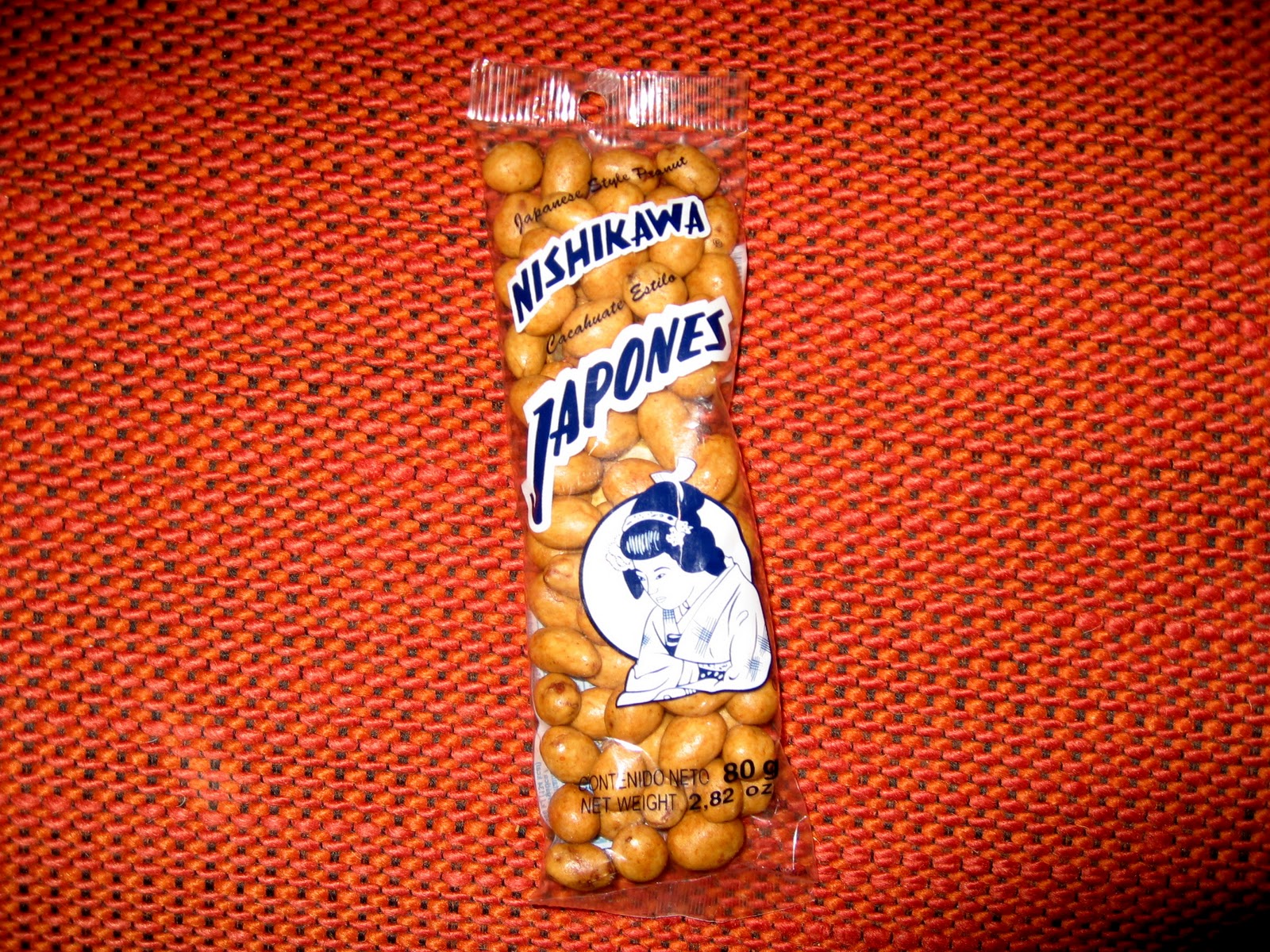
Nishikawa brand Japanese-style peanuts (via The Grande Enchilada)


 Eating The World
I saw a report on mexican tv about how a Japanese immigrant invented this treat in Mexico City, he used to get up very early in the morning and do a great deal of walking peddling his peanuts. After some time he was able to open a formal factory with a handful of employees, that’s the Nishikawa brand you mention. His granddaughter is in charge of the business now and she said on the report that she regretted that her grandfather didn’t file for a patent.
¿Porqué se llaman “cacahuates japoneses”, si en Japón no hay cacahuates?
8 SEPTIEMBRE 2008
E l cacahuate japonés es mexicano. En 1945, Yoshigei Nakatani lo creó en un taller del mercado de La Merced en la ciudad de México; ahí mismo se ubicaban sus clientes. “Mi abuelo iba con su diablito a vender lo que había producido en la mañana, el objetivo era sacar el día a día”- nos dice Claudia Chieko Nakatani, directora de la compañía, y nieta de Yoshigei.
Entre 1950 y 1975 los clientes de Nipón fueron mayoristas de La Merced y la Central de Abastos, lo que permitió que el negocio pasara de ser un taller a una empresa registrada en 1975 y una marca para el cacahuate en 1977, pero el producto y el proceso para elaborarlo nunca se patentaron.
El mercado del cacahuate japonés explotó en 1980. Otras marcas salieron al paso mientras Nipón empezaba a satisfacer la demanda de las tiendas de autoservicio y las maquilas; Nipón comenzó a perder terreno, al grado de ocupar actualmente el tercer lugar de ventas en México, después de empresas como Sabritas y Barcel.
“La ventaja competitiva de Sabritas y Barcel es la distribución”, admite
Para alcanzarla, arguye Nakatani, las marcas de la competencia han tenido que ofrecer sus botanas a bajo costo, precio que ella no está dispuesta a pagar pues afecta la calidad de los cacahuates que creó su abuelo.
“El sector popular es un mercado contra el que no podemos competir porque nuestra prioridad es la calidad y para eso no podemos ofrecer los precios a los que salen las mil marcas patito. Nipón es una marca premium, su sabor es inconfundible, los otros son sin sabor”, asegura la empresaria en entrevista.
El secreto en el método de fabricación del cacahuate japonés original, el de Nipón es frágil.
I’m Japanese/American born in Hawaii and I’ve had a similar snack all my life-BUT!!!-this “Japones Nishiyama Cacahuate Estilo made by Delarosa is FREAKiIN’ AWESOME!!! I very much prefer them to the standard Japanese-style coated peanut that I grew up with! My daughter’s friend brought her a 900gr bag from Mexico and I ate most of it!!! Now the search to find it here in the US begins. If anyone knows where one can purchase this great snack, please let me know!!!
Hi Grant – several varieties are available online at MexGrocer : http://www.mexgrocer.com/catagories-snacks—cookies-nuts—other-snacks.html
We have also had luck in Mexican grocery stores in the US.