
I love nothing more than discovering similar dishes from disparate locations. When we were visiting some new foodie friends, we brought along box of Italian torrone morbido – soft almond nougat – to contribute to dessert. Torrone is one of our favorite winter holiday treats, and is an especially good host gift as it is typically both gluten and dairy free. When our gracious hosts tried the torrone they instantly drew a parallel with gaz, the confectionery specialty of the Isfahan region of Iran. In fact, they were kind enough to share some special gaz brought directly from Iran. We heartily appreciated them delving into their limited supply in the name of food culture research!
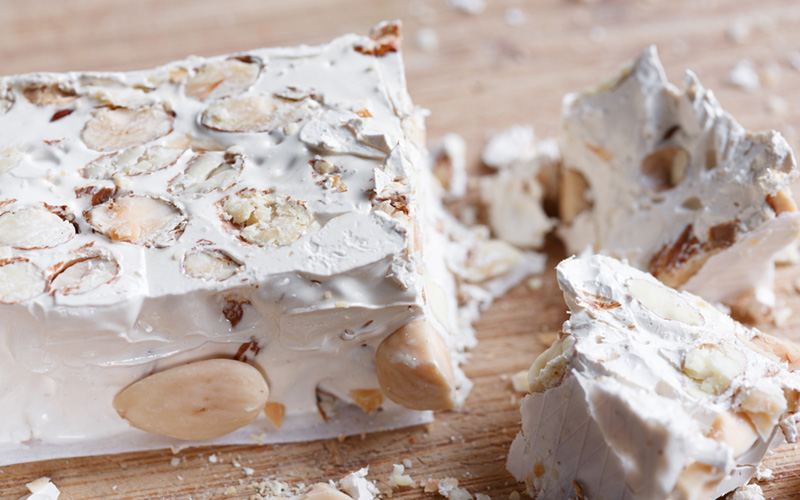
We instantly recognized the parallels between the two confections. Both were soft nougats made with egg whites, sugar, and whole nuts, cut into small rectangles. For torrone, the type of nuts used depends on the region (ours was almond), while gaz is typically made with pistachios. In terms of predominant flavor, gaz is also tinged with rosewater and Tamarisk tree sap, while Italian torrone flavors may include citrus or vanilla. The method for preparing both nougats is very similar, and if you are ambitious you can make it yourself (recipes for torrone and gaz here). Both are also commercially available, our go-to torrone, available in many US Italian markets is La Florentine (and we recently just learned the story behind their packaging design). Eataly also has a wide variety of torrone. You can order many varieties of gaz online at Persian Basket. However, to get the best versions you will probably have to visit the respective countries of origin.
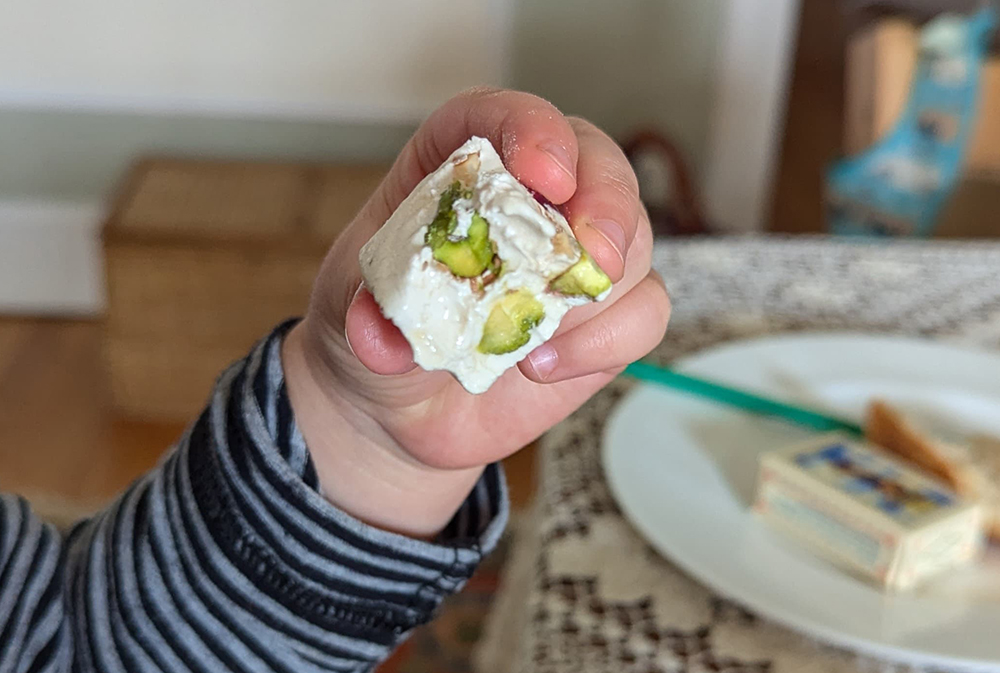
Torrone can also be found in a very similar format in Spain, where it is called turrón. The similarities between turrón/torrone and gaz are not coincidental. Though its exact creation story is lost to time, it is speculated that one possible origin for Mediterranean European nougats is through the adaptation of Middle Eastern nougats as they entered Southern Spain or Sicily through cross-cultural exchange. Munching on our Persian and Italian treats, we were grateful for new friendships and cross-cultural culinary connections.


 Eating The World