When we first happened upon a picture of this cake, we couldn’t believe it was real. Was it a fruit? Gelatin? Turns out that this striking, otherworldly concoction is Vietnamese Pandan Honeycomb cake. Pandan – a flavor not often seen in American baking – is a tropical plant from Southeast Asia with edible leaves that impart the flavor and green color to this unusual cake. You can find pandan extract in many larger SE Asian groceries or online. The main base ingredient of this cake is tapioca flour, which leaves a chewy texture in the middle, much like pão de queijo. Julesfood, Danang Cuisine, and Runaway Rice have similar recipes for Pandan honeycomb cake. The Spice of Life takes it one step further, and uses whole pandan leaves to supplement the flavor of the pandan extract, and while it seems a little difficult, the payoff is big!
Today is Brazilian Independence Day, so I think some Brazilian food adventures are called for. Whenever we visit a a city in the US we always check to see if there is a Brazilian food or cultural outpost. You’d be surprised at how many places have a hidden Brazilian gem. However, one of the best places for Brazilian food in the US – that is no secret – is the Astoria neighborhood in the NYC borough of Queens. Astoria is perhaps most famously known for its sizable Greek population, though in recent years it has become an amazingly diverse place. Along with an influx of other Latin American and Middle Eastern cuisines, Astoria has become more Brazilian in the past decades and there are the food establishments to prove it.
Our first stop in Brazilian Astoria is always Rio Market (32-15 36th Ave, Astoria, NY 11106), which is definitely the biggest Brazilian grocery store we have seen in the US. They have pretty much every Brazilian dry good you could hope for: coffee, cookies, Guarana soda, sauces, tea, rice, beans, soap, shampoo, and even Brazilian soccer paraphernalia and Havaianas. What sets them apart is their wide selection, and the fact that they also have rarer fresh foods like queijo coalho – the cheese on a stick you can buy on Brazilian beaches – and picanha steaks. There is also a small cafe in the front of the store that serves simple dishes, feijoada, pão de queijo and coffee. A new feature is that you can order products from Rio Market online!
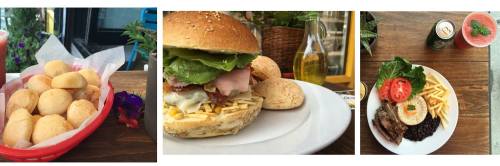
However, for Pão de Queijo, you must stop at New York Pão de Queijo (31-90 30th St.) aka Astoria Pão de Queijo or just Pão de Queijo. This hole in the wall restaurant reminded us pleasantly of a typical urban corner restaurant in Brazil. You of course have to get the Pão de Queijo, but there are also salads, acaí bowls and X-Burgers (Brazilian Portuguese for Cheeseburger – the X is pronounced “Sheese” – get it?). Within Astoria there are also a plethora of restaurants tapping into a variety of Brazilian food traditions beyond just the churrascuria that is the most known in the US. Point Brazil, Copacabana,Minas Grill, Villa Brazil and Kilo Astoria are kilo restaurants in the Brazilian style (a buffet where you pay by weight). Kilo restaurants are on every corner in Brazil, so it is only appropriate they have made their way to Astoria, too. Favela Grill and Beija Flor are more, modern, slightly upscale restaurants with live music. And at Casa Theodoro you can get Brazilian-style pizza, which is a genre unto itself. If you want to get a taste of Brazil while in NYC, definitely wander around Astoria!
Even since M first visited Peru in 2004 he has been on the hunt for the perfect ceviche. Even when we are not looking, sometimes a place specializing in ceviche will present itself. When we arrived in Lisbon we had heard a lot of buzz around A Cevicherica (R. Dom Pedro V 129, 1250-096 Lisboa, Portugal), and the word was that it was one of the best restaurants in Lisbon, ceviche or not. A Cevicheria is helmed by Chef Kiko Martins, who has a growing empire of restaurants around Lisbon.
Would you believe it if I told you there was a pepper unique to Chicago? No, I’m not talking about the ubiquitous sport peppers on a Chicago-style hot-dog, I am talking about the Melrose pepper. Melrose peppers are a type of sweet pepper ranging in color from green to red, that are mainly grown in the Chicago area (though now you can order seeds and plant them anywhere). Below are some green Melrose peppers we found at Mariano’s – you can see how they look like hot peppers – but they have no heat.
Having grown up in Chicago, I am surprised that I have not learned about the Melrose pepper’s existence until now. A recent Chicago Tribunearticle featuring the peppers was my first introduction, though my mom says that my Italian grandmother used to mention Melrose peppers. The peppers actually have their roots in Italy, and the seeds were brought over to Chicago by Neapolitans Joseph and Lucia Napolitano in 1903. The pepper that they transported grew wild in Southern Italy, and really took to the soil of Chicagoland, specifically the Napolitano’s home Melrose Park (from where they get their name). The peppers proliferated throughout the gardens of Italian-Americans in Melrose Park, and became a Chicago classic over the decades.
Outside of home gardens, you can also now find Melrose Peppers in August at Caputo’s and Mariano’s supermarket locations throughout Chicagoland (I would recommend that you call for availability). You can also buy seeds at Reimer Seeds or Southern Exposure (which is what we plan on doing next year). You can prepare Melrose Peppers similarly to bell peppers, though they are not as pungent, and are sweeter. A popular Melrose Pepper recipe is stuffing the peppers with Italian sausage, and the Tribune has another recipe for stuffed peppers along with other preparations. We have tried Melrose Peppers a few ways, and even though we do not like green peppers (or at least one of us doesn’t), we really enjoyed the taste – and history!
The call is coming from inside the house! This may be the first time that I have written a post about a place from inside the place itself, so here I am sitting in Copenhagen Coffee Lab (R. Nova da Piedade 10, 1200-298 Lisboa) writing this post! The coffee scene in Lisbon is very particular. The coffee is very strong, comes from only a few national producers, and is usually taken in tiny shots like espresso standing up at a bar. Barring that, you can get various dilutions with milk and sugar. When espresso exists it is often in the form of Nespresso pods, which seem to have taken the entire city by storm. All of this is fine, but sometimes you just want some really good coffee. Thankfully, Copenhagen Coffee Lab, a new third wave coffee shop, has opened in the cute neighborhood of São Bento. In Scandinavia coffee is king. While in Copenhagen we tried what was purported to be the best coffee in the world. Copenhagen Coffee Lab makes no such bombastic claims, but I can definitely say that this is the best coffee I have had in Lisbon. And, this place is actually run by two Danes, and imports all of their coffee from the Copenhagen Coffee Lab in Copenhagen, making it sort of a cross-country mini-chain. At Copenhagen Coffee Lab (Lisbon) you can get your full range of espresso-based drinks, from a single shot to a flat white to iced coffee, a dirty chai latte and beyond. For those with more refined tastes you can also get filter coffee made in a V60 (4€), Aeropress (4€) or French Press( 6/10€).
For the non-coffee drinker there are hot teas, chais and house-made iced teas (a rarity here). They get their Chais from David Rio in San Francisco, and they are very tasty, though sometimes they will run out for a week when more is being ordered from San Fran. Along with the full coffee, there is a nice selection of foods and snacks including Swedish style kanellebullar cinnamon rolls, muffins, knækbrød flatbread with spreads, yogurt, oatmeal and creative salads for lunch. This is the perfect place for vegans or vegetarians, or anyone who wants a laid-back brunch with great coffee.
Moreover, what drew us to Copenhagen Coffee Lab is that it is also a great place to study and work, which is no secret because the place is full of people with laptops on most days. True, this may also be a little off putting (and we are contributing to the problem) but there are still plenty of people just chatting. There is also a larger communal table in back where those working tend to congregate. The crowd seemed to mostly be foreigners, and my hunch is that Lisboetas have not quite embraced this type of third wave coffee that deviates so far from their traditions (and there are no pasteis de nata sold here). Whether you are looking to use the free Wifi or not, Copenhagen Coffee Lab is a must for any coffee fiend in Lisbon.
At the start of our latest trip we lamented openly the lack of gelato in Lisbon, but little did we know that, since our last trip in 2015, there had been something of a gelato renaissance in Lisbon. We’re talking about Italian-style gelato here, not ice cream (though Lisbon has that too, the most famous ice cream maker being Santini) Now gelato shops seem to be popping up everywhere (especially anywhere tourists happen to be) but most of it is just meh. But never fear, there are now some great places to get gelato in Lisbon, too.
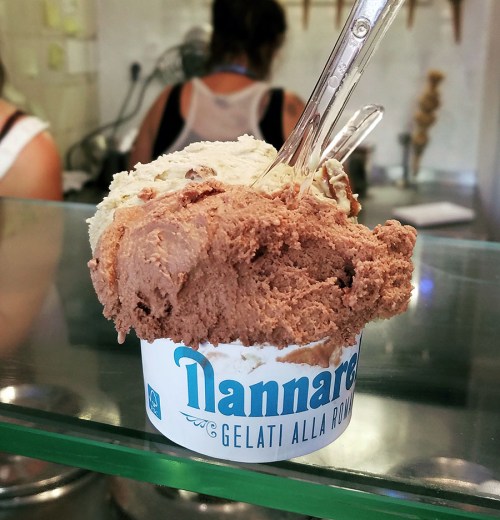
The gelato renaissance all started with Nannarella (Various locations, main location São Bento), which was founded by expats from Rome. One of the original founders of Nannarella, Filippo Licitra, then split off on his own to start rival Gelato Davvero (Various locations, main location Cais de Sodré). We can attest that both of these gelato places are the real deal, after having visited each several times. The locations are pretty much only walk up counters, but fortunately Lisbon is replete with parks and other places to enjoy your cone. So which one do we like better? It’s hard to say…both of these are delicious, but each has their pros and cons. For each of the following categories we have selected a winner.
Prices – Draw. Prices were comparable for either a cup or cone, for Davvero a Piccolino was €1.75, a Piccolo, €2 (seen above), Medio €3, Grande €4, and Grandissmo €5. Anything above a medium is just huge. You can also get half liters and up of gelato in boxes to take home (1L is €16 at each place). For Nannarella, there are fewer options, a small for €2, medium for €3 and large for €3.50. At the top end Nannarella is a little cheaper, but Davvero lets you get larger sizes.
Wait time – Davvero. As M can attest, I hate to wait in line. However, I did wait in line 30 minutes for Nannarella (see above, which was just bordering on too much. The waits at Davvero were much shorter, so take that for what you will.
Ambiance – Draw, slight edge Davvero. Each place has only storefront outlets with nowhere to sit, except the Cais de Sodré location of Davvero that has both indoor and outdoor seating, which is right on the square.
Extras – Nannarella. You can get whipped cream for free at Nannarella. Maybe they also have it at Davvero, but we have never been offered this topping. At Nannarella you can also get a mini cone to put on top of your cup for 20 cents – a great idea we have never seen before.
Generosity – Nannarella. For the small cup size, Davvero allows 2 flavors. Nannarella (above) allows unlimited flavors, which basically means you can get 3 scoops or more, as I did here with chocolate, salted caramel and pistachio. The scoops were overall more generous at Nannarella.
Taste – Draw. This is a tricky one, and probably relies more on personal preference than anything. The consistency of both gelato is smooth and creamy, and the flavors are delicious, and not artificial at all (we used pistachio as a test for this). Neither of the pistachio gelatos are bright green, and both taste delicious and natural. At both stores you can get classic flavors like strawberry, coffee, hazelnut, chocolate chip and vanilla. However, we liked the salted caramel more at Nannarella, though Davvero’s sour cherry was the fast favorite of our travel buddies. Each location has special flavors of the day, and there are even some more unique flavors like basil (Nannarella) and cheesecake (Davvero).
Overall, Nannarella, the original may have a slight edge over Davvero, though we wouldn’t turn up our noses at either. We are just grateful that Lisbon is experiencing a boom in gelato!
On every corner of Lisbon there are little family restaurants – tascas – that serve a small menu of Portuguese classics with a wine selection. Often the menus (bacalhau, grilled fish and steaks) and atmospheres at each of these places are pretty similar (though the quality certainly runs the gamut), and it is hard to know which one to try. When attempting to cut through the dizzying quantity of tasca, we got a tip though, the the best tasca in town is Crisfama (R. Cruz de Sta. Apolónia, 58/60A, 1100-188 Lisboa), where everything was fresh, high-quality and cooked to order. Crisfama is on a backstreet on the outskirts of Alfama, the medieval quarter of Lisbon. It is a little bit of a trek to get there, but getting off the tourist track when it comes to food is definitely a good thing. The restaurant has only a handful of tables in the simple, clean dining room, so it is absolutely essential to make a reservation. Moreover, Crisfama is only open for a few hours for each lunch and dinner, so be sure to plan accordingly. The restaurant seems like a two-person show with the affable owner and his wife running the front and back of the house, respectively. The owner/waiter Fernando is an amiable host, ready to give recommendations, pour wine heavily and exchange in some witty banter in English or Portuguese while his wife mans the kitchen.
For starters you get the typical Portuguese couvert of bread and olives, along with a choice of local Portuguese cheeses (€2-3). We ordered a round of soft goat cheese with herbs and a semi-hard sheep cheese. We are constantly impressed by the huge varieties of goats cheese in Portugal, and it is always fun to try a new variety. For mains, you can get either seafood or meat dishes for prices so reasonable that they will astound you. Everything is less than €12 (the bacalhau tops out the menu at €11.50), and for that price you can get a whole fish or a huge steak. Other specials included grilled octopus, bitoque (steak with an egg), bifana (pork sandwich), and duck with rice. Side salads are a shockingly low €1.25, and you can even get fresh fruit by the piece.
In the mood we for seafood, we ordered sea bass, tuna, dourada and the ultimate Portuguese classic, grilled sardines (€8.5 for each seafood plate). Each came with a side of potatoes and green beans, and the sardines came with a side salad. Each fish was cooked perfectly to order, and this was some of the best, freshest fish we have had in Portugal – everything was absolutely delicious. And as you can see, they didn’t skimp on portions. To wash down your meal, each glass of house wine is only €1.
For dessert there is a refrigerator case with an appealing variety of cakes, tarts and semifreddos. We heard that the chocolate orange semifreddo was sublime – so we ordered two – and it lived up to the hype and was basically the perfect treat for a hot summer day. From start to finish, we enjoyed the attention to detail at Chisfama, and it was definitely the best traditional Portuguese food we have had in Lisbon. With great prices and great quality for classic Portuguese food – you won’t find a better deal in Lisbon.
I have been diligently eating my way through the sweets of Portugal and Spain, but haven’t got around to posting much, so as a result, I have a huge backlog of sweets to share with you. When in Lisbon previously, I had been concentrating on some of the more iconic sweets available in the city’s myriad bakeries. This go around, however, especially as we have seen more of the country, I have branched out into some more specialized local treats. While in Évora, a picturesque, architecturally-interesting (even including a Roman temple) town located east of Lisbon, the key place to sample regional or convent sweets (doces regionais or conventuais) is the Pastelaria Conventual Pão De Rala (Rua do Cicioso 47, 7000-658 Évora).
Queijinho do Céu (pictured below – recipe in Portuguese)– This name translates as “little cheese from heaven,” a name given to the sweet by the Clarissian nuns that invented it. Queijinho do Céu is basically an almond, marzipan-like paste that is super dense and fudgy, formed into small, flattened rounds, filled with egg yolk cream. There is also a treat with the same name from another region that does not contain almonds.
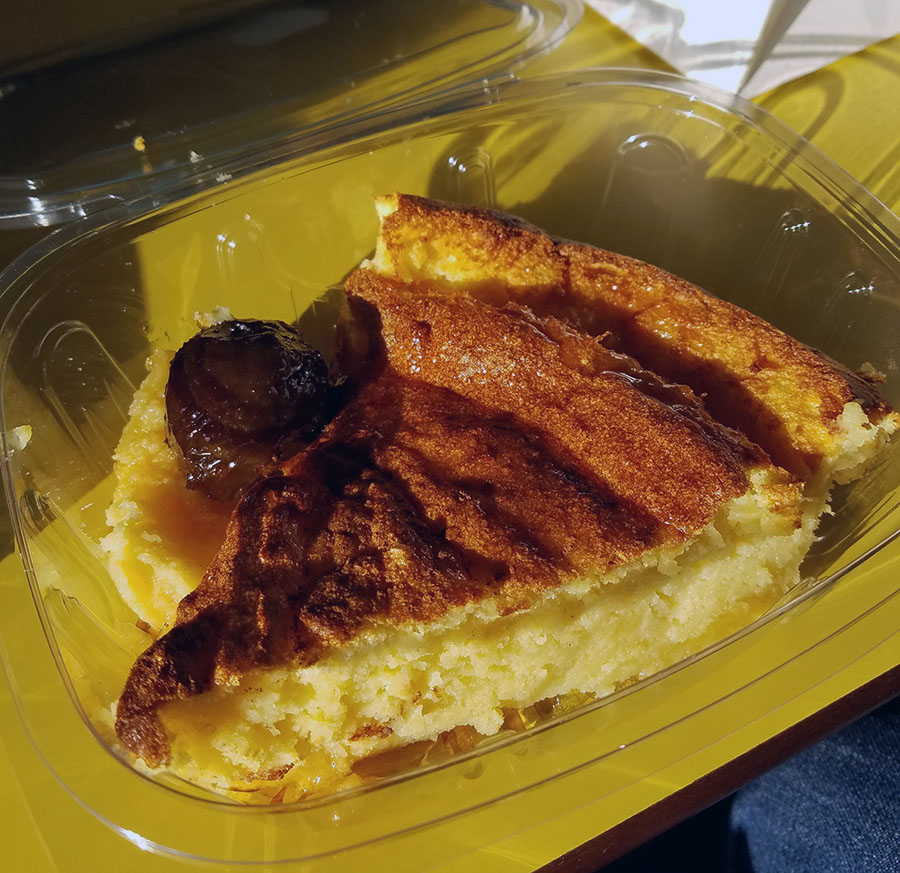
Cericá / Sericaia (recipe in English) – This sweet takes more of a basic cake form, with a fluffy souffle-like texture, lightly flavored with citrus. We have seen this cake dusted with cinnamon, but this version was not. This treat was also served with a local fruit varietal in syrup: the Elvas plum (which we previously thought was a fig)!
Pão de Rala (recipe in Portuguese)- The Pão de Rala, from which the bakery gets its name, is a brioche-like sweet made from eggs, sugar, lemon, almonds and filled with its most unique ingredient – gila – or squash, with a spaghetti-like texture. Sweetened squash fillings are surprisingly common in Portugal, and are found in a variety of treats throughout the country. I have even seen the squash filling for sale alone in small cups, or in jam form.
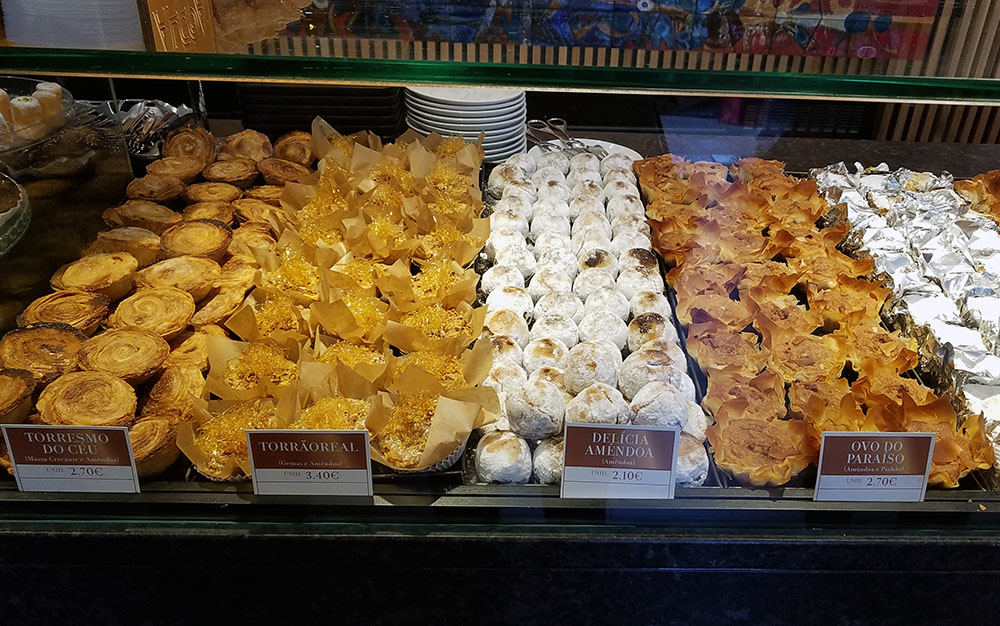
If you can’t get to the Alentejo, in Lisbon there is a place to sample some of the convent sweets and other rare regional desserts from around Portugal: Pastelaria Alcôa (R. Garrett 37, 1200-309 Lisboa) in the heart of the bustling Chiado district. Alcôa has some treats from the Alentejo including the egg custard Encharcada (recipe in English) and Torrão Real (recipe in Portuguese). Torrão Real is a concoction of egg yolks, sugar and almond, that is almost pudding-y in consistency. The Torrão Real we got at Alcôa was cut into neat squares and topped with a fancy burnt sugar decoration. However, it was basically impossible to eat a without a spoon – so it makes a bit more sense that it usually served in a bowl or a deep plate with utensils.
This is only scratching the surface of the sweets of the Alentejo – we are constantly surprised just how many permutations of egg yolks, flour and sugar the nuns in Portugal were able to come up with. I am sure there are still hundreds we have not tried. Which of these sweets would you most like to sample?
One of the most interesting things about the Lisbon food scene is the proliferation of restaurants with foods from former Portuguese colonies. Brazilian, Angolan, Cape Verdean and Goan foods and restaurants abound in the city. When we were showing some friends around town, we wanted to find a place that would give them a taste of food from around the Lusophone world. We stumbled upon Mesa Kreol (Arco Portas do Mar, 1100-035 Lisboa). Mesa Kreol gives you that around-the-world trip by offering only the most iconic dishes from several former Portuguese colonies, all with a contemporary twist.
Mesa Kreol is located at the foot of Alfama, the old quarter of Lisbon, which is perhaps more known for its fado music and small restaurants serving grilled fish. The restaurant is clean in tidy, and only foreigners were eating at the absurdly early hour of 7 PM (like 4 PM in the US), though the restaurants seems to be popular with a mix of locals and visitors alike. The menu was brief, and was divided into starters, meat and fish. For starters we had to sample the strawberry gazpacho, not traditional at all, but spicy, delicious and refreshing. Other starter options included an octopus escabeche or linguiça sausage with goat cheese. For mains we went with the more traditional dishes, Moamba from Angola, Caldo de Mancarra from Guinea-Bissau and Brazilian shrimp Moqueca. Other national dishes included the cachupa bean stew from Cape Verde. Less traditional offerings included the tuna steak, Mozambican shrimp, and a Moroccan tajine.
Moamba is the national dish of Angola, and is made with whole chicken, drenched in palm oil, tomatoes, okra, spicy malagueta pepper, bell peppers and other veggies. We were warned by the server that this was a “greasy” dish, which may have been a needed warning for those not familiar with palm oil, but it was not really a greasy dish at all. The Caldo de Mancarra – a rich peanut stew with whole chicken – was delicious, and reminded us of other groundnut stews from West Africa. We sopped up every possible bit of sauce with the rice.
However, the hit of the night may have been the shrimp moqueca, a classic Brazilian dish of coconut milk, palm oil and bell peppers that we have enjoyed many times in Brazil. M deemed deemed Mesa Kreol’s version as one of the best moquecas he had had outside of Brazil, which is pretty high praise. This version came with delicious fresh shrimp and it was replete with palm oil, which is a necessity. We were too stuffed for dessert, but tempting options included Brazilian Sagu (tapioca pudding) and chocolate cake. Mesa Kreol is a great introduction to the foods of former Portuguese colonies. It is a true culinary trip around the world in only one place!
On our recent visit we stayed in the charming Barcelona neighborhood of Gràcia, and after dinner one night we decided to explore dessert options around the main square. While there were a smattering of typical gelato places, we were most interested to see a Japanese shaved ice shop on the corner: Mr. Kakigori (Pl. de la Vila de Gràcia 3, Barcelona, 08012)! Kakigori is a traditional Japanese shaved ice, flavored with syrup, and it is currently making a comeback in Tokyo (and apparently making inroads in Europe as well).
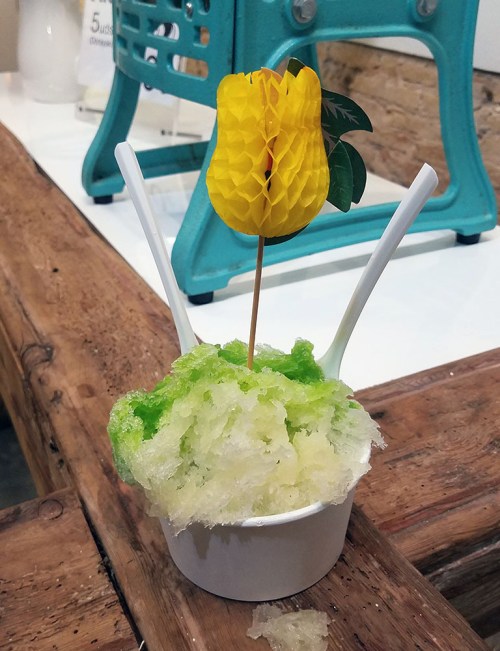
True to Japanese Kakigori style, the ice was shaved off a rotating cylinder by hand – check out the ice in action. You can choose from 2 sweet syrup flavors for each size, ranging from strawberry to mango to coconut, with additional toppings like condensed milk and fresh fruit. We ordered a small – which turned out to be huge – with passion fruit and green tea flavors. Along with the shaved ice, you can also get Japanese pancakes called doriyaki, with savory fillings like tuna, or sweet fillings like red bean paste and Nutella. The kakigori is was perfect for a hot night, and we loved the refreshing change of pace!
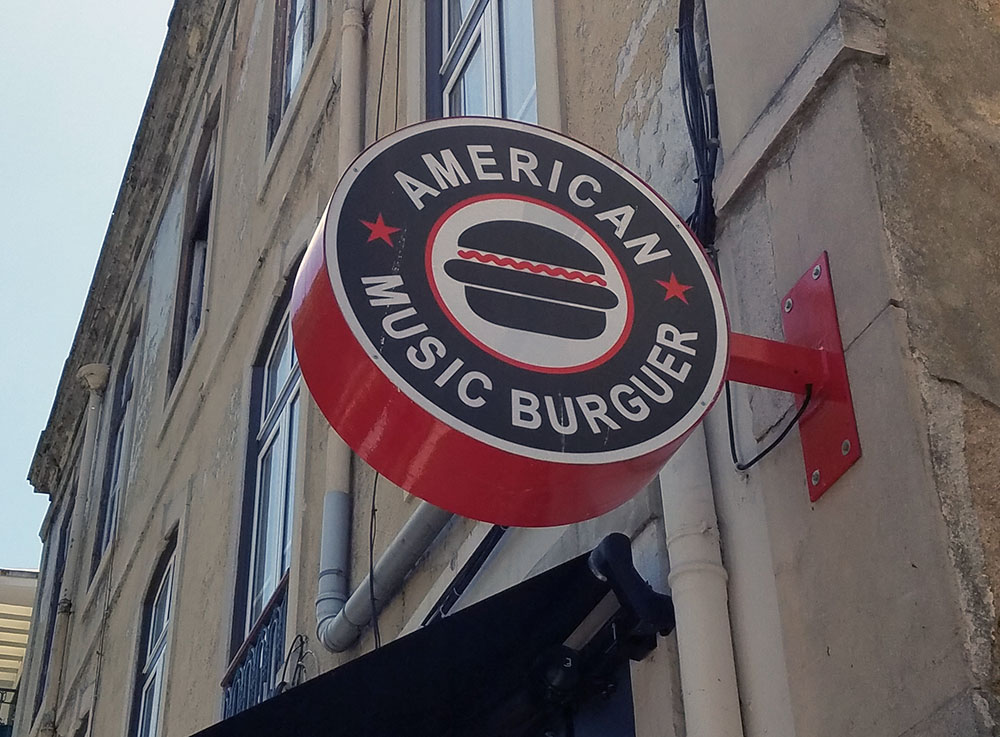
We are currently in Portugal for the 4th of July, which got us thinking about whether or not we could put together a US-style cookout here. Being abroad has definitely enlightened us to what other countries think of American food, and what American foods have just not crossed the ocean. Previously, we had lamented the lack of peanut butter – we had found some at an Indian grocery – but now we have found jars twice at run-of-the-mill grocery stores at semi-reasonable prices. So it seems that peanut butter is making in-roads, but there is still a dearth of BBQ and tacos. At the Continete megastore (think WalMart) in the gigantic Colombo Mall we saw an American food section in the “foreign foods” aisle – but it consisted mostly of Old El Paso products. Burgers and craft beer, two staples of the 4th of July cookout are actually getting to be pretty popular in Lisbon, especially burgers. Case in point, the aptly named “American Music Burguer” we spotted near the University.
Though cookouts in Portugal usually include fish, if you are planning to do an American-style 4th of July cookout, most fresh meats, fruits and veggies should be readily available. However, we have also found a resource to get the esoteric-to-Portugal ingredients you may need – the “American store.” Yes in Portugal, there is a such a thing as an American store – Liberty Store(Largo de São Sebastião da Pedreira 9D, 1050-010 Lisboa). Liberty Store is stocked with such goodies as Pringles, Pancake Syrup, Beef Jerky, Barbecue Sauce, Funfetti cake mix, and the like. The strangely-named Glood (several Lisbon locations) has products from all over the world, including a sizeable US selection, with a few slightly healthier options. The products available at either store are only the most mass market of mass market – but each definitely carries products you cannot find elsewhere. Liberty Store even has solo cups, an essential to every 4th of July cookout!
When we went to Spain we were expecting to get our fill of tapas, but one thing we were not expecting were the proliferation of tea salons! We are major tea lovers here at ETW, so we were delighted to learn about a genre of tea rooms found only in Andalusia: teterias. These are Moroccan-style tearooms influenced by the many centuries of Islamic rule when Spain was known as Al-Andalus. Teterias are found throughout Andalusia, and we were lucky enough to try them in both Cordoba and Granada. In Cordoba we visited the Salon de Té (Calle Buen Pastor, 13, 14003 Córdoba, Spain), a stone’s throw from the Mezquita. In Granada we stopped at La Teteria Del Banuelo (Calle Banuelo 5, 18010 Granada, Spain), in the shadow of the Alhambra.
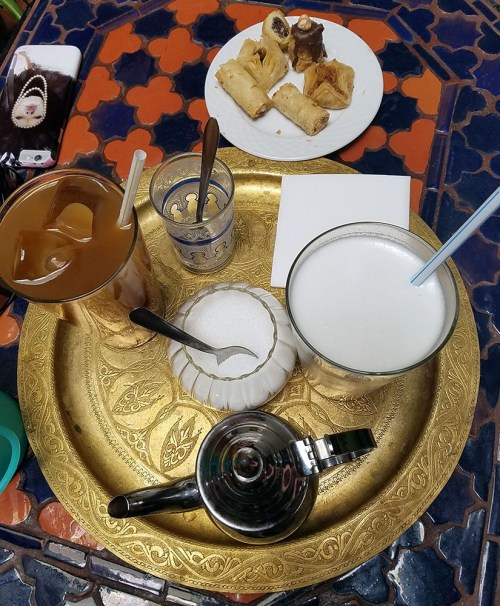
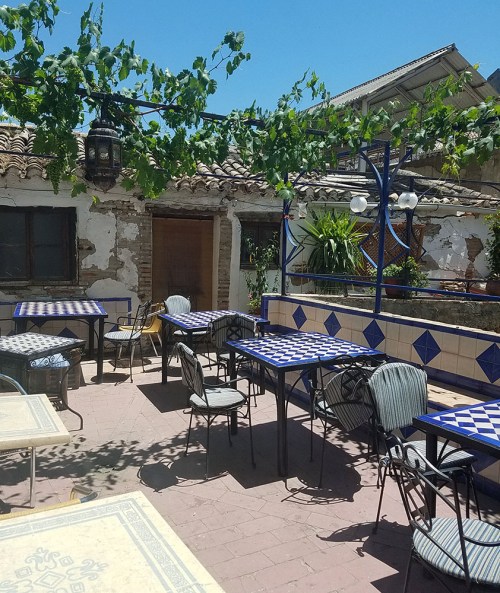
The inside of a teteria is typically done in a Moroccan style, with an atmospheric courtyard filled with North African-style furnishings and pillows. Mint tea is always a good bet at the teteria, though the tea offerings are usually much more extensive; at some places you can even get smoothies and Mediterranean munchies. Another great aspect of the teteria are the little Moroccan pastries on offer, which transported us to the Djemaa al Fna.
I was impressed by the tea selections at the Salon de Té, with pages and pages of both hot and cold varieties. M got an almond shake, while I sampled an iced rooibos tea with berries. Our friend K fought through the heat and got a beautifully-presented mint tea with tons of fresh mint. At the Salon, we sampled baklava, kunefe (birdsnest pastries), tiny turnovers with pistachios, and makrout; you can get savory dishes as well if you are feeling peckish. Banuelo had a smaller selection of teas and savories, but offered sweet crepes along with a similar selection of Moroccan petit fours. Lemonade with mint and an iced coffee was a perfect selection for a particularly hot day at Banuelo, though the mint tea was still beautiful and refreshing. Banuelo also boasted a cute outdoor seating area, though it was too hot to venture outside on the day we visited.
Visiting these teterias was a highlight of our visits to Andalusia, and they definitely transported us to another era of Spain’s history. Whether you are looking to hide out from the punishing sun, or get some munchies, when you are in Andalusia you have to make sure to stop by a teteria for the full experience.
The eaters are going to be spending our Summer in Portugal, with a few side trips to the South of Spain and Barcelona. This means we will be taking a brief hiatus from blogging until we get settled and return from Andalusia – probably until Mid June. After that we hope to start chronicling our Iberian adventures. We have been to Portugal for an extended period of time (and have sampled dozens of pasteis de nata), but are relatively new to Spain and are especially looking forward to delving into the rich food scene. We see a lot of tapas and jamon in our future. Do you have any favorite recommendations in either country?
In years past we wrote about the enigmatic Nutellerias of Europe (and the short-lived Nutella cafes in North America): store/cafes dedicated to nothing but Nutella, the world’s favorite chocolate and hazelnut spread. Though the international Nutella cafes have come and gone, it now it appears that we will finally have a Nutella-only cafe of our own stateside. The Nutella Cafe will open in Millennium Park Chicago on May 31, and is officially run by Nutella’s parent company Ferrero. The Cafe will offer sweet, Nutella-based treats as well as savory non-Nutella fare. Previously, Nutella lovers in Chicago and NYC could enjoy the Nutella kiosk in Eataly, but this new cafe represents a whole new level of Nutella love (the door is even shaped like a jar of Nutella).
Today, May 22, is Victoria Day, a holiday to celebrate historical British monarch Queen Victoria’s birthday. Of all places, this is not a holiday in the UK, but in Canada! One classic treat to have on this date is Victoria Sandwich, named for the queen. Despite the name, this is not what North Americans would think of when they hear the word sandwich – it is actually a cake! Another name for this treat is Victoria sponge (as in sponge cake), and it consists of two sponge cakes filled with raspberry jam and cream in the middle. I first heard of this cake when it was referenced many times on the Great British Bake-Off! You can find a recipe for a classic Victoria Sandwich on BBC GoodFood, Jamie Oliver and Urban Hounds.
When we first saw a picture of Bebinca cake from Goa, we thought it looked a little bit like Hungarian Dobos Torte. Look at all of those layers! Bebinca is a cake popular in the Western Indian region of Goa, and it is known by its 7+ distinctive layers. Bebinca is probably the most famous dessert in the region, and is even known by some as the “Queen” of Goan Desserts. Some of its fame also probably comes from its difficulty – it is as time-consuming as it is beautiful – each of the 7 layers is cooked individually and then stacked up. Despite this advanced structure, the ingredients for Bebinca are super simple: eggs, flour, coconut milk, ghee (clarified butter) and nutmeg. This dish is a product of Portuguese influence to Goa, which is definitely evident in the copious use of egg yolks – a Portuguese favorite. Here are a few recipes for Bebinca from Flavors of Mumbai and BBC Good Food.
When we left Chicago, one of the places we were saddest to say goodbye to was our favorite butcher shop: Homestead Meats in Evanston. When we got to Cleveland, we were super happy to find lots of great fresh meat purveyors at the West Side Market – however nothing quite fit the bill of a single location where we could get fresh meat, house-made sausage, charcuterie, prepared meals, and more. With a new addition to Slavic Village – Saucisson (5324 Fleet Ave, Cleveland, OH 44105) – we feel like we have found a Cleveland butcher replacement for our beloved Homestead Meats.
Saucisson is a fell-fledged butcher and you can see back into the kitchen where everything is made – we were also excited to learn that they are offering sausage-making classes – the next one is on Saturday, May 20 (call for details). Saucisson is a labor of love for founders and owners Penny Barend and Melissa Khoury, which started out as a pop-up at Farmer’s Markets, before opening their own bricks and mortar location. The new Saucisson space is clean and bright, with a fully-stocked cooler and freezer full of along with stock, soups, and lard. Saucisson had a variety of beef and pork cuts for sale, alongside a variety of pates, bacon, jerky, rilettes and esoteric sausages, all made/butchered in house. We sampled the German-style currywurst, the Oaxacan black mole sausage and the Filipino longganisa (a sweet breakfast sausage). Quite the spread – though we think the Mole sausage was our favorite! Every week the selection rotates, so be sure to call ahead if you want something specific.
One of the other great features of Saucisson is that they have rotating food menu every day, which you can take out or eat in store (check out Facebook for the day’s menu). On the night we visited there was Italian chicken meatball soup ($5) and pulled pork tacos ($8). Though not a traditional taco, the super tender and flavorful pulled pork stole the show, smothered in green salsa, cotija cheese, slaw and pickled onions. Yum! Saucisson is only open Thursday, Friday and Saturday from 11 a.m to 7 p.m so be sure to time your visit properly. When we visited on a Friday night at 6, we got the last of the food.
Even more promising – the Saucisson team was super excited to potentially help us out with some custom butchery – we of course wanted to see if they could make the Brazilian classic cut of beef, picanha. They assured us that with a little advance notification, they could pretty much make anything. This stretch of Slavic Village is just starting recover from the housing bubble and economic downtown, and Saucisson is a welcome addition to the neighborhood’s commercial center. But Saucisson would be a great addition to any Cleveland neighborhood. We look forward to becoming regulars!
It’s always a delicate balance finding somewhere to go out to eat on a weekend for lunch – note that I say lunch – not brunch! FortunatelyLa Sirena Clandestina (954 W Fulton Market, Chicago, IL) strikes a nice balance between lunch and brunch dishes, and is sure to please people with all kinds of palates. La Sirena Clandestina has an eclectic menu with lots of Brazilian flourishes, based on Chef John Manion’s childhood in Brazil – they even have our favorite cheesy bread on the menu – Pão de Queijo – though it sadly wasn’t available when we visited. We are always looking for new Brazilian tastes, so we were definitely looking forward to sampling La Sirena’s mix of Brazilian flavors and local ingredients.
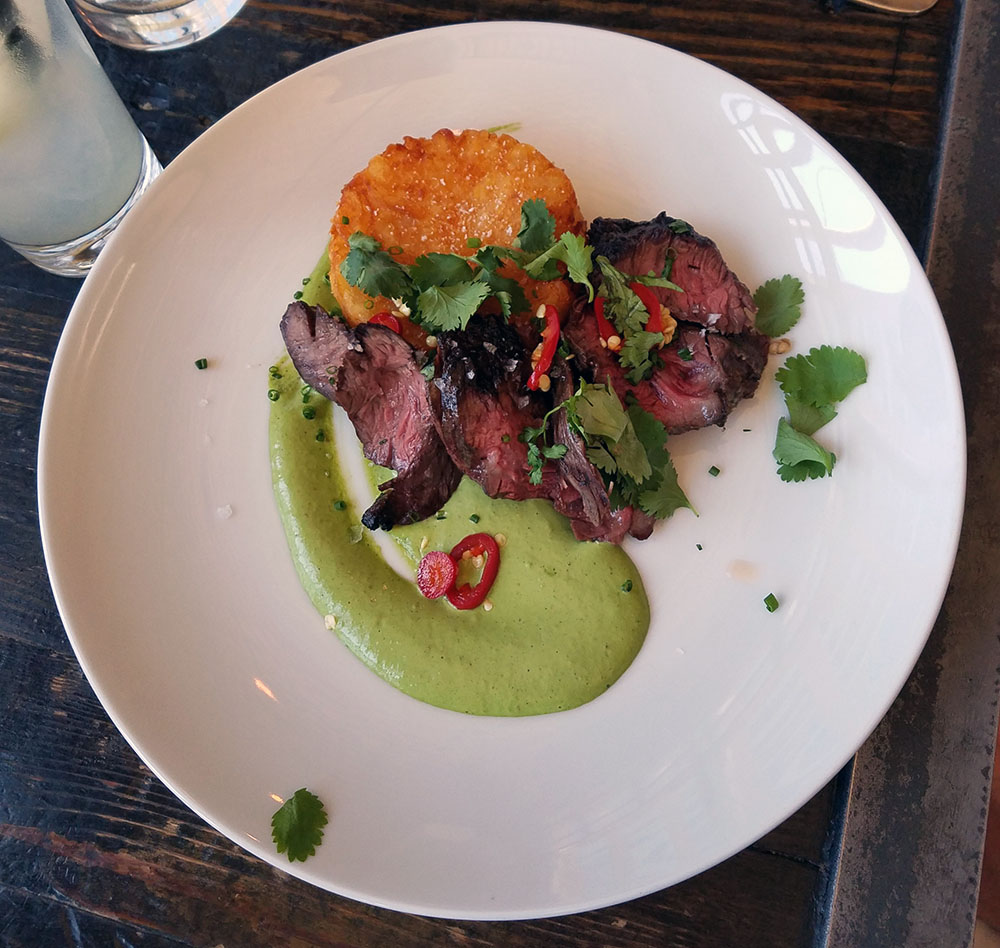
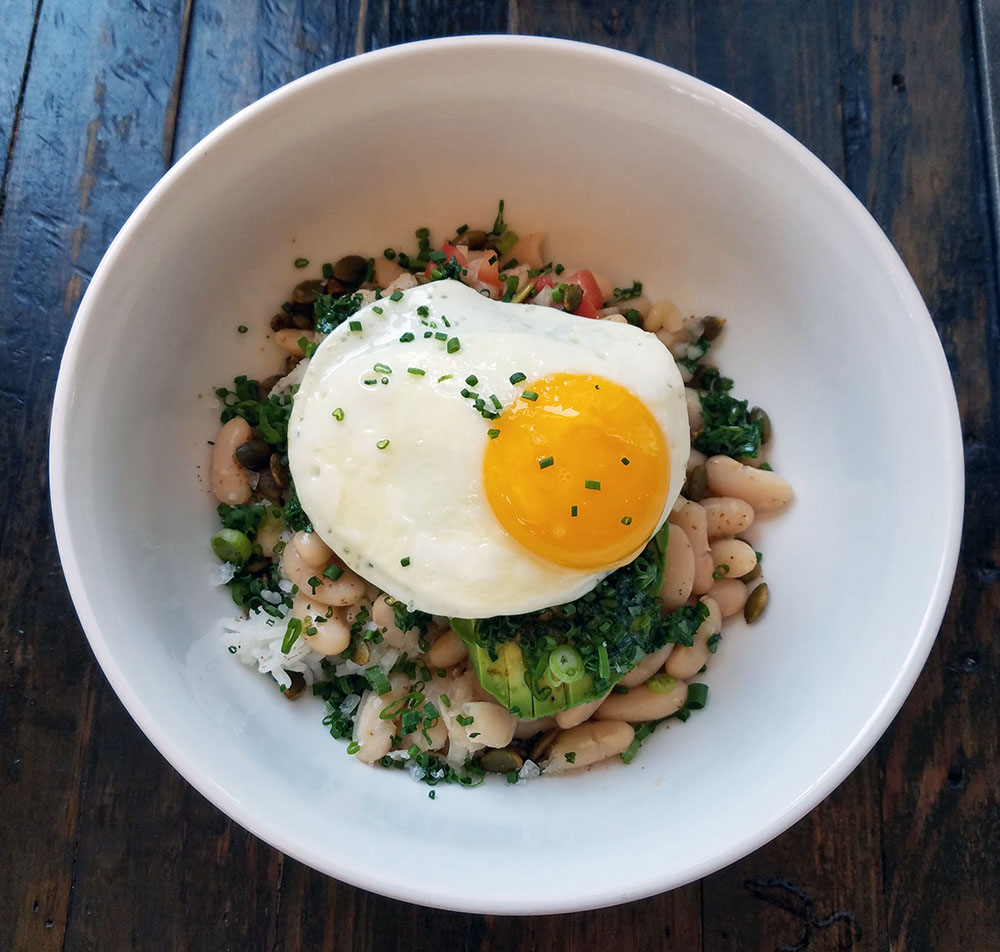
The weekend daytime menu at La Sirena is a mix of sweet and savory, brunch and lunch. On the brunch side of things you can get their take on Eggs Benedict, with soft shell crab and Brazilian malagueta peppers ($18) or chilaquiles with plantains and salsa verde ($15). For those going more savory, you can get a grilled hanger steak with a fried yucca “tot” ($18) or the “El Che” (a take on the Cuban sandwich – $13) – achiote roasted pork loin with ham, Swiss cheese and pickles. There are also some nice, healthier vegetarian options including the Kale Salad ($9) and the white bean hash with avocado and chimichurri ($15) Among our group we ordered some options from each “type.”
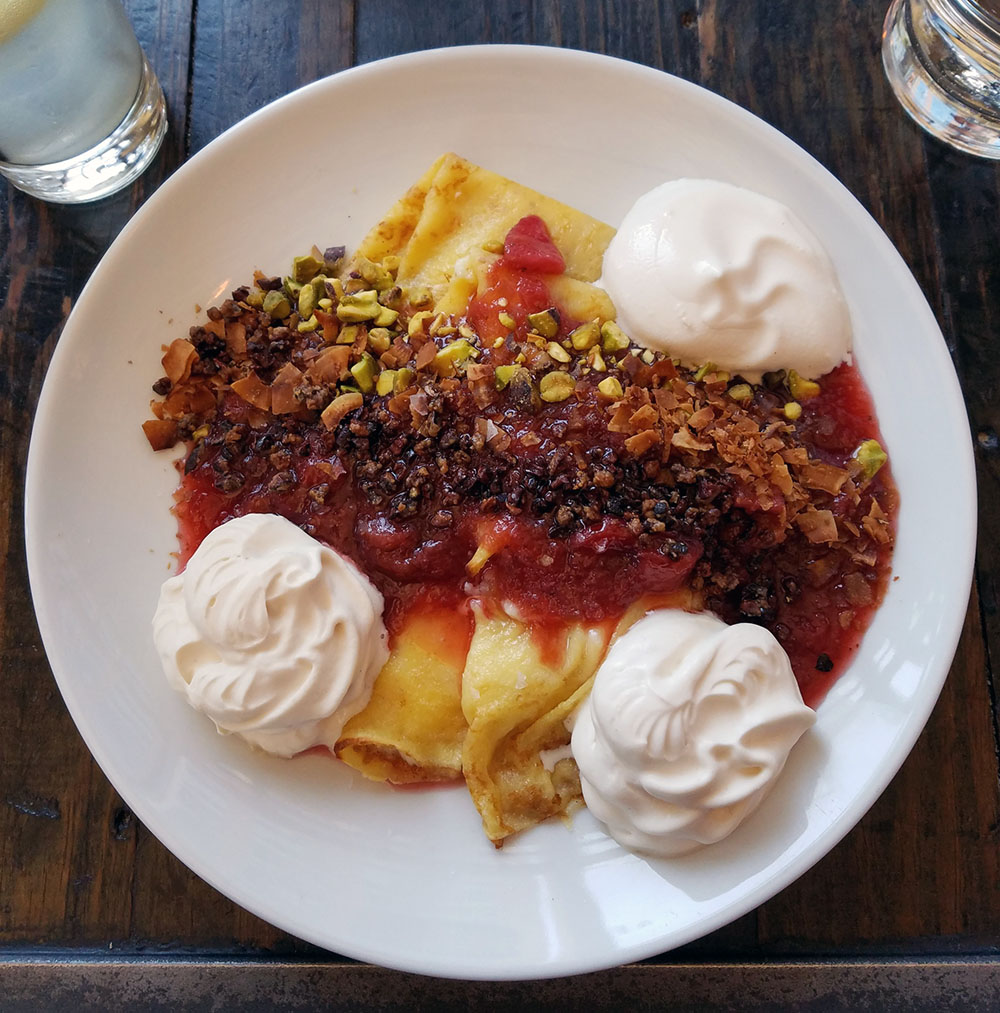
One of our favorites, the hanger steak was perfectly tender and well-accented by the garlicky sauce – we also appreciated the whimsy of the yucca “tater tot.” Another hit was the Tapioca Nordestina ($12) – which was similar to a beachside dish that is popular in Brazil. This consisted of manioc flour crepes stuffed with cream cheese and topped with strawberry and rhubarb compote. This was a combination of flavors we didn’t expect – but worked really well together, and was not too sweet at all.
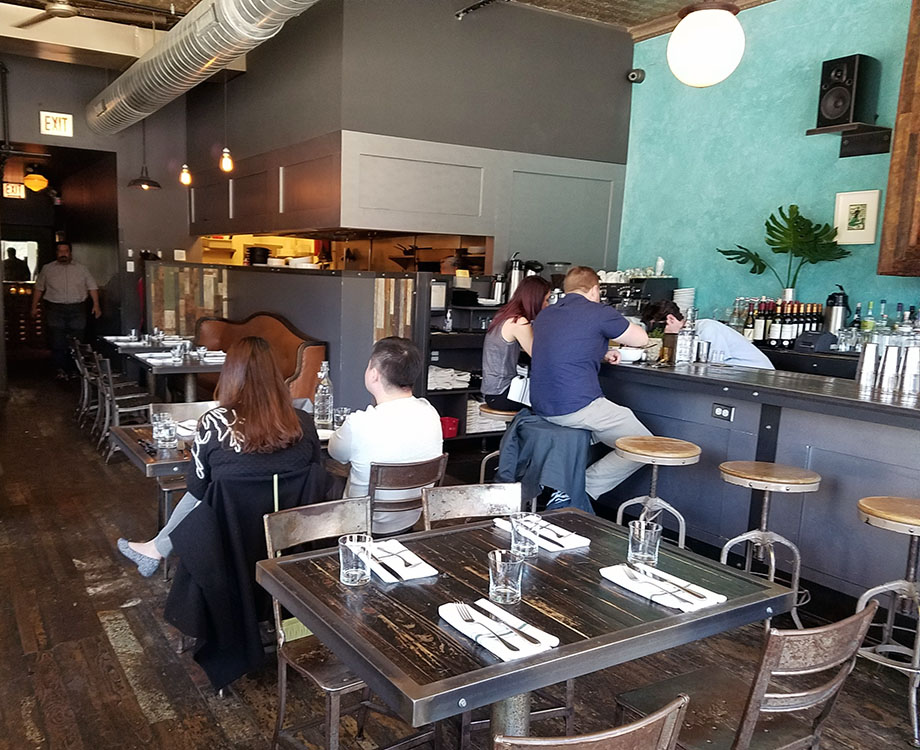
As an added twist on brunch, instead of the typical mimosa, you can get a variety of mixed drinks with Brazilian cachaça, along with aguas frescas (the juice of the day was chamomile lemon) and teas from Rare Tea Cellar. The vibe inside the restaurant is relaxed and casual, with vintage Brazilian tunes playing in the background (think Os Mutantes and Elis Regina). The space is not very big – so reservations are recommended. We highly enjoyed our eclectic brunch at La Sirena Clandestina, and it was a great spot for the pro and anti brunch crowds alike.
When we were in Morocco, one of the daily highlights of our trip was enjoying some mint tea with a side of pastries. The range of Moroccan pastries, cookies and desserts was mind-bending, and every tea time brought new treats. In Marrakesh we first tried one of the most popular desserts in Morocco, M’Hannacha (or M’Hencha). M’Hanncha is made out of a giant spiral of almond and orange water paste wrapped in phyllo dough, and is also known as snake or serpent cake due to its coiled appearance. You can try to make your own version with recipes for M’Hanncha from Epicurious, Spice Traveller and Food52.
We are so happy to hear about stories of immigrants using food to make connections and find success in their new homes. We previously featured Honeydoe catering in Chicago, and we just learned of another successful venture by Syrian refugees in Hamilton, Ontario, Karam Kitchen. Karam Kitchen is run by Syrian female chefs Rawa’a Aloliwi, Dalal Al Zoubi, and Manahel Al Shareef, and two American/Canadian women, Brittani Farrington and Kim Kralt, who run the logistics of the business. Karam Kitchen was kicked off by a successful Kickstarter campaign in 2016, and is now up and running and taking catering orders (and recently ran a second Kickstarter to get a delivery van). Saveur has a great feature about the start of Karam Kitchen and People of Hamilton focuses on the women involved in the project. Karam means generosity, and you can definitely see the generosity in the amazing spreads of Syrian foods that Karam Kitchen prepares.
Welcome to Eating the World! We’re two Midwestern omnivores, L and M, who are trying to eat food from every country in the world (at restaurants in both the US and abroad). Eating the World is where we update our global restaurant and food adventures. We are based in Cleveland, Chicago and beyond. To contact us for questions, partnerships, or just to say hi, email us at eatingtheworld (at) gmail

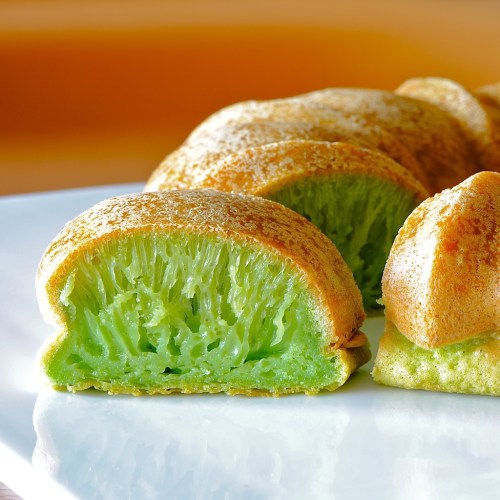
 When we first happened upon a picture of this cake, we couldn’t believe it was real. Was it a fruit? Gelatin? Turns out that this striking, otherworldly concoction is Vietnamese Pandan Honeycomb cake. Pandan – a flavor not often seen in American baking – is a tropical plant from Southeast Asia with edible leaves that impart the flavor and green color to this unusual cake. You can find pandan extract in many larger SE Asian groceries or online. The main base ingredient of this cake is tapioca flour, which leaves a chewy texture in the middle, much like pão de queijo. Julesfood, Danang Cuisine, and Runaway Rice have similar recipes for Pandan honeycomb cake. The Spice of Life takes it one step further, and uses whole pandan leaves to supplement the flavor of the pandan extract, and while it seems a little difficult, the payoff is big!
 Today is
 Even since M first visited Peru in 2004 he has been on the hunt for the perfect ceviche. Even when we are not looking, sometimes a place specializing in ceviche will present itself. When we arrived in Lisbon we had heard a lot of buzz around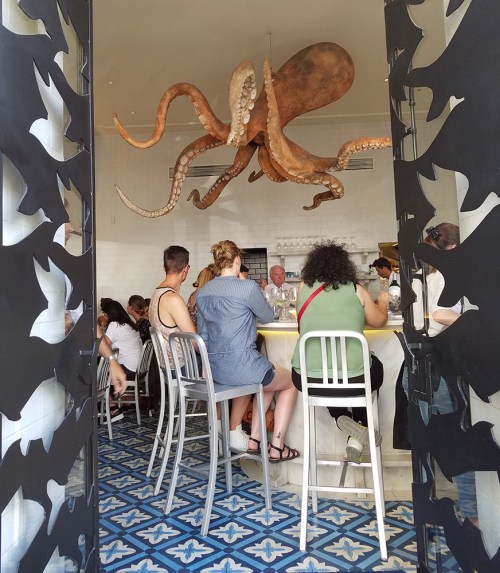
 Would you believe it if I told you there was a pepper unique to Chicago? No, I’m not talking about the ubiquitous sport peppers on a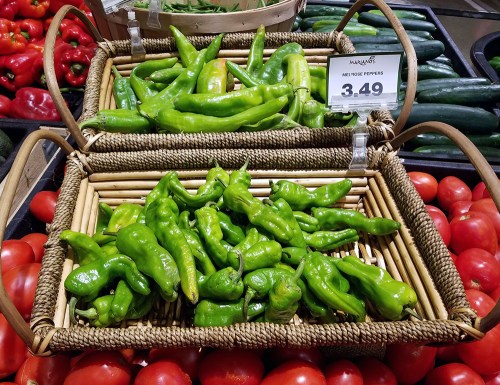
 The call is coming from inside the house! This may be the first time that I have written a post about a place from inside the place itself, so here I am sitting in
  In Scandinavia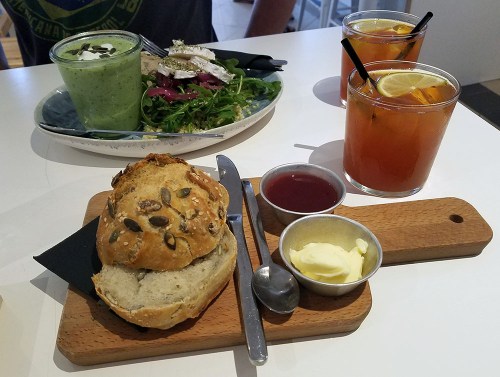


 At the start of our latest trip we lamented openly the lack of gelato in Lisbon, but little did we know that, since our last trip in 2015, there had been something of a gelato renaissance in Lisbon. We’re talking about Italian-style gelato here, not ice cream (though Lisbon has that too, the most famous ice cream maker being Santini) Now gelato shops seem to be popping up everywhere (especially anywhere tourists happen to be) but most of it is just meh. But never fear, there are now some great places to get gelato in Lisbon, too.

 Crisfama is on a backstreet on the outskirts of Alfama, the medieval quarter of Lisbon. It is a little bit of a trek to get there, but getting off the tourist track when it comes to food is definitely a good thing. The restaurant has only a handful of tables in the simple, clean dining room, so it is absolutely essential to
 In the mood we for seafood, we ordered sea bass, tuna, dourada and the ultimate Portuguese classic, grilled sardines (€8.5 for each seafood plate). Each came with a side of potatoes and green beans, and the sardines came with a side salad. Each fish was cooked perfectly to order, and this was some of the best, freshest fish we have had in Portugal – everything was absolutely delicious. And as you can see, they didn’t skimp on portions. To wash down your meal, each glass of house wine is only €1.
 For dessert there is a refrigerator case with an appealing variety of cakes, tarts and semifreddos. We heard that the chocolate orange semifreddo was sublime – so we ordered two – and it lived up to the hype and was basically the perfect treat for a hot summer day. From start to finish, we enjoyed the attention to detail at Chisfama, and it was definitely the best traditional Portuguese food we have had in Lisbon. With great prices and great quality for classic Portuguese food – you won’t find a better deal in Lisbon.
 Queijinho do Céu (pictured below –
  Cericá / Sericaia (
 Pão de Rala (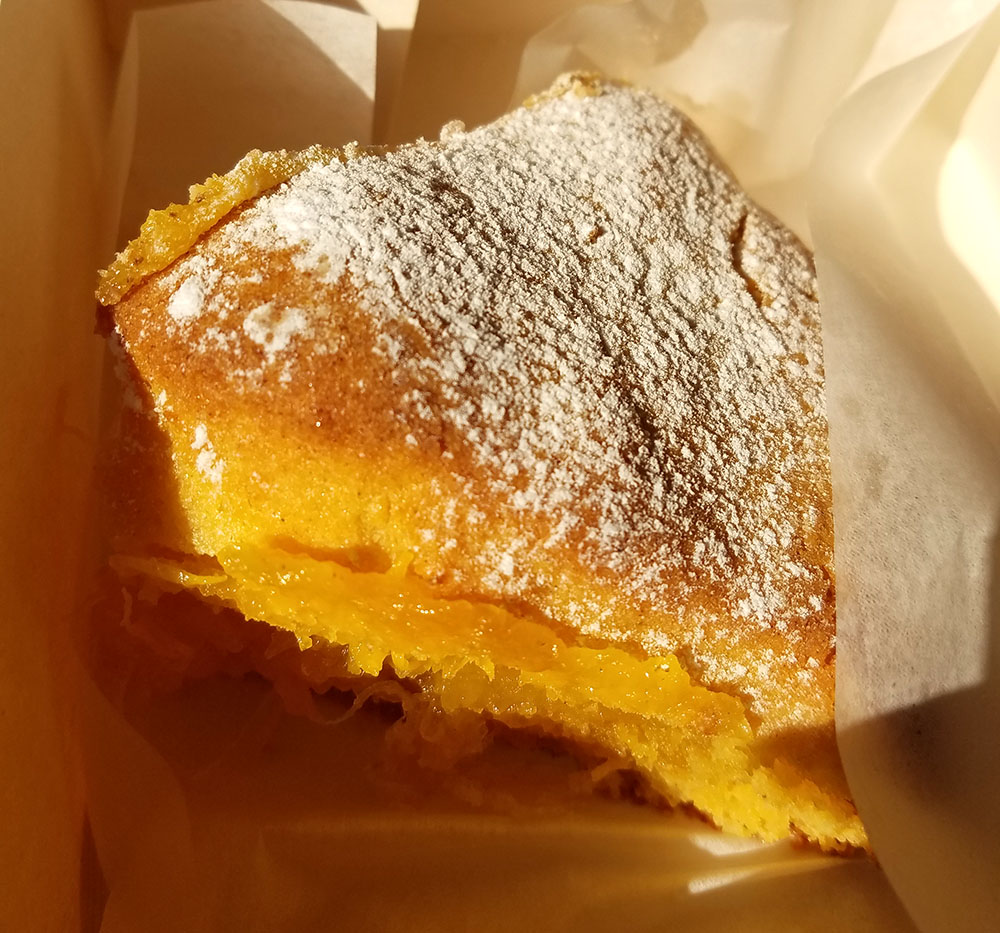


 One of the most interesting things about the Lisbon food scene is the proliferation of restaurants with foods from former Portuguese colonies. Brazilian, Angolan, Cape Verdean and Goan foods and restaurants abound in the city. When we were showing some friends around town, we wanted to find a place that would give them a taste of food from around the Lusophone world. We stumbled upon Mesa Kreol (Arco Portas do Mar, 1100-035 Lisboa). Mesa Kreol gives you that around-the-world trip by offering only the most iconic dishes from several former Portuguese colonies, all with a contemporary twist.
 Mesa Kreol is located at the foot of Alfama, the old quarter of Lisbon, which is perhaps more known for its fado music and small restaurants serving grilled fish. The restaurant is clean in tidy, and only foreigners were eating at the absurdly early hour of 7 PM (like 4 PM in the US), though the restaurants seems to be popular with a mix of locals and visitors alike. The menu was brief, and was divided into starters, meat and fish. For starters we had to sample the strawberry gazpacho, not traditional at all, but spicy, delicious and refreshing. Other starter options included an octopus escabeche or linguiça sausage with goat cheese. For mains we went with the more traditional dishes, Moamba from Angola, Caldo de Mancarra from Guinea-Bissau and Brazilian shrimp Moqueca. Other national dishes included the cachupa bean stew from Cape Verde. Less traditional offerings included the tuna steak, Mozambican shrimp, and a Moroccan tajine.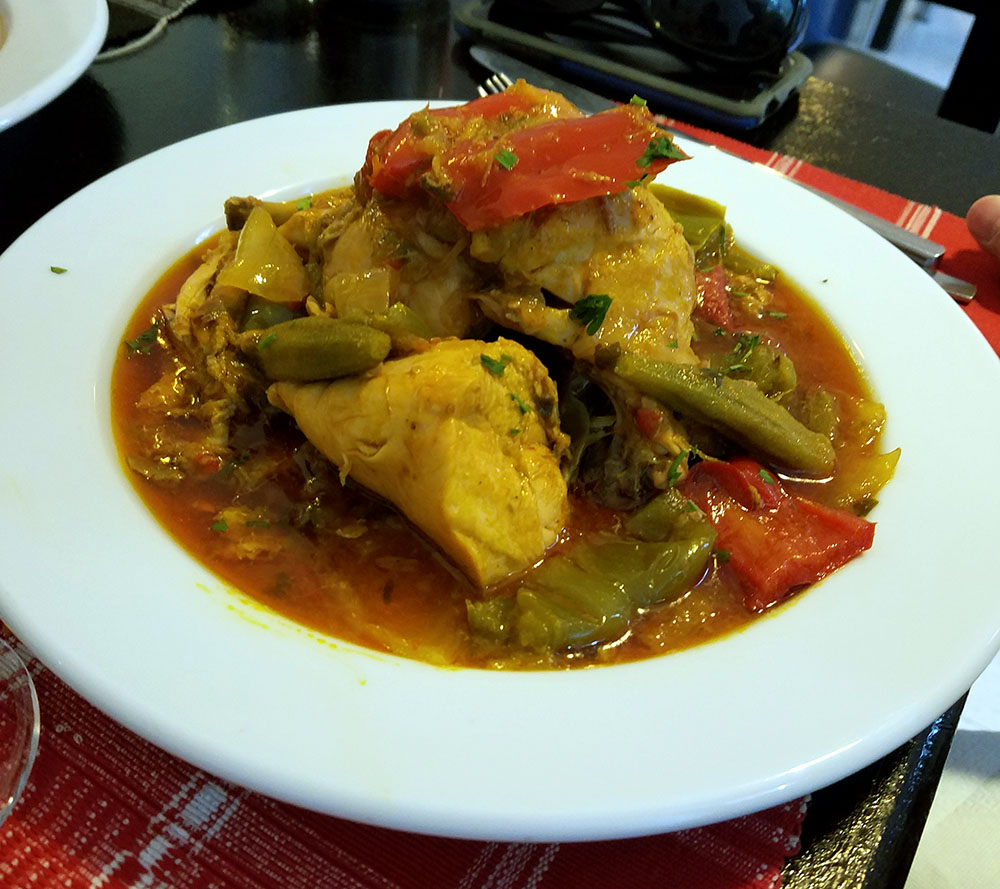

 On our recent visit we stayed in the charming Barcelona neighborhood of
  True to Japanese Kakigori style, the ice was shaved off a rotating cylinder by hand –

 Though cookouts in Portugal usually include fish, if you are planning to do an American-style 4th of July cookout, most fresh meats, fruits and veggies should be readily available. However, we have also found a resource to get the esoteric-to-Portugal ingredients you may need – the “American store.” Yes in Portugal, there is a such a thing as an American store –
 When we went to Spain we were expecting to get our fill of tapas, but one thing we were not expecting were the proliferation of tea salons! We are major tea lovers here at ETW, so we were delighted to learn about a genre of tea rooms found only in Andalusia:


 Today, May 22, is Victoria Day, a holiday to
 When we first saw a picture of


 When we were in Morocco, one of the daily highlights of our trip was enjoying some mint tea with a side of pastries. The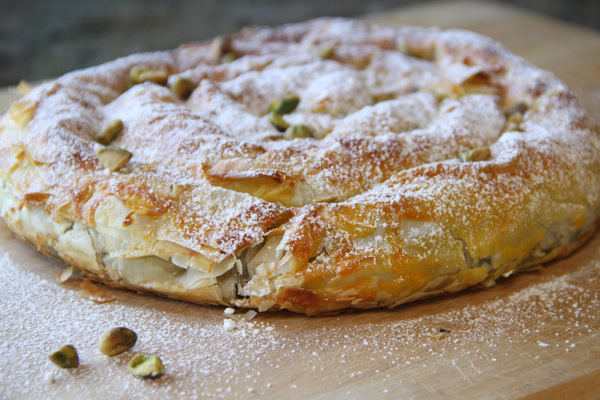




 Eating The World