

 We cover a lot of international holidays and festivals on ETW, but that got us thinking, in every other country American holidays are international. So what kind of recommendations would those in other countries give to celebrate the American holidays (if we could find such sites)? We did some scouting, and came up with some international, specifically UK, sites that had recipes to celebrate July 4th at home. We noticed a trend toward BBQ, which makes sense given the cookout tradition of the 4th. The Good Food Channel in the UK suggested Cherry Pie and Pork Ribs. The BBC went even more BBQ heavy with pulled pork and a few varieties of ribs. It’s interesting to see some of the other recipes the BBC has in the “American” section, like fluffy American pancakes.
American Independence Day…in the UK
Filed under Holidays, Links, World Eats
Dondurma (Turkish Ice Cream) on a Hot Day
 On a hot summer’s day there is nothing better than some ice cream, and given this current heat wave (seems like Brazil in Chicago here today with the humidity) we could use a LOT of ice cream. One of our favorite ice cream permutations is Dondurma, a stretchy and pliable ice cream from Turkey. Dondurma has a texture unlike any commerical American ice cream (almost like taffy), and is flavored with mastic and thickened with salep, a type of flour made from orchids. If you have an ice cream maker, here is a recipe for DIY dondurma. However, part of the fun of dondurma is watching the dondurma sellers prepare the ice cream – we saw them all over Istanbul – check out the video of a seller below.
Filed under World Eats
Origin of the Taco

Chorizo Taco from Carniceria Guadalajara in Chicago
 They may be wildly popular in Mexico, the US and…pretty much everywhere else, but what is the exact origin of the taco? We can assume they are from Mexico, but what beyond that? Though somewhat shrouded in mystery, this Smithsonian Magazine interview with Mexican food expert Jeffrey M. Pilcher, professor of history at the University of Minnesota, talks about the history of the taco.
The origins of the taco are really unknown. My theory is that it dates from the 18th century and the silver mines in Mexico, because in those mines the word “taco” referred to the little charges they would use to excavate the ore. These were pieces of paper that they would wrap around gunpowder and insert into the holes they carved in the rock face. When you think about it, a chicken taquito with a good hot sauce is really a lot like a stick of dynamite. The first references [to the taco] in any sort of archive or dictionary come from the end of the 19th century. And one of the first types of tacos described is called tacos de minero—miner’s tacos. So the taco is not necessarily this age-old cultural expression; it’s not a food that goes back to time immemorial. [Read more here].
Filed under World Eats
A guide to street food in Sicily
 After our visit to Next Sicily we have Sicily on the brain. We visited the real Sicily last fall on our honeymoon, and we loved the food there (no surprise). What we especially loved was the abundance of cheap, tasty street food. Palermo in particular is a street food mecca – with fast and delicious morsels being sold from stands or tiny storefronts on almost all corners. When we were headed to Palermo we shortlisted a few types of street food we had to try while there, and fortunately we were not disappointed. We set out right away to start sampling street food, and made a beeline to the markets, where street food is king. Below are the favorite street foods we sampled (and one even we were not brave enough to try). So let’s go to Palermo….

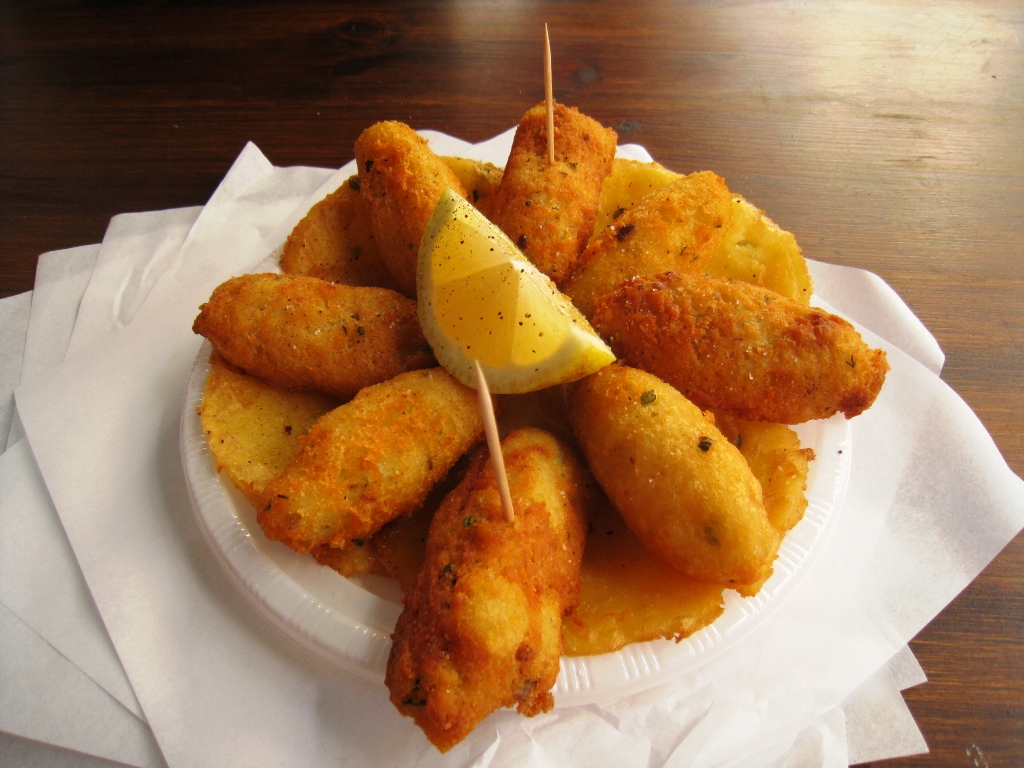
Panelle – Panelle is a riff on a falafel – and is composed of chickpea flour fried up on a hot griddle. It is then served in a pita or eaten alone. One wouldn’t think that this carby concoction would work, but it is actually quite delicious (fans of falafel will approve). We had some handmade Panelle griddled up for us at the bustling Ballarò market, a cool food market with a lot of awesome African stalls.
Crocchè – We dodn’t even realize our Panelle would be coming with a special topping – crocchè- a little fritter made of mashed potatoes and parsley. Think of them as the most delicious tater tots you will ever have. The crocchè are the top layer of the snack below, and panelle is the bottom layer. Don’t forget to add a squeeze of lemon to help cut through all of the starch.
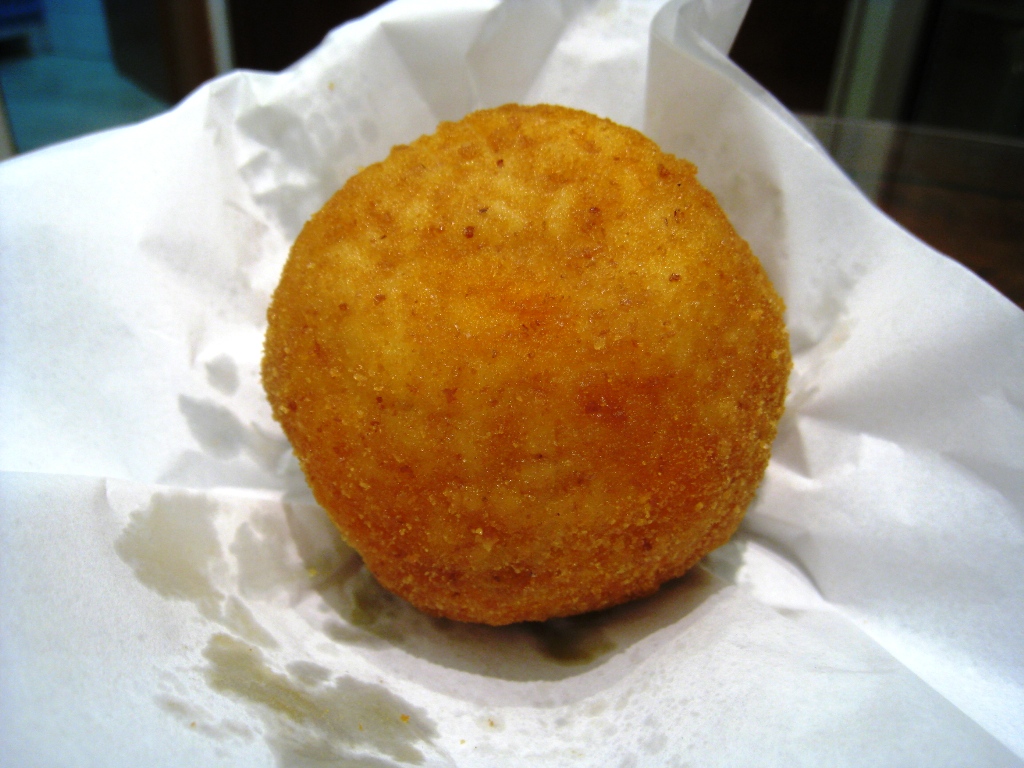
Arancini – The humble arancine is basically a fried dough ball filled with cheese and meat. However, the beauty of the arancine lies in its proper execution. If done wrong, an arancine is a gelatinous mealy blob that settles into a leaden ball in the pit of your stomach. Yes, we’ve had a few of those. However – when done right – the arancine is a warm gooey mess that does not leave you feeling like you ate a cannonball. Let’s just say – we had both varieties for Arancini on our Sicilian adventure. Arancine were found in pretty much every snack shop in Palermo, and one, Bar Touring, even specializes in giant arancini.
Pane cà meusa – Pane cà meusa is for braver stomachs than ours, and this street food dish consists of boiled calf spleen served in a roll. When happening across a pane cà meusa stall, you will usually find a hot bubbling cauldron of spleen. While its sheer popularity leads us to believe it is probably decently good, we would much rather take gelato in a brioche, thanks.
Gelato con Brioche – Saving the best for last, Gelato con Brioche is perhaps the most epic street food we have ever encountered in all of our travels. It is exactly what it sounds like, amazing gelato stuffed in a split brioche roll. Think of it as an ice cream cone carried to its next logical extreme. The first gelato in brioche we had even helped us get over the gruesome sites at the Convento dos Capuccinos in Palermo.

Filed under World Eats
We eat the menu at Mercat a la Planxa
Mercat a la Planxa
638 S. Michigan Ave.
Chicago, IL

One of the best things about tapas restaurants is the huge variety of food options, however, it is also the worst things since there is never any way to try all of the enticing options. So when we had the occasion to go out in a group of four we figured a tapas restaurant would be perfect, thereby upping everyone’s chances of enjoying as many dishes as possible. Mercat a la Planxa, helmed by Jose Garces, has been open since 2008, and specializes in Barcelona-style tapas. The menu changes frequently and has a rotating selection of traditional and more avant-garde tapas, as well as fish and meats “a la planxa” (“grilled”). We went to Mercat with quite an appetite, so we were excited to sample the extensive tapas menu. You’ll find what we had below, along with menu descriptions. As you might notice, all of the dishes have Catalan names – very Barcelona!
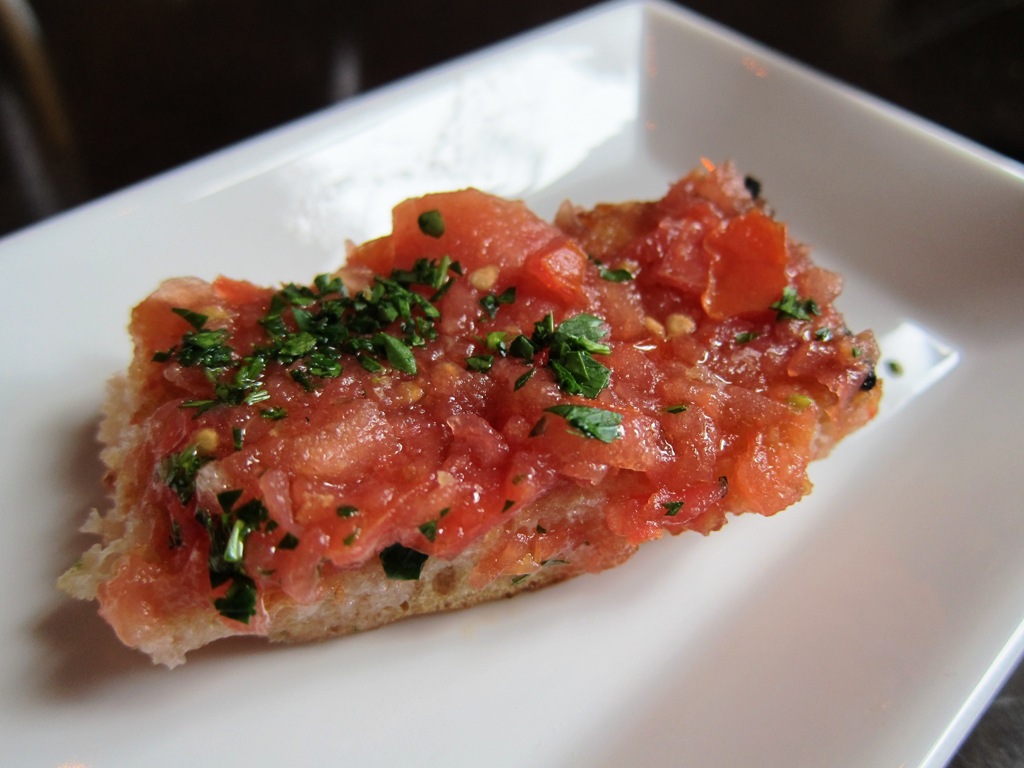
At the start of the meal we were presented with the house Pa amb tomàquet, a kind of riff on bruschetta. Typically, Pa amb tomàquet is typically a lot lighter on tomato, but we liked this non-traditional take as well. Next, we picked from the Spanish cheese selections, and tried La Peral, a Cow’s Milk Cheese with Apricot-Cider Mustard ($9) and Garrotxa, a Goat’s Milk cheese, roasted garlic dulce de leche ($8). Garrotxa is one of our favorite cheeses, and it paired perfectly with the dulce de leche, the Peral was good, but less memorable. Next, we had an order of Gambas al ajillo – Garlic Shrimp ($10) – a classic tapas dish, perfectly executed, though the portion was a little small.
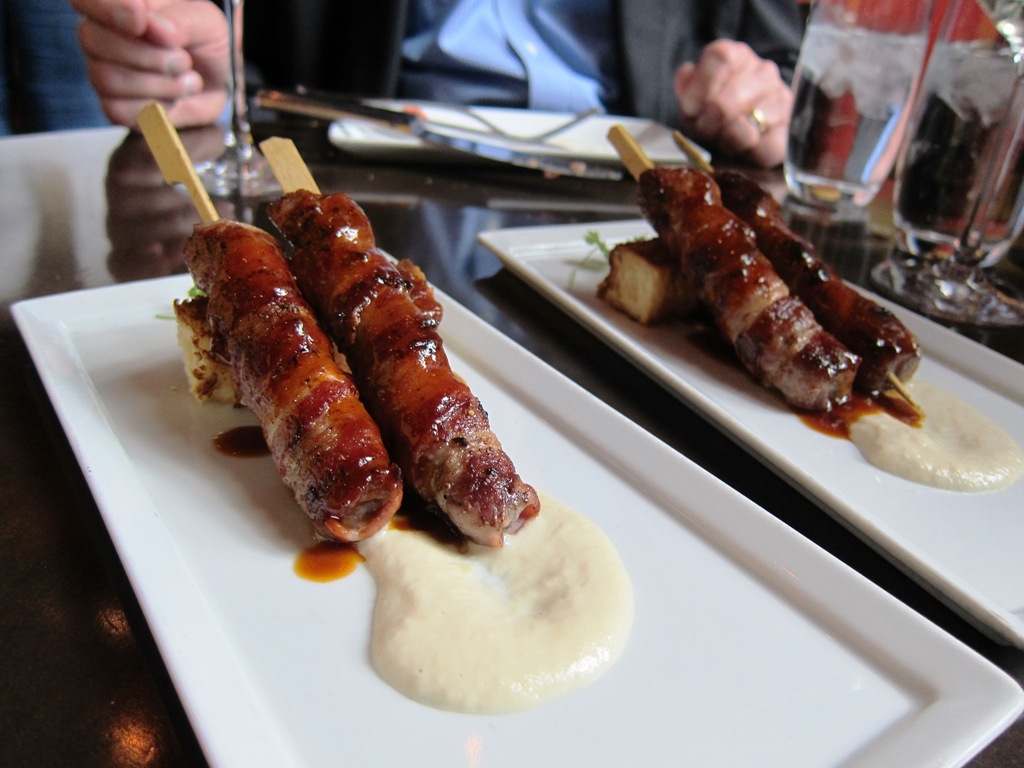
Pintxos Muranos – Lamb brochettes wrapped in bacon with a lamb jus ($14). Another classic tapas dish, this one was M’s favorite, which was not surprising, given the wrapped in bacon. Since the brochettes were served on skewers, they were a little hard to share, so the two non-bacon lovers ceded their portions.
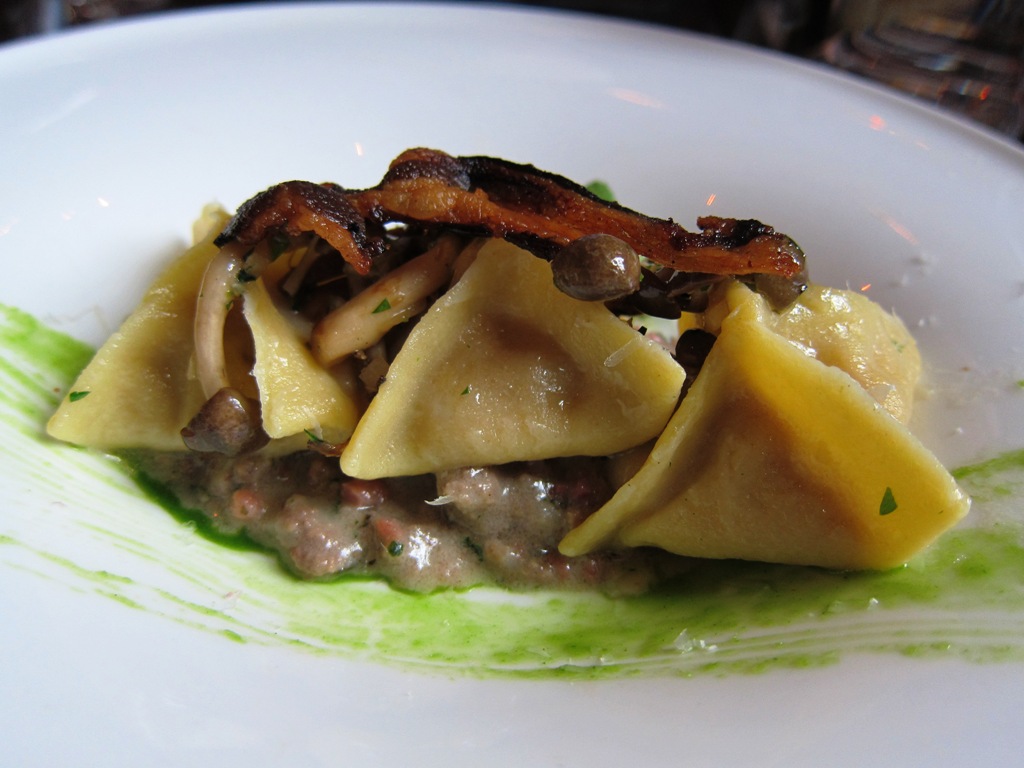
Next were the Pelotas de calabaza y cordero, Butternut squash dumplings, lamb ragout, beech mushroom escabeche and black truffle ($11). What looks like fried bacon in the photo above was in fact mushroom, which had an amazingly earthy flavor. The dumplings were more like squash-filled ravioli, and were tasty, though the lamb ragout definitely stole the show.
Black Angus Rib Eye – 12 oz. ($42). The steak was good, but probably nothing we would really get again at a tapas restaurant, good for the two major carnivores at the table, though. Looks like we forgot to get a photo…oops.

Mar i Muntanya (“Sea and mountain”)- Serrano-wrapped yellow fin tuna, potato croquette, foie gras torchon, pickled pearl onion. The yellowfin tuna was wonderful, but we’re not sure it needed the foie gras on top, maybe we aren’t just big foie fans though. The pickled pearl onions provided an unexpected tangy zip, and the potato croquettes were both substantial and flavorful. We also appreciated the beautiful presentation.

Gratin de Escalivada (“Grilled Gratin”) – Oven baked roasted red peppers, tomato, eggplant & cipolini onions with goat cheese and grilled sourdough ($10). There needed to be more goat cheese with this dish (as with any dish), the grilled veggies were fine, but nothing to write home about on their own.
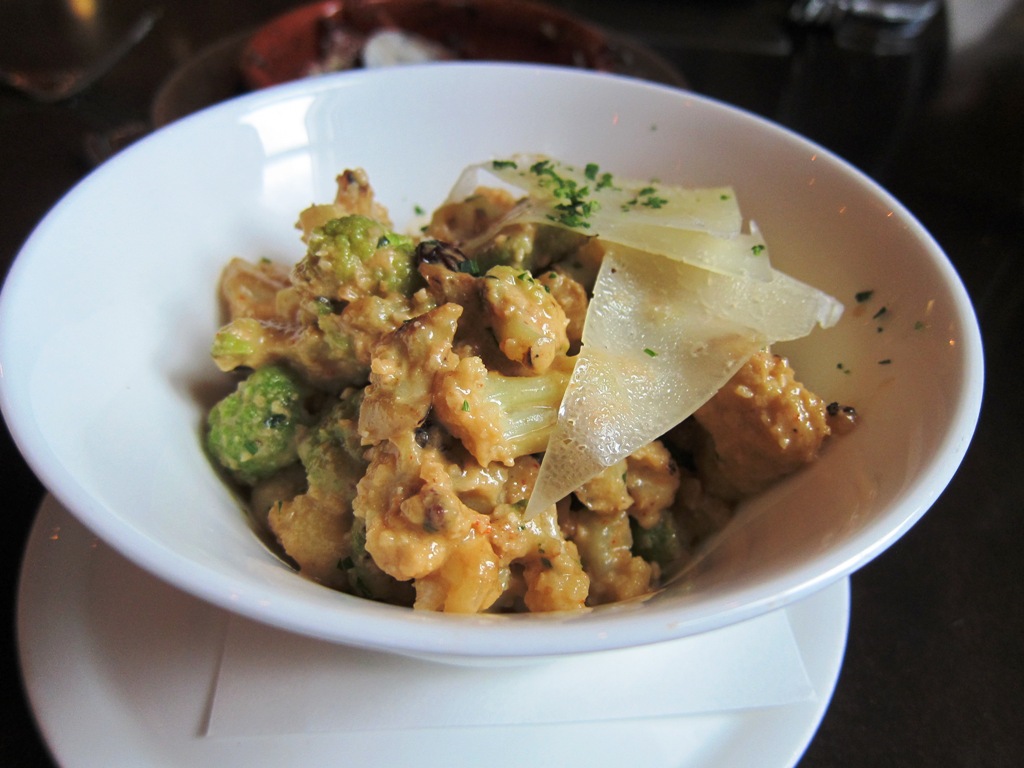
Coliflor amb Xato – Roasted cauliflower with currants, padron peppers, truffled tarragon xato and shaved manchego cheese ($13). Despite never ordering cauliflower out on a regular basis, we found this take on caulifower was unexpectedly delicious, and perfectly complemented by the spicy xato sauce (Xató sauce is made with nuts, vinegar, garlic and nyora pepper). This was L’s pick out of the tapas we ordered.

Patatas Bravas – Spicy potatoes with spicy paprika aoili ($5). This is an item we always have to order at a tapas joint. As you can see from the presentation above, this is more of an avant-garde take than the usual haphazard potato cubes, with each potato being formed into a little fried cake, topped with a dollop of spicy sauce.

Plantain empanada – Spinach, Manchego & Piquillo artichoke escabeshe ($10). Though it arrived with our savory foods, the empanada provided a hint of plantain sweetness. The piquillo pepper was a nice contrast to the somewhat-rich empanada.

Horchata Bon Bon – Horchata ice cream, dark chocolate, cinnamon, puffed rice, coconut crema and marcona brittle ($3.50). The bon bon was filled with ice cream – and the combination of flavors was absolutely perfect! The Spanish horchata flavor (made from Tiger nuts) was rich and almond-y, and worked perfectly with the cinnamon and coconut flavors. The marcona almond brittle was also a nice touch.

Our final dessert was the Pastissos d’Avellana (“Hazelnut Cake” – sounds better in catalan, no?) Hazelnut Mascarpone gateux, apricot, dulce de leche, salted hazelnuts, apricot sorbet ($12). This was a very successful take on cheesecake, with a rich hazelnut flavor. The apricot sorbet was also delicious, and tasted exactly like biting into a fresh apricot.
We enjoyed Mercat a la Planxa, and we were happy to try both the traditional and nouveau tapas dishes. We think the new takes on tapas were really Garces’ forte, and our favorite dishes were the more unusual ones. We were pleased with our choices – but there was one item we really were coveting – we noticed a party table next to us getting a suckling pig (cochinillo asado), which looked absolutely fantastic ($220 for half, $440 for a whole). However, you have to order the pig 72 hours in advance, so you can’t order it on the fly. Maybe next time… thanks also to our dining companions, who helped us sample this veritable feast!
Filed under Reviews
Rick Bayless Teaches Us To Make Guacamole

“Everything is better with bacon.” – Rick Bayless
We were lucky enough to catch Chicago’s own Rick Bayless at a cooking demonstration during the Printer’s Row Lit Fest a few weeks ago. Originally we had considered not even going – too hot, too crowded, we thought – but were shocked when we arrived just a few minutes early to find a few open seats. Stay we did, and we are glad, because over the next fifteen minutes Rick Bayless absolutely blew our minds making a simple bowl of guacamole. Here’s some of his key thoughts, which we have already started incorporating into our home-made guacs:
1. Avocados are amazing. Use Hass avocados – they were bred specifically for guacamole-like uses. They are one of the few fruits that does not ripen on the tree. Amazingly, if picked and left at below 50 degrees, they will never ripen. What this means is that when you buy them at the grocery store they have been pre-refrigerated, and so will not ripen for another 3-5 days. The takeaway: you cannot use an avocado the day you buy it. When buying an avocado, check to make sure the stem is still intact (it will be brown inside otherwise), and afterwards you can store them up to a year in the fridge and they will never go bad. They are ripe when you have left them out for 3-5 days and the top by the stem is squishy.
2. Lime juice and avocado pits: you’re using too much! Leaving avocado pits in the fruit or in guacamole does not help them stay fresh. Neither does adding lime juice. And adding too much of either makes the guacamole taste less like avocado and more like something else. To keep it fresh, only temperature matters. And getting rid of the rumors helps you highlight the other ingredients.
3. Use white onions. They taste better, they are crispier, and it is a sin against cooking to use red or Spanish ones. He said this and he meant it. If you are concerned about them being too overwhelming in the dish, here is how to fix it: Cutting white onions causes chemicals in two different sections of the membrane to interact, producing a kind of sulfuric acid. To stop the reaction, just run them under cold water – this is called “deflaming” the onion in Mexico. It is for this reason…
4. Do not make guacamole in a molcajete! Crushing the onions with the stone mortar and pestle will just re-break the onion membrane and thus ruin all the good washing work you did. Better to make the guacamole in another bowl (mixing it), and then serve it in a molcajete for maximum classiness.
5. Guacamole is largely an American invention, as the USA is largely, as Mr. Bayless put it, “a chip-and-dip culture.” Mexican guacamole is very simple: avocado, garlic, a little lime juice, and perhaps salt and pepper. That’s because it is meant to be used on foods in concert with other accompaniments: fresh cilantro, salsas, etc. When you realize how American guacamole is, you realize that you don’t have to be dependent on stereotypically Mexican ingredients, which brings us to point 6….
6. Avocados are adaptable. They go with sweet, sour, and savory, and do it well. Americans tend to be too limited in how they use avocados, and they tend to not be particularly knowledgeable about the ones they are using. Rick Bayless made a salsa with tomatoes, cilantro, chipotle peppers in adobo sauce, and – wait for it – bacon. (He even held up a piece of bacon and said “everything is better with bacon.”) Another great combination he recommended: watermelon cubs, habaneros, and mint. Mangoes are great as well in guacamole. Most of us don’t think to use these ingredients, but trust us, they are killer.
You’re welcome!
Tasting 1000 Fruits

Mountain Rose Apple by Mighty Girl
We were totally fascinated by the unusual fruits we encountered in Brazil, and we got some great fodder for our “Adventures in Brazilian Produce” series. So naturally we were excited to find out that Mighty Girl is on a mission to go well above and beyond our foray into fruit sampling – her goal is to taste 1000 fruits! You can keep updated on here mission on her blog – she has crossed the 100 fruit mark so far, unearthing some delicious looking finds, like Guinep and Mountain Rose Apple.
Filed under Links
Food for the Festas Juninas / Festa de São João

Festa Junina Dancers by Christoph Diewald
 June is a very important month in Brazil, especially due to the many mid-summer festivals called “Festas Juninas” – celebrating the three saints days of Anthony (June 13th – Santo Antônio), John (June 24th – São João) and Peter (June 29th – São Pedro). Festas Juninas are naturally filled with lots of merriment and delicious food. The events take place in large spaces with festive flags called an arraial, and there are elaborate dances called quadrilhas. The festivals are particularly popular in the Northeast of the country, and one rather humorous tradition is to dress up like a “caipira,” in a costume similar to what those in the US would think of as a “country bumpkin.” Though those outside of Brazil likely won’t be able to get the full Junina experience (though there are some celebrations in the US), there is certainly a lot of food to try. Corn based dishes are particularly popular including pamonha, bolo de fuba and Canjica (or Muzunga). Another popular Junina drink that I imagine would be a stateside hit is Quentão, mulled Cachaça. Peanuts also make an appearance in Festa Junina food, and a recipe for Doce de amendoim (Peanut Bars) can be found on the House of Pinheiro Blog.
Filed under Holidays, World Eats
Our first – and last – visit to Testaccio Market
 We absolutely love Italian markets. From Philadelphia to Siracusa to Rome, there is nothing better than the hustle and bustle of purchasing fresh produce, fish, bread, olive oil, prosciutto, and cheese from knowledgeable folks who have been doing it for years and years. As such, we were a little disappointed when we went to Campo di Fiori market in Rome and found it overrun with stands catering mainly to tourists seeking weird dried spice mixes (“Taco Spice”, “Aphrodisiac Romance Spice,””Pasta Spice” etc.). Not exactly what we wanted.
Yet relief awaits. Just cross the Tiber river, to the Testaccio neighborhood. It’s full of old buildings and quaint cafes, along with beautiful churches tucked into hidden courtyards. Testaccio is also home to one of M’s favorite Roman sites – the Pyramid of Cestius – as well as the nearly 100 year-old Testaccio Market.
Right away we could tell that this place wasn’t designed for tourists. The Testaccio market was the real deal. It makes its home in a partially enclosed structure with huge glass skylights, containing vendors selling any kind of delicious item, from meat to bread to veggies. The market was crowded, even at the afternoon hour, and was full of locals chatting and haggling. We spotted tourists, too, but the market certainly wasn’t geared to tourist tastes. One of our favorite stalls was dedicated completely to tomatoes – manned by a kind Sicilian woman who let us sample a few of tomatoes (you can find a few of the varieties below). We also ended up buying arugula, bread, cheese, and some prosciutto all to make a little picnic in the Borghese Gardens.

Sadly, we recently learned that Testaccio Market will only live in its current state until the end of the month. Parla Food give a particularly bleak outlook for the market’s future: moved to a new building, the new market is ugly, built on a parking garage, and worst of all, will charge nearly double for vendor space. Seasoned vendors will probably close up shop instead of pass the expense onto their regular customers, meaning the market could soon morph into another tourist trap like Campo de Fiori. Sounds like a lose-lose situation. Really, since when are Romans known to visit the marketplace by car? Much like the Maxwell St. Market in Chicago, we are sure something will be lost in the move. RIP Testaccio Market.

Filed under Reviews, World Eats
Great Non-Taco Items at Maxwell Street Market
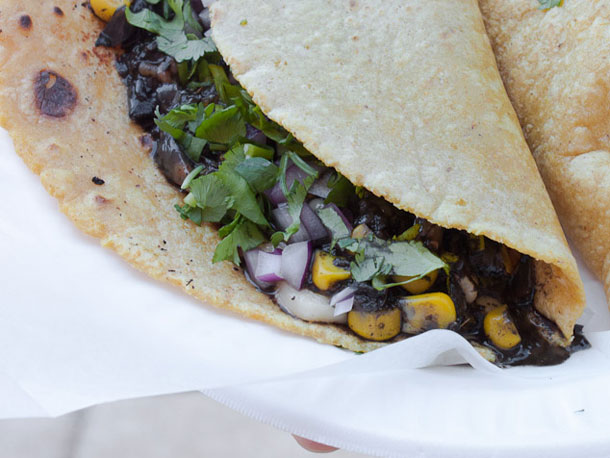
Huitlacoche Quesadilla at Rubi’s – our favorite! (via SeriousEats)
It’s no secret that we love Maxwell Street Market for its awesome array of street food, so we were happy to see this Serious Eats Chicago profile on the some great things to eat at the Market (beyond the taco).
Filed under Links
Panama: Conoce Mi Panama

Conoce Mi Panama
3054 W Armitage Ave
Chicago, IL 60647
Panamanian cuisine, at the crossroads of North and South America, is severely underrepresented in Chicago. In fact, the city had a complete lack of Panamanian cuisine until Conoce Mi Panama opened in Humboldt Park. Conoce Mi Panama is small and homey, and we were welcomed in with open arms right upon entering. Usually we don’t note the service of a restaurant, unless of course it is really abysmal or, really noteworthy. In this case, it was fortunately the latter. We were totally bowled over by the AMAZING owner of Conoce Mi Panama who came by frequently to check on us, how we liked our meal, and just to chat. Members of our party were also excited that Conoce Mi Panama was BYOB, with no corkage fees (noticing a trend – woohoo!).
The menu consisted of all Panamanian favorites, which seemed familiar, but highly distinct from other Caribbean menus. Of all of our dishes, the appetizers turned out to be the standouts. We had an order of yucca fries with a stellar garlic sauce ($3.50) and a citrus-heavy ceviche that was to die for ($9.00). The yucca fries in particular were flawless, who would have thought something so simple could be a standout?

Yuca frita (Fried yucca strips with mojo sauce)
When looking at the menu for entrees, we noted an unusual affinity for cornish game hen. We decided to the half Cornish Hen with a cilantro sauce ($12.75), as well as the chicken with coconut sauce ($12.75). At our table we also ordered the Ropa vieja (shredded steak – $13.75) and Panamanian rice with chicken ($13.75). We enjoyed all of our entrees immensely, but the cornish game hen with the cilantro sauce was a particular standout.
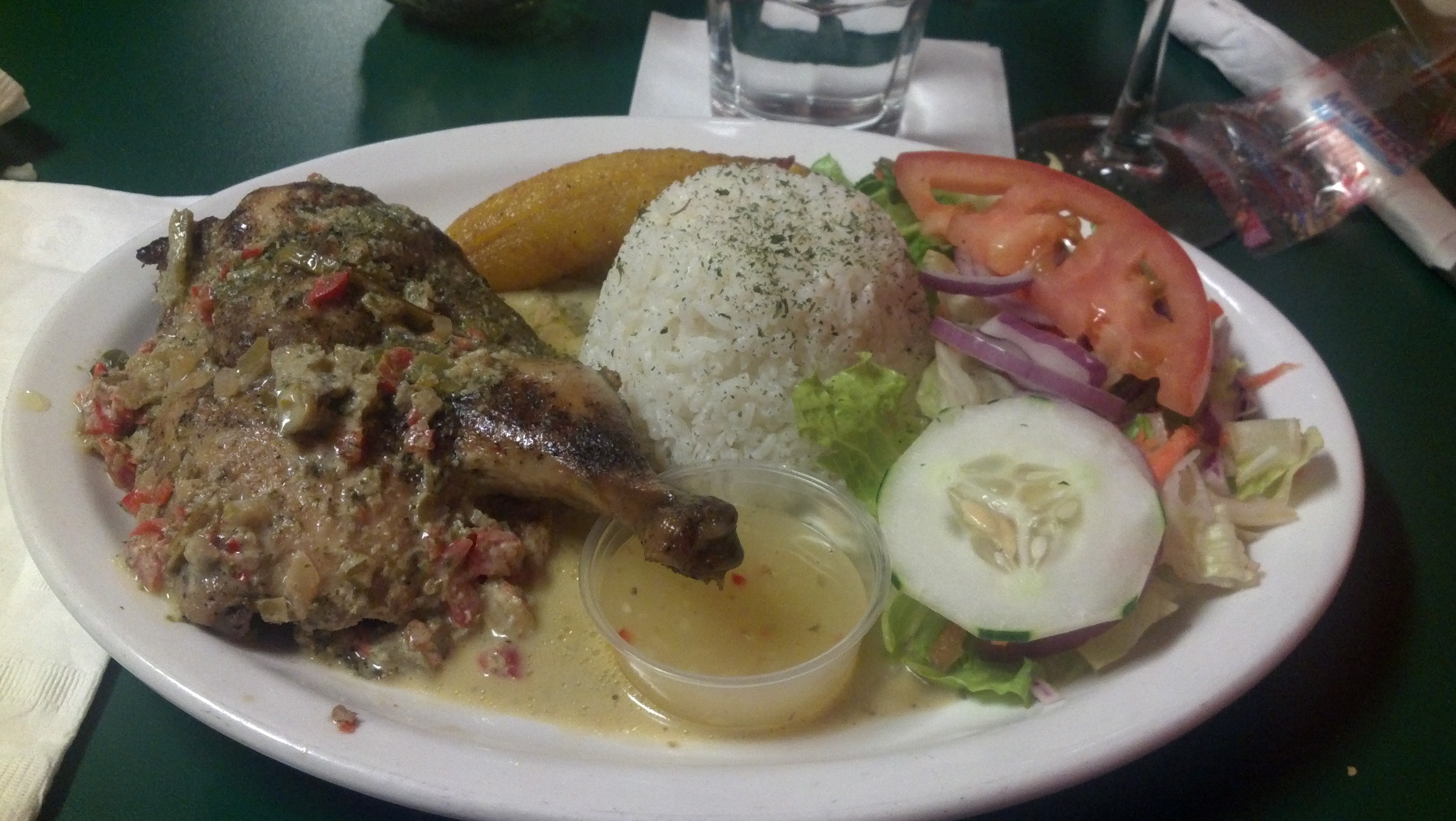
Pollo guisado con coco (Chicken with coconut sauce)
For each entree, there were absolutely huge portions, and each came with sweet fried plantains and a little wilty throwaway salad. The salad didn’t really add much to the meal, so we skipped the salad and went right in for the plantains…they were delicious. For dessert there were sweet fried plantains and vanilla bread pudding (Mamallena) on offer – though we were too full to partake in any sweets. So far, on our first venture, we have to say that we enjoyed Panamanian food, with its mix of Central American and Caribbean flavors. We highly recommend Conoce Mi Panama for its completely friendly and welcoming attitude, and delicious reasonable-priced food.
Kyrgyzstan: Jibek Jolu
Jibek Jolu
5047 N Lincoln Ave
Chicago, IL 60625
 A new country checked off the list! Jibek Jolu has been on our “to try list” for ever (in fact it had even made it on to our hallowed real-life to do list whiteboard), so we were so glad to finally get there and sample Kyrgyz cuisine for the first time. Located in Lincoln Square, Jibek Jolu had a pleasant and bright dining room, with Kyrgyz tapestries on the wall and Russian music videos playing in the corner. Though we went in not knowing much about Kyrgyz cuisine, we were right in assuming it would include both Russian and trans-Soviet specialties. Some were familiar from our previous sojourns to Russian and other former USSR restaurants (Plov, Borscht, Pirojki, etc.), however some were distinctly Kyrgyz, like Beshbarmak ($12.00), a dish of diced, spiced lamb on top of boiled noodles. We started off with the Korean carrot salad ($4) which consisted of shaved carrot and spicy oil dressing, though the jury is still out if it is actually descended from a Korean dish. We also each ordered a plain blinchiki (an absolute steal at $1 apiece) which were amazing – sometimes blini can take on the consistency of doughy lead, but these were light, delicate and fluffy. Not ever having had this sort of blini before, we definitely became converts.
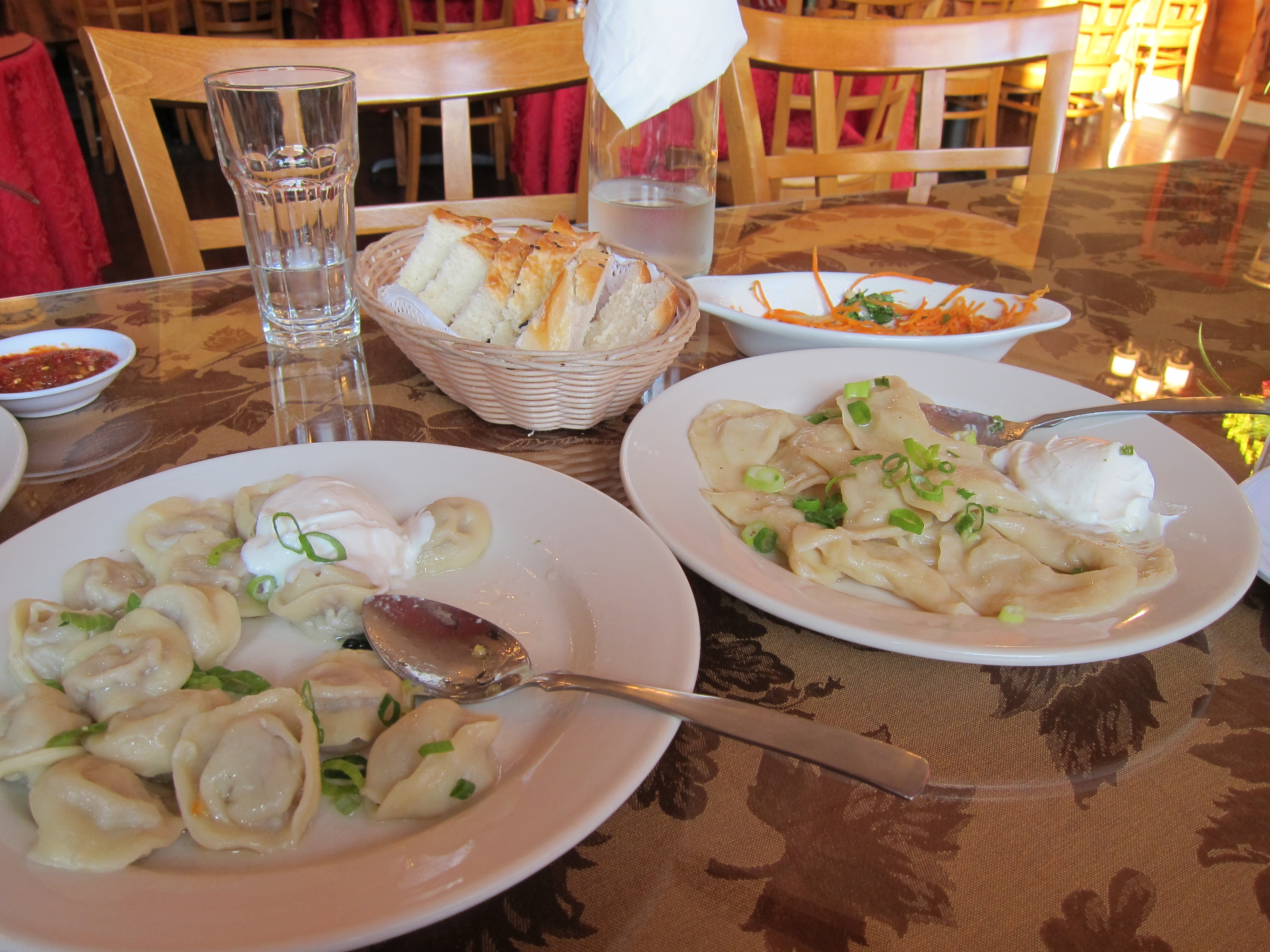
To guide us through our meal, we dined with our Russian friend (M2), an expert on traditional Russian and central Asian cuisine. M ordered the chicken drumsticks, called Okorochka ($7.99). L and M2 ordered Pelmeni ($11) and Vereniki ($8.50). The Pelmeni were stuffed with meat, more properly described as miniature meatballs of ground beef and onion, while the vereniki had a vegetarian potato filling. Naturally, everything was served with a healthy dollop of sour cream. Both of the dumplings were totally delicious and we could tell they were homemade, right down to the dough. The Okorochka presented two well-spiced drumsticks paired with a filling set of sides: mashed potatoes, pickles, corn, a small salad, and a vibrant and flavorful spicy sauce that really made the dish. M2 declared that this was the best Russian food she had sampled in Chicago, putting fancier places like Russian Tea Time to shame. M2 said the food at Jibek Jolu was of better quality, more adventurous, and much less expensive than any other Russian or central Asian restaurant she had been to in the city, and even we non Russians would have to agree.

The service was sweet and friendly, and the restaurant was slowly filled with people speaking Kyrgyz (always the sign of a good place), and even a few grandmothers (so you know it must be good). M also noted a few little details that improved the service for him. For example, the server left a chilled bottle of water at the table (and didn’t keep annoyingly filling it every 5 seconds, a la Girl and Goat). The best touch was giving two napkins: silverware came wrapped in one napkin and then diners are supplied a second, meaning diners have one for their lap and one to clean off their silverware between dishes or bites – a simple, yet brilliant idea, and one we had never seen before! Jibek Jolu is also BYOB, with none of that corkage fee mumbo jumbo. Overall we loved this place, and it is definitely one of the best restaurants we have visited recently. Michelin is already on to Jibek Jolu, and reviewed it very favorably for their 2012 guide – so it seems that this gem won’t be hidden for long.

Filed under Reviews
Next Restaurant Sicily Non-Alcoholic Drink Pairings
As fans and critics alike know, where Next really excels is in its uniqueness, and this boils down even to their drinks. Every restaurant does wine pairings, so Next does one better by also offering some pretty awesome non-alcoholic drink pairings. Next Thailand blew us away with their drink pairings (including of course Cha Yen, which was part of the meal) so we jumped at the chance to try their Sicilian offerings. As usual, Next did not disappoint. For full coverage of the Sicily menu, check out our complete review post. This go-around the Next drink menu included five pairings for $48. Here they are in order, with the names from the official menu.
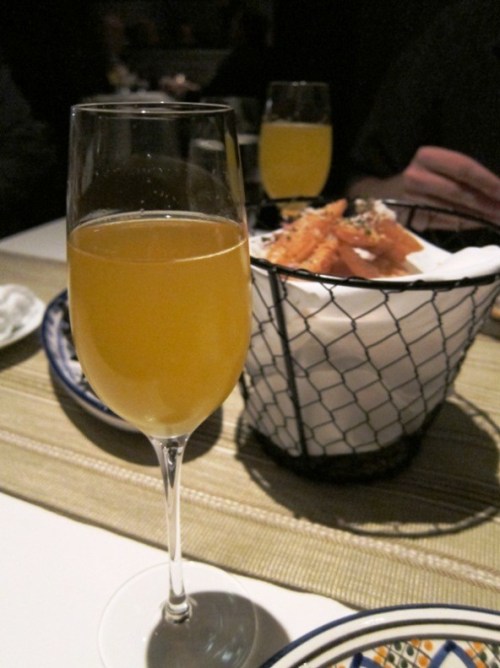
The first drink started out on a fizzy and sweet note, and was brought out with our array of little street foods. In addition to the three ingredients listed on the official menu, the drink also contained Meyer lemon. Fortunately while the drink was sweet, it was not too sweet, and was cut through by the carbonation (done in-house). Of the lot, this was probably M’s least favorite drink (too much carbonation), though L quite enjoyed it.
2. Zucchini and Mount Olympus Flower
The second drink arrived with our first pasta dish. According to our server, Mt. Olympus Tea, rather than just being an ornamental name, is actually a floral herbal tea from the Mediterranean (if it actually is picked off of Mt. Olympus remains to be known). The flower in the tea is Sideritis, and since we enjoyed it so much, we are pleased to find it is available online. We found this tea (served cold) completely delicious and enchanting, with hints of lemon and sage. Despite its billing, we couldn’t really detect any of the zucchini flavor notes. This drink was L’s pick.
3. Green tomato, garlic, white pepper
We deemed this drink the “garden drink” and it is not exaggeration to say it was like a drinkable caprese salad. The server also mentioned celery, garlic and thyme. This drink, not surprisingly, was completely savory and this cognitive dissonance was not quite to L’s liking, but M gladly guzzled the remainder of her drink. Our server noticed this and even brought L some more Mt. Olympus tea (nice work servers). M thought the drink complemented the swordfish quite nicely, and flavor echoed the herbal notes of the mint pesto. Fans of V8 or the like will be pleased by this elegant rendition of a veggie drink.
 4. Fennel verjus rouge, orange
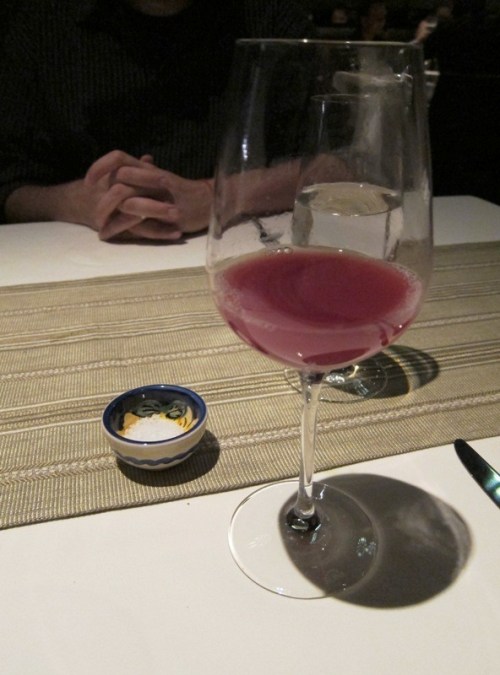
The fennel drink, served with our last entree dish, reminded us of after-dinner digestifs (you know the candy coated fennel seeds, Mukhwas, you sometimes get at Indian restaurants?). This drink, as you can see above, was shockingly magenta. The blood orange probably only amplified the color. Though we might have never thought to combine blood orange and fennel, the result was delicious.
5. Watermelon, white balsamic, pinor noir juice
The final drink was watermelon-pink, served over crushed ice in an old-fashioned glass, the only drink to not come in a wine glass. The primary flavor here – no surprise – was watermelon, though you could definitely taste the acidic kick of the white balsamic vinegar. The pinot noir grape juice was very subtle, and was definitely overwhelmed by the watermelon. We were curious that they chose Pinot Noir grapes since they are typically grown in the Northern part of Italy, not Sicily. The drink, which came with our desserts, was a perfect cool palate-cleanser for the end of the night. As you can see below, we ended up closing the place down!

Next Restaurant: Sicily
Next: Sicily
953 West Fulton Market
Chicago, IL

An ETW exclusive! We are pleased to present the first full review of the NEXT Sicily menu, complete with photos! (Grub Street Chicago posted the menu earlier today, but we got all the pictures). Chef Achatz’s approach to traditional Sicilian fare, nodding to history and time-honored techniques, was surprising given the experimentation for which he is known; but in that relative conservatism was an impressive array of flavors that hit some very, very impressive high notes over the course of the evening. While some of you may remember our tour of the Thailand menu last year, we found Sicily to be overall more interesting and the decidedly better meal of the two. Update: for a description of the non-alcoholic drink pairings check out our complete review post here.
The meal begins with four antipasti, served family style, all at once:

Antipasta 1: Arancine
L, who is Sicilian, declared these arancine to be better than those we had in Sicily, and M would have to agree. Perfectly fried, the rice inside was wonderfully cooked, and the lamb tongue filling braised to perfection. The highlight of this dish was the accompanying caper-tomato sauce, which hit on perfect notes of saltiness and and a mixture of other flavors that made this antipasta one of our favorite dishes of the evening.

Antipasta 2: Carciofi Alle Brace (Grilled Artichokes)
Our understanding has always been that grilled artichokes are more of a Roman dish, but we will give the chefs a pass on this. Lightly seasoned artichokes were grilled over an open flame, leaving the exterior charred and the interior flesh moist and delicious. We were encouraged to peel off the charred bits and suck off the flesh underneath, and M in particular was happy to find the taste of the char was an excellent accompaniment to the artichoke flesh, almost like a dry-rubbed and barbecued artichoke.
Antipasta 3: Caponata
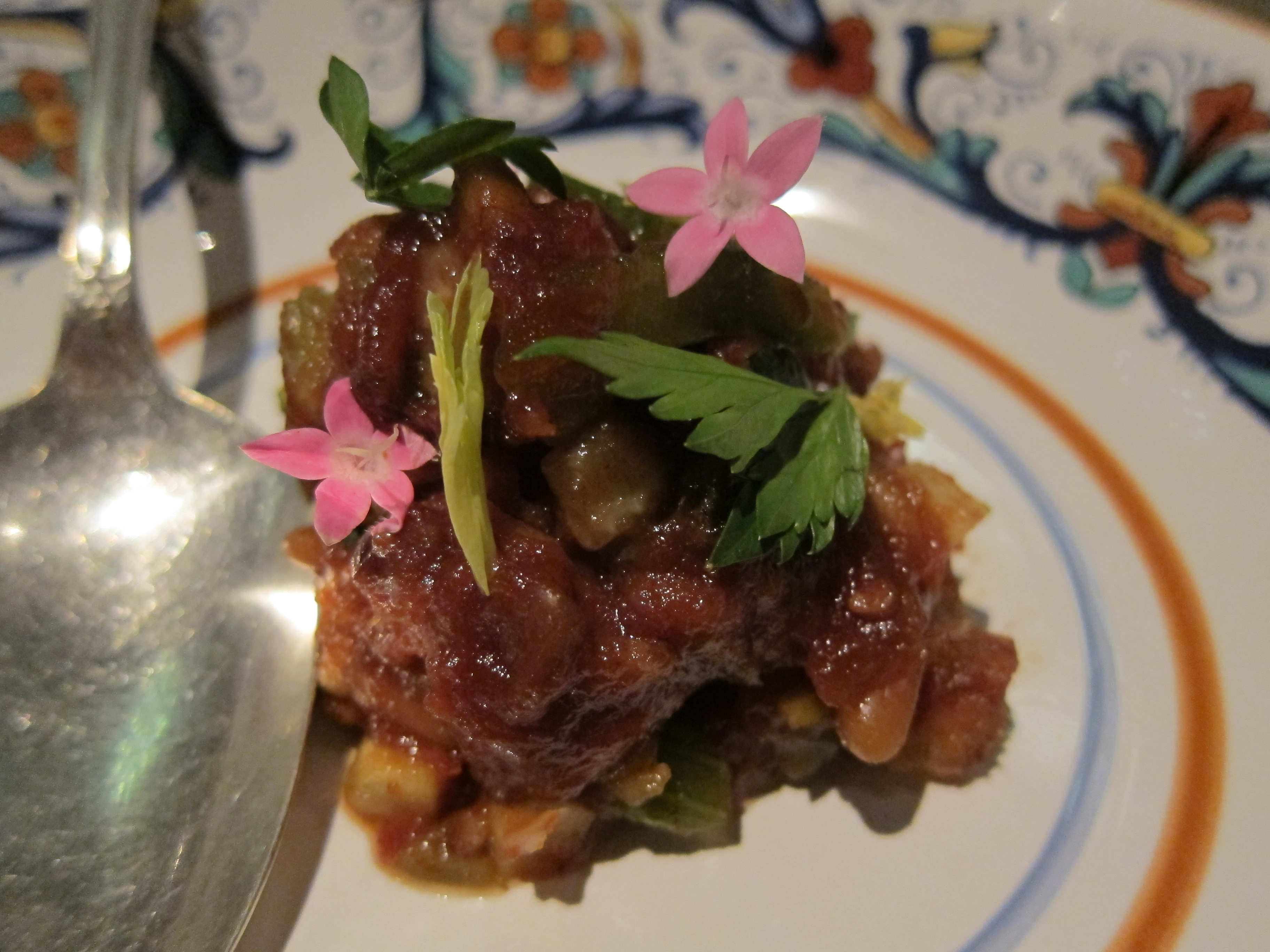
“The whole garden in a dish” is how our waiter described our third antipasta, a wonderful take on caponata. A variety of vegetables accompanied with the perfect dose of a wonderful sweet-and-sour tomato sauce. The pink Egyptian star flowers, said the server, were delivered only minutes before service began that evening, and so were a last-minute addition to the dish.
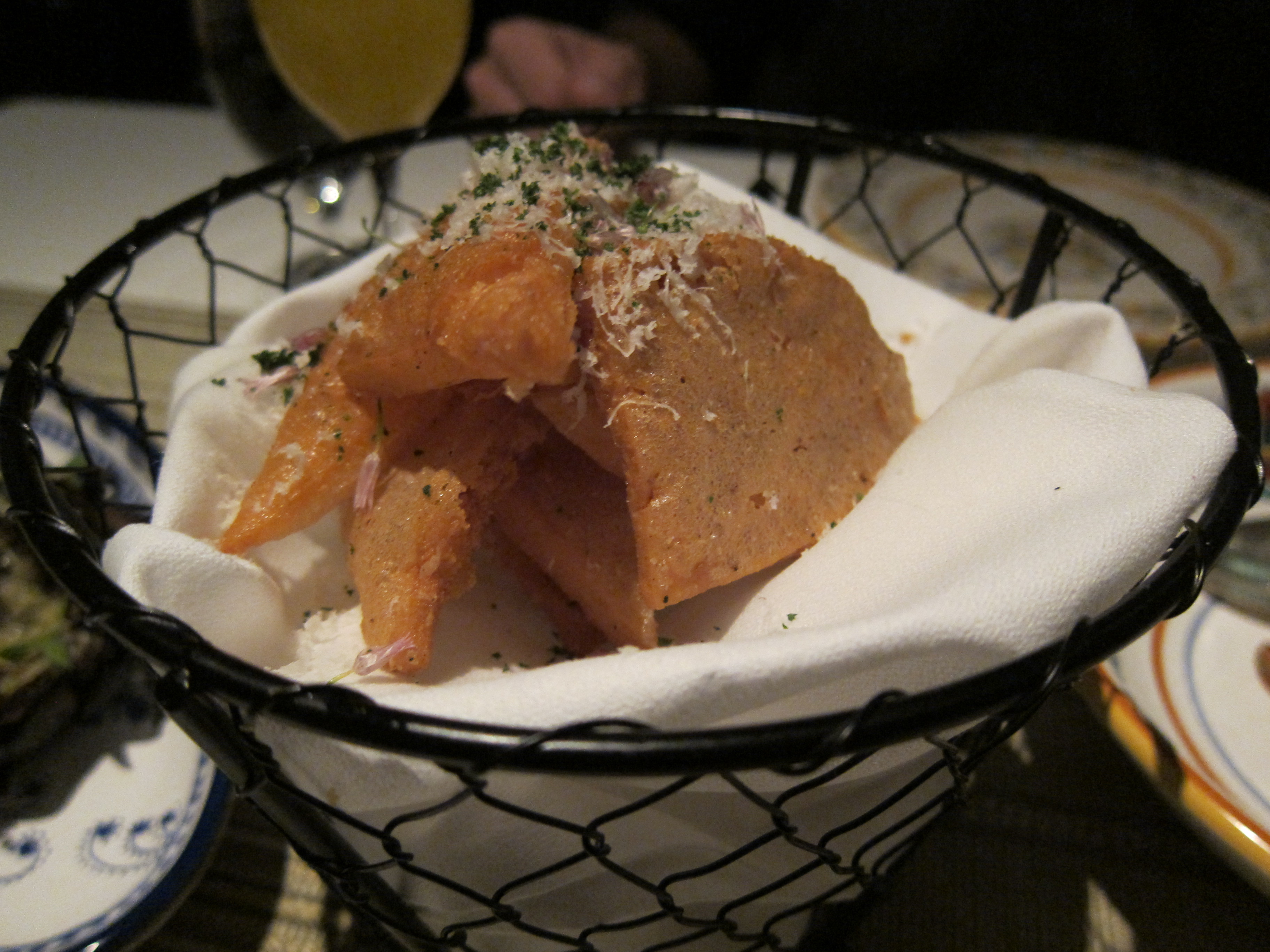
Antipasta 4: Panelle
Panelle are a type of Sicilian fritter, but these disappointed us. Well-seasoned with a little shaved cheese, they were far too thin to maintain their structure on their own, not to mention when paired with a caponata. Despite being directed by our server to put a spoonful of the caponata on our panelle, L laughed when hers disintegrated in her hands and onto her plate. Hopefully over the course of the menu service they will solidify the panelle and give them more backbone, because otherwise they are a difficult dish to even stand on their own, much less with the caponata weighing them down.
We soon realized this meal would follow a very traditional Sicilian structure: the antipasti finished, the plates were cleared to make weigh for consecutive pasta courses.

Pasta 1: Bucatini con Bottarga
This small dish was the highlight of the evening: home-made bucatini in a rich, flavorful, complex sauce of fish roe and cheese, topped with thinly-sliced fish and wild mountain basil. We are not usually fans of fish roe, but the way Achatz integrated the cheese and roe into that sauce was nothing short of masterful – we will remember those flavors for ever. Add to that the basil, which had a much stronger and more inviting flavor that the standard variety, this was a dish that pulled a lot of flavor punches, but did so in perfect balance. Incredibly disappointing that this dish was so small, because we could have eaten a few more courses. The dish was not without its problems, however: the buccatini was perhaps 30 seconds from being perfectly cooked; as a result, the pasta stuck to our teeth a little too much. A very small kitchen mistake, but one that prevented this from being the dish of the year.

Pasta 2: Gemelli con le Sarde
The national dish of Sicily – and the servers introduced it as such – Achatz did a great job paying homage to this classic, and L would have critiqued him heavily if he had messed it up. Perfectly-cooked gemelli was mixed with currants, pine nuts, breadcrumbs, mushrooms, a hint of lemon (we think) and fennel sprigs, and topped with a grilled sardine. The sardine – of which we are normally not fans – was grilled perfectly, and had its saltiness reduced just enough to make it blend very well with the rest of the pasta. Overall, this dish was the epitome of refined rustic cooking. The added accompaniments were great complements to the dish, and executed wonderfully.
The sardine was a well-positioned transition to the meal’s third portion: the fish course.

Fish: Pesce Spada con di Ceci (Swordfish . . .)
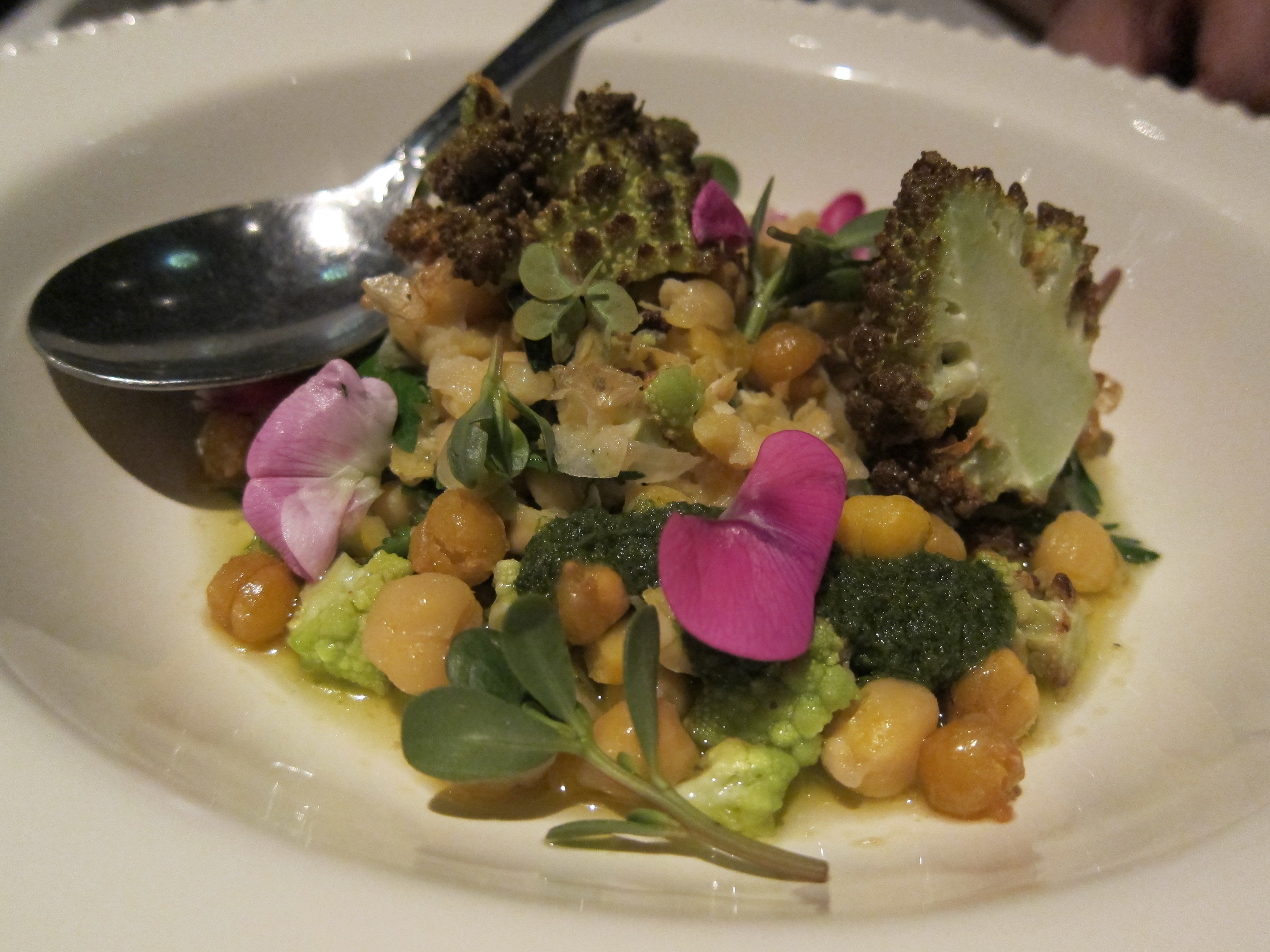
. . . with accompanying chickpea salad.
Our fish course was grilled swordfish with mint pesto, served topped with a bunch of grilled mint and a charred head of garlic. On its own, the swordfish was a bit of a disappointment given the wonderfully complex flavors that had emerged thus far in the course of the evening. Lightly seasoned with salt and pepper and nicely grilled, even with the mint pesto we found the flavor a little underwhelming in the context of the rest of the meal. This changed once the fish was eaten with a bit of the accompanying salad: chickpeas, basil, and Romanesco (“fractal”) broccoli in lemon juice. This small salad added exactly what the fish had been missing: a little vibrancy of citrus, contrasted and paired well with the mint pesto.
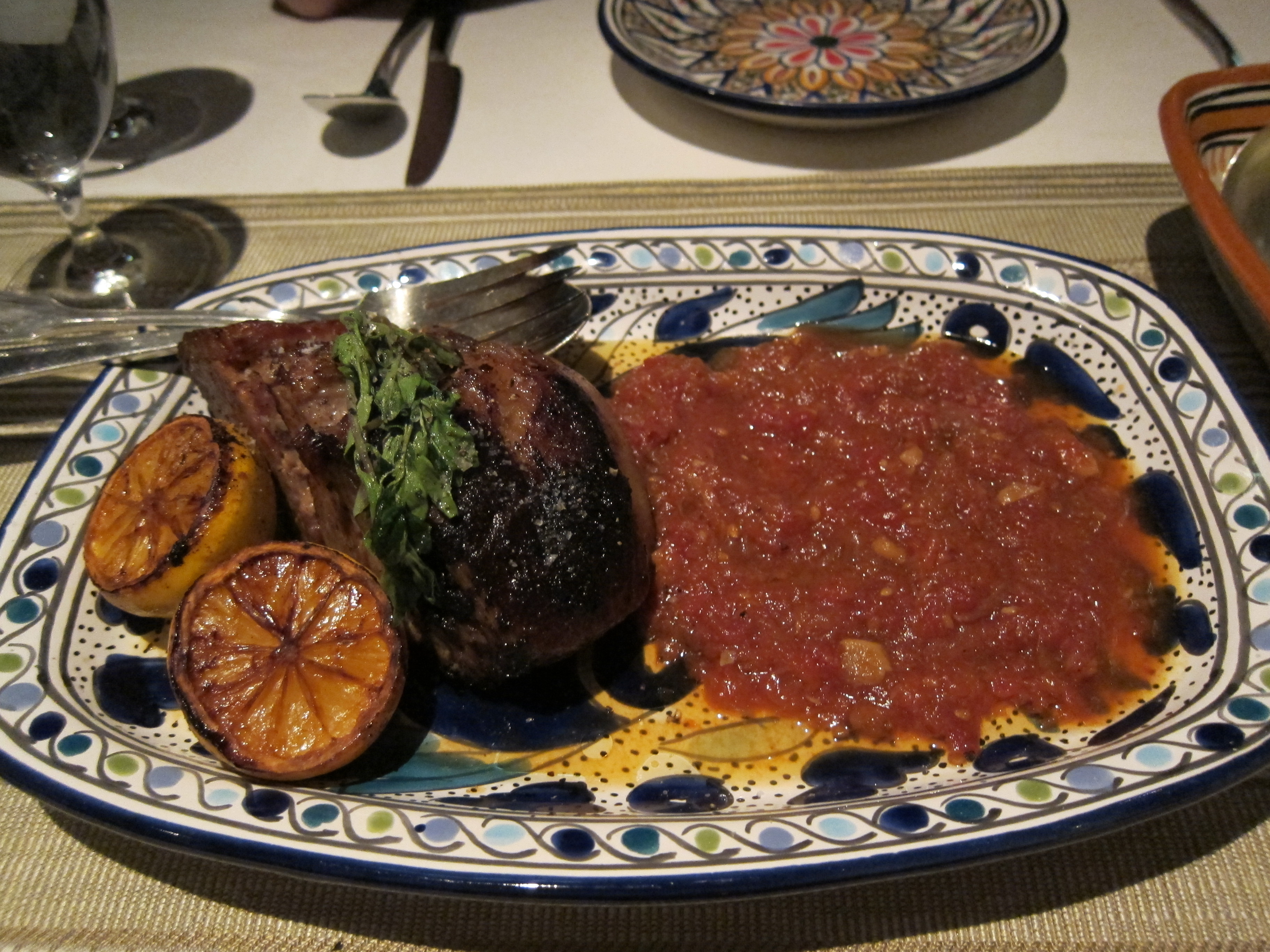
Meat: Spalla di Maiale Brasato (Braised Pork Shoulder)
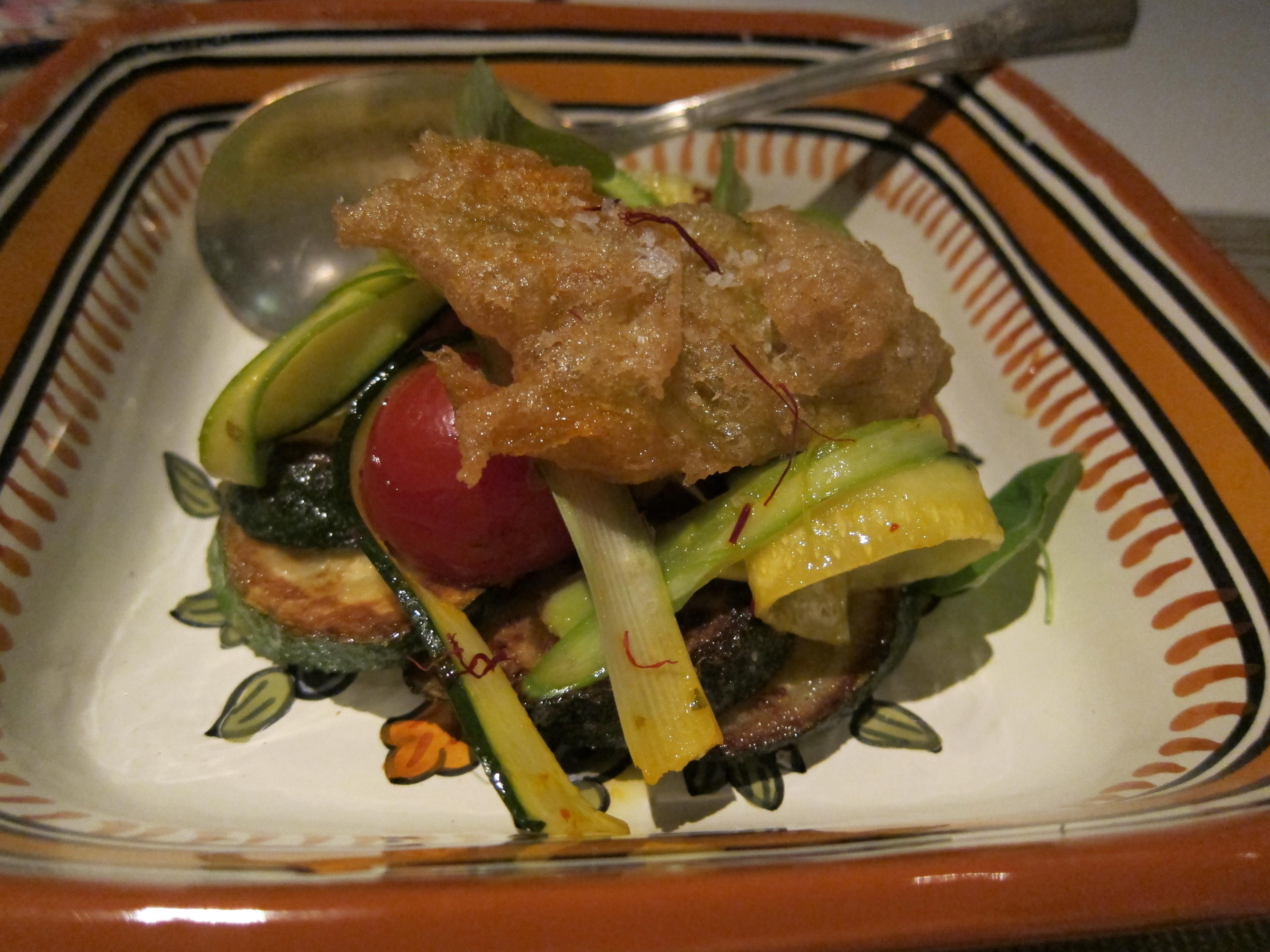
. . . with accompanying salad of grilled zucchini and tomatoes.
This dish may have tied the bucatini as the highlight of the meal. With so little meat in Sicily, it is saved and savored for weekends, when pasta sauce is made with chunks of meat, the meat removed and the sauce served over pasta, and then the meat consumed on its own after. This is a rich culinary tradition – it still goes on in our large Italian family homes – and it could not have been better represented on this plate. The pork shoulder we were served – and this is not an exaggeration – dissolved on our tongues: “Yeah, we braised it for a little while before you got here,” our server said with a wry smile. We have never had any pork so amazingly cooked in our lives, and it would take such a large, sophisticated, and pre-set menu to allow a chef the chance to do this outside of a small restaurant that would specialize in such a thing. The accompanying red meat sauce tasted like something one of our grandmothers would have made, and hit well on all the notes of the pork (thus confirming they were in fact made together). Grilled (and very juicy) meyer lemons took the dish to new heights. With all that flavor, the grilled zucchini and tomatoes served with it were something of an afterthought, and probably our lest favorite dish of the evening. They were fine, just unremarkable and completely unnecessary given the wonder of the pork shoulder’s main event.
At this point, we were completely stuffed. Antipasti, pasta, fish, and meat had been served: only dessert remained.
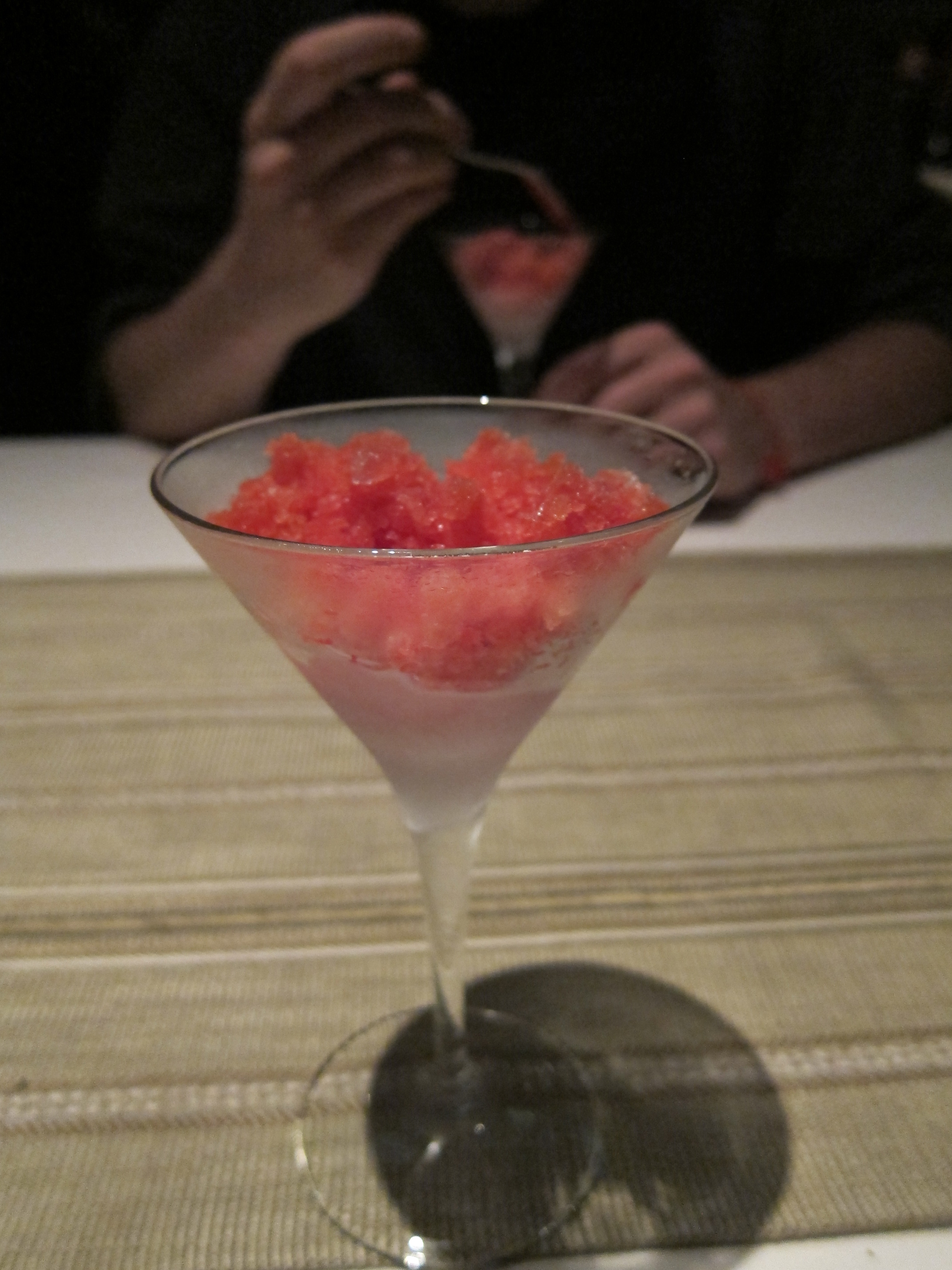
Cleanser: Granita di Arance Rosse (Blood Orange Shaved Ice)
This was a very smart part to include in the meal: something light and cool to cleanse your palette and allow you to digest before taking on dessert. Apparently (said the server) the Arabs developed shaved ice while in Sicily, and they were also the first to cultivate the islands wide array of citrus fruits for which Sicily is justifiably well-known. The granita at Next was unpretentious, nothing more than ice flavored with blood orange juice (and thus quite sour), but a welcome interlude before Sicily’s most famous product: dessert.
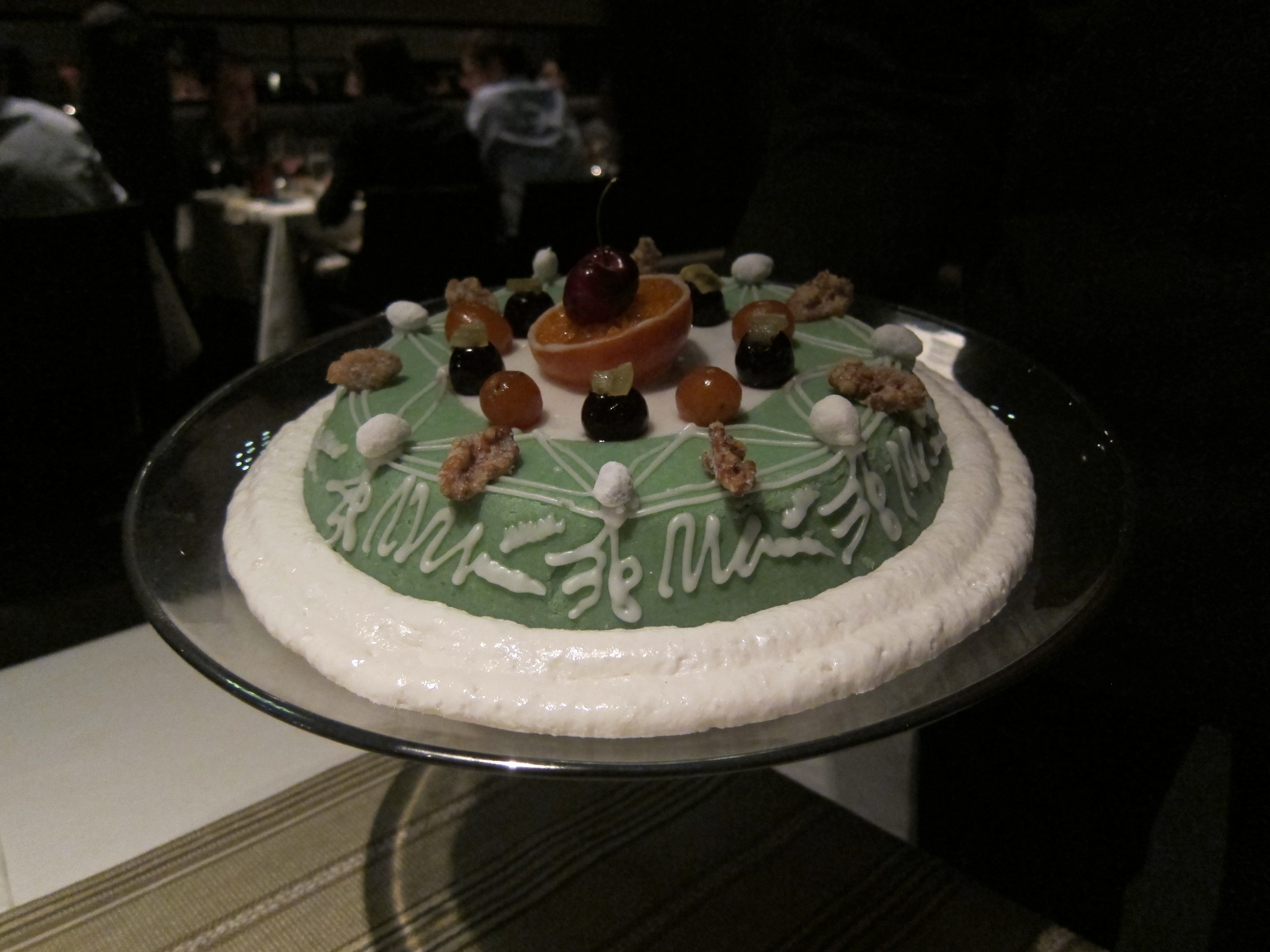
Dessert 1: Cassata (whole cake, for display)

Cassata slice, for consumption
L’s family is from the region around Palermo, where Cassata originates. She knows this dish well, and was thrilled to see it on the menu. A spongecake usually covered in almond-flavored marzipan, the chefs did not use the almond flavor on this go-around, instead just letting the marzipan speak for itself. Topped with a marinated strawberry, the cake was garnished with vanilla (with a hint of lemon?) whipped cream, candied orange peel, a candied pecan, and mint sprigs. Light, sweet, and well-garnished, we enjoyed this cassata immensely.
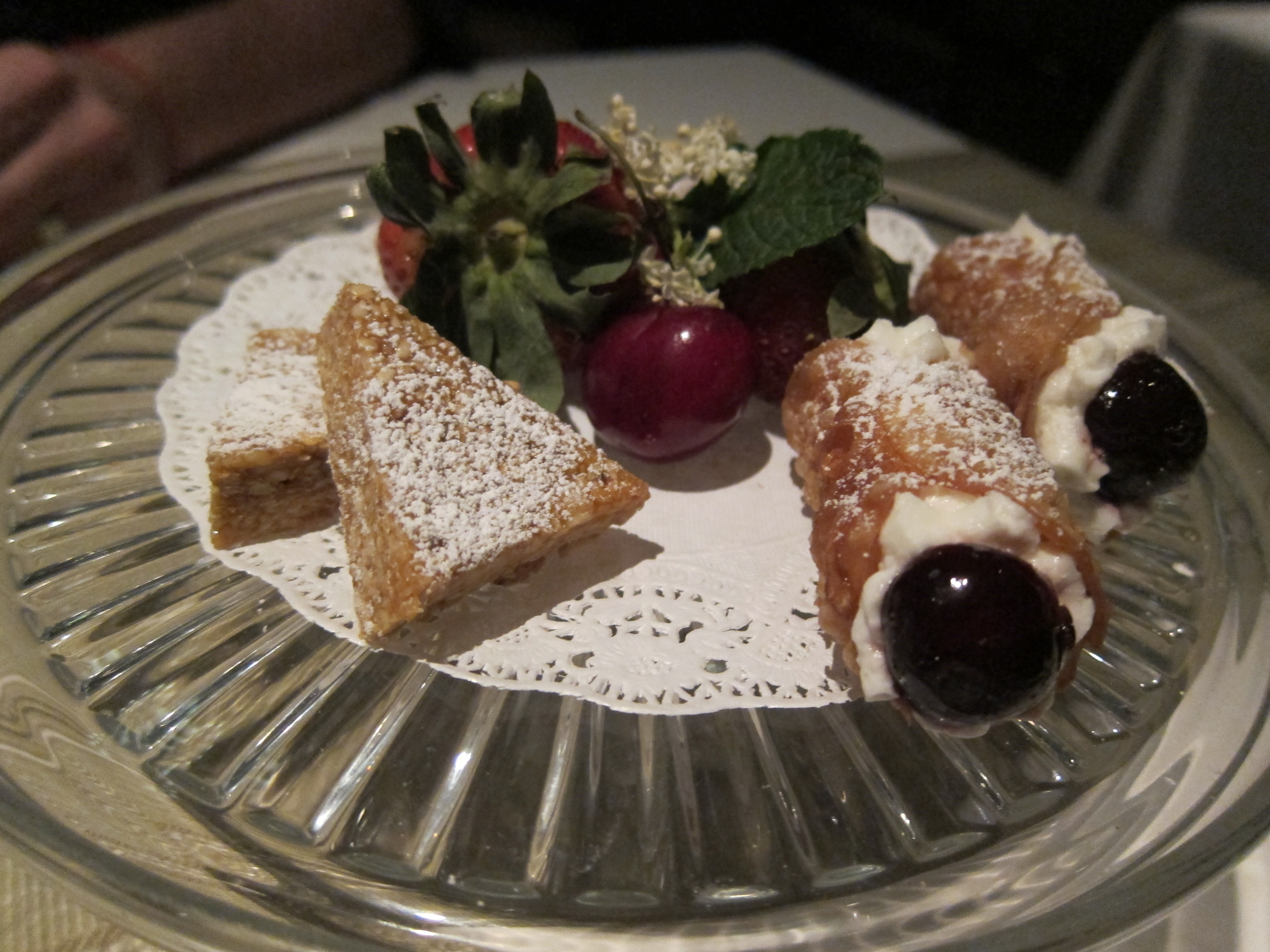
Dessert 2: Dolci (sweets): Cannoli, Ravioli Fritti, and Cubbaita di Giugiulena
Our final dish of the evening was a celebration of traditional Sicilian pastries. The fried ravioli were filled with a a locally-sourced strawberry jam. Giugiulena, one of our favorites, is a heavy sesame-seed pastry that tastes like peanut to the unfamiliar palette (a bit like a thicker, seedier version of halva). These first two pastries were solid albeit unremarkable, which frankly was welcome after the onslaught of flavors we had previously. We saved the cannoli – our favorites – last, but were sorry to say these woefully disappointed us. We found them much too small; the shells far too thin (we had a similar problem to the panelle where they broke into pieces as soon as we bit them) and, sin of sins, the cream inside did not have a hint of sugar. Cannoli are not easy to create, but we are saddened to say these are some of the most disappointing cannoli we have had recently, and absolutely pale in comparison to those we have eaten in Sicily or elsewhere in the U.S.
Not that this really disappointed us. Our meal complete, we walked away awed at this menu’s fusion of technique, flavor, and commitment to tradition. This is difficult to pull off, and we can only think Chef has been refining his thinking in this way after the El Bulli menu – billed as a “celebration” (as opposed to an “imitation”) of El Bulli’s creations. If that were true of the previous menu, Next Sicily follows suit: this evening was an impressive celebration of Sicily’s culinary innovations and explorations. As a foodie you will be glad to come here. But rest assured, your Sicilian grandmother will enjoy the meal as well – and that is saying a lot.
Portugal / South Africa / Mozambique: Nando’s Peri-Peri


Nando’s Peri-Peri
819 7th St NW
Washington, DC 20001
Nando’s is a South African restaurant chain with locations throughout DC and Maryland, serving up a signature Portuguese/Mozambican speciality: peri-peri (pronounced “piri-piri”) chicken. Peri-peri is the local name for an African Bird’s Eye Chili, grown throughout sub-Saharan Africa. How the pepper came to Portugal is a mystery, but eventually Portuguese and Mozambican (Mozambique being a former Portuguese colony) culinary exchanges gave rise to a peri-peri sauce made from the pepper. The sauce is a staple on southern African and Portuguese tables, and is applied liberally to chicken breast grilled over a spit: peri-peri chicken. Nando’s was founded by members of South Africa’s Portuguese-Mozambican community, and has since expanded to 30 restaurants on 5 continents. Unfortunately, they have only recently made inroads in the USA, and only in the DC metro area. That is unfortunate, Nando’s definitely hits the spot for your stateside peri-peri craving and is well worth a visit.

On a recent trip to DC, M visited Nando’s Chinatown location (hence the Chinese characters on the sign) – probably their most popular location in the city. Nando’s logo is a representation of the Rooster of Barcelos, the Portuguese national symbol, and appropriate here because the rooster’s large eye makes one think of the Bird’s Eye Chili.

Nando’s does an excellent job of serving up presumably fast food in an upscale setting. Wood paneling and good lighting make for a sophisticated interior, and a central plexiglas wall – actually filled with dried peppers – is a nice touch. The walls are decorated with original works from South African artists, part of Nando’s ever-expanding art collection (now 4,000 pieces) which also offers scholarships to young artists back in Africa. The uniqueness of the food and their commitment to the arts really made me want to like this place, so it is lucky the food delivered.
For the relatively upscale vibe, the ordering is simple. You can choose from many entrees, but if we are being honest (and we always are) there is no point in getting anything besides the chicken: pick a half or whole breast, choose your spiciness level, and choose between 0 and 3 side dishes. I selected the extra spicy chicken (of course), with sides of Portuguese rice and a mayo-heavy coleslaw, to reduce the heat from the chicken if need be. After ordering they give you a cute table marker and you proceed to your spot, waiting for the food to be delivered to you.
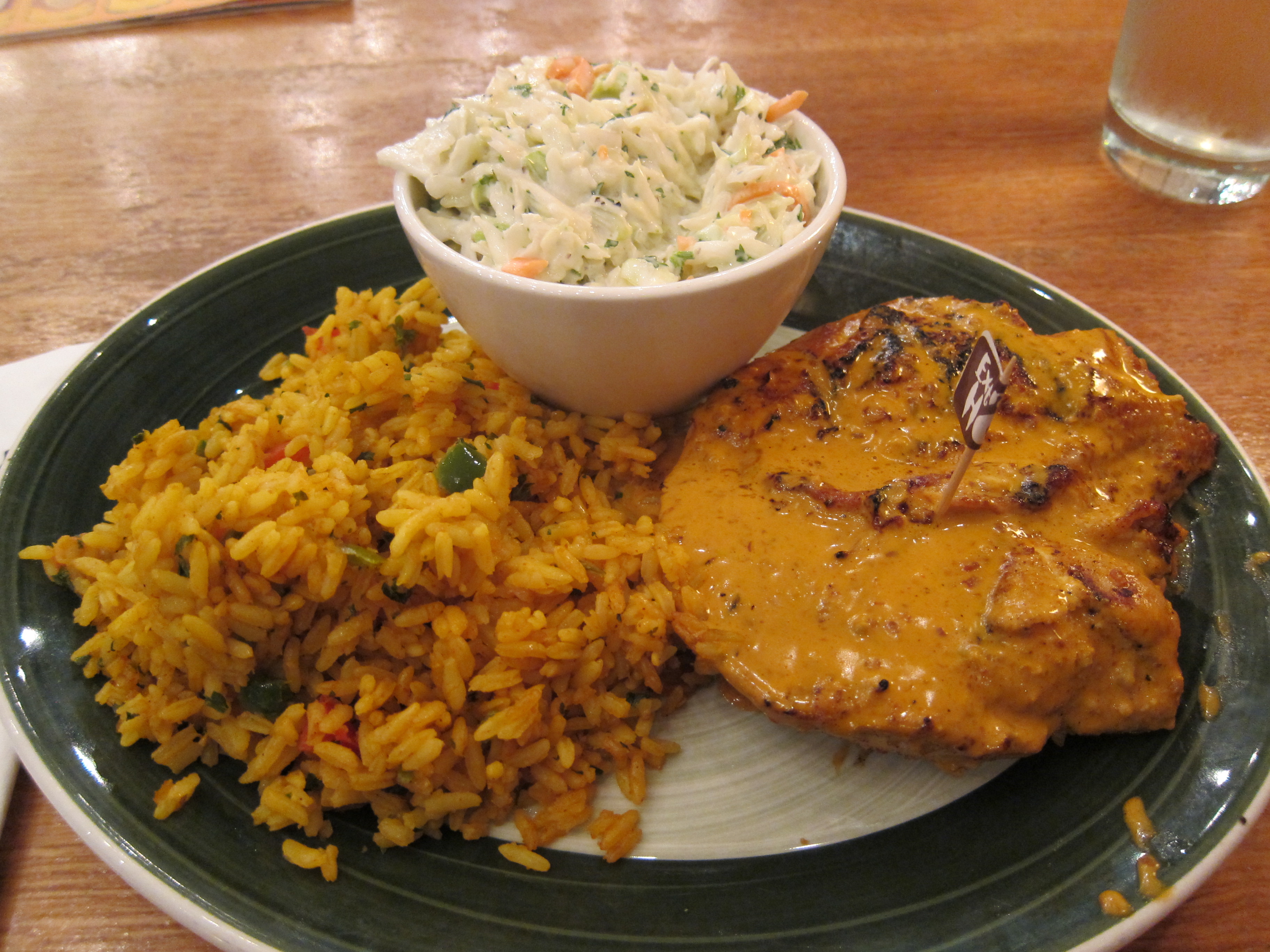
The chicken was – and I cannot overstate this – perfect. Grilled to perfection with just the right amount of marinade, Nando’s then lathered on the peri-peri to add the extra heat I requested. But the flavors come through as well: peri-peri is a complex sauce, loaded with spices and contrasting flavors, and Nando’s variety brought out all the high notes from the pepper as well as the other ingredients. I thought these paired nicely with the rice, which was satisfying though underwhelming. I probably would not get the coleslaw again: it was very good as far as coleslaw goes, but the menu was correct in suggesting it would cut off the heat, which it did almost too well. Next time, I’d order something not as heavy as a side, reserving the slaw for less spice-inclined diners. Overall, for under $15, this was a steal for a weekday lunch. I hope Nando’s is able to expand and open up more locations in the USA, because they would do well given their business model. But if they stray from their signature sauce and effective grilling as a result of the expansion there will be major issues. I’m just thrilled to see good, fast, transnational cuisine like this making inroads in the USA – for now, if you are in the DC area, definitely stop by for a great lunch!
Filed under Reviews
Food Trucks Roll Into Paris
 New York, Or Paris? photo by Stephane
 When I learned that Chipotle had arrived in Paris, it seemed that anything was possible in the French capital. Now, food trucks, one of our favorite food delivery methods, are becoming very popular in Paris, something that is surprising Parisians almost as much as Chipotle. The featured food trucks in the article specialize in gourmet tacos and burgers with fresh and well-sourced ingredients. While living in Lisbon some of things we missed most were good Mexican food and burgers, so we would have definitely visited Cantine California or Le Camion qui Fume!
Filed under Links
British Pasties in Bridgeport at Pleasant House Bakery

What with the Diamond Jubilee reaching fever pitch, you might find yourself hankering for some British food while stateside. Though Chicago may be flooded with Irish (and even Scottish) pubs, it is also home to some pretty good British food. We were very pleased to learn that the historically Irish neighborhood of Bridgeport on the south side is home to a couple of noteworthy British options. The first is Bridgeport Pasty, a food truck which was recently awarded 3rd place in the World Pasty Championships. The pasty (rhymes with “vast”) is a filled savory pastry that originated in Cornwall, and is now found in countries with large amounts of Cornish immigrants (such as the Upper Peninsula of Michigan where there is even a PastyFest). For other British cravings, a bricks and mortar shop also in Bridgeport, Pleasant House Bakery (964 West 31st Street) is known for its savory pies. So there are definitely some places for homesick British and American Anglophiles alike.
Filed under A New Place, World Eats
Coming soon….Next Sicily

We had the rare luck of snagging a ticket to the latest iteration of Grant Achatz’ eclectic Next restaurant, Sicily (for once, sitting at a computer and hitting “refresh” 400 times had a payoff). We visited Sicily on our honeymoon, so we are highly anticipating Achatz’ take on Sicilian home cooking. Our ticket is for this week, so you can expect a report back soon. In the meantime, check out our report of Next’s Thailand menu from last year. Update: Check out our full Next Sicily review here.
Macarons for the Diamond Jubilee

 This coming weekend marks Queen Elizabeth’s Diamond Jubilee – 60 years on the throne – and British companies have been pulling out all all of the stops to put out special editions of clothes, tea and even Heinz baked beans. However, what has most caught our eye are the special Laduree jubilee-edition macarons. The Union Jack themed box of six red and white macarons runs $25 and is available at Laduree NYC, Paris and London locations (and also Harrods in the UK). Apparently this is only the second time that special edition macarons were made – the first being a special nod to Hello Kitty. This year also marks the 150-year anniversary of Laduree, which first opened at 16 Rue Royale in Paris in 1862. We are a little sad that we cannot sample the special edition macarons, since Laduree was voted the winner of our Parisian macaron taste-test, but maybe one of our lovely readers can let us know how they are!
Filed under Finer Things Club, World Eats
Military Chocolate on Memorial Day

In honor of Memorial Day, I found this patriotic chocolate-themed ad from World War II-era Nestle. Hershey chocolate bars were part of the soldiers’ rations, however, they were made in special formulas specifically for nutritional needs and to withstand heat (meaning they didn’t taste as good). For example, the first military chocolate bar was called the “D. Ration” and was required to:
- Weigh 4 ounces (112 g)
- Be high in food energy value
- Be able to withstand high temperature
- Taste “a little better than a boiled potato”
World War II Magazine has an extensive feature about the wartime chocolate bars, including the fact that by the end of WWII, Hershey produced 40.2 million D Ration bars, and 380 million Tropical Chocolate Bars.
Filed under World Eats



 Eating The World