Bahian Moqueca Tour, Stop 1: Sorriso da Dadá

Sorriso da Dadá
Rua Frei Vicente, 5
Pelourinho, Salvador, Brasil

One of my first days in Salvador, I knew I wanted a moqueca. The word flows off your tongue smoother than the dende-oil infused coconut milk that is the backbone of this traditional Bahian seafood stew, and garnished with farofa (toasted manioc flour, usually with a little dende) and vatapá, there really is nothing like it. I was walking through Pelourinho, operating on the recommendation from a friend to try Panela da Bahia, a place he told me to go if I needed a “moqueca made with love.” Boy, did I!

But, sadly, the “love” would have to wait another day. Panela da Bahia was closed on this Monday, and I had to settle for the restaurant next door, another moqueca-specialist place called Sorriso da Dadá (“Dadá’s Smile). It was not until after my meal, returning home, that I discovered Dadá has one of the most famous restaurants in Bahia. So, to give the readers a luxury I forgot to afford myself, please read the following reviews and ask yourself: would you have gone to this restaurant? From Frommer’s, via NYT:

Dadá has made quite a name for herself and contributed to a renewed appreciation of Bahian cuisine. Brazilians and foreigners come from far and wide to taste her food, journalists write articles about her, and gourmet magazines rave about her restaurant. Her food certainly showcases the best of Bahian cuisine, specializing in seafood moquecas, vatapá, and bobó de camarão. However, Dadá may be coasting a little bit on her success. We found service uninspired and the prices higher than at other restaurants — typically 25% more than elsewhere. The food, however, was still as delicious as ever.

An OK review, I suppose. I’ll take uninspired surface as long as the food is justifiably delicious. However, my own guidebook, Bradt (2010), had this to say:

The restaurant takes its name from the perpetual smile of the former queen of traditional Bahian cooking, Aldaci ‘Dadá’ dos Santos. She began her career selling acarajé on the streets of Salvador. In her heyday Tropicalista & culture minister, Gilberto Gil was a fan of her moquecas & Dadá was serving her spicy, Afro-Brazilian dishes to distinguished visitors to Bahia, including Hillary Clinton. But when we ate here last, Dadá had either taken her eye off the ball or was busy in one of her other restaurants in Salvador or on the Costa do Sauipe. The food was bland, lukewarm & over-priced.

So, what to take from these two reviews? Potentially bland and lukewarm food with uninspired service? Turns out that is exactly what I got. And while the food was acceptable, it was a little pricey for what was received, and I would recommend to anyone they try any number of other solid moquecas in Salvador (three of which will have glowing reviews on ETW in the coming days).


Dadá’s restaurant is not an uninviting space, but I also didn’t find it the most welcoming. The windows to the outside don’t do the best lighting job, and I found the eating space surprisingly dark for always-sunny Salvador. On this day I had the restaurant to myself; an American couple were finishing up their meal just as I arrived, but otherwise the place was empty. Service was a little inattentive by Bahian standards (where service is usually inattentive; it is seen as impolite to bug the customers unless they want to be bugged), though Pelourinho usually operates on a more touristic agenda for the Europeans and Americans coming through seeking an authentic meal.

I decided quickly on a traditional fish moqueca, with a white fish filet cooked in coconut milk and dende, garnished with tomatoes, green peppers, and cilantro, and served with vatapá. It was not, however, served with farofa – something in the coming weeks I would come to cite as a cardinal sin.

Though this was my first moqueca in Brazil, and the flavors were new and inviting, I could tell there were problems. A lack of flavor punch, a watery moqueca broth, and the fish a tad undercooked for my taste (perhaps stemming from the thin broth, which probably needed more time to cook down). “Watery” is a word one should never have to utter in reference to a moqueca, as water is not an ingredient. But it tasted watery to me, and lucky for the restaurant I am not a Bahian, otherwise someone may have made a scene. Portions were generous, more than what was needed for one person at R$39 – but less than what one usually gets in Salvador for the same price, and better quality, elsewhere. The uninspired food left me hungry for what I knew were better moquecas in the city. And our next three posts will let you know: boy, did we find them!

StGeorge (Oxóssi) stands guard over the cash register at Sorriso da Dadá.

1 Comment

Filed under Reviews

Pasta di San Giuseppe – St. Joseph’s Day Pasta

Giuseppe

St. Joseph’s Day Pasta – by Erin Zieske

March 19th is St. Joseph’s Day, a holiday celebrated in Southern Italy, or in communities of southern Italian Immigrants. Naturally, having the proper food is a huge part of St. Joseph’s Day, with many churches even constructing elaborate St. Joseph’s Day altars full of food. We’ve written previously on the most famous St. Joseph’s Day food – the fried sweet Zeppole – so this year we wanted to introduce another holiday dish – Pasta di San Guiseppe. There are many variations on the recipes – but at its core it is a dish of pasta and breadcrumbs. The pasta dishes made on this day are typically meatless to represent the famines experienced in Sicily. The breadcrumbs represent sawdust, which is symbolic of the profession of St. Joseph, carpentry. Another popular dish for St. Joseph’s Day is Pasta con Sarde (Pasta con Sardi in Sicilian)  – pasta with Sardines [another version here].

2 Comments

Filed under Holidays, World Eats

Potatoes of the Canary Islands

In looking for a flight to Lisbon, one option given to us was a stopover in the Canary Islands. Who would have thought? We knew little of Canary Island cuisine, so we were pleased to see that Food and Think did a feature on the  best (and worst) of Canarian cuisine. It turns out the Canaries are known for their potatoes. The Canary Islands were one of the last places in Europe to be introduced to the tuber, and there are still heirloom Andean varieties grown there. One of the most famous Canarian potato dishes is known by the name of “wrinkly potatoes (papas arrugadas)” – we found a recipe on Tastespotting.

Leave a comment

Filed under Links

São Paulo: Esfihas at Jaber

Jaber
Rua Domingos Morais, 86 – Vila Mariana
Sao Paulo, 04010-000, Brazil

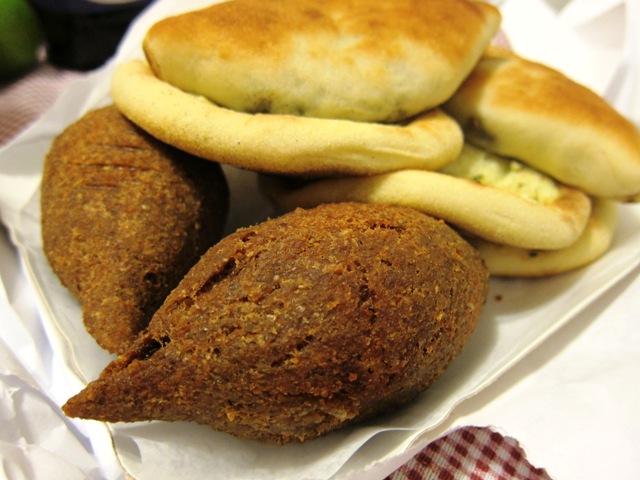
São Paulo, with its cosmopolitan populace, is home to a large middle-Eastern population – especially Lebanese residents. This of course means delicious Lebanese food, one of our favorite varieties. Some Lebanese-inherited dishes have become popular all across Brazil – including kibbe – ground beef and cracked wheat fritters and the esfiha – an open faced pastry with either sweet or savory toppings. There are Middle Eastern restaurants on almost every corner of Sampa, so were definitely spoiled for choice (much as we were for Pizzas, as we will write about shortly). Right around the corner from our friends’ place was a Lebanese takeout restaurant that racked up accolades from Veja magazine and the like for awesome Lebanese treats. The menu at Jaber had both individual dishes, hot small snacks (salgados), and huge-family-style platters, they seemed to be doing very rapid turn over on large take-out plates for hungry families.

kibbe and esfiha

Of course we were pleased to see both kibbe and esfiha on offer at Jaber, both of which are pictured above. We sampled 3 types of esfihas, Za’atar, Cheese and Endive. The Za’atar esfiha really impressed us – the topping on the pastry crust was nothing but a solid layer of spice – Za’tar is a spice mix of thyme, oregano, sumac, sesame and salt – and the flavor of the esfiha was nothing short of explosive. Also on the menu were varieties of Esfiha that are “closed”, kind of a Brazilian/Lebanese take on Stromboli, with the pastry folded over the filling. Sao Paulo made us esfiha addicts! One thing about Brazil – they definitely have a lock on the pocket-sized savory pastry – who knew such myriad wonders even existed?

1 Comment

Filed under Reviews, World Eats

Our go-to Pão de Queijo

When we first wrote about Pão de queijo in 2007, we had no idea we would be undergoing so many Brazilian food adventures, and enjoy making Brazilian dishes so much. One of our friends recently asked us what our favorite Pão de queijo recipe was – and we are happy to share it with them and here – our go-to recipe is Simply Recipes’ version. Since Brazilian cheeses are hard to come by in the US we substitute Cotija cheese, readily found in Mexican grocery stores.

4 Comments

Filed under Links, Recipes

French Pantone Tarts

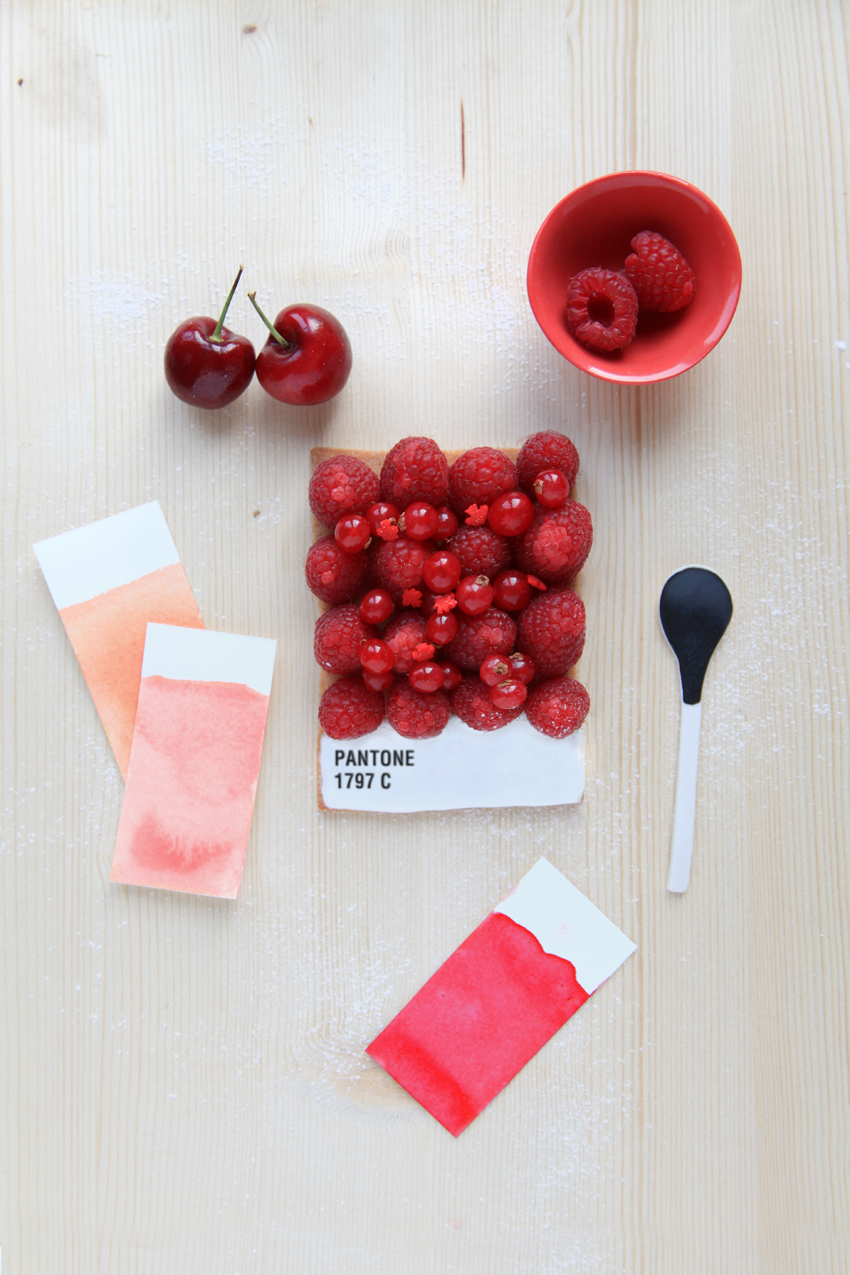
It seems that Pantone, the color matching system used to standardize colors across industries and projects, is ubiquitous nowadays. You can even find Pantone mugs, ornaments and makeup. Now, the Pantone mashups have reached food – French blogger Emilie Griotte has created Pantone Tarts! The text is in French, but the pictures are perfectly delightful in any language.

Leave a comment

Filed under Design and Photography, Links

Domo-kun Cookies

Domo Cookies

Domo Cookies at Diamonds for Dessert

I just came across this post on Diamonds for Dessert on how to make Domo cookies [via Food is My life]. The cute and cuddly Domo is the mascot for the Japanese NHK TV network, and has been incarnated in stickers, posters, stuffed animals, and practically every other form… now even cookies! However, these are not just any cookies, but are a version of Thomas Keller’s famous oreo cookies (TKOs), from Bouchon Bakery. Can’t wait to try these.

Leave a comment

Filed under Links, Recipes

O Melhor Bolo de Chocolate do Mundo

O Melhor Bolo de Chocolate do Mundo
Shopping Iguatemi
Av. Tancredo Neves, 148,
Caminho das Árvores – Salvador – Bahia

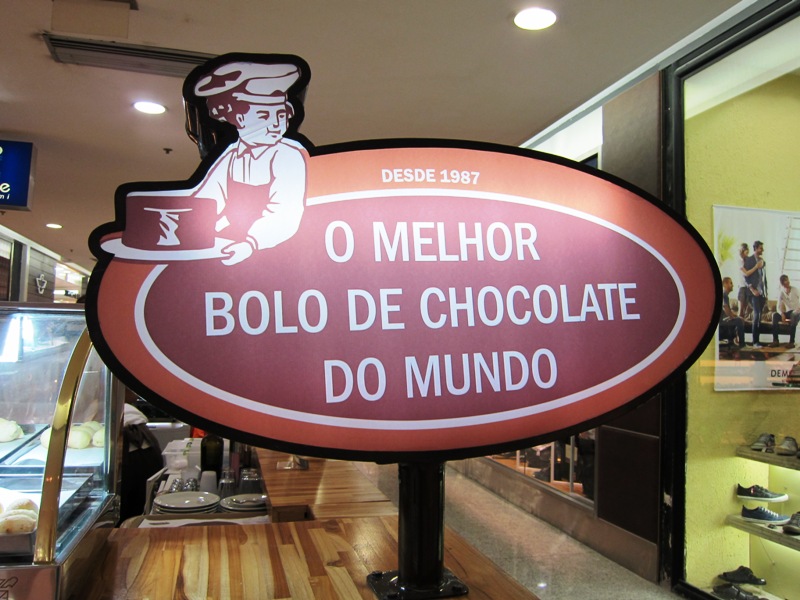
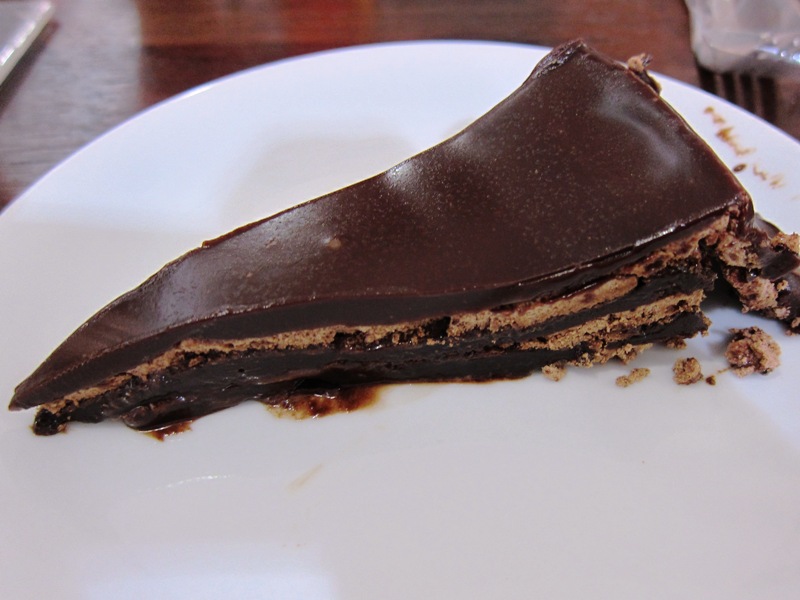
A cake shop calling itself the “Best Chocolate Cake in the World” is a pretty gutsy move. With a name like that, they would HAVE to deliver. Intrigued by the bombastic name as well as our never-ending appreciation of chocolate confections, we set out to sample the chocolate cake from MBCDM. When we arrived at the store location in Shopping Iguatemi– we were surprised to discover it was a kiosk in the mall instead of a proper store. The offerings were unsurprisingly chocolate cakes sold by the slice (about 5 dollars), along with coffee and other cake accompaniments. Two varieties of cake were offered by the slice: Bolo Meio Amargo (70% bittersweet chocolate)  and Tradicional Doce (53% chocolate).  There was also a sugar-free version of the traditional cake on offer. We went for the dark chocolate cake: the texture was that of a flourless cake. The flourless chocolate was interspersed with layers of chocolate cake crust and chocolate ganache on top. The filling was dense and uber-chocolately, but unfortunately the cake layers all but fell apart when we began to eat. As you can see below, it is already starting to lose its structural integrity – even before the first bite. Final verdict: the cake was very good, but perhaps a bit oversold. Sorry, we’re tough cake critics!

O Melhor Bolo de Chocolate do Mundo

Leave a comment

Filed under Reviews

Rio de Janeiro: Confeitaria Colombo

Confeitaria Colombo
Rua Gonçalves Dias, 32
Rio de Janeiro – RJ, 20050-030, Brazil

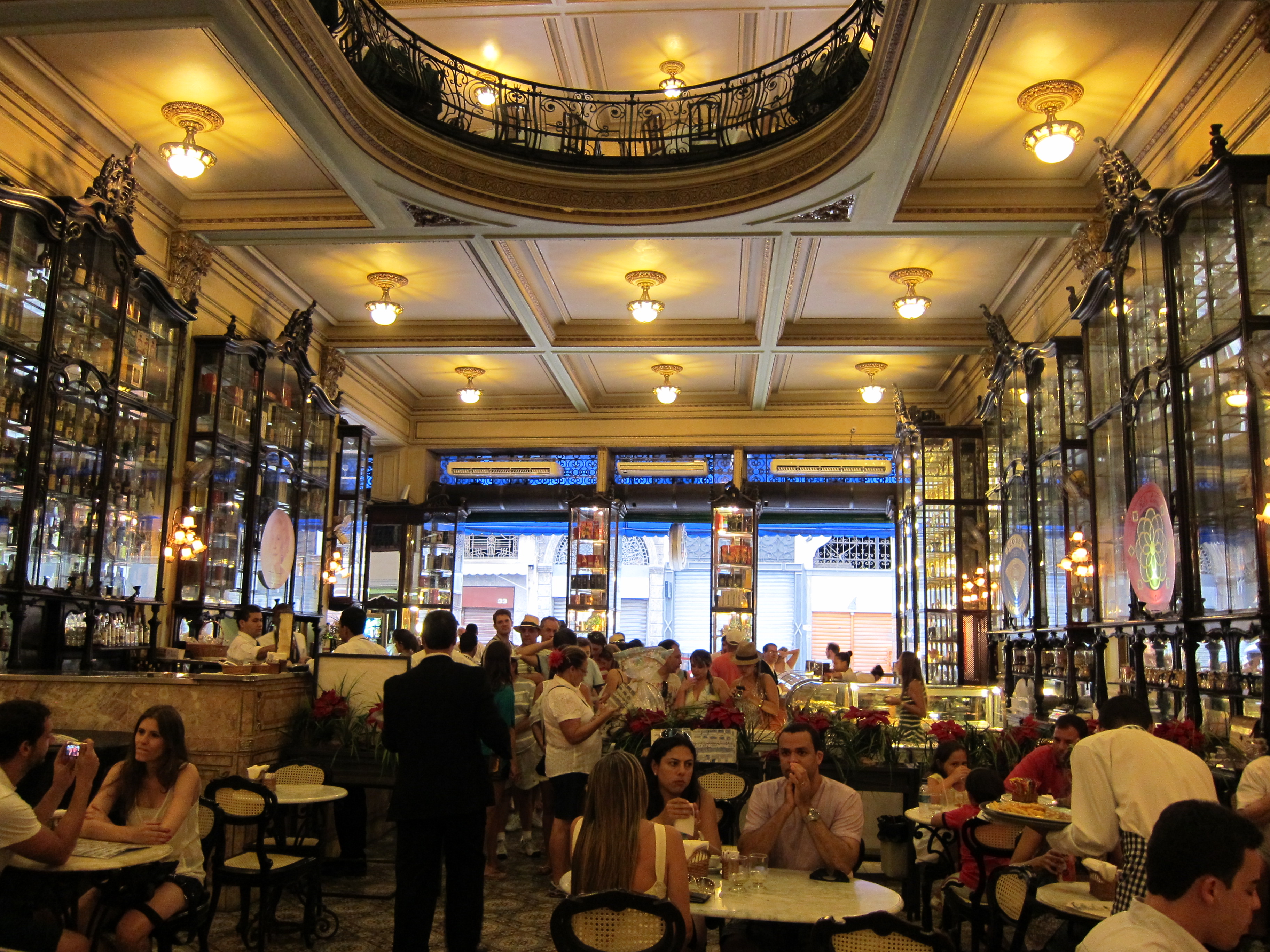
We are not sticklers for decor – excellent food can make up for drab surroundings. We are no strangers to scrumptious hole-in-the-wall cafes decorated only by expired calendars and shabby counter-only establishment that serve excellent food. However, sometimes, enjoying good food in luxurious surroundings can be all the more enjoyable. We had heard about a place in Rio that was a must-try as well as a must-see: Confeitaria Colombo. Confeitaria Colombo has been continuously operating in Rio since 1894, and is decked out in all of its fin-de-siècle finery. And we mean really decked out – the back wall is graced by a 20-ft mirror and almost every surface is lined with gilded flourishes, frescos and gold-leaf mirrors. The front of the Confeitaria is especially tantalizing as it displays row upon row of too-good-to-be-true desserts in vintage cases.

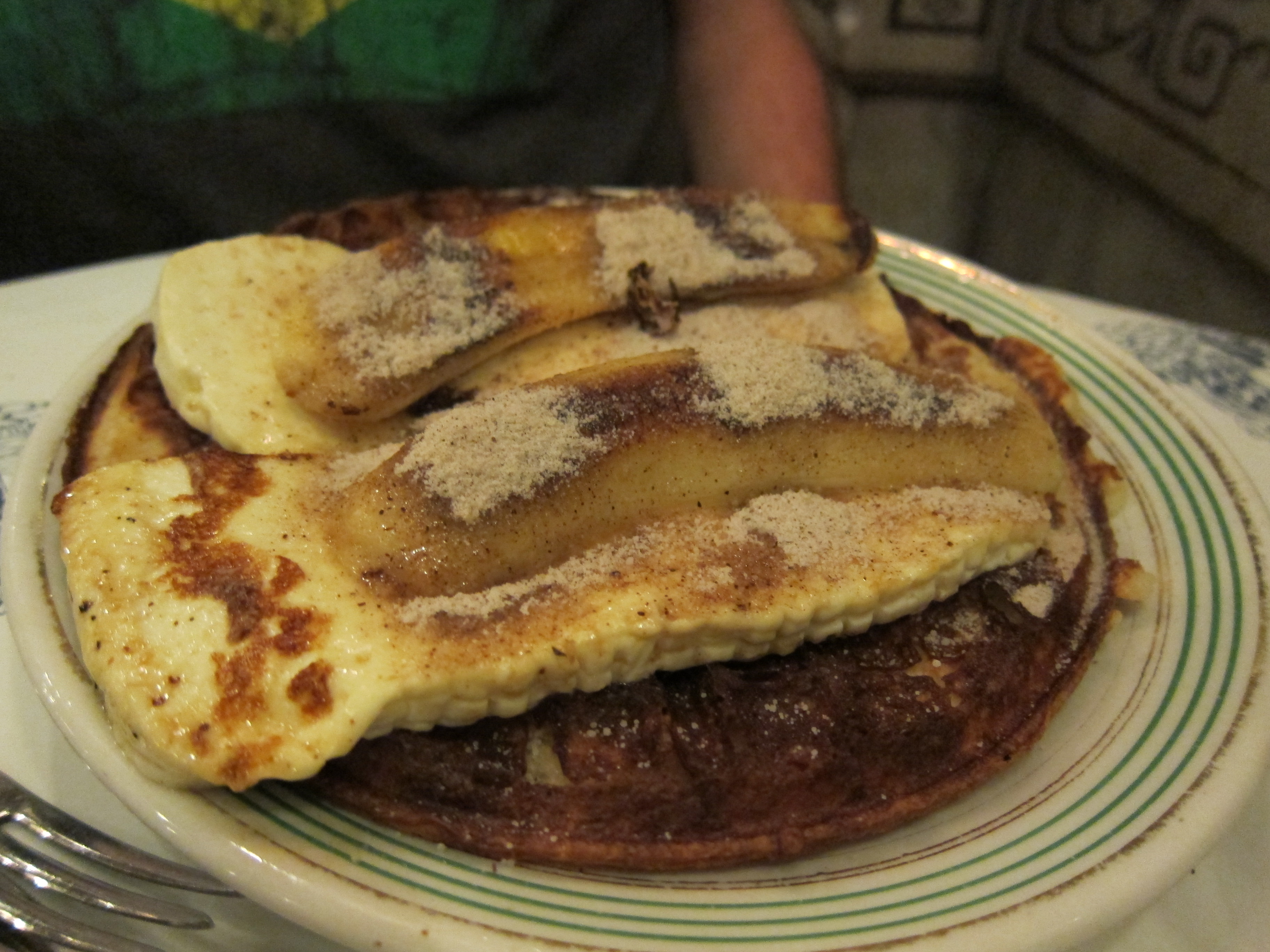
We arrived within 20 minutes of opening and were fortunate enough to snag one of the last free tables. Not even the post-Carnaval haze could keep people away. The menu at the Confeitaria had a variety of sweet and savory dishes including some decidedly non-Brazilian offerings – pancakes and waffles. We usually make waffles at home every Sunday, but due to our travels have not had a good waffle since November. Needless to say, we each ordered waffles. We don’t know if it’s because we had been going through waffle withdrawal, or because the waffles were particularly good, but we were very impressed by our picks. L opted for a classic waffle (R$ 14) M went for a waffle with more of a Brazilian twist – Minas cheese and banana, topped with cinnamon and sugar (R$ 18). M was expecting the cheese to be a little heavy on the waffles, but it was balanced nicely by the bananas, and made a great snack unto itself. Well worth a visit, especially given the price, to try this distinctly Brazilian take on a breakfast classic.

However, our trip was not without a hitch. M ran into a conundrum that we have encountered in our international travels previously – ordering a glass of cold milk. To Americans this is not such a weird breakfast request, maybe a little unusual for a grown-up (sorry M), but definitely doable. However asking for a glass of cold milk in Brazil is like asking for a glass of cold pickle juice. L ordered the much more understandable cappuccino while M placed his order for cold milk. The waiter seemed to understand the unorthodox request, however when he arrived with two cappuccinos and a little pitcher of creamer we knew we had run into our old problem again. M tried to re-explain his order, and the 2nd cappuccino was whisked away – only to be replaced by a cup of steaming cream (which M drank). Enjoying our waffles and strange little beverage in such sumptuous settings was exceedingly enjoyable and a very cheap and efficient form of time travel.

3 Comments

Filed under Reviews

Street / beach food in Brazil: Beijus

We are huge fans of street food, but Brazil has added a whole new dimension to that love – beach food! On the beaches of Brazil there are always a plethora of food trucks and roaming food vendors who are ready to fill you up with snacks (including cheese on a stick – more on that later) while you are chilling on the beach. The key to beaches in Brazil is to basically bring nothing to the beach, because the rest will be provided for you – water, sunglasses, sarongs, cheese on a stick, whatever. One of the more unique beach finds we encountered was the Beiju – a sort of tapioca crepe with a myriad of sweet and savory fillings. Popular choices include Nutella, fresh coconut and a delicious combination known as “Romeo and Juliet” (Goiabada and Minas cheese). In order to make a Beiju- a layer of tapioca starch is cooked in the bottom of a pan or mold on a flattop- solidifying the tapioca into a type of pancake. The texture is a little bit unusual – and the Beiju has a certain amount of chewiness and crumbliness – but in a good way. Though Beijus are more popular in the Northeast, you can find them around Brazil. We have tried Beijus both at Ipanema beach in Rio, and at a storefront in Salvador. Much like crepes – there are a million different variations – but what you are basically getting is always comfortingly familiar.

Beiju on Ipanema Beach

Beiju with a view – Ipanema Beach

1 Comment

Filed under World Eats

The Best Pão de Queijo in São Paulo: Pão de Queijo Haddock Lobo

Pão de Queijo Haddock Lobo
Rua Haddock Lobo, 1408
São Paulo, 01414-002, Brazil

If, like us, you are cheese-and-carb lover, then pão de queijo may be one of the world’s most perfect foods. We’re getting pretty good at making it in the ETW Kitchen, despite some poor trial runs at the beginning. But now in Brazil, we were looking forward to sampling the many varieties of the Brazilian snack. Sadly, we’ve found Bahia quite lacking in pães, originally a speciality from the state of Minas Gerais. We encountered pães a few times in Salvador, at little snack counters mostly, and sampled a particularly foul version at a chain dedicated to Pao de Queijo (which we shall not name). Feeling a little disheartened by our pão de queijo experience in Salavdor, we were looing forward to getting to São Paulo to see if the pickings were any better.

What little flavor explosions lie undiscovered inside that basket?

And there, like a shining beacon a few blocks down from Avenida Paulista, Pão de Queijo Haddock Lobo came to our rescue. Admittedly, our encounter was not accidental: PQHL was recommended to us very highly as some of the best pães in São Paulo, a city already famous for its vast and varied food. The storefront – like any good pão de queijo shop worth its weight in cheesy bread – is just a small walk-up counter, with freshly-made pães kept in a covered wicker basket. Fun for us, as this lent an air of mystery to the proceedings. Right there in front of us, but what did they look like? At R$4 each – a little pricey – how big were they? How many should we order? Of course, we could have saved ourself the trouble but just asking the friendly cashier, but boy if that does take all the fun out of it. Finally, 4 pães, 2 apiece. Decision made. And a brigadeiro – a truffle-like chocolate and caramel dessert covered in chocolate sprinkles – for dessert.

Conclusion? Absolutely worth the special trip. Since the lone bench at Haddock Lobo was occupied, we enjoyed our pães al fresco. They were astoundingly large, much bigger than the typical mini specimens were have encoutnered in the USA and Brazil. And despite our after-lunch arrival, they were still piping hot and fresh. Overall, easily some of the best pães we had ever had – if not the best – they were completely crispy on the outside and cheesy on the inside, with a great cheese flavor that managed to complement, as opposed to fight with or overpower, the bread. All in all, ETW heartily recommends Pão de Queijo Haddock Lobo for great pão de queijo in Sampa!

Leave a comment

Filed under Reviews

Cidades Maravilhosas

Cidades Maravilhosas

Municipal market in São Paulo

We spent Carnaval week in São Paulo and Rio de Janeiro – the food we had there was wonderful! We were definitely spoiled for choice in these gastronomic paradises

Leave a comment

February 24, 2012 · 8:29 AM

The best Açai bowls in Salvador

From right to left: All in Salvador, Bahia

Suco 24 Horas
Rua Miguel Burnier 108

Bom Sabor
Rua Miguel Burnier 110

Fábrica de Sucos
Rua Miguel Burnier 114

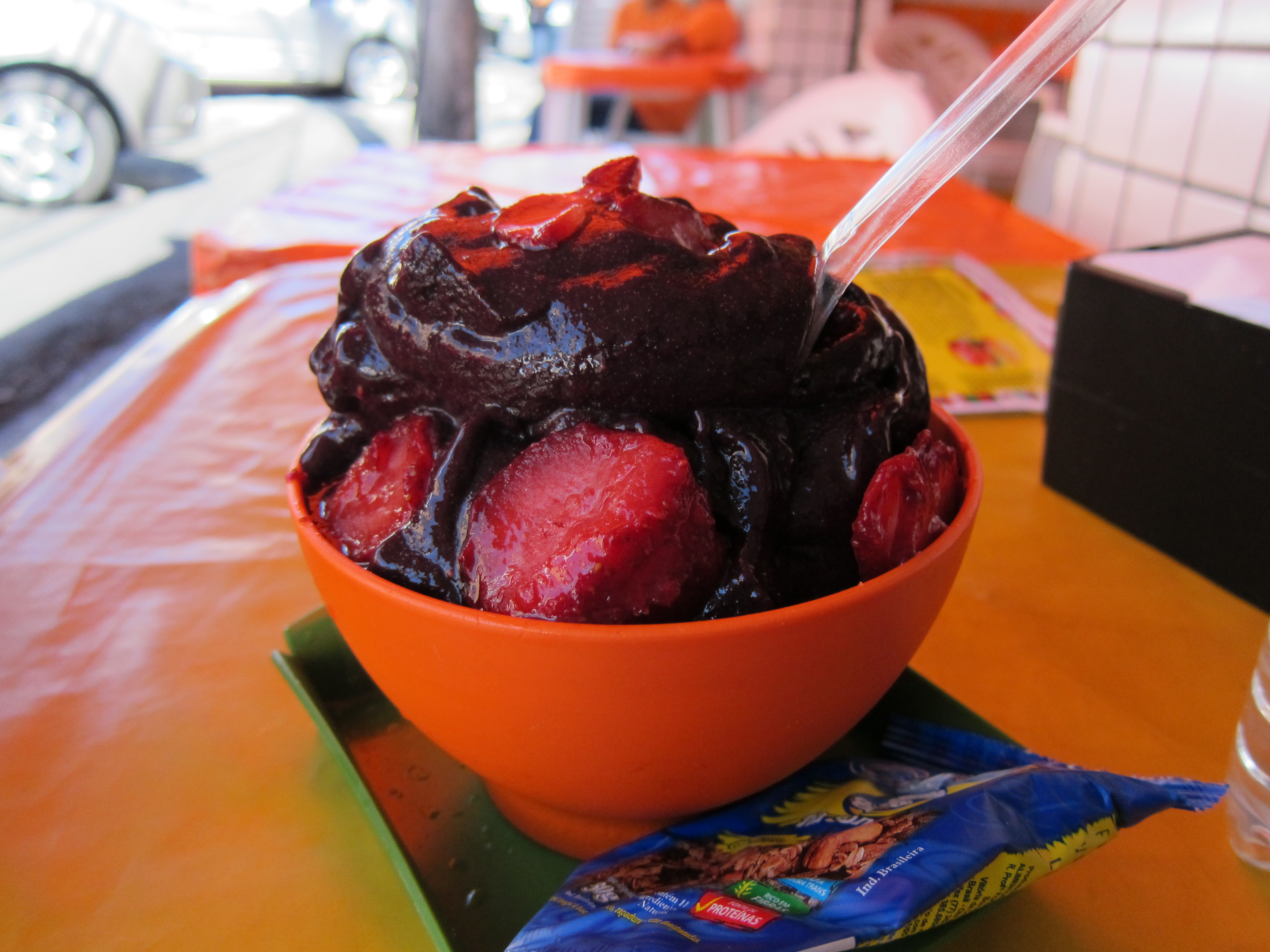
It seems that each new country we visit has an everyday snack treat that comes to us as something of a revelation. In Greece it was Yogurt and Honey, and in Brazil it must be the açaí bowl, known here as Açaí na Tigela. Açaí fruits, the product of a species of palm tree well-known in Brazil, has been making the rounds in the United States since about 2004, advertised by the health-conscious for its “antioxidant” properties (which has no factual basis, sorry to say). So why do we like açaí? Because its dark, sweet, rich pulp makes for some darn good eats, especially when – Brazil style – you blend it, ice it, top it with fresh fruit and granola, and serve it up in a plastic 700mL bowl all for around R$10 (about US $5.50). Yes, please!

Luckily for us, three great açaí bowl establishments are just down the road from our apartment in Salvador: Fabrica de Sucos (“Juice Factory”); Bom Sabor (“Good Flavor”); and Suco 24 Horas (“24 Hour Juice”), winner of nine consecutive “Best Açaí” awards from the annual food issue of Veja Salvador. We decided not to trust the food critics – isn’t that our job, anyway? – and try all three to determine the ETW Best Açaí in Salvador.

We should state now that between the three places we tried, we found no substantial taste difference between the actual açaí. It all came down to the extras. First up: Suco 24 Horas, the longtime reigning champion. Pluses: the açaí, like the others we will review, was ice-cold, with a rich, velvety flavor. Our server separated our order into two bowls (always helpful), and the free granola topping was a solid touch.  We left very happy with our purchase: R$10.00.

Second: Bom Sabor. We initially felt bad for Bom Sabor, since everyone was sitting at Suco 24 Horas, and the nice front-of-house hostess there seemed unable to convince anyone to stop by. But the second time we came back, there were a few people, probably because Suco 24 was full. That said, we left very impressed: though the serving size (700mL) was the same size as at Suco 24, it sure looked like more to us. Our toppings – banana and strawberry – were both fresh, and the granola at Bom Sabor was also free (and the same variety, Tia Sonia). Total cost: R$10.50, and an extra point for having a festive orange bowl (as opposed to the bland ones at Suco 24h).

Last up: Fabrica de Sucos. Note, savvy readers, the lack of photo. Fabrica de Sucos was out of the running as soon as they decided to charge us for granola. When the two places next to you are giving granola away for free, you had better be producing so darn good – ney, damn good – açaí for us to consider you. But your taste was no better, if not slightly worse, and the granola was exactly the same as at your two competitors. Sorry!

For us, the winner was pretty clearly Bom Sabor. We thought their portion was more generous, we like their toppings better, and frankly, they had a more enjoyable bowl. We’ve made two trips back since our initial taste tests, and we are still confident in our decision. And after a hot and humid day of walking around Salvador, there really is nothing more refreshing than a good açaí bowl from Bom Sabor.

3 Comments

Filed under Reviews

Coffee Culture in India

India FlagWhile India is famous for its storied tea culture and ubiquitous tea stands, the BBC reports that now the coffeehouse is beginning to take hold, especially for its social aspects.

2 Comments

Filed under Coffee, Links

Paris vs. NYC

Paris vs. NYC

Macarons vs. Cupcakes, Cheese vs. Cheesecake, Patisserie vs. Pastrami. Vahram Muratyan’s Paris vs. NYC blog compares the cuisines, attitudes and styles of each iconic city in colorful graphics. While we were in Paris we saw the book based on the blog for sale, and it is now available stateside! You can buy the book online, along with art prints of the images.

Leave a comment

February 9, 2012 · 12:42 PM

Côte d’Ivoire Cuisine: More to come!

Market in Abidjan, Côte d’Ivoire: via Loisperris

Here at ETW, we like to keep our readers happy. And being the nerdy academics we are, we also like to keep track of our blog stats, and the data say we get a lot of traffic for our writings about Mexican moles, French macarons, and Caribbean cuisine.

But we were surprised to find we are one of the top hits on the internet for “Côte d’Ivoire Cuisine” and “Côte d’Ivoire Food.” While we are pleased that Ivorian and Ivorian cuisine enthusiasts love us, we feel we have disappointed you, as our only post on the subject is a review for a now-defunct restaurant.

On top of that, Chicago’s only Ivorian restaurant – the apparently once-excellent and delightfully authentic Au Maquis on west Howard Street – closed some years ago and has since been replaced by a Dunkin’ Donuts.

So what to do? We want you to know how much we love West African food and African Cuisine on this blog, and if you want it, you are going to get it. We’ll check out more recipes from Côte d’Ivoire and its neighboring regions, do some solid exploring to find the best West African cuisine in Chicago and on the rest of our travels, and continue to spread the word of one of the world’s great culinary traditions. It’s what we do.

1 Comment

Filed under Note

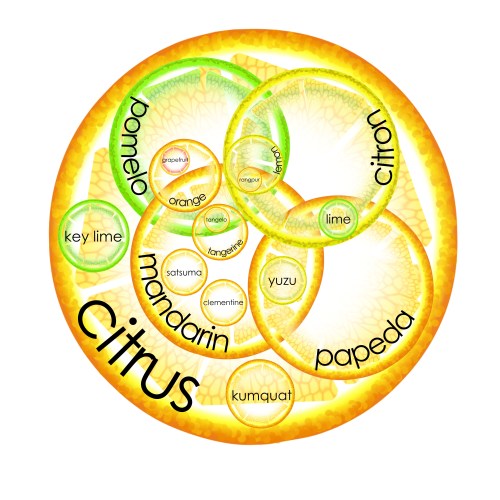
What is an orange?

What is an orange?

Cut Squash has an amazing infographic about the various hybrids that make up the citrus fruits we know and love. Very informative and surprising.

Leave a comment

February 8, 2012 · 9:31 AM

Adventures in Brazilian Produce: Pinha or Fruta-do-conde


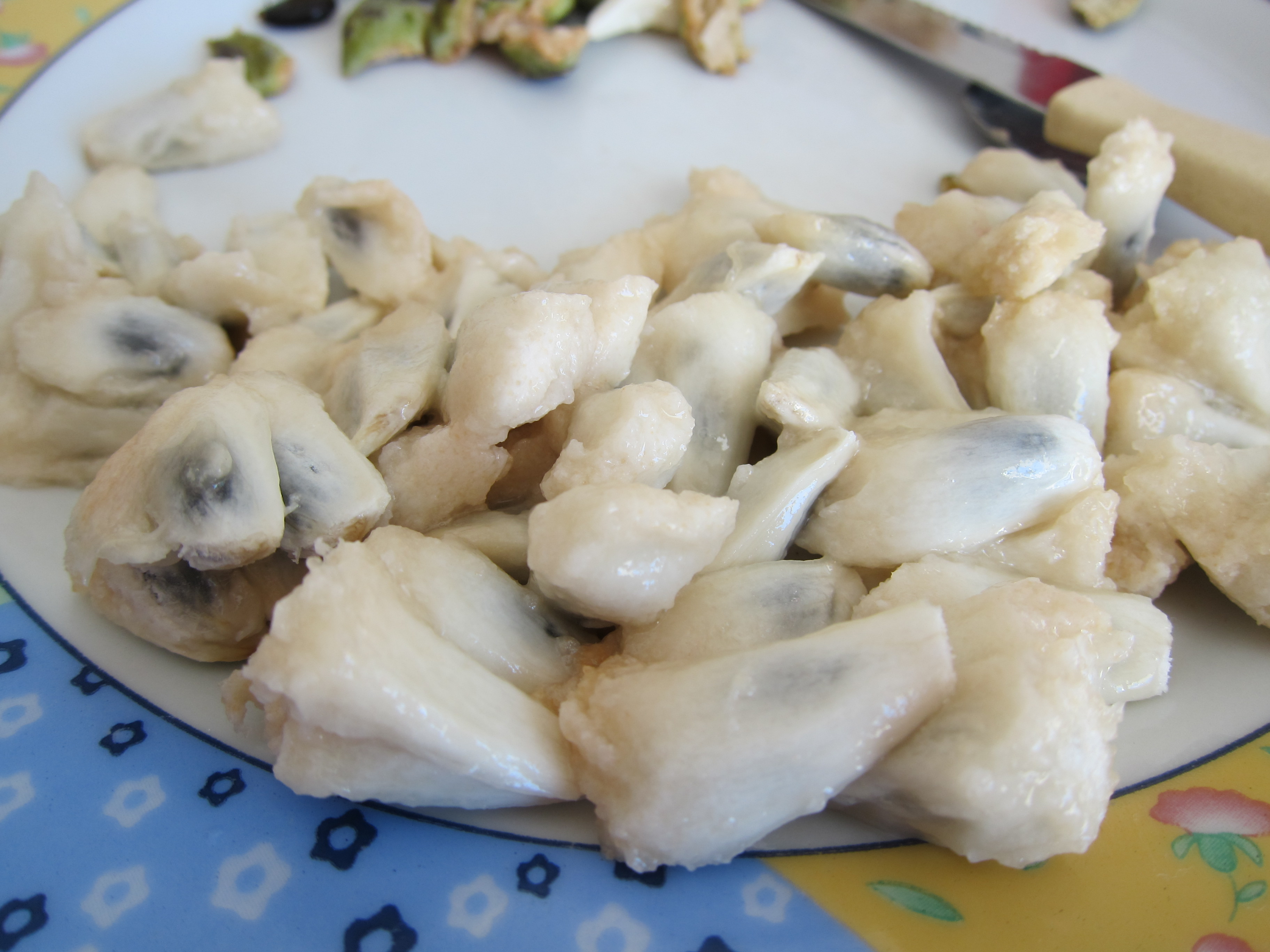
…AKA the Fruta-do-conde or the Sugar Apple. Having been in Brazil for a month, we still don’t know exactly what the proper name for this fruit is, but we know we like it. Here, we are finally getting used to the concept of buying fruits unripened, so the first time we bought a pinha, we didn’t understand what the big deal was. It tasted hard and bland, like an unsweetened pear. But then we figured out we had not let it ripen enough. To properly enjoy a Sugar Apple, you need to let it almost overripen, to the point where the fruit becomes so soft you can squeeze it open with a slight press of your hand. The days passed with anticipation, and we finally got it right. You can gently peel off the green outer layer, and squeeze out the flesh right onto a plate.

Sugar apples are filled with 50 or so black seeds, each of which is coated with a generous helping of flesh. Just pop the seeds into your mouth and squeeze the fruit off. The flesh hits notes like a very sweet, sugary pear; the sugar so dense you can practically feel the crystals in your mouth. It’s a great afternoon snack, and easy to store once you’ve squeezed out all the seeds. They are so readily available in Brazil, we’ll be sad when we have to head home, but we did read recently they are trying to grow the fruit in Florida, so we’ll see!

2 Comments

Filed under World Eats

If we had an ice cream maker….

…we would definitely make this Thai Tea Ice Cream – it sounds amazing!

Leave a comment

Filed under Links, Recipes

SENAC Restaurant School in Pelourinho, Salvador

  SENAC Restaurant School
Praça José de Alencar, 13/19
Largo do Pelourinho
Salvador – BA, Brasil

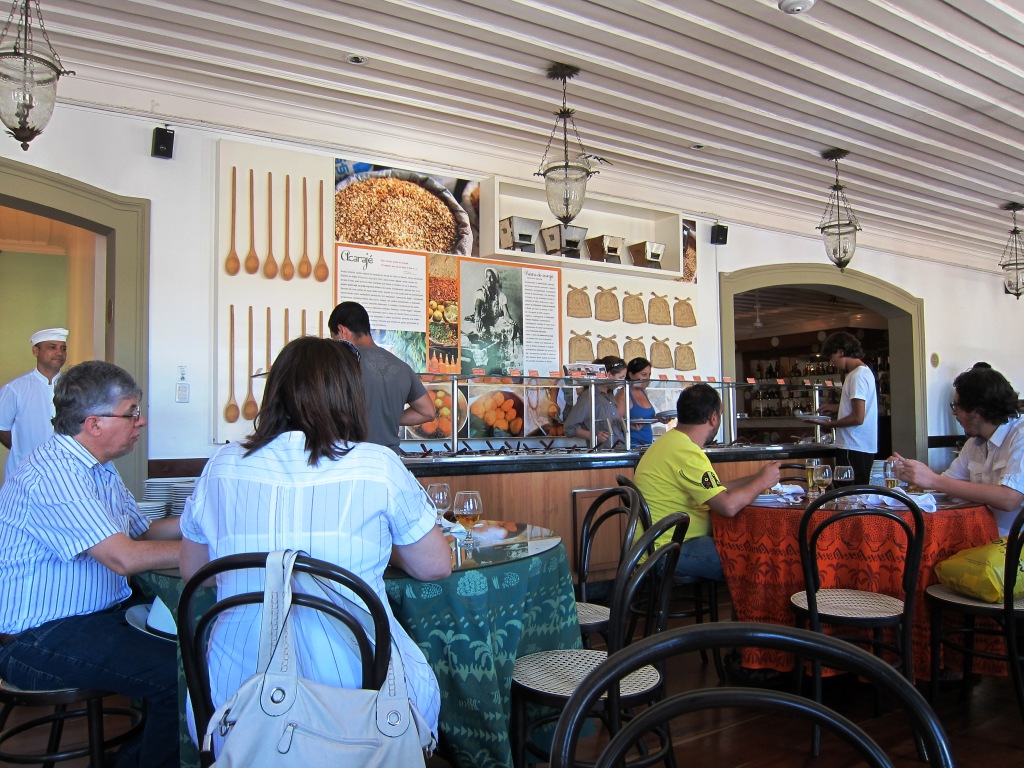
Regional Bahian cuisine has a flavor and style all its own in the landscape of Brazilian food. Its Portuguese and Dutch European backings, and Native Brazilian undertones and flourishes, and all heavily impacted by Bahia’s major western and central African influences. And you can experience the best of all of these wonderful flavors served up at the SENAC Restaurant School, which offers both “food by the kilo” and all-you-can-eat buffet options at reasonable prices. We opted for the buffet, run by the state restaurant school, and offering a wide variety (40+) of dishes including appetizers, mains and desserts, all prepared by students. The restaurant is open for lunch every day from 11 AM to 3 PM and the cost is 36 Reais per person as of writing (about $20) which is a pretty good price for an all you can eat buffet, even by Salvador’s very reasonable food prices.

For sheer breadth alone, this is a great way to get an introduction to a wide variety of Bahian foods. The appetizers and main courses are displayed in a traditional steam table, with a separate little table for desserts. Our chosen appetizers included:

  • Acarajé – Iconic Bahian fried bean patties (as described previously here)  flavored with ginger and dried shrimp
  • Abará– a variant on acaraje, but cooked in a banana leaf, much like a tamale
  • Farofa – toasted manioc
  • Vatapá, – paste made from coconut oil, peanuts, cashews, peppers and dried shrimp – typically used as a garnish for acarajé
  • Coconut Rice

Main courses:

  • Xinxim – chicken stew flavored with dende oil and spices
  • Carurú– Stewed okra in palm oil
  • Moquecas – one of the classic Bahian dishes, the food everyone’s Mom makes best. Moquecas are usually seafood stews made with coconut milk, and garnished with farofa, carurú, cilantro, and tomatoes. SENAC also served a chicken moqueca, but in tasting this was indistinguishable from the xinxim.
  • Feijoada – Brazil’s national dish, a hearty and smoky black bean and meat stew
  • Crab and Shrimp Salad

And the desserts:

  • Cocadas – fresh coconut patties mixed with a lot of brown sugar, coming in a variety of tropical fruit flavors
  • Quindim – Egg and Coconut tarts
  • Portuguese egg tarts
  • Ambrosia – Condensed milk, cinnamon and egg dessert(almost pudding-like)
  • Fresh  fruit

We can only assume that there is little change in variety each day, especially given the wide range of selections they already put out.  We’ll readily admit that while none of the food blew us away, the price, variety, and very solid and tasty dishes definitely met our expectations. And in addition to the food, the view is nice as well – located on the 2nd floor of one of the Pelourinho district’s many restored colonial buildings, it looks out onto Salvador’s most famous square below, and the many windows provide a nice breeze. SENAC’s friendly waitresses are dresses as baianas, and are very attentive (drinks are extra, about R$2). So if it’s your first day in Salvador and need a reasonably-priced way to experience Bahian cuisine, head to SENAC.


Leave a comment

Filed under Reviews