Category Archives: Reviews

Cacahuates Estilo Japonés (Japanese-Style Peanuts)

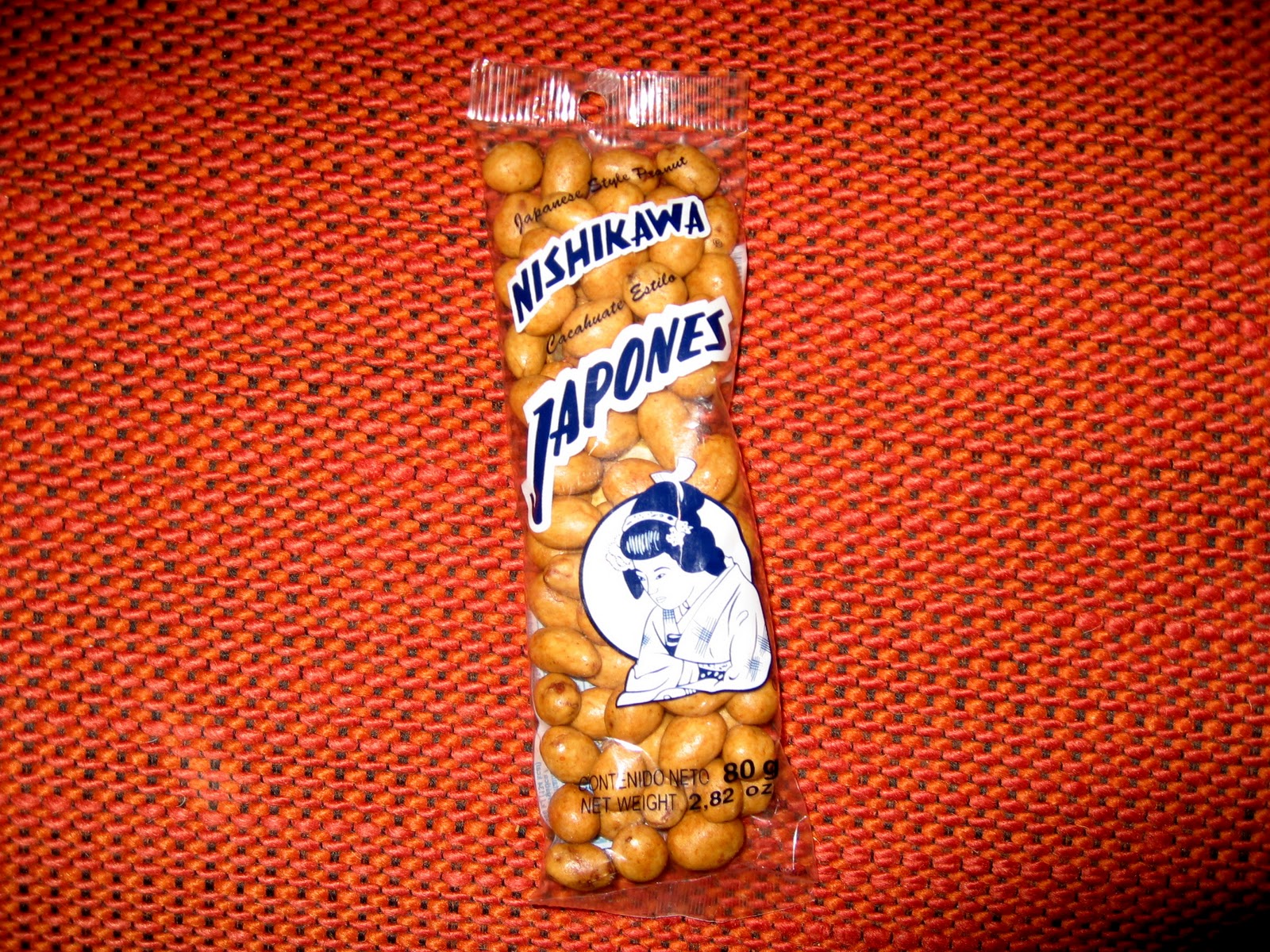
In July, we attended the wedding of one of our good friends – a Mexicophile – and a wonderful man from Puebla state. They had excellent wedding favors: a packet of candy, filled with their favorite candies from Mexico and the U.S. We were particularly struck by what a blue plastic packet of “Cacahuates Estilo Japonés” (literally “Japanese Style Peanuts.”) They appear to be unique to Mexico: large peanuts, de-shelled, covered with a thick, dried sweet coating with a hint of soy sauce. It took us a couple minutes to figure out that the coating we even edible (too used to shelling peanuts at baseball games, I suppose!), and when we finally did, we were perplexed by the texture and the flavor. After that, they became one of our go-to snacks: salty, sweet, crunchy, and soft all at the same time. A bit of research has yielded no definitive answer as to their origins: unique to Mexico, they appear to have no relation to Japan other than a hint of soy flavor. Beyond that, it is unclear how they were developed in Mexico, and who developed them. The best part, according to Slashfood contributor Joe DiStefano, is the packaging, which depending on the brand “which ranges from a geisha to a Mr. Peanut-type character dressed in a baseball uniform.

Nishikawa brand Japanese-style peanuts (via The Grande Enchilada)

4 Comments

Filed under Reviews

Nasi Lemak: National Dish of Malaysia

Until a few days ago, every medal won by the country of Malaysia had been won by a male in badminton,. That all changed with 19 year-old Pandelela Rinong, who won a bronze medal in women’s 10 meter platform diving. Rinong was also the flag-bearer for her country at the opening ceremony, and it is easy to see why: the interview she conduced with NBC reporters after winning her medal could have been a commercial for the Malaysian tourism board, with Rinong endlessly beaming with pride over being Malaysian.

The national dish of Malaysia is Nasi Lemak, a rice-based dish cooked in coconut milk and served on a pandan leaf. The name translates to “rich” or “fatty” rice, a name derived from the cooking process: the rice is steamed and simmered in coconut milk, giving it a rich and creamy texture and flavor. That done, the nasi lemak is served with any number of accompaniments, depending on the time of day (it can be breakfast, lunch, or dinner): this usually includes sambal, along with sliced cucumber, hard-boiled egg, anchovies (usually fried), roasted peanuts, and meat. Then, just mix and match the flavors any way you wish! We can only assume the dish is plentiful at all times of day on Jalan Alor, the main eating street in Kuala Lumpur, but unfortunately we did not sample it on our 12-hour layover tour of KL in 2010. We’ll have to go back – Pandelela, want to take us on a tour of your capital? You seem just like the person to do it!


2 Comments

Filed under Reviews, World Eats

The Olympics and British Cuisine

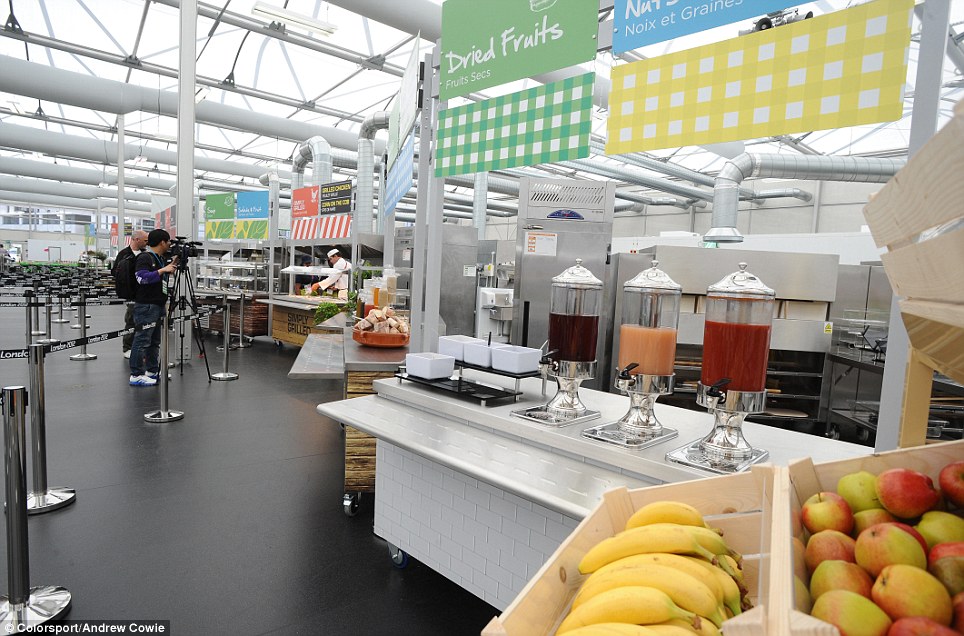
A view inside the Olympic Village Dining Hall – courtesy of The Daily Mail

The 2012 Olympic Games begin today in London, and Britain is using the international exposure to rebrand its still paltry international culinary reputation. Of course, anyone who still believes Britain has terrible food has either not visited London in the past ten years or, if they did, managed to have their heads stuck in the Underground for too long. As Henry Chu of the LA Times noted, London is a very different place from when it last hosted the Olympics (1948), and Londoners today are used to having the world at their doorstep. But just in case you missed the memo, here’s some light reading to catch you up: The New York Daily News is asking whether or not the Olympics can put British cuisine back on the menu, noting that the Olympic Village’s main dining hall contains a number of different culinary zones highlighting the international influences that make up the British culinary menu, including “Best of Britain; Europe, the Americas and Mediterranean; Asian, and Afro-Caribbean” cuisines. Meanwhile, Gavin Cleaver at An Englishmen in BBQ Sauce (he’s a Briton writing in Dallas – get it?) has a celebration and occasional loathing of British cuisine, dishing out gold, silver, and bronze medals (try the curry!) in an Olympics of British food. Lastly, Katrina Heron at The Daily Beast outlines how, as spectacular as the Beijing Olympics were overall, they were an unmitigated culinary disaster, with terrible food that kept running out. Instead, in London, they are trying to launch a “culinary revolution,” insisting that this Olympics presented “an unprecedented opportunity to look at our diets and our health, at our catering industry, at the state of our farms, and to commit to a long-term plan for good food and environmental stewardship.” Internationally diverse, readily available, locally sourced, delicious food? London, we wish we were there too.

Leave a comment

Filed under Reviews

Chickpea flatbread from France: Socca

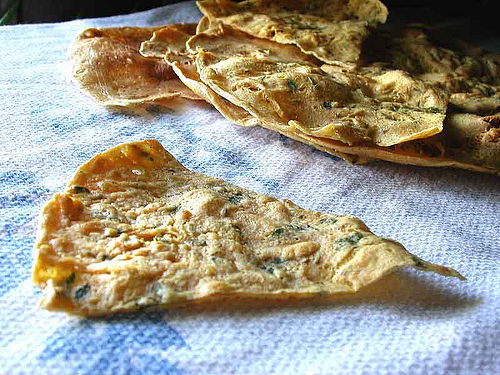
Socca by Chotda

We searched high and low yesterday for food related to Bastille Day, but the consensus seemed to be that pretty much anything goes. That gives us licence to highlight one of our favorite lesser known French street foods, Socca. Socca, originating in Nice, France is a flatbread made out of chickpeas. Since Nice is so close to the Italian border it is no surprise that there is an Italian version of Socca, called Farinata that is nearly identical. Given the Sicilian proclivity to chickpeas and our love of street food, it is no surprise that we are big fans of Socca. Socca is simply made out of chickpea flour and olive oil, and can be made very thin and crispy, as seen above, or can be much thicker, with toppings like a pizza. However, according to purists, in order to properly make a Socca, you need a special copper pan and a wood-burning oven.  Fortunately The Minimalist assures us that making Socca at home isn’t really too daunting of a task, and the homemade result can be as good as what you find on the streets of Nice. The ingredients really are just that simple, and Lottie and Doff ups the ante a little with the addition of rosemary. As the Kitchn points out, it is also naturally gluten-free!

1 Comment

Filed under Reviews

Mexico: Huaraches Dona Chio

Huaraches Dona Chio
1547 W. Elmdale Ave.
Chicago, IL

When we got back from Brazil we went straight for the food we craved most – in our case, BBQ and Mexican food. Fortunately, Chicago is more than overflowing with Mexican eateries, so we decided to try someplace new. Huaraches Dona Chio had a reputation for being difficult to find, but the big awning meant we did not have any trouble.  On a chilly and blustery day, there could be nothing more comforting than some fresh Mexican food. Inside, the welcoming yet spartan space provides a few tables and an open view of the small kitchen where Dona Chio herself was busily at work preparing the food for the night. Her specialty? Huaraches, a type of thick, open-face masa tortilla from from Mexico City. Huarache toppings provide an almost endless variety, and HDC did not disappoint.

You can get the regulars at HDC: the usual tacos and burritos, and quesadillas. But you come for the huaraches. Naturally, we selected two huaraches as our entree (at only $6.50 each, how could we not)? L got the tinga (it came highly recommended) and M picked the huitlacoche (still his favorite from his time in Mexico). Tinga was by far our favorite. The huitlacoche was topped with both mild green and spicy red salsa, black beans, corn, white onions, cotija cheese and cilantro. The tinga, shredded chicken marinated in chipotle sauce,  was topped with white onion, cilantro and a hearty helping of cotija cheese. We’ve tried a few places around town and also in other cities and these were definitely the best huaraches we’ve had. The masa was not soggy (a problem we encountered elsewhere), and the toppings were extremely generous.

Our dining companion went a more conservative route and got a plate of tacos ($2.50), noting they were excellent as well. To finish up the meal M ordered a banana chocolate smoothie. With our time in Brazil, we will never take for granted the great Mexican food selection in Chicago again (side note: We met up with a friend from Guatemala in São Paulo, who is planning on starting a Mexican food distribution business in Brazil. We hope he succeeds!). Huaraches Dona Chio is one of the fine examples: small, family-run, and serving up great regional Mexican dishes to a small but discerning clientele.

Tinga huarache, we miss you already!

Leave a comment

Filed under Reviews

A New Place for Falafel: Falafill

Falafill
Various Locations in Chicago, IL

The Eaters – especially L – are pretty particular about falafel. It’s no exaggeration to say we make a point to try falafel in pretty much every city we go to. In all our travels, a few places stand out above the rest. Pita Inn in Skokie has some of our favorite falafel in Chicagoland; while the expanding fast-food joint Maoz remains our all-time favorite, owing to their great falafel and toppings. Maoz’ Philadelphia location remains the standard by which L judges all other falafel, a shining beacon of perfection on the Delaware River, never to be equaled….Until today.

We like the logo!

Falafill, a brand-new falafel lunch spot in the Loop, may have perhaps the best topping bar we have ever encountered, and while its falafels may not be as good as Maoz, the topping bar and the excellence of the falafel otherwise may actually put this place over the top in L’s rankings. Falafill starts out appealingly, with a sleek and appealing dining area decorated with falafel witticisms perfectly suited to the Facebook generation. On the food side, the simple menu is complemented by an impressively wide range of sodas and juices: M got a mango yogurt drink , while our old salty yogurt favorite Ayran was also available. The menu is simple. Pick your falafel (classic, curried, or seasonal – all with fries)  in a pocket or a bowl ($5.95/$7.95). The seasonal falafel when we visited was white bean, and we heard from our dining companions that it was out of this world. L opted for some classic falafel and M for the curried, and a side of some sweet potato fries ($2.95).

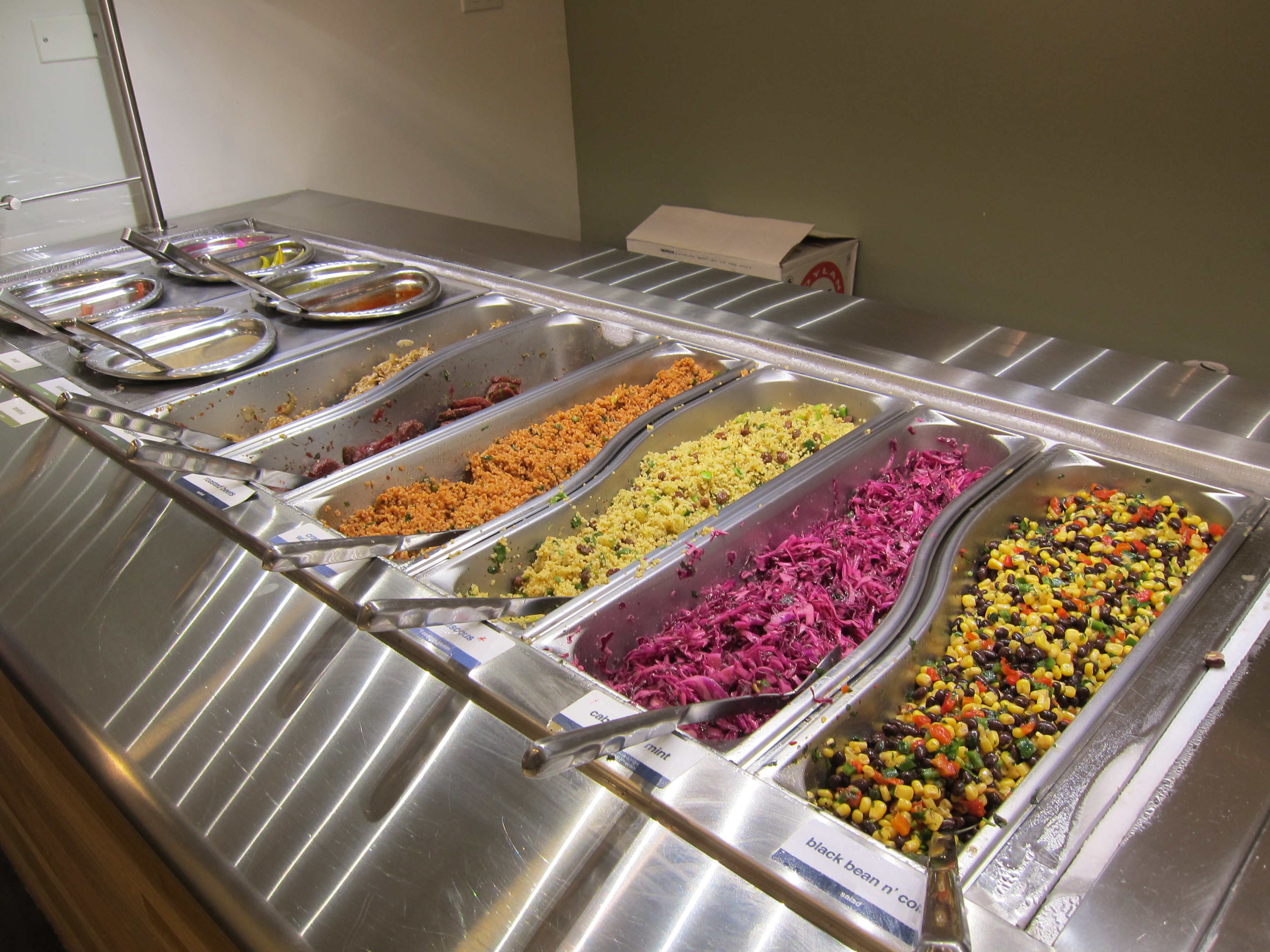
The toppings bar at Falafill. Amazing.

Both falafels, curried and classic, were cooked to order, and perfectly spiced.  L’s classic had the hallmark appealing green color that means there ‘s fresh parsely and cilantro inside. Yum! The fries were also tasty and crisp, not soggy like many other sweet potato fries. Yet what REALLY sets Falafill apart is the Mezza bar, where you can select all the toppings you want for your falafel. As expected, the salad bar contained hummus, baba ghanouj, lentils, tatziki, harissa tabbouleh, all middle eastern standards we love. In addition, we were really excited to see some awesome new flavors at the bar, including cracked wheat with pomegranate, beets, toum (garlic sauce), zough (jalapeno sauce) black bean and corn salad, and cabbage and mint. Each order of falafel includes a trip to the salad bar, and there is no limit to how many toppings you can add. For those who are obsessed, you can order simply a bowl ready to fill with mezza toppings ($6.95). All in all, for under 8 dollars you can create an out-of-this-world falafel experience with a wide variety of contrasting flavors that will have you full for days. Falafill is now one of our go-to Loop lunch spots, and like L has sacrilegiously stated: if not her favorite falafel place in the United States, it is definitely giving Maoz a run for its money.

Comments Off on A New Place for Falafel: Falafill

Filed under A New Place, Reviews

We eat the menu at Mercat a la Planxa

Mercat a la Planxa
638 S. Michigan Ave.
Chicago, IL

One of the best things about tapas restaurants is the huge variety of food options, however, it is also the worst things since there is never any way to try all of the enticing options. So when we had the occasion to go out in a group of four we figured a tapas restaurant would be perfect, thereby upping everyone’s chances of enjoying as many dishes as possible. Mercat a la Planxa, helmed by Jose Garces, has been open since 2008, and specializes in Barcelona-style tapas. The menu changes frequently and has a rotating selection of traditional and more avant-garde tapas, as well as fish and meats “a la planxa” (“grilled”). We went to Mercat with quite an appetite, so we were excited to sample the extensive tapas menu. You’ll find what we had below, along with menu descriptions. As you might notice, all of the dishes have Catalan names – very Barcelona!

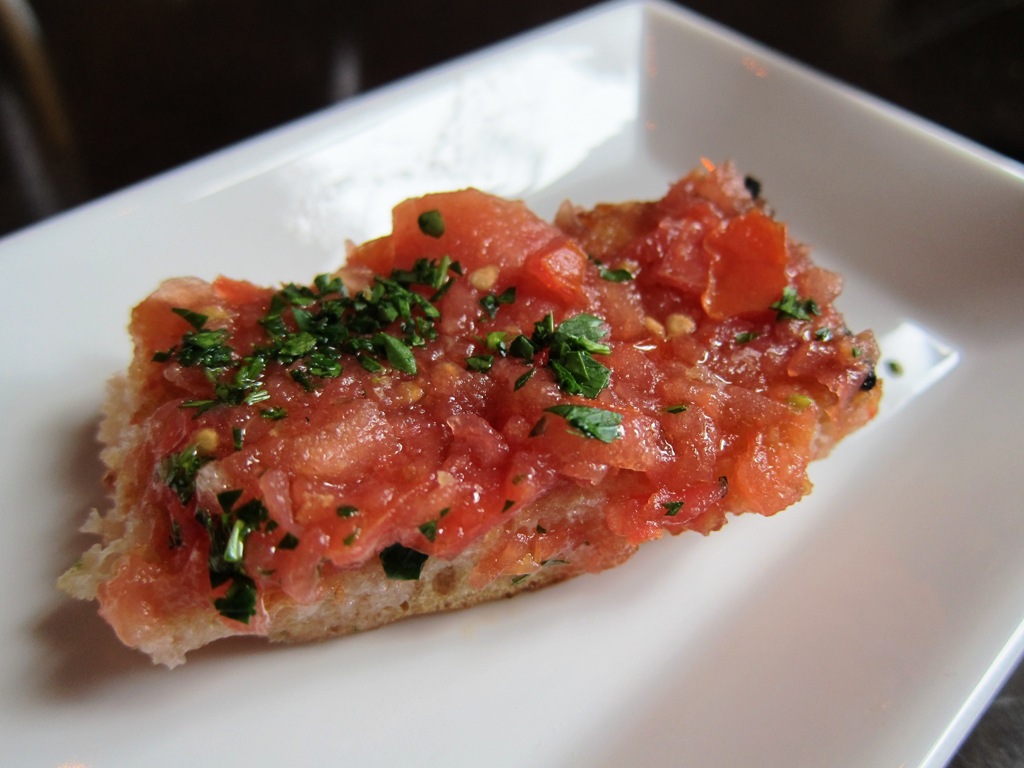
At the start of the meal we were presented with the house Pa amb tomàquet, a kind of riff on bruschetta. Typically,  Pa amb tomàquet is typically a lot lighter on  tomato, but we liked this non-traditional take as well. Next, we picked from the Spanish cheese selections, and tried La Peral, a Cow’s Milk Cheese with Apricot-Cider Mustard ($9) and Garrotxa, a Goat’s Milk cheese, roasted garlic dulce de leche ($8). Garrotxa is one of our favorite cheeses, and it paired perfectly with the dulce de leche, the Peral was good, but less memorable. Next, we had an order of Gambas al ajillo – Garlic Shrimp ($10) – a classic tapas dish, perfectly executed, though the portion was a little small.

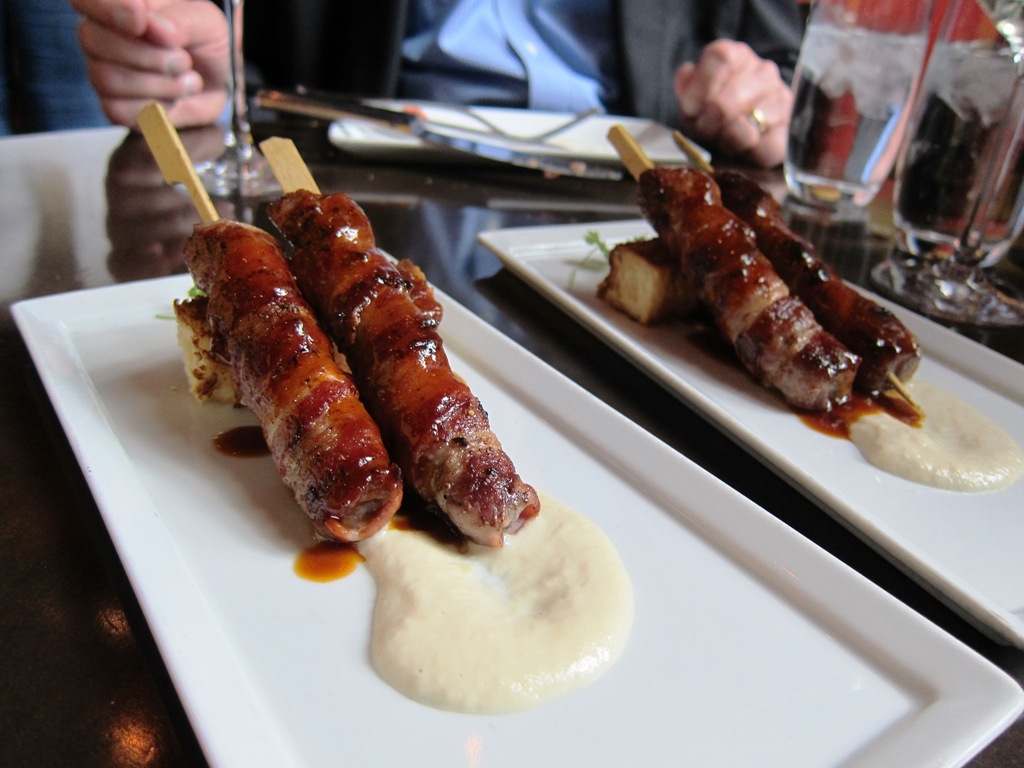
Pintxos Muranos – Lamb brochettes wrapped in bacon with a lamb jus ($14). Another classic tapas dish, this one was M’s favorite, which was not surprising, given the wrapped in bacon. Since the brochettes were served on skewers, they were a little hard to share, so the two non-bacon lovers ceded their portions.

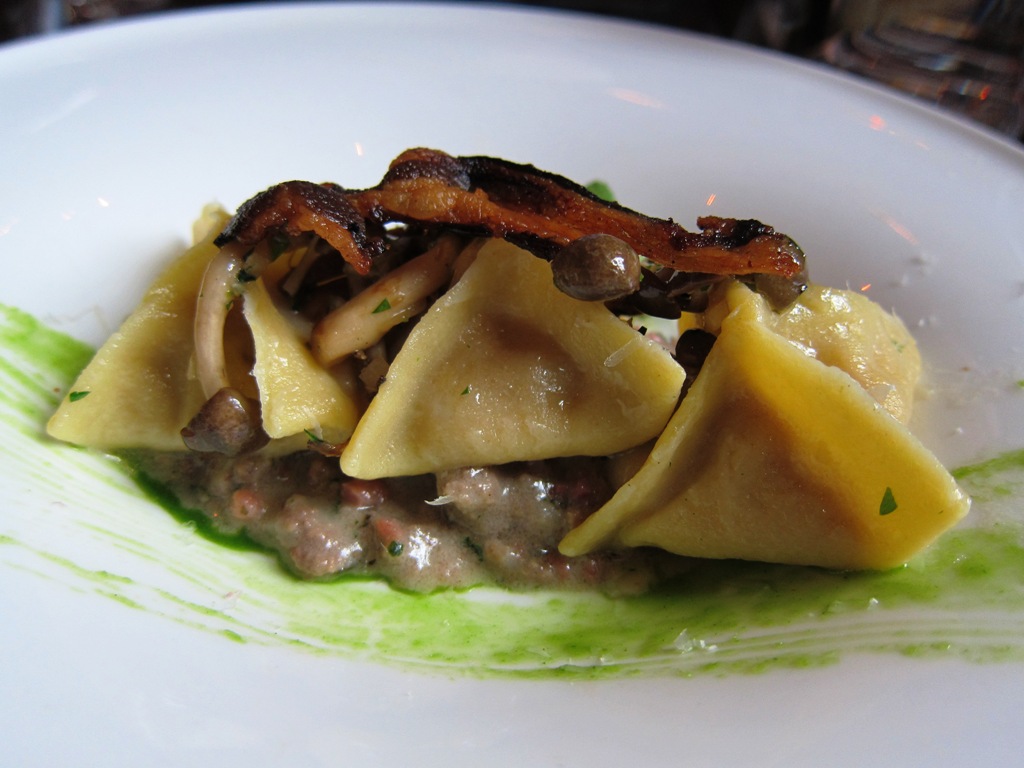
Next were the Pelotas de calabaza y cordero, Butternut squash dumplings, lamb ragout, beech mushroom escabeche and black truffle ($11). What looks like fried bacon in the photo above was in fact mushroom, which had an amazingly earthy flavor. The dumplings were more like squash-filled ravioli, and were tasty, though the lamb ragout definitely stole the show.

Black Angus Rib Eye – 12 oz. ($42). The steak was good, but probably nothing we would really get again at a tapas restaurant, good for the two major carnivores at the table, though. Looks like we forgot to get a photo…oops.

Mar i Muntanya (“Sea and mountain”)- Serrano-wrapped yellow fin tuna, potato croquette, foie gras torchon, pickled pearl onion. The yellowfin tuna was wonderful, but we’re not sure it needed the foie gras on top, maybe we aren’t just big foie fans though. The pickled pearl onions provided an unexpected tangy zip, and the potato croquettes were both substantial and flavorful. We also appreciated the beautiful presentation.

Gratin de Escalivada (“Grilled Gratin”) – Oven baked roasted red peppers, tomato, eggplant & cipolini onions with goat cheese and grilled sourdough ($10). There needed to be more goat cheese with this dish (as with any dish), the grilled veggies were fine, but nothing to write home about on their own.

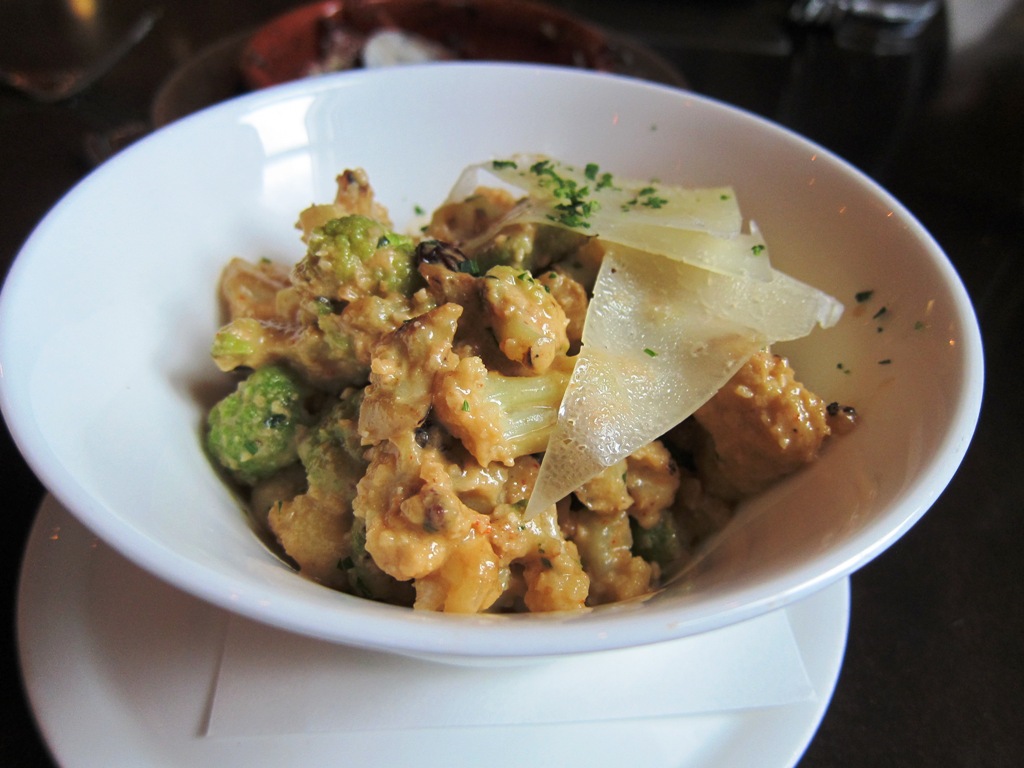
Coliflor amb Xato – Roasted cauliflower with currants, padron peppers, truffled tarragon xato and shaved manchego cheese ($13). Despite never ordering cauliflower out on a regular basis, we found this take on caulifower was unexpectedly delicious, and perfectly complemented by the spicy xato sauce (Xató sauce is made with nuts, vinegar, garlic and nyora pepper). This was L’s pick out of the tapas we ordered.

Patatas Bravas – Spicy potatoes with spicy paprika aoili ($5). This is an item we always have to order at a tapas joint. As you can see from the presentation above, this is more of an avant-garde take than the usual haphazard potato cubes, with each potato being formed into a little fried cake, topped with a dollop of spicy sauce.

Plantain empanada – Spinach, Manchego & Piquillo artichoke escabeshe ($10). Though it arrived with our savory foods, the empanada provided a hint of plantain sweetness. The piquillo pepper was a nice contrast to the somewhat-rich empanada.

Horchata Bon Bon – Horchata ice cream, dark chocolate, cinnamon, puffed rice, coconut crema and marcona brittle ($3.50). The bon bon was filled with ice cream – and the combination of flavors was absolutely perfect! The Spanish horchata flavor (made from Tiger nuts)  was rich and almond-y, and worked perfectly with the cinnamon and coconut flavors. The marcona almond brittle was also a nice touch.

Our final dessert was the Pastissos d’Avellana (“Hazelnut Cake” – sounds better in catalan, no?) Hazelnut Mascarpone gateux, apricot, dulce de leche, salted hazelnuts, apricot sorbet ($12). This was a very successful take on cheesecake, with a rich hazelnut flavor. The apricot sorbet was also delicious, and tasted exactly like biting into a fresh apricot.

We enjoyed Mercat a la Planxa, and we were happy to try both the traditional and nouveau tapas dishes. We think the new takes on tapas were really Garces’ forte, and our favorite dishes were the more unusual ones. We were pleased with our choices – but there was one item we really were coveting – we noticed a party table next to us getting a suckling pig (cochinillo asado), which looked absolutely fantastic ($220 for half, $440 for a whole). However, you have to order the pig 72 hours in advance, so you can’t order it on the fly. Maybe next time… thanks also to our dining companions, who helped us sample this veritable feast!

Leave a comment

Filed under Reviews

Our first – and last – visit to Testaccio Market

We absolutely love Italian markets. From Philadelphia to Siracusa to Rome, there is nothing better than the hustle and bustle of purchasing fresh produce, fish, bread, olive oil, prosciutto, and cheese from knowledgeable folks who have been doing it for years and years. As such, we were a little disappointed when we went to Campo di Fiori market in Rome and found it overrun with stands catering mainly to tourists seeking weird dried spice mixes (“Taco Spice”, “Aphrodisiac Romance Spice,””Pasta Spice” etc.). Not exactly what we wanted.

Yet relief awaits. Just cross the Tiber river, to the Testaccio neighborhood. It’s full of old buildings and quaint cafes, along with beautiful churches tucked into hidden courtyards.  Testaccio is also home to one of M’s favorite Roman sites – the Pyramid of Cestius – as well as the nearly 100 year-old Testaccio Market.

Right away we could tell that this place wasn’t designed for tourists. The Testaccio market was the real deal. It makes its home in a partially enclosed structure with huge glass skylights, containing vendors selling any kind of delicious item, from meat to bread to veggies. The market was crowded, even at the afternoon hour, and was full of locals chatting and haggling. We spotted tourists, too, but the market certainly wasn’t geared to tourist tastes. One of our favorite stalls was dedicated completely to tomatoes – manned by a kind Sicilian woman who let us sample a few of tomatoes (you can find a few of the varieties below). We also ended up buying arugula, bread, cheese, and some prosciutto all to make a little picnic in the Borghese Gardens.

Sadly, we recently learned that Testaccio Market will only live in its current state until the end of the month. Parla Food give a particularly bleak outlook for the market’s future: moved to a new building, the new market is ugly, built on a parking garage, and worst of all, will charge nearly double for vendor space. Seasoned vendors will probably close up shop instead of pass the expense onto their regular customers, meaning the market could soon morph into another tourist trap like Campo de Fiori. Sounds like a lose-lose situation. Really, since when are Romans known to visit the marketplace by car? Much like the Maxwell St. Market in Chicago, we are sure something will be lost in the move. RIP Testaccio Market.

Leave a comment

Filed under Reviews, World Eats

Panama: Conoce Mi Panama

Conoce Mi Panama
3054 W Armitage Ave
Chicago, IL 60647

Panamanian cuisine, at the crossroads of North and South America, is severely underrepresented in Chicago. In fact, the city had a complete lack of Panamanian cuisine until Conoce Mi Panama opened in Humboldt Park. Conoce Mi Panama is small and homey, and we were welcomed in with open arms right upon entering.  Usually we don’t note the service of a restaurant, unless of course it is really abysmal or, really noteworthy. In this case, it was fortunately the latter. We were totally bowled over by the AMAZING owner of Conoce Mi Panama who came by frequently to check on us, how we liked our meal, and just to chat. Members of our party were also excited that Conoce Mi Panama was BYOB, with no corkage fees (noticing a trend – woohoo!).

The menu consisted of all Panamanian favorites, which seemed familiar, but highly distinct from other Caribbean menus. Of all of our dishes, the appetizers turned out to be the standouts. We had an order of yucca fries with a stellar garlic sauce ($3.50) and a citrus-heavy ceviche that was to die for ($9.00). The yucca fries in particular were flawless, who would have thought something so simple could be a standout?

Yuca frita (Fried yucca strips with mojo sauce)

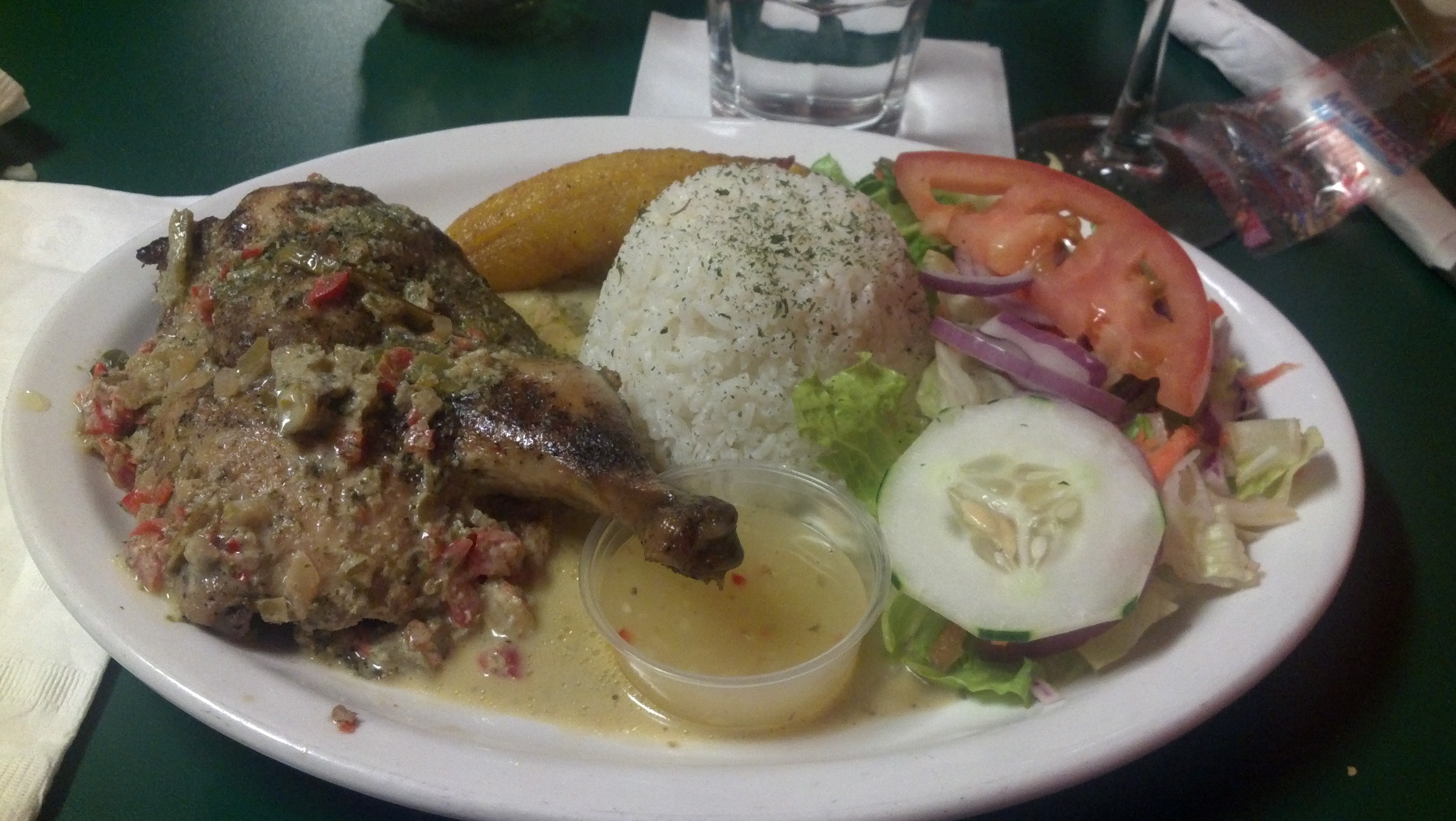
When looking at the menu for entrees, we noted an unusual affinity for cornish game hen. We decided to the half Cornish Hen with a cilantro sauce ($12.75), as well as the chicken with coconut sauce ($12.75). At our table we also ordered the Ropa vieja (shredded steak – $13.75) and Panamanian rice with chicken ($13.75). We enjoyed all of our entrees immensely, but the cornish game hen with the cilantro sauce was a particular standout.

Pollo guisado con coco (Chicken with coconut sauce)

For each entree, there were absolutely huge portions, and each came with sweet fried plantains and a little wilty throwaway salad. The salad didn’t really add much to the meal, so we skipped the salad and went right in for the plantains…they were delicious. For dessert there were sweet fried plantains and vanilla bread pudding (Mamallena) on offer – though we were too full to partake in any sweets. So far, on our first venture, we have to say that we enjoyed Panamanian food, with its mix of Central American and Caribbean flavors. We highly recommend Conoce Mi Panama for its completely friendly and welcoming attitude, and delicious reasonable-priced food.

1 Comment

Filed under Reviews

Kyrgyzstan: Jibek Jolu

Jibek Jolu
5047 N Lincoln Ave
Chicago, IL 60625

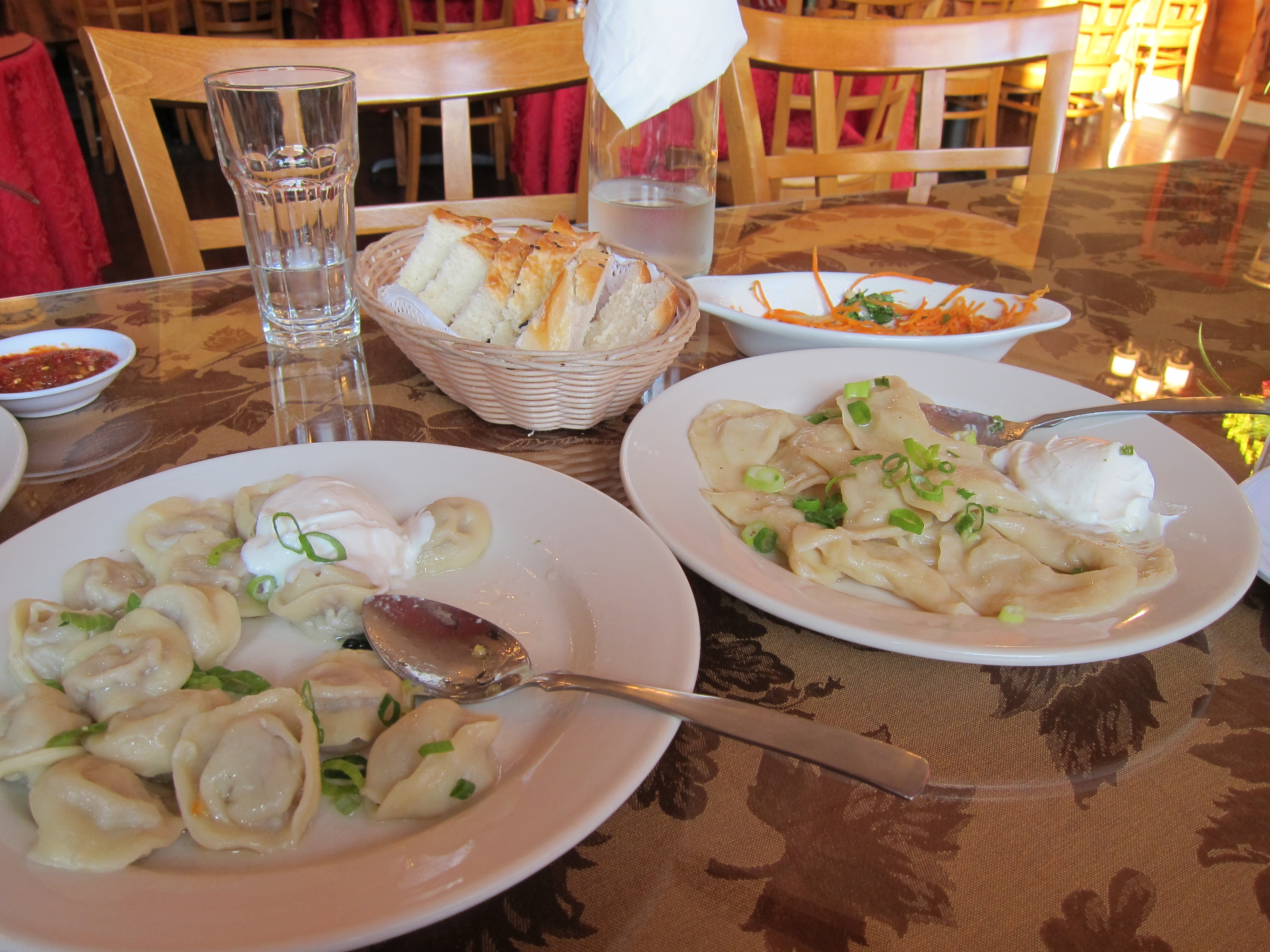
A new country checked off the list! Jibek Jolu has been on our “to try list” for ever (in fact it had even made it on to our hallowed real-life to do list whiteboard), so we were so glad to finally get there and sample Kyrgyz cuisine for the first time. Located in Lincoln Square, Jibek Jolu had a pleasant and bright dining room, with Kyrgyz tapestries on the wall and Russian music videos playing in the corner. Though we went in not knowing much about Kyrgyz cuisine, we were right in assuming it would include both Russian and trans-Soviet specialties. Some were familiar from our previous sojourns to Russian and other former USSR restaurants (Plov, Borscht, Pirojki, etc.), however some were distinctly Kyrgyz, like Beshbarmak ($12.00), a dish of diced, spiced lamb on top of boiled noodles. We started off with the Korean carrot salad ($4) which consisted of shaved carrot and spicy oil dressing, though the jury is still out if it is actually descended from a Korean dish. We also each ordered a plain blinchiki (an absolute steal at $1 apiece) which were amazing – sometimes blini can take on the consistency of doughy lead, but these were light, delicate and fluffy. Not ever having had this sort of blini before, we definitely became converts.

To guide us through our meal, we dined with our Russian friend (M2), an expert on traditional Russian and central Asian cuisine. M ordered the chicken drumsticks, called Okorochka ($7.99). L and M2 ordered Pelmeni ($11) and Vereniki ($8.50). The Pelmeni were stuffed with meat, more properly described as miniature meatballs of ground beef and onion, while the vereniki had a vegetarian potato filling. Naturally, everything was served with a healthy dollop of sour cream.  Both of the dumplings were totally delicious and we could tell they were homemade, right down to the dough. The Okorochka presented two well-spiced drumsticks paired with a filling set of sides: mashed potatoes, pickles, corn, a small salad, and a vibrant and flavorful spicy sauce that really made the dish. M2 declared that this was the best Russian food she had sampled in Chicago, putting fancier places like Russian Tea Time to shame. M2 said the food at Jibek Jolu was of better quality, more adventurous, and much less expensive than any other Russian or central Asian restaurant she had been to in the city, and even we non Russians would have to agree.

The service was sweet and friendly, and the restaurant was slowly filled with people speaking Kyrgyz (always the sign of a good place), and even a few grandmothers (so you know it must be good). M also noted a few little details that improved the service for him. For example, the server left a chilled bottle of water at the table (and didn’t keep annoyingly filling it every 5 seconds, a la Girl and Goat). The best touch was giving two napkins: silverware came wrapped in one napkin and then diners are supplied a second, meaning diners have one for their lap and one to clean off their silverware between dishes or bites – a simple, yet brilliant idea, and one we had never seen before! Jibek Jolu is also BYOB, with none of that corkage fee mumbo jumbo. Overall we loved this place, and it is definitely one of the best restaurants we have visited recently. Michelin is already on to Jibek Jolu, and reviewed it very favorably for their 2012 guide – so it seems that this gem won’t be hidden for long.


Leave a comment

Filed under Reviews

Next Restaurant Sicily Non-Alcoholic Drink Pairings

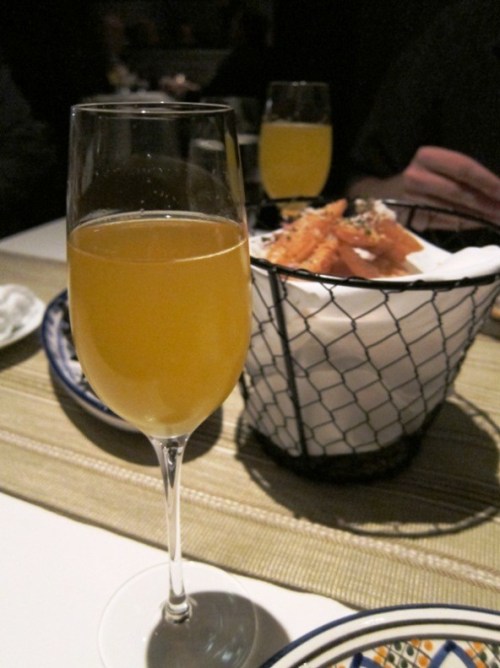
As fans and critics alike know, where Next really excels is in its uniqueness, and this boils down even to their drinks. Every restaurant does wine pairings, so Next does one better by also offering some pretty awesome non-alcoholic drink pairings. Next Thailand blew us away with their drink pairings (including of course Cha Yen, which was part of the meal) so we jumped at the chance to try their Sicilian offerings. As usual, Next did not disappoint. For full coverage of the Sicily menu, check out our complete review post. This go-around the Next drink menu included five pairings for $48. Here they are in order, with the names from the official menu.

1. Honey, chamomile, saffron
The first drink started out on a fizzy and sweet note, and was brought out with our array of little street foods. In addition to the three ingredients listed on the official menu, the drink also contained Meyer lemon. Fortunately while the drink was sweet, it was not too sweet, and was cut through by the carbonation (done in-house). Of the lot, this was probably M’s least favorite drink (too much carbonation), though L quite enjoyed it.

2. Zucchini and Mount Olympus Flower
The second drink arrived with our first pasta dish. According to our server, Mt. Olympus Tea, rather than just being an ornamental name, is actually a floral herbal tea from the Mediterranean (if it actually is picked off of Mt. Olympus remains to be known). The flower in the tea is Sideritis, and since we enjoyed it so much, we are pleased to find it is available online. We found this tea (served cold) completely delicious and enchanting, with hints of lemon and sage. Despite its billing, we couldn’t really detect any of the zucchini flavor notes. This drink was L’s pick.

3. Green tomato, garlic, white pepper
We deemed this drink the “garden drink” and it is not exaggeration to say it was like a drinkable caprese salad. The server also mentioned celery, garlic and thyme. This drink, not surprisingly, was completely savory and this cognitive dissonance was not quite to L’s liking, but M gladly guzzled the remainder of her drink. Our server noticed this and even brought L some more Mt. Olympus tea (nice work servers). M thought the drink complemented the swordfish quite nicely, and flavor echoed the herbal notes of the mint pesto. Fans of V8 or the like will be pleased by this elegant rendition of a veggie drink.

4. Fennel verjus rouge, orange
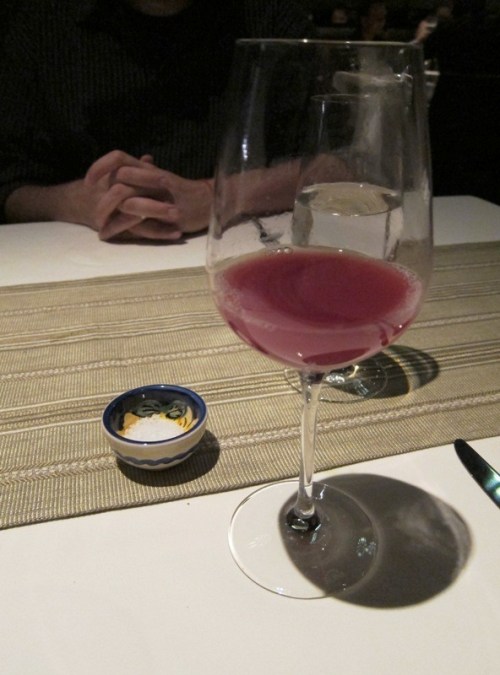
The fennel drink, served with our last entree dish, reminded us of after-dinner digestifs (you know the candy coated fennel seeds, Mukhwas, you sometimes get at Indian restaurants?). This drink, as you can see above, was shockingly magenta. The blood orange probably only amplified the color. Though we might have never thought to combine blood orange and fennel, the result was delicious.

5. Watermelon, white balsamic, pinor noir juice
 The final drink was watermelon-pink, served over crushed ice in an old-fashioned glass, the only drink to not come in a wine glass. The primary flavor here – no surprise – was watermelon, though you could definitely taste the acidic kick of the white balsamic vinegar. The pinot noir grape juice was very subtle, and was definitely overwhelmed by the watermelon. We were curious that they chose Pinot Noir grapes since they are typically grown in the Northern part of Italy, not Sicily. The drink, which came with our desserts, was a perfect cool palate-cleanser for the end of the night. As you can see below, we ended up closing the place down!

scene at next restaurant

1 Comment

Filed under Reviews

Next Restaurant: Sicily

Next: Sicily
953 West Fulton Market
Chicago, IL

An ETW exclusive! We are pleased to present the first full review of the NEXT Sicily menu, complete with photos! (Grub Street Chicago posted the menu earlier today, but we got all the pictures). Chef Achatz’s approach to traditional Sicilian fare, nodding to history and time-honored techniques, was surprising given the experimentation for which he is known; but in that relative conservatism was an impressive array of flavors that hit some very, very impressive high notes over the course of the evening. While some of you may remember our tour of the Thailand menu last year, we found Sicily to be overall more interesting and the decidedly better meal of the two. Update: for a description of the non-alcoholic drink pairings check out our complete review post here

The meal begins with four antipasti, served family style, all at once:
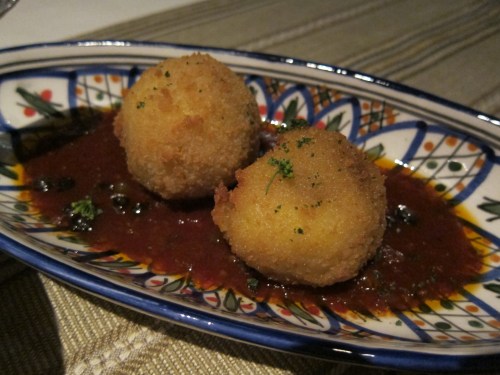
Antipasta 1: Arancine

L, who is Sicilian, declared these arancine to be better than those we had in Sicily, and M would have to agree. Perfectly fried, the rice inside was wonderfully cooked, and the lamb tongue filling braised to perfection. The highlight of this dish was the accompanying caper-tomato sauce, which hit on perfect notes of saltiness and and a mixture of other flavors that made this antipasta one of our favorite dishes of the evening.

Antipasta 2: Carciofi Alle Brace (Grilled Artichokes)

Our understanding has always been that grilled artichokes are more of a Roman dish, but we will give the chefs a pass on this. Lightly seasoned artichokes were grilled over an open flame, leaving the exterior charred and the interior flesh moist and delicious. We were encouraged to peel off the charred bits and suck off the flesh underneath, and M in particular was happy to find the taste of the char was an excellent accompaniment to the artichoke flesh, almost like a dry-rubbed and barbecued artichoke.
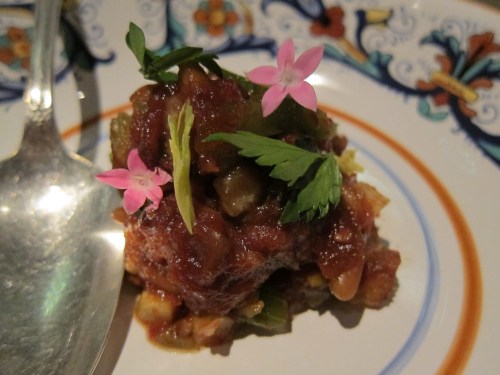
Antipasta 3: Caponata

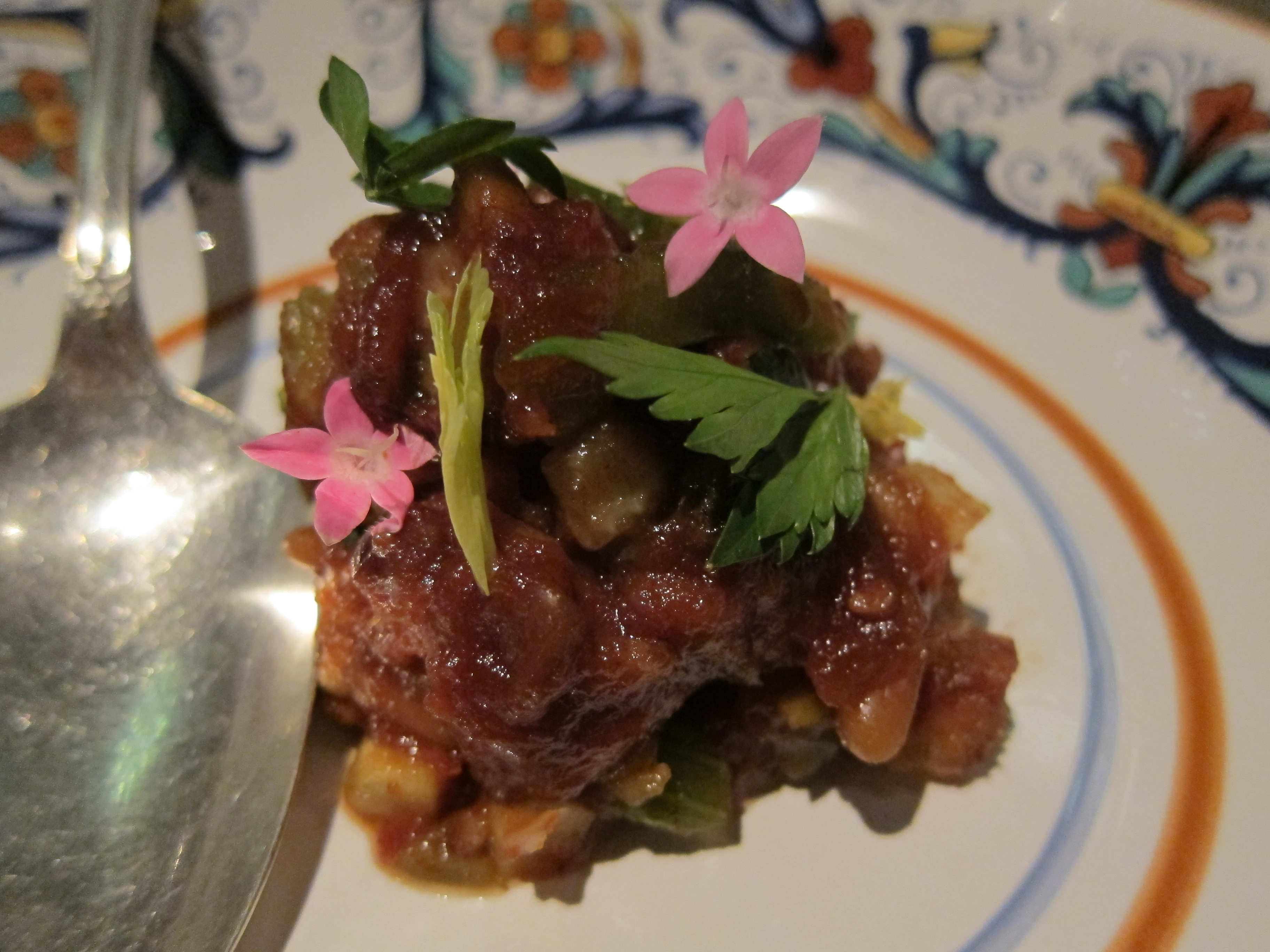
“The whole garden in a dish” is how our waiter described our third antipasta, a wonderful take on caponata. A variety of vegetables accompanied with the perfect dose of a wonderful sweet-and-sour tomato sauce. The pink Egyptian star flowers, said the server, were delivered only minutes before service began that evening, and so were a last-minute addition to the dish.

Antipasta 4: Panelle

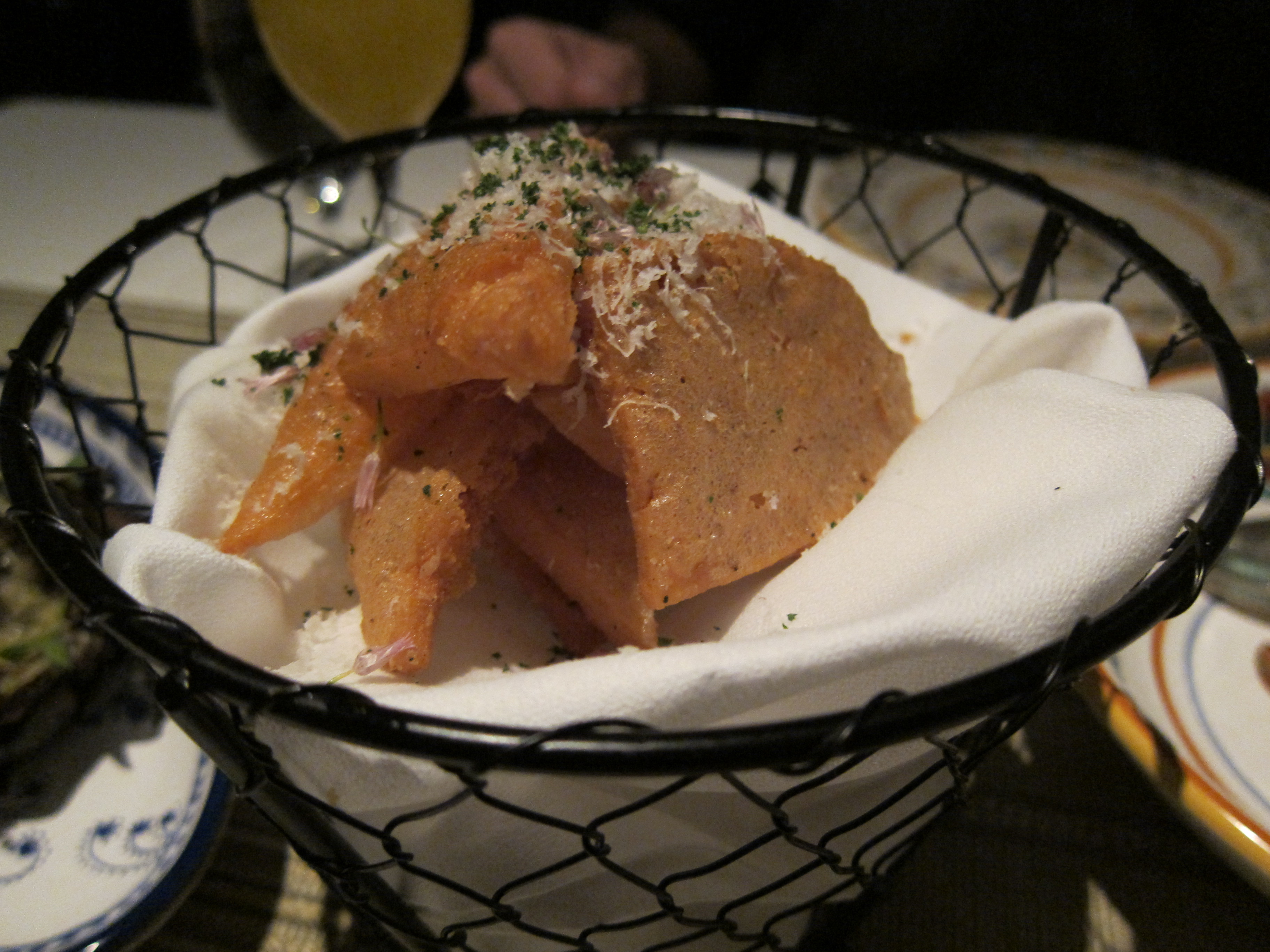
Panelle are a type of Sicilian fritter, but these disappointed us. Well-seasoned with a little shaved cheese, they were far too thin to maintain their structure on their own, not to mention when paired with a caponata. Despite being directed by our server to put a spoonful of the caponata on our panelle, L laughed when hers disintegrated in her hands and onto her plate. Hopefully over the course of the menu service they will solidify the panelle and give them more backbone, because otherwise they are a difficult dish to even stand on their own, much less with the caponata weighing them down.

We soon realized this meal would follow a very traditional Sicilian structure: the antipasti finished, the plates were cleared to make weigh for consecutive pasta courses.

Pasta 1: Bucatini con Bottarga

This small dish was the highlight of the evening: home-made bucatini in a rich, flavorful, complex sauce of fish roe and cheese, topped with thinly-sliced fish and wild mountain basil. We are not usually fans of fish roe, but the way Achatz integrated the cheese and roe into that sauce was nothing short of masterful – we will remember those flavors for ever. Add to that the basil, which had a much stronger and more inviting flavor that the standard variety, this was a dish that pulled a lot of flavor punches, but did so in perfect balance. Incredibly disappointing that this dish was so small, because we could have eaten a few more courses. The dish was not without its problems, however: the buccatini was perhaps 30 seconds from being perfectly cooked; as a result, the pasta stuck to our teeth a little too much. A very small kitchen mistake, but one that prevented this from being the dish of the year.

Pasta 2: Gemelli con le Sarde

The national dish of Sicily – and the servers introduced it as such – Achatz did a great job paying homage to this classic, and L would have critiqued him heavily if he had messed it up. Perfectly-cooked gemelli was mixed with currants, pine nuts, breadcrumbs, mushrooms, a hint of lemon (we think) and fennel sprigs, and topped with a grilled sardine. The sardine – of which we are normally not fans – was grilled perfectly, and had its saltiness reduced just enough to make it blend very well with the rest of the pasta. Overall, this dish was the epitome of refined rustic cooking. The added accompaniments were great complements to the dish, and executed wonderfully.

The sardine was a well-positioned transition to the meal’s third portion: the fish course.

Fish: Pesce Spada con di Ceci (Swordfish . . .)
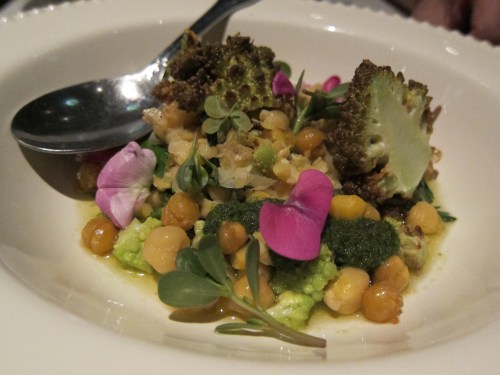
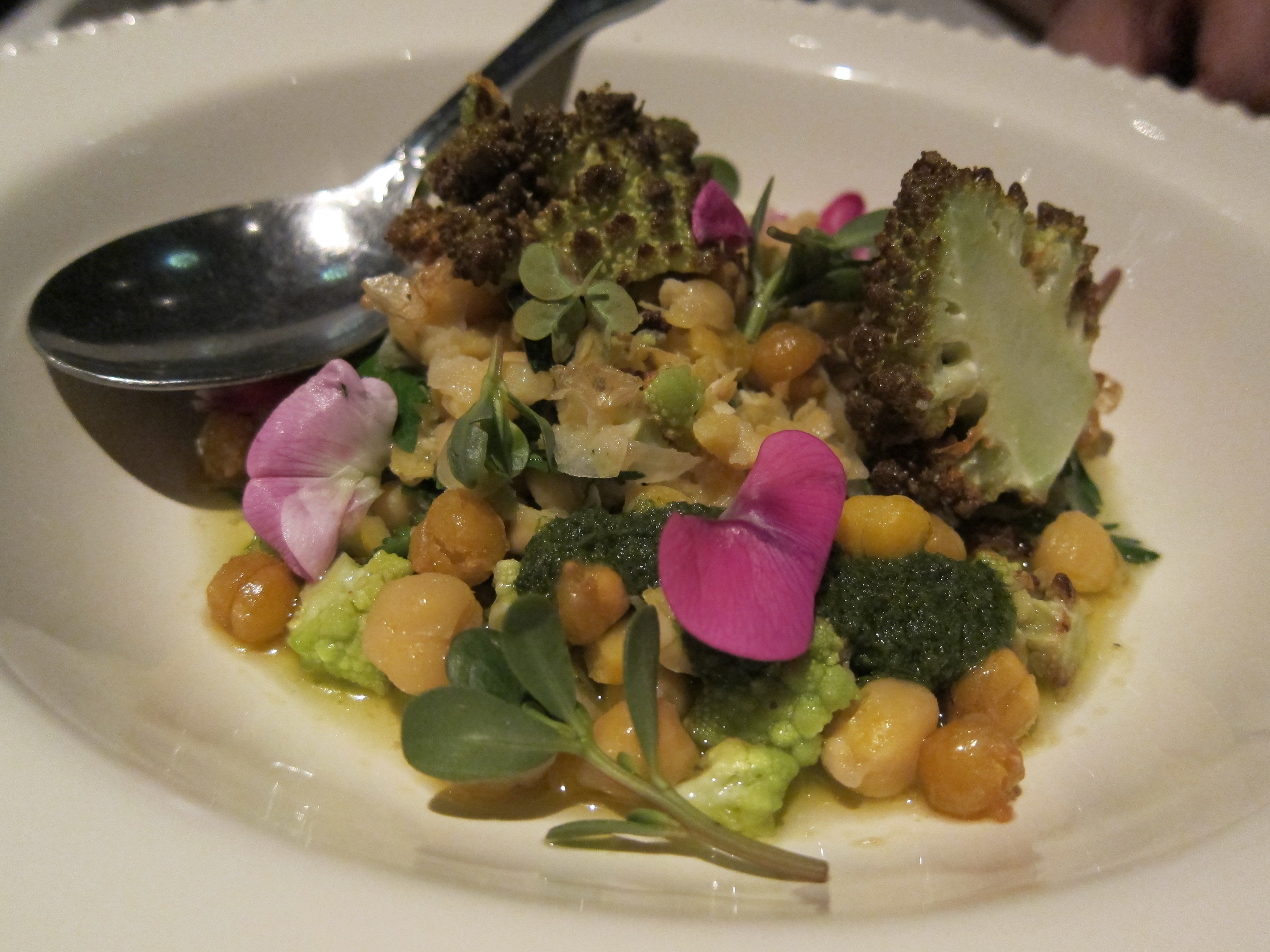
. . . with accompanying chickpea salad.

Our fish course was grilled swordfish with mint pesto, served topped with a bunch of grilled mint and a charred head of garlic. On its own, the swordfish was a bit of a disappointment given the wonderfully complex flavors that had emerged thus far in the course of the evening. Lightly seasoned with salt and pepper and nicely grilled, even with the mint pesto we found the flavor a little underwhelming in the context of the rest of the meal. This changed once the fish was eaten with a bit of the accompanying salad: chickpeas, basil, and Romanesco (“fractal”) broccoli in lemon juice. This small salad added exactly what the fish had been missing: a little vibrancy of citrus, contrasted and paired well with the mint pesto.
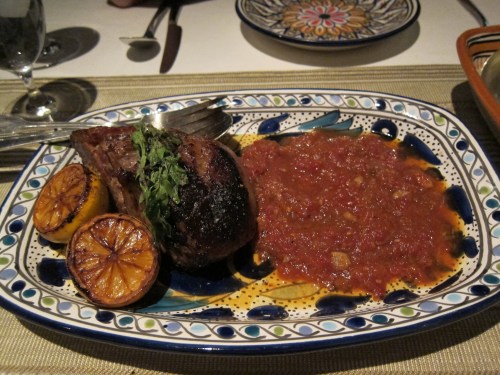
Meat: Spalla di Maiale Brasato (Braised Pork Shoulder)
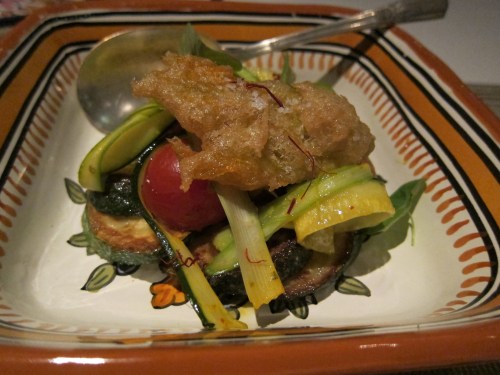
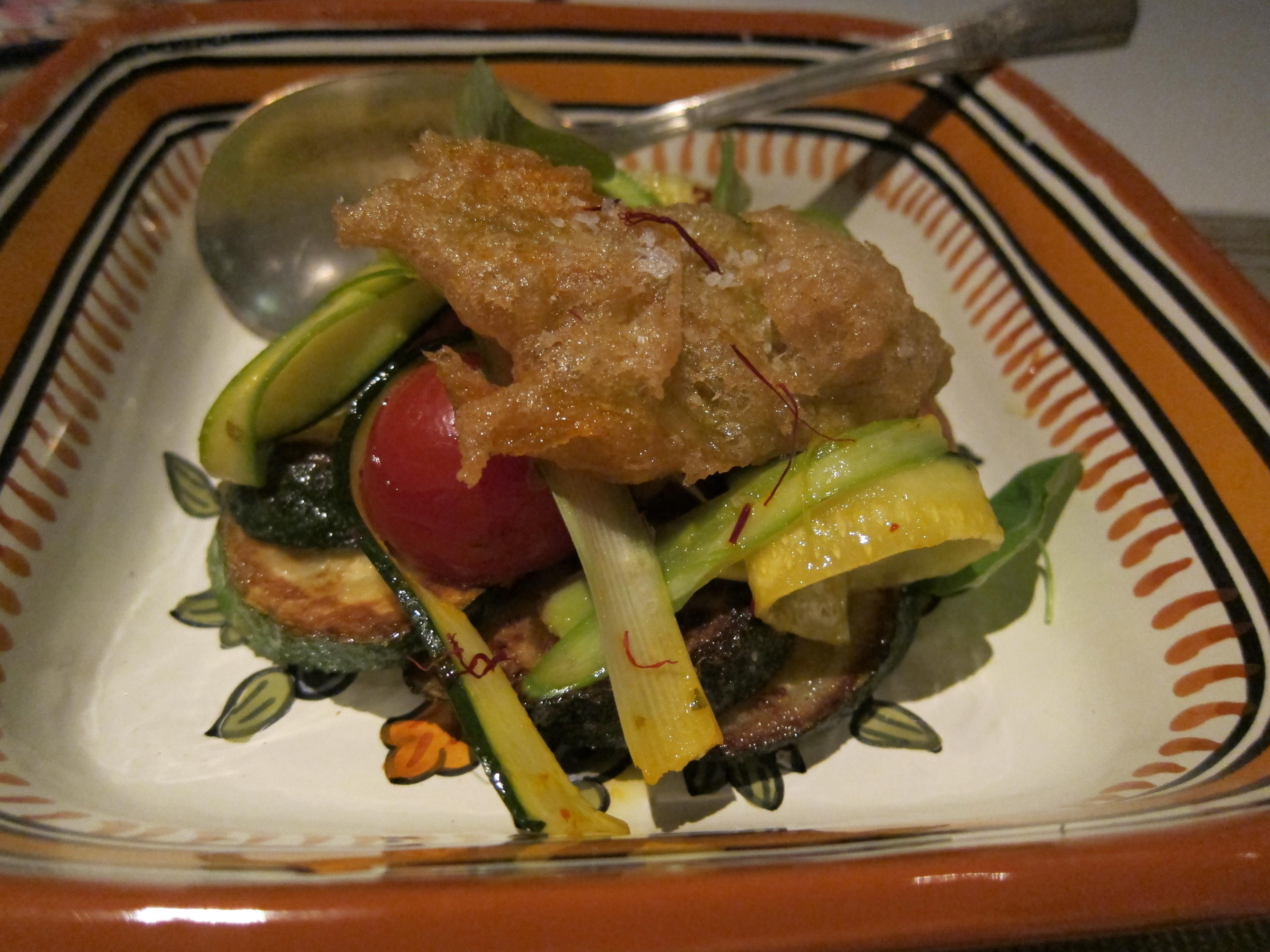
. . . with accompanying salad of grilled zucchini and tomatoes.

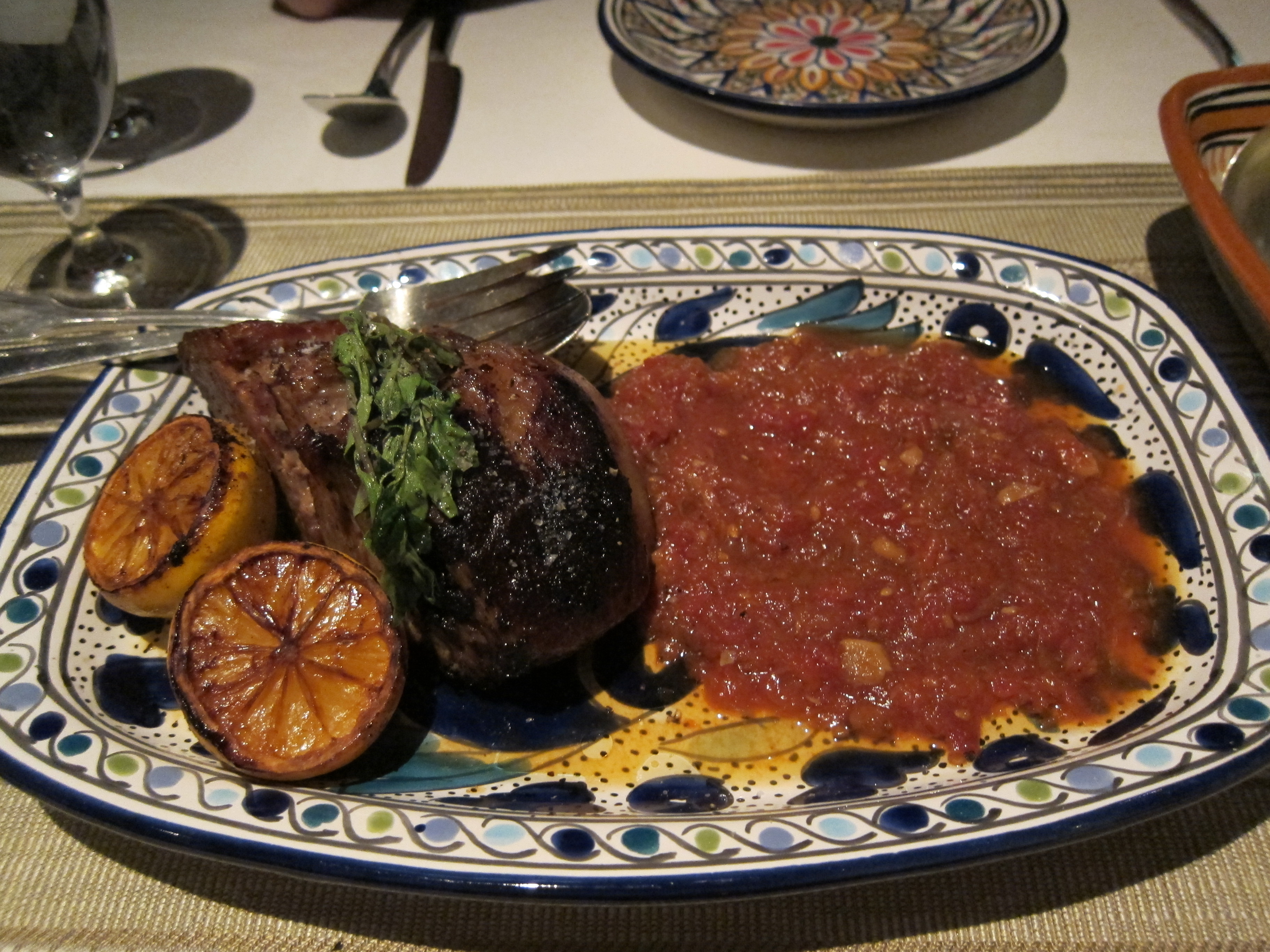
This dish may have tied the bucatini as the highlight of the meal. With so little meat in Sicily, it is saved and savored for weekends, when pasta sauce is made with chunks of meat, the meat removed and the sauce served over pasta, and then the meat consumed on its own after. This is a rich culinary tradition – it still goes on in our large Italian family homes – and it could not have been better represented on this plate. The pork shoulder we were served – and this is not an exaggeration – dissolved on our tongues: “Yeah, we braised it for a little while before you got here,” our server said with a wry smile. We have never had any pork so amazingly cooked in our lives, and it would take such a large, sophisticated, and pre-set menu to allow a chef the chance to do this outside of a small restaurant that would specialize in such a thing. The accompanying red meat sauce tasted like something one of our grandmothers would have made, and hit well on all the notes of the pork (thus confirming they were in fact made together). Grilled (and very juicy) meyer lemons took the dish to new heights. With all that flavor, the grilled zucchini and tomatoes served with it were something of an afterthought, and probably our lest favorite dish of the evening. They were fine, just unremarkable and completely unnecessary given the wonder of the pork shoulder’s main event.

At this point, we were completely stuffed. Antipasti, pasta, fish, and meat had been served: only dessert remained.

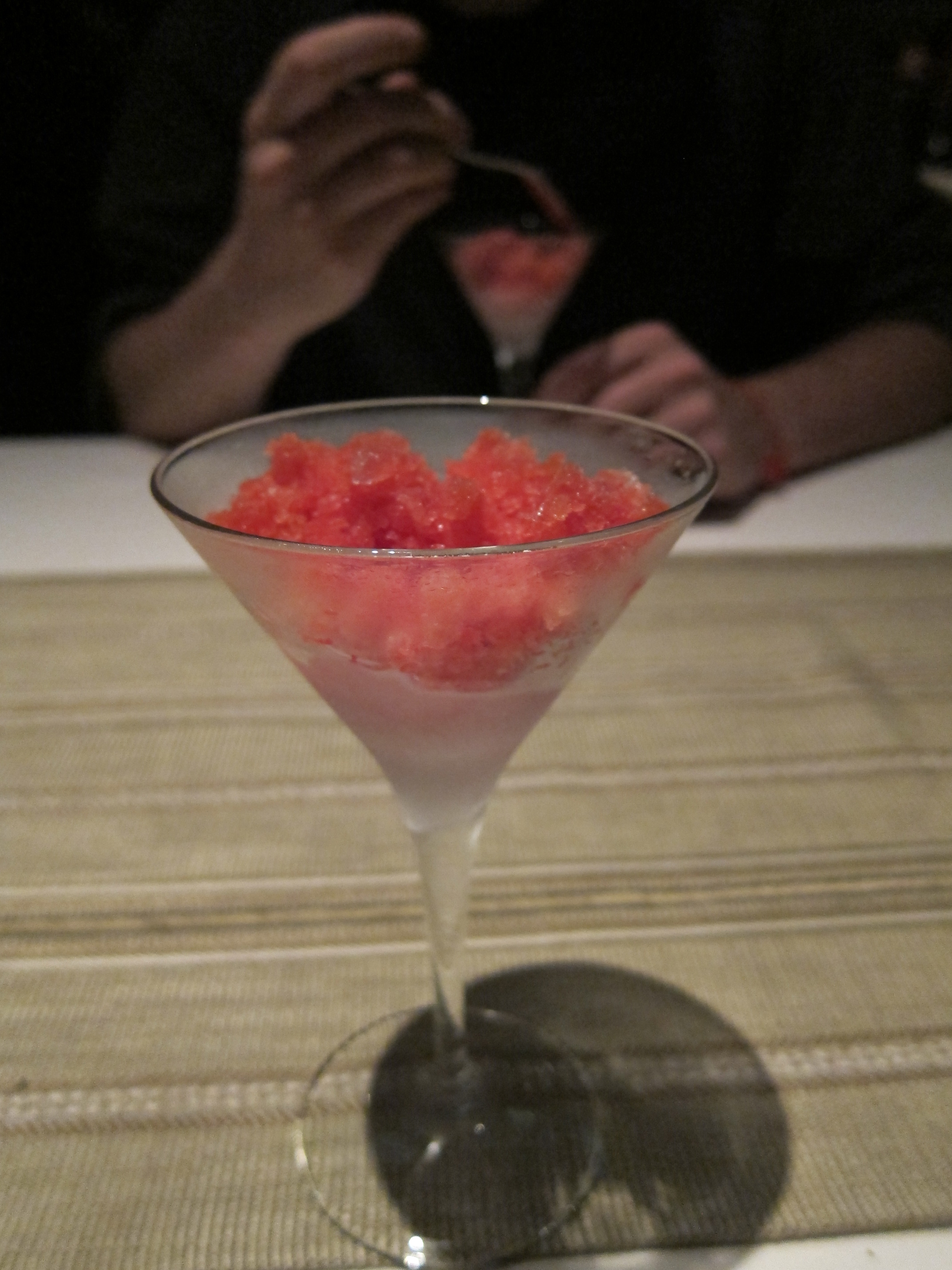
Cleanser: Granita di Arance Rosse (Blood Orange Shaved Ice)

This was a very smart part to include in the meal: something light and cool to cleanse your palette and allow you to digest before taking on dessert. Apparently (said the server) the Arabs developed shaved ice while in Sicily, and they were also the first to cultivate the islands wide array of citrus fruits for which Sicily is justifiably well-known. The granita at Next was unpretentious, nothing more than ice flavored with blood orange juice (and thus quite sour), but a welcome interlude before Sicily’s most famous product: dessert.

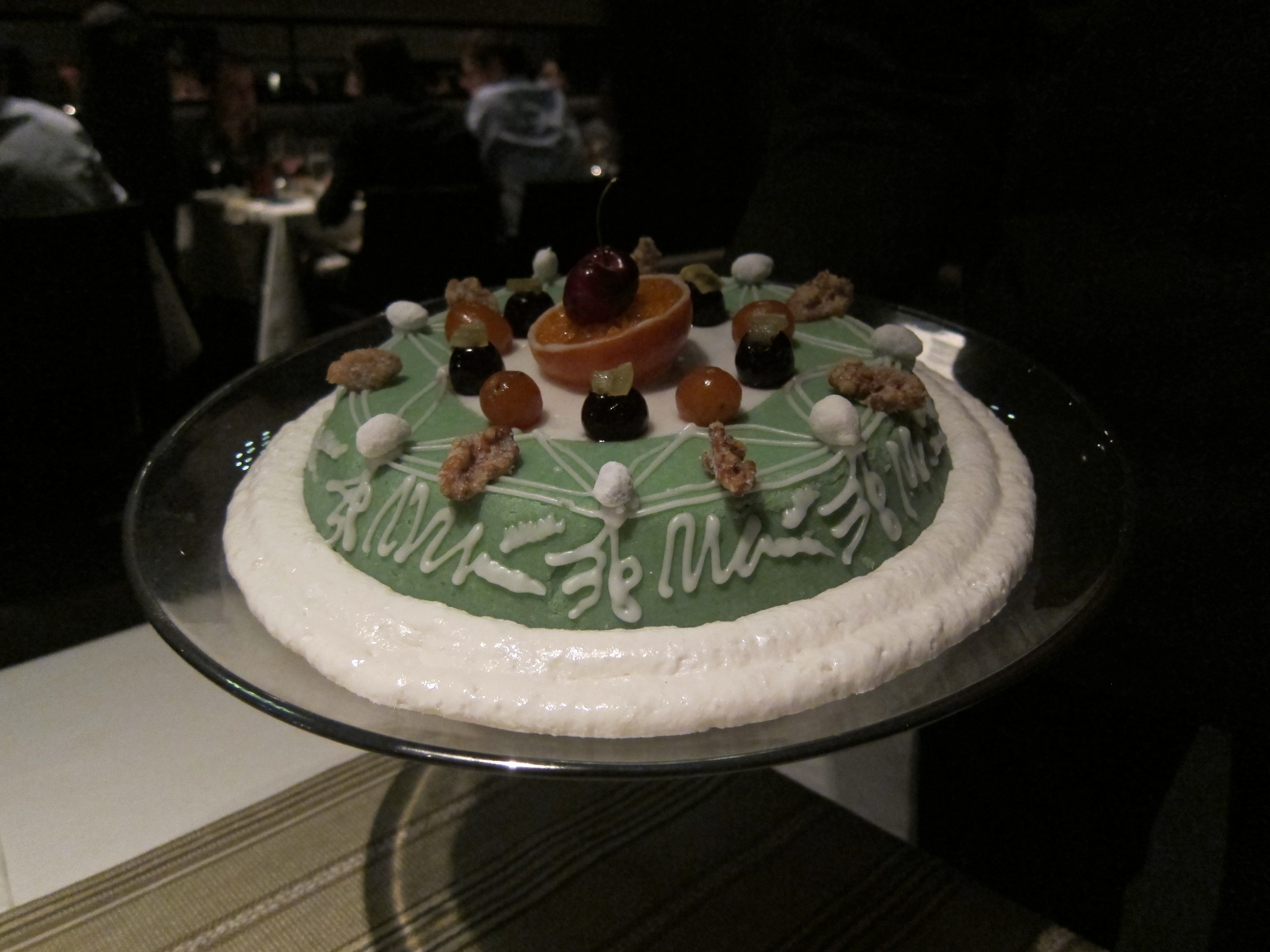
Dessert 1: Cassata (whole cake, for display)
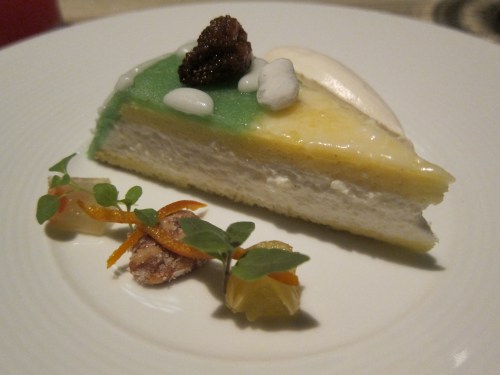
Cassata slice, for consumption

L’s family is from the region around Palermo, where Cassata originates. She knows this dish well, and was thrilled to see it on the menu. A spongecake usually covered in almond-flavored marzipan, the chefs did not use the almond flavor on this go-around, instead just letting the marzipan speak for itself. Topped with a marinated strawberry, the cake was garnished with vanilla (with a hint of lemon?) whipped cream, candied orange peel, a candied pecan, and mint sprigs. Light, sweet, and well-garnished, we enjoyed this cassata immensely.

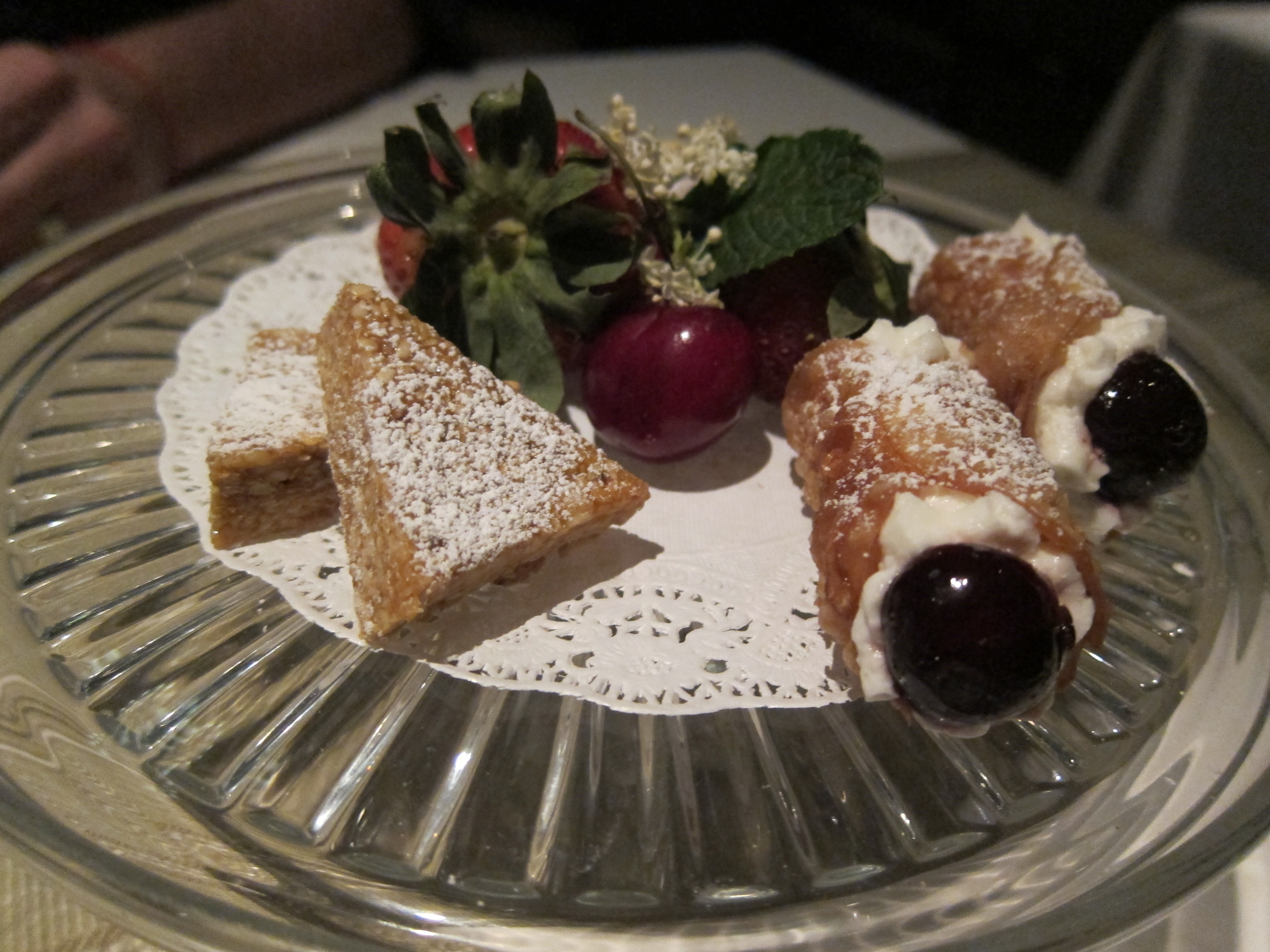
Dessert 2: Dolci (sweets): Cannoli, Ravioli Fritti, and Cubbaita di Giugiulena

Our final dish of the evening was a celebration of traditional Sicilian pastries. The fried ravioli were filled with a a locally-sourced strawberry jam. Giugiulena, one of our favorites, is a heavy sesame-seed pastry that tastes like peanut to the unfamiliar palette (a bit like a thicker, seedier version of halva). These first two pastries were solid albeit unremarkable, which frankly was welcome after the onslaught of flavors we had previously. We saved the cannoli – our favorites – last, but were sorry to say these woefully disappointed us. We found them much too small; the shells far too thin (we had a similar problem to the panelle where they broke into pieces as soon as we bit them) and, sin of sins, the cream inside did not have a hint of sugar. Cannoli are not easy to create, but we are saddened to say these are some of the most disappointing cannoli we have had recently, and absolutely pale in comparison to those we have eaten in Sicily or elsewhere in the U.S.

Not that this really disappointed us. Our meal complete, we walked away awed at this menu’s fusion of technique, flavor, and commitment to tradition. This is difficult to pull off, and we can only think Chef has been refining his thinking in this way after the El Bulli menu – billed as a “celebration” (as opposed to an “imitation”) of El Bulli’s creations. If that were true of the previous menu, Next Sicily follows suit: this evening was an impressive celebration of Sicily’s culinary innovations and explorations. As a foodie you will be glad to come here. But rest assured, your Sicilian grandmother will enjoy the meal as well – and that is saying a lot.

1 Comment

Filed under Reviews

Portugal / South Africa / Mozambique: Nando’s Peri-Peri

Nando’s Peri-Peri
819 7th St NW
Washington, DC 20001

Nando’s is a South African restaurant chain with locations throughout DC and Maryland, serving up a signature Portuguese/Mozambican speciality: peri-peri (pronounced “piri-piri”) chicken. Peri-peri is the local name for an African Bird’s Eye Chili, grown throughout sub-Saharan Africa. How the pepper came to Portugal is a mystery, but eventually Portuguese and Mozambican (Mozambique being a former Portuguese colony) culinary exchanges gave rise to a peri-peri sauce made from the pepper. The sauce is a staple on southern African and Portuguese tables, and is applied liberally to chicken breast grilled over a spit: peri-peri chicken. Nando’s was founded by members of South Africa’s Portuguese-Mozambican community, and has since expanded to 30 restaurants on 5 continents. Unfortunately, they have only recently made inroads in the USA, and only in the DC metro area. That is unfortunate, Nando’s definitely hits the spot for your stateside peri-peri craving and is well worth a visit.

On a recent trip to DC, M visited Nando’s Chinatown location (hence the Chinese characters on the sign) – probably their most popular location in the city. Nando’s logo is a representation of the Rooster of Barcelos, the Portuguese national symbol, and appropriate here because the rooster’s large eye makes one think of the Bird’s Eye Chili.

Nando’s does an excellent job of serving up presumably fast food in an upscale setting. Wood paneling and good lighting make for a sophisticated interior, and a central plexiglas wall – actually filled with dried peppers – is a nice touch. The walls are decorated with original works from South African artists, part of Nando’s ever-expanding art collection (now 4,000 pieces) which also offers scholarships to young artists back in Africa. The uniqueness of the food and their commitment to the arts really made me want to like this place, so it is lucky the food delivered.

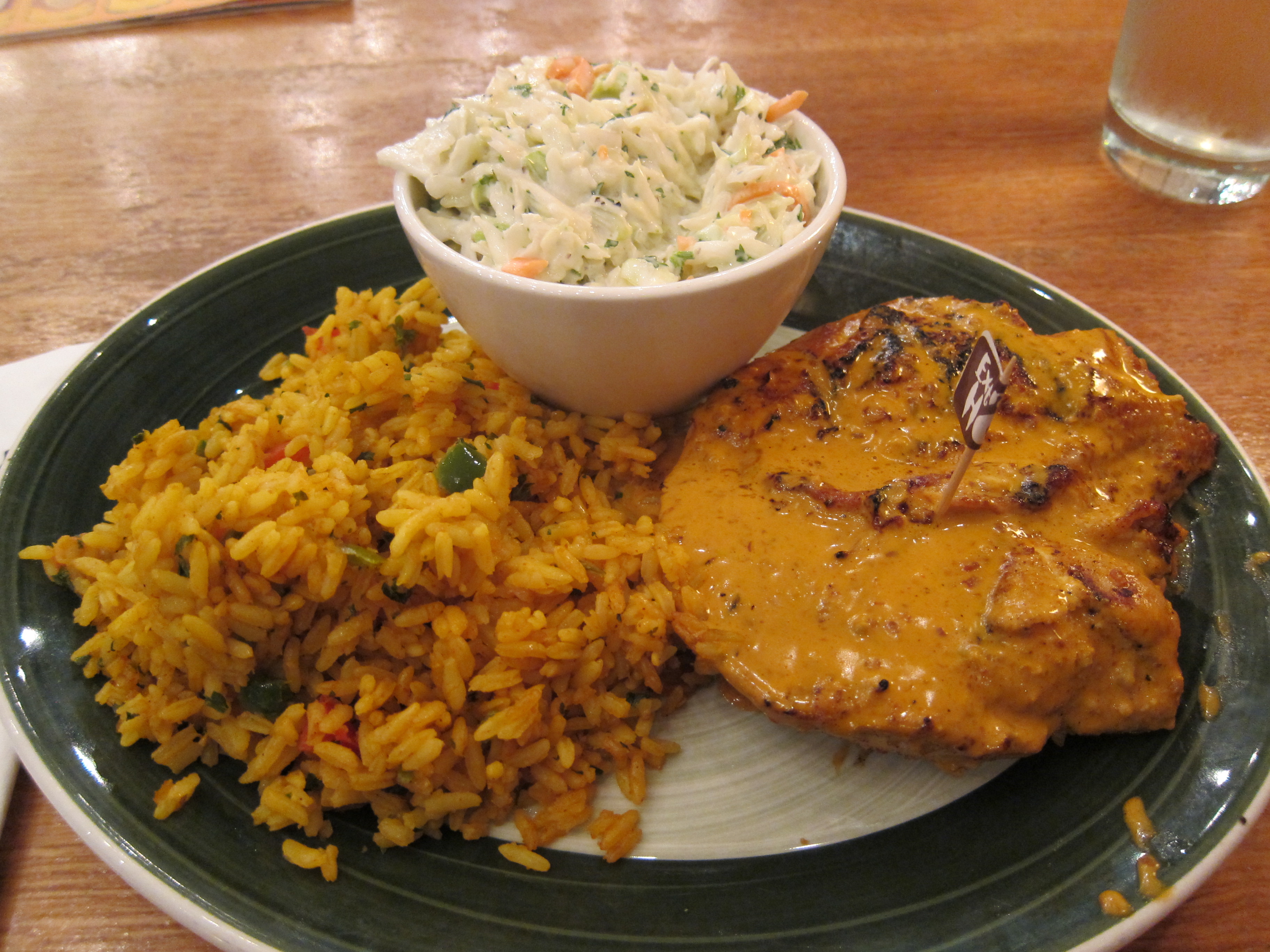
For the relatively upscale vibe, the ordering is simple. You can choose from many entrees, but if we are being honest (and we always are) there is no point in getting anything besides the chicken: pick a half or whole breast, choose your spiciness level, and choose between 0 and 3 side dishes. I selected the extra spicy chicken (of course), with sides of Portuguese rice and a mayo-heavy coleslaw, to reduce the heat from the chicken if need be. After ordering they give you a cute table marker and you proceed to your spot, waiting for the food to be delivered to you.

The chicken was – and I cannot overstate this – perfect. Grilled to perfection with just the right amount of marinade, Nando’s then lathered on the peri-peri to add the extra heat I requested. But the flavors come through as well: peri-peri is a complex sauce, loaded with spices and contrasting flavors, and Nando’s variety brought out all the high notes from the pepper as well as the other ingredients. I thought these paired nicely with the rice, which was satisfying though underwhelming. I probably would not get the coleslaw again: it was very good as far as coleslaw goes, but the menu was correct in suggesting it would cut off the heat, which it did almost too well. Next time, I’d order something not as heavy as a side, reserving the slaw for less spice-inclined diners. Overall, for under $15, this was a steal for a weekday lunch. I hope Nando’s is able to expand and open up more locations in the USA, because they would do well given their business model. But if they stray from their signature sauce and effective grilling as a result of the expansion there will be major issues. I’m just thrilled to see good, fast, transnational cuisine like this making inroads in the USA – for now, if you are in the DC area, definitely stop by for a great lunch!

3 Comments

Filed under Reviews

How to Properly Enjoy a Brazilian Beach (Hint: Eat Everything)

Brazilian beaches have the stereotype of being all about beautiful people, sun, and skin. We tend to think that big stereotype gets out just so people won’t discover the real reason Brazilians go to the beach: to have a great time with lots of food. So much so that Rio’s mayor recently declared beach vendors as part of the city’s cultural heritage. What follows is what we learned from multiple trips to beaches in Bahia over two months: our no-nonsense guide to enjoying one Brazil’s best full-service and sinfully gastrononmic experiences. Really!

1. Relax! You’re on a beach.
Brazilian beaches vary widely in quality, but we are here to tell you that while beach quality as judged by swimming or picturesqueness is important, going to a beach with good-quality food options and service more than makes up for that. In either case…

2. Don’t bring anything except a little money.
Why? Because everything you need will be provided to you. Free yourself of all of your worldly possessions, and come to the beach prepared to be pampered, Brazil-style. If you bring a lot of stuff to the beach, not only are you asking to get it stolen, you are going to immediately divorce yourself from the great fun of the beach market!

3. Pick a chair, and sit in it all day. 
Any beach worth going to for the service will have a large set-up of chairs. Umbrellas too. Typically you can rent a chair for a few reais all day, or at some less-frequented beaches it is free. Pay the attendant whatever the going rate seems to be, and be this person’s friend: he or she is your one-stop shop to all the goods for the rest of the day.

See all these people? They know how to live life.

4. Survey the culinary landscape.
Remember when we said you got the chair all day? That means you have a ton of time to check out all the beach food. No, no, don’t get up from your chair! Yoou don’t need to, since the food comes to you. Tens of hundreds of beach food sellers, roaming amongst the beachgoers, selling whatever is on the market for the day. Investigate the offerings for a while: sit there and see what is being solid by the many roaming foodsellers, and if you can, check out the prices being paid by Brazilians. Also take a moment to sit in awe at the selection. Here, for example, is a shortlist of the food we encountered on a recent 2-hour beach excursion: soda, beer, fresh fruit juices, coffee, bottled water (with and without gas), picoles (popsicles), chips, queijo coalho, grilled shrimp, sandwiches, moquecas, oysters, sugarcane, cocadas (coconut cookies), roasted cashews, meat skewers, salgados (various savory fried snacks), fried fiesh, hard boiled eggs, acarajé, and cotton candy.

And this is only the food. There are a number of other items being sold by roaming sellers, like gum, suntan lotion, aloe, sunglasses, jewelry, kangas (Brazilian sarongs), dresses, hats, sandals, and towels. The world is at your disposal!

Picoleishion blasts cheesy Brazilian tunes from his colorful cart while selling the best picoles in Itaparica. He’s famous!

5. Sample everything.
After three months, we found this to be the best thing about Brazil’s street/beach market economy: nobody cares if you do not buy. Sample, sample, sample – but if you don’t want it, say no, thank you, give a thumb’s up to the seller, and go along with your day. They’ll give you a thumb’s up back, and move right along selling. No guilt tripping, no bargaining – especially on beaches where there are more than enough customers. It’s incredibly refreshing.

6. Get whatever you want!
You know those Brazilian steakhouses becoming so popular in the USA, where the meat comes to your plate as long as you ask for it? That’s how the beach is – wave people over, pay a little money to get as much or as little as you want, and keep buying and buying until you are full. Get full? Go swimming, relax, take in some sun, nap, wake up, and then eat more. Repeat ALL DAY, eating cheaper, better, and more comfortably than you could have in any restaurant.


So nice we posted this photo twice: beijus filled with chocolate and coconut on Ipanema beach.
You know you’re jealous.

And finally,

7. Don’t necessarily avoid the crowds.
One of our best days on the beach was in two chairs absolutely packed in between other groups and families. We couldn’t even see the water. But you know what? People share! You make friends! And suddenly you realize the best part of the beach is not the water – it’s the community, the service, and the great food.

You’re welcome, travelers.

Leave a comment

Filed under Reviews

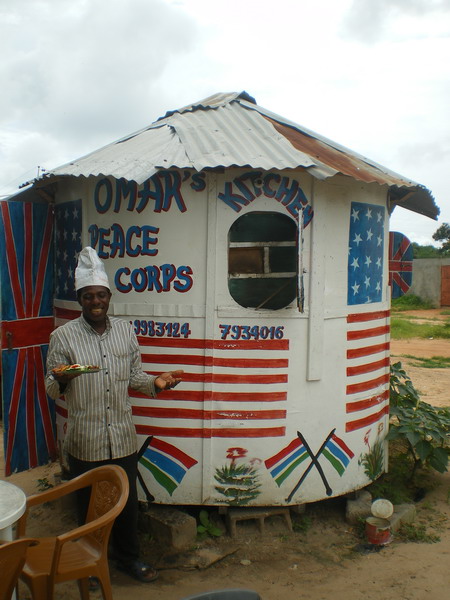
Guaranteed future review: Omar’s Peace Corps Kitchen

 Over the weekend M made a new friend, Whitney, who spent a good chunk of last year as a Peace Corps   volunteer in the Gambia. Reading her blog today, we came across her review of an apparent Banjul lunch gem: Omar’s Peace Corps Kitchen. Whitney says

Omar is a talented cook who has been friends with PC for years. His little rocket ship-shaped hut is just down the street from our offices, so its a great lunch spot, plus he’s open to learning new foods for volunteers, such as quasadillas or philly cheese steak sandwiches. He caters a lot of PC training events and makes a mean ginger chicken. 

Wait just a minute: we can feast on both West African ginger chicken AND Philly cheese steaks from the same place, while chatting with an apparently good-natured chef to boot?! Omar, looks like a trip to Banjul is in order!

Image

Source: Whitney in Gambia

Leave a comment

Filed under Reviews

Angolan Cuisine in Lisbon: Moamba

 Moamba
 Rua Fradesso da Silveira, 75
Lisbon, Portugal

If anywhere outside of Angola would have good Angolan food, it would be an Angolan restaurant directly across from the Angolan Embassy in the city with the world’s largest population of Angolan expatriates.

Surprisingly, though Moamba was full, there were few Angolans in the restaurant on this day – perhaps they were all still working at the consulate? But even though most patrons were Portuguese, looking around we could tell they staunchly avoided the small section of Portuguese cuisine on the menu, and went straight for the moamba, the house specialty and Angola’s national dish, which is served up hot, heavy and in bulk to almost everyone who walks through the door.

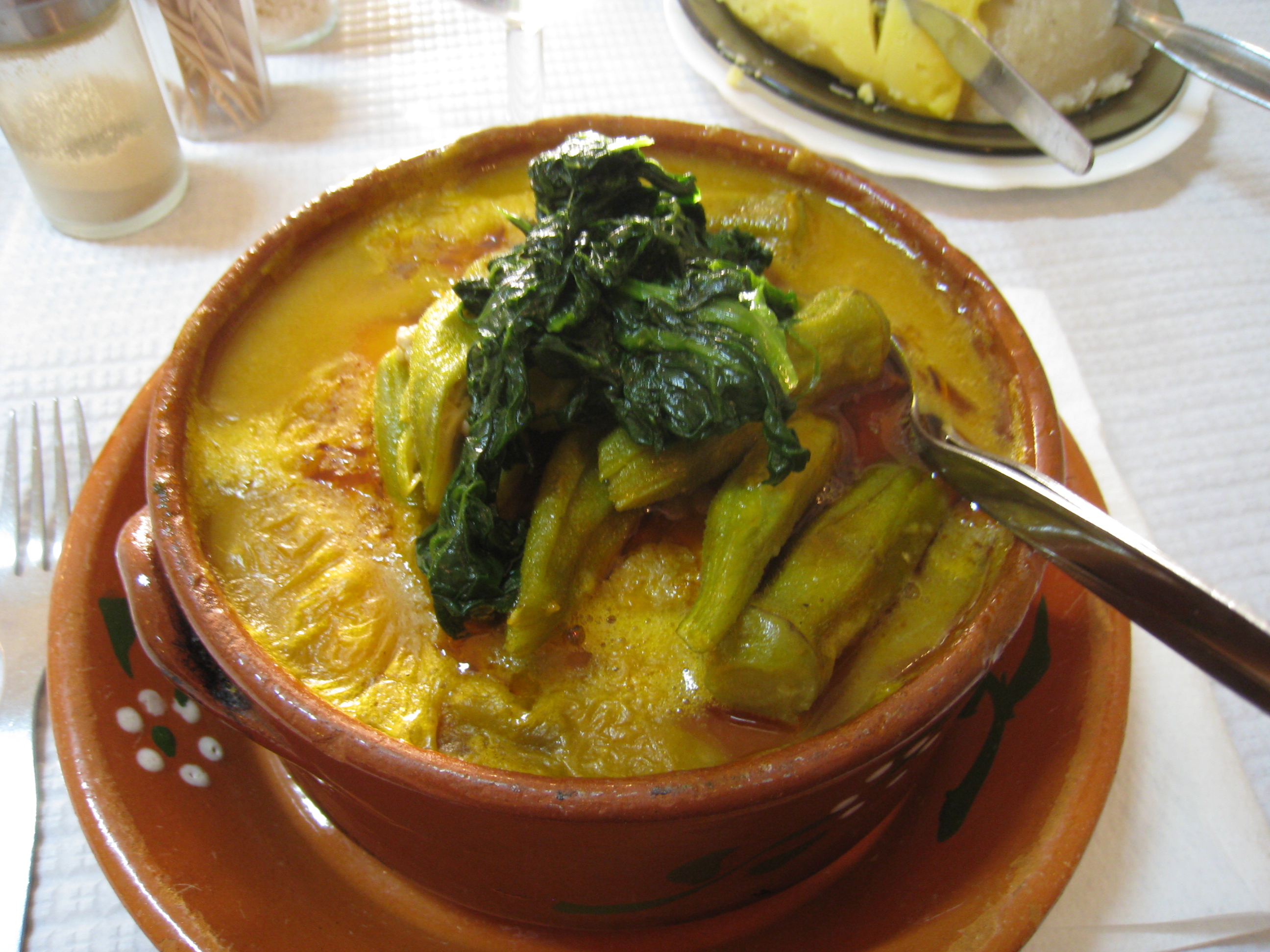
Moamba will remind the first-timer of other rich stews from the western African coast: a thick, oily dish of chicken stewed with tomatoes, okra, potatoes, and collard greens in a slightly spicy sauce. It is served with generous portions of tapioca and a yellow flour mash, similar to Nigerian fufu. Even the half-portion we ordered (9 euros), when combined with the tapioca, was far more than what was needed for the two of us.

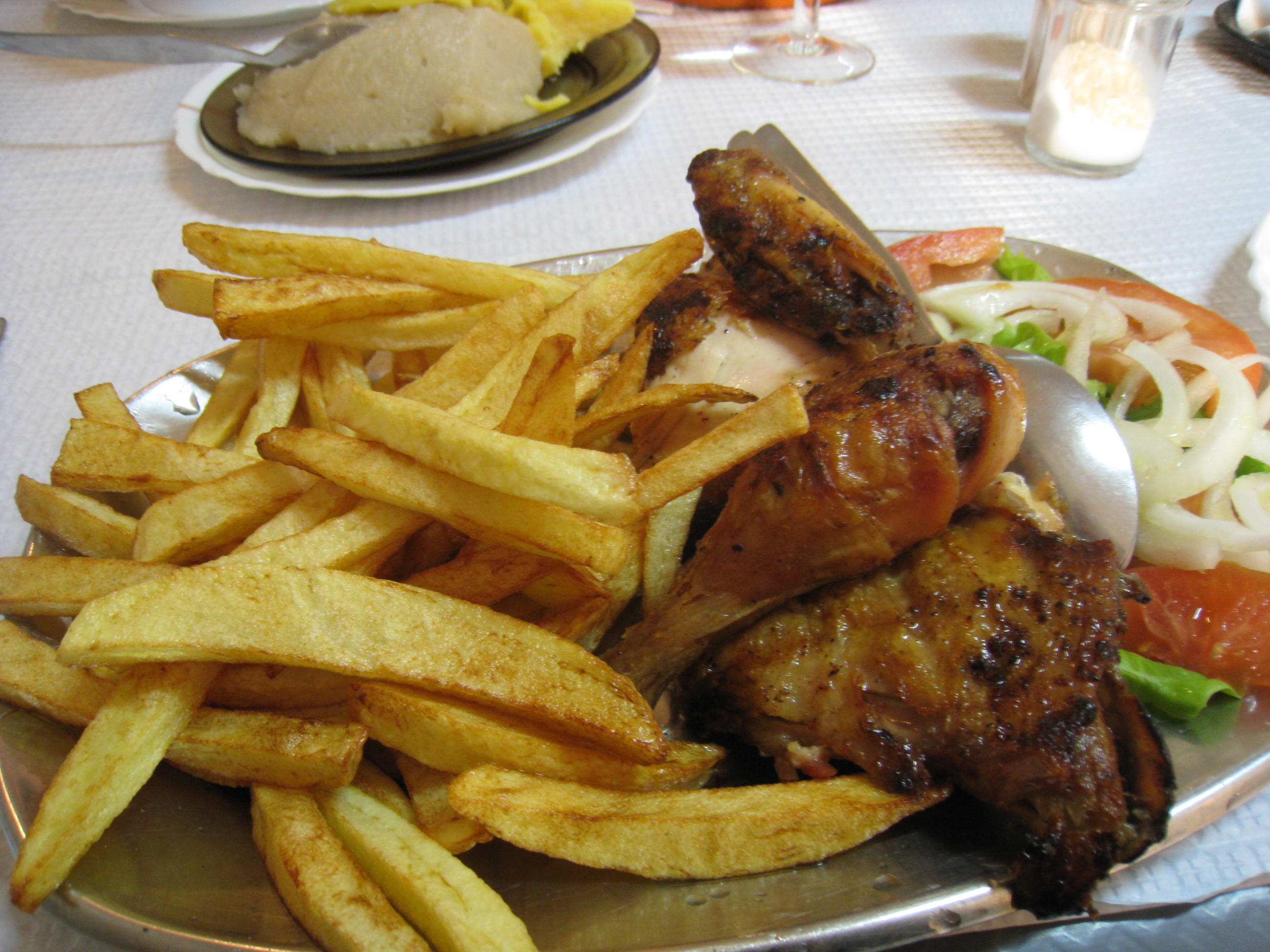
To mix things up, L ordered the roast chicken, grilled and marinated with Angolan spices and served with piri-piri. She was less than willing to heap on the piri-piri, but M dove right in, slathering it on his moamba, some chicken, and the welcome fresh – and desnse! – bread served with our meal. The chicken, served with fries and a small inconsequential salad, hit the spot – places that serve a great, flavorful piece of grilled chicken are increasingly hard to come by, and it is no secret that a lot of our favorites have come from western and central African restaurants. When we head back to Lisbon in the fall (yes, the secret is out), Moamba will definitely be on our return list for a flavorful, inexpensive, and very hearty African lunch.

1 Comment

Filed under Reviews

The Mixed Martial Arts Açai Shop in a Gas Station: Posto do Açaí

Posto do Açaí
R. Vergueiro, 1694 (R. Estela)
São Paulo, SP 04102-000

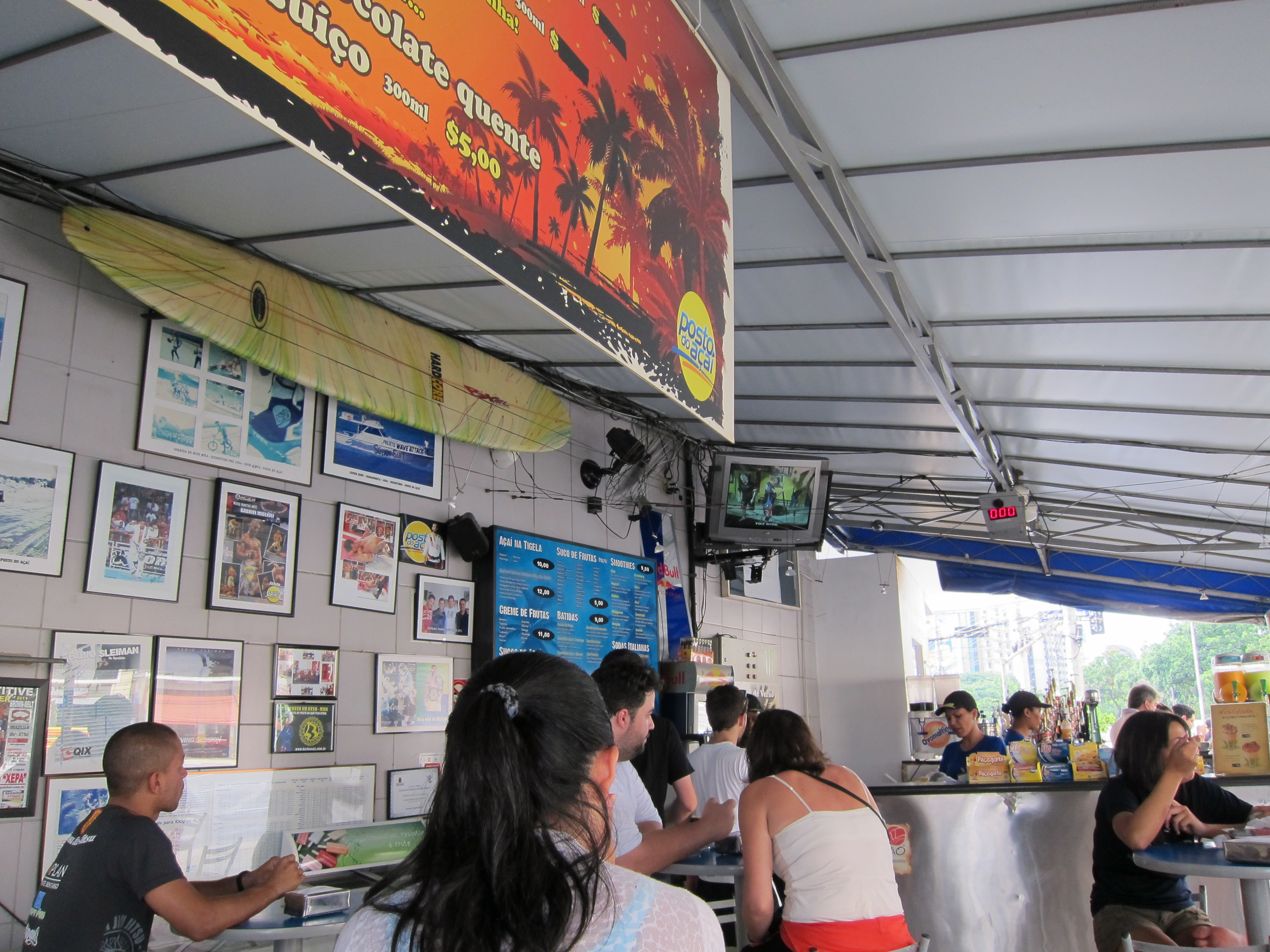
Only in Brazil, right? While we previously rated our favorite açaí spots in Salvador, açaí bowls are extremely popular all across Brazil. São Paulo, of course, is no exception, and as usual we were excited to find a relatively crowded local açaí watering hole only a block from where we were staying in Sampa. Normally, we would usually give little credence to a restaurant in a gas station – technically sandwiched in between two gas stations – but that is exactly where we found Posto do Açaí.  Our first time through was by accident – just stopping under their roof to get out of the all-too-typical Sampa drizzle – and we were initially baffled by the Brazilian jiu-jitsu paraphernalia on the walls. Turns out it’s a chain, and they sponsor a series of Brazilian martial arts groups. But, even better for us, we found Posto do Açaí to be surprisingly decent açaí in the heart of São Paulo.

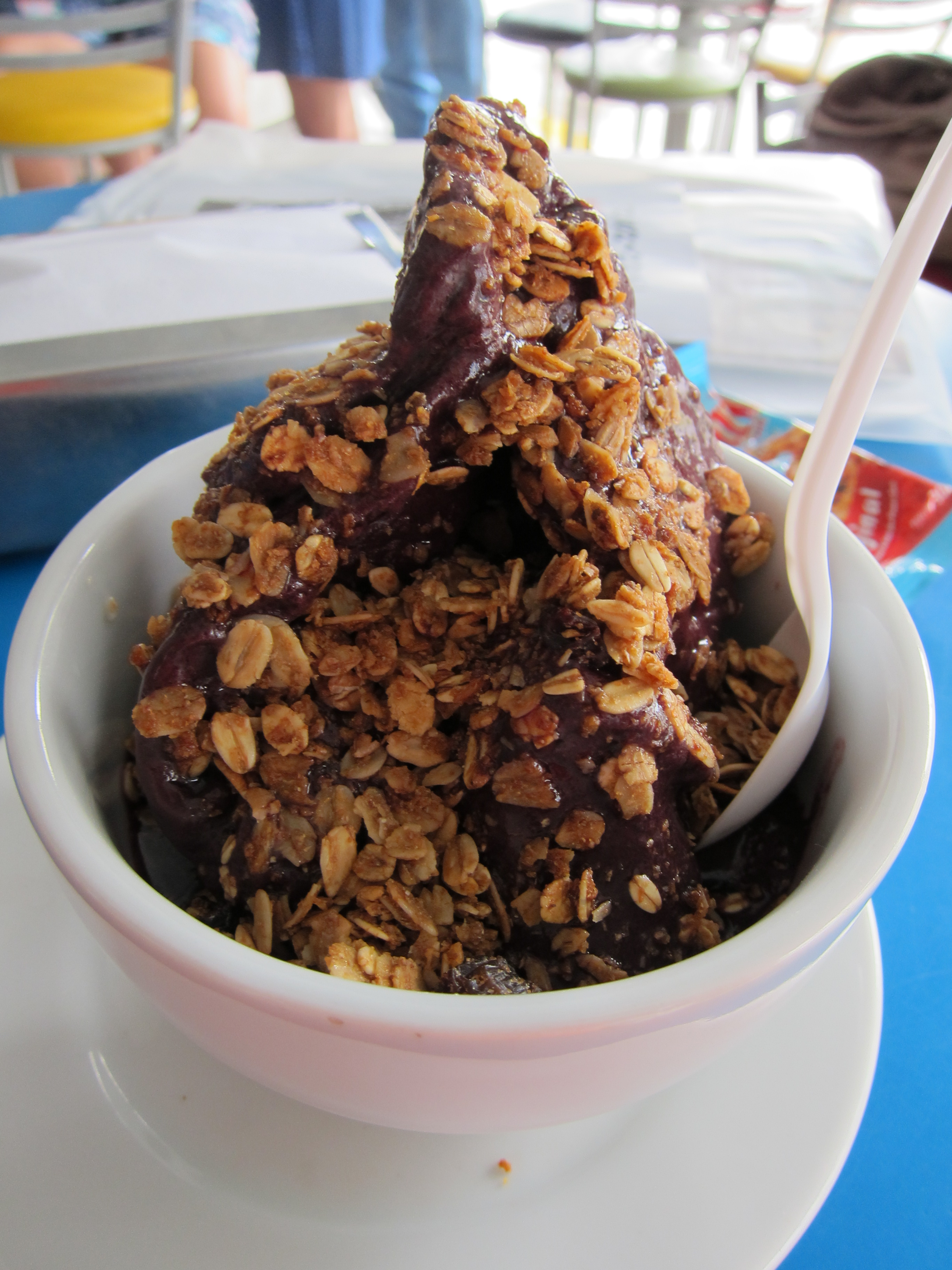
The menu, similar to most açaí joints, contains no real surprises: açaí na tigela with various toppings; juices; and juice milkshakes (batidas). However, points to the Posto for offering an interesting twist, presumably descended from São Paulo’s rich history of Italian immigration: a wide variety of Italian flavor syrups to add to any açaí bowl or drink (for a surcharge of R$2). We sampled the Sicilian orange and lime beaten into a bowl, topped with granola, and felt it was on par with some of our favorite places in Salvador, especially given the extra exotic fruit. We also sampled one of their range of Italian sodas – not bad for a gas station joint!

Leave a comment

Filed under Reviews

Xue Hua Bing at 527 Cafe

 Now that Cloud 9 in Chicago is closed, and Spring is theoretically around the corner, where can you go for you Xue Hua Bing (Taiwanese shaved ice) fix? 527 Cafe! Right in downtown Evanston (527 Davis St.), Cafe 527 makes some pretty good XHB, with gargantuan portions. The flavors available are mango, strawberry and passion fruit and the serving size is more than enough for you and your 2 closest friends.

Xue hua bing by Kimberlykv

Leave a comment

Filed under Reviews, World Eats

Brazil: Deskolado Bar Futebol E Pizza

Deskolado Bar Futebol E Pizza
Just West of Shopping Barra – Exact address unknown
Salvador, Bahia, Brazil

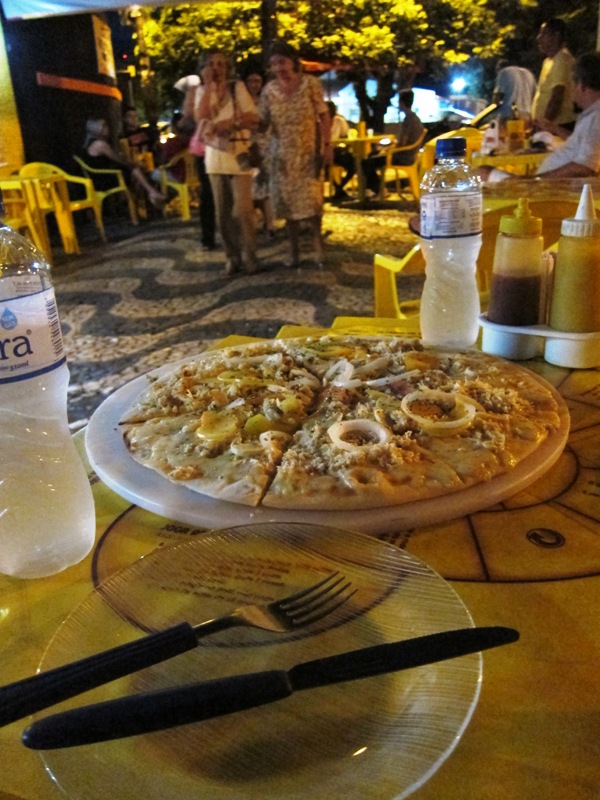
If São Paulo’s 1900 Pizzeria represents an elegant, refined pizza experience, Café Deskolado represents the quick, fast and cheap end of the scale, with its yellow plastic tables and menu written on poster board. Deskolado spills out into the street right outside the Shopping Barra mall, and most people prefer to mingle over their pizzas with gigantic bottles of Skol beer, while the latest futebol game is fed by satellite to the TV. The word “Descolado,” by the way, means something like “cool” in Brazilian Portuguese. The punny “Skol” in the name has been altered due to the fact that it is a Skol bar, an uber-popular Brazilian beer brand that makes itself known with a huge array of yellow and red branded merchandise.

Pizzas at Deskolado start at about R$13 for a large (about US $7) and R$16 (about $9) for a special large. This, as you may recall is a far cry from the US $25+ prices at fancy establishments, so this was a good place to soothe our sticker shock. Even at this lower price point, we were still spoiled for choice. The toppings at Brazilian pizza restaurants tend to be rather more eclectic (as we saw at Fogo 2 Go) than the typical American take out joint, and offerings at Deskolado including toppings of ham, Catupiry cheese, hard-boiled eggs, anchovies, etc.

Our classic pick was the chicken and Catupiry pizza – a white pizza that was laden with both Mozzarella and Catupiry cheeses, as well as onions.  The pizzas at Deskolado arrive quickly, on a tasty thin crust, perfectly crisp. It may not be an elegant, artisan pie, but it sure is tasty. Above all, Deskolado is definitely is a great place to hang out with friends and enjoy a heated Esporte Clube Bahia match. It was a rare night that we didn’t see the dining area of bright-yellow Skol-branded tables completely full. The pizza is good, but won’t blow your mind, and the addition of friends, futebol and drinks obviously account for some of this place’s appeal. Due to its location and good selection, Deskolado definitely became a staple for when we were craving some take-out food at night in Salvador. However, we would have to go elsewhere for our lunch cravings. No matter how much you may want a quick slice over lunch– pizza is for dinner only in Brazil!

Leave a comment

Filed under Reviews

São Paulo: 1900 Pizzeria

1900 Pizzeria
Rua Estado Israel, 240
São Paulo, 04022-002, Brazil

São Paulo is famed for its pizzerias, a fact of which Paulistanos are very proud. The city’s strong pizza heritage is thanks to waves of Italian immigrants that call São Paulo home. There are pizzerias of all stripes in Sampa, from utterly elegant to tiny one-woman operations. We were completely spoiled for choice in São Paulo and didn’t quite know where to start, so we were completely grateful when our hosts in São Paulo, Marciel and Angela, suggested we try 1900 Pizzeria.

1900 Pizzeria, which has several locations around Sampa, is an upscale establishment specializing in artisan Neapolitan pies. The name of 1900 Pizzeria comes from the fact that some iteration of the Pizzeria has been open since the year 1900. The recipe is also reportedly unchanged since that time. The restaurant itself was lively and bustling when we entered at the early, un-Brazilian time of 7 PM, and the partially open kitchen was working full-tilt. We could see pizza ovens burning, which was naturally a good sign.

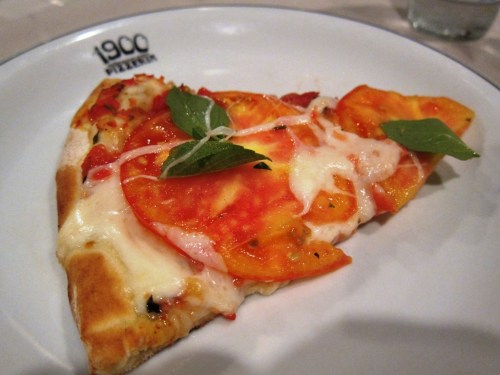
The menu was divided into “Traditional (Tradicionais)” and “Specialty (Especias)” varieties of pizza – with the specialty pizzas having slightly more adventurous combinations like bacalhau and dried beef (and slightly higher price points). Pizzas came in individual, medium and large sizes, and the prices for a large pizza ranged from 47 to 62 reais (about 25-35 dollars). Across 2 large pizzas we sampled 4 varieties (1/2 of a pie each). First up was the endive and Margherita pizza. We had never tried endive on a pizza before, but the slightly spicy endive made for a very delicious and fresh pizza. The classic Margherita was lovely, with a perfect distribution of tomatoes, fresh basil and buffalo mozzarella (see below). Our second pizza (which we tried with a whole wheat crust) was ½ four cheese and ½ arugula. The winner of this pie was the 4 cheese, which included the delicious Brazilian staple Catupiry along with gorgonzola, mozzarella and provolone. We slightly preferred the whole wheat crust, since it added a little more substance to the pizza. For dessert there were also several sweet pizzas, with nutella, strawberries, etc, apparently an exceedingly popular option in São Paulo pizzerias.

Though it was more than we are used to paying for pizza, we felt the added cost was worth it. The pizzas at Pizzeria 1900 were excellent, and we are happy that we got to experience a slice of São Paulo pizza culture with our friends. We only wish we could have more time in Sao Paulo to try some more pizza spots.

1 Comment

Filed under Reviews