Tag Archives: candy

A Tale of Two Nougats: Torrone and Gaz

I love nothing more than discovering similar dishes from disparate locations. When we were visiting some new foodie friends, we brought along box of Italian torrone morbido – soft almond nougat – to contribute to dessert. Torrone is one of our favorite winter holiday treats, and is an especially good host gift as it is typically both gluten and dairy free. When our gracious hosts tried the torrone they instantly drew a parallel with gaz, the confectionery specialty of the Isfahan region of Iran. In fact, they were kind enough to share some special gaz brought directly from Iran. We heartily appreciated them delving into their limited supply in the name of food culture research!
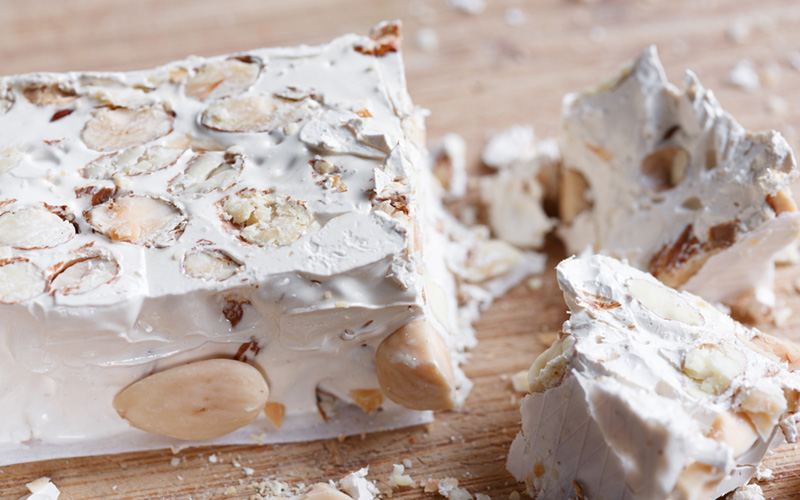
La Florentine’s Italian torrone mobido (soft torrone)

We instantly recognized the parallels between the two confections. Both were soft nougats made with egg whites, sugar, and whole nuts, cut into small rectangles. For torrone, the type of nuts used depends on the region (ours was almond), while gaz is typically made with pistachios. In terms of predominant flavor, gaz is also tinged with rosewater and Tamarisk tree sap, while Italian torrone flavors may include citrus or vanilla. The method for preparing both nougats is very similar, and if you are ambitious you can make it yourself (recipes for torrone and gaz here). Both are also commercially available, our go-to torrone, available in many US Italian markets is La Florentine (and we recently just learned the story behind their packaging design). Eataly also has a wide variety of torrone. You can order many varieties of gaz online at Persian Basket. However, to get the best versions you will probably have to visit the respective countries of origin.
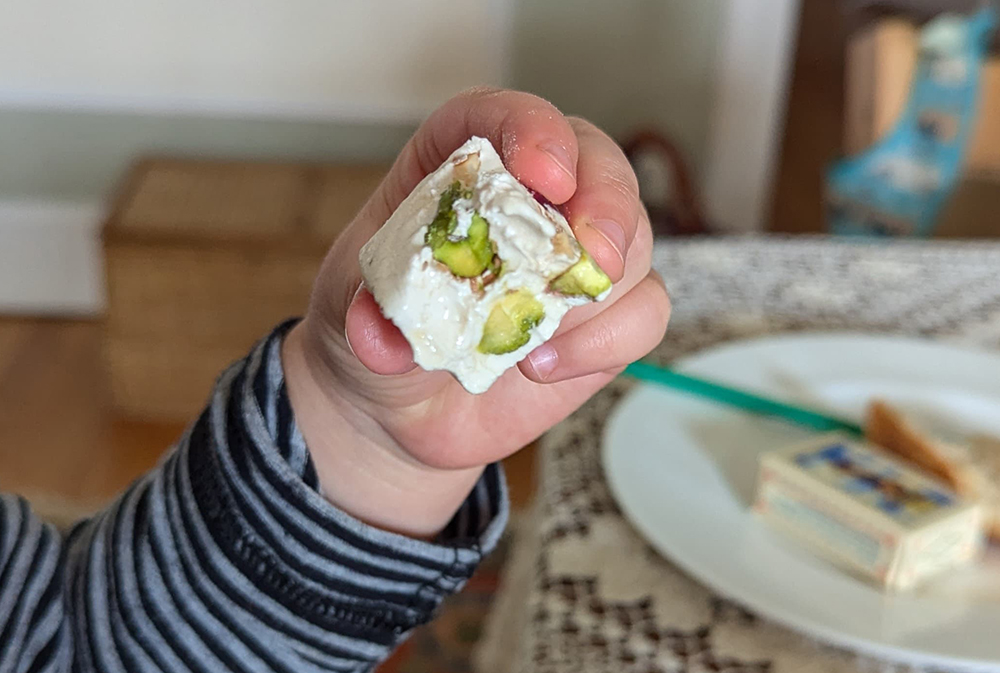
Gaz presented by our hosts’ adorable son.

Torrone can also be found in a very similar format in Spain, where it is called turrón. The similarities between turrón/torrone and gaz are not coincidental. Though its exact creation story is lost to time, it is speculated that one possible origin for Mediterranean European nougats is through the adaptation of Middle Eastern nougats as they entered Southern Spain or Sicily through cross-cultural exchange. Munching on our Persian and Italian treats, we were grateful for new friendships and cross-cultural culinary connections.
Leave a comment

Filed under history, Reviews

A taste of childhood: Haw Flakes

Happy Lunar New Year! In honor of the upcoming Year of the Dragon we are excited to share with you one of our new favorite Chinese snacks (though it is really quite an old-school favorite). It all started when M was in San Francisco, he visited an amazing art popup run by artist Derrick Higa in Japantown. At the pop-up he bought a sticker depicting Haw Flakes (山楂餅), an iconic Chinese, Chinese American, and Asian Diaspora childhood sweet snack. We had never tried Haw Flakes, so on our next trip to Park to Shop, we decided to seek them out.

Haw Flakes
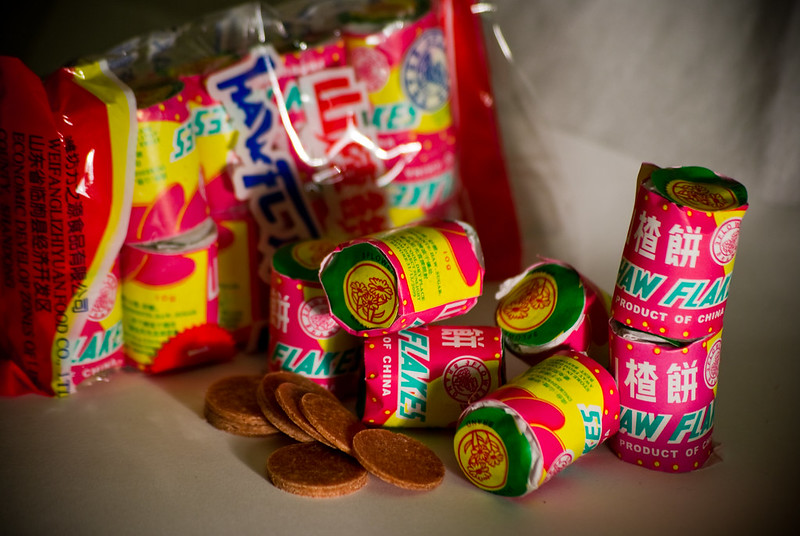
Haw Fakes by Joey

Haw Flakes are compressed discs of Hawthorn fruit (from the Chinese Hawthorn Tree), sweetened with sugar. They are wrapped in little tubes of flat circular candies, maybe the diameter of a nickel. Mackenzie Chung Fegan, writing in Bon Appetit, likens them to Necco wafers, and I think that is pretty spot on. They had a sweet, slightly-tangy cranberry-like flavor with a tiny bit of chew. Red Hawthorn fruits are associated with Lunar New Year celebrations, particularly candied Hawthorn on sticks (Tanghulu). You can find Haw Flakes at most Chinese grocery stores, and our local shop even had multiple varieties, or you can buy them at many locations online. The iconic Haw Flake is also branching out and can now be seen in ice cream, cookie, and pin formats!

Leave a comment

Filed under Holidays

Soan Papdi for Diwali

India FlagHappy Diwali! Diwali, the Hindu festival of lights, started yesterday, October 27, 2019, but it is not too late to get in on some delicious treats to celebrate this holiday. Today, for Diwali, we will be making Soan Papdi (aka patisa, son papri, sohan papdi or shonpapdi), a North Indian confection with an amazing melt-in-the-mouth texture. Really, it is unlike anything I have had before, somewhat like cotton candy, but with flaky layers, often formed into cubes. You definitely have to experience it for yourself! This treat was first introduced to me by my friend from Delhi, who brought the treat back directly from a favorite sweet shop. Soan Papdi is popular throughout India, especially during festivals. With a base of ghee (clarified butter), gram flour and sugar, soan papdi is often flavored with cardamom, but you can now find it flavored any number of ways, including mango, pistachio or chocolate. Check out Steemit, The Times of India and Awesome Cuisine for Soan Papdi recipes.

Soan Papdi in Delhi by Georgia Popplewell


Leave a comment

Filed under Holidays, Pastry Post-Poc, World Eats

The hidden history of candy corn

Candy Corn Creature by Karla Fitch

Candy corn is one of the most divisive candies on Halloween – one ETW member thinks it was one of the worst candies you could get trick or treating (better than raisins but worse than Tootsie Rolls), while the other member just willingly bought a bag of candy corn to consume by themselves. Whether or not you are pro candy corn or not, it seems like it has been a part of Halloween forever. According to the National Confectioners Association, more than 35 million pounds (or 9 billion pieces) of candy corn will be produced this year. And candy corn HAS been around a long time – it originated in the US sometime in the 1880s, but was first commercially produced by Wunderle company, and production of candy corn was taken up by the Goelitz Candy Company by 1898 (the ancestor of the current Jelly Belly Company). It was originally called “chicken feed,” which appealed to the agrarian sensibilities of America at the time. Candy corn has been popular ever since! Though now automated, the process of making candy corn was originally very time-consuming, and each color was individually poured into molds and had to harden before the next layer was added. if you are really a fan, you can even make your own homemade candy corn!

2 Comments

Filed under Holidays, Pastry Post-Poc

Sockerbit: Swedish Candy Paradise in NYC

sweden_flagIf you’re looking for that “kid in a candy store” feeling, there is nowhere better to visit than Sockerbit (89 Christopher St New York, NY 10014) in New York City. The best part about Sockerbit is that, unless you are Swedish, you have probably never seen any these candies before, which makes the adventure all the more fun. All of the bulk candy in Sockerbit is sold by the pound ($12.99) so you can grab a bag and pick out your own perfect selection from the dozens (hundreds?) of varieties. Here is a preview of a few of the candies you can get.sockerbit
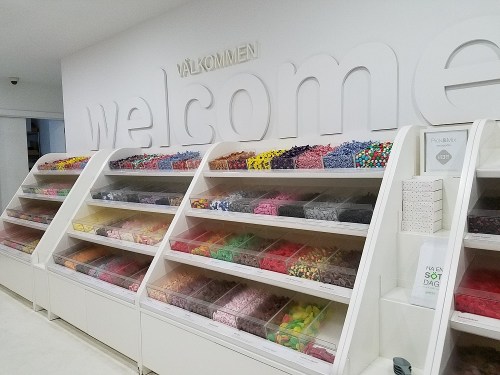
  • There is a huge variety of gummy candies, in any shape you could ever want, including old favorites like bears, worms, cola bottles and fish. But the fun doesn’t stop there, the beauty of Sockerbit is that there are also dozens of particularly unique shapes like sour apple skulls, pink dolphins and raspberry Ferarris.
  • Hard candies like the wrapped mint Marianne variety and fizzy raspberry balls
  • Traditional Swedish licorice in both hard and soft varieties, some of which is super strong and almost spicy, like the hard Napoleon variety. Other varieties like Salmias are salty!
  • Flavored Sockerbitar marshmallows in flavors like strawberry (the Swedish word for marshmallow is the namesake of the store)
  • Wrapped toffees and caramels, both hard and soft, in some more unusual flavors like the Swedish Christmas cookie Pepparkakor
  • Chocolate with fillings like muesli, toffee or hazelnutsockerbitcandy

In addition to the overwhelming amount of candy, Sockerbit also has a small assortment of Swedish ingredients like coffee, jam and flour along with boxed candies and cookies. You can also buy modern Dala Horses and and housewares, if you are looking for something a little more durable. Plus, Sockerbit is also one of the few places you can find the famous Swedish Polkagris candies in the US. If you can manage to save some of your candy haul, these also make a great souvenir!

sockerbitex

Leave a comment

Filed under Pastry Post-Poc, World Eats

The weird and wonderful world of Japanese Kit Kat Bars

greenteakitkat

Green Tea Kit Kat by Smallbrainfield

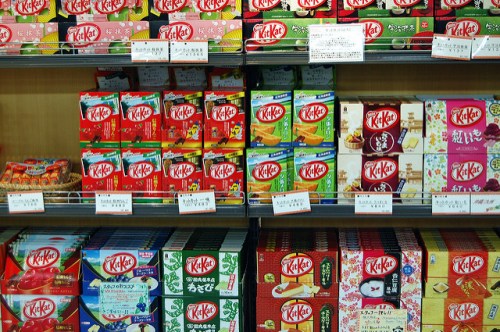
JapanKit Kat, the chocolate-coated wafer candy from Nestle, is experience a bit of a publicity resurgence in the US, due to a popular series of quirky ads featuring Chance the Rapper. However, nowhere is Kit Kat more popular than in Japan, where the humble Kit Kat bar is only a jumping-off point for fanciful flavors and gourmet Kit Kat creations. Kit Kat was introduced to Japan in 1973, and has since become ubiquitous convenience store treat, as well as a popular gift for students and a present for friends and family when traveling. In Japan, the different flavor varieties of Kit Kat are seemingly endless – there are nearly 300 – including anything from strawberry cheesecake to plum to wasabi. Now there’e even a Sake-flavored KitKat. When we visited a candy store in Chicago’s Chinatown, we were able to sample the sweet potato and green tea Kit Kats. The sweet potato flavor basically tasted like white chocolate, but the green tea flavor was really excellent! If you are hankering for some unique Japanese-flavored Kit Kats, check out Amazon – you can get a variety pack, or pick up bags of esoteric flavors like Pumpkin Pudding. And just when you think it couldn’t get any weirder – enter Kit Kat sushi!

kitkat

Kit Kat display in Tokyo by jpellgen

1 Comment

Filed under Reviews

The Magical World of Turkish Osmanlı Macunu

turkeyWe absolutely love the culture of street food in Turkey, and we were completely intrigued by Zester’s videos of the Turkish candy, Osmanlı Macunu, being made on the street. Macun (which means “paste” in Turkish) is basically a colorful sugar lollipop that comes in a variety of flavors, made to order. Each lollipop is composed of several flavors, twirled on a stick in succession and then cured by lemon. You just have to watch!

Leave a comment

Filed under World Eats

Czech and Slovak candy for St. Nicholas Day / Deň Sv. Mikuláša

czechSlovakiaThe holiday season is upon us – and that means food – and especially sweets – are out in full force! One of the biggest sweet-filled holidays in Central Europe is right around the corner: St. Nicholas Day. On the Eve of St. Nicholas Day (called Deň Sv. Mikuláša in Slovak), children leave out their boots in the hopes that they will get a special treat from St. Nicholas, perhaps some fruit, or if they are lucky, candy! This tradition is similar to other countries, such as the celebration of Sinterklaas in the NetherlandsIf you’re looking to learn about Czech candies, Prague Artel blog has a comprehensive guide about some of the most famous varieties (we think Kofila looks especially delicious). You can get your fix of Czech / Slovak candies at Slovczechvar.com and Equ.inox has reviews of both Czech and Slovak chocolates. For something a little more substantial, check out these St. Nicholas moon cookies.
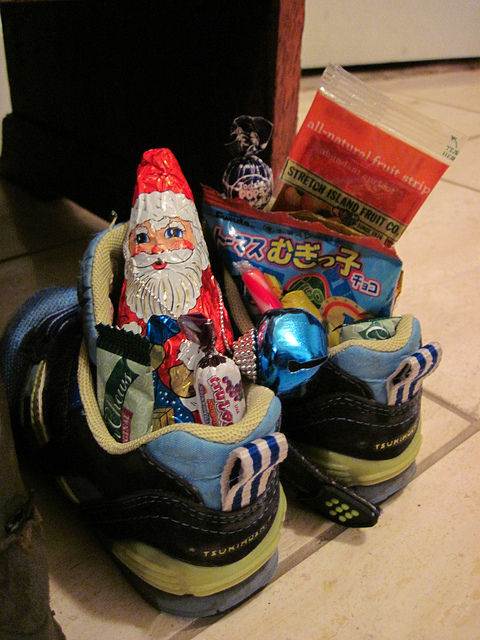
Candy-filled shoes for St. Nicholas Day - by Major Bonnet

Candy-filled shoes for St. Nicholas Day – by Major Bonnet

Leave a comment

Filed under Holidays

Paçoca de Amendoim – Brazilian peanut candy

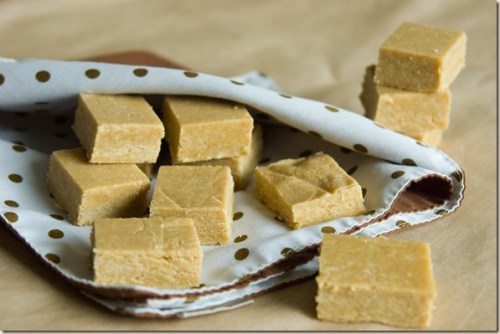
Brazilians love little candies and treats, and at some places, like Perini supermarket, you can buy the individual bite-sized treats and create your own box of goodies. One of these popular treats is Paçoca de Amendoim – kind of a riff on Peanut Fudge – with the added texture of Manioc flour. The name comes from the Tupi word Posok which means “to crumble.” Making Paçoca is super simple, and we found versions at Pink Bites (using cookies instead of manioc) and Flavors of BrazilAs Flavors of Brazil points out – there is a dish also called paçoca that is completely different – think beef and onions. We actually ran into this situation at the São Cristóvão market in Rio – which has food from the Northeast – both kinds of paçoca were for sale. Be careful you order the one you’re intending!

Leave a comment

Filed under Links, Pastry Post-Poc, Recipes, World Eats

Israel: Mekupelet

Thank goodness for the internet. I recently was the recipient of an assortment of snack-sized Israeli chocolate bars, and none of them, and I mean none had any sort of roman letters. Since I don’t read any Hebrew, and I was curious as to what type of log-like confection I was eating, I turned to Google. All I typed into Google was “Israeli candy” “chocolate” and “log” – but somehow I still got directed to the right place! The candy I had was Mekupelet, a famous Israeli candy similar to the Cadbury Flake bar – milk chocolate specifically extruded in a flaky form to look like a log. Markos Kirsch attempted to compare the two, but they were pretty much running neck and neck, with no clear winner.

Leave a comment

Filed under World Eats

FTC: Aero Bars

England International candy is  so wonderfully random and varied, you can’t help but love it. At the top of my list of fun international candies from my youth has to be Aero, made by Nestle. Aero is a UK creation, and was first made by the Rowntree Mackintosh company in 1935 (Nestle bought Rowntree Mackintosh in 1988). Above all else, Aero is a novelty bar, and not some extraordinarily fine bittersweet chocolate.

The novelty, in this case, is that Aero bars have a bubbly, aerated chocolate filling, which creates a pretty unique texture. Tellingly, the tagline of Aero is “have you felt the bubbles melt?”If you cut the bars open you can really see the bubbly interior – check it out below. Though we searched the web for how the bubbles in Aero form, it seems to be a closely guarded and much-speculated secret. Aero bars also come in dark chocolate and mint varieties – check out the awesome green color below! Aero is available at Cost Plus infrequently, and any respectable British Market.

Leave a comment

Filed under Finer Things Club

FTC: Caramels from Dulcelandia in Chicago

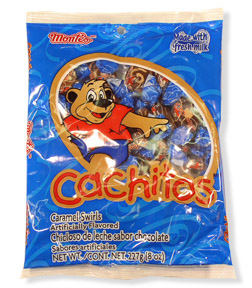
colombia.pngMexico FlagDulcelandia is a a chain of Mexican candy stores found across Chicagoland. Today I got my hands on assortment of caramels bought from Dulcelandia (though I have never been), and I am excited to say they were pretty tasty. I can’t wait to go to Dulcelandia myself to get some more sweets. Don’t tell my dentist!Cachitos

  • Ricos Besos: Did I lose a filling? Pure, chewy little chunks of milk caramel from Mexico. The chewiest imaginable.
  • Cachitos: These candies from Mexico were my favorite of the three. Cachitos are swirled chocolate and caramel pinwheels. Bite-sized and perfectly melt-in-your-mouth tasty.
  • Bianchi: Bianchi are little milk caramels with a gooey chocolate center from Colombia. They almost reminded me of a chocolate Werthers.
  • Arequipe: Arequipe is the Colombian word for a dulce de leche. These are from the same company as Bianchi, and have the same outer hard caramel shell with a gooey ducle de leche center.

Leave a comment

Filed under Finer Things Club