It may just be the end of an era. The main wing of Toyko’s most famous modernist hotel, the Hotel Okura, is now closed, and is in the process of being demolished. Watch this video from Monocle to get an idea about the distinctive design of the Okura, originally built in 1962, with more photos from Curbed. The restaurants and bars in the hotel were also iconic, particularly the Orchid Bar, which looks like the perfecet setting for any James Bond film or diplomatic meeting. I remembered the Hotel Okura instantly from “Walk Don’t Run,” a charmingly bizarre movie about the 1964 Summer Olympics in Tokyo (starring Cary Grant).
Tag Archives: Japan
The end of an era: Hotel Okura’s Modernist Building Closes
Filed under video
Muracci’s Japanese Curry in San Francisco
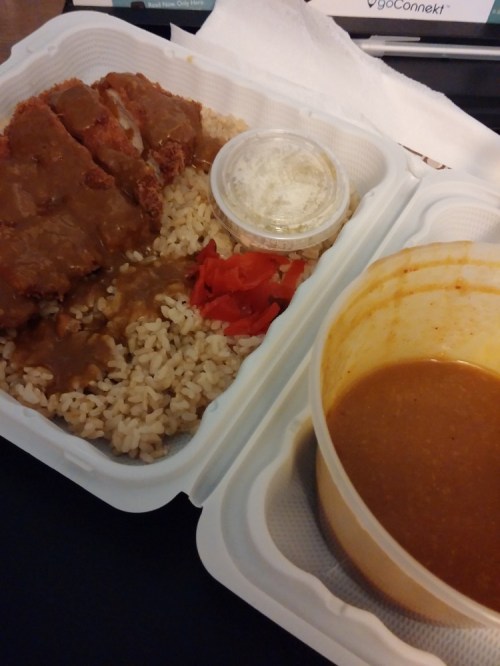
Muracci’s (307 Kearny Street, San Francisco, CA 94108) was on our shortlist of places to try in San Francsico for a long time, so when I had a work trip there, I jumped at the chance. We were intrigued by the concept of Japanese curry, a version we had never tried before, despite being extremely well-acquainted with Thai and Indian curries. Legend has it that the dish was introduced to Japan by the British in the 1800s (when India was still a British colony). It is definitely not an elegant or refined dish, and is generally seen as “home cuisine,” and is not commonly available in Chicago Japanese restaurants.

When we went to the counter to order we noticed the large 64-plus gallon vats of curry stacked on the side of the counter, which we took as a good sign. You can order 3 strengths of curry: mild, medium and hot. There were several varieties of meat that could be topped with the ubiquitous crurry – and the chicken katsu ($10.25) and pork tonkatsu ($10.25) seemed to be favorites, though you could also get prawns, salmon, beefs and veggies. I went with the medium-spice chicken katsu, which was a chicken breast, pounded flat and breaded, served with choice of rice, slaw and pickles. Other non-curry options included chicken teriyaki, hot curry noodle soup and homemade mochi.
There is really nowhere to sit in the counter-only postage stamp-sized shop, and they did a brisk trade in takeout. I did particularly enjoy the miniature shrine with a cow they had set up right by the cash register. I took my meal back to the hotel, where I unpacked the little Styrofoam container, which had the curry in a separate tub – which was nice because you could add as much or little as you wanted. The curry was delicious and fragrant, with similar spaces to a mild Korma curry, heavy in garlic and onion. It was a perfect compliment to the juicy boneless fried chicken. This curry was a great, quick filling meal, and a new taste of Japan. We are itching to try some Japanese curry in Chicago, and Time Out found a couple of spots that serve this rarer dish. Another option is to make it at home, using “curry roux” pre-formed blocks, or even from scratch.

Filed under Reviews
Origami: Starbucks’ single-use Japanese pourover kit
Pourover coffee is having a moment, but now Starbucks in Japan is taking it one further with their “origami” single use pourover kit. Seems like a pretty cool way to brew coffee, and we certainly prefer it over the more common single-serve coffee method of K-Cups or freeze dried coffee powder. What do you think – would you use origami?
Will 2015 be the year of Matcha?
Bon Appetit certainly thinks so. We have always been fans of matcha – powdered Japanese green tea, so we are look forward to seeing it become more popular in the US. From lattes to cupcakes to sugar cookies, matcha is good in everything.

Matcha Latte by cgc76
Filed under Tea
A Winter’s Nabe Tale
While we have always enjoyed Japanese cuisine, we don’t consider ourselves experts. But we do consider our friends R & R to be Japanese food experts, given their years of experience in Japan and a passion for Japanese food. They recently opened out eyes to a whole new dish when (just as the weather turned colder) they invited us over for some Nabe (or nabemono 鍋物, なべ物), a warm, hearty, wintery stew. Nabe’s name derives not from its ingredients but from the pots used to make it (donabe), which also are heated to keep the dish warm on a portable burner after it has been served. A true stew, nabe can be made with pretty much anything you have a taste for.

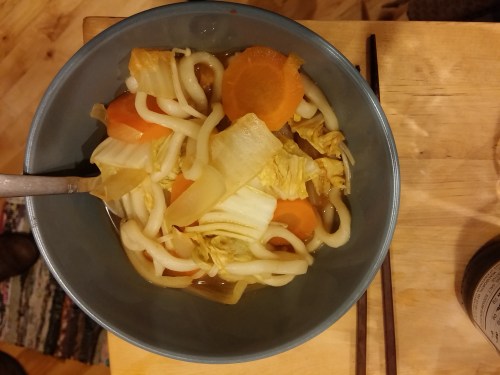
Nabe ready for consumption!
Typically this begins with special nabe broth, which can be purchased pre-made in packets in a variety of flavors. One then adds veggies and many add-ins along with a dipping sauce, which are then cooked with long metal cooking chopsticks. A particularly hearty chicken and fish nabe is also known as “sumo nabe,” Chankonabe (recipe here), since it allegedly helps sumo wrestler pack on the pounds. The nabe R & R made was composed of a spicy kimchi broth, cabbage, carrots, noodles, mushrooms and meatballs, and was delicious, hearty and filling. You also use the leftovers to make a fried rice dish, which was amazing. Our first taste of nabe made us hungry to try more in the future. Spicy pork and seafood nabe sounds good, no? Thanks R & R, for introducing us to the vast world of nabe!
Filed under World Eats
The Art of Fake Food, Sampuru, in Japan
[Via Metafilter] We recently came across an absolutely fascinating video depicting a master fake food maker in Japan. That’s right, FAKE food, known in Japanese as sampuru, which is derived from the English word “sample.” In many restaurants in Japan, as well as Japanese restaurants abroad, enticing fake food is put on display to give potential customers an idea of what they will get. Creating the food itself is an art, and sometimes it’s even a little hard to tell real from fake.
Filed under Links
How (fresh) Ramen Noodles are made
[Video via Kottke] We spoke recently how authentic ramen restaurants were becoming increasingly popular across the US, and that trend has no sign of slowing down. Some of these restaurants make noodles in-house, but many buy them. Check out how fresh ramen is made for some of the most popular ramen eateries across the US, at Sun Noodle.
Filed under Links, World Eats
Blue Seal, the original Okinawan Ice Cream
Our World Cup coverage continues with an unexpected cross-cultural treat from Japan. Okinawa, Japan may not be first place you think of when you think of ice cream, but it turns out the island is crazy about it! Ice cream came to Okinawa with American troops in WWII, but became a trend that lasted much longer. The main purveyor is Blue Seal, originally founded to provide troops with a taste of ice cream from home, but eventually the ice cream became available island-wide, where it has gained quite a following. There are flavors that Americans would be familiar with, as well as Okinawan flavors like sugarcane, bitter melon and purple sweet potato. Blue Seal-branded cafes are found all over Okinawa, and now even in Tokyo, too. Softserve is more popular in Japan, but Blue Seal definitely holds the top spot for American-style ice cream.

Blue Seal Ice Cream by Jason Poon
Filed under Reviews, World Eats
Reclaiming Ramen
When the word “ramen” comes up, your first thought may be of the ten-for-a-dollar deals your local supermarket had on instant ramen in college. However, there is a lot more to it than that, and the traditional preparations of this Japanese soup dish are catching on in the US. Food and Wine has a profile of Ivan Orkin (with recipes) about how he and other chefs are reclaiming ramen’s good name. There are ramen shops popping up all over NYC and Chicago, and Serious Eats Chicago ranked suburban Mount Prospect’s Misoya as the top ramen in the area.

Ramen in Kyoto by Claire Yuki
Merry Christmas 2013!
Happy winter wishes from the miniature snow-covered Sphinx in Tobu World Square Theme Park in Japan.
Filed under Holidays
Mujin Hanbai: Stores without staff
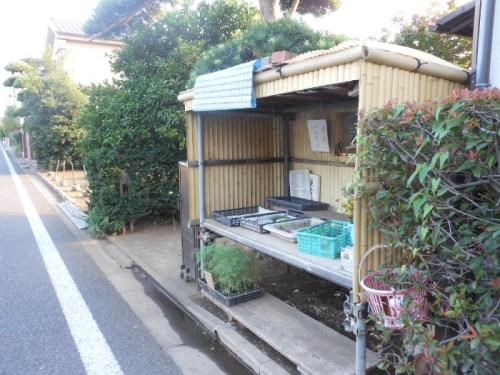
Pingmag has a fascinating article about mujin hanbai, or “honor stores,” a type of farmstand in Japan that relies on the honor system. The simplest of these just has a locked cashbox, while others more resemble vending machines. They are popular nationwide, even in Tokyo. I’ve seen a few honor roadside farmstands before (one even boasting “self-serve rocks”), but nothing so elaborate as those found in Japan. Have you ever encountered something like an a honor store?

Mujin Hanbai from Pingmag
Filed under Links, World Eats
Tsunami: Sushi with a view in Baton Rouge
Tsunami
100 Lafayette Street
Baton Rouge, LA
If you’re looking for scenery with your sushi, Tsunami definitely impresses. Located on top of the Shaw Center for the Arts, Tsunami is an upscale sushi restaurant with a bar and a terrace with a panoramic view of Baton Rouge and the Mississippi river. We had a very pleasant dinner at Tsunami with M’s dad and his friend Chuck, who are both experts on Baton Rouge restaurants and nightlife. M’s Dad knew we are always looking for good local restaurants, so he wisely picked Tsunami as an upscale option.

Tsunami’s dining room and view
Though there are Japanese entrees available including Japanese dishes like Tonkatsu ($15) and Chicken Teriyaki ($16), Tsunami’s focus is sushi. Tsunami serves a variety of innovative rolls, with a few Cajun touches sprinkled in, which we appreciated! For example, check out the Ragin’ Cajun Roll ($8) – only in Louisiana! – with panko fried alligator and avocado. We also ordered the Jazz Roll ($10), which includes snow crab, asparagus, boiled shrimp in a soy paper; and the 412 Roll ($16), with cream cheese, asparagus, tuna, avocado and crunchy shrimp topped with tuna and avocado. There are also Nigiri (for $5 to 8 each) which would appeal more to the sushi purist with varieties like Yellowtail, Tuna and Salmon Roe.
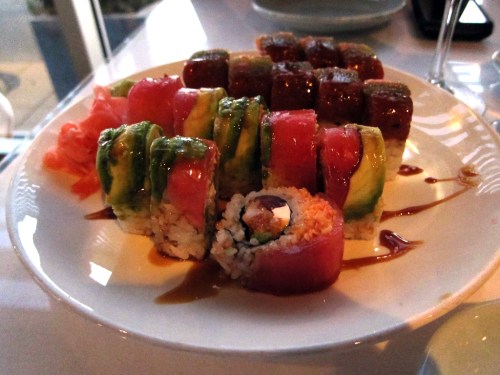
Tsunami Sushi
While we were waiting for the sushi to arrive we snapped some pictures of the river and the town, and on a more temperate night, it certainly would have been a great place to eat (it was 95 degrees when we dined!). Our sushi arrived, and we were immediately impressed by the presentation (and a little by the prodigious portion size as well). We also ordered a special roll with tempura shrimp that was particularly tasty though the portion was gigantic. The fish was very fresh, and we appreciated the special Cajun touches that you could not get at a sushi restaurant “up north.” To finish off our meal we enjoyed chocolate cake, elegantly served with ice cream and Pocky Sticks in a bento box. Though we enjoyed the food, the view was the true superstar. Tsunami is a perfect place for a date night (we witnessed a few) or for a group of friends. It was a wonderful suggestion!

View of Baton Rouge from Tsunami terrace
Filed under Reviews
Japanese recipe site Cookpad, now in English
[Via MetaFilter] I recently learned that the huge Japanese user-contributed recipe site Cookpad, which has over 20 million users and 1.5 million recipes, now has an English version. Cookpad seems similar to Food.com, and you can browse recipes by category or ingredient. Over 1,500 recipes have been translated into English so far, with more planned (the translations are not by a machine, though there are a few errors anyway). There are a ton of cool-looking recipes including Taro Root Croquettes, Somen noodles, Udon with Yuzu and Tofu with dashi sauce. Any fans of Japanese food should definitely explore. Did you find any favorite recipes?
Baking Bread with the Tangzhong method
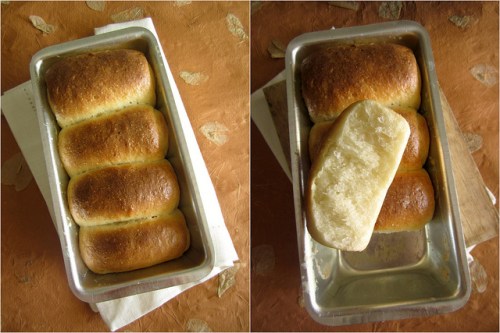
Our previous attempts at making bread were not terribly successful, but we’d love to give bread making another try. One of the techniques we recently learned about was the Japanese Tangzhong bead-making method, which involves making a roux (called the Tangzhong) and incorporating it into the dough. Apparently this addition results in a very soft, tender loaf of bread. There are countless different breads you can make with the Tangzhong method, and many recipes we found are for various types of Hokkaido Milk Bread (here’s a cinnamon and chocolate chip version and a Nutella version). We had a favorite milk bread back at our local fruteria in Chicago, and we are mourning the fact that they don’t carry it any more. Maybe some of these Japanese milk breads are worth a try to fill our cravings. You can also try your hand at hot cross buns and 10 grain milk bread made with the Tangzhong method.

Hokkaido Milk Bread by Divya Kudua
Filed under Pastry Post-Poc, Recipes
Amazing Japanese Latte Art

The cast of Charlie Brown in Latte form – NPR.com
We enjoy latte art, though it usually doesn’t go much beyond a leaf or a heart. However, Japanese barista Kazuki Yamamoto takes latte art to a whole new level – even including some 3D creations.
Filed under Design and Photography, Reviews
Lunar New Year in Liberdade, São Paulo

Today is Lunar New Year – the welcoming the year of the snake. Fact of the day: Brazil has a substantial East Asian population, including the largest population of Japanese-descended persons outside Japan. São Paulo in particular is a major Japanese-Brazilian (nikkei) center, with Japanese cultural heritage on full display in São Paulo’s Liberdade neighborhood (which means “freedom” in Portuguese). Though originally settled by the Japanese, today the area is also home to many recent Chinese and Korean immigrants. Due to this, Liberdade is a great place to experience Lunar new year! In 2011, 200,000 people attended new years celebrations in Liberdade alone.

Chinese New Year Celebration in Liberdade, 2008 by Bianca Bueno
Liberdade is a very cool place, marked by its distinctive red lamp posts and a red Japanese gate (torii) at the entrance to the main street. We visited Liberdade in 2012, right after new year, but the place was still hopping. The neighborhood is also famous for its weekend street fairs, which are full of food, and bring out Paulistanos from all areas of the city. On any day of the week you can get some of the best yakisoba , bubble tea and gyoza in Liberdade. In many other Brazilian cities, Japanese food is quite expensive, but Paulistanos have the pick of any range of restaurants. There is even a dedicated Sake shop!

Streets in Liberdade, Sao Paulo by Márcio Cabral de Moura
Filed under Holidays, World Eats
Japan and Taiwan: Honey Toast

I love learning about unique foods from around the world, especially if they are a little quirky. One of the quirkiest foods I have encountered recently is honey toast, a Japanese creation that has caught on in Taiwan, where the topping choices have become even more extravagant. Honey toast is composed of a small loaf of hollowed out white bread, the interior of the bread is cubed, toasted and stuffed back inside, and all is covered with a heaping helping of honey. Honey toast toppings may be a simple as ice cream, or may include fruit, syrups, or even something as decadent as macarons. Curious yet? A review of What8ver Cafe in British Columbia has a great description of honey toast. Or if you need a better visual, here is a video of Honey toast at Dazzling Café in Taipei being dissected. Making the honey toast does not seem terribly difficult, but definitely for carb lovers only.
Filed under World Eats
Finer Things Club: (Re)Discovering Yoku Moku Cookies
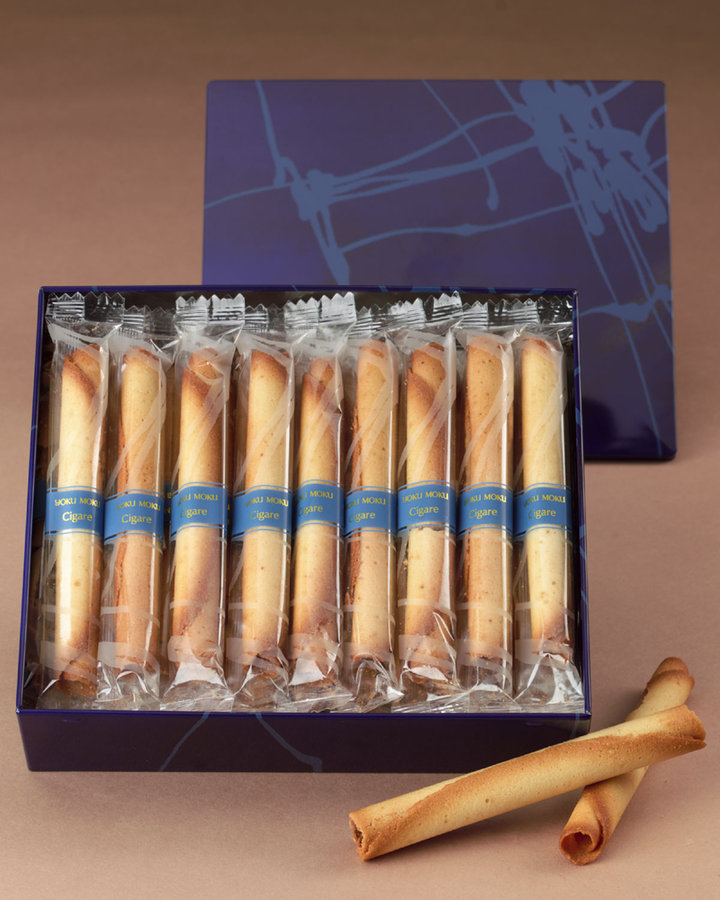
I finally put a name to a food memory of buttery cookies I had many years ago – Yoku Moku cookies. I remember eating these cookies a long time ago and being very impressed by both the taste and the presentation, I think my dad brought them home from work, and I still have the distinctive blue tin. However, I didn’t know what they were called until I ran across a picture of the very same tin online (the style seems unchanged over the years). The Japanese company Yoku Moku got its unique name from the northern Swedish city of Jokkmokk, where the founder, Noriichi Fujinawa first tried European butter cookies. That first encounter was the impetus for the creation of Yoku Moku (and the towns’ name was adopted for the company). The most famous Yoku Moku cookies, and the ones I remember were the Cigares, rolled thin butter cookies with a hint of vanilla flavor. Yoku Moku also makes larger tins with other cookie assortments. Though primarily available in Japan, the cookie tins are available at Neiman Marcus, Bergdorf Goodman and Dean & Deluca in the US.
Filed under Finer Things Club, World Eats
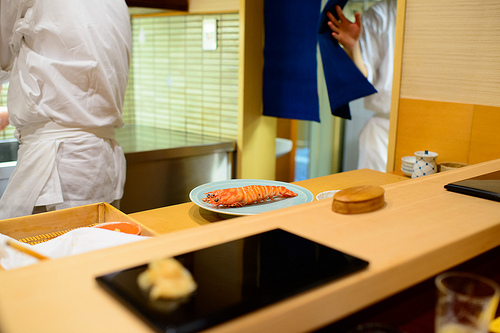
Sukiyabashi Jiro: The $20-a-Minute Meal
Recently, I posted about the wonderful documentary film about sushi expert Jiro Ono, Jiro Dreams of Sushi. Via Kottke.org I found an account of A Life Worth Eating’s recent visit to Jiro’s restaurant, Sukiyabashi Jiro, where the entire meal lasted a mere 19 minutes, with a tab of $380. You can check out the entire stunning meal on Flickr.
Filed under Links, World Eats
Japan: Jiro Dreams of Sushi
We recently watched the documentary, Jiro Dreams of Sushi, about Jiro Ono, a dedicated Japanese Sushi chef that has earned three Michelin stars for his tiny restaurant Sukiyabashi Jiro in a Tokyo subway station. Jiro was the first sushi chef to ever receive 3 Michelin stars and it is clear that his life is completely dedicated to perfecting his craft. The movie is beautiful and engrossing, and I guarantee you will have a newfound respect for sushi. Anthony Bourdain has stated that it is his favorite sushi experience, and we agree that the tasting menu looks amazing.
Filed under Reviews, World Eats