
Saint Lucia, a small island nation in the eastern Caribbean with a population of less than 200,000 people, does not have a large diaspora population. But in the Dalston neighborhood of London, one finds a little but popular outpost of Saint Lucia in Rainbow Bakery. Established in 1987, Rainbow bills itself as the only Saint Lucian establishment in the United Kingdom; indeed, it’s likely one of the very few located outside of the island. And even better, it is well worth a visit for excellent baked goods and drinks.

Newcomers to the cuisines of the eastern Caribbean can sometimes miss the subtleties of the food distinctions between the islands; they can be forgiven, given the long history of exchange and connection between the islands. But Rainbow is unabashedly Saint Lucian. A large Saint Lucian flag hangs over the main ordering area, and all the drinks on offer in their fridge are imported directly from Saint Lucia.


At front, food for order is set up in a bakery case: savories on the left and sweets on the right. Upon getting to the front – there were six in front of me on this busy morning in a clearly popular spot – the man behind the counter said, “First time?” “Yes,” I said, “what should I pick?” Going past the appetizing but probably-too-filling option of an oxtail plate served with mac and cheese and greens, as well as a chicken roti – both staple dishes of Saint Lucian cuisine – I went with their Friday- and Saturday-only special: a “meat loaf,” a kind of medium-dense baked bread filled, in this case, with succulent curried lamb.

For sweets, there was a slew of options: sweet rolls with raisins; a cinnamon and nutmeg cake; baked sweet pastries; but I went with a spice bun: a dense, brown ball of baked rough flavored with seemingly every spice available in Saint Lucia (the helpful man behind the counter listed the spice ingredients, of which there were at least fifteen), plus raisins.

Both dishes were delectable. For a beverage, I grabbed a peanut-flavored seamoss drink (soursop and pure seamoss flavors were also on offer); imported directly from Saint Lucia and complete with the national flag and the island’s outline on the bottle. Excited when I brought it to the counter, the server explained to me how it was made from fermented seaweed steeped in water and then strained; he even had a pack of the leaves behind the counter to demonstrate. He described it as “Taste: 4 out of 10” but “Health: 10 out of 10.” I ended up disagreeing: it tasted to me like a slightly less sweet horchata with some added peanut; or maybe a kind of thinned-out bottled satay sauce. Could have drank another bottle easily if I weren’t so stuffed from the lunch.

Rainbow’s location exemplifies the history of its neighborhood. Rainbow is just a block from the C.L.R. James Library, named for the influential Trinidadian historian and activist who moved to London in 1933, and where he wrote a series of critical works on Caribbean history with a Marxist bent. Rainbow is also around the corner from the Overground line station. Installed in 2011 (ahead of the London Olympics), Dalston’s new public transport connection to downtown has contributed to rapid gentrification in recent years. After carrying my food out of Rainbow, I walked over to a small picnic area in front of the library where I could enjoy all my treats in peace: the freshly-warmed meat loaf; the roll; and the seamoss drink. Personally, we felt this was the best Caribbean bakery we had been to of those we had tried previously (all in New York). And there are more to try, including Grenadian options (which would be a new country for us!) in London, New York, and Toronto. We hope to hit at least one of those in future years. But we’ll be telling others to head to Rainbow in London for unique Saint Lucian offerings, hospitality, and great food.


 One of our first stops in London was the venerable British Museum, where they had a delightful museum cafe run by the local cafe chain











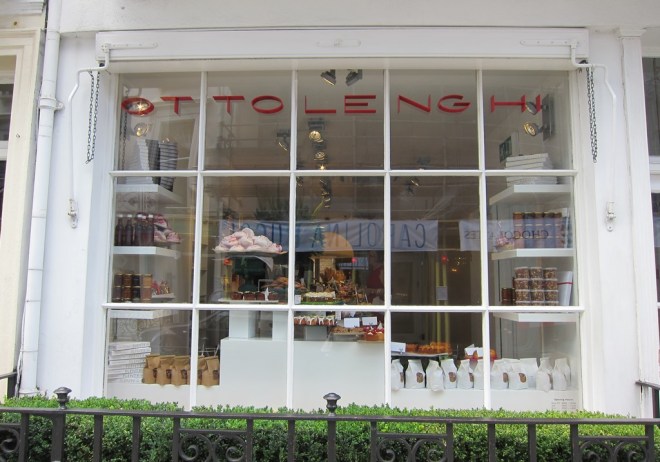


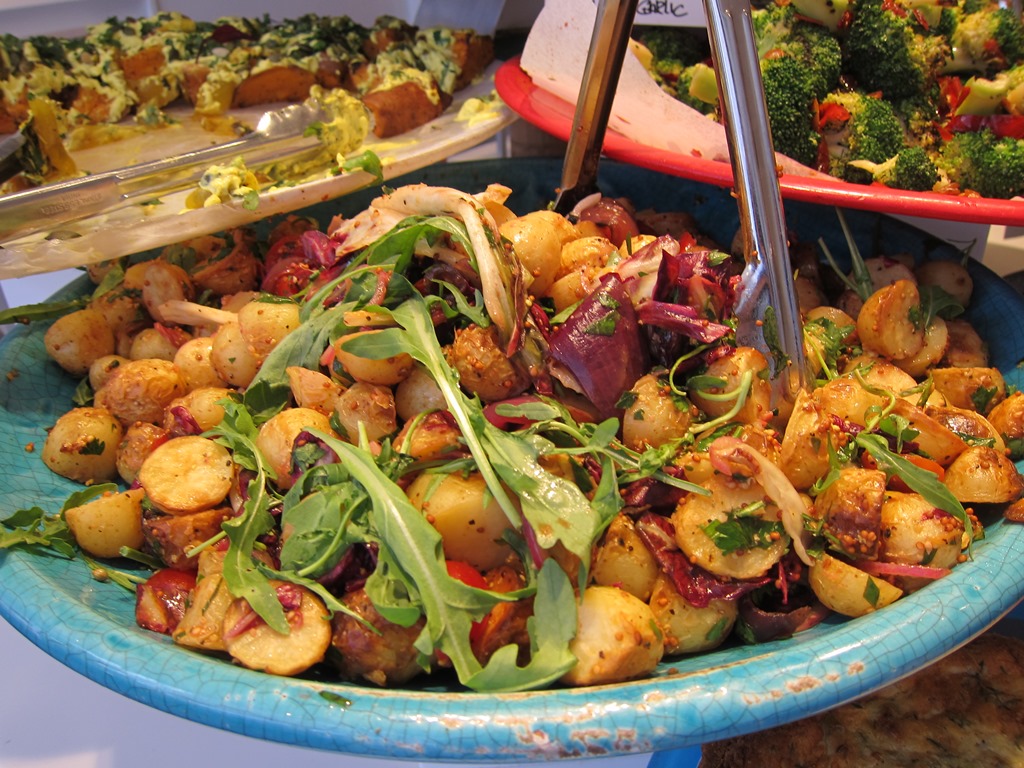

 We ended up at
 We ordered one of our favorites from Singapore, Prawn/Shrimp Lemak (£8.70), and a new-to-us dish: Beef Rendang (£7.95). Both dishes came out pretty quickly and were perfect portions to share. The Rendang was advertised as being in a spicy, “almost dry” curry, meaning it was more of a thick paste that coated the meat. Not a photogenic dish, but spicy, flavorful and tender. The prawn lemak was a coconut milk curry, with plenty of lightly spicy soupy-ness and a strong lemongrass flavor. Both dishes were flavorful and complex, and had clearly been cooked to order. Overall, we found the food at Sedap to be unique and reasonably priced (for London) for the quality. We wish we had more time in London to explore more of Sedap’s Nyonya dishes and flavors. But even if we won’t be back for a while, we encourage people to get off the tourist track and try something new beyond the typical curry.
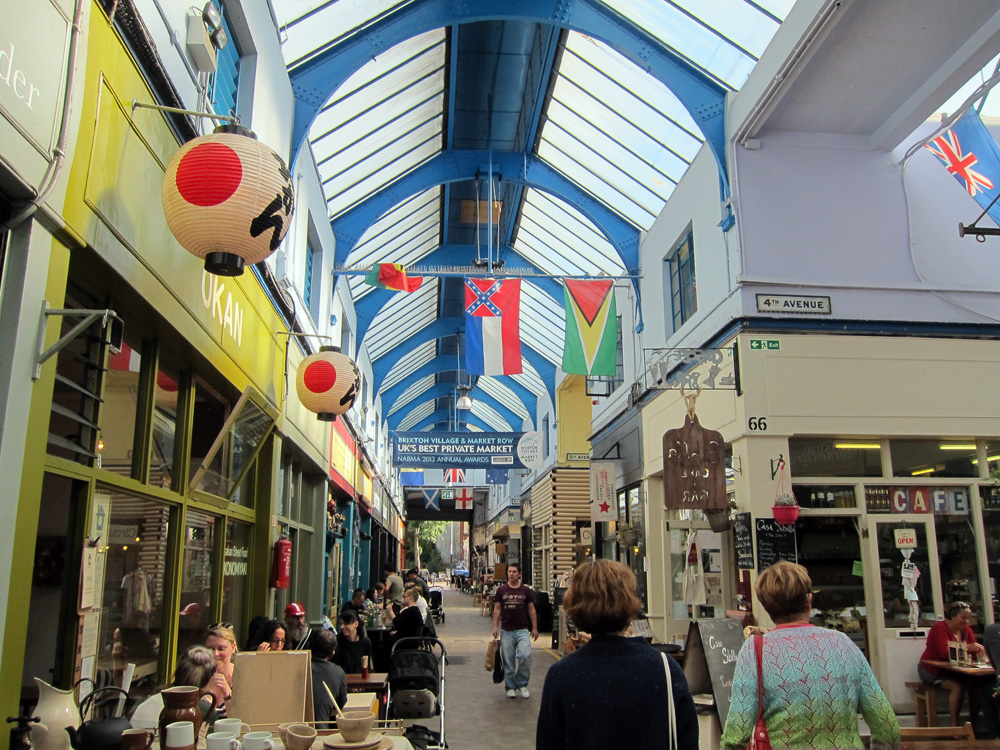
 We love Caribbean/West Indian food, but our local options in Chicago are somewhat limited to Jamaican food and a Trinidadian spot or two. However, our trip to London provided us with the rare opportunity to sample Guyanese cuisine and we jumped at the chance. The ultimate Guyanese dish is the roti, an unleavened bread popular in Indian cuisine, which was brought to the West Indies by immigrants from the Indian subcontinent. The beauty of the roti is in its role as a wrap, that can be filled with nearly anything! We learned about a couple of roti restaurants in the Brixton area which seemed to be located in food trucks or markets, and were near-impossible to track down. However, we heard great things about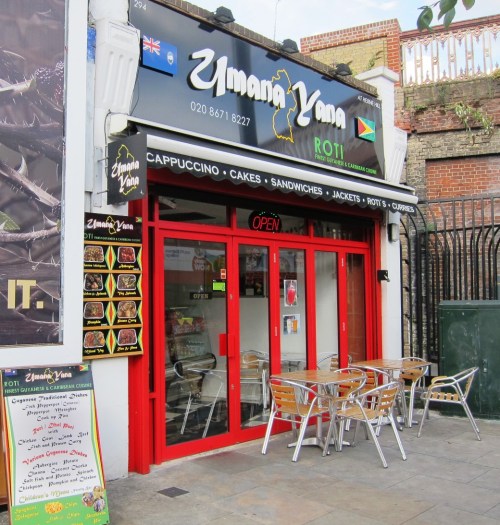
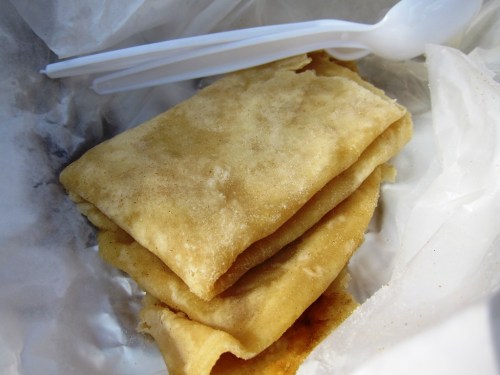 We decided to split a Goat curry on dohl puri, at the behest of the chef/owner Deborah. We really enjoyed the dohl puri, a roti filled with chickpeas, which was unusual and different from a garden variety roti (we ordered one of those on the side too – see above). The rotis were made fresh to order, and were like thin, rich naan: soft and a little flaky, but not too greasy. Unfortunately the curry was not too photogenic, but it was certainly delicious. To finish, we recommend washing your meal down with a delicious, floral
  In my years of coffee drinking, it is rare that I come across a wholly new espresso drink, however when I heard of a
  I decided to go to the pioneer of flat white coffee while in London, the aptly named Flat White cafe in Soho (17 Berwick St, London W1F 0PT). The menu is very simple, consisting of only a few coffee drinks and a pastry or two with a special focus on the eponymous drink. There were expats behind the counter and filling the shop, one particularly pleased grandmum expressed her pleasure at being able to get a proper flat white. The cafe is quite small, and many just pop in for a flat white to-go cup. I placed my order and waited at a small table inside.



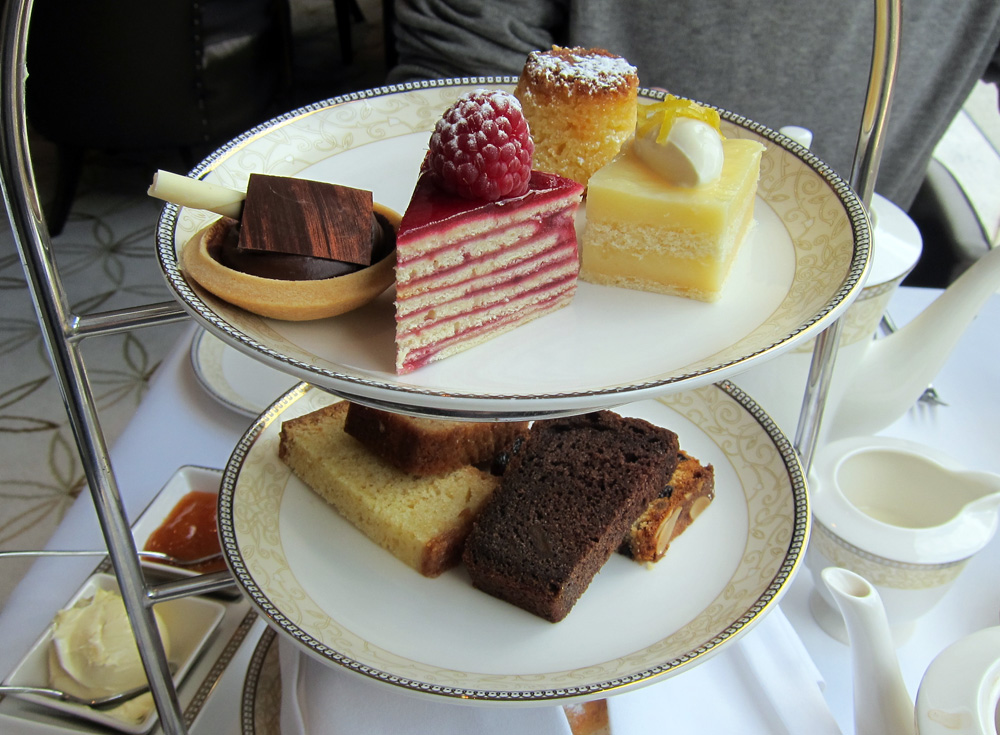
 When we were in London this past month, we were absolutely blown away by the huge amount of international cuisines available (even compared to our last visit 10+ years ago). However, we wanted to give proper attention to English classics including our favorite category of food – sweets. Now, we are no strangers to English candy, but we had not ventured far into the world of desserts, or as they are called locally – puddings. While in London, I popped into a bakery that specializes in English treats to brush up on my British baking knowledge: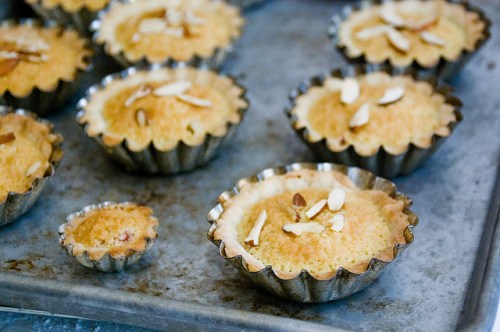






 Eating The World