Tag Archives: West Africa

Experience Togolese Flavors at Mé Lon Togo in Rockland, Maine

One of the last places you might expect to find a restaurant with cuisine from the small west African nation of Togo is in coastal Maine, but sure enough, that is where you will find Mé Lon Togo (10 Leland Street, Rockland, Maine). The restaurant – whose name translates to “I Love Togo” – is run by a percussionist from Togo who teaches music at Colby College (roughly 1.5 hours away), Jordan Benissan, explaining its somewhat perplexing location. Mé Lon Togo restaurant is set up in an old colonial house, and the restaurant fits neatly into the warren of rooms on the first floor. While we were there, there was even live musical entertainment, contributing to the warm atmosphere within.

Mé Lon Togo offers only a prix fixe menu ($40 per person) for dinner on Thursday through Sunday. However, this format is not limiting. When we visited, there were a staggering amount of main course options, spanning Togolese cuisine; as well as French dishes (showing the French influence on Tologese cuisine and language) like Duck de Provence, Coq au Vin and Beef Bourguignon; and selections from other parts of Africa: a Moroccan chicken tajine and Ghanaian/Nigerian Jollof Rice. The primary Togolese dishes on the menu are designated by the name Dessi: Fetri Dessi, Deku Dessi, Gusi Dessi (similar to Egusi stew, made with melon seeds), and Azi Dessi. There are options for all tastes, including a vegan option in the signature Mi Lon Togo stew with mushrooms, plantains, and eggplant. The restaurant also features a bar with a range of signature cocktails, beer, and even tea.
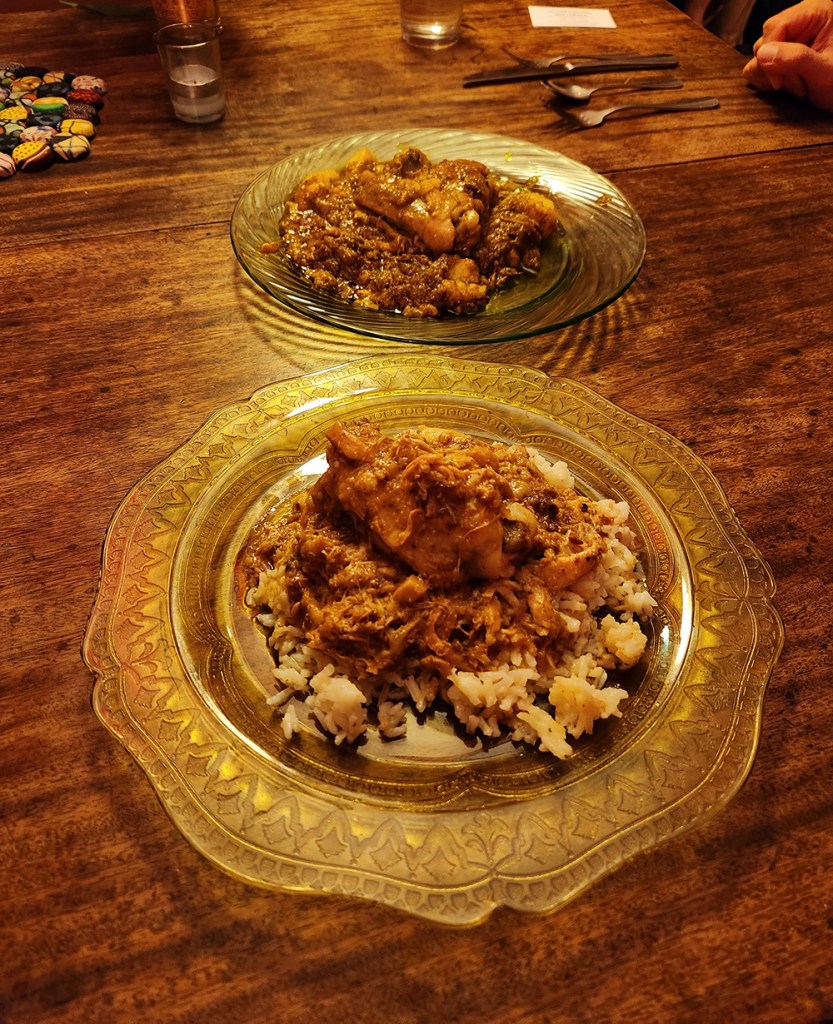
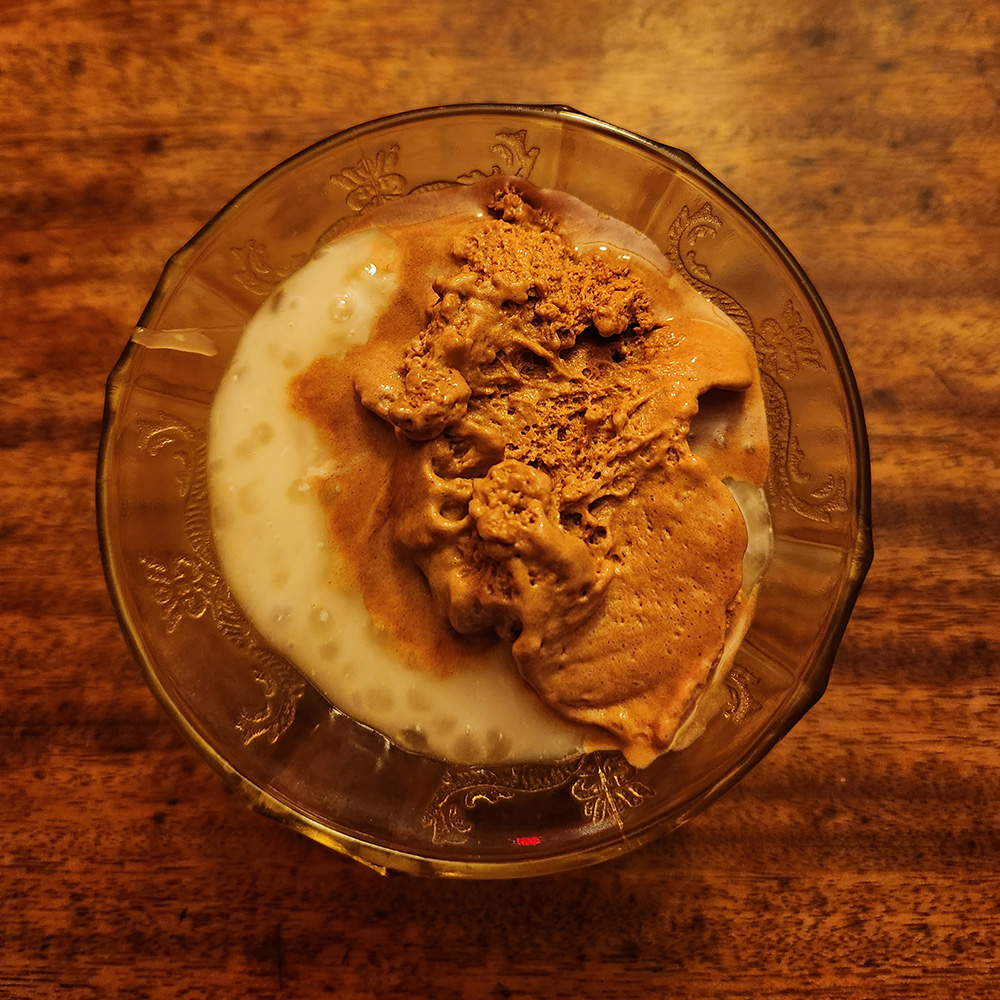
For appetizers, there were 2 options on the prix fixe menu when we visited: Dje te & Amada, a sweet potato and plantain dish with a tomato, onion and apple cider vinegar sauce, and gari fotu, manioc grits with egg and shrimp in a tomato sauce. You also got a small garden salad with each meal. For mains, we ordered the Azi Dessi and the Deku Dessi. The Azi Dessi was chicken in a peanut and tomato sauce, reminiscent of some of the other West African peanut stews we have had in the past, with notes of garlic, ginger, and a peppery kick. The Deku Dessi was your choice of protein (beef/chicken/eggplant) in a red palm oil sauce with West African spices. For dessert, the day’s option was tapioca pudding with a subtle lemongrass broth and your choice of vanilla or chocolate ice cream. The Azi Dessi was a particular standout, and we scrambled to sop up every morsel of the comforting peanut sauce. Each of these dishes was delicious, and we admired the way the chef let all of the individual flavors shine, without being overpowering.
The meal unfolded at a leisurely pace, and the portions sizes were good, but not overwhelming, which really allowed you to sample each course. Perhaps the most important secret ingredient contributing to the Mé Lon Togo experience was the atmosphere. The restaurant’s setting in a historic home only amplified the convivial family atmosphere, supported by friendly servers and staff. Everyone was talking and laughing like old friends, and you can tell that many people dining that night were restaurant regulars. We highly recommend Mé Lon Togo for those looking to sample West African cuisine for the first time, or those tiring a bit of traditional seafood options in New England, they will surely welcome you with open arms!
Leave a comment

Filed under Reviews

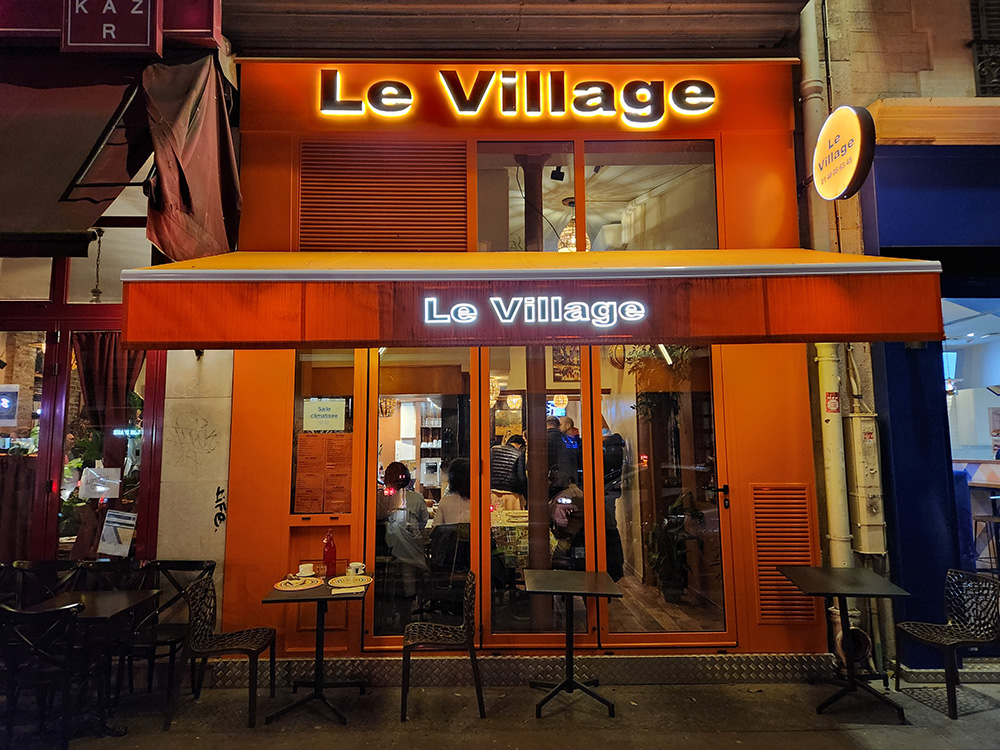
Where it all began: Le Village, Senegalese cuisine in Paris

This blog started almost exactly 15 years ago in November 2007, can you believe it? We really can’t. Eating the World all began over a dinner in Paris in August 2007 where we talked about the international cuisines we had eaten to that point while dining at Au Village, a wonderful Senegalese restaurant in the trendy Oberkampf neighborhood. However, despite this formative experience of having Senegalese food for the first time, we actually never reviewed the restaurant. Perhaps it seemed like it loomed so large in our lore that naturally, we believed a review must have come out of it. Well, 15 years later, we are rectifying the omission.

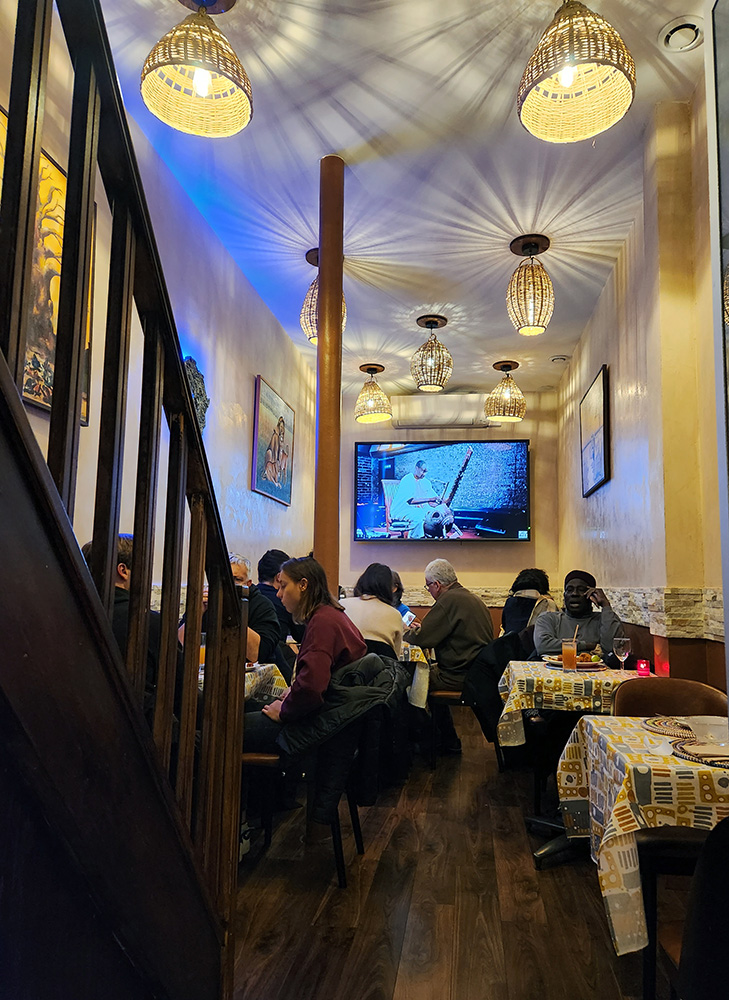
We haven’t been to Paris since 2011, and when we decided we were returning to Paris this year, we wanted to see if Au Village was still around. Turns out they are still there, going strong, and have renamed themselves as Le Village, at the same address, (86 Parmentier in Paris). The bi-level interior is simple, with wood accents and Senegalese-inspired decor, plus a small bar. They also have a few tables outside, and we were grateful that Parisians aren’t deterred by a slight chill for dining al fresco.

We visited Le Village after 15 years away on a chilly fall day, but were promptly greeted by the ebullient proprietor. To warm up, we ordered 2 pots of tea, classic mint tea, ataya, and a new drink us: quinquéliba, a Senelagese herbal infusion made from the Combretum micranthum shrub. The quinquéliba was woody and herbal, and very refreshing. The menu at Le Village is full of Senegalese and West African classics. For appetizers, you can get fish or shrimp acaras (bean fritters, and a relative of acarajé in Brazil), fried pastries filled with tuna, along with lighter options like avocado puree and crab and tomato salad. Some of the most classic Senegalese main dishes are represented, including Mafé peanut sauce, and the mild mustard-and-onion Yassa sauce. You can pick your choice of protein: beef or chicken, or even veggies. For those who prefer fish, you can try Thieboudienne, fish with red rice, or Firir, a whole fried fish. On weekends, there are special dishes, including Thiebouyapp, a lamb and rice dish.

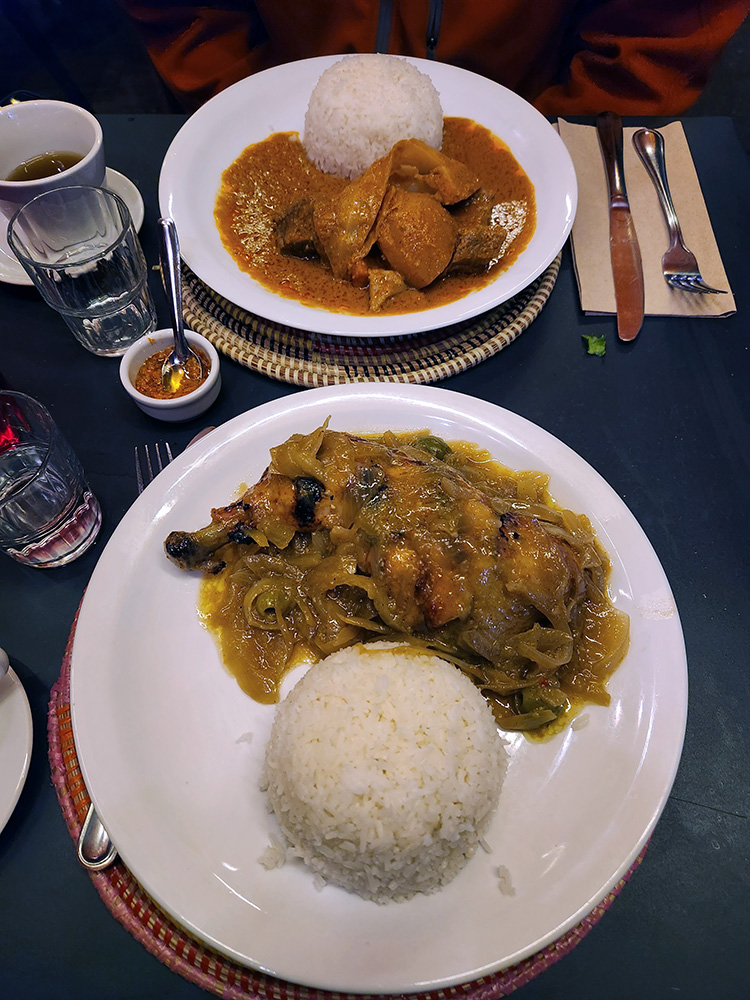
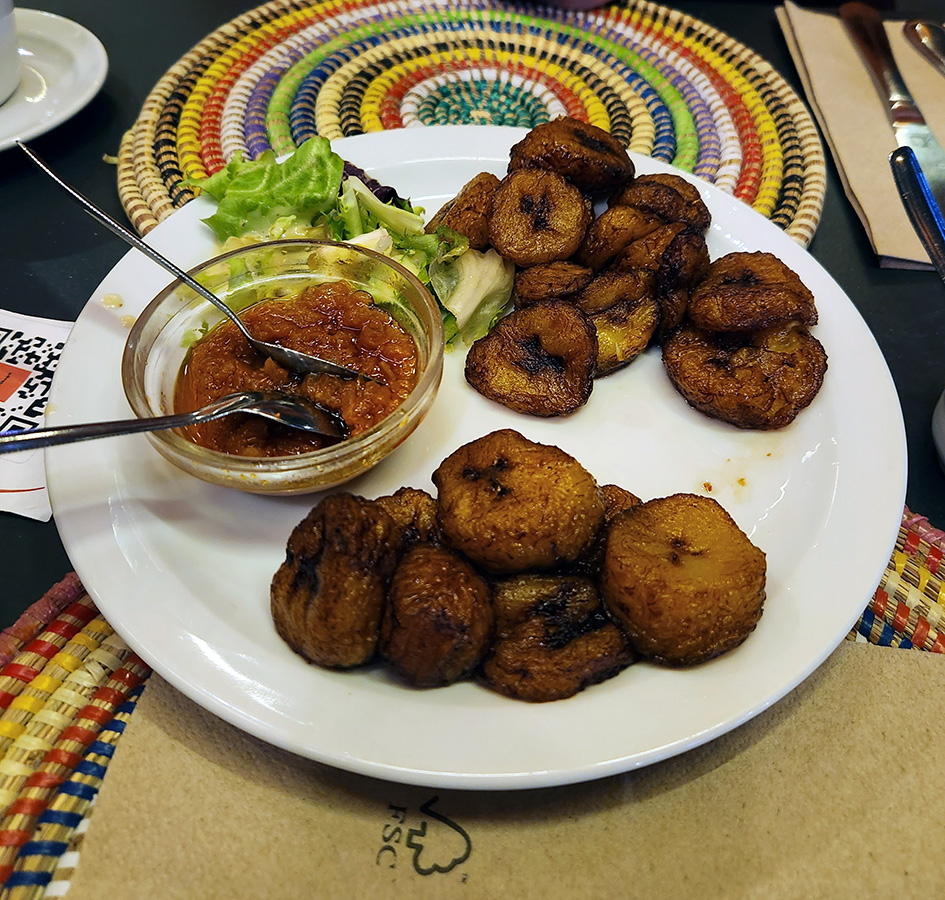
We ordered beef mafé (top) and chicken yassa, two of our favorite dishes, and those by which we judge any Senegalese restaurant. For an appetizer, we got the fried plantains, alocos. The mafé was rich and delicious, and the yassa was light and delicate. The mafé and yassa were perfect versions of these Senegalese classics, and tasted just as good as they had all those years ago when we tried them for the first time. We didn’t have room for dessert, but there were several intriguing options, including coconut flan, banana flambeé, fresh tropical fruit, and mango tiramisu. The food at Le Village is a greatest hits selection of Senegalese classics, and the service was warm and friendly, making us feel like we were regulars. We loved everything we ordered, and we still feel that Le Village is a great introduction to Senegalese cuisine. There may be dozens (hundreds?) of Senegalese restaurants in Paris, but Le Village will always have a special place in our hearts.

1 Comment

Filed under Reviews

Teranga restaurant at The Africa Center in NYC

When we visited New York City last fall we met a friend for some food and snacks at Teranga, located on the ground floor of The Africa Center in Harlem (1280 5th Ave.). The mission of The Africa Center is to celebrate contemporary African culture and the cultures of its diaspora, and Teranga, opened in 2019, furthers that mission. Teranga is the concept of Senegal-born chef Pierre Thiam, and features dishes from a variety of African countries, with an emphasis on West Africa. If you would like to hear more from Chef Thiam, you can listen to him in conversation with food historian Jessica B. Harris at 5 PM ET, June 9th, 2020 in partnership with The Africa Center and the Museum of Food and Drink (MOFAD).

We love the mission of Teranga to bring fresh, accessible African food to the neighborhood. All of the dishes at Teranga are served in a customizable bowl format: you pick a base, a main, sides, and a sauce. The West African influence on the menu is apparent right away with the bases of Attiéké (fermented cassava from Cote D’Ivoire), Jollof rice (tomato spiced rice that a popular throughout West Africa) and Liberian red rice. For the mains you can choose Moroccan-spiced salmon, roasted chicken or veggies. The sides again dip into West African territory, with fonio (a type of grain found in West Africa, which Thiam sells through his food company, Yolélé) and Senegalese Ndambe (Black eyed pea stew), among others. You can top your dish with peanut mafe, or the mild onion yassa. There are even various levels of hot sauce available, from smoky Ghanaian shito to super-spicy Senegalese kani.

We are partial to Teranga’s Jollof rice, and absolutely love the mafe peanut sauce. You may notice that we wolfed everything down before we were able to get a picture. Also noteworthy are Teranga’s delectable fresh-squeezed juices ($5). In particular, we are fans of the ginger and mint (strongly gingery, in the best possible way) and the hibiscus Bissap. Teranga’s space on the ground floor of the Africa Center is a really nice and welcoming place to sit and relax, and we hope to visit again when hanging out is possible. As of 6/8/20, Teranga is open for delivery and pickup, and is also providing meals for NYC essential workers, and you can support their GoFundMe here. We love the accessibility of the food at Teranga, and the fact that you can mix and match for dozens of possible combinations. Please give them some love!

Bowls from the Teranga website

Leave a comment

Filed under Reviews

Pastry-Post Doc: Thiakry / Degue from West Africa

We recently attended the end-of-the-year gala for the local college’s African Student Association, which was a delightful banquet full of delicious dishes from all around Africa: jollof rice, moi moi, plantains, injera, beef tibs, samosas and more. However, there were no African desserts. That got us to thinking – what would be a good African dessert to add in the future? That’s when we first heard about Thiakry (aka Dégué) – a sweet couscous-like dish with origins in West Africa. Both titles refer to the millet grain used in the dish itself, which is called Thiakry in Senegal, or Dégué in the rest of West Africa. The grain used in Thiakry can be millet or if that is not available, wheat, which is then mixed with dairy, dried fruit, vanilla and spices like nutmeg or cinnamon. The final texture is similar to rice pudding. You can check out the following recipes for varieties of Degue/Thiakry: Yummy Medley, Food World, and Salwa Petersen. You can buy Degue/Millet in most African markets, or in various shops online. This is a dish that is open to experimentation and customization – so you can add pretty much anything you want – as in this modern take on the recipe from the Milwaukee Journal Sentinel (seen below).

Leave a comment

Filed under Reviews

Bennachin – West African Cuisine in New Orleans

Cameroongambia When we set out to New Orleans we were excited to stuff ourselves with as much Cajun and Creole food as possible (which we did), but we are always open to a good international meal, no matter where we are. Little did we know that we would get an authentic taste of Africa right in the middle of New Orleans, and actually gain a new country in the process – Gambia! Turns out New Orleans is home to a stalwart African restaurant with roots in both Gambia and Cameroon – Bennachin (1212 Royal St, New Orleans, LA 70116).
bennachin

Continue reading

Leave a comment

Filed under Reviews