Monthly Archives: June 2013

Eating Cheap and Well in Jardim América, São Paulo

brazilThe area southwest of Avenida Paulista in São Paulo, bordered on the west by Avenida Rebouças and on the east by Avenida Nove de Julho, encompassing the neighborhoods of Jardim América and Cerqueira César, is one of the swankiest and most upscale neighborhoods in the Americas. It is home to São Paulo’s finest restaurants – i.e., some of the finest restaurants in the hemisphere – and thus is a must for any foodie. Yet this high concentration of culinary awesomeness comes with an annoying tradeoff: eating there can be exorbitantly expensive. But, determined eaters as we are, we did some exploring and came up with a tasty, cheap snack itinerary for those of you wanting to explore the area without breaking your wallet.
IMG_1860

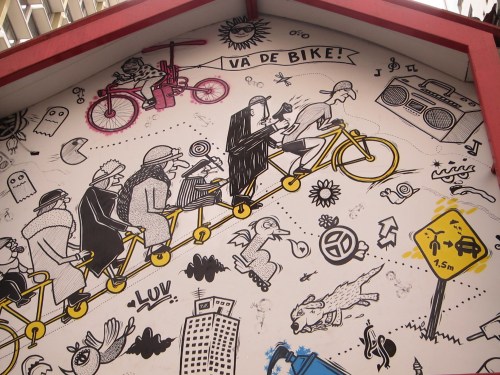
Street art in Jardim America

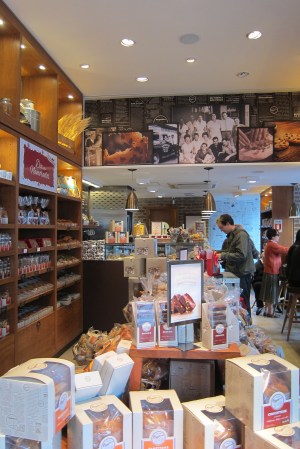
Start out at Casa Bauducco (Alameda Lorena, 1682), a well-known Italian bakery famous for their Panettone. Sample the wide variety of cookies and pastries available, but do yourself a favor and get a fresh slice of chocottone (chocolate panettone, R$5.80), heated with cinnamon and sugar on top. The recipe supposedly takes over 40 hours to make, and you can taste every bit of effort in that chocottone.
IMG_1869

Casa Bauducco

A few blocks away, continue with the Italian trend and cool off your mouth with a few scoops of the finest gelato in Brazil at  Bacio di Latte (Rua Bela Cintra, 1829). Get a grande size for R$12, and up to three flavors. We recommend the maracujá (passionfruit) and negrissimo (super dark chocolate) flavors, especially in combination. Be sure to sit on one of the converted milk jugs as seats.

If you need a little relaxation time, take a load off in the excellent book selection and beanbag chairs at the famous Livraria da Vila (Alameda Lorena, 1731), where you can admire the famous bookshelf-doors while sipping a coffee or cappuccino at their cafe and wondering why anyone would pay R$ 10 to valet a car at a bookstore.

Still hungry? Walk south to the unassuming Pão de Queijo Haddock Lobo (Rua Haddock Lobo, 1408), serving up the best cheese bread in the city, if not the country. If you have time, wait for a fresh batch to come out: you will get the most for your R$4.50, which is worth it [full review here].

Having had your fill of cheese bread,finish up your explorations by deciding what other flavors could entice you at Folie (Cristiano Viana, 295), purveyor of excellent French macarons. Choose from Brazilian-inspired flavors, including brigadeiro and beijinho; or go with something even more inventive, such as drink-themed macarons with flavors like Gin & Tonic and Green Tea.
1 Comment

Filed under Reviews

The First Argyle Night market in Chicago is Today

We love the concept of the night market that is extensively popular in Asia – food, music and general fun milling about during the evening and night hours. Most markets in the US tend to be morning and early afternoon affairs, so what’s a night owl to do? Fortunately there is a new night market in Chicago on Argyle street from 4-8 every Thursday evening. Argyle is home to a large Asian community, especially Vietnamese and Chinese communities. The first night market is tonight, June 27th, and they run through the fall. There will be food, farmers market stalls, and even entertainment. Expect a report back, soon.

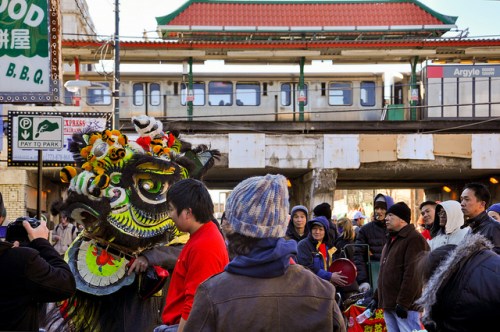
Argyle Street in Chicago

Argyle Street Lion dancer in Chicago by Chris Bentley

1 Comment

Filed under Note

Q Bar: see and be seen in Rio de Janeiro

Q Bar
Rua Dias Ferreira 617
Leblon, Rio de Janeiro

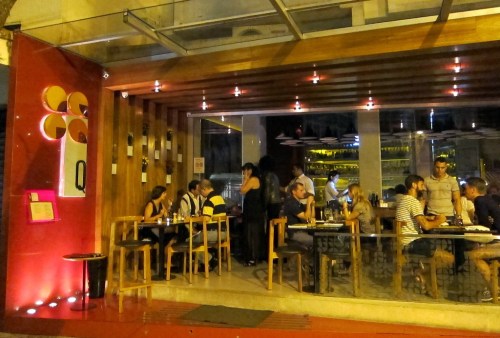
brazilQ Bar is a place to see and be seen – it’s no surprise it has been earning accolades from the international press, and attracting a cosmopolitan clientele. M’s father read about it a magazine as a bar that was a “must try,” so we figured it would be fun for a night on the town. This was a big change for us since we are usually more likely to be found in corner lanchonetes or old school cafes than anyplace favored by trendy Rio denizens. Happily, contrary to many “scene-y” places – the service at Q Bar was actually excellent, which we found to be exceedingly rare in Rio (and Brazil in general). Q bills itself as a “gastrobar,” and the focus is on small plates and creative cocktails. One of their most famous cocktails is the “Rocket Collins” – a Tom Collins with the addition of arugula, making it a shade of bright green $12 (R$ 23).

Q Bar in Leblon

Q Bar in Leblon

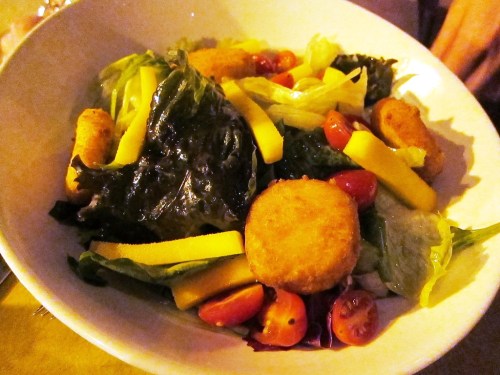
The menu at Q Bar is eclectic and internationally-inspired, and seemed similar to places we had been in Chicago. In fact Q Bar would probably be at home in many cities around the world. For starters we had fried goat cheese salad, and frankly, what salad ISN’T better with goat cheese? Keeping with that feeling, L had truffle goat cheese mac and cheese gnocchi, which came baked in a miniature cast iron skillet. The tiny skillet was a cute touch, and the mac and cheese itself was creamy and delicious, and not at all overwhelmed by truffle flavor. M ordered a deconstructed moqueca – a nod to our upcoming trip to Salvador – which was a moqueca risotto with shrimp and a filet of fish. The risotto was very well cooked, with a moqueca’s signature palm oil flavor, and the fish filet was excellent. M’s parents ordered the signature Q Burger and tuna tartare with caviar, both of which they heartily enjoyed.

Moqueca Risotto at Q Bar

Moqueca Risotto at Q Bar

Visiting Q Bar was a nice change of pace, and it is a great place to bring your international guests. Even if you are not a scenester (as we are not), you definitely feel cool eating your small plates on Q’s fun outdoor patio, in an already-buzzing street full of chic restaurants. Many of the servers spoke English, which is not common in Rio, and would likely make non-Portuguese guests feel more comfortable. Beware though, the prices are a little steep, with many entrees over $25 (R$ 50). However, if you are looking for a big city dining experience that is much more cosmopolitan than a boteco, Q Bar is your place.

Fried Goat Cheese Salad at Q Bar - everything IS better with goat cheese

Fried Goat Cheese Salad at Q Bar – everything IS better with goat cheese

Leave a comment

Filed under Reviews

Food traditions for the Festa do São João do Porto

portugalThe June festivals in the Lusophone world, commonly called “Festas Juninas,” are most associated with Brazil. But one of the biggest is actually held in Porto, Portugal: the Festa do São João do Porto. Though little known outside Portugal, the festival for São João (St. John) is one of Europe’s biggest street partiesLasting from the night of June 23rd until June 24th, the holiday celebrates St. John the Baptist (whose feast day is June 24), and was brought to Brazil by the Portuguese. However, the Portuguese celebrations are a little different, though there is the same merriment, dancing and fireworks that Brazil enjoys, along with some quirky Portuguese food-related traditions. 

saojoaomallet

Fireworks (and mallet) for Festa do São João in Porto by Black_wall

There is a ton of food at the Festa do São João do Porto, and one of the most traditional foods, seen on nearly every street corner, is grilled sardines, Sardinhas Assadas (and the recipe couldn’t be easier). Other somewhat stranger food traditions, whose origins are pretty much unknown, are also part of the festivities. First, a tradition is bopping other revelers over the head with plastic mallets (which were substituted for leeks or garlic flowers in former times, a tradition that is actually coming back). The other food tradition is the exchange of basil plants (manjericão) with your sweetheart. The plants traditionally even come with a romantic four-line poem:

Se eu me podesse afogar / If I could drown myself
Na tua pele perfumada / 
In your perfumed skin
Poderia flutuar, / 
I would waft away,
Viver sempre apaixonada. / 
Living passionately forever.

Who’d have thought a little basil plant would have such a major part in any festival?

Sao Joao Mangericao

A Basil Plant (manjericão) sign for São João by Tantegert

1 Comment

Filed under Holidays

The Burgeoning Food Scene in Luanda, Angola

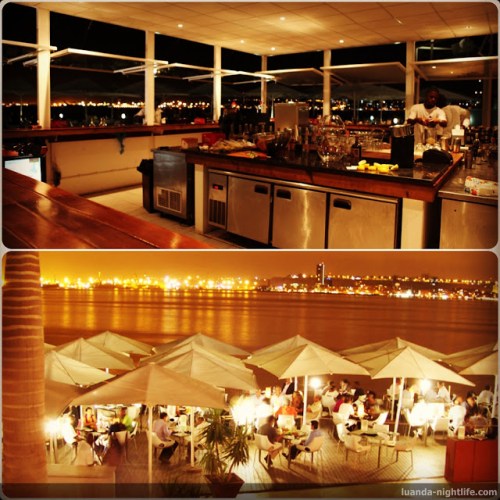
angolaEspecially in the US, Angola many be pretty far off the culinary radar. However, living in Brazil and Portugal we got to sample Angolan cuisine and it is awesome! It turns out that in Luanda, the capital of Angola, a pretty amazing homegrown food scene is emerging, drawing on both local and international food influences (including, of all things, a Scandinavian Cafe). The link from Africa is a Country also includes a recipe for Moamba de Galinha (Chicken Moamba) one of the country’s most iconic dishes. Even more diverse places to eat in Luanda are highlighted on a site started by expats, Luanda Nightlife. It seems like Luanda has nearly every type of restaurant you could want!
Leave a comment

Filed under World Eats

The land of BBQ & Shrimp and Grits

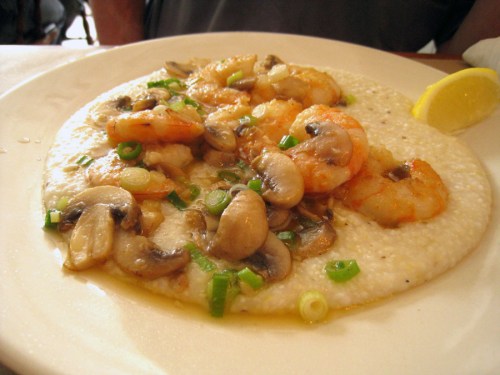
We’re currently in Charleston, South Carolina (and then L graduates)- we plan to unplug from technology a little bit – posting will resume later this week. For now, we’ll leave you with this picture of shrimp and grits from our 2011 trip.HominyGrits

Leave a comment

Filed under Note

Real Sicilian Pizza: Sfincione in Palermo

SicilySfincione is traditional Sicilian pizza which is baked in large squares and is often served by cutting slices with scissors (our favorite part). Sfincione is akin to a thick foccacia bread topped with tomato sauce and (traditionally) anchovies and onions, and maybe some cheese, though definitely not as much as an American pizza. More exotic toppings are not an option. Sfincione originated in Sicily, and was the primary type of pizza on the island until the 1860s. While we were in Sicily, especially Palermo, we partook in many slices from street sellers known as sfinciunaros. In addition to being a street snack throughout Sicily, sfincione is also available in many restaurants and bakeries throughout Sicily and even Rome. Serious Eats has a Sfincione recipe that has been declared to be “spot on.” Looks like we’ll have to try making it this Christmas season, when it is traditionally consumed (though it is definitely a year-round food).

Sincione

Cross Section of Sfincione by Scott Wiener

1 Comment

Filed under World Eats

A quest for Belgian Frites in Brussels (and Chicago)

BelgiumThis New York Times piece about searching for the perfect frites in Brussels, Belgium is right up our alley. We are quite fond of Belgian fries, or “frites” and also of quests. Though we have never been to Belgium, some of our favorite places for Belgian fries in Chicago are Frietkoten Belgian Fries in the Chicago French Market (131 N Clinton St.) or Hopleaf (5148 N Clark St). We also learned that there is now a late night Belgian fry take-out, Backwoods (3335 N. Halsted St.), though we haven’t tried it yet. Anyone have any other frite favorites in Chicago?

Belgian Frites

Belgian Frites with Sauce Andaluse by Su-lin

Leave a comment

Filed under Links, World Eats

Romantic treats for Dia dos Namorados – Brazilian Valentine’s Day

brazilIn Brazil – “Valentine’s Day”- Dia dos Namorados – actually occurs on June 12. February 14 is too close to Carnaval – which dominates the festivities for a month in Brazil – so putting the holiday in June makes a lot of sense. Dia dos Namorados is celebrated in similar way by showering your sweetheart with chocolates, cards, flowers and the like. This year we made brigadeiros to celebrate, however there are a wealth of other Brazilian treats appropriate for the day, some even with romantic names: beijinhos (little kisses), casadinhos (little marrieds) and bem casados (well-marrieds).

casadinho

Casadinhos with a rainbow-colored brigadeiro by Marcio Cabral de Moura

Beijinhos are little coconut candies, “kissed” with cloves, hence the name. They are almost like a coconut version of brigadeiros, and are nearly as popular in Brazil. The recipe for making them is almost identical to a brigadeiro recipe (minus the chocolate), whether covered in sugar or coconut flakes. Casadinhos are black and white brigadeiros (“marrying” the two flavors) – unfortunately I can’t find a recipe for these in English, but here is one in Portuguese. Bem casados are sandwich cookies with a doce de leite filling, which are understandably popular at weddings on the dessert table or as favors. Here is a recipe from Kitchen Corners that even includes homemade doce de leite, and another from the Cookie Shop blog with frosting. Feliz Dia dos Namorados!

Beijinhos

Beijinhos with cloves by Bianca Bueno

3 Comments

Filed under Holidays

Baking Bread with the Tangzhong method

JapanOur previous attempts at making bread were not terribly successful, but we’d love to give bread making another try. One of the techniques we recently learned about was the Japanese Tangzhong bead-making method, which involves making a roux (called the Tangzhong) and incorporating it into the dough. Apparently this addition results in a very soft, tender loaf of bread. There are countless different breads you can make with the Tangzhong method, and many recipes we found are for various types of Hokkaido Milk Bread (here’s a cinnamon and chocolate chip version and a Nutella version). We had a favorite milk bread back at our local fruteria in Chicago, and we are mourning the fact that they don’t carry it any more. Maybe some of these Japanese milk breads are worth a try to fill our cravings. You can also try your hand at hot cross buns and 10 grain milk bread made with the Tangzhong method.
Hokkaido Milk Bread

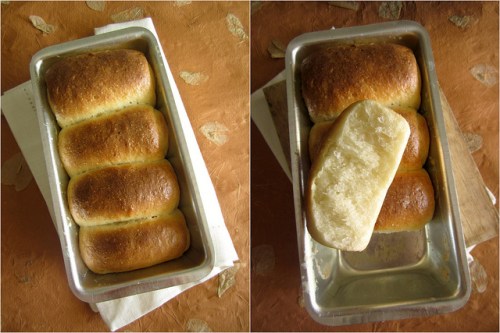
Hokkaido Milk Bread by Divya Kudua

1 Comment

Filed under Pastry Post-Poc, Recipes

The best gelato in São Paulo: Bacio di Latte

Bacio di Latte
(4 Locations) We visited: Rua Bela Cintra 1829
São Paulo, Brazil

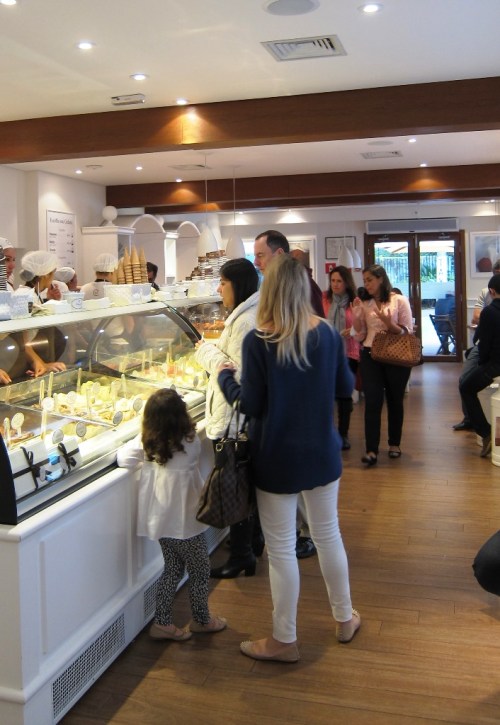
In addition to having the best pizza in Brasil, due to the proliferation of Italian influence in São Paulo, there is also some of the best gelato in Brasil. Bacio di Latte (“Milk Kiss” in Italian) has been receiving accolades for their gelato, so we had to visit an outpost while we were in São Paulo. We visited the location in Jardim America, definitely the “Upper East Side” of São Paulo. Everything is expensive and beautiful – including the food. Bacio di Latte follows the neighborhood trend, with a brand new, big, flashy store, with a nice outdoor cafe area. To order, you pay at the cashier first (like at Giolitti), and then make your way over to the luminous gelato counter to select your flavors. Obviously, everyone is there for the gelato, but they also have some baked goods and coffee drinks.

BaciodiLatteInterior

Bacio di Latte Interior

Bacio di Latte had all the telltale signs of good gelato: it is made in-house (you can barely get a peek of people making gelato in the kitchen), no neon colors, and no artificially air-whipped peaks. We were also excited to see that there were no less than five flavors of chocolate on offer. To order you select your size: it is R$ 8 for a small (up to 2 flavors) R$ 10 for a medium (up to 3 flavors) and R$ 12 for a large (up to 3). The flavor selection is overwhelming, but fortunately you can ask for small samples of any flavor including Zabaglione, Doce de Leite, Guava, and Pistachio, among others. You may have to brush up on your Italian to interpret some of the flavors (the complete list is online).

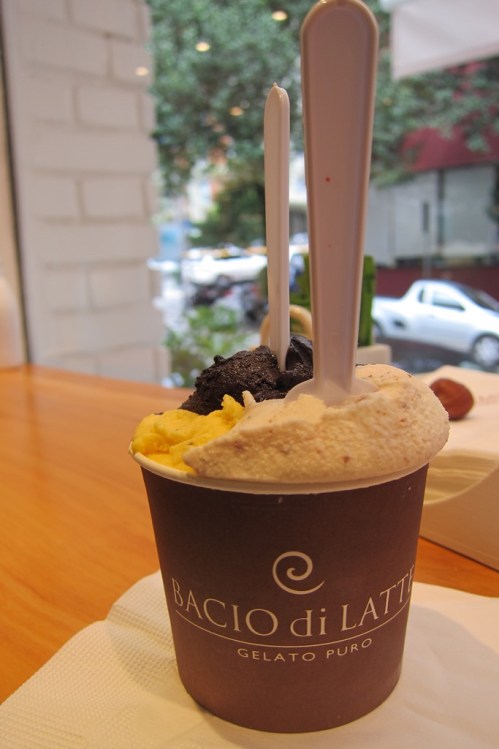
Bacio di Latte

Bacio di Latte Milk Cream, Dark Chocolate and Passion Fruit

From our time in Italy consuming as much gelato as humanly possible, we settled on the following flavor combination that we felt gave us maximum gelato enjoyment: a dark chocolate variety, a fruit variety, and something with a cream or vanilla base for contrast. We went with this strategy and got the dark, dark chocolate Nerissimo, passion-fruit and the Bacio di Latte milk cream with Nutella chunks. Every flavor was outstanding and the gelato’s texture was excellent. The dark chocolate was really dark chocolate – which we love. The “Bacio di Latte” ice cream flavor also reminded us of the “Cereal Milk” flavor from Momofuku Milk Bar that really tastes like cereal! The passion fruit flavor has more of a sorbet texture, but the favor was amazing. As we sat on our milk pails that doubled as counter stools, we couldn’t believe we devoured our gelato so quickly (though that always seems to happen). It may not have been quite as good as Italy, but it was pretty darn close, and we know we would be visiting Bacio di Latte frequently if we lived in São Paulo.

Bacio di Latte Chocolate Flavors

The many Bacio di Latte Chocolate Flavors

Leave a comment

Filed under Reviews

What is a cronut?

Cronut

Dominique Ansel Bakery’s Infamous Cronut

Happy National Doughnut Day! So we’ve been out of the country for roughly the past 9 months, and we definitely feel out of sync with current American culture. We’ve definitely missed out on doughnuts, and most American food trends. It was just yesterday that we learned of the latest food craze sweeping the US (which happens to be doughnut related): the cronut. A cronut, as the name might imply, is croissant dough shaped like a doughnut, and then fried (which is apparently extremely difficult). The confection was first created at the Dominique Ansel bakery in New York City, and every day’s fresh batch draws a huge crowd. The cronuts sell out so fast there is something of a gray market springing up around the coveted cronut (only 200 are produced per day), and many are resold to cronut fans at inflated prices. You can try your hand at diy cronuts with ready-made croissant dough. Of course, along with a meteoric rise to fame, there is a backlash. Only in America!

Leave a comment

Filed under Pastry Post-Poc

A Place for Spices in Rio de Janeiro: Casas Pedro

brazil

The Saara neighborhood is one of our favorite areas in Rio. It is a great place to shop for anything under the sun, people watch, and get a bite to eat on a sunny afternoon. The name “Saara” is rumored to derive from the word “Sahara,” an explanation that has entered into the public lore of Rio. Nowadays, the area is mostly given over to selling clothes, home goods, party/Carnaval supplies and any kind of bric-a-brac you would ever want (there is an entire store dedicated to Tupperware, for example). However, there are a few places in Saara that do specialize in Middle Eastern spices and foods. Our favorite, Casas Pedro, has several branches are sprinkled throughout Rio, including 3 in the Saara. You can get nearly any spice you could imagine at Casas Pedro, several kinds of cinnamon, tumeric, coriander, cumin, along with nuts, dried fruit, chocolate chips and other oddities (even baking soda) sold by weight. You can also find “Pao Sirio” a kind of flatbread popular in Brazil, tahini paste, honey and other Middle Eastern packaged goods. If you are feeling hungry, a counter sells meat and cheese esfihas to go. 

Casas Pedro in Rio

Casas Pedro in Rio

1 Comment

Filed under Reviews

brazilThe BBC recently did a short video piece on the culinary renaissance in Brazil’s favelas, brought about by the recent pacification programs. The Guia Gastronômico das Favelas do Rio (“Gastronomical Guide to Rio’s Favelas”), mentioned in the video, was recently released, giving intrepid foodies a roadmap of 22 restaurants in eight comunidades. We’re always for unique food options – so let’s go!

Guia Gastronômico das Favelas do Rio

Guia Gastronômico das Favelas do Rio

Leave a comment

June 5, 2013 · 8:53 AM

Our favorite Acarajé in Rio de Janeiro: Cida Acarajé at Largo do Carioca

brazilAcarajé, a bean fritter fried in palm oil and filled with various toppings is one of the iconic foods of Brazil. We were spoiled for choice by the cheap and plentiful acarajé options in Bahia, where acarajé is most commonly found, (a complete Salvador acarajé post is coming soon). However, we are happy to report we found a great and centrally located acarajé spot in Rio de Janerio as well. Right in the bustling Largo do Carioca in Centro, Cida Acarajé sets up shop every weekday at around 12:30. It’s a pretty big production, so we are always impressed that it seems to pop up out of nowhere every day at lunchtime.

Cida Acaraje in Largo do Carioca

Cida Acaraje in Largo do Carioca

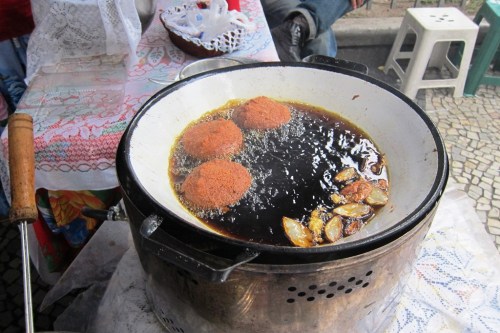
An acarajé at Cida costs R$ 9 without dried shrimp, which is highway robbery by Bahian standards, but is largely in keeping with Rio’s generally inflated prices.  However, this was actually some pretty good acarajé, so we were prepared to shell out a little extra money for one of our favorite Bahian treats. The acarajé are made fresh to order in a giant vat of dendê (palm oil) – which is absolutely imperative to a good acarajé experience. As far as places in Rio go, we definitely preferred Cida’s acarajé to the one we had previously sampled at the Feira Hippie in Ipanema (another high profile location).

Acaraje in Dende

Acaraje Frying up in Dende Oil

The acarajé was perfectly fresh and we enjoyed the good renditions of the traditional acarajé fillings: vatapá, caruru and salada. M also appreciated the spicy sauce with a nice kick. If you are going for the full authentic experience you must also top the acarajé with dried shrimp (though we are on the fence if we actually prefer this). In addition to acarajé, there were various chocolate and coconut cakes by the slice, cocadas and even small puddings baked right in a coconut shell. This was our friend M’s first venture into acarajé and we are happy to report that she heartily enjoyed it. Another Brazilian food convert won over!

Cida Acaraje

The finished Acaraje with all the fixins

1 Comment

Filed under Reviews

Miniature Waffles from the Democratic Republic of the Congo

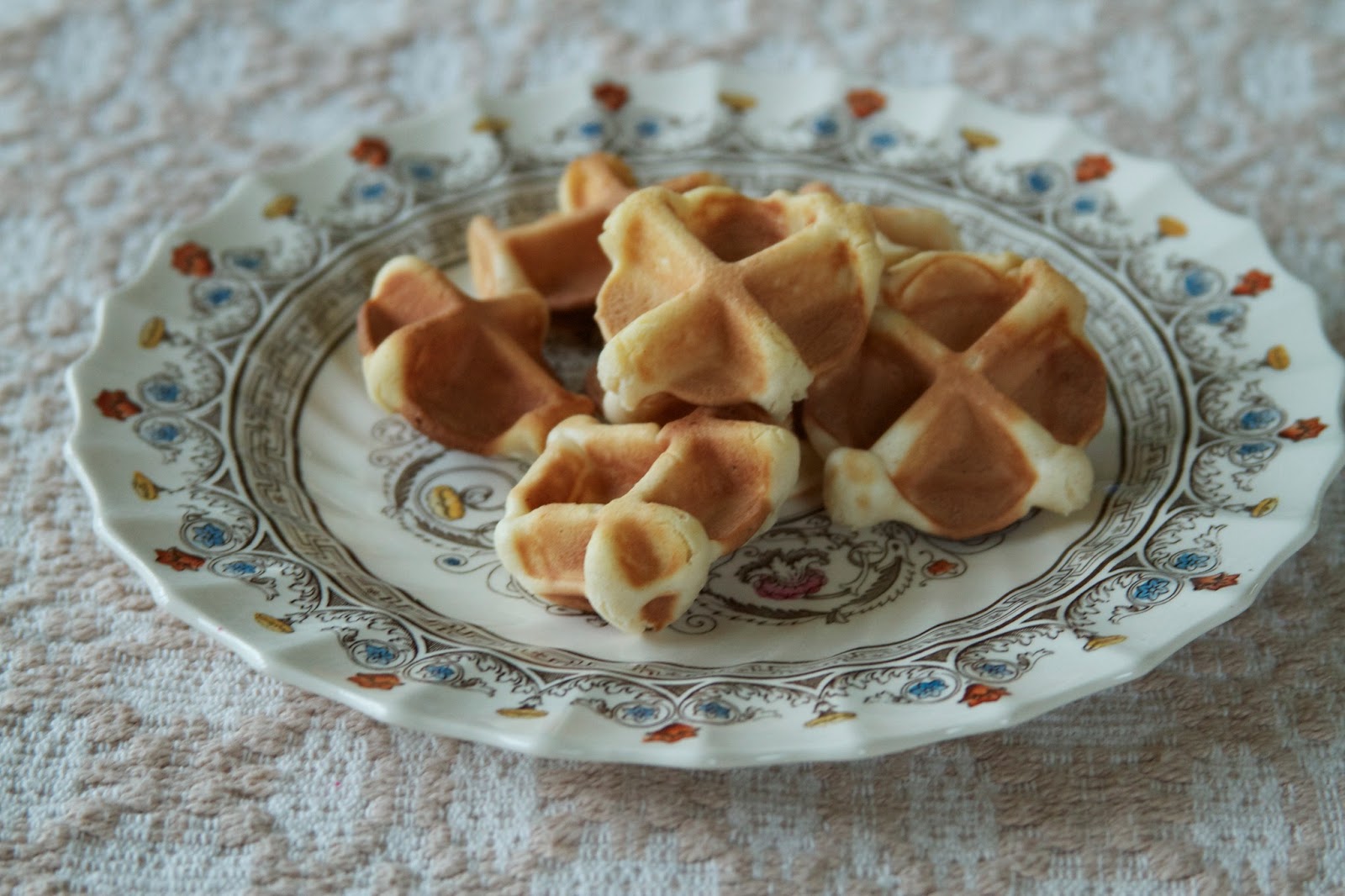
Mini Waffles

Mini Waffles from Immigrant Kitchens

DRCFlagImmigrant Kitchens has an awesome post about a food we would love to try: Congolese mini waffles (Here’s the recipe). Now, we love waffles, and every food certainly tastes better in miniature form. Though initially it seemed a little strange that waffles might have turned up in the DRC, it makes sense given the country’s colonial past. Immigrant Kitchens is a great blog, with the goal of sharing home recipes from around the world, by talking with international cooks living in the US and sharing their stories. We are looking forward to reading through all of the archives.

Leave a comment

Filed under Links, Recipes