A Holiday Feast of the Seven Fishes

Feast of the Seven Fishes by Austin Kleon

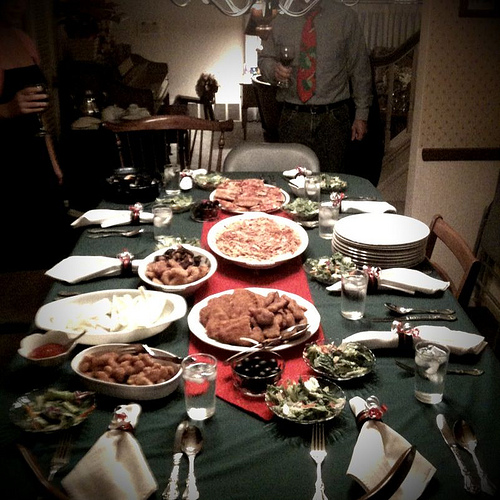
It’s Christmas Eve – which means it’s time for the Feast of the Seven Fishes known as “festa dei sette pesci” in Italian or alternatively as “Vigilia (the Vigil).” We posted briefly on this topic previously, but we figured it would be a good time to expand upon it. The Feast of the Seven Fishes originates from the Catholic tradition of not eating meat on the eve of special holy days, where fish would be consumed instead. The tradition has especially caught on in Italian-American communities, and inventive menus including baccala, calamari, lobster, shrimp and more adorn many “7 Fishes” tables.

Along with the requisite assortment of fishes, sides of veggies and Christmastime desserts like struffoli complete the meal. Traditional or not, any fish dish is welcome at a modern-day feast of two fishes in America. Mario Batali has a traditional Italian menu featuring anchovies, clam and mussels. The Bite Sized blog is cooking their way through an eclectic Feast of the Seven Fishes including Oysters Rockefeller. For those among us who aren’t terribly fond of fish, Buzzfeed has a tongue-in-cheek version of the feast featuring Goldfish Crackers and Swedish Fish. We also like Meatballs and Milkshakes‘ take on the meal, opting for a small menu – doesn’t a bay scallop crudo sound nice?

1 Comment

Filed under Holidays, World Eats

Holiday Eats Around the World: Panettone from Italy

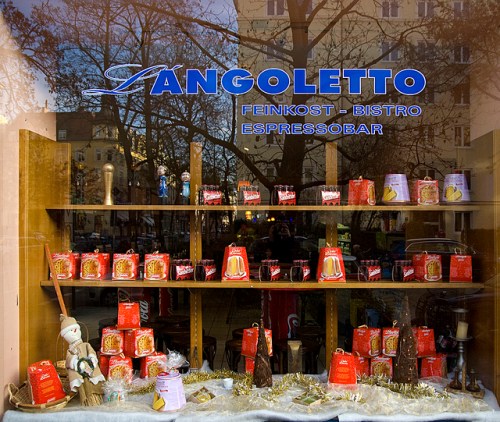
At our favorite grocery store in Lisbon there was an entire wall of Panettone, in distinctive paper boxes, in sizes ranging from tiny to one that would feed an army battalion. This is a testament to both the Portuguese love for Panettone and also the sheer variety of Panettone available. Panettone is a yeast-based Christmas sweet bread from Milan, Italy – traditionally it had pieces of citrus and nuts – however there are other varieties with chocolate or even cream filling. Panettone’s particularly light and fluffy texture is the result of a complicated proofing process (similar to Sourdough bread). Though it originated in Italy, Panettone has flown way past the Italian (and European) borders and is readily available in the US and in South America.

PanettoneBox

A variety of Panettone for sale in Munich

The origin of Panettone is probably the Roman Empire, but I was surprised to learn that it only became commercially available in the 1920s.   Needless to say, it wouldn’t be an Italian Christmas or New Year without some Panettone. The large size Panettone is a lot for one person to handle, so sharing it with family and friends is probably a good idea (M swears by eating it the next day as toast with butter and cinnamon, or you could make a bread pudding). We’ve never tried making Panettone, though these miniature cranberry Panettones seem to be more manageable. Recipe Roll and King Arthur flour have  recipes for a classic Panettone, and Sur Le Table even has Panettone baking molds in traditional parchment.

2 Comments

Filed under Holidays, World Eats

Portuguese Pastry Post-Doc: Xadrez Cake / Bolo Xadrez

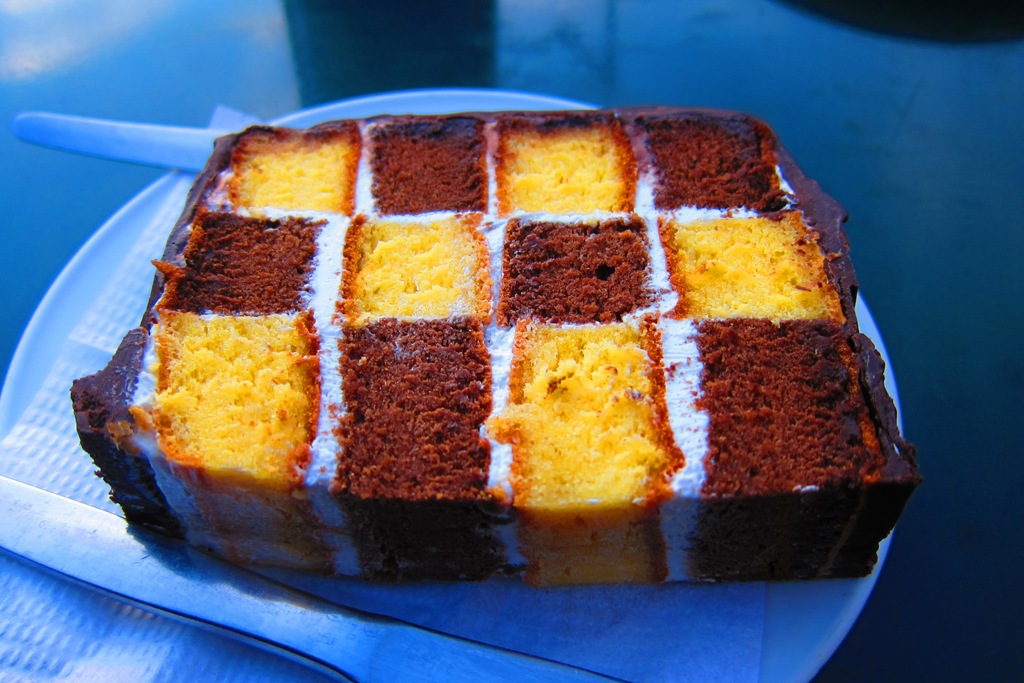
Xadrez cake or “Bolo Xadrez” was the last type of Portuguese pastry I had been aiming to try. Why? It has chocolate, an ingredient relatively uncommon in Portuguese pastry. Xadrez means “chess” and of course it describes the checkered appearance of the cake. The Xadrez cake is composed of both chocolate and yellow cake, covered with a layer of chocolate. The frosting between the layers may be egg cream, or possibly vanilla or chocolate butter cream frosting. “Chess cake” means something very different in American English, often to a chess pie, a classic Southern sugar pie. Here is a recipe for a Portuguese-style chess cake, which takes it even one step further to have a checkerboard coating.

Xadrez Cake

Xadrez Cake from Chique de Belem

1 Comment

Filed under Pastry Post-Poc

Living in America

We are back in America (for the time being). In the words of James Brown, “Superhighways and coca cola…” but perhaps most importantly for us: cheap peanut butter, BBQ, sharp cheddar cheese, Greek Diners, Taquerias and Thai food.  Only one month and a few important holidays to indulge in before we leave for Brazil!

Leave a comment

Filed under Holidays, Note

Portuguese Pastry Post-Doc: Jesuíta

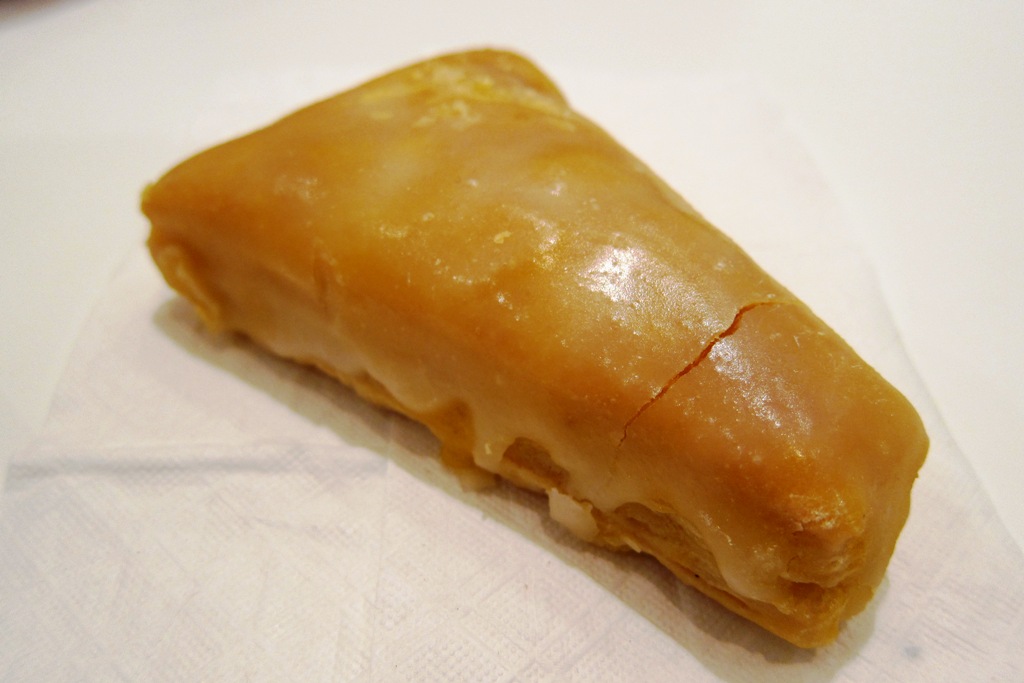
You’re probably thinking – “does that mean Jesuit?” – and yes you are correct – this is the Jesuit pastry, another one of Portugal’s oddly named confections. We’ve previously noted the many religious names of Portuguese pastries, due to the fact that pastry-making was the purview of convents. Even today, many places say they specialize in “Doces Conventuais (convent sweets).” The Jesuíta is a little different than other Portuguese pastries, first for its triangular shape, but also for the fact that it is covered in a frosting glaze rather than egg cream or custard. The Jesuíta is a triangular puff pastry topped with a powdered sugar glaze, and filled with cinnamon egg cream, though in this case the type of filling may vary. Here is a Jesuíta recipe in Portuguese – I have found no recipes for this dish in English.

Jesuita

Jesuita pastry in Lisbon

4 Comments

Filed under Pastry Post-Poc

Portugal to Madrid to Dallas to Chicago

spainportugalWe are heading to Madrid for the weekend – mainly because it was cheaper to fly to Chicago from Madrid than Lisbon (even factoring in a hotel in Madrid and a flight from Lisbon to Madrid). Yes, that means our time in Portugal is coming to a close. We will miss Lisbon more than we thought we would, especially its inimitable cafe culture and pastries. Hopefully we will find some good eats to transition back to stateside living in Madrid. Starting on December 18th we will be back in the USA for about a month before heading off to another foodie location. Stay tuned to find out where.

PlazaMayorMadrid

Plaza Mayor, Madrid at Christmastime by Carlos Solana

Leave a comment

Filed under Note

The Best Pastel de Nata in Lisbon

Much to our surprise, our study of the Best Macarons in Paris continues to be one of the most popular 0n the internet. But we’ve taken a bit of criticism because of our small sample size – since we only had an afternoon, we had to prioritize with the two most popular locations (apparently we should have also gone to Gerard Mulot).

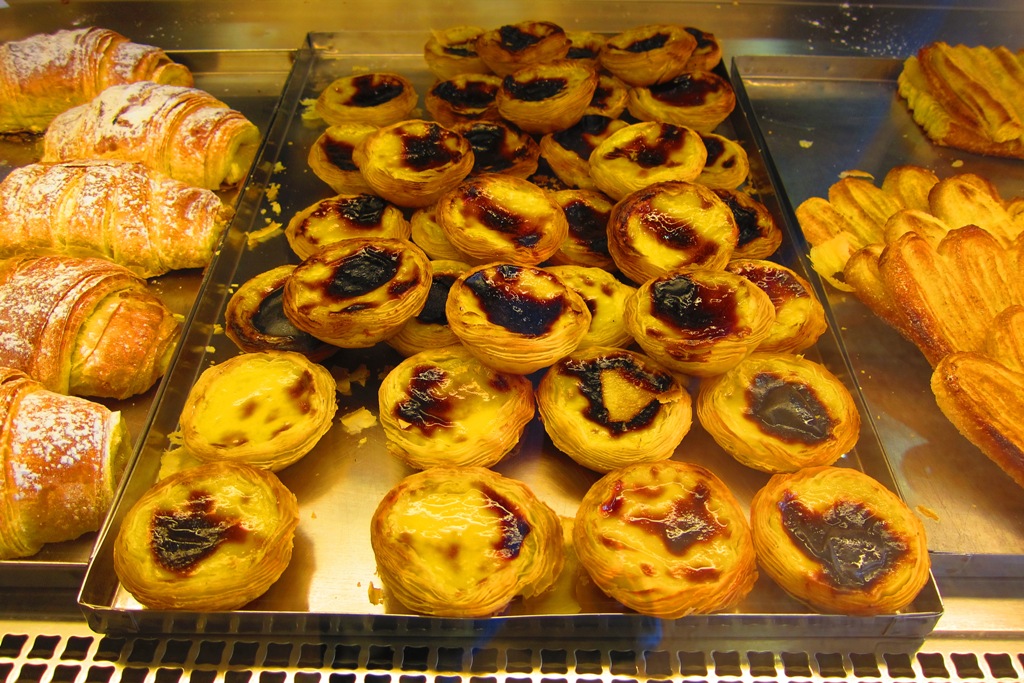
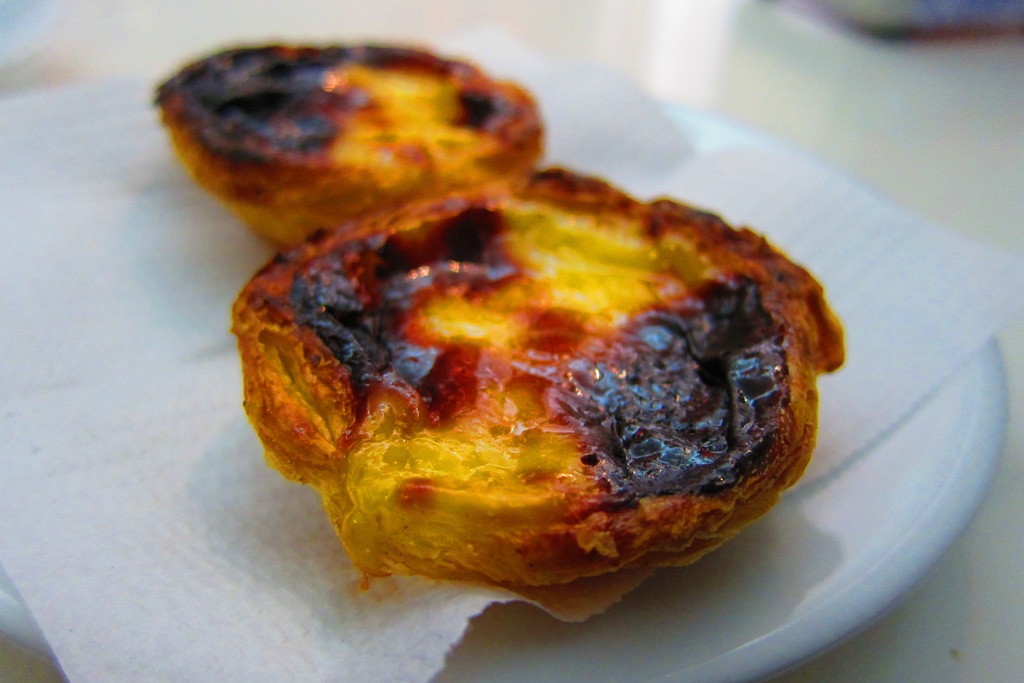
Yet as of today, our last day in Lisbon, we have been in this beautiful city for over two months. L has been tirelessly working on an exhaustive study of Portuguese pastries that would make the authors of Fabrico Próprio sit in awe (though we bought their fabulous book anyway!). We have been to scores and scores of Portuguese pastelarias, in every area of the city, and at this point may be some of the best experts in Portuguese pastries on either side of the Atlantic. And at every Lisboeta pastelaria, we have sampled their offering of Portugal’s most famous and emblematic sweet: the pastel de nata (or pastel de Belém), a small egg-tart pastry originating, so the story goes, with 18th century monks at  Jerónimos Monastery in Lisbon’s Belém district and now produced throughout the lusophone world. Every street in Lisbon has at least three pastelarias, and every one makes pastéis de nata. We have eaten a lot of pastéis de nata during our time in Portugal and in our time here, combining exhaustive taste testing and testing again, we have concluded what we think is the best pastel de nata in town. There was, obviously, no shortage of contenders  but we settled on a ranking after several visits to each place. Surely, there are as many opinions on pastéis as there are pastelarias in Lisbon. However, we think you will have a successful pastel experience if you try these locations.
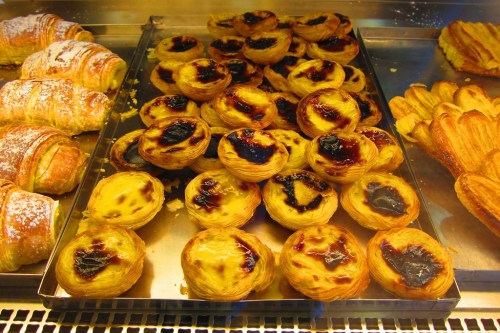
Pasteis de Nata

Pastéis de Nata in the Wild

The Ground Rules:

1. We only included pastelarias that were “Fabrico Próprio,”meaning the pastries were made in house. Any pastelaria worth its weight in egg cream will make its pastries on site, and the ones that do always say “FABRICO PROPRIO” on their sign. If you are visiting a pastelaria that does not say that, just move on, because you will be wasting your money.
2. Only classic pastéis count in this ranking. We needed a 1 to 1 comparison, so no fillings, fruit flavors, mini or giant size, etc. (Although try the pastel de chocolate at Versailles – great!)
3. Rankings are based on custards, crust, caramelization and overall appearance. Most pastéis were of a similar size and cost between 1-1.3€ so we did not include price as a factor.
4. A good tasting does not move you to the top of the ranking, but one bad one knocks you off. If we had a bad experience somewhere, we did not return: with so many in Lisbon, the best place should not be making any errors. If we had a good experience, we were sure to return at least once to test for consistency. Our top three finishers each got no less than three taste tests.

The Rest:

A caveat: we urge everyone who visits Lisbon to try as many pastéis as you can and form your own opinions. It’s really fun! And definitely not damaging to the pocketbook. But for us, so many pastelarias did not make the cut for the top three, and we did not include them in our final ranking. Some were flavorless or too eggy, some were burnt, had too thick a crust, or too thin (a major deal-breaker is when you bit into a pastel and the whole crust goes with it – you should be able to take out a single section of cream and crust in one bite). Among the most famous to be cut were the Confeitaria Nacional and, gasp, the Antiga Confeitaria de Belém. The Antiga Confeitaria is far and away the most famous place to grab a pastel in Lisbon, and every guidebook will direct you there. Lines are always out the door, and the inside seats hundreds and hundreds of people, all eating pastéis. But you can see the problem already: quality control. Wild inconsistency plagued the Antiga Confeitaria, even in the same batch of four: some were burnt, some were soggy, and some were underdone. With that, we give you our top three choices for the best pastéis in Lisbon.

Our Top Three Pastéis de Nata in Lisbon

3. Pastelaria Aloma
Rua Francisco Metrass, 67
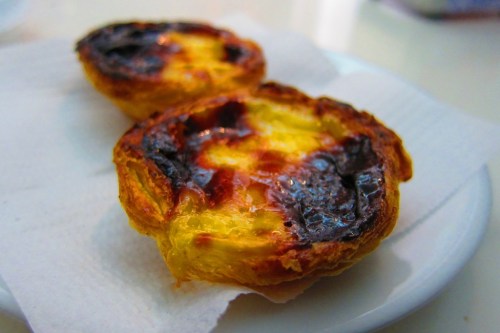
Aloma Pasteis

Pastelaria Aloma is a small neighborhood pastelaria northwest of Bairro Alto, which wandered under everyone’s radar until, in 2012, it won the competition for best pastel in Lisbon. In a hilarious and welcome moment of fame capitalization they changed their website’s url to omelhorpasteldenatadelisboa.com (literally, TheBestPasteldeNataInLisbon.com), and plastered the new url all over their small store and delivery trucks. Quite off the beaten path, it takes some searching to find the place, but we were happy to see their quality control has not suffered as a result of their fame (they remain busy, but not crowded). We found the crust to be well-made, the filling very tasty, but the crust’s browning was inconsistent enough as to affect the flavor on one of our pastéis, bringing them to number 3.

2. Pastelaria Versailles
Avenida da República, 15
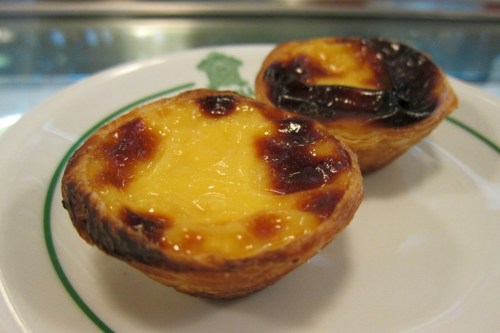
Versailles Pasteis

Pastelaria Versailles, conveniently located immediately above the Avenida da República exit at the Saldanha metro station, is a charming, old-world style (almost Parisian) cafe offering a wide variety of freshly-made pastries, as well as sandwiches and tea served by a jovial waitstaff that make this a great lunch spot, one of our favorites in Lisbon. As far as we can tell, pastéis de nata are not one of their specialties, and they have not appeared on any major rankings. But we found their pastéis to be magnificant examples: a perfect crust, with a delectable egg cream whose flavor we found to be second only to our overall winner. (And once again, if you go here, try to pastel de chocolate – a variation of the traditional pastel but with chocolate filling, a variety we saw almost nowhere else!)

Drumroll…..

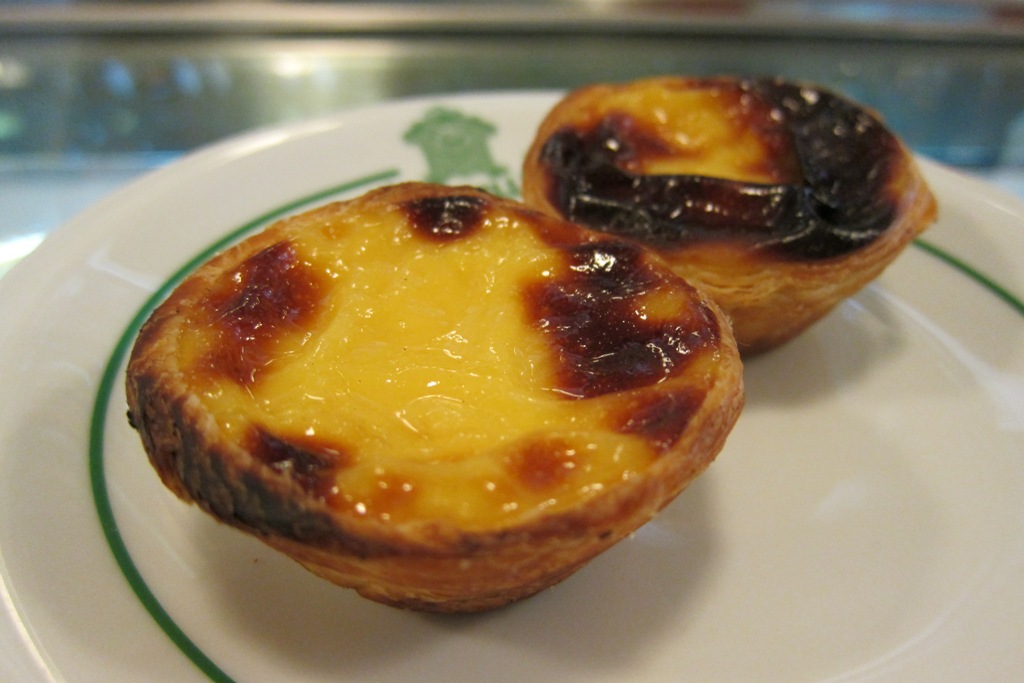
1. Chique de Belém
Rua da Junqueira, 524

Chique PasteisIn the end, this was not even close. If you visit Lisbon you will, at some point, find yourself admiring the architectural wonders of the Jerónimos Monastery in Belém. You will walk east on Rua da Junqueira, with the crowds, toward the front of the Antiga Confeitaria de Belém and you should, in our humble opinion, keep on walking. A few blocks further is the small, utterly charming, and fantastic Chique de Belém, easily our vote for the best pastel in Lisbon. Perfectly textured, elegantly flavored egg cream inside a crust with just the right balance of flakiness and support make this our go-to place for pastéis in Lisbon. In three visits and six samples we were shocked by the consistency of their output. Even better? Their outdoor seating area, right on the sidewalk, offers a view of Belém’s parks, where you can relax while the servers bring you the pastries of your choosing. And of course, you picked the pastéis.

14 Comments

Filed under Pastry Post-Poc

Sephardic recipes for Hanukkah

spainWhile Ashkenazi (Eastern European) Hanukkah foods may be more well-known in the USA, Sephardic (Mediterranean) traditional foods are worth a second look if you are hoping to switch up your Hanukkah menu. The mix of Jewish traditions and Mediterranean flavors is definitely a good one. I am very interested to try Jessamyn’s Sephardic Challah Recipe, which seems different than its eggier Eastern European counterpart. Other traditional Sephardic Hanukkah foods include buñuelos, a Spanish cousin to sufganiyot, and even fried turnips. Buñuelos, (aka Bimuelos, Burmuelos, among others) were initially created by Spanish moriscos, but have since spread in popularity across Latin America.

Bunuelos

Bunuelos / Bimuelos by Joe Goldberg

1 Comment

Filed under Holidays, Recipes

Holiday Glögg for St. Lucia Day

sweden_flagSt. Lucia’s Day is a Swedish holiday that occurs on December 13th, marked by feasts and candles. Despite it being pretty dark in Sweden in the weeks leading up the Christmas, St. Lucia’s day and Advent as a whole are a great time of celebration filled with lots of light. We have written about some sweet treats like Lussekatter and pepparkakor that are used to celebrate the holidays in Sweden, but if you need some warming up the best prescription is Glögg, a mulled red wine. Glögg is so integral to the holiday season, there are dedicated “Glögg parties.” While you can buy Glögg at many stores, it is definitely more fun to make your own.

Glogg

Glogg by Aya Patron

2 Comments

Filed under Holidays, World Eats

Food and Life in the Djemaa el Fna

Flag_of_Morocco There are no shortage of opinions on how, and what, to eat in the Djemaa el Fna, Marrakech’s biggest culinary attraction. A large open area at the southern end of the Medina’s major souks, by day the Djemaa is an open stream of performers, orange juice and fruit sellers, and wandering locals and tourists. The orange juice here is particularly tasty: at 4 dirhams (40 cents – and make sure you have correct change, or you will end up paying more) it is a steal. Just make sure it is pressed in front of you, otherwise you risk a watered-down product. Other highlights during the day include the row of dried fruit sellers near the orange juice stands.
We also highly recommend something that gets rarely mentioned on other blogs: Moroccan sweets, usually served with tea.

MoroccanCookiesA set of carts sells an awesome variety of small sweets on one end of Djemaa el Fna, with a typical going price of 30 dirhams (3.5 dollars) for a good-sized box. All of the treats are excellent – in particular we enjoyed a one that resembled a miniature pistachio-chocolate-sesame cupcake. Delightful. If you still have a sweet tooth during the daytime and want something healthier, head for the fruit stalls: Moroccan dates and figs in particular are excellent, and even made a believer out of L, who rarely enjoyed them before our trip to Morocco. We purchased a small bag of figs for less than 50 cents, and they were of considerably better quality than you can find here in the US. You can shop around with them as well: stall owners sit high above their offerings, calling to passers-by, but you can see the quality in the fruit for yourself before you make a purchase. Strolling through the sellers’ performances, and navigating your place within it, really is the experience of Djemaa.

But what to do at nightfall? You can find multitudes of opinions from other travelers on other blogs, and they tend to go like this: we went at night, we found a stall that looked good (numbered XX), we ate a lot of tasty food for relatively cheap, and we tried something crazy like sheep’s head or snails on top of it. This makes for a good story, and is all good advice, but we think this story misses something exciting, and perhaps more culturally valuable, about Djemaa. We’ll start by saying something readers of this blog will find shocking: we did not eat in the Djemaa el-Fna at night.

IMG_6074

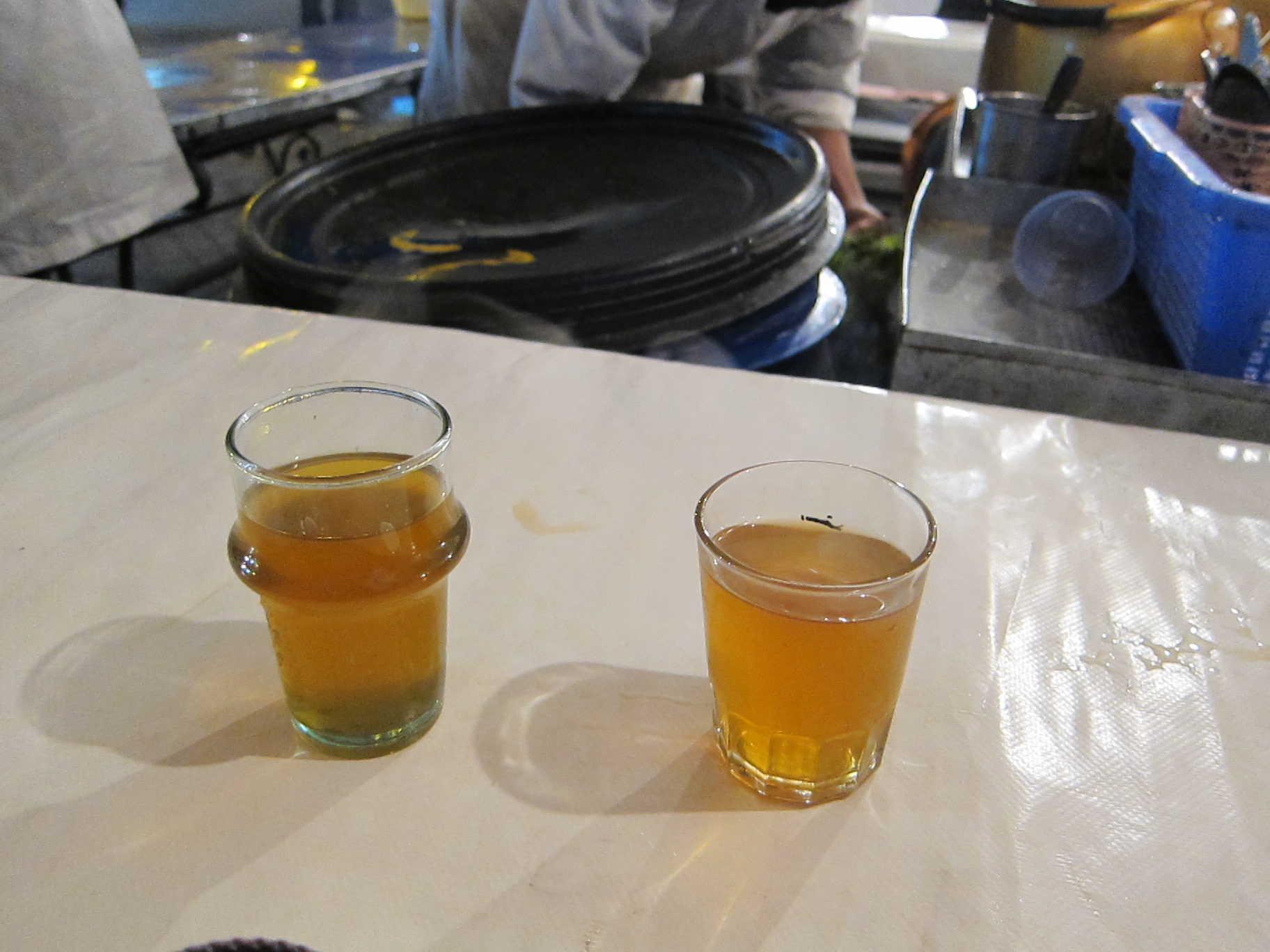
We drank tea. Spectacular, wonderful tea mind you. At a stall whose number we won’t reveal, hidden at the edge of the square. We had walked by it the previous evening, and saw that this stall, unlike many of the others, had a curious, and most welcome clientele: it was the go-to spot for all the square’s performers to pack a power dinner before a night of work. It opens a good half hour before the other stalls, and in that time gets packed with not just locals, but the locals that tend to make their living in the square, performing for the very tourists who will flood the stalls later in the evening.

IMG_6078

This stall has only five options, all legibly written and hanging from a sign above the cooking area. Beans. Lentils. Tripe. Soup. Tea ( for 1.5 dirhams, or about 18 cents). There is no fancy food display, no energetic and admirably persistent front-man to draw you in. Just honest food, eaten by locals, for explicit prices that are well below the 10 dirhams we had paid for tea at a nearby stall just the evening before. To find this stall, of course, we abided by all the cardinal rules: do not go anywhere that has to advertise; do not go anywhere not frequented by locals; and do not go anywhere that does not list its prices on a sign. But, we also committed an apparently cardinal soon of food travel by not really eating anything. Instead, over three cups of tea, we sat in a huddled group of patrons, having a broken conversation in what little French, and far less Arabic, we could muster. In the over-touristed and relentlessly performative facade of the Djemaa el-Fna, itself an experience worth indulging, we may have tricked ourselves into believing we somehow got under that veneer, sitting and drinking the country’s national beverage with those who, after filling up on lentils and soup and Moroccan bread, will be running the greatest night show in Marrakech.

All this is to say that if you go into Djemaa el-Fna looking for only the food, you will be disappointed. You must go for the experience, and understand what that experience is when you sit down at a table, whether it be for a pot of tea with a small group of local men or the grandest platter of food at a stall packed with locals and tourists or a sheep’s head at the east end. We encourage everyone to find the stall that will make them happiest. For us, those three cups of tea – independently fantastic fresh mint tea, naturally sweetened and presented from a large communal golden teapot – were somehow made better by the calm company in the midst of the bustling, screaming square around us.

2 Comments

Filed under Reviews

Portuguese Pastry Post-Doc: Travesseiros de Sintra

At first glance, Travesseiros de Sintra, seem to be the sugar coated cousin of pampilhos. The box below has both, so you can see their resemblance. Travesseiro means “pillow” in Portuguese, and I am not quite sure why this confection in particular gained the “pillow” name, though it appears that other renditions have a more rectangular shape. They are a specialty of the town of Sintra, which is perhaps better known for its castles and its queijadas, small cheesecake-like confections. Like the pampilho (and a majority of other Portuguese treats) , the travesseiro is full of egg custard – known as ovos-moles. However instead of cake layer, as in a pampilho, a travesseiro  is composed of puff pastry and covered in crystal sugar. If you are in Sintra, they are a classic of the Piriquita bakery. If you already a pro at ovos-moles – here is a recipe in Portuguese to try.

Pampilho And Travesseiro

A Pampilho de Santarém (top) and Travessiro de Sintra from Corte Ingles, Lisbon.

2 Comments

Filed under Pastry Post-Poc

Holiday Eats Around the World: Sufganiyot for Hanukkah

Happy Hanukkah! Hanukkah in America is often associated with latkes, however, an equally delicious treat is popular for Hanukkah in Israel – Sufganiyot – a type of a jelly doughnut. There has long been a tradition of associating fried foods with Hanukkah due to the importance of oil to the holiday, and Sufganiyot is a mash-up of North African and European traditions. Here is a recipe for Sufganiyot, with a classic jelly filling – though you might find them with any manner of exotic fruit or cream fillings. For another twist, try these Sufganiyot-inspired cupcakes.

Sufganiyot

Sufganiyot for Hanukkah- by Avital Pinnick

2 Comments

Filed under Holidays, World Eats

Portuguese Pastry Post-Doc: Pampilhos de Santarém

Pampilhos are a confection from the Central-West region of Santarém, Portugal. They are little known outside of Portugal, though you can find them in Lisbon bakeries specializing in regional treats. A pampilho is a thinly rolled sponge cake filled with egg yolk cream called “Ovos-moles (soft eggs)” in Portuguese. It has a cake-like rather than a pastry texture, and is almost like a rolled crepe. There is little to no information on pampilhos in English, but here is a recipe for pampilhos in Portuguese translated to English, which also including directions to make the Ovos-moles sauce that is so essential to many Portuguese pastries. Of course the best place to get a pampilho is probably Santarém itself, where Pastelaria Bijou is famous for producing the treat.

Pampilho And Travesseiro

A Pampilho de Santarém (top) and Travessiro de Sintra from Corte Ingles, Lisbon.

Leave a comment

Filed under Pastry Post-Poc

Traditional Dutch celebration foods for Sinterklaas

Netherlands flagThough in the USA, Santa Claus is the symbol of the holiday season, in Europe it is St. Nicholas that children wait up for on December 5th. Sint Nikolaas, in Dutch, is then typically known as Sinterklaas, and is considered the precursor to the American concept of Santa. The figure of Sinterklaas is indeed similar to Santa, a benevolent figure wearing a red robe and delivering presents to children, though he rides a horse on his journey from house to house. Kids, instead of leaving milk and cookies, leave carrots for the horse beside their shoes (which is where the presents get delivered – if you are naughty you will be left with an empty shoe).

Sweets abound at Sinterklaas celebrations both on the 5th and 6th, including one of our favorites, the crisp, cinnamon speculaas cookies. Other sweet treats include pepernoten (same as German pfeffernüsse) and kruidnoten, similar to speculaas, but in more of a nugget shape.  Many Dutch recipes instruct you to make kruidnoten with pre-blended “speculaas spice” which is definitely not available in the USA. However, to make your own, the Dutch Baker’s Daughter has a good DiY speculaas spice breakdown. Another food tradition is getting a large chocolate letter representing your first name called a chocoladeletter. Sinterklaas is definitely a day with tradition – many of the festive occurrences in this 17th century painting by Jan Steen (note the empty shoe) remain unchanged today.

Jan Steen - Het Sint Nicolaasfeest

Jan Steen – Het Sint Nicolaasfeest / Festival of St. Nicholas

1 Comment

Filed under Holidays, World Eats

Pastry Post-Doc in Morocco: Gazelle Horns (Cornes de Gazelle or Kaab el Ghazal)

Flag_of_Morocco

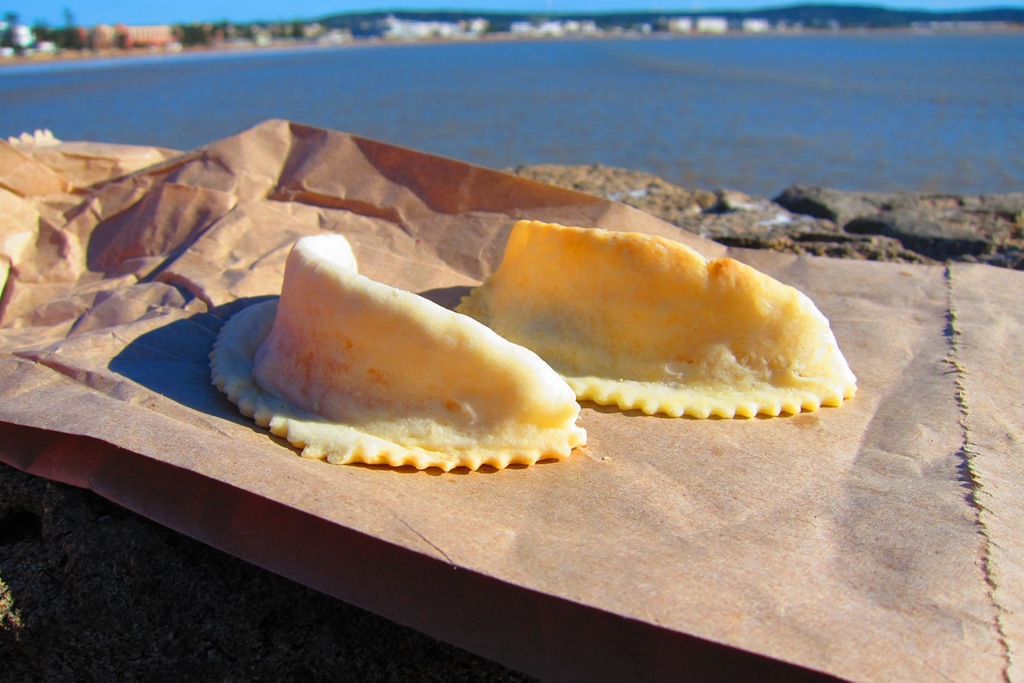
The Pastry Post Doc and Partner just returned from a whirlwind trip to Morocco, where we sampled a ton of delicious food, including a fair share of pastries. Well, I didn’t know much about Moroccan pastries before visiting, but I am happy to report that Morocco has an awesome pastry culture that is a blend of French and North African flavors. One of the emblematic Moroccan pastries is the Corne de gazelle. Cornes de gazelle (“gazelle horns” in French) are named for their crescent shape, in Arabic they are known as Kaab el Ghazal (which actually means “gazelle ankles”). Crescent shaped gazelle horns are composed of crimped pastry dough around an orange flower water and almond paste center, and are sometimes topped with powdered sugar. The following gazelle horns were purchased from Patisserie Driss in Essaouira and cost less than a euro apiece. As you can see, we took our treats to go, and enjoyed our gazelle horns with an ocean view. Other than the orange flower water, there are not any unusual ingredients in the recipe, so why not give gazelle horns a try?GazelleHorn

Leave a comment

Filed under Pastry Post-Poc

Roast Chestnuts herald the arrival of Winter in Lisbon

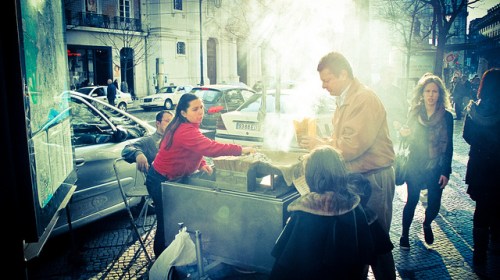
One sure sign that fall has arrived in Lisbon is the appearance of the roast chestnut vendors. As the holiday season approaches, they only become more popular. If the air is crisp enough, it is not uncommon for the Baixa area of Lisbon to be filled with smoke and steam from the roast chestnuts. The typical setup is a metal cart, as seen below, but there are some other nifty arrangements where the chestnut roaster is attached to the front of a motorcycle. For about 2€ you can get about a dozen chestnuts. The chestnuts are completely charred and perfect for staving off the winter chill, definitely a must-do for anyone visiting Lisbon in the colder months.

Chestnut vendors in Lisbon by Sr. Nefasto

Leave a comment

Filed under Holidays, World Eats

Portuguese Pastry Post-Doc: Pirâmide

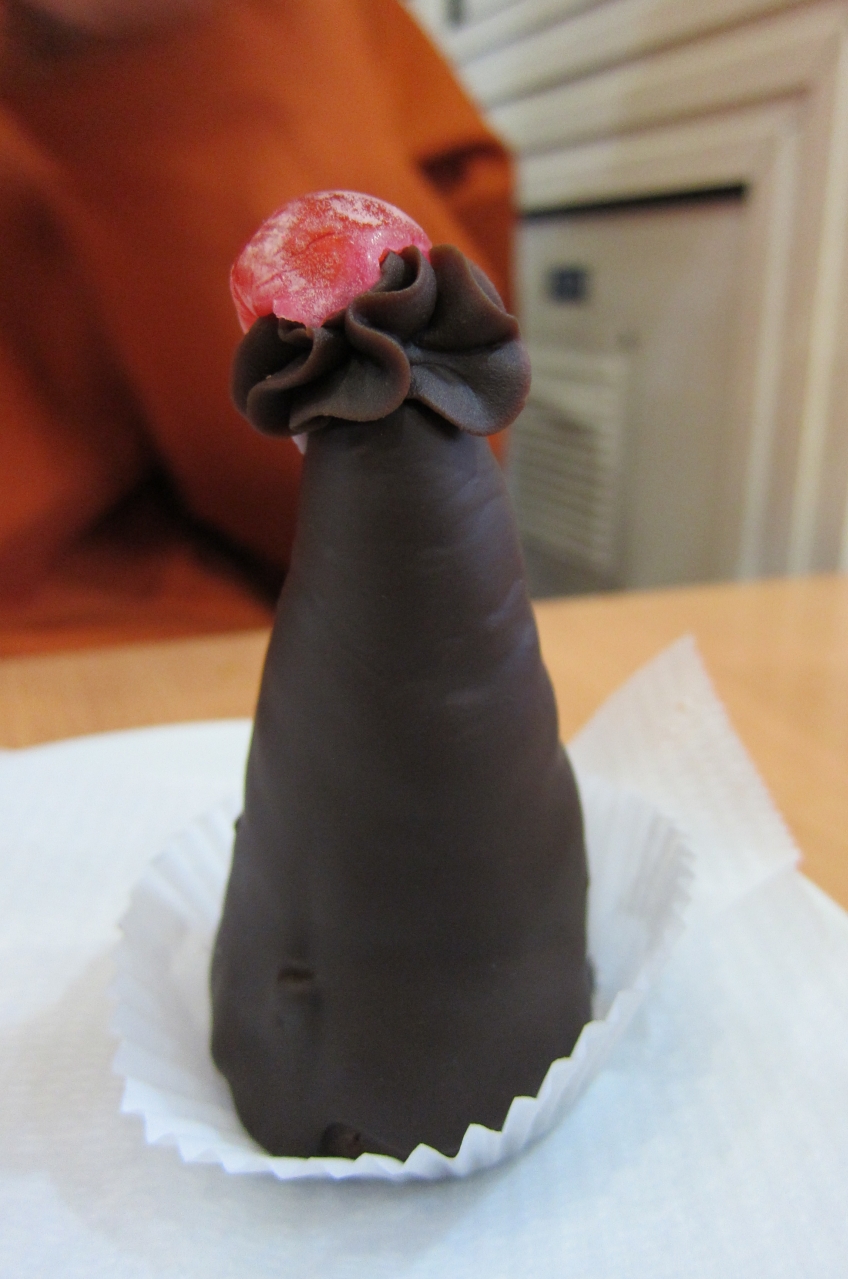
When we ordered this dessert at the Chique de Belém cafe in Belém, we had no idea what it was, but how can you turn down what appeared to be a chocolate cake covered in chocolate? A Pirâmide is obviously named for its pyramid shape and consists of chocolate cake with nuts and raisins or candied fruit, covered with a shell of dark chocolate and a cherry. Pirâmides can be made with other cakes than chocolate as well. I guess it is a good way to use up leftover cake (though when would that happen in this household?). Here is a recipe – in Portuguese – to make pirâmides.

1 Comment

Filed under Pastry Post-Poc

Canada: Artisinal cheeses from the rare Canadienne cow

canadaCulture magazine had an interesting post about an effort to revive the rare Canadienne Cow, one of the oldest breeds in North America. The Canadienne cow was brought to Canada by French settlers in the 16th century, and though it was initially popular, it was gradually replaced by other varieties. Canadienne cows are now relatively rare, except in pockets of Quebec. However the Canadienne cow is making a comeback. Along with promoting the Canadienne cow comes the revival of unique cheeses only made with Canadienne milk, including the varieties made at La Laiterie Charlevoix.

Leave a comment

Filed under Cheese, Links

Morocco-bound: Petit Voyage au Maroc

Today is the start of our last side trip while we are in Lisbon – we are headed to Marrakech, Morocco for a long weekend. We are so excited for the food, especially the tagines  and spice markets. In addition to the food, we plan to drink as much mint tea as humanly possible. We are staying in the heart of it all in the Medina, so we assume there will be no shortage of good food, especially from street vendors. Reports coming soon!

Spices in Marrakech by bgblogging

Leave a comment

Filed under Note

Portuguese Pastry Post-Doc: Gorreana Tea

You can’t have a proper pastry time in Lisbon without coffee or tea. So for the Portuguese Pastry post-doc, what could be more appropriate than a Portuguese tea to accompany some sweet snacks? Gorreana tea, from the Azores, is not only the Portuguese-grown tea, it is the only commercially-produced tea grown in Europe. The plantation was founded on the Ilha de São Miguel in 1883. According to their Portugese wikipedia page, tea was brought to the island by Macanese technicians in the 1870s, after it was decided that the mild Azorean climate would be perfect for  tea production. Currently, Gorreana produces Green Tea, Orange Pekoe tea, Black tea and broken leaf tea.

Gorreana Tea Plantation

Leave a comment

Filed under Coffee, Pastry Post-Poc, Tea