
Bahia, a large state in northeastern Brazil, has long been one of our second homes. We have made multiple trips to the region over the past fifteen years, with our time in Bahia oscillating between research, tourism, and eating its distinctive cuisine. Heavily influenced by West African techniques and ingredients (especially palm oil), the cuisine of Bahia’s coastline utilizes manioc, coconut, tapioca, and the region’s variety of fruits, fish, and meats. Bahia’s gastronomy is deservedly heralded among the country’s diverse offerings, and in recent years, the state’s capital city of Salvador is being increasingly regarded as a gastronomic destination. Many new upscale restaurants have opened in the capital, especially in Pelourinho (the old historic center) and the beachside neighborhoods of Barra and Rio Vermelho. And just this year, Ori, one of the city’s finest dining spots, was named #52 on the list of Best Restaurants in Latin America. Yet very few tourists, and even many locals, never realize that some of the city’s best local food is served in off-the-beaten-path religious spaces. Even more surprising? It’s often free.
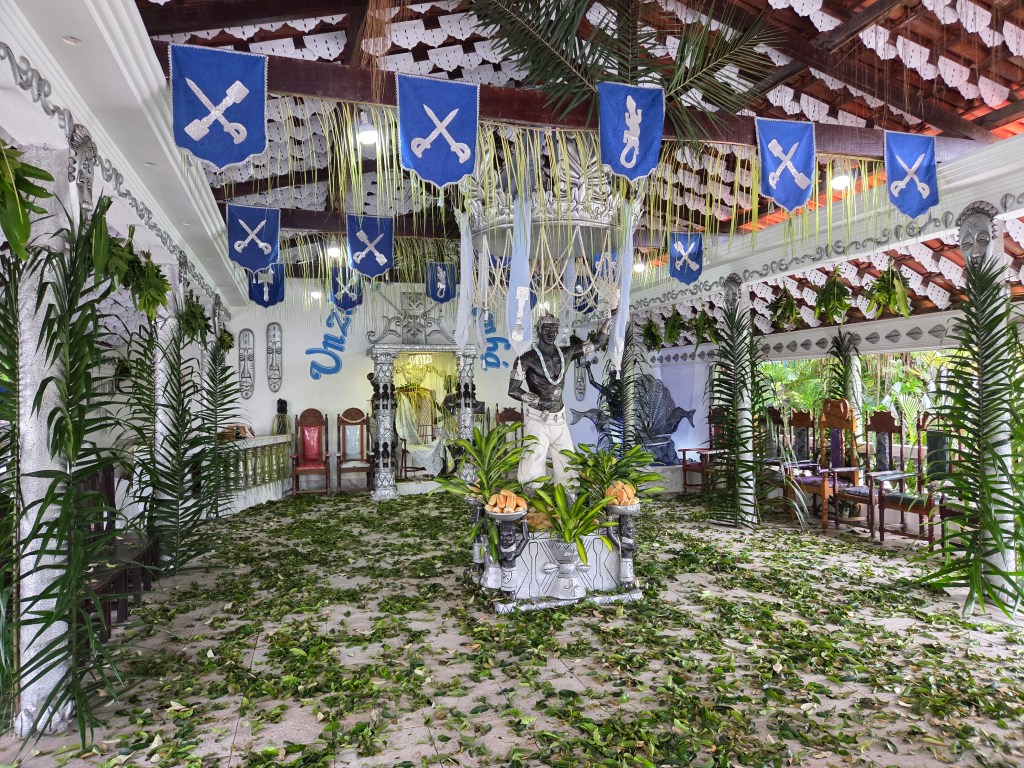
Bahia is the historic origin point of Candomblé, an African-inspired religion that developed beginning in the nineteenth century. Candomblé is practiced in autonomous “houses” (called terreiros) that range from small homes to large complexes that can incorporate worship halls, museums, shrines, schools, and elaborate kitchens. Some of the most prominent and well-known Candomblé houses maintain well-cultivated social media presences and post the schedules of their ceremonies when they are open to the public. Candomblé ceremonies can be elaborate affairs, lasting four or five hours and incorporating dancing, music, singing, and stunning dress ensembles worn by the spirits. While ritual protocols can be elaborate, especially for outsiders – don’t wear dark colors, only take photos with permission, sit only in the chairs for visitors, and be sure to introduce yourself to the high priest before or after the ceremony – ceremonies can be surprisingly welcoming spaces. Indeed, it is part of the religion to create an atmosphere of acolhimento, a Portuguese term conveys a sense of easy, relaxed, and thorough welcoming.
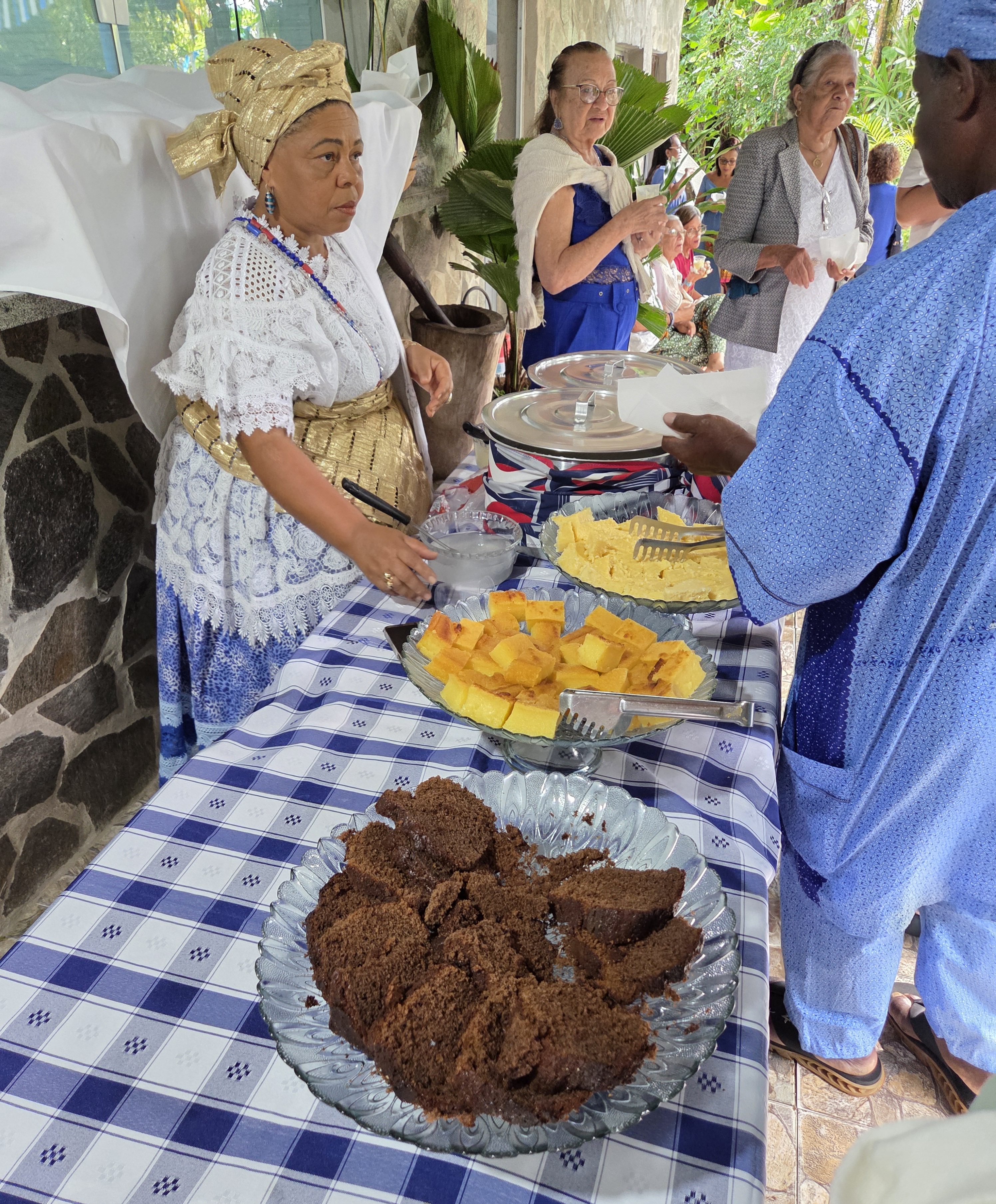
In early June, M attended a Candomblé ceremony for the god Nikosi, a central African spirit of iron and warfare, at the Terreiro de Lembá, in Camaçari, a small city north of Salvador. Lembá is a spectacular site and sight: a complex of buildings and shrines amid verdant Atlantic rainforest. After entering, we were ushered to the area in front of the kitchen, where initiates of the house – dressed in white lace skirts and blouses and headwraps that are typical markers of female initiates to Candomblé – served slices of chocolate cake alongside lelê (a kind of coconut-and-corn sweet) and aipim. Aipim is the local name for a kind of sweet manioc that’s processed and mixed with a bit of sugar; it’s distinct from sour manioc (mandioca), which is used to make a flour called farofa that is served alongside, or on top of, most Brazilian stews and beans. Also on offer were two flavors of mingau: a slightly sweet, soupy drink made of tapioca and served warm.
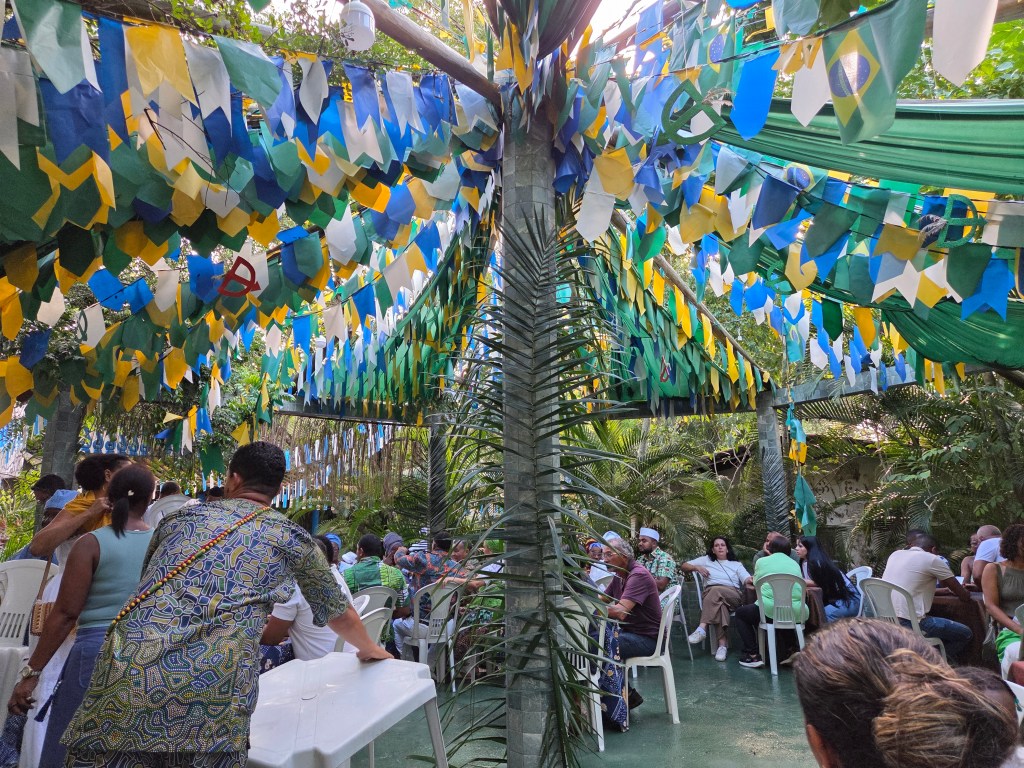
The ceremony began shortly after this welcoming snack, and lasted five hours: it was an elaborate, energetic, and visually sumptuous affair. Afterwards, all guests were asked to bring their chairs to an open area in the back, decorated with flags and surrounded by forest. Perhaps a hundred people had come, and all were treated to a hearty meal of feijoada: a classic Brazilian stew of beans and meat, served a slew of optional accompaniments: white rice; sliced tomatoes and cucumbers; the aforementioned farofa; and pimenta (a sauce of tomatoes mixed with spicy malalgueta peppers).
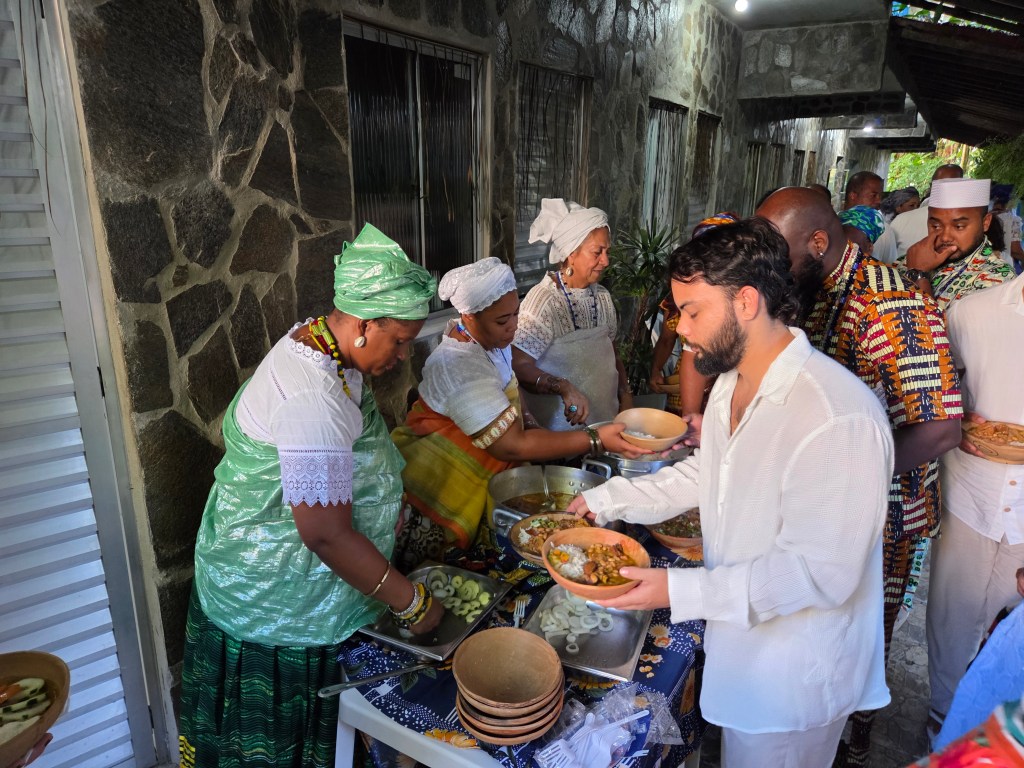
Feijoada happens to be a food sacred to Nikosi (as well as his better-known Yoruba-based counterpart, Ogum). Each person got in line and was given a traditional clay bowls that had hand-painted geometric designs, while the women served each person in attendance their choices. Back at the tables, younger initiates attended to drink orders, bringing out waters, beers, and fruit punches; clearing tables; and quickly finding extra farofa when anyone requested it (like me).
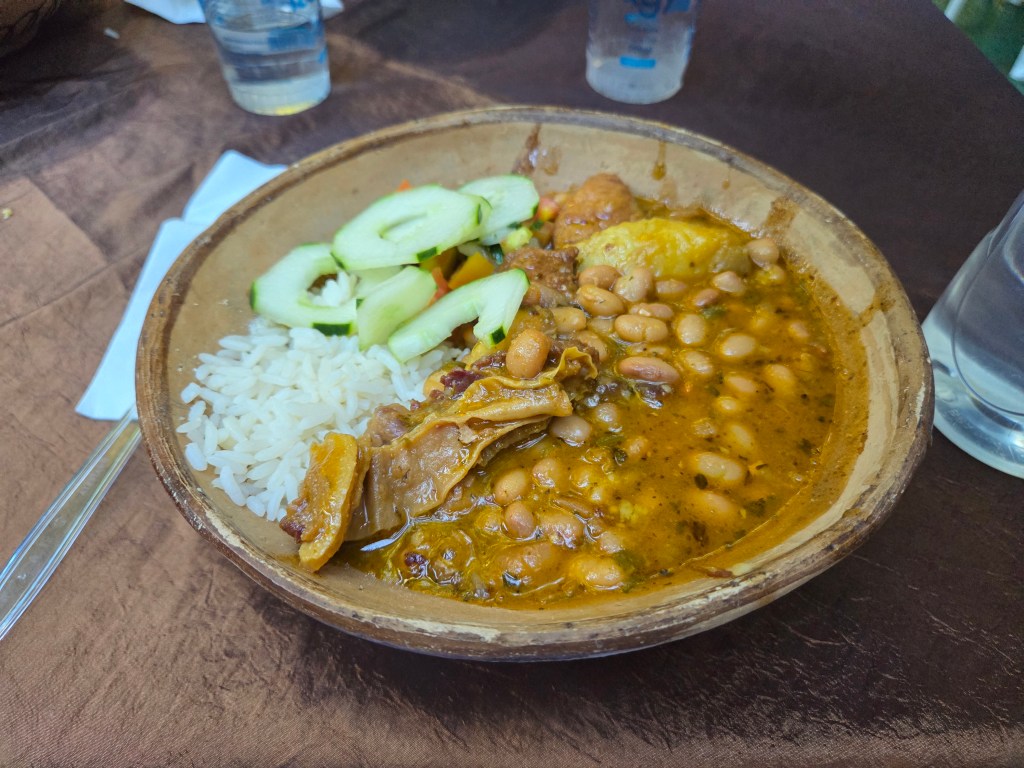
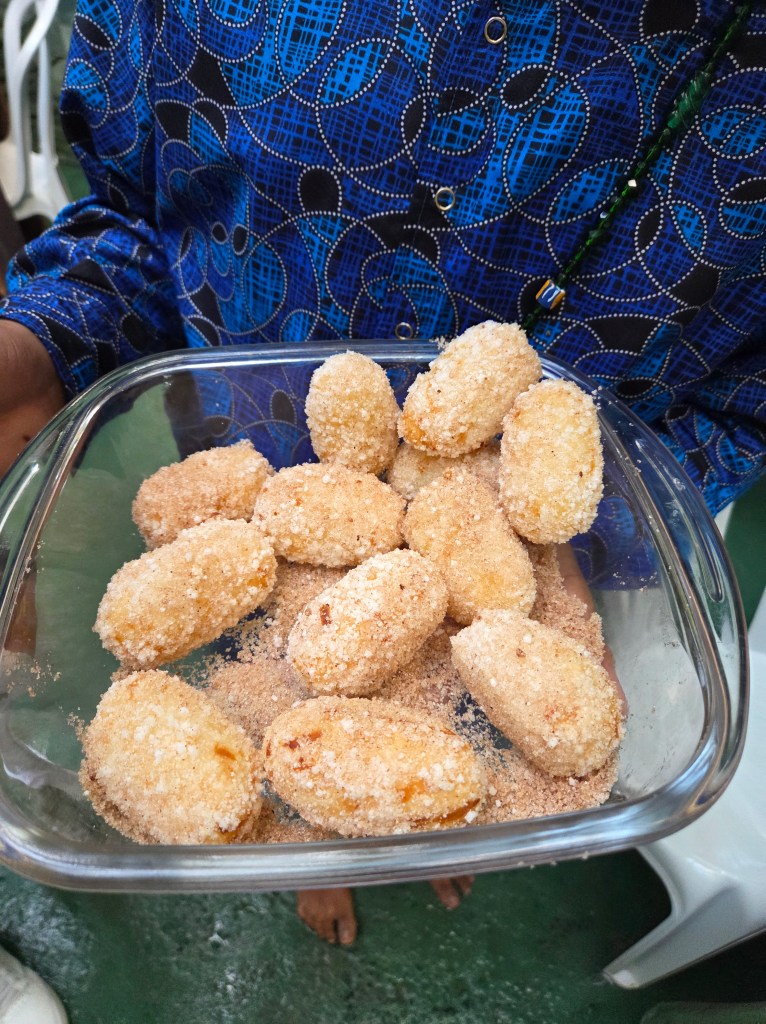
I’ve had a good number of feijoadas in my life, and this one could hold a candle to any of them: hearty, perfectly seasoned, alongside stellar rice. I went back for a second bowl without thinking about it. And then, before I left, the sweets came out, served table to table: aipim once again (happy to take seconds there too), and a little-known bolo de estudante (“Student’s Cake”) which, despite the name, is a croquette of shredded coconut mixed with tapioca starch, fried until it is crispy on the outside and soft on the inside, and rolled in sugar.
Over the years, I have had many meals at Candomblé houses. I’ve had any number of Bahian classics: acarajé (a bean fritter fried in palm oil and stuffed with fillings), moqueca (a fish stew of palm oil and coconut milk), quiabado (stewed okra); as well as simpler meals of beans, rice, and a bit of meat. They are always made with love and a welcoming spirit; and while I always donate money to the houses, it has never been asked of me. That comes from a legacy: up until the mid-20th century, Candomblé was a heavily criminalized religion in Brazil, and in Bahia in particular, and it still required police permission to be practiced through the 1980s. Today, Candomblé houses are again facing politically- and religiously-motivated attacks – sometimes violent ones – from people who have never been to a temple or attended a ceremony. Terreiro de Lembá’s high priest (tata), the amiable and hardworking Ricardo Tavares, spoke as much at the ceremony. His message was to dispel stereotypes and myths about Candomblé and welcome in the wider community: please be welcome, please come here, please post photos so people know who we are. The sharing of food is evidence of this community spirit.
 So what is the national dish of Brazil, the host of the 2016 Olympic games?





 Eating The World