Tag Archives: Portugal

Portuguese Pastry Post-Doc: Tripa de Aveiro

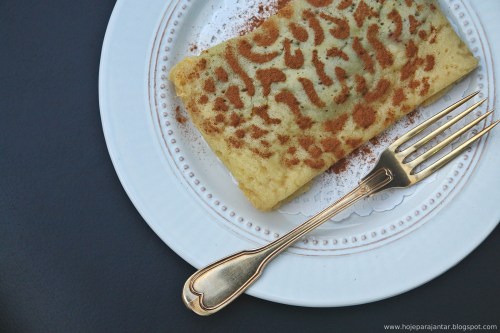
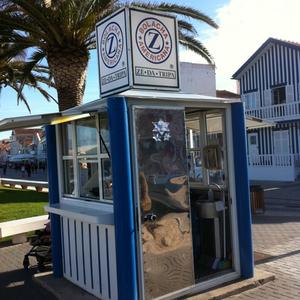
Today we are featuring a rare Portuguese confection – tripa de aveiro – we first learned of this dessert from one of our loyal readers, José. Tripa literally means “tripe” and it was named for its appearance  not its contents. Much like tripe, tripa has a bubbly texture, and is somewhere between a crepe and a waffle in consistency. A typical topping for tripa is cinnamon, with an ovos moles filling, though topping and filling combinations may be more exotic.  Tripa de Aveiro is local to the city of Aveiro, in North-Central Portugal, and is little known in other parts of Portugal. In fact, we never came across them in Lisbon at all. The typical place to find tripas is at small kiosks around town, José sent this picture as an example. We wish we would have had a chance to try them, maybe next time we will be able to visit Aveiro. If you are not in the vicinity of Aveiro, here is a recipe for chocolate-filled tripas from Hoje Para Jantar (in Portuguese). Thanks for the tip about Tripas, José!

Tripa de Chocolate

Tripa de Chocolate from Hoje Para Jantar

Leave a comment

Filed under Pastry Post-Poc

Portuguese Pastry Post-Doc: Croissants at Pastelaria Benard

While the French are known for impossibly delicate and flaky pastries, the Portuguese prefer denser eggy and sugary cakes. The Portuguese take on the croissant is much the same. We heard that Pastelaria Benard had a reputation for the best croissants in Lisbon we were eager to try them (though we did not know what difference a Portuguese croissant would have in store for us). Pastelaria Benard (Rua Garret 104) is located right off of Largo Camões in the heart of Lisbon’s atmospheric Bairro Alto, right next to A Brasileira, one of Lisbon’s most internationally famous cafes. Benard, though less touristy, is just as antique, and practically exudes history.

 Croissants at Pastelaria Benard

In the old Pastelaria there is an entire shelf of croissants that are piping hot – fresh out of the oven – so we figured we were in for a treat. However, we were a little confused upon first bite. Yes, these so-called croissants were quite good, but nothing like the classic French croissant we have come to know and love. In this rendition, the dough is cakey and rich like a brioche, not flaky at all! At first we thought we perhaps ordered wrong – but they had given us two straight off of the “croissant shelf.” Though the alleged “croissant” was good in its own right, we are surprised the Portuguese have not given this confection another name, especially since the Portuguese have such creative names for their sweets. However, we have also seen French-style croissants in Lisbon also being called by the croissant moniker (or at least they appeared flakier than this). Very confusing! So be warned, pastry-philes looking for a croissant in Lisbon – you could be ordering a different treat altogether!

Leave a comment

Filed under Pastry Post-Poc

Portuguese Pastry Post-Doc: Fradinho

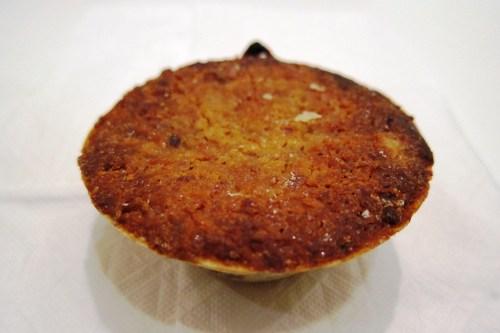
Fradinho, which means “little friar,” is a small traditional Portuguese tart filled with sweetened white beans, almonds and egg custard. In Portuguese feijãofradinho is the name for black-eyed peas, and many recipes calling for “fradinhos” are calling for this sort of bean. We think it is pretty inventive to have a typically savory item like white beans in a sweet dish. If you did not know the filling was bean-based it would not be apparent, and the fradinho has more of an overall nutty flavor. The most classic place to get a fradinho is from a cafe aptly called “Pastelaria Fradinho” in Mafra, the home city of the fradinho, right outside Lisbon.

Fradinho

A humble fradinho

2 Comments

Filed under Pastry Post-Poc

Portuguese Pastry Post-Doc: Suspiros

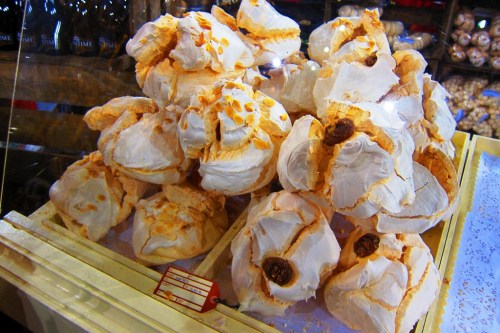
If you are a regular reader of ETW and the Pastry Post-Doc you will surely know that most Portuguese pastries are mainly composed of sugar and egg yolks. However, in a slight twist, suspiros are composed of egg whites and sugar. With these ingredients you can see that suspiros are basically meringues, though they are more artfully named as “sighs” (suspiros means sighs in both Portuguese and Spanish). You can find them in most bakeries and the grocery stores in Lisbon, ranging from tiny to almost disturbingly large. At one Christmas market in Lisbon we managed to find suspiros that were as big as a dinner plate, filled with frosting (as seen below). While, many suspiros are not additionally flavored, we like the chocolate variety (or why not try the strawberry). Suspiros are also popular throughout Latin America with some variations, like the Peruvian Suspiro a la Limeña. However, in the Dominican Republic – suspiro is a type of frosting.

GiantSuspiros

Giant Suspiros at the Campo Pequeno Christmas Market

Leave a comment

Filed under Pastry Post-Poc

Brazil in Portugal: Feel Rio

Feel Rio
Rua Crucifixo 108
Lisbon, Portugal

brazilWe did not set out looking for Feel Rio – it found us while we were on our way to the iconic San Justa Elevator in Lisbon. However, when did we ever refuse an açaí bowl? Feel Rio had a traditional Brazilian lanchonete snack bar menu: açaí bowls, smoothies, salgadinhos, and some sweet snacks. There are only a few tall tables around the front of the store by the window, and it seemed to be mostly a popular takeout spot. Even beyond snacks, Feel Rio seemed to be a meeting point for the Brazilian community of Brazil, and there were flyers and postings about Brazilian businesses and events in the area.

FeelRioAcai

We ordered our two favorite Brazilian snack dishes from our time in Salvador: an açaí bowl, topped with banana and granola, and a couple of pães de queijo. They made their smoothies and açaí bowls out in the open with fresh fruit, so you could definitely tell they were fresh. On the downside, the pães’ cost seemed a little steep. But to our surprise, they were excellent: a firm crust, a cheesy center, not too gluey, and warm. Potentially the best we have had outside of Brazil!  The açaí bowl, however, was more of a disappointment. It was quite sizable, and came with a topping of bananas and guarana syrup (the granola was extra). While the flavor was alright, it came out with a surprisingly grainy texture, not the milky smoothness you would expect. Perhaps too much açaí concentrate? No matter though. After our famously unsuccessful attempts at trying to recreate the açaí bowls at home, who are we to judge!

FeelRio

We liked that Feel Rio brought the lanchonete concept to Lisbon. Feel Rio is a perfect place for a snack, a light lanche or a juice when you are in the Chiado area. Though Lisbon may be a far cry from the beaches of a Guanabara bay, you can still pop in for your Carioca-style Açaí.

Leave a comment

Filed under Reviews

Portuguese Pastry Post-Doc: Folhada / Pasteis de Tentúgal

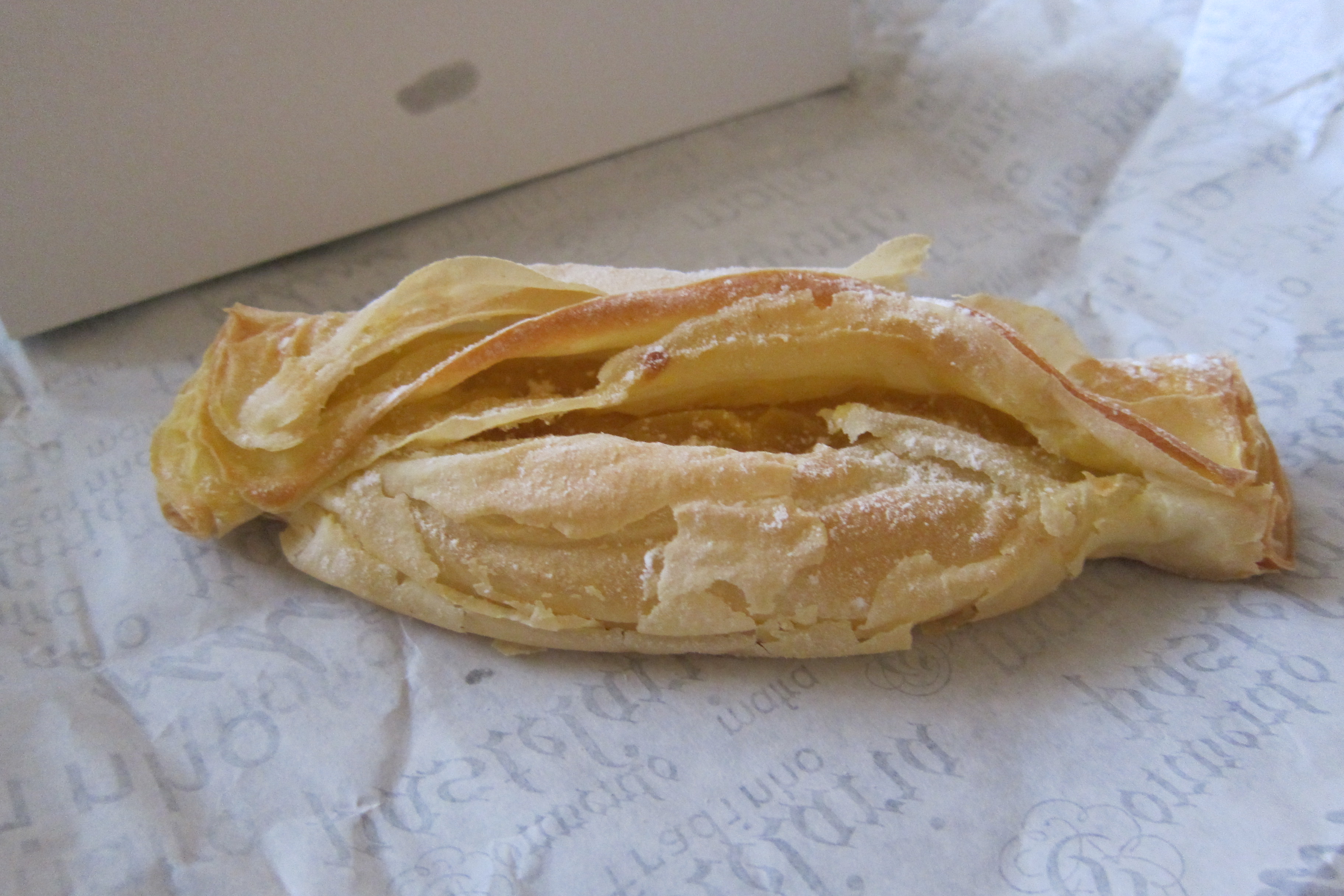
 One lesser-known, but important, pastry in the Portuguese repertoire is the regional sweet called the Folhada de Tentúgal. The Folhada de Tentúgal is a puff pastry filled with ovos moles – the iconic Portuguese egg cream. Its origin is unknown, though it is local to the Tentúgal area, in the Coimbra district of Portugal, an area apparently very well known for their iconic Convent Sweets. Folhadas mean “puffs” in Portuguese, and this refers to the many layers of the puff pastry folded over the ovos moles to form the pastry packet. They are also known as Pasteis de Tentúgal, and we found many more references for them under that name. David Leite has a history of the sweet, as well as the tale of its modern-day revival. Here is a recipe in English. The treat was even a finalist for the “7 Gastronomical Wonders of Portugal” contest (losing out to the Pastel de Nata).

Folhada / Pasteis de Tentúgal

Folhada / Pasteis de Tentúgal from Fradinho in Mafra, Portugal

Leave a comment

Filed under Pastry Post-Poc

Portuguese Pastry Post-Doc: Xadrez Cake / Bolo Xadrez

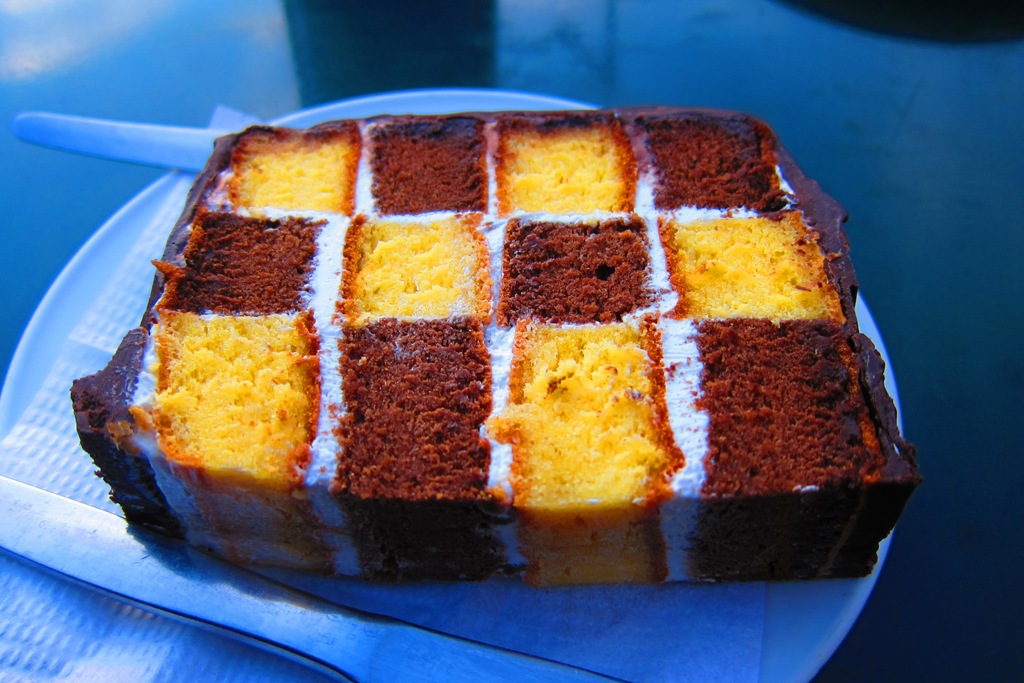
Xadrez cake or “Bolo Xadrez” was the last type of Portuguese pastry I had been aiming to try. Why? It has chocolate, an ingredient relatively uncommon in Portuguese pastry. Xadrez means “chess” and of course it describes the checkered appearance of the cake. The Xadrez cake is composed of both chocolate and yellow cake, covered with a layer of chocolate. The frosting between the layers may be egg cream, or possibly vanilla or chocolate butter cream frosting. “Chess cake” means something very different in American English, often to a chess pie, a classic Southern sugar pie. Here is a recipe for a Portuguese-style chess cake, which takes it even one step further to have a checkerboard coating.

Xadrez Cake

Xadrez Cake from Chique de Belem

1 Comment

Filed under Pastry Post-Poc

Portuguese Pastry Post-Doc: Jesuíta

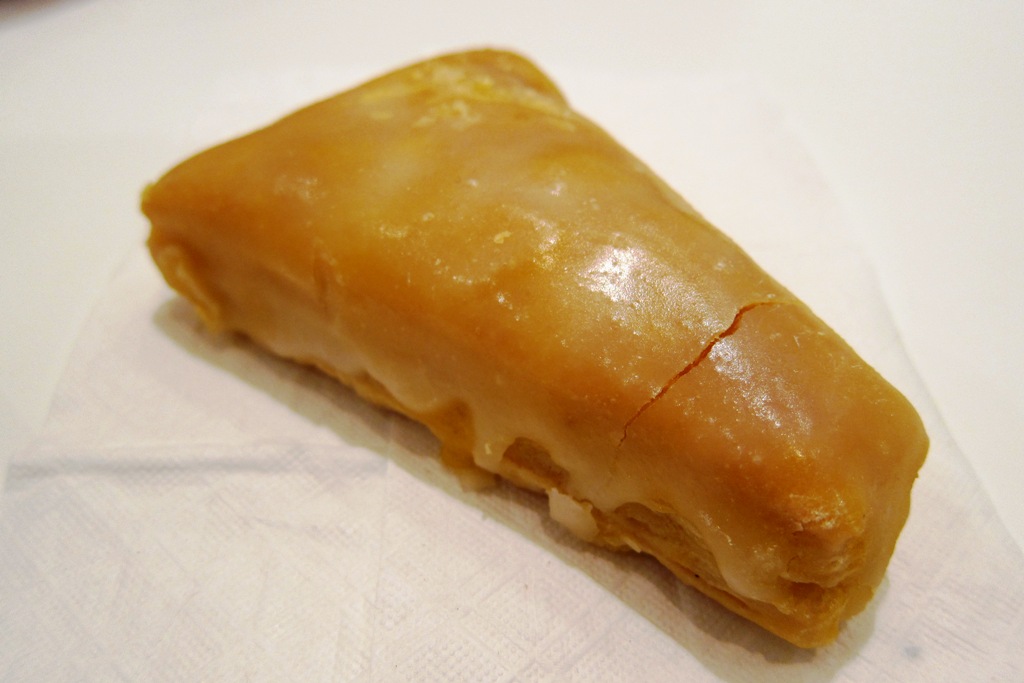
You’re probably thinking – “does that mean Jesuit?” – and yes you are correct – this is the Jesuit pastry, another one of Portugal’s oddly named confections. We’ve previously noted the many religious names of Portuguese pastries, due to the fact that pastry-making was the purview of convents. Even today, many places say they specialize in “Doces Conventuais (convent sweets).” The Jesuíta is a little different than other Portuguese pastries, first for its triangular shape, but also for the fact that it is covered in a frosting glaze rather than egg cream or custard. The Jesuíta is a triangular puff pastry topped with a powdered sugar glaze, and filled with cinnamon egg cream, though in this case the type of filling may vary. Here is a Jesuíta recipe in Portuguese – I have found no recipes for this dish in English.

Jesuita

Jesuita pastry in Lisbon

4 Comments

Filed under Pastry Post-Poc

Portugal to Madrid to Dallas to Chicago

spainportugalWe are heading to Madrid for the weekend – mainly because it was cheaper to fly to Chicago from Madrid than Lisbon (even factoring in a hotel in Madrid and a flight from Lisbon to Madrid). Yes, that means our time in Portugal is coming to a close. We will miss Lisbon more than we thought we would, especially its inimitable cafe culture and pastries. Hopefully we will find some good eats to transition back to stateside living in Madrid. Starting on December 18th we will be back in the USA for about a month before heading off to another foodie location. Stay tuned to find out where.

PlazaMayorMadrid

Plaza Mayor, Madrid at Christmastime by Carlos Solana

Leave a comment

Filed under Note

The Best Pastel de Nata in Lisbon

Much to our surprise, our study of the Best Macarons in Paris continues to be one of the most popular 0n the internet. But we’ve taken a bit of criticism because of our small sample size – since we only had an afternoon, we had to prioritize with the two most popular locations (apparently we should have also gone to Gerard Mulot).

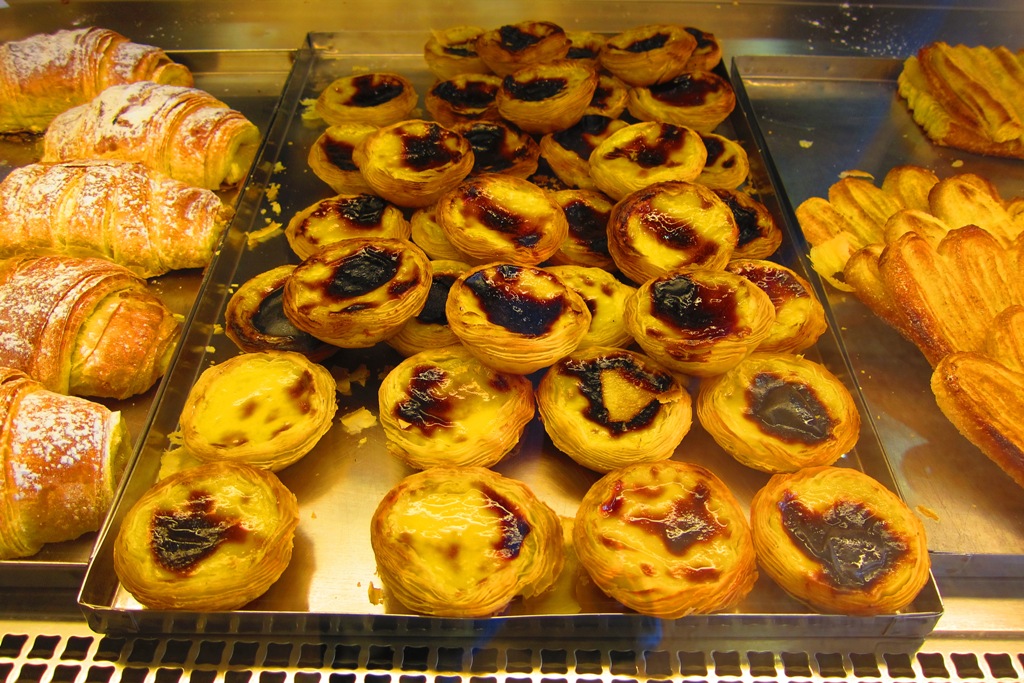
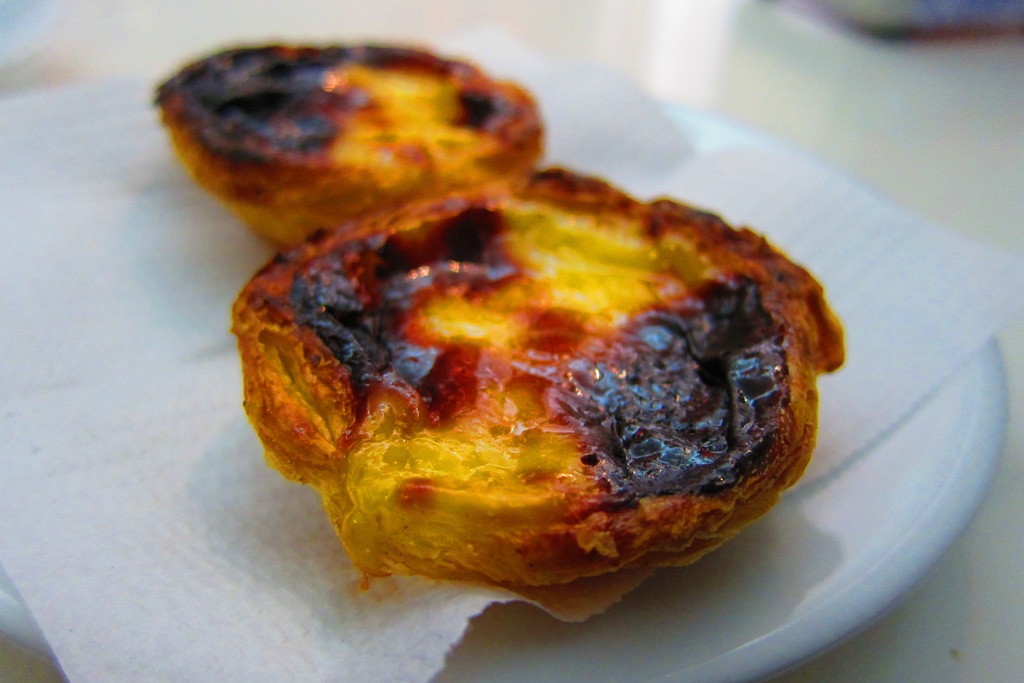
Yet as of today, our last day in Lisbon, we have been in this beautiful city for over two months. L has been tirelessly working on an exhaustive study of Portuguese pastries that would make the authors of Fabrico Próprio sit in awe (though we bought their fabulous book anyway!). We have been to scores and scores of Portuguese pastelarias, in every area of the city, and at this point may be some of the best experts in Portuguese pastries on either side of the Atlantic. And at every Lisboeta pastelaria, we have sampled their offering of Portugal’s most famous and emblematic sweet: the pastel de nata (or pastel de Belém), a small egg-tart pastry originating, so the story goes, with 18th century monks at  Jerónimos Monastery in Lisbon’s Belém district and now produced throughout the lusophone world. Every street in Lisbon has at least three pastelarias, and every one makes pastéis de nata. We have eaten a lot of pastéis de nata during our time in Portugal and in our time here, combining exhaustive taste testing and testing again, we have concluded what we think is the best pastel de nata in town. There was, obviously, no shortage of contenders  but we settled on a ranking after several visits to each place. Surely, there are as many opinions on pastéis as there are pastelarias in Lisbon. However, we think you will have a successful pastel experience if you try these locations.
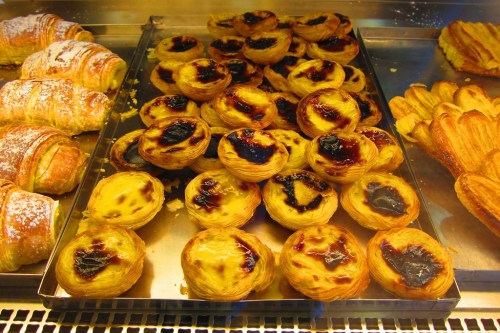
Pasteis de Nata

Pastéis de Nata in the Wild

The Ground Rules:

1. We only included pastelarias that were “Fabrico Próprio,”meaning the pastries were made in house. Any pastelaria worth its weight in egg cream will make its pastries on site, and the ones that do always say “FABRICO PROPRIO” on their sign. If you are visiting a pastelaria that does not say that, just move on, because you will be wasting your money.
2. Only classic pastéis count in this ranking. We needed a 1 to 1 comparison, so no fillings, fruit flavors, mini or giant size, etc. (Although try the pastel de chocolate at Versailles – great!)
3. Rankings are based on custards, crust, caramelization and overall appearance. Most pastéis were of a similar size and cost between 1-1.3€ so we did not include price as a factor.
4. A good tasting does not move you to the top of the ranking, but one bad one knocks you off. If we had a bad experience somewhere, we did not return: with so many in Lisbon, the best place should not be making any errors. If we had a good experience, we were sure to return at least once to test for consistency. Our top three finishers each got no less than three taste tests.

The Rest:

A caveat: we urge everyone who visits Lisbon to try as many pastéis as you can and form your own opinions. It’s really fun! And definitely not damaging to the pocketbook. But for us, so many pastelarias did not make the cut for the top three, and we did not include them in our final ranking. Some were flavorless or too eggy, some were burnt, had too thick a crust, or too thin (a major deal-breaker is when you bit into a pastel and the whole crust goes with it – you should be able to take out a single section of cream and crust in one bite). Among the most famous to be cut were the Confeitaria Nacional and, gasp, the Antiga Confeitaria de Belém. The Antiga Confeitaria is far and away the most famous place to grab a pastel in Lisbon, and every guidebook will direct you there. Lines are always out the door, and the inside seats hundreds and hundreds of people, all eating pastéis. But you can see the problem already: quality control. Wild inconsistency plagued the Antiga Confeitaria, even in the same batch of four: some were burnt, some were soggy, and some were underdone. With that, we give you our top three choices for the best pastéis in Lisbon.

Our Top Three Pastéis de Nata in Lisbon

3. Pastelaria Aloma
Rua Francisco Metrass, 67
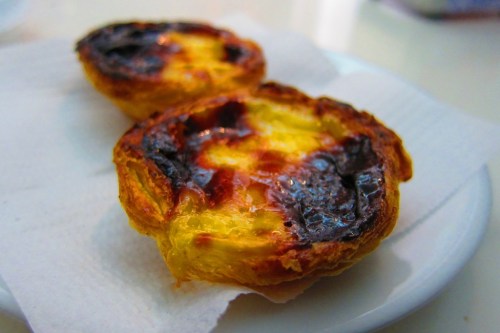
Aloma Pasteis

Pastelaria Aloma is a small neighborhood pastelaria northwest of Bairro Alto, which wandered under everyone’s radar until, in 2012, it won the competition for best pastel in Lisbon. In a hilarious and welcome moment of fame capitalization they changed their website’s url to omelhorpasteldenatadelisboa.com (literally, TheBestPasteldeNataInLisbon.com), and plastered the new url all over their small store and delivery trucks. Quite off the beaten path, it takes some searching to find the place, but we were happy to see their quality control has not suffered as a result of their fame (they remain busy, but not crowded). We found the crust to be well-made, the filling very tasty, but the crust’s browning was inconsistent enough as to affect the flavor on one of our pastéis, bringing them to number 3.

2. Pastelaria Versailles
Avenida da República, 15
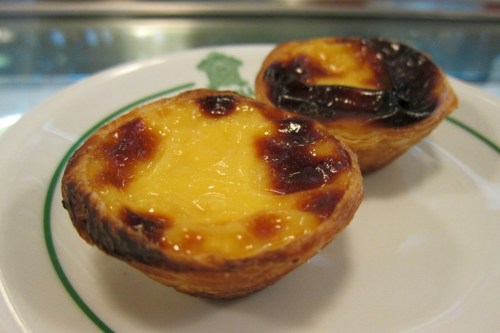
Versailles Pasteis

Pastelaria Versailles, conveniently located immediately above the Avenida da República exit at the Saldanha metro station, is a charming, old-world style (almost Parisian) cafe offering a wide variety of freshly-made pastries, as well as sandwiches and tea served by a jovial waitstaff that make this a great lunch spot, one of our favorites in Lisbon. As far as we can tell, pastéis de nata are not one of their specialties, and they have not appeared on any major rankings. But we found their pastéis to be magnificant examples: a perfect crust, with a delectable egg cream whose flavor we found to be second only to our overall winner. (And once again, if you go here, try to pastel de chocolate – a variation of the traditional pastel but with chocolate filling, a variety we saw almost nowhere else!)

Drumroll…..

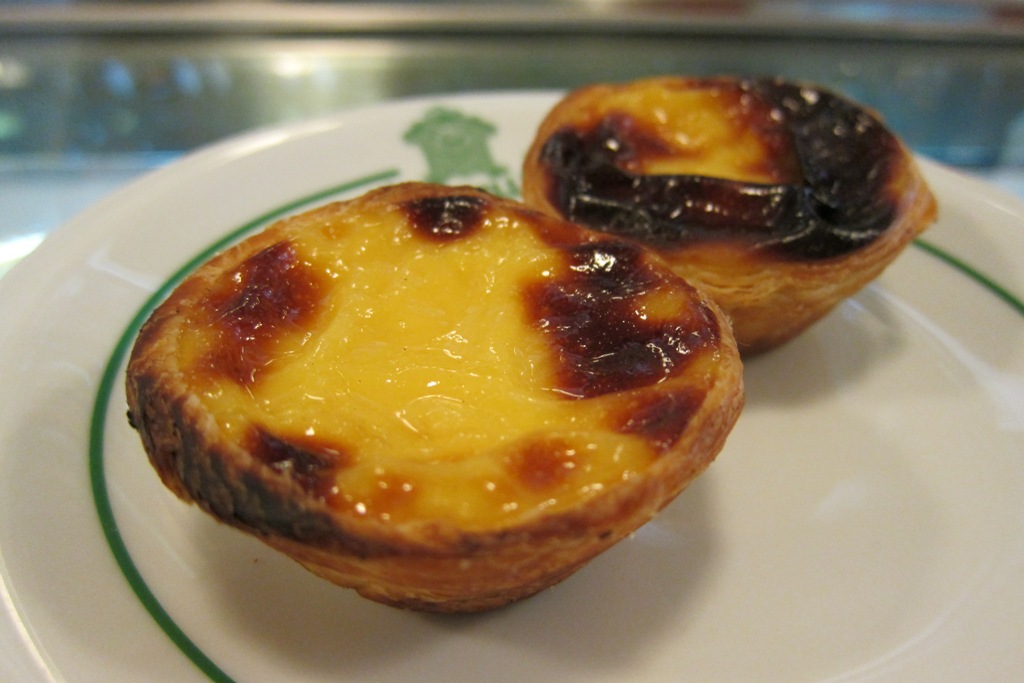
1. Chique de Belém
Rua da Junqueira, 524

Chique PasteisIn the end, this was not even close. If you visit Lisbon you will, at some point, find yourself admiring the architectural wonders of the Jerónimos Monastery in Belém. You will walk east on Rua da Junqueira, with the crowds, toward the front of the Antiga Confeitaria de Belém and you should, in our humble opinion, keep on walking. A few blocks further is the small, utterly charming, and fantastic Chique de Belém, easily our vote for the best pastel in Lisbon. Perfectly textured, elegantly flavored egg cream inside a crust with just the right balance of flakiness and support make this our go-to place for pastéis in Lisbon. In three visits and six samples we were shocked by the consistency of their output. Even better? Their outdoor seating area, right on the sidewalk, offers a view of Belém’s parks, where you can relax while the servers bring you the pastries of your choosing. And of course, you picked the pastéis.

14 Comments

Filed under Pastry Post-Poc

Portuguese Pastry Post-Doc: Travesseiros de Sintra

At first glance, Travesseiros de Sintra, seem to be the sugar coated cousin of pampilhos. The box below has both, so you can see their resemblance. Travesseiro means “pillow” in Portuguese, and I am not quite sure why this confection in particular gained the “pillow” name, though it appears that other renditions have a more rectangular shape. They are a specialty of the town of Sintra, which is perhaps better known for its castles and its queijadas, small cheesecake-like confections. Like the pampilho (and a majority of other Portuguese treats) , the travesseiro is full of egg custard – known as ovos-moles. However instead of cake layer, as in a pampilho, a travesseiro  is composed of puff pastry and covered in crystal sugar. If you are in Sintra, they are a classic of the Piriquita bakery. If you already a pro at ovos-moles – here is a recipe in Portuguese to try.

Pampilho And Travesseiro

A Pampilho de Santarém (top) and Travessiro de Sintra from Corte Ingles, Lisbon.

2 Comments

Filed under Pastry Post-Poc

Portuguese Pastry Post-Doc: Pampilhos de Santarém

Pampilhos are a confection from the Central-West region of Santarém, Portugal. They are little known outside of Portugal, though you can find them in Lisbon bakeries specializing in regional treats. A pampilho is a thinly rolled sponge cake filled with egg yolk cream called “Ovos-moles (soft eggs)” in Portuguese. It has a cake-like rather than a pastry texture, and is almost like a rolled crepe. There is little to no information on pampilhos in English, but here is a recipe for pampilhos in Portuguese translated to English, which also including directions to make the Ovos-moles sauce that is so essential to many Portuguese pastries. Of course the best place to get a pampilho is probably Santarém itself, where Pastelaria Bijou is famous for producing the treat.

Pampilho And Travesseiro

A Pampilho de Santarém (top) and Travessiro de Sintra from Corte Ingles, Lisbon.

Leave a comment

Filed under Pastry Post-Poc

Roast Chestnuts herald the arrival of Winter in Lisbon

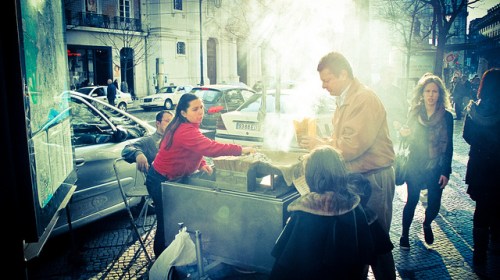
One sure sign that fall has arrived in Lisbon is the appearance of the roast chestnut vendors. As the holiday season approaches, they only become more popular. If the air is crisp enough, it is not uncommon for the Baixa area of Lisbon to be filled with smoke and steam from the roast chestnuts. The typical setup is a metal cart, as seen below, but there are some other nifty arrangements where the chestnut roaster is attached to the front of a motorcycle. For about 2€ you can get about a dozen chestnuts. The chestnuts are completely charred and perfect for staving off the winter chill, definitely a must-do for anyone visiting Lisbon in the colder months.

Chestnut vendors in Lisbon by Sr. Nefasto

Leave a comment

Filed under Holidays, World Eats

Portuguese Pastry Post-Doc: Pirâmide

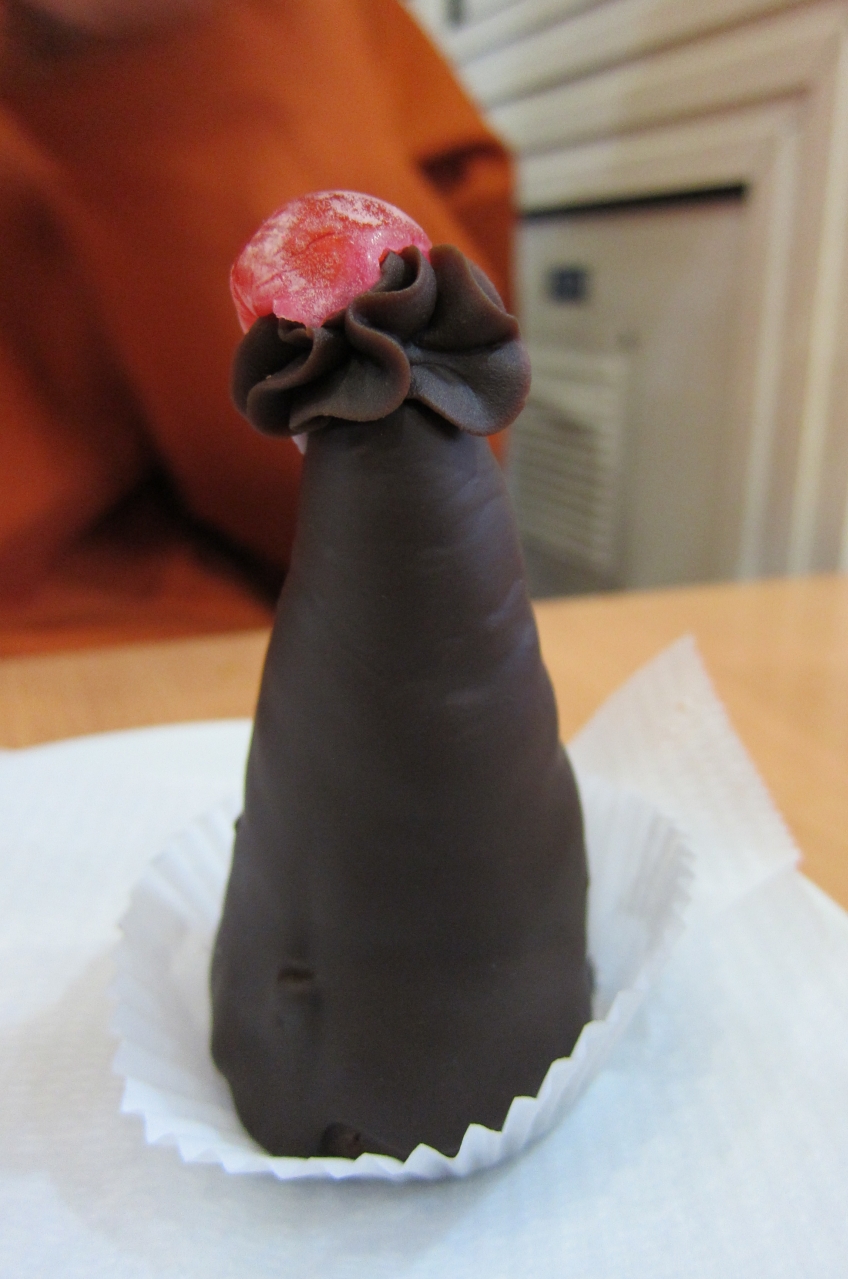
When we ordered this dessert at the Chique de Belém cafe in Belém, we had no idea what it was, but how can you turn down what appeared to be a chocolate cake covered in chocolate? A Pirâmide is obviously named for its pyramid shape and consists of chocolate cake with nuts and raisins or candied fruit, covered with a shell of dark chocolate and a cherry. Pirâmides can be made with other cakes than chocolate as well. I guess it is a good way to use up leftover cake (though when would that happen in this household?). Here is a recipe – in Portuguese – to make pirâmides.

1 Comment

Filed under Pastry Post-Poc

Portuguese Pastry Post-Doc: Gorreana Tea

You can’t have a proper pastry time in Lisbon without coffee or tea. So for the Portuguese Pastry post-doc, what could be more appropriate than a Portuguese tea to accompany some sweet snacks? Gorreana tea, from the Azores, is not only the Portuguese-grown tea, it is the only commercially-produced tea grown in Europe. The plantation was founded on the Ilha de São Miguel in 1883. According to their Portugese wikipedia page, tea was brought to the island by Macanese technicians in the 1870s, after it was decided that the mild Azorean climate would be perfect for  tea production. Currently, Gorreana produces Green Tea, Orange Pekoe tea, Black tea and broken leaf tea.

Gorreana Tea Plantation

Leave a comment

Filed under Coffee, Pastry Post-Poc, Tea

Portuguese Pastry Post-Doc: Cultura do Chá (Closed)

Cultura do Chá (Closed)
Rua do Norte, 31-33
Lisbon, Portugal

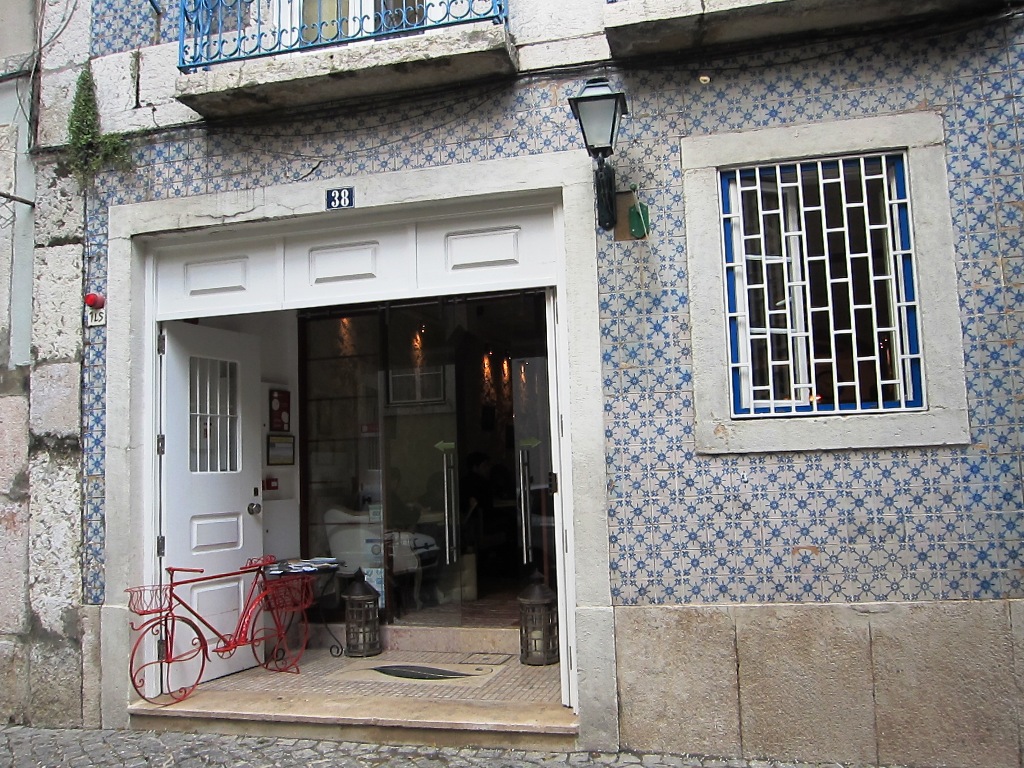
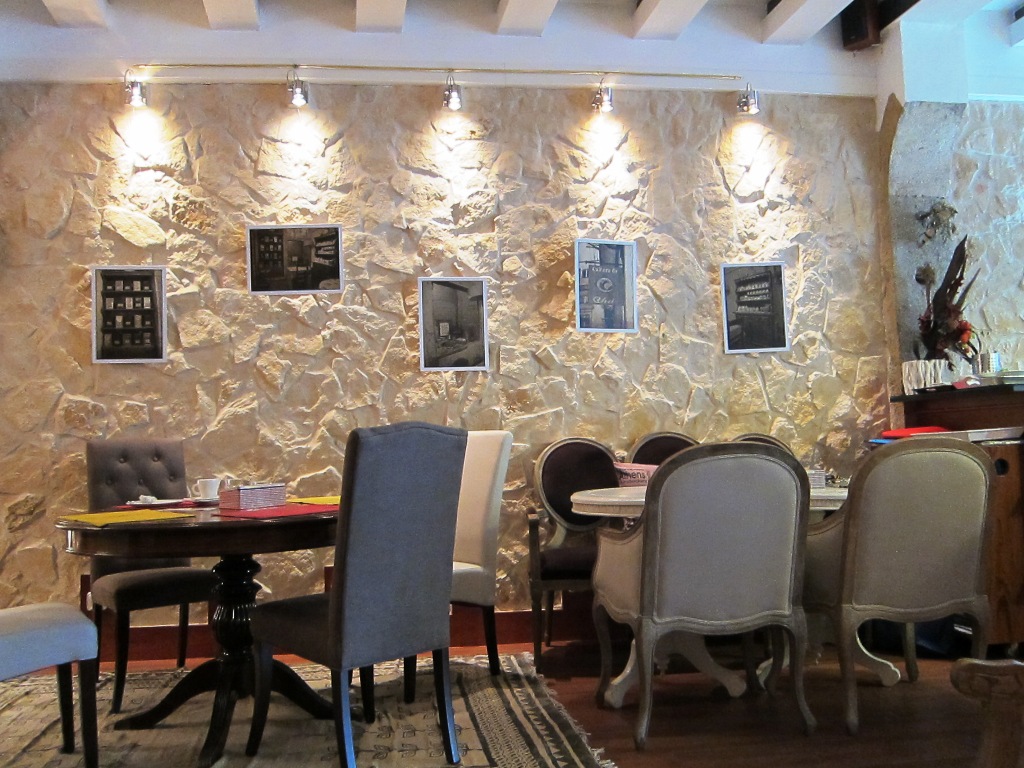
With our latest trip to Lisbon we figured out the way to truly enjoy ourselves is to go to cafes. One of the best and most inviting cafes we have encountered recently is Cultura do Chá (“Tea Culture”). Set back in a tiny alley in Chiado, Cultura do Chá is directly across from a giant bougainvillea tree – a red bicycle marks the entrance- you can’t miss it. Cultura do Chá is a small cafe, set in an old stone building covered with azulejos. This interior has stone walls and is full of nice antiques and artfully mismatched tables. Randomly, they also had the nicest bathrooms we have ever seen in a cafe – done with Asian inspired screens and even real towels. You really have to see it to understand.

After some initial confusion about the ordering process – find a seat? order at the counter? – we were directed to sit, on a lovely comfy couch, where we relaxingly perused a slate of Lisbon cultural magazines while waiting for the cafe’s lone server. The menu revealed the cafe’s focus on tea – you can get 30 varieties of tea, each for 1 or 2 people. We ordered a pot of tea for 2 (5€) of loose-leaf chocolate hazelnut tea. Kudos to presentation: cloth napkins, nice flatware, and a classy set of ceramic teapot and plates, which we not-so-secretly wanted to take home with us. We were also a fan of the cups: wide-brimmed and flat like a soup bowl, we actually found them very easy to manage and better at cooling the piping-hot tea so we could drink it sooner.

After tea, we looked at their small lunch menu of crepes, salads and sandwiches all for less than about 7 euros. L ordered the spinach quiche (4€) and M got a chicken sandwich (4€) with apple and balsamic vinegar (maybe some cinnamon, too?). Both came with a really nice and salad, simply dressed, but super-fresh. Both the quiche and the sandwich were larger than we expected for the price, and completely delicious.

To top off your meal, there are some delectable looking cakes in the window. Naturally, we partook in a large piece of chocolate cake, which came out in a surprisingly elegant presentation: house-made whip cream, and an artful swirl of chocolate sauce. Service was friendly, though at a leisurely pace, so prepare to savor your meal. Even at the somewhat late hour of 2 PM, the cafe was full of happy expats and Lisboetas alike enjoying a leisurely tea, and we agree that it seems like the perfect place for relaxation on a busy day. We will definitely be back: after all, we have 29 more varieties of tea to sample.

1 Comment

Filed under Pastry Post-Poc, Tea

Portuguese Pastry Post-Doc: Queque

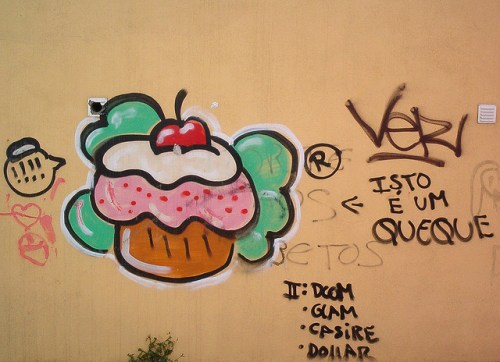
Though we visited one of the nicest cupcake shops in Lisbon, we figured the concept of the cupcake was imported to Portugal. However, we found the indigenous Portuguese version of cupcakes: the queque. Alternately described as “cupcakes” or “muffins,” queques are little cakes, typically yellow sponge cake with a hint of citrus, though they may also be chocolate. The typical shape of a queque is also a little different than a conventional cupcake, with ruffled edges, as seen in this Portuguese recipe. We found a pack of mini chocolate queques in the supermarket and we were extremely excited – a taste of home. Here is a recipe for basic queques in both Portuguese and English.

Queque graffiti in Portugal – by Graffiti Land

2 Comments

Filed under Pastry Post-Poc

Portugal: Joshua’s Shoarma Grill

Joshua’s Shoarma Grill
Vasco de Gama Mall ( Various Locations in Lisbon)
Lisbon, Portugal

We finally made it up to the Parque das Nações in the North-East of Lisbon, home to the city’s superb Oceanarium (we highly recommend it). When approaching the Parque das Nações from the metro you will encounter the super-modern Vasco de Gama mall, which was appropriately decked out for the holidays. At the top of Vasco de Gama is a food court, with tapas, stir-fry, a Brazilian kilo restaurant and some Portuguese chains, including  Joshua’s Shoarma Grill. We actually read about this restaurant in our copy of Cozinhas do Mundo em Portugal (“World Cuisines in Portugal”), and we figured it would be a good stop on our quest for Middle Eastern food in the heart of bacalhau country. Joshua’s Shoarma Grill is a basic fast-food endeavor, with a selection of beef and chicken shewarma, falafel and some Mediterranean-inspired salads.

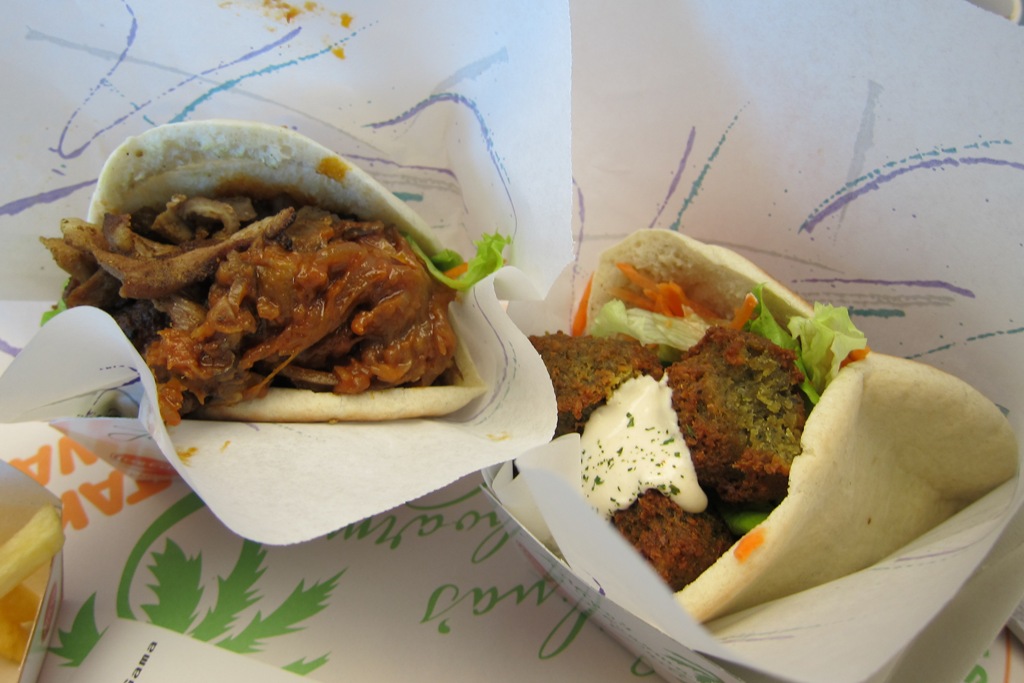
For about 7 euros apiece we each ordered a combo platter with a small drink and fries. True to type, M got the chicken pita and L got the falafel pita (we are creatures of habit). The funny thing about foreign fast food is that small fries and drink really does mean small (maybe 8 oz) – as opposed to an American “small soda” that is really 24 ounces. Very interesting. L enjoyed the falafel, though you can tell that they were not perhaps freshly cooked. M though his sandwich was way too greasy, unfortunately. The fries were a little limp and sad. A redeeming grace was the garlic sauce. Like Ali Baba Kebab, one of our recent finds, Joshua’s is a good place for a quick Middle Eastern fix. Overall L liked the falafel at Joshua’s better, but M decided Ali Baba Kebab was a better pick for carnivores. If you are in the vicinity of the Parque das Nações, prices tend to be a little inflated, so Joshua’s is a great pick for bargain hunters.

Leave a comment

Filed under Reviews

Portugal: Ali Baba Kebab Haus

Ali Baba Kebab 
Rua Palma, just south of Martim Moniz Square
Lisbon

We love Middle Eastern food, so we were definitely excited to find a few options in Lisbon (more reviews to come). Walking down Martim Moniz square, M’s eye was immediately drawn to the döner spinning in the window. In the words of Ron Swanson, a character from one of our favorite shows, Parks and Recreation, “There’s a hot spinning cone of meat in that Greek restaurant next door. I don’t know what it is, but, I’d like to eat the whole thing.” That was pretty much our reaction upon seeing the Ali Baba Kebab Haus.
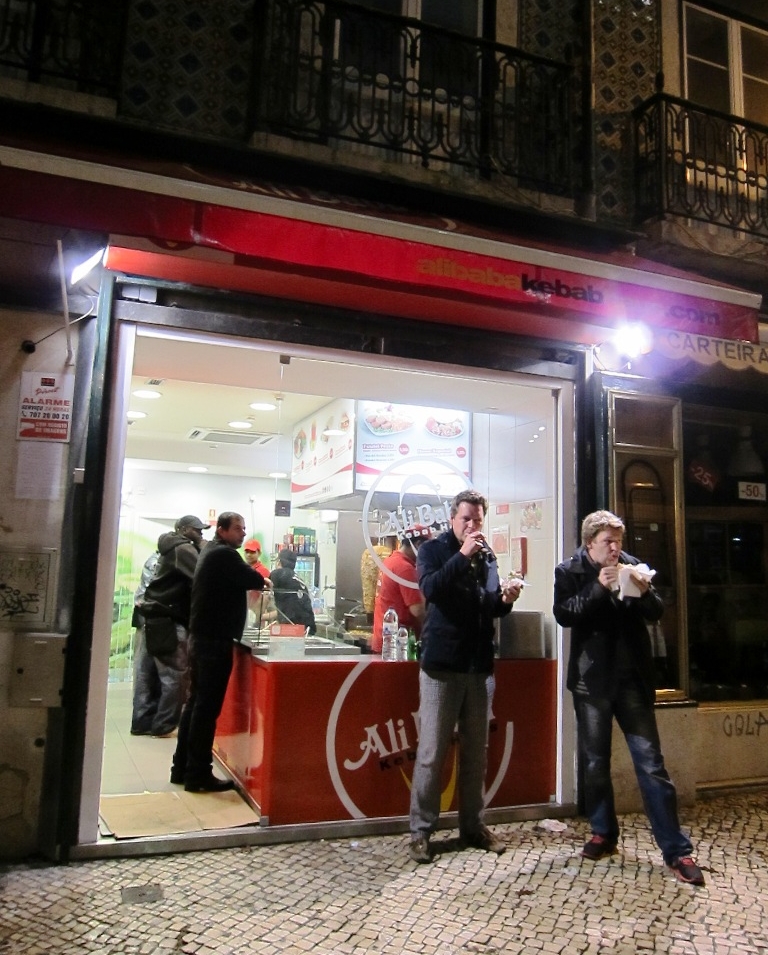
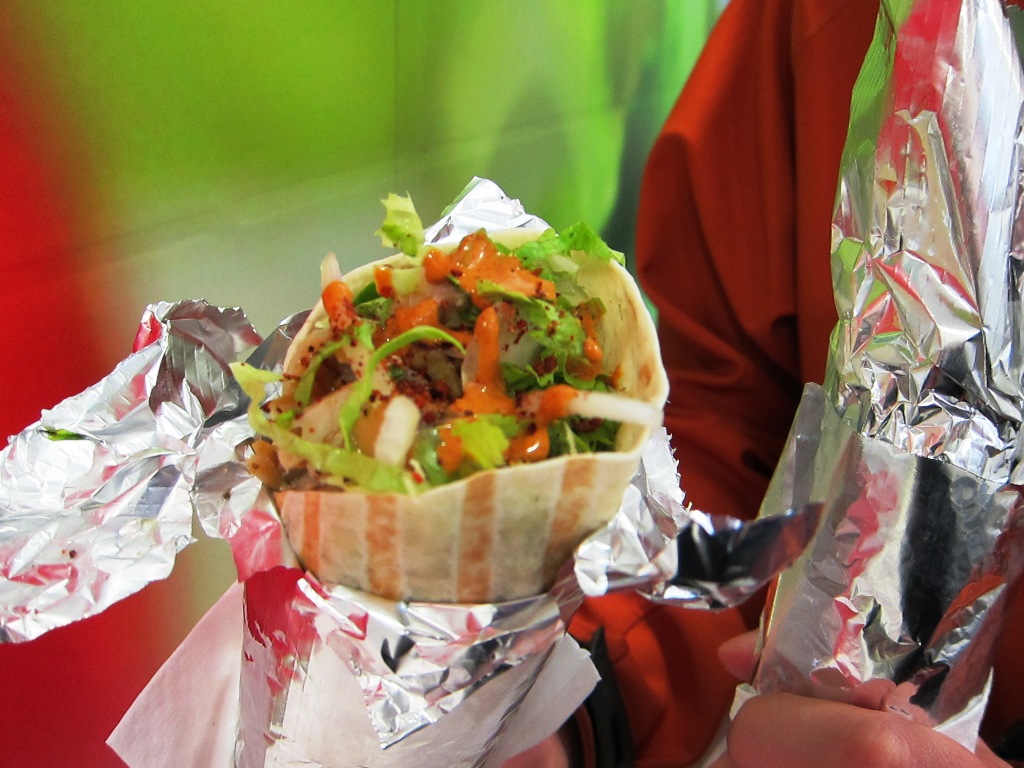
Unfortunately, we had just had dinner, so we vowed to return on another day. About a week later, before a night performance at the Dona Maria II National Theater in Rossio Square, we headed over to Ali Baba for a quick bite. When we arrived, the spot was filled with a fast-moving crowd composed of the local middle eastern community and a strong local/German tourist contingent (let us not forget the stunning popularity of döner kebabs in Germany).

Ali Baba serves Turkish food, and there are only three things on the menu: chicken döner, beef döner and falafel. You can get each filling option in a pita or a durum wrap, along with a side of salad or french fries. We each opted for a durum – M picked the chicken and L went with the falafel. All of these options are between only 3.5-6€. Once you pick your filling, you tell the sandwich maker what sorts of toppings you want, lettuce, tomatoes, onion, hot sauce (fantastic!) and garlic sauce (similarly awesome).

Fair warning – there are no tables, just a tiny stand-up counter in the very tiny store. No surprise, many people take the orders to go. M enjoyed his chicken döner, but found it a little greasy for his tastes. The Turkish-style falafel was tasty, and completely complemented by the garlic sauce. Though we had a little trouble eating the overstuffed durums at the stand-up counter you will definitely be hard-pressed to find a better cheap meal near Rossio Square.

1 Comment

Filed under Reviews

Portuguese Pastry Post-Doc: The Azores, Portugal’s Dairyland

It was surprising to see so many dairy products in Portugal with origins in the Azores (Os Açores), a small Portuguese archipelago located 900 miles from Lisbon in the Atlantic ocean. At first we thought that seemed terribly exotic – but it turns out that much of Portugal’s dairy comes from the Azores. Dairy production is the biggest industry in the Azores, and the archipelago is particularly verdant (see below). Azorean Immigrants also brought their dairy culture with them when they traveled to their new homes. One such area, Marin County in California, owes much of its dairy heritage to the Azores: “As late as the 1940s, there was a saying that a traveler from the Golden Gate to Petaluma would never be out of site of a Portuguese dairy.”

Dairy Pastures in São Miguel, Azores – by Tim Sackton

In our stay in Lisbon we have sampled Azorean milk, cheese and butter. Azorean butter is bright yellow – much brighter yellow than typical butter in the US – the color is due to lots of Beta Carotene from the fresh green grazing grass in the Azores. We just had some salted Azorean butter and even when spread on simple crackers you can tell the difference. The Azores are also known for the quality of their cheeses, and there are several cheeses with DOP protection, including São Jorge and Pico. So go figure, despite being smack dab in the middle of the Atlantic, the Azores are the Wisconsin of Portugal!

Leave a comment

Filed under Pastry Post-Poc