Tag Archives: Portugal

Portuguese Pastry Post-Doc: Salame de Chocolate

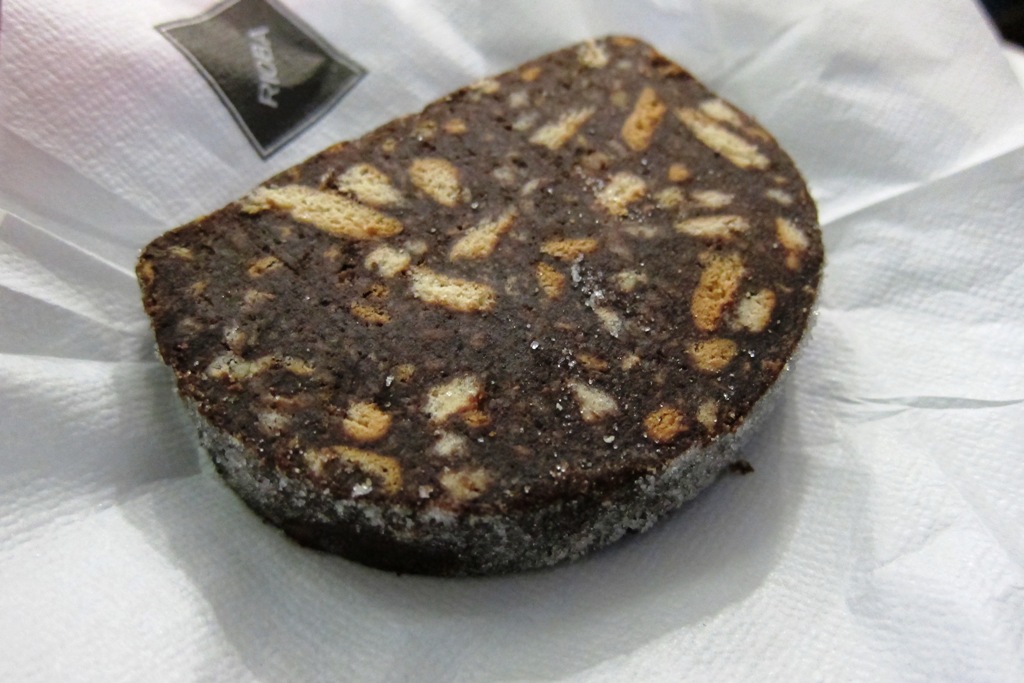
Much like Wafysugar, a watered-down version of Salame de Chocolate (“Chocolate Salami”) is found in typical Portuguese vending machines alongside staples like gum and soda. The name does truly sounds unappetizing, but despite its homely look, the dessert packed a delicious chocolate punch. Basically, chocolate salami is dark chocolate fudge filled with broken cookie pieces, and when the roll of fudge is sliced it resembles “real” salami.  M likened the taste to a chocolate doughnut, but L thought the taste was more fudgy than cakelike. However, true to Portuguese nature, it is SWEET, and relatively simple to make. As it turns out this is not a truly Portuguese dish, it is originally an Italian confection that caught on in Portugal. Though I’m sure M would prefer chouriço, my sweet tooth will take anything made of chocolate.


A Non-Vending Machine Version of Salame de Chocolate in Lisbon

1 Comment

Filed under Pastry Post-Poc

Portuguese Pastry Post-Doc: Tease

Tease
Rua do Norte, 31-33 (Has since moved to another location in Bairro Alto – Rua Nova da Piedade 16
1200-298)
Lisbon, Portugal

While the bakery scene in Lisbon may be dominated by classic cafes with gilded mirrors and eggy pastries, there is another breed of cafe cropping up in trendier areas of Lisbon, one more in line with contemporary culinary trends and tastes. One such shop is Tease, Lisbon’s go-to spot for cupcakes. Tease is located in the Chiado neighborhood of Lisbon, home to many of Lisbon’s newest clubs.

Tease is the brainchild of architect Sónia Millard and you can tell that every detail has been carefully considered. The interior of Tease is eclectic, with a mishmash of velvet armchairs, antique china and cool wall art. The glass bakery case was full of cupcakes, and there was also a variety of other baked goods and coffee drinks on offer.  Like many of the newer cafes in Lisbon, Tease also offers a complete brunch and afternoon tea. However, the main reason to visit Tease is for the cupcakes. Each large cupcake was 2.40€, and miniature cupcakes are 1.00€.

The day we visited, the cupcake assortment included red velvet, vanilla, fresh strawberry, cookies and cream, lemon poppyseed, among others. We ordered a cookies and cream cupcake, chocolate cake, which came topped with cookies and cream icing and an oreo. We were not expecting much (we are not too into cupcake bakeries as a rule) – but the cupcake was actually quite delicious. We loved the eclectic decor of Tease, the friendly service and the cute outdoor seating area. We would definitely recommend Tease to visitors and Lisboetas alike who are maxed-out on Pasteis de Nata.

Leave a comment

Filed under Pastry Post-Poc, Tea

Pão por Deus: “Trick or Treating” on All Saints Day in Lisbon

Trick or Treat? – By Chris Devers

They don’t have trick-or-treating on Halloween in Lisbon, but there is a similar tradition that occurs on All Saints Day, November 1st, called  Pão-por-Deus. Instead of asking “Trick or Treat” Portuguese children go door to door asking, “Ó tia dá bolinho!?”(Originally – “Ó tia dá Pão por Deus?”) Literally – does auntie have any cookies? Traditionally the children would get bread from the neighbors and shop owners they visited, though it is now sometimes substituted for cookies, change or candies. This also leads to the other name for the holiday, “Dia de Bolinho.” Kids collect goodies in special drawstring bags, saquinhos, that are often decorated with embroidery or patches. Unlike Halloween, children go asking for Pão por Deus before noon (no costumes are involved, either).

November 1st, in addition to being All Saints Day, is also particularly known in Lisbon as the day of the destructive  1755 earthquake. This particular event is seen as triggering the Pão por Deus tradition, as the city was  devastated and people had to go asking for food.  The first Pão por Deus was held the following year, and continues today, though there is increasing influence form “Halloween”-type traditions. The holiday is most popular around Lisbon, but has also expanded to Brazil.

1 Comment

Filed under Holidays, World Eats

Portuguese Pastry Post-Doc: Língua de gato

 One thing that makes a Post Doc in Portuguese Pastries difficult, but intriguing, is that most pastries are not labeled in Portuguese pastry cases, so you are always in for a bit of a surprise. Getting an assortment of sweets often involves a lot of pointing and asking “what is this called?” Case in point, what we dubbed “flat madeleines” at Cafe Versailles were in fact properly called Linguas-de-gato “Cat’s tongues”). Still, they basically tasted like a flat, buttery madeleine tea cake. The characteristic cat tongue shape is achieved by piping the batter onto a cookie sheet. Though homemade cats tongue cookies are usually simple ovals, the store-bought versions usually have more of figure-eight shape. There is also a chocolate with a cat tongue shape that goes by the same name, which is popular in Brazil.

The “cat tongue cookie” is also popular in France and Spain, as well as Latin America, where the cookie is known variously as “Langues de chat” or “Lenguas de gato.” The exact origins of the cookie are unclear, with Spain laying claim to them, and others crediting the French ladyfinger cookie as a predecessor. Despite their popularity in Portugal, they likely did not originate here. This simple recipe comes from Finland, showing the near-universal appeal of the cat tongue cookie.

Leave a comment

Filed under Pastry Post-Poc

Portuguese Pastry Post-Doc: Bolo de Arroz

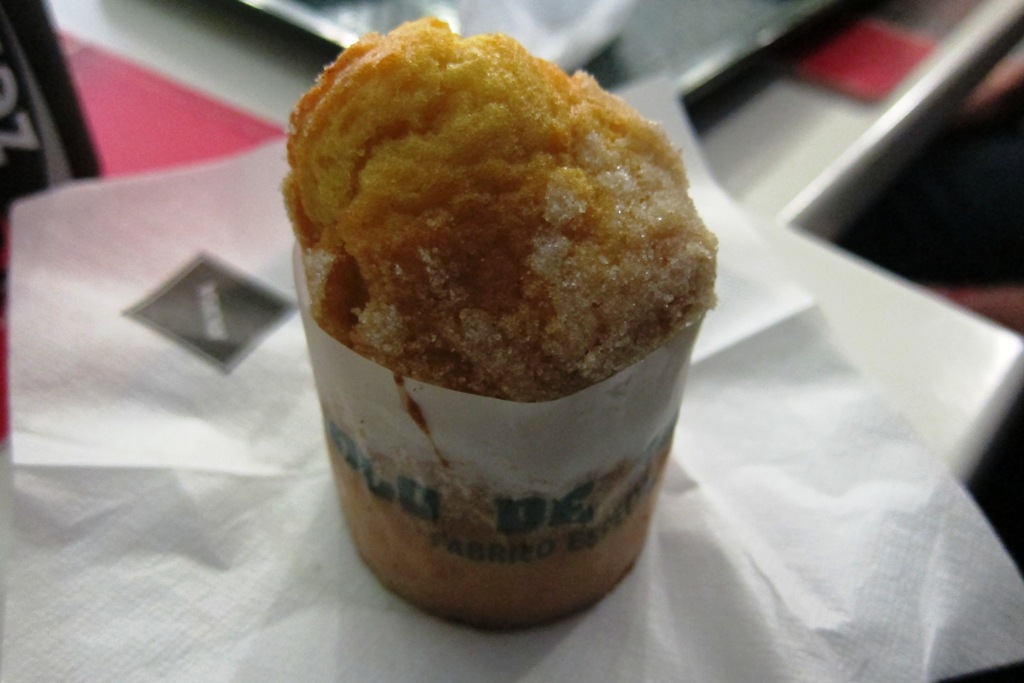
Today, for the first time we tried Bolo de Arroz – Portuguese rice muffins – another classic staple of the Portuguese bakery. We ducked into a small cafe to dodge the rain, and were super pleased to see these particular pastries on offer. Given the name, I was initially expecting these to have a mealy rice-pudding texture like arancine (don’t ask me why), but they were perfectly smooth and had a cake-like texture. The “rice” or arroz in the name just refers to rice flour. Instead of coming in a muffin liner, they are wrapped in little paper sheets that typically say “Bolo de Arroz (see photo below). The taste of a bolo de arroz is basically like an eggy cupcake, but with a hint of earthy rice flavor. Wordflux has a recipe for Bolo de Arroz, they don’t seem too difficult to make, the only special ingredient being rice flour. To add a little confusion, the Bolinho do Arroz, popular in Brazil, is a savory snack made from rice, like arancine.

1 Comment

Filed under Pastry Post-Poc

Portuguese Pastry Post-Doc: Wafysugar

What is sold in vending machines can tell you a lot about the culture of a country. Here in Portugal they sell waffles. When we first saw the “Wafysugar” in a subway vending machine, we did a double-take. It was the first time we had seen waffles in a vending machine, and waffles aren’t a popular breakfast food here, though they are pretty common in gelato shops. We love waffles and usually have them every weekend, thanks to a well-loved registry gift (sadly, our waffle iron is back across the Atlantic). Out of curiosity, and waffle withdrawal, we felt we had to try a Wafysugar after seeing them everyday in the subway. For one Euro, we figured it was worth a shot. The Wafysugar, billed as a “Gofre de Liege,” was about the size of a quarter of a Belgian waffle. Surprisingly, the ingredient list for the Wafysugar was not terribly long, containing mostly decipherable ingredients. It was a tad chewy, very sweet and though it did indeed taste like it came out of a vending machine, it was not entirely bad. Despite the relative palatability of the Wafysugar, we’ll leave the vending machine purchases to water and soda from now on.

Leave a comment

Filed under Pastry Post-Poc

Portuguese Pastry Post-Doc: Coffee from A Carioca

A Carioca
Rua da Misericórdia, 9
Lisbon, Portugal

Lisboetas loves coffee, and one of the best places to get fresh coffee beans in Lisbon is from A Carioca, a beautiful wood-paneled, art-deco store that is literally filled wall-to-wall with coffee beans, teas and candies. A Carioca is in the trendy-yet-historical Chiado neighborhood, near the most famous cafe in all of Lisbon, A Brasileira. You may note that both of these historic coffee venues have Brazil-themed names, a “Carioca” being an inhabitant of Rio de Janiero. Though Brazil is now the number one producer of coffee in the world, the coffee industry there did not take off until the 1930s.

You can get coffee beans at A Carioca by the gram in a variety of flavors – vanilla, hazelnut, chocolate – as well as single origin coffees and blends from all over South America, Asia and Africa. Note the very friendly-looking bright red coffee grinders (there is even a larger red coffee grinder in the front of the store). Despite looking like antiques, they are still put to use every day. In addition to coffee, A Carioca has sort of an old-time candy store feel, with glass jars of traditional penny candy. Tea is also on offer, including the only tea produced in Europe, Gorreana tea from the Azores.

Leave a comment

Filed under Coffee, Pastry Post-Poc

Portuguese Pastry Post-Doc: Pastelaria Versailles

Pastelaria Versailles
Av. da República 15A
Lisbon, Portugal

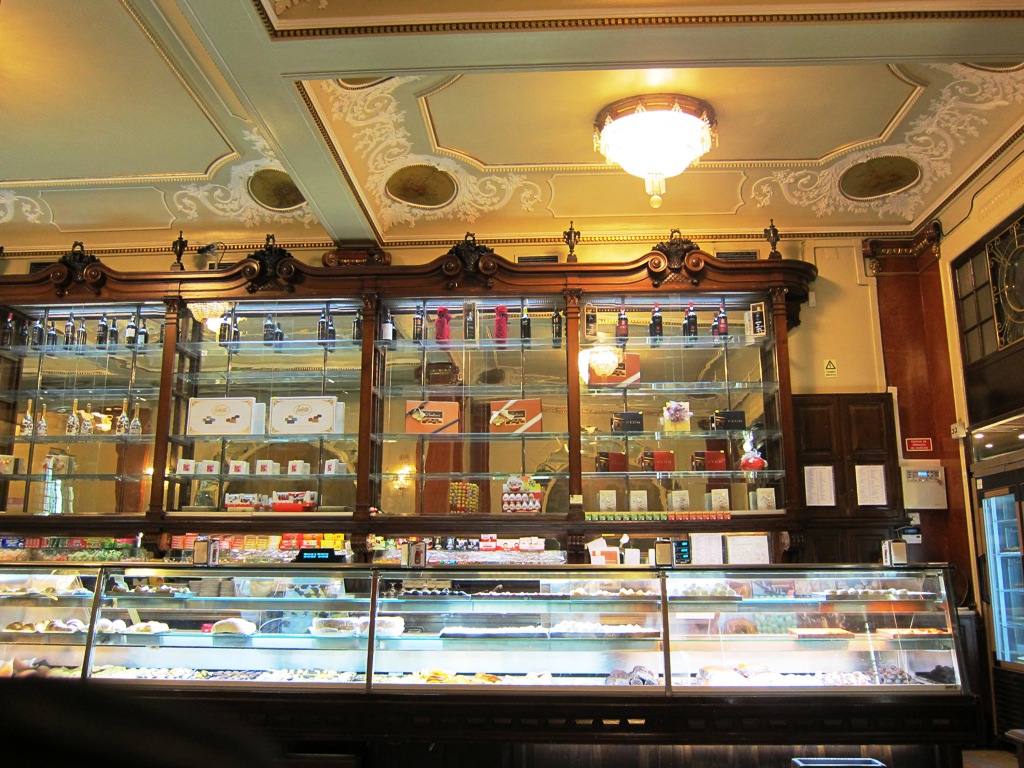
There is something about dining in sumptuous surroundings that makes everything taste a little bit better. Lisbon is full of lovely historical cafes, and Versailles is a stunning example of the slightly faded glory of old-school Lisbon. Pastelaria Versailles was built in the 1920’s and served as a sumptuous symbol of the Avenidas Novas (“new avenues”) that were built north of the historic center of the city. As befitting of the name “Versailles,” the cafe is filled wall-to-wall with gilded mirrors, chandeliers, checkerboard marble and floor-to-ceiling elaborate wooden display cases.

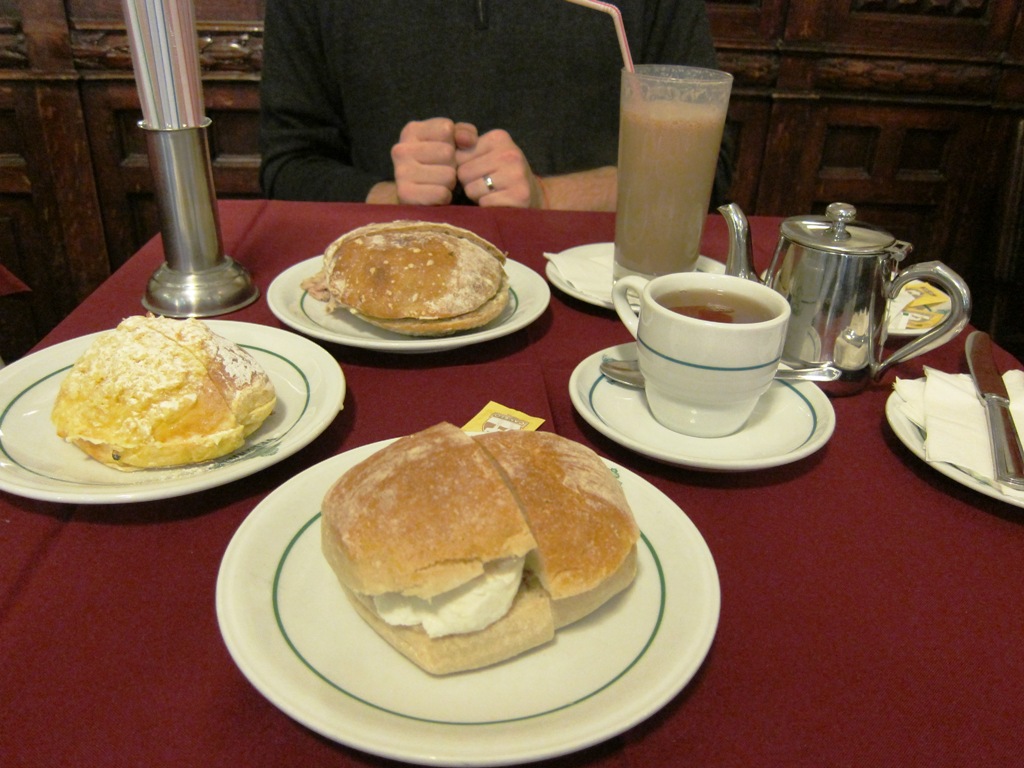
Though primarily a cafe, there is also a little mezzanine that has a more complete dinner menu for 12-25 euros featuring fish and steaks and various traditional Portuguese plates. However, we are cafe people, and opted for the simpler sandwich menu (which was intimidatingly long). There were a range of coffee drinks, batidos (milkshakes) and teas on offer  as well as little snacks like bacalhau croquettes and a series of sandwiches, all for less than about 4 Euros. One way in which we can tell that Portugal is serious about bread is the fact that each sandwich (with the same variety of a few options like bacalhau, turkey, cheese, tomato and even simple butter) is listed by the type of bread it comes on. We counted no less than 8 bread options for sandwiches.

M ordered a turkey sandwich on a Chapada role (which seems to be a cousin to Ciabatta). L ordered a Mafra sandwich with queijo fresco. The light and airy Mafra roll is native to the town of Mafra, just north of Lisbon, and has a slightly sweet flavor. For such a small price, we were surprised at the size of each sandwich, and were impressed with the quality and freshness of the bread. We finished up our meal with a delicate Pão de Deus and an elegant service of Versailles signature tea. The Versailles blend is a black tea with a mix of orange, cinnamon and vanilla, and tasted a little like a subtle citrus chai.

Naturally, we could not ignore the bakery case, which runs the whole length of the cafe. Though we arrived late in the day there was still a pretty good selection of treats, and we filled a box for the road. We selected an assortment of cookies, the names of which were not labeled. One we uncreatively dubbed the “Flat Madeleine,” which looked and tasted like a flat Madeleine cookie. The other was a chocolate Italian-style dipped cookie shaped like an acorn. But the pièce de résistance were the chocolate Pastéis de Nata. The Versailles Pastel had both requisites of an excellent Pastel de Nata: the custard and the flaky multi-layered crust, and with a hint of chocolate these were perfect! Cafe Versailles has quickly become one of our favorite cafes and we are excited to work our way through the pastry case.

2 Comments

Filed under Reviews

Portuguese Pastry Post-Doc: Pão de Deus

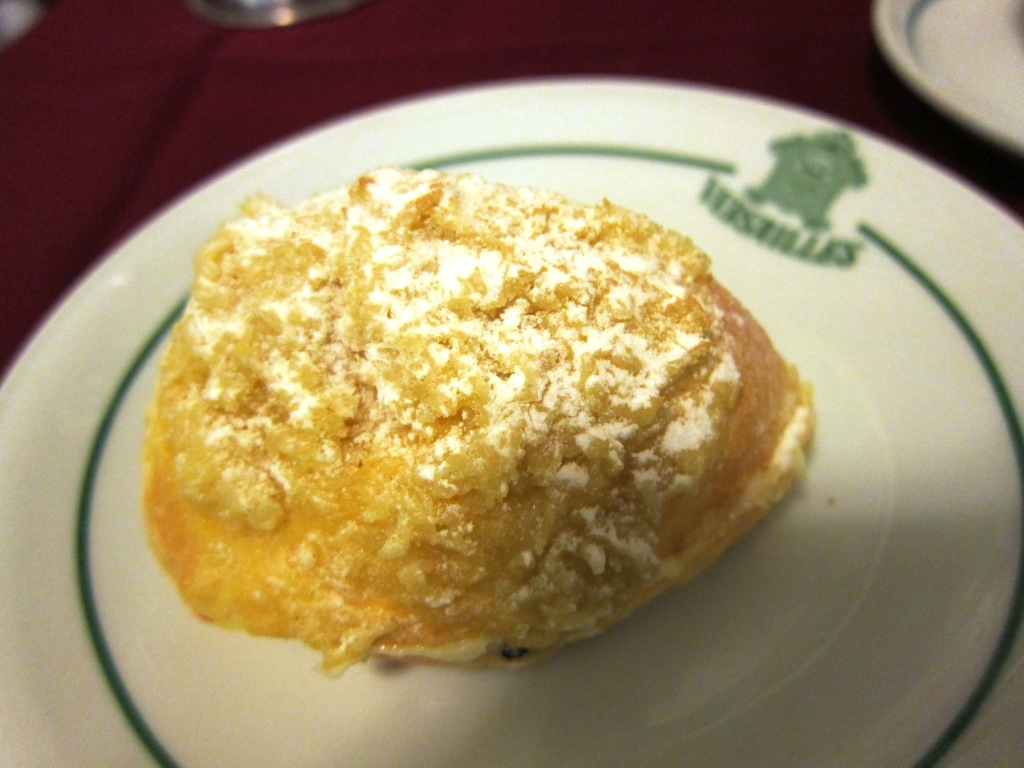
The pastries in Portugal are often  quite uniquely – almost poetically – named. Case in point – Pão de Deus – God’s bread.  Many of Portugal’s most iconic pastries originated in convents many centuries ago, perhaps accounting for the recurring religious allusions in pastry names. In appearance, Pão de Deus is somewhat more humble of a creation than its name implies. It is a sweet brioche roll with a topping of coconut and a shower of powdered sugar.  The coconut develops a gooey almost macaroon-like texture beneath the surface, and is pleasantly crispy on top. As seen below, the Pão de Deus we sampled from Pastelaria Versailles (review coming soon) came with a healthy slather of butter, and if you are feeling especially hungry you might even include some ham and cheese! Pão de Deus is a typical breakfast all across Portugal, though it is not very well known outside of the country. Home Gourmets has a recipe for Pão de Deus if you are feeling nostalgic for some Portuguese patisserie, or are looking to try it for the first time.

2 Comments

Filed under Pastry Post-Poc, World Eats

Portuguese Pastry Post-Doc

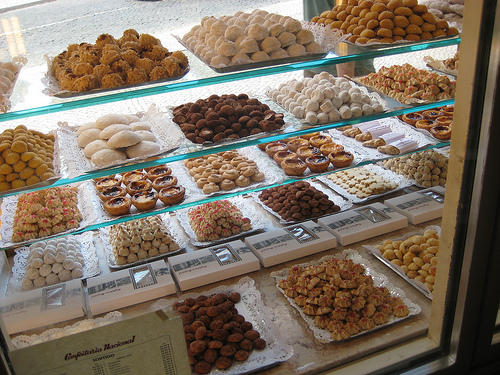
So ETW world HQ has been moved to Portugal for two more months, our second extended visit in the past year. The first time around, while we enjoyed the food, we were not blown away by Portuguese cuisine. However, we vowed to make our second visit more of a culinary success. In the first week alone, we have improved our food fortunes immensely by simply doing one thing: focusing on the pastries! Portugal is known for its pastries, many of which are found in elegant historical pastelarias or confeitarias. It all seems so simple in retrospect – the Portuguese are renowned for their varied pastries, cookies and cakes, many of which are impossibly rich and laden with eggs, butter and sugar – so why not focus on them? While I have written about Pasteis de Nata, the most iconic Portuguese pastry, Portugal has so much more to offer in the way of sweet treats. Since I (L) have recently finished my PhD, I am using these next two months as some much needed relaxation time. However, I can’t quite give up my researching ways, so I will be dedicating my research skills to Portuguese pastries. I call this new project my “Post-Doc in Portuguese Pastries,” and I promise I will leave no stone un-turned in my quest for the tastiest, most classic, most beautiful and iconic Portuguese desserts.

Pastries and Cookies at Confeitaria Nacional, Lisbon

Pastries and Cookies at Confeitaria Nacional, Lisbon

1 Comment

Filed under Note, Pastry Post-Poc

World Cuisines in Portugal: A Guidebook for International Foodies

On our first full day in Lisbon, after acquiring our monthly metro passes we decided to head downtown and reacquaint ourselves with Lisbon.  Surprisingly, we pretty much remembered our way around, and sampled a few Pasteis de Nata as we headed toward the Tagus River. Unfortunately, it started to drizzle unexpectedly ( and counter to weather reports) so we ducked into Betrand Livreiros, a bookstore in the Chiado neighborhood, to avoid the rain. Naturally, as we waited out the weather, we starting browsing for books. There was a pretty healthy culinary section with a bunch of global cookbooks – but one in particular caught our eye: Cozinhas do Mundo em Portugal (World Cuisines in Portugal). However, this was not a cookbook, but a guidebook! Along with descriptive information about various cuisines, typical ingredients and meal structure, the book listed restaurants in Portugal that specialized in each cuisine. While the book covered all of Portugal, there are many restaurants in Lisbon. Cuisines from Asia, Europe and Africa are represented, from obvious choices like Japan and Italy to the more esoteric Guinea Bissau and Luxembourg. There are even a few Irish pubs and American restaurants listed. We just couldn’t pass up this cool book, and it is now part of our growing travel book library in Lisbon. It is already littered with sticky tabs and we are well on our way to checking a few more countries off of the list.

Leave a comment

Filed under Books

ETW em Lisboa (ETW in Lisbon)!

ETW is in Lisbon until the Christmas season – and we are both excited to continue our European food adventures. Now that I am done with school, I have more free time, so expect some more regular posting. We’ve been having some great eating adventures in Chicago recently (particularly Brazilian ones), and even took a brief jaunt to New York City, so expect some reports. Here in Lisbon, we’ve already been on our first grocery run and got our first batch of Pastéis de Nata, though we are excited to revisit Pastéis de Belém in the near future.  Stay tuned!

We have missed you, little Pastel!

Leave a comment

Filed under Note

Portugal / South Africa / Mozambique: Nando’s Peri-Peri

Nando’s Peri-Peri
819 7th St NW
Washington, DC 20001

Nando’s is a South African restaurant chain with locations throughout DC and Maryland, serving up a signature Portuguese/Mozambican speciality: peri-peri (pronounced “piri-piri”) chicken. Peri-peri is the local name for an African Bird’s Eye Chili, grown throughout sub-Saharan Africa. How the pepper came to Portugal is a mystery, but eventually Portuguese and Mozambican (Mozambique being a former Portuguese colony) culinary exchanges gave rise to a peri-peri sauce made from the pepper. The sauce is a staple on southern African and Portuguese tables, and is applied liberally to chicken breast grilled over a spit: peri-peri chicken. Nando’s was founded by members of South Africa’s Portuguese-Mozambican community, and has since expanded to 30 restaurants on 5 continents. Unfortunately, they have only recently made inroads in the USA, and only in the DC metro area. That is unfortunate, Nando’s definitely hits the spot for your stateside peri-peri craving and is well worth a visit.

On a recent trip to DC, M visited Nando’s Chinatown location (hence the Chinese characters on the sign) – probably their most popular location in the city. Nando’s logo is a representation of the Rooster of Barcelos, the Portuguese national symbol, and appropriate here because the rooster’s large eye makes one think of the Bird’s Eye Chili.

Nando’s does an excellent job of serving up presumably fast food in an upscale setting. Wood paneling and good lighting make for a sophisticated interior, and a central plexiglas wall – actually filled with dried peppers – is a nice touch. The walls are decorated with original works from South African artists, part of Nando’s ever-expanding art collection (now 4,000 pieces) which also offers scholarships to young artists back in Africa. The uniqueness of the food and their commitment to the arts really made me want to like this place, so it is lucky the food delivered.

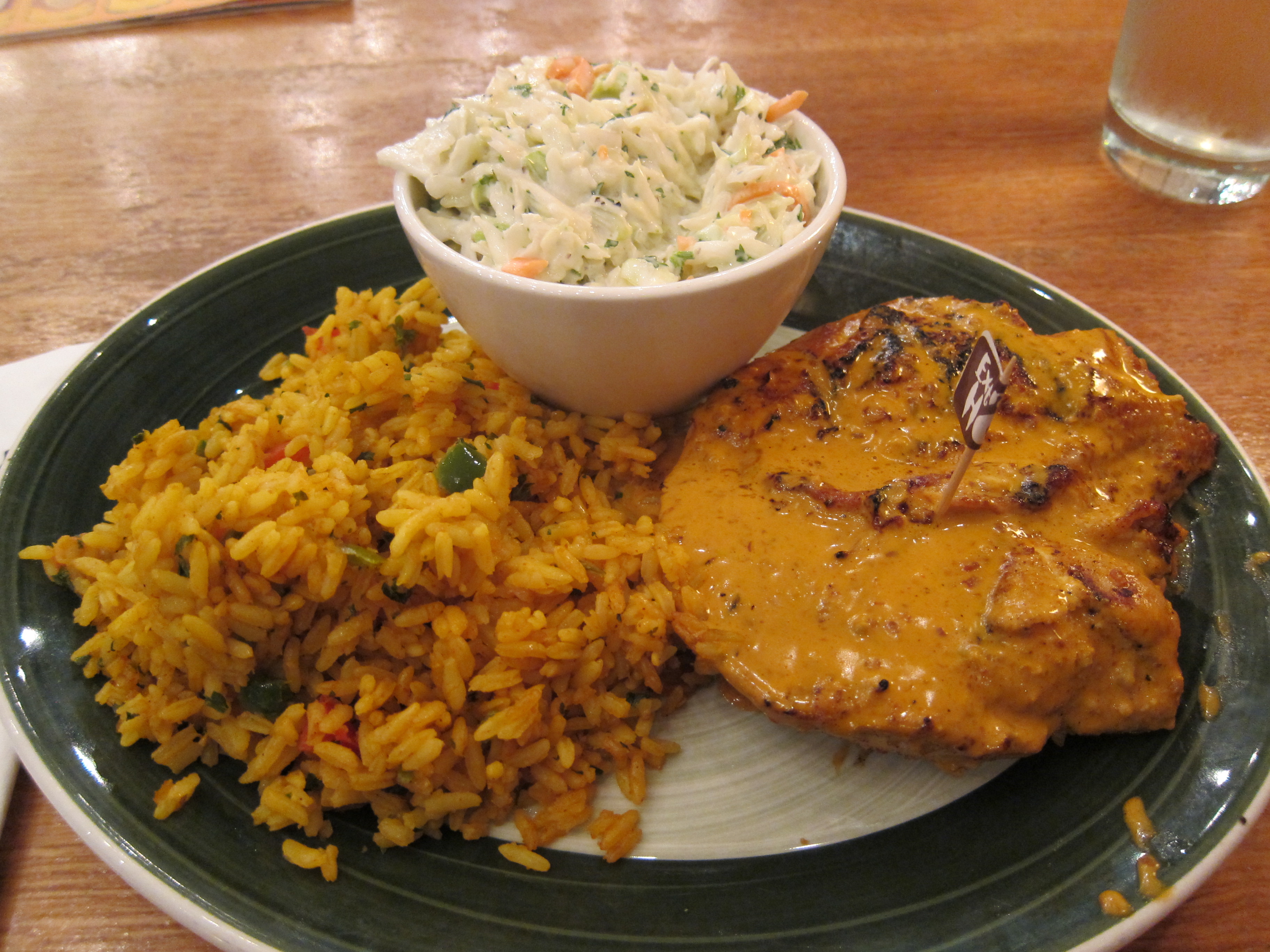
For the relatively upscale vibe, the ordering is simple. You can choose from many entrees, but if we are being honest (and we always are) there is no point in getting anything besides the chicken: pick a half or whole breast, choose your spiciness level, and choose between 0 and 3 side dishes. I selected the extra spicy chicken (of course), with sides of Portuguese rice and a mayo-heavy coleslaw, to reduce the heat from the chicken if need be. After ordering they give you a cute table marker and you proceed to your spot, waiting for the food to be delivered to you.

The chicken was – and I cannot overstate this – perfect. Grilled to perfection with just the right amount of marinade, Nando’s then lathered on the peri-peri to add the extra heat I requested. But the flavors come through as well: peri-peri is a complex sauce, loaded with spices and contrasting flavors, and Nando’s variety brought out all the high notes from the pepper as well as the other ingredients. I thought these paired nicely with the rice, which was satisfying though underwhelming. I probably would not get the coleslaw again: it was very good as far as coleslaw goes, but the menu was correct in suggesting it would cut off the heat, which it did almost too well. Next time, I’d order something not as heavy as a side, reserving the slaw for less spice-inclined diners. Overall, for under $15, this was a steal for a weekday lunch. I hope Nando’s is able to expand and open up more locations in the USA, because they would do well given their business model. But if they stray from their signature sauce and effective grilling as a result of the expansion there will be major issues. I’m just thrilled to see good, fast, transnational cuisine like this making inroads in the USA – for now, if you are in the DC area, definitely stop by for a great lunch!

3 Comments

Filed under Reviews

Global Easter Recipe Roundup

Easter may be over, but that doesn’t mean that you can’t make holiday-themed food (and we aren’t going to be retiring our Peeps-shaped muffin pan). In that spirit, we have a roundup of some international carb-heavy Easter recipes for your enjoyment.

Leave a comment

Filed under Holidays, Links, Recipes

Merry Christmas Bacalhau!

If there is one constant in Portuguese food it is the mighty, iconic Bacalhau. This Portuguese salted cod is found nearly on every traditionl Portuguese menu – often in dozens of preparations. It is in fact rumored that over 500 canonized Balcahu recipes exist in Portuguese cuisine. Some of the most popular Bacalhau dishes are Bacalhau com Natas and Bacalhoada, but there is a Bacalhau recipe to suit nearly every taste.

Christmastime is an especially important time for the Bacalhau – as it is traditionally eaten on Christmas Eve by Portuguese families. Bacalhau can be found in many forms – filleted and dried, in cans, and even frozen is gaining popularity. We were also amused to find specal  “Christmas Bacalhau” for sale. Basically these are the normal splayed, dried and salted bacalhau, but wrapped in cellophane and topped with a red bow. We thought this was a one-off, but we actually saw this festive gift-ready presentation in several Lisbon stores leading up to Christmas.

This calls to mind the Italian tradition of the feast of the seven fishes, which we have written about previously. In Italian, Bacalhau is called Baccala, and sorry to say we do not much care for that either, perhaps betraying our Italian heritage a bit. But, bacalhau is the real heart of Portuguese cuisine, and if you don’t at least try it – you are missing out! You never know when you will need that 7th fish dish for the Feast of Seven Fishes.

Leave a comment

Filed under Holidays, World Eats

Christmas in Portugal: Bolo Rei

Bolo Rei on display in Lisbon

In Portugal, one of the signals that the Christmas season has arrived is the arrival of the Bolo Rei (King Cake), a yeast-baked cake flavored with nuts and fruit and topped with a heaping helping of crystallized fruit. Eaten in Portugal until Kings Day (Jan 6), the Bolo Rei is nearly identical to the King Cake that is popular for Mardi Gras in New Orleans. Like a King Cake, the Bolo Rei has a small trinket inside (traditionally a fava bean, but in more modern times, a charm), a practice which has now actually been outlawed (boo!).

The Confeiteria Nacional in Lisbon credits itself with introducing the Bolo Rei to Portugal in the 1800s. Throughout Portugal there are Bolo Rei being sold by every corner bakery, in all sizes. However, if you are not currently in Lusitania, there are many recipes available for Bolo Rei. Another Variation on the Bolo Rei is the Bolo Rainha – without crystallized fruit.

1 Comment

Filed under Holidays

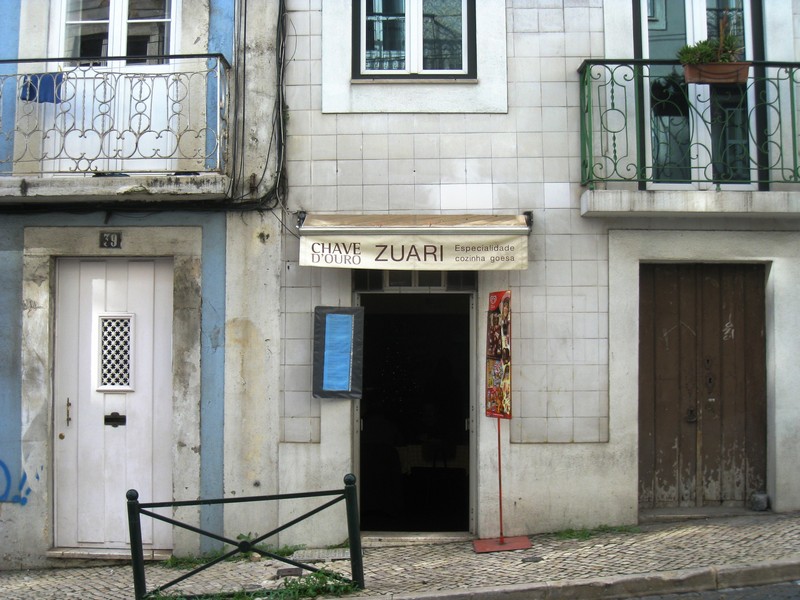
Zuari: Goan Cuisine in Lisbon

  Zuari
R. São João da Mata 41,
1200 Lisbon

“Dois pessoas, por favor.” When Orlando, the 34-year owner of Zuari, one of Lisbon’s most acclaimed Goan restaurants, heard our request for a two-person lunch seating, he seemed confused. He looked around the completely empty restaurant, and an immediately frustrated look came over his face. “It’s all full!” We walked past empty table after empty table, as he directed us to a tiny little table in front of a door leading to the kitchen. Apparently the only available seating? Who else was there – ghosts? At noon on a Thursday?

No matter – we had seats, and we wanted to eat. Lisbon is probably one of the best locations for Goan food outside of the former Portuguese colony turned Indian state, but as with any establishment, we were worried that the owners had changed the dishes to conform to more sensitive, even muted, Portuguese tastes. Luckily, we were wrong. For starters, the menu was encouraging: entirely in Portuguese. Few tourists coming this way, apparently – far from the city center and the metro, that’s usually a good sign. Orlando patiently explained the menu to us, as we had never heard of “Sarapatel” before. He spoke quickly, and M caught words like carne (meat) and pedacos (pieces) of linga (tongue) and a quick statement that “tudo e bom” – it’s all very good. He then scurried away, finally explaining the reason he seemed so frazzled: a big party was going to start there in about twenty minutes.

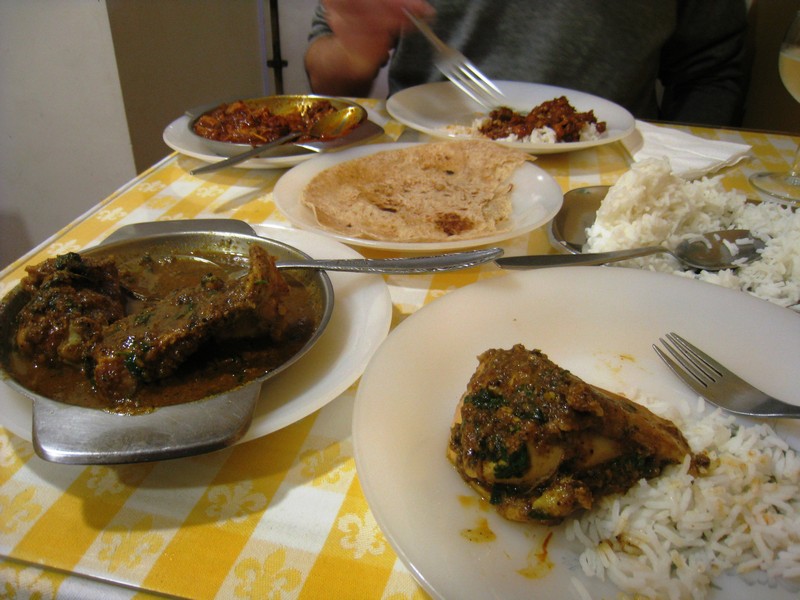
In we put the order: a bottle of water, two sides of white rice. For a starter we went with the obligatory Apas, a type of bread unique to Goan cuisine ( €0,75). It has a texture similar to a very thin version of naan, and a similar flavor, yet somehow manages to remain thick and hearty. L tried to Chacuti de Galinha (€7,00), a type of chicken curry with coconut milk and “spices.” A few taste tests later, and we could detect mint, cumin, coriander, cardamom, and black pepper. A slight spicy kick with a fantastic flavor profile, and three pieces of chicken – the real stuff, still on the bone – was more than expected. M went with the Sarapatel (€7,00), a mix of diced and pulled pork and tongue, simmered in a spicy – very spicy – and flavorful sweet tomato-based sauce. The texture and taste reminded us of a very spicy version of Carolina barbecue pulled pork. Regular readers of the blog will know how we feel about that! Plus, the spice level was one of the few dishes ever to satisfy M’s Scoville scale requirement, and he didn’t even have to make a special request!

The only disappointment of the day was that Zuari was out of their famous mango ice cream, due to the party preparations. We would have liked to try it, but the unexpectedly complex flavors in our dishes, combined with the great price – €20,00 for the whole meal – made this easily our best meal in Lisbon thus far.

2 Comments

Filed under Reviews

Discovering Portuguese Cheese

We’ve been in Lisbon for two weeks now, and have noticed the cheese and meat shops we expected to be so plentiful, well, aren’t. So, we have been searching around to find some good cheeses, and managed to pick up two at a small grocery store close to home on Lisbon’s far north side. They have a small, but well-stocked, meat and cheese counter, along with some bubbly-personality butchers and cheesemongers, which always make a purchase better.

Our first splurge was Castelo Branco, a semi-hard goat milk’s cheese named for the town where it originated in west-central Portugal. Castelo Branco packs a strong, pungent punch dispersed in a crumbly texture. It’s far too strong to eat on its own, but does make a great complementary flavor with something softer, like a simple salad or a pasta. We found it worked particularly well with a simple pesto pasta, which we have made a few times since we’ve been here. (M also decided to throw in some chouriço, but that is a different story).

Opening the refrigerator door every day and catching the wafting smells of the castelo branco made us opt for a slightly more mild second cheese. We opted for Flamengo, a semisoft cow’s milk cheese that is a staple on Portuguese sandwiches. It’s inoffensive, nutty, tasty, and melts very well – especially on grilled cheese sandwiches, we discovered. Flamengo usually comes in a red wax package, wrapped in red plastic or foil. Our brand was Terra Nostra (pictured right).

Over at CataVino, Andrea Smith has a great user’s guide to Portuguese cheeses that did a great job enlightening us to some of the finer points. Most interesting for us, Flamengo – Portuguese for “Flemish” – is actually a copy of Dutch edam (we knew it tasted familiar!).

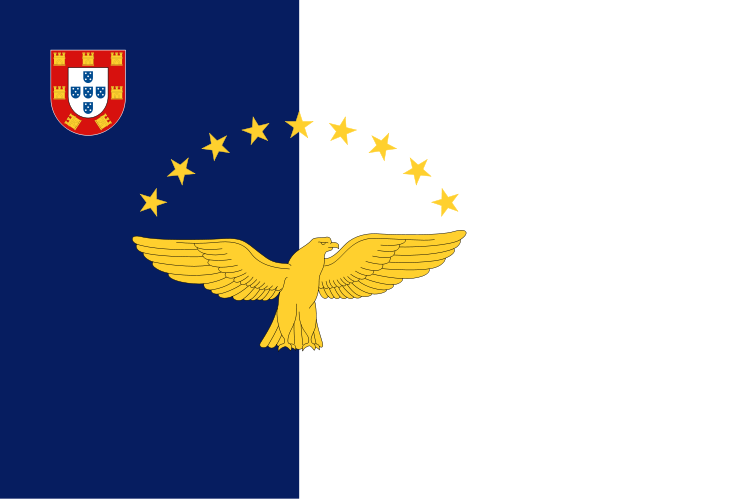
And for those of you link-obsessed readers who clicked on all the links from this post, you will have noticed that our brand of flamengo is noted as “Natural dos Açores.” Does this mean we have officially eaten Azorean food? We think so. So with apologies to the hard work of Anthony Bourdain and his crew, up goes the flag!

1 Comment

Filed under Cheese, Reviews

Pastéis de Nata

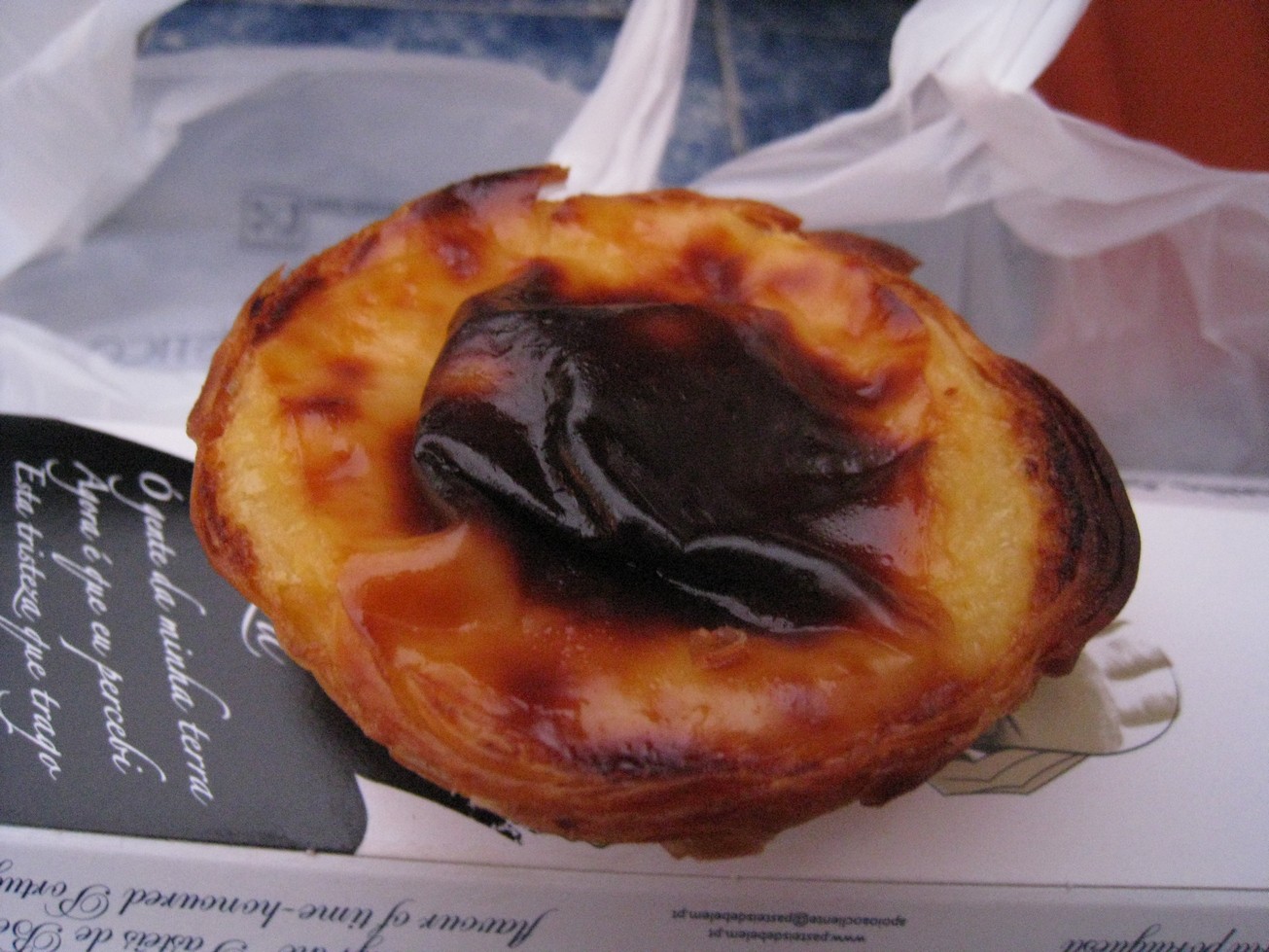
One of the most iconic treats in Portugal is the little Pastel de Nata (Plural Pastéis) – a custard tart similar to a creme brulee in a phyllo shell. But that’s too simple of a description – it really is a completely different thing! However, the same delicious effect of caramelized sugar is the same, as you can see below.

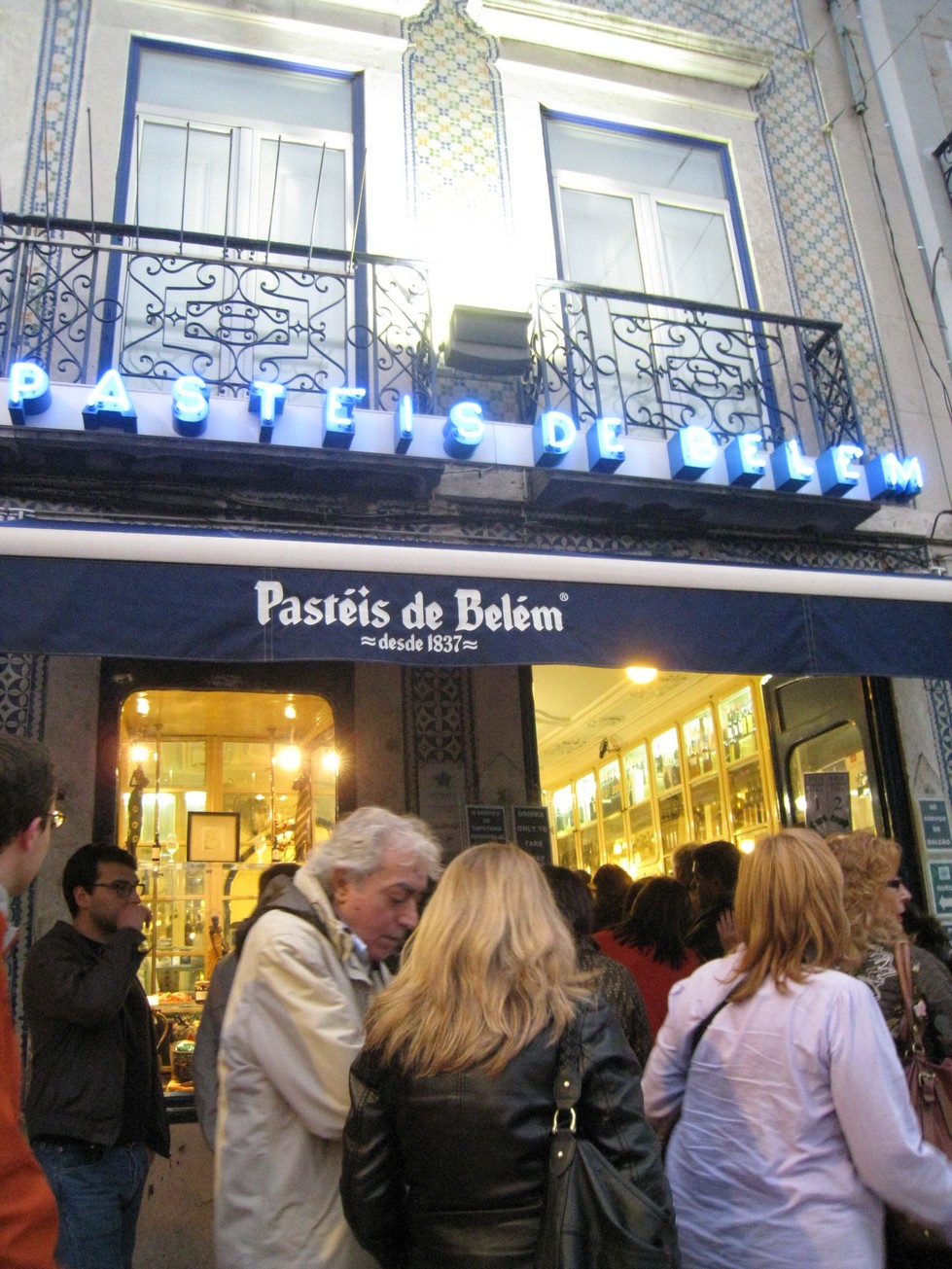
One of the best places to get Pastéis de Natal is at the obviously-named Pastéis de Belém (Rua de Belem, 84, Lisbon). This place is a pure madhouse, with a huge line going down the block at nearly all hours (it is open to 11 or 12 PM every day). Below is a picture of the scene when we arrived – and this is just to To-Go line. There is also inside seating, where you can get a full range of coffees with your Pastéis  but there was even a huge queue to get seated there. Each Pastel is 95 cents, but common orders in the To-Go line (which moved shockingly fast) seemed to be in multiples of 6 – since they make pre-packed boxes of 6 to go. Insider tip – we ordered 4 Pastéis – but they gave us a box of 6. We figured it would only have 4 inside – but it had 6! We don’t know if this was because they didn’t notice, or that turnover was so high and fast that they just didn’t care. Maybe it’ll work for you too! The 6 little 3″ tarts were surprisingly filling, and were fresh out of the oven.

It really is quite an operation, and we can’t even imagine how many Pastéis get made in a day. David Leite has an inside look at the operation, here. Turns out that The Pastéis de Belem are trademarked and are considered the original Pastéis de Nata (which is now used as a  more generic name for the Belem custard tart). Of course there are many other places in Lisbon to get Pastéis de Nata, one of the other most famous being the Confeiteria Nacional in the Baixa (Praça da Figueira 18B, Lisbon). But in truth, nearly every bakery in Lisbon has their own rendition, supermarkets too. There’s no way to get to Lisbon and not enjoy a pastel or two, or a dozen. You can try to make them at home, with some delicious but challenginglooking recipes. But in our experience home renditions of custard tarts are never the same!

5 Comments

Filed under World Eats

The Salinas (salt marshes) of Portugal

portugalThe New York Times has a fascinating article on how salt is made the traditional way in Portugal. Artisinal salt makers using salt marshes called salinas are reviving centuries-old traditions, as most salt-making goes large-scale and commercial.

Leave a comment

Filed under Links