Category Archives: Reviews

Masouleh, Northern Persian Cuisine in Chicago [Closed]

Masouleh [closed]
6653 N. Clark St.
Chicago, IL 60626

flag_of_IranWe’ve driven past Masouleh on Clark a thousand times, but it was only when we were seeking a spot for a low-key date night that we actually popped in – and we are glad we did. Named after a picturesque town in Northern Iran, Masouleh specializes in northern Persian food, a new regional specialty to us. Masouleh is a family place, and attracts a wide swath of neighbors, locals and Persian families making the special trip. Masouleh is not too fancy, but just a little bit romantic if you have a low key significant other (nice touch: flowers and candles on the table!).??????????????????????????????? The menu at Masouleh  is small and straightforward. You will recognize many of the main dishes from other restaurants, however we were also pleased that they had Northern Persian specialties. We started off with a cucumber and yogurt salad, which M devoured too quickly to be photographed. For mains we got fesenjan ($13) – chicken with ground walnut and Pomegranate sauce, served with rice (pictured below). The dish was simple, but hearty, and the sauce took on a deliciously creamy flavor.

For the second entree we decided to do a little something different. Every day there is a northern Persian specialty, and on that day it was an intriguing salty/sweet dish: Gheimeh Nessar, which is made of beef stew marinated with onions, saffron, split peas, sourberries, pistachios, almonds and orange peels served with white rice. The flavor combination had the potential to be overpowering but it was actually perfectly spiced and delicate. Both of our entrees came with a huge variety of side dishes, certainly more than we expected: pita bread, feta cheese with tomatoes, and a cup of the soup of the day, a hearty lentil. We were positively and pleasantly stuffed, but we decided to make a little room for dessert.

??????????????????????????????? To finish our meal, we ordered Persian Ice cream($3), which was flavored with rose water, saffron and pistachio. Maybe a little too much rosewater, but still very tasty. The table next to us got some tempting-looking baklava, and we are looking forward to trying that next time. We highly enjoyed our dinner at Masouleh, and we can’t wait to try some more Northern Persian food. If you’re looking to impress your foodie date, this is the place!

1 Comment

Filed under Reviews

A real Brazilian steakhouse experience: Porcão

Porcão
Avenida Infante Dom Henrique
Rio de Janeiro, Brazil

brazilGermany plays Brazil today, and while we still hope the Canarinho can pull it out, Neymar’s injury and Thiago Silva’s suspension means this may be our last chance to highlight Brazilian cuisine before the end of the World Cup. In the United States, as well as Germany, it seems, the idea of Brazilian food usually conjures up the picture of a giant buffet with roving gauchos serving up meat on skewers. Fine cuts of meat are less Brazil-specific than they are at home in the broad swath of land between Argentina, Uruguay, and southern Brazil – the land of the gauchos. Nevertheless, large transnational chains like Fogo de Chão and Texas de Brazil are responsible for popularizing this concept of Brazilian cuisine, which has now gained global popularity. But while we were living in Rio de Janeiro, we were curious if Brazilian steakhouses are the same or similar in Brazil. On many a carioca’s recommendation, we decided to head to Porcão, a high-end churrascaria north of Botafogo bay so large it has its own exit off of Infante Dom Henrique. Turns out, while beef is only a very small slice of Brazilian cuisine (think of fancy steakhouses representing all of US cuisine abroad), the experience at Porcão was very, very similar to those you would find in the United States. There were a wider variety of cuts of meat – Matt’s favorite anticuchos (hearts) come to mind – but overall, we have to say we were a tiny bit disappointed the experience was not more different. Don’t get us wrong, the food was excellent. But trust us when we say when you go to the Texas de Brazil or the Fogo de Chão in Chicago you are are getting basically the same experience (minus the Portuguese, of course).

???????????????????????????????

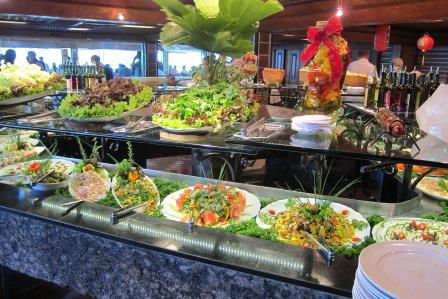
You know the routine. You pay a set rate for the meal (at the time we went for lunch it was R$110; about 55 US dollars, and then you stuff yourself on the lavish salad bar and buffet. Then, you return to your seat and wait for the roving guacho to come around with particular cuts of meat that suit your fancy. And come they did, as always: every cut imaginable, overall of a wider variety and a bit saltier than you find at US versions. This Porcão was quite large, and seemed to cater to the business executive crowd, who hosted clients and co-workers for marathon meat-eats.???????????????????????????????

The salad bar, was of curse quite extensive, and consisted of various salad fixings, fruit and veg, a small selection of cheeses and bread. Again – no pão de queijo – basically a food crime against humanity. There were some winners at the salad bar though. We really enjoyed the mango and goat cheese salad. One major difference from the US, though is that at Porcão, there was no fish or chicken – only beef. Now, there was basically every type of beef under the sun, but if you don’t like beef you are pretty much out of luck. Sides were only so so, perhaps a little better in the American rendition of the Brazilian steakhouse.

???????????????????????????????

However, where Porcão excelled was in the atmosphere. Most of Rio does, of course, and you simply cannot replicate it at a strip mall in suburban Chicago. In this particular location, the natural setting also plays a big role. Diners here are treated to a very cool view looking out on Sugar Loaf over Botafogo Bay (above). In fact, we don’t think we’ve ever been to a restaurant with quite so nice a view. So fans of the Brazilian steakhouse experience in the US – rest assured that your beloved meat skewers are very much a Brazilian thing – but you may not get quite the authentic view.

2 Comments

Filed under Reviews

Blue Seal, the original Okinawan Ice Cream

JapanOur World Cup coverage continues with an unexpected cross-cultural treat from Japan. Okinawa, Japan may not be first place you think of when you think of ice cream, but it turns out the island is crazy about it! Ice cream came to Okinawa with American troops in WWII, but became a trend that lasted much longer. The main purveyor is Blue Seal, originally founded to provide troops with a taste of ice cream from home, but eventually the ice cream became available island-wide, where it has gained quite a following. There are flavors that Americans would be familiar with, as well as Okinawan flavors like sugarcane, bitter melon and purple sweet potato. Blue Seal-branded cafes are found all over Okinawa, and now even in Tokyo, too. Softserve is more popular in Japan, but Blue Seal definitely holds the top spot for American-style ice cream.

Blue Seal Ice Cream

Blue Seal Ice Cream by Jason Poon

Leave a comment

Filed under Reviews, World Eats

Costa Rican Chocolate Makes a Comeback

500px-Flag_of_Costa_Rica_(state).svg Mario Balotelli, the Azzurri‘s star striker, was born in Sicily, in our minds the undisputed capital of chocolate production in Italy, and one of the few places you can find chocolate produced in Europe based on ancient Mesoamerican recipes. Yet Italy’s opponents today, the Ticos of Costa Rica, now hold claim to an ancient chocolate renaissance of their own. Chocolate has been grown in Costa Rica for thousands of years, and was considered so valuable it was utilized as a medium of exchange prior to the arrival of the Spanish in the early 1500s. Cacao plantations were common fixtures across the country until the 1970s, when a fungus called monilia began to decimate the crop. Nearly 90% of Costa Rica’s cacao crops succumbed to the disease – but now they are making a comeback. The Tico Times provides the exciting (and well-researched) narrative behind the work of Costa Rica’s Tropical Agricultural Research and Higher Education Center (CATIE), and their work to cultivate strains of cacao resistant to the fungus. The resultant work has led to a boom in Costa Rican chocolate, made all the more popular by the country’s commitment to fair working conditions and environmental sustainability (which cannot be said for production practices in other major cacao production centers, especially in western Africa). Now, visitors to Costa Rica have many different ways to experience the country’s resurgent chocolate culture, from chocolate tours and agricultural volunteering, to a wide range of chocolate-influenced foods, to just tasting the offerings at a respected retailer like Sibú. We are lucky enough to be heading to Costa Rica in December, so we will definitely experience as much of the new chocolate culture as we can!

wide-1000-12

Rainforest Chocolate Tour sign just outside Arenal Volcano in Costa Rica.

Leave a comment

Filed under Reviews

Eating at the Maquis, Côte d’Ivoire’s Favorite Spot

cote_divoire1In a few minutes, Les Éléphants will square off against Colombia in Group C, with a win by either team sending them to the knockout stage. In Abidjan, and likely across all of Côte d’Ivoire, Ivorians will watch the game at one of the city’s countless maquis: a small, open-air restaurant that serves as a go-to meeting place for locals. Developed in Ghana around the 1950s, the maquis is now an indelible part of the Ivorian cultural landscape. Anyone visiting Abidjan will find maquis packed not only with locals, but with some of the best home-made offerings of Ivorian cuisine. Maquis can also be found throughout West Africa, from Mali to Burkina Faso, as well as further afield wherever Ivorians have gone – you can find them in Geneva and Paris. Indie Travel Podcast provides a great breakdown of the history of the maquis, the range of Ivorian classics on offer, maquis eating etiquette, and some suggestions for the best maquis to try while in Abidjan. Based on their recommendations, we would definitely hit up Poulet aves les doigts (“Chicken with the Fingers”, a maquis in Abidjan’s Treichville district serving up mouth-watering chicken and alloco, a classic Ivorian snack of fried plantains served with chili peppers and onions. Maybe Côte d’Ivoire and Colombia can swap plantain preparations recipes after the game?

Women grilling fish at a maquis in Abidjan.

Women grilling fish at a maquis in Abidjan (via Courrier International)

Leave a comment

Filed under Reviews

Agua y Sal: Adventures in Mexico City’s Best Ceviche

Agua y Sal Cebicheria
Campos Elíseos 199-A
Polanco C.P. 11560
Mexico, D.F., Mexico

Mexico FlagAgua y Sal (“Water and Salt”) is widely acclaimed as one of the best seafood restaurants, if not one of the best restaurants in general, in Mexico City. We wasted little time in placing it on our list of “must-trys” in Mexico City. While (as will be demonstrated in forthcoming posts), we really came to the D.F. for street food and markets, the lure of some of the best ceviche in a great ceviche country was too much to pass up. And Agua y Sal delivered: from flawless Mexican service, to adventurous and innovative ceviches, to the fresh seafood necessary to pull them off, this was a treat well worth the high (by Mexican standards), but not unreasonable, price.

???????????????????????????????

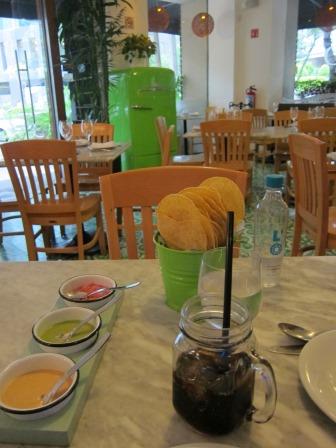
We walked to Agua y Sal following a day of wandering through Chapultepec Park (and taking it all the sites at the very impressive National Anthropology Museum). Located just north of the park, in Mexico City’s swanky Polanco district, Agua y Sal presents an initially surprising first impression: a marriage of upscale ambiance and casual dining. A green 1950s refrigerator and hipster-style mason jar serving glasses would be much more at home in Wicker Park than Mexico City’s version of the Chicago Loop; but somehow it all works. Less surprising is that the service at Agua y Sal is flawless: attentive without being overbearing, quick but not rushed, and, like any good non-US restaurant, they let you linger without the check long after you’ve finished eating. Our waiter, whose name we sadly didn’t write down, was the best we’ve had in some time. On his and our recommendation, we decided to start and finish with the Cebiches Tasting Menu, a selection of four of the restaurant’s [supposedly] finest ceviches, priced at 185 pesos (about US $15). Check out the photos and descriptions of each below.

???????????????????????????????

Agua y Sal places an emphasis on fresh and unique flavor combinations, while paying homage to the classics. Take a look at the menu, and you can see the restaurant emphasizes its particularly impressive array of sea salts to be paired with each of its ceviches. As we learned during our time in Portugal, sea salt can make or break the dish, bringing out certain flavors while diminishing others. They certainly did on our first course, the Atun. An interesting ceviche of tuna in a tamarind sauce, the tamarind is well balanced with accompanying cucumber, red onion (always), avocado, and cuaresmeño chiles (a variety similar in spice to a jalapeño, but with milder flesh like a poblano). Using this chile instead of the jalapeño is a smart choice against the powerful tamarind, and all the flavors were brought together by their other smart choice of a little black Hawaiian sea salt. While this was not our favorite ceviche of the evening, it could have gone terribly awry in less competent hands.

???????????????????????????????

Our second ceviche was the restaurant’s namesake, Agua y sal. One of our constant problems with Mexican ceviches in the past has been their overall lack of leche de tigre, but at Agua y Sal in general, we were pleased to see them using classic Mexican and tropical flavor profiles without sacrificing the precious liquid that makes ceviches of all kind such a treat. The Agua y sal showcases fresh shrimp and chopped mango in a sauce of pineapple and cuaresmeño chiles. Add red onion, peanuts, sesame seed oil, and a bit of Maldon sea salt flakes, and this is a great dish to showcase Mexican ceviches alongside a readily drinkable leche de tigre.

???????????????????????????????

At this point it is difficult to make a classic Peruano ceviche that really impresses Matt, so Agua y Sal can be forgiven for not blowing us away with its rendition of the coastal Peruvian classic. But they did a very good job. Halibut always seems to be a better choice than tilapia, and their choice was soft and spot-on. Red onion, cuaresmeño chiles, and cilantro accompanied the ubiquitous cancha (Peruvian corn nuts), corn kernels, sweet potato, and Peruvian Andean sea salt. Rarely do the corn kernels and nuts make their way into the ceviche proper, but we were interested by this technique of adding a little liquid to the typically dry corn nuts. A very solid rendition.

???????????????????????????????

But the big winner and unexpected star of the night was the Veracruzano. Arguably the simplest ceviche of the bunch, this one packed bold and sophisticated flavors that married perfectly together. Grouper – an odd and excellent choice of the main fish – balanced against a sauce of cilantro,  jalapeño chiles (for extra flavor), cucumber, red onion, and sea salt from Guerrero Negro in Baja California. The sweetness and refreshment of the cucumber was a great complement to the peppers and sea salt. This was a big winner, and we would order it for our main appetizer next time!

Overall, we would highly recommend Agua y Sal to anyone in for some ceviche in the notoriously landlocked and smoggy Mexico City. Refreshing, light, and airy, you can linger here for a while; and when you are done, spend some time in Chapultepec or the gorgeous branch of the Pendulo bookstore in Polanco. We’ll be back on our next trip to the D.F.


Leave a comment

Filed under Reviews

The World Cup of Sausages

The World Cup is only just a few days away. Of course, we will use this global event as yet another way to highlight some of the lesser-known and more delicious foods from all around the globe. For a first little taste, why not check out Bon Appetit’s list of top sausages from every country represented in the cup, from Croatia’s ćevapi to Mexico’s chorizo to Algeria’s merguez!

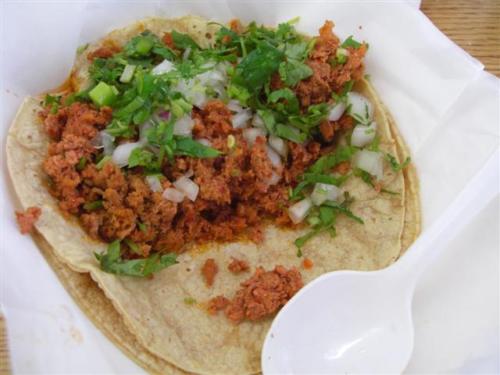
chorizo taco

A chorizo taco in Chicago

Leave a comment

Filed under Reviews

Zapotec Cooking in Oaxaca with Reyna Mendoza

Zac xtili! Reyna Mendoza had carefully explained to us how to say “Good morning” in the Oaxaca valley dialect of Zapotec only ten minutes before, but we were still having problems. Luckily Reyna, a native speaker of both Zapotec and Spanish, did all of the talking. On this day, our last in Oaxaca, we were lucky enough to be the only two participants in a cooking class with Reyna. A widely-known authority on the cuisine of this region, and a spectacular chef in her own right, Reyna has spent the past nine years hosting cooking classes that showcase what she terms El Sabor Zapoteco – “Zapotec Flavor.” A lifelong resident of Teotitlán del Valle, a small town outside Oaxaca City primarily known for its families of tepate weavers, Reyna takes her students through the sites and sounds of the local market – where valley Zapotec is spoken almost exclusively – as well as the careful preparation of some classic Oaxacan ingredients using traditional methods. In this context, “Zapotec” flavors does not necessarily connote pre-Hispanic dishes – the majesty of Oaxacan cuisine in general comes from its careful negotiation across Spanish and indigenous ingredients and techniques – but rather largely pre-Hispanic preparations. The jaw-dropping numbers of different molcajetes, earthenware comales, and stone metates in Reyna’s kitchen alone emphasize her insistence on using ancient preparation techniques to impart flavors one cannot get with other preparations. One then leaves her class with a quite different relationship to the food.

???????????????????????????????

Class starts at the local market, which showcases meat and produce from the immediate valleys, as well as more exotic imports like apples (shipped in from Washington state). As is true throughout most of Mexico, it is considered very rude to take photos of locals, so we stuck to shots of food while using the three Zapotec words we learned.

???????????????????????????????

No Oaxacan meal is complete without quesillo, a soft white cheese that can be crumbled on top of, or stuffed inside of, seemingly anything you want. Its mild flavor pairs well with many stronger ingredients. Packed hand-made fiber wheels and wrapped in string, this cheese has evolved over the centuries from when the Spanish first brought cheesemaking to the Americas. On this day, we would use a small wheel of it in preparing flores de calabaza rellenas de queso – squash blossoms stuffed with cheese.
???????????????????????????????

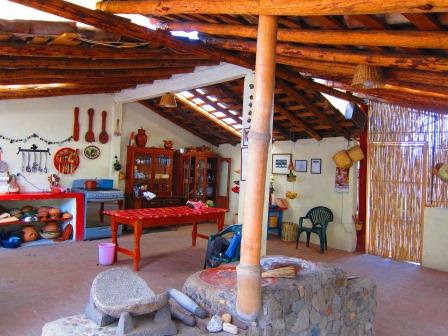
Having picked up our ingredients at the market, Reyna brought us back to her absolutely spectacular kitchen. Half outdoors, bright and colorful, boasting a set of kitchenware to make anyone jealous, and to this day the only kitchen we’ve seen that incorporates two hammocks (for when you pass out after a big meal), it is our dream space. Swoon.

???????????????????????????????

No cooking before chocolate! Oaxacans do love coffee, but historically, and to a large extent still, they begin their days with a cup of chocolate prepared in a green-glazed cup, and then frothed with a molonillo, a type of wood whisk that can be easily purchased in any Oaxacan market for between one and two dollars. Making the chocolate usually involves breaking pre-made bars into hot water or milk, and then frothing it with the molonillo. The chocolate bars used for our drink were made, by hand, by Reyna’s mother.

???????????????????????????????

Some of the slew of ingredients for our day of cooking. Dried ground corn; coarse sugar and cinnamon sticks; dried red pasilla chiles; purple tomatillos; tuna fruits, the product of the nopal cactus; garlic; cilantro; small Oaxacan avocados (there are many different cultivars, each with their own flavors – the photo actually shows two different types); and a side view of a concha, a classic Mexican pastry always paired with morning chocolate.

???????????????????????????????

Even more of our prep table: sea salt; the quesillo we purchased from the market; ground bread crumbs; a bundle of fresh squash blossms (widely used in Oaxacan cooking), and at the far right you can see a peak of epazote, a very distinctive green herb, and some guajillo chiles.

???????????????????????????????

This area makes us jealous as well. Reyna’s kitchen features two large clay comales, a type of shallow cooking surface used in this region for centuries. Reyna’s are heated manually using a local type of bamboo. You can use the comales for any variety of uses: heating up tortillas, roasting dried chiles, or toasting dried corn. At right, a stone metate will eventually be used for grinding toasted dried corn.

???????????????????????????????

Reyna showing off her very impressive metate skills. Reyna’s kitchen had at least ten different metates, each one with a different use. While the one she is using in this photo is for corn, the smaller (and exuberantly decorated) one at left is used for preparing chiles that have been dried, smoked, and then soaked in water. Note how the corn one has a very rough surface, while the chile one is both smaller and smoother.

???????????????????????????????

So, we made the executive decision not to show you, or describe to you, much more of the cooking preparation. On one hand, arriving at around 10am, we cooked for a few solid hours to make a four-course meal that left us completely stuffed. It would just be too much to show! But at the same time, we don’t want to share the recipes. While Reyna does give out small recipe booklets to everyone who takes her classes, you really should go to Oaxaca and experience it for yourself; indeed, some of the dishes simply cannot be made without the methods and materials Reyna uses. If nothing else, go for the table preparation: somehow while we were cooking, Reyna and her sister magically set up this lunch table for us. Already on the table are a roasted pasilla and guajillo salsa, and a very refreshing cold drink of tuna juice, the aforementioned cactus fruit that is a popular flavoring throughout the Oaxaca valley. We were also served some very fine, very smooth, and very strong mezcal, paired with orange slices and spicy salt.
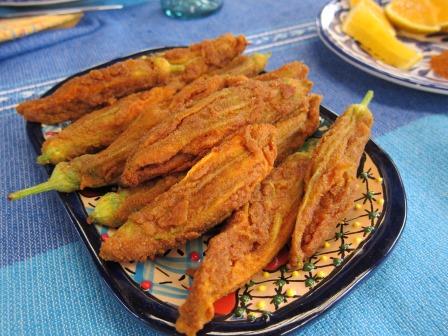
???????????????????????????????

Appetizer one: Flores de calabaza rellenas de queso – fresh squash blossoms stuffed with quesillo and fried. These are simple to make, but by no means easy.
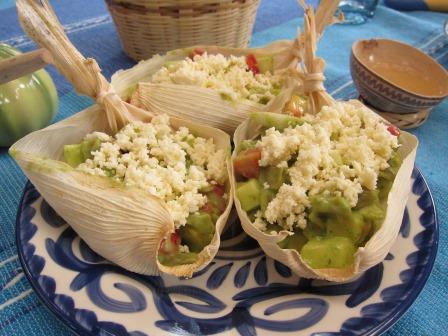
???????????????????????????????

Appetizer two: Ensalada de noplaes – a salad of tomatoes, jicama, nopales, and onions in a dressing made with avocados, limes, and cilantro, all topped with quesillo and served in a dried corn husk. Our favorite dish of the day. Simple to prepare, fabulous presentation, and bold, balanced flavors.
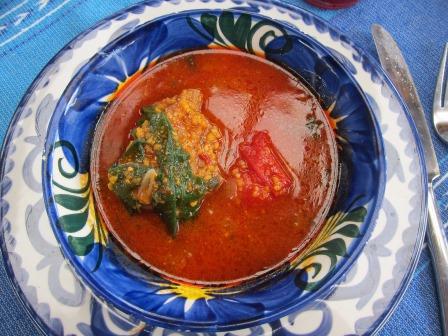
???????????????????????????????

Main dish: Zegueza. Boiled chicken served in a sauce of specially-prepared corn (trust us, no way to make this at home), guajillo chiles, tomatoes, and onions, served with some leaves of hierba santa.

???????????????????????????????

Dessert: Reyna’s favorite dish, nicuatole. In its simplest preparation (the white part in this photo), this dish only contains corn, water, sugar, and cinnamon. Yet making it is quite complex, involving a series of different processes and waiting that adds up to between four and twelve hours of prep time. One eventually arrives – very surprisingly – at a consistency like jello or pudding. Some then top the mixture with a sauce made from tuna fruits. Here, Reyna made a special sauce from sugar and cochineal, a small insect that lives in nopal cacti, and whose red dye is frequently used as a coloring ingredient. An astoundingly unique dish, and one that will be very difficult to re-create in Chicago.

Overall, this cooking class was an awesome experience. Even with all the time we spent cooking, Reyna had been preparing many of the ingredients for the dishes the day before. Indeed, our greatest experience from this class was the amount of concentrated effort and love labors put into this food: how the effort at grinding salsas by hand in a molcajete imparts a different (and better!) flavor than just putting them in a blender; how grinding corn in a metate that has been used for years creates a unique texture necessary for a any good zegueza. We highly encourage you to check out Reyna’s class the next time you are in Oaxaca; or, failing that, to check out her family’s restaurant: Tlamanalli. You won’t be disappointed!

3 Comments

Filed under Reviews

Jimmy’z Kitchen: Mofongo in Miami

Jimmy’z Kitchen
Several locations – we visited 2700 N. Miami Ave.
Wynwood, Miami, FL

Flag of Puerto RicoWe first had mofongo in Puerto Rico in 2008, and haven’t had it many times since. So when our Miami local friend suggested a good place to get mofongo in Miami, we were sold. Jimmy’z (named after proprietor Jimmy Carey), located in the trendy Wynwood neighborhood of Miami, is bright and modern with ample outdoor seating. The menu is a little more upscale and pricier than you might expect at a place where you order at the counter (some entrees over $20), and the food is later brought to your table. ???????????????????????????????

The menu at Jimmy’z has something for everyone. For a quick bite, there were a wide selection of panini and other sandwiches, including a cubano and seared ahi tuna. There are even substantial entrees covering both Latin and American cuisine like pollo guisado and cajun ribeye if you are really hungry, and a big range of salads if you are trying to be “good.” We had the tomato and mozzarella salad to offset our mofongo and it was delicious! However, what we had been hearing raves about was the mofongo, the quintessential dish of Puerto Rico made from mashed plantains and garlic. Honestly, we were a little skeptical since the restaurant seemed to be doing the whole Pan-Latin and euro sandwich thing. However, we were assured that the mofongo was the real deal. ??????????????????????????????? There were 6 kinds of mofongo available: mixed seafood, fresh fish, churrasco, pork in mojo sauce, chicken and shrimp. We ordered the pork mojo mofongo, since M can never pass up a roast pork dish, and split a little of the churrasco with our friends. The price, $17, was a little high, but it was more than enough to feed two hungry people. The pork was tender and flavorful and it was chock full of plantains. It was still had some substance to it, not too mushy. They weren’t lying, this mofongo was delicious.

???????????????????????????????

Everyone at our table got mofongo so it was fun to try all the different kinds, though we still think the pork mojo was our favorite. Contributing to the party atmosphere, there is also an ample beer and wine selection, including a lot of import bottles, which were a hit. On a nice night, the outdoor patio was particularly festive.  Jimmy’z was awesome for mofongo, and it gave us the hankering to go back to Puerto Rico, ASAP!

Leave a comment

Filed under Reviews

Jin Thai, superlative Thai in Chicago

Jin Thai
5458 N. Broadway
Chicago, IL 60640

thailandWe have been meaning to try Jin Thai FOREVER…well maybe not forever, but certainly sometime soon after they made it onto the Michelin Bib Gourmand list in 2012. Every time we go up and down Western we looked at the Jin Thai sign longingly. We finally made it there on a particularly blustery and cold night, and we were certainly glad we did. The place is tiny, and they don’t take reservations unless your party is more than 4 people (we had 4), so we waited about 20 minutes for a table to open up on a Friday night. There really is no room to wait, which made it a little awkward as we loomed over other tables. It is also BYOB and also does carry out, so keep that in mind if it is a particularly busy night.

JinIterior

Jin Thai’s menu hits all the classics while incorporating some less common dishes, enough to keep Chicago’s seasoned Thai food aficionados happy. A well-curated and manageable menu includes a set of highly recommended curries, as well as one of the best crab rangoon in the city. On this trip, we stuck to our favorites: Lindsay got her classic Pad See Ewe ($8.95), a  delicious version made better by the addition of a little something else in the sauce beyond soy. Maybe fish sauce? Whatever it was, it had a great depth of flavor. Matt got the Massamun Curry ($14.95), with chicken, potatoes, onions, pineapple, and peanuts. This was one of the more complex curries he had ever had. We also shared a plate of crab rangoon to start, and everyone agreed with the reviews:  one of the best in the city.???????????????????????????????

Everything at Jin Thai was delicious, and the flavors were slightly more complex and elevated than we expected. If we lived closer, this definitely would be our go-to place, though we plan to visit it whenever we are on that stretch of Western. Get there early so you can get a table!

1 Comment

Filed under Reviews

Farm Fresh in Naples: Agriturismo Tre Piccioni

Tre Piccioni
Via Tre Piccioni, 73
Pozzuoli, Italy

ItalyWe love going to countries and experiencing a wholly new restaurant genre. The kilo restaurant was one of our favorites in Brazil; but in Italy we first encountered the Agriturismo. Agriturismos are restaurants run by local farmers. Typically open only on weekends, their owners prepare fresh, ingredient-forward meals based on whatever is in season at the farm. You just sit back, tell the owner how many there will be in your party, and see what you get served.
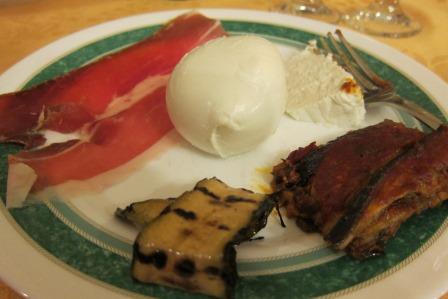
Our friends Maya and Chris, temporary expats from the US, lived near agriturismo Tre Piccioni (“Three Pigeons”), in the town of Pozzuoli, just west of Naples proper. Definitely off the beaten tourist path, you can only get there by car, and if you blink you might miss it. Maya and Chris were also good friends with the amiable proprietor, Paolo. Paolo’s menu changes constantly, though it seems he puts it on the website as well. Maya and Chris warned us to come with a full appetite: Paolo typically serves an antipasto, a primo and segundo piatto, a dessert, coffee and a carafe of house wine – all for the very reasonable price of 20 euros a head.

???????????????????????????????

When we arrived we were heartily greeted by Paolo, who promptly given a  carafe of house wine, fresh bread and a fresh ball of mozzarella. The mozzarella was a show stopper, and we could have eaten 2 or 3 more. For our antipasti we were served sliced prosciutto, eggplant parmigiana, fried zucchini and chickpea flour fritters (crocche); a nice little taste of some of the street food we also enjoyed in Sicily.

???????????????????????????????

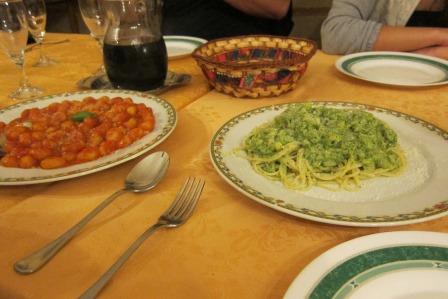
For our primi, we actually were served 2 pasta dishes for the table. First was gnocchi alla Sorrentina. This consisted of tiny gnocchi (much smaller than we had seen elsewhere) covered in a red sauce and sprinkled with cheese and a hint of fresh basil. We also enjoyed a pasta with broccoli sauce – a new dish we had never tried before. The pastas came out family-style on a big plate, but don’t worry, there was MORE than enough for everyone. However, we are still kicking ourselves for letting the waiter take away the gnocchi plate while there were still gnocchi to be consumed.

???????????????????????????????

For our mains we were served a hearty plate of pork cutlets and sausages, with a side of somewhat limp fries that we mostly picked over. There was also an unusual side salad seasoned only with salt, and accented with lime juice. Perhaps a little too much salt for L’s taste, but M enjoyed the simplicity. Either way, good to have some veggies!

???????????????????????????????

For dessert we had a light raspberry panna cotta, which was extremely tasty, though it almost pushed us over to the point of bursting. The meal was finished up with a glass of homemade limoncello (very strong), and tiny cups of espresso (what else?). We were so stuffed we couldn’t believe it! All this for 20 euros apiece. If we lived nearby there’d barely be reason to cook at home, since everything was nice and fresh, and just like eating at a friend’s house. Now let’s work on bringing some of these agriturismi to the US!

1 Comment

Filed under Reviews

Nutella Bar opens in NYC Eataly

With much fanfare, a Nutella bar has opened in the NYC Eataly. Well it isn’t quite a Nutelleria, but it is the closest thing to one on US shores. The Chicago Eataly already has a lovely Nutella bar (which was around since the grand opening of Eataly, unlike the NYC outpost), but it appears to be on a slightly smaller scale than the NYC Nutella bar, which has a towering wall of Nutella on one side (that is where the gelato stand is in the Chicago Eataly). So what can you get at a Nutella bar? The menu is the same as in Chicago: pastries and bread slathered in Nutella, alongside Nutella crepes, ranging in price from $2.80 to $5.80. Without a doubt, the success of the Chicago Eataly’s Nutella bar was inspiration to Eataly impresarios Bastianich and Batali to transport the concept to NYC. After all, who doesn’t love Nutella!?

Image

Nutella Bar in NYC by Eater NY

2 Comments

Filed under Reviews

Classic Pho at Tank Noodle

Tank Noodle
4953 N Broadway
Chicago, IL 60640

vietnamPho Xe Tang, popularly known as Tank Noodle, is a staple of Chicago’s Vietnamese Argyle neighborhood and our go-to place for Vietnamese cuisine in Chicago. Though this area has no shortage of places that do pho very well – Pho 777 and Pho 888 spring immediately to mind – we always end up coming back to Tank Noodle (there is a fish tank in the corner, from which we suspect the restaurant gets its name). We have introduced many of our friends to Vietnamese food here, and everyone has come away happy. Be warned: the menu is, well, gargantuan. It is easy to feel overwhelmed by the seeming laundry-list of Vietnamese dishes, but we are still searching for something they don’t make well here, and there are options for every palette, from vegan to carnivorous and everything in between.  Of course, you will see most people ordering pho, though you can also get stone pot dishes, noodles, and bánh mì sandwiches.
Tank Noodle

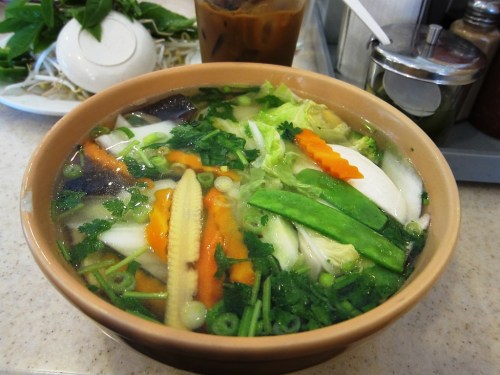
Though it is easy to get bogged down in choices, we have a few go-to options to which we always return. Lindsay enjoys her lemongrass noodle bowl, a light cool dish that is especially good in summer months. Matt also enjoys #195, the the Hot and Spicy Sour Chicken Soup, which comes with an ingredient list that reads like a paragraph: “pineapple, lime leaves, hot pepper, tamarind, okra, Alocasia odora, culantro, sour bamboo, basils, rice paddy herb, dried onion, garlic pork oil.” The flavor combinations are exciting and seemingly unique to this dish. Spice it up with some chili sauce, peppers, and more lime juice, and it’s a great winter soup / full meal anytime. Get the “small” – at $12.95 it is enough food for two days. We don’t even want to know how big the large is ($18.95).

???????????????????????????????

In the winter, however, you have to go with the pho. The most popular choice always appears to be beef pho. You can decide what kind of meat you want in the pho, ranging from sliced steak to tendons. While you can select to get a small or large size, much like with Matt’s soup, unless you are sharing with 3 other people (and maybe you are) the “small” is plenty large enough for even the biggest appetite. Though the broth is heavenly, our favorite part of pho is really the platter of garnishes that comes with it. On the plate you get Thai basil, culantro ( a fascinating herb that tastes like cilantro but looks like a stalk of grass), sprouts, lime wedges (cut the right way by taking out the white pith in the center) and hot peppers. Of course, to go the extra mile to make your pho spicy you can add some house-made chili sauce and fresh jalapeño peppers.

???????????????????????????????

If you have a large group, it is absolutely essential to have reservations, since this place can get packed to the gills, especially after 7pm on Fridays and weekends. It’s also fun to sit at the large table with the lazy susans. When we were there with a group of eight people on a Friday night, a huge line loomed behind us. Thank goodness for that reservation.

Leave a comment

Filed under Reviews

Our favorite moqueca in Salvador: Axego

Axego
Rua Maciel de Cima, 1,
Salvador, Bahia 40026-250, Brazil

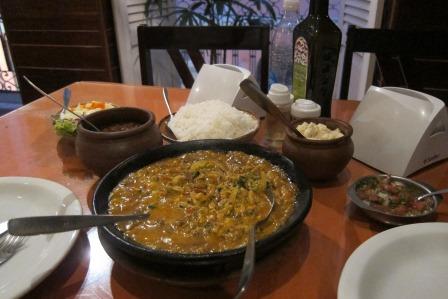
Axego is the rare restaurant that we will go to TWICE in one trip. Though we rarely visit the same place, we loved Axego’s setting, the food and the warm service so much we decided to make it our last moqueca in Salvador. We also could not believe the extremly reasonable price. The menu at Axego is pretty varied and has all the typical Bahian dishes you may expect. However we were there for one thing alone – Moqueca. On our first visit we decided to branch out into a type of moqueca we had never tried before: Aratu Red Crab (R$48). This rounds out to about $25 US or less than $13 a person – good deal!

???????????????????????????????

Axego’s restored colonial interior.

Now we absolutely love moquecas, and over the past year or so have sampled enough so that we know exactly what we are looking for. First – it has to come to the table piping hot, preferably in or on a stone bowl. In terms of the moqueca itself: it has to have not too runny of a sauce , high quality protein, good dende flavor and a nice and varied amount of sides in non-stingy portions. M would also add that there has to be a spicy pepper sauce to spice things up. Never have all of these elements come together so well than as at Axego. The moqueca itself came our absolutely filled to the brim with Aratu, a strongly-flavored and tasty crab dish. No filler or watery  sauce here! On our second trip we went with our old standby – moqueca de camarao. Both were equally delicious, though the uniqueness of the Aratu gets our vote. We can get shrimp just as well in the US.

???????????????????????????????

Moqeuca de Aratu (red crab) – a rare treat even in Bahia.

On the last visit we made to Axego we were even lucky enough to hear a live Olodum concert while we were eating – not IN Axego, mind you, but rather in a largo right behind the restaurant. Dinner and a show all for the price of a few mediocre sandwiches back in the US. The space of the restaurant itself is very nice, in a restored colonial rowhouse. The inside is mostly wood, and an entire wall is dedicated to a a creatively-displayed selection of Bahian artifacts and art works.

???????????????????????????????

Music provided by Samba Chula de Sao Braz and Raimundo Sodre at Sankofa African Bar.

We highly enjoyed our moqueca at Axego, and we hope we are able to go back soon. Along with tasty food, Axego has all of the intangibles that we love in a restaurant, welcoming service, pleasant atmosphere and a good vibe.  If you are going to get one moqueca in Salvador, make it Axego!

1 Comment

Filed under Reviews

Fika – a Swedish coffee break in NYC

Fika
(Several locations)
41 W. 58th St.
New York City

sweden_flagWe wrote several years ago about the iconic Swedish coffee and snack break – the fika – including a mention for the Fika coffee shop in NYC. The post got us really hoping to visit Sweden to enjoy an authentic fika. A few weeks ago, we were excited to visit Fika and experience a tiny bit of Swedish coffee culture right here in the US. NYC’s Fika cafe is just how we would imagine a Swedish coffeehouse to be: tiny and immaculate with only room for about 10 people at tall tables inside (if you are lucky enough to get a seat). Compared to US coffeehouse, Fika had a rather small menu of coffees. The coffee served here is actually roasted in NYC, but in the Swedish style. L ordered a cappuccino and the caffeine-averse M ordered hot chocolate. The coffee was light and flavorful and the hot chocolate was pleasingly rich.???????????????????????????????

Even better, there is a very nice selection of pastries and chocolate, including a wide variety of truffles and chocolates. In fact, Fika has its own chocolatier and several pastry chefs, giving the shop a constant supply of tempting sweets. We got a Cardamom bun, one of the most popular items, which was a rose-shaped croissant with a heavy helping of one of Sweden’s favored spices (there were also cinnamon and vanilla versions for non-cardamom fans). Of the chocolates, we tried truffles with goat milk, which was surprisingly delicate.???????????????????????????????

However, the showstopper was the Prinsesstårta, aka Princess cake. On their website, Fika even advertises that they are the “home of the Princess Cake,” which is no small feat. We have written about the painfully complex Prinsesstårta before (to date it is the the only cake we have seen that requires a diagram to explain) but we have never actually tried it until now. The version at Fika had all the requisite layers: sponge cake, whipped cream, jam and green marzipan. It was really enjoyable, and a lot more filling than we expected.???????????????????????????????

We are so happy to have found Fika, a little taste of Sweden in the US. Incidentally, when we went on a weekday morning, the cafe was full of Swedes! If you are feeling especially nostalgic, you can also bring home boxes of the stores coffee, tea, and Swedish berry preserves for your own little fika at home.

2 Comments

Filed under Coffee, Pastry Post-Poc, Reviews

Oslo Coffee in Brooklyn

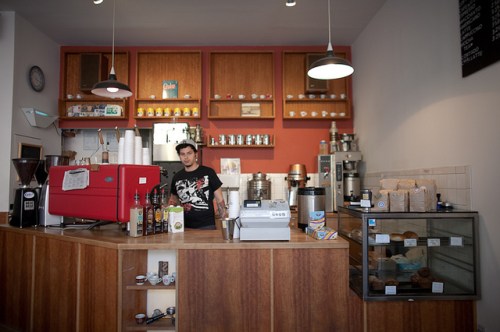
norwayTogether with Fika (review coming soon), Oslo Coffee represented our foray into Scandinavian coffee culture while in NYC. Oslo Coffee (328 Bedford Avenue, Williamsburg, Brooklyn) is super tiny, consisting of only a few tables, two benches outside and not even a public bathroom (we asked). The menu consists primarily of coffee or tea, and most people get it to go, though it seems like the other locations are a bit bigger and have more seating. However, despite the tiny size, the store is cute and welcoming. There are also some pastries on offer if you are feeling peckish. The coffee is specially roasted by the owners in New York City, but in the Norwegian Style, home of arguably the world’s most exacting coffee culture. There are 3 house coffee blends named after Norse gods: Odin (Espresso), Freya (Dark Roast) and Thor (house blend). We ordered an iced coffee made with Odin, and it was surprisingly smooth and mellow, and perfect for one of the first iced-coffee appropriate days of the year. They don’t take credit cards though, so remember your cash.
Oslo Coffee Company

Bedford Ave. location of Oslo Coffee Company by Protographer23


Leave a comment

Filed under Coffee, Reviews

Paraguayan in NYC: I Love Paraguay

I Love Paraguay
4316 Greenpoint Avenue
Sunnyside, NY 11104

paraguayLong has Paraguayan food eluded us. But the beautiful thing about New York City is how you can get any kind of food there. I Love Paraguay is one of the few Paraguayan spots in the whole country and we were excited to see the rave reviews. Located on bustling Greenpoint Avenue in Queens, I Love Paraguay seemed welcoming and popular, with a soccer game playing on a TV in the corner.
???????????????????????????????

I Love Paraguay has a well-proportioned menu, featuring Paraguayan and American classics. We were greeted by a cheerful waitress who readily informed us that…sorry… they were out of pretty much everything. Seemingly every time we ordered, the waitress came back and stated – very apologetically – “Sorry we’re out…” Of salad, chipa cheese rolls, sopa paraguaya. We kept scanning the menu for things we could order, only to be shot down again and again. Wanting to try something typically Paraguayan, we also tried to order a traditional cold mate tea, but the waitress assured us that “Americans don’t usually like it.” Our pet peeve! Usually we would have been more insistent, but we didn’t want to be pushy. Sigh… Oh well.

???????????????????????????????

Our two dining guests finally settled on a selection of empanadas: corn, beef, and cheese. All were excellent, and cheese was easily the favorite. We (L&M), owing to lack of options, were suggested one of the most popular dishes at the restaurant,  the sandwich de lomito: grilled skirt steak in a sandwich, garnished with lettuce and tomato (and egg if you so desire). If only these dishes had been on the menu, we likely would have had a much better overall impression of I Love Paraguay. The empanadas were excellent, the steak sandwiches were well-seasoned and perfectly grilled, and you got a lot of food for the money. But hopefully we will be back to try the rest of the menu, and some of the more emblematic Paraguayan dishes, if they are available.

Leave a comment

Filed under Reviews

Sultan’s Market, fast and fresh in Lincoln Park

Sultan’s Market
2521 N Clark
Chicago, IL

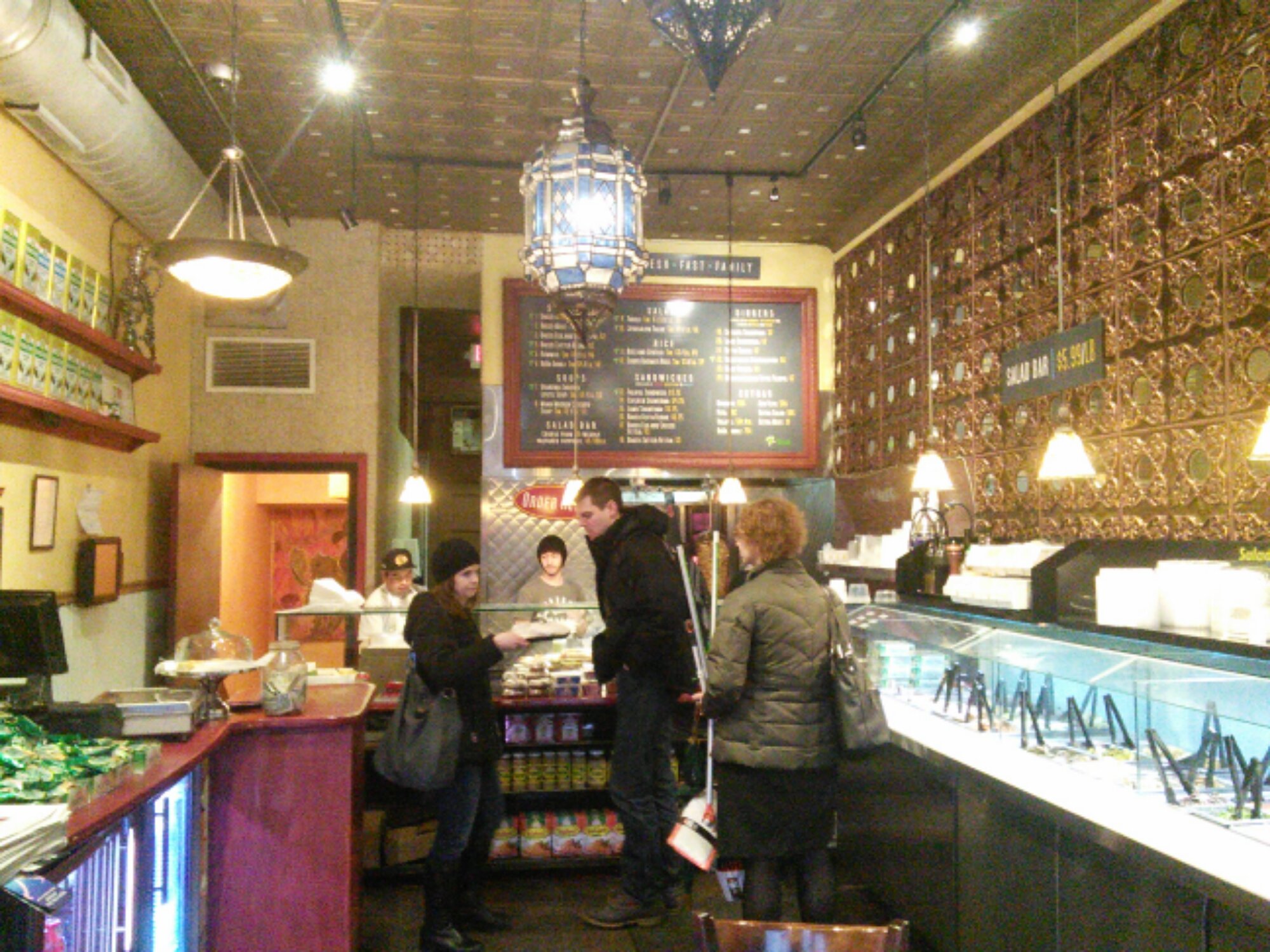
jordanWe recently came upon yet another ranking of Chicago’s top falafel spots, and this time Sultan’s Market came out on top. Why had we still not been there? So many friends raved about it, so we finally made the decision to go, trekking down to Sultan’s Market hoping for falafel paradise. The space is super tiny, with just a few tables a food counter and a salad bar. You order at the counter where your sandwich was prepared for you with freshly fried falafel and shewarma from the spit. The food is super quick and you pay after you eat (I guess they assume you are pretty honest!). There is shiny golden tin on the walls and ceiling which adds a cool ambiance, amplified by a few colorful glass lamps.
image
The value-ratio at Sultan’s Market simply cannot be beat. Matt ordered a lamb shawerma dinner ($7.00), expecting a light meal. He got a big plate of marintaed, spiced lamb, accompanied with pita, hummus, cucumber salad, and a *small* lentil soup ($2.00, which, as you can see from the photo below, was by no means small). Meanwhile, Lindsay ordered a falafel sandwich ($3.75) and another small lentil soup. Total bill was less than $20 for two people, and we had way more food than we needed – we ended up taking about half of the food home for lunch later. Everything was very good, especially on the falafel front. Lindsay enjoyed hers, very delicious, fresh, and it comes in regular or spicy versions. It also has the characteristic green tint, provided by fresh herbs, that we appreciate.
Sultan's Market
One brilliant aspect of their business model is how they seamlessly integrate self-service into a sit-down restaurant concept. Everything seems made-to-order, but they have a salad bar There is also a salad bar where you can fill up a container with tabbouleh, baba ghanouj and other Middle Eastern favorites (oh, and salads…), as well as mounds of take-home containers for those who inevitably cannot finish their meals. Keeps costs down and portions big! We are totally smitten with Sultan’s Market, and will certainly be back. The menu at Sultan’s Market is so cheap, it is just a bonus that it is so good!

Leave a comment

Filed under Reviews

Reporting from the World-Wide Mustard Competition

Lindsay and I were thrilled to receive an invitation to be judges at the Grand Champion round of the 2014 World-Wide Mustard Competition, held this year on the campus of Kendall College in Chicago. The competition is run by the National Mustard Museum in Middleton, Wisconsin, and directed by amiable museum curator Barry Levenson (a.k.a. Mr. Mustard) and his wife, Patti Levenson (Mrs. Mustard). You can read all about Barry and Patti’s background, as well as everything else you ever wanted to know about mustard and the museum, on the NMM’s fantastic blog and website.

Mr. and Mrs. Mustard

Mr. and Mrs. Mustard rocking mustard-themed apparel.

Due to a work conflict, Lindsay couldn’t go, so I represented the ETW team. As I quickly realized upon entering, mustard judging is serious business (especially obvious when Barry led us in singing the Poupon U fight song – Wisconsin version, of course). While the first two rounds of judging (held last month in Middleton) sorted through the winners in each of sixteen different mustard categories, our task was much more difficult: rank each of the sixteen category champions from best to worst, thereby establishing the overall winner. Barry described this as akin to judging the Westminster Kennel Club Dog Show: comparing a garlic mustard and mustard barbecue sauce is as tough as comparing a poodle to a greyhound. Yet we must do it! Barry and Patti encouraged me to conduct multiple rounds of tasting each of the sixteen entrants, ranking them by how well they exemplified each category (read the full list and descriptions here), as well as basic questions we always ask ourselves: would we use this on our food? Does it make our food better? Does it showcase the mustard well?

The official entry platter, with sixteen categories identified by number.

The official entry platter, with sixteen categories identified by number. One will emerge as Grand Champion!

I was presented with a plate of each of the sixteen mustards, identified only by their entry number and their category (no other labels, manufacturers, or information provided). I opted for a three-tier judging system. First, I took a sample of each for initial impressions and thoughts. They ranged from mild and incredibly hot, from mustard-centric to more balanced flavors, from grainy to silky smooth. I then went through a second round, separating them into categories: top, middle, and bottom. Finally, I went through them again to separate out the rankings, coming up with a final mustard ranking, from grand champion (1) to bottom (16). Just to confirm my choices, I then opted for another round of tasting in order to be sure I made no mistakes.

I took spoon-size samples of each entry to facilitate my judging. Here I've already finished tasting #1, "Sweet-Hot."

I took spoon-size samples of each entry to facilitate my judging. Here I’ve already finished tasting #1, “Sweet-Hot.”

While I can’t reveal my final rankings, I can provide some of my general thoughts on how I proceeded. Many of the mustards were fiery hot, and I while I always appreciate the boldness of heat in condiments, one must balance that heat against showcasing the flavor. This is true for even milder mustards: if I felt it was bland, or lacked real mustard flavor, I ranked these lower than mustards that utilized their flavors in complex and satisfying ways. Finally, many readers will be familiar with our love of Category 16: “Mustard-Based BBQ Sauces.” Our original BBQ love will always be South Carolina mustard sauce, so I knew beforehand it would take a lot to impress me in this category!

The three judges seated at my table took the opportunity to compare our rankings once we were finished, and occasionally there was significant divergence, but four or five of the mustard were near the top in all our sheets. Perhaps these mustards are in the running for the top awards! We won’t know until May, when the winners of the Grand Championship will be for available for tasting and sale at the NMM’s “Salute! to the Winners” event on May 3 and 4 from 10am to 5pm. Come by and see if you agree with the judges, and if the other judges agreed with me!

Leave a comment

Filed under Reviews

Greenbush Bar: An Italian Speakeasy in Madison

Greenbush Bar
914 Regent St
Madison, WI

ItalySicilySpeakeasy. Tiny. Crowded. Delicious. That’s Greenbush Bar in a nutshell. One of our go-to places in Madison, we have been there countless times since Matt started graduate school in 2006. Serving Italian-American fare (though the website says “Sicilian“) with Midwestern charm, we have been so often, until two days ago we were not even sure if we had taken photos there or not, or even gotten started on a review. Perhaps that’s fitting for a place that is difficult to find for the uninitiated. Greenbush boasts no oversize, catchy sign advertising its existence; no large windows to let jealous passers-by gaze inside. Instead, Greenbush thrives on being a bit of a hidden gem, yet seemingly everybody knows about it.

Madison's Italian Workmen's Club (via Madison Trust for Historic Preservation)

Madison’s Italian Workmen’s Club (via Madison Trust for Historic Preservation)

More than any place else we have ever been, Greenbush feels like a speakeasy. You enter the front door of the old Italian Workmen’s Club, and descend down a small flight of stares to a wooden door that says simply, “Please wait to be seated.” Every time we open that door, without fail, we are shocked to find people on the other side. Yet we always do, and it is always full. Greenbush does not take reservations, and going after 6:30pm or so, especially on Friday or Saturday, virtually guarantees a long wait. We’ve learned to go around 5pm for the best shot at a table underneath Greenbush’s signature kitschy, yet surprisingly charming, year-round Christmas light ceiling display.

???????????????????????????????

Every time we go to Greenbush, we order the same things. An order of the #1 crostini, topped with prosciutto, goat cheese, and tomatoes ($6.75). These are big pieces of bread, so do not expect small portions for an appetizer that could easily be an entree for some people. Savoring these, our entrees invariably arrive together, at the exact moment we finish our appetizer. Lindsay has ordered an 8-inch thick pizza, topped with nothing but mozzarella cheese and tomato sauce. Cut into four pieces, the constant assumption (but only occasional reality) is that we will split it equally. One of the best pizzas in Madison, this simple yet perfect preparation never disappoints for those seeking a high-quality version of the pizza we all known and love.

???????????????????????????????

At the same time, Matt has ordered his go-to, the “Gorgonzola Cream Sauce,” a fettucine dish with smoked chicken, toasted walnuts, scallions, lemon, and mushrooms mixed its eponymous sauce. Again, like all good Italian cuisine, nothing sophisticated about this preparation: well-sourced ingredients (many from Wisconsin), balanced together. The heavy cream works wonderfully with the lemon and scallions, and the mushrooms add a distinct texture while absorbing the rest of the flavors from in the dish. Again, we are never disappointed – and we have never ordered anything else. We then spend the next hour or more eating back and forth off each others’ plates, switching when need be, until we slowly work our way through the pizza and pasta. Typically, if we still have room, we finish with one of Greenbush’s rotating dessert options. Frequently this is a cannoli – a real cannoli, filled with real ricotta, and real pistachios on the sides (not some other nut with green food coloring).
???????????????????????????????

Greenbush may not be fancy, it may not be trendy, but remains romantic and comforting, just like the food it serves. We will be going back forever, ordering the same dishes every time, and always getting the same Italian Midwestern speakeasy experience. And we would not have it any other way.

Leave a comment

Filed under Reviews