

The cast of Charlie Brown in Latte form – NPR.com
 We enjoy latte art, though it usually doesn’t go much beyond a leaf or a heart. However, Japanese barista Kazuki Yamamoto takes latte art to a whole new level – even including some 3D creations.
The cast of Charlie Brown in Latte form – NPR.com
We enjoy latte art, though it usually doesn’t go much beyond a leaf or a heart. However, Japanese barista Kazuki Yamamoto takes latte art to a whole new level – even including some 3D creations.
Filed under Design and Photography, Reviews
 M does not like cappuccino. Or coffee of any kind. At least this is the story he told himself, until an encounter with the most delectable, sweet, delicious coffee drink he has ever sampled: the famous cappuccino at Rio de Janeiro’s landmark Confeitaria Colombo. It took a lot of nudging for him to try it. With the parents visiting us in Rio for a week, M’s Mom raved about her cappuccino, proclaiming that it was the favorite thing she ate during her week in Rio. “Could it really be that good?” M thought to himself. A week later, having breakfast together with a friend, both L and friend were sampling cappuccinos in front of M, and finally, on a whim, he decided to go for it.

The famous Colombo Cappuccino
He would end up having two. Topped with a generous amount of homemade whipped cream and a dash of cinnamon, this is more a sweet coffee drink than a real Italian cappuccino, hitting sweet and spiced high notes that purist coffee drinkers may scoff at. But not M: this was a pastry in a coffee cup, and just what he needed to get over his dislike of coffee drinks. If you are ever in Rio, do yourself a favor and head into Confeitaria Colombo, even if just to sample its famous – and very worth it – cappuccino. Score local points by standing at the bar!
Filed under Coffee, Pastry Post-Poc, Reviews
Al Kuwait
Av. Treze de Maio, 23 – Centro
Rio de Janeiro


 Rio de Janeiro is full of middle-Eastern restaurants, ranging from
four-star white-tablecloth places to corner botecos, owing to the large Arab Brazilian population. Al Kuwait falls into the latter category, and does a brisk lunch trade selling Middle Eastern dishes, salgados and juices. Moreover, we figured we had to try this place since Al Kuwait claims to have some of the best kibbe in Rio.

Kibbe at Al Kuwait
Kibbe is extremely popular in Brazil, and is found in almost all snack bars, Middle Eastern or not. A kibbe in Brazil is basically a miniature football-shaped meatball (again, sounds like something Ron Swanson would appreciate, right?) composed of ground meat, bulgur and other fillings, which are then fried. For lunch we each ordered a kibbe and an esfiha (one cheese and one meat), another iconic Middle Eastern salgado. Now, we always eat at Middle Eastern restaurants in Chicago and we have never encountered esfihas there. However, in Brazil they are nearly as ubiquitous as kibbe (you can even get them on the beach). Esfihas are savory triangle pastries filled with meat or cheese, which are prefect to eat on the go.

Esfiha at Al Kuwait
However, Al Kuwait had a nice outdoor seating area, so we took a seat to enjoy our snacks. The kibbe was much larger than we expected, but true to advertising, was excellent and had a great texture and flavor. The esfihas were also oversized, but not as memorable as the kibbe. We also enjoyed that we could wash down our somewhat-heavy meal with some fresh juice (Mango, Passion fruit and Pineapple were on order). There is also a full menu of entree-sized middle-eastern specialties if you would like something a bit more substantial, including hummus, baba ghanouj, kebabs and Brazilian specialties like picanha sandwiches. Al Kuwait is a great place for lunch, especially if you want a taste of typical Arab-Brazilian cuisine in a laid-back setting.

Dining Al Fresco at Al Kuwait
Casa Cavé
Rua Sete de Setembro, 127 – Centro
Rio de Janeiro
Rio de Janeiro is home to some beautiful colonial architecture as well as some wonderful, classic coffee houses that would be right at home in Lisbon. Casa Cavé is one of those places, featuring excellent pastries and drinks at reasonable prices in a salon that reminded us of our time in Portugal (there are even Portuguese azulejos on the wall). Cavé used to be in a larger, more ornate building just around the corner, which still bears the name “Casa Cavé” on the front, so don’t get confused (as we did – more on that in a future post). You can now find Casa Cavé by its distinctive green sign.
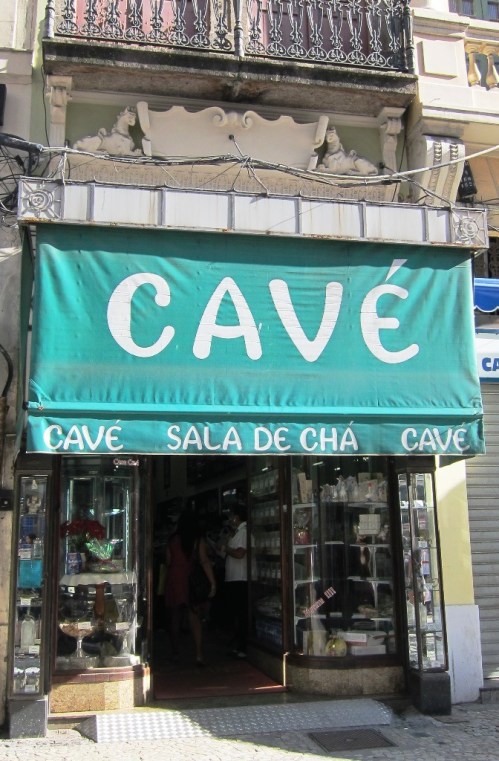
Casa Cave Sign
When you first enter Casa Cavé, you are greeted by an enormous wall of cookies and a wonderful pastry counter. The specialties at Casa Cavé are Portuguese pastries sold by the unit, and many people opt to take their cookies to go (you pay by the kilo – at a very reasonable price). Once you get past the long, glass counter of treats, you arrive in the larger tea salon, “sala de cha,” where you can enjoy coffee and other snacks. The interior is pretty, with almost a Grecian twist, very much reminding us of a Lisbon coffee house.

Casa Cave Interior
The selection of pastries was pretty overwhelming, and included everything you would expect in a Portuguese bakery, with some Brazilian favorites thrown in. In the tea salon you can get everything from the bakery, as well as a selection of coffee, juices and light sandwiches. Unfortunately there were not any iced coffee selections (this is Brazil in the Summer heat of 36°C/96°F, so we were surprised)! We had a “ratinho” (true to name, the treat was shaped like a mouse/rat), miniature bem casados (Brazilian dolce de leite sandwich cookies) and pastel de nata. All of the treats were delicious and freshly-made, and we were surprised that the pastel de nata was pretty much up to Portuguese standards, with a nice flaky crust. We were also pleased that nothing set us back more than 3 reais apiece.

Casa Cave Treats
We could have spent all day sampling the baked goods at Casa Cavé, and we were happy to see some of our Portuguese favorites in Brazil (Jesuitas, Linguas de Gato, Pasteis de Nata). If you are looking for a quiet spot to relax in Rio, Casa Cavé is a perfect break from chaotic modern-day Centro.
Filed under Coffee, Pastry Post-Poc, Reviews
How time flies! Our time in Rio de Janeiro has drawn to a close, and we are in Salvador da Bahia now, which means it is time to tabulate the results for the best açaí bowl in Rio. We had a lot of fun sampling açaí spots all over the city, and you can see all of our reviews below. Along the way we learned the difference between regional styles of açaí and sampled more granola and tapioca puffs than we’d ever imagined. So without further ado….
The winner of the best açaí in Rio de Janeiro is: Tacacá do Norte
Incidentally, the best açaí bowl in Rio, at least according to our metrics, was the last bowl we tried! Tacacá do Norte had near-perfect Northern-style açaí, with a good price point. Our top Carioca-style açaí was at Polis Sucos.
The Results (Highest to lowest score):
Tacacá do Norte: 36 / 40
Barraca do Pará: 34 / 40
Polis Sucos: 34 / 40
Amazônia Soul: 32 / 40
Bibi Sucos: 31 / 40
Vero Suco: 30.5 / 40
Kicê Sucos: 27.5 / 40
Pioneiro dos Sucos: 22 / 40

The Winner: Acai at Tacaca do Norte
Tacacá do Norte
Rua Barão do Flamengo, 35
Flamengo, Rio de Janeiro
Our trip to Rio de Janeiro introduced us to the Northern style of açaí popular in Pará. Tacacá do Norte, named for the unique Northern Brazilian soup, “Tacacá,” is tucked away on a quiet street in the residential neighborhood of Flamengo. Tacacá do Norte is a small diner-like affair, with seats wrapping around a circular counter. The menu is small, and the sign advertises “Sucos e Artigos de Belém do Pará (Juices and articles from Belém in Pará)” which includes northern favorites like Tacacá soup, casquinha de siri and of course açaí (in either 400 or 600 ML bowls). There was also a small section of Northern goods for sale, including the classic cuia gourd bowls for serving Tacacá.

A view of Tacacá do Norte
Value: 1/5. Our heaping bowl was very generous for R$ 14 for 400mL and R$ 16 for 600mL. It should also be noted that the restaurant is cash-only.
Taste: 15/15. There was pure açaí flavor at Tacacá do Norte – but they pre-added the sugar for us! This was awesome – since at Barraca do Pará we always felt we had too much or too little when we mixed in our own sweetener. At Tacacá do Norte the sweetness level was just right!
Texture: 10/10. The açaí at Tacacá do Norte had the best texture we experienced anywhere. It did not melt at all, and was smooth and creamy throughout.
Açaí at Tacacá do Norte
Granola: 5/5. The topping was, no surprise, tapioca. It came in a pour container and was the best tapioca of the bunch so far.
Extras: 5/5. There was a very friendly atmosphere at Tacacá do Norte: bustling environment, convenient seating, Amazonian menu, unlimited toppings and 2 spoons – we’re in love!
TOTAL: 36/40 – Tacacá do Norte takes the lead with a strong showing.
Filed under Reviews
Pioneiro dos Sucos
Av. Treze de Maio, 23
Rio de Janeiro
In the heart of Centro (our neck of the woods) we visited Pioneiro dos Sucos, which is a really basic, local, stand-up only açaí place, mentioned on Todo Rio. The juice bar always seemed to be full of locals and office workers so we figured it certainly would be worth a try. This type of simple stand-up juice bar is prolific in Centro. People go to these kinds of places to get a cafezinho or a juice and snack before/after work and at lunchtime. There are also sandwiches and more substantial items, but the majority of people just grab a snack and go.
Value: 5/5. Açaí was $5.80 for a 300 mL cup – with R$1 extra for granola. This was the cheapest price so far for a 300 mL cup in Rio. No complaints so far.
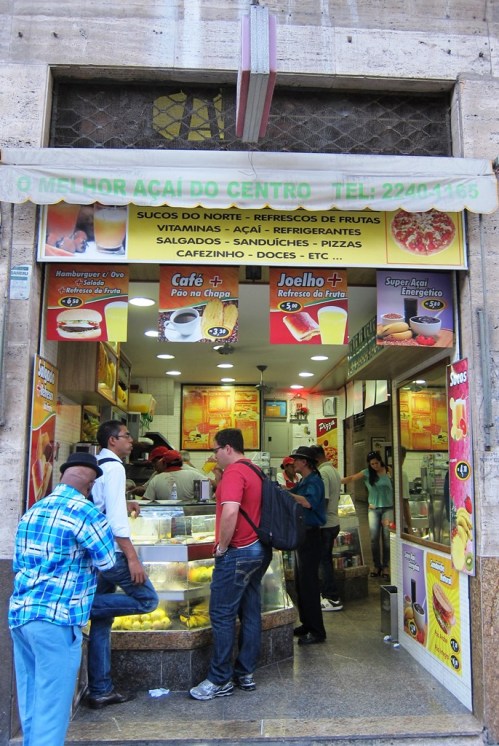
Pioneiro dos Sucos in downtown Rio de Janeiro
Taste: 10/15. Pioneiro do Sucos had a nice açaí flavor with a generous mix of fruits (probably strawberries and blueberries).
Texture: 7/10. The açaí had a decent texture, but tended towards icy and a little grainy.
Granola: 0/5. This is where our visit screeched to a halt. Now this was definitely a basic type of place, so we went in with modified expectations. However, everything went sour when we found a small black bug (beetle-ish) in our cup of granola. Gross! We stopped eating the granola right there, hoping it was a fluke. We figured the bug could have flown in from the street. However, we then discovered a SECOND bug deep in our cup of granola. That was it for us.
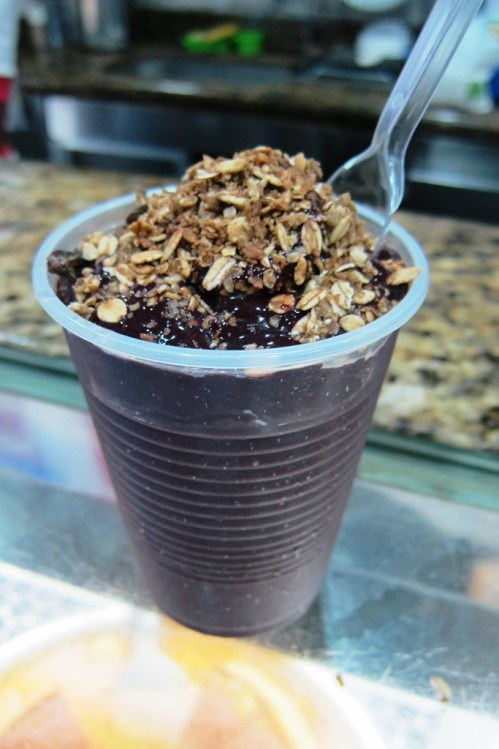
Pioneiro dos Sucos Açaí Cup
Extras: 0/5. So we were prepared for the lack of seating and bowls, and receiving no spoon, however the unclean atmosphere ruined the experience for us. Bugs in granola = bad vibes.
TOTAL: 22/40 – Probably best avoided.
Filed under Reviews
Barraca do Pará
Feira de São Cristóvão
Rio de Janeiro
We had our first experience with Northern-style açaí at Amazônia Soul in Ipanema, and we were hooked. When we visited the Feira de São Cristóvão, a fair full of Northeastern Brazilian culture, music and food, we were expecting carne-de-sol and other savory northern specialties, but somehow didn’t think about açaí. However, we were overjoyed to stumble across Barraca do Pará in the labyrinthine Feira. As its name implies, this little restaurant specialized in cuisine from the northern Brazilian state of Pará, such as Tacacá or Vatapá, along with delicious Northern-style açaí. We actually visited this Barraca on two separate occasions and we were pleased by the quality and consistency each time.

The state flag of Pará greets you at Barraca do Pará
Value: 0/5. Our heaping bowl was very generous for R$ 15.
Taste: 14/15. Again, the açaí at Barraca do Pará had very strong flavor, similar to what we had at Amazônia Soul. This is pure açaí, with none of the fruit blend at Southern-style places. In order to get the desired sweetness, you were given a large tub of sugar, and you added your own amount. Regrettably, we never really reached the perfect sweetness level.
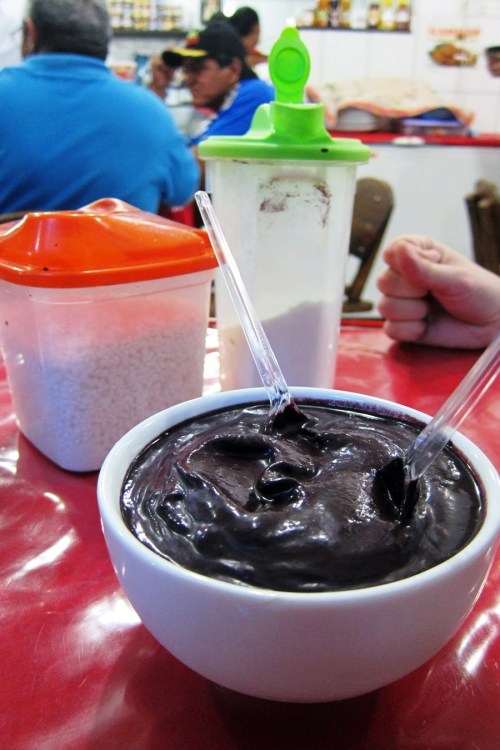
Amazonian Acai at Barraca do Para – add your own tapioca and sugar
Texture: 10/10. The açaí had an amazing texture. Absolutely no melting, even when we got to the bottom of the bowl.
Granola: 5/5. Again, we opted for the tapioca as the açaí topping, which was excellent. We also loved that the tapioca came to the table in a giant pouring container, so you can add all you want.
Extras: 5/5. There was tons of seating, a full menu of Paraense cuisine, unlimited toppings and 2 spoons – we’re in love!
TOTAL: 34/40 – A very good showing. This is our favorite Northern-style place yet.
Filed under Reviews
After eleven weeks in Rio, we are heading back to Salvador da Bahia for two months! We spent a good chunk of early 2012 in Salvador, where we sampled all the local specialties from acarajé to moquecas, and we are ready for more. Stay tuned!
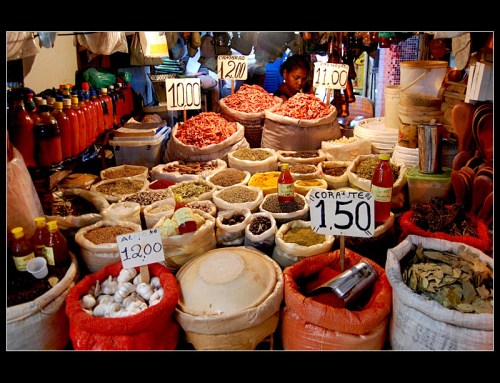
Spices and dried shrimp for sale at the Feira de São Joaquim in Salvador. via Trekearth
Filed under Reviews
Polis Sucos
Rua Maria Quitéria, 70
Rio de Janeiro, Brazil
Now that we are back in Brasil our açaí quest has been renewed with full force. Though there were a variety of options for açaí in Salvador, Rio is really the place for the açaí-lover. There is a juice bar on nearly every corner, and some of the most famous açaí shops are located throughout the Zona Sul beach area. We did a little research beforehand, and compiled a list of açaí places to try. First on our list: Polis Sucos. Polis Sucos is one of the most popular places for juices and açaí in Rio; and the Ipanema location is the most famous.

You can spot the distinctive Polis Sucos corner store from blocks away, and when we approached the place was already full! The counter was stocked with fresh fruit, and the menu is appropriately composed of mainly fruit juices, smoothies (vitaminas and batidos) and açaí blends. Polis Sucos is conveniently located right next to an Italian gelato place if you want to follow up on your açaí with another sweet treat …maybe next time.

Visit 1: Polis Sucos Batido (granola mixed in)
Value: 3/5 We got an açaí granola cup for R$11.50, for 500 ml.
Taste: 15/15. This açaí was easily one of the best we have had, anywhere in Brazil. It had great açaí flavor without being too sweet, with just the right amount of berries mixed in.
Texture: 9/10. Polis had an excellent, smooth texture that held up well, even with a little melting. We had previously ordered a batido – which meant the açaí was blended with granola, which had an excellent texture. We decided to try it this time non blended – and the texture was still great.
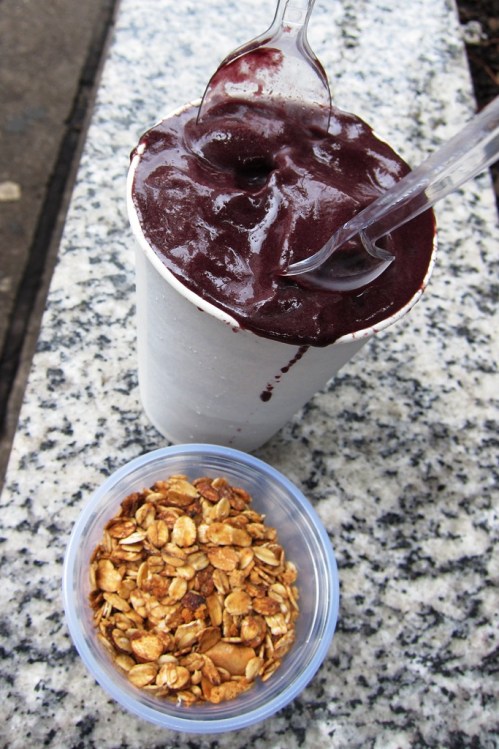
Visit 2: Polis Sucos, Not Blended
Granola: 5/5. The cup came with standard-issue granola (no extra charge), which came in a separate plastic cup.
Extras: 2/5. This was a mixed bag. In addition to the range of juices, there are other more savory option like sandwiches and hamburgers (cheesefrango, cheddaregg, etc), so you are set for choice. However, Polis Sucos is a popular place, and there is no seating, so prepare to stand, unless you can squeeze into one of the surrounding benches that are shared by Polis Sucos and the gelato place next door. There were also no bowls of – only cups.
TOTAL: 34/40 – Polis is our front-runner so far. We enjoyed our açaí at Polis, and it is definitely worth a trip if you are in Ipanema.
Filed under Reviews
Popat Store
Centro Commerical Mouraria
Lisbon, Portugal

We love cooking with Indian flavors back in Chicago, but we figured that we would not be able to find Indian spices in Lisbon – but we were wrong! Right in the heart of Lisbon, and accessible from the Martim Moniz metro stop is the Popat Store, a small Indian grocery store which will warm the hearts of any Indian food lover. You don’t even need to exit the metro station to find Popat Store, just follow the signs in the labyrinthine Martim Metro stop to the Centro Commerical Mouraria – which is even a more labyrinthine shopping mall of international delights.
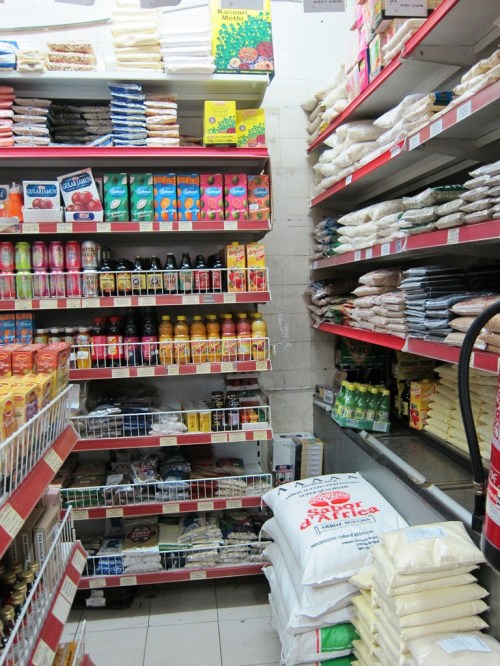
Popat store caters to those who want to cook from scratch, as well as those who would reheat frozen samosas. There are pre-packaged spice blends starting from just one euro, including a masala spice blend and tandoori spice rub. You can get bottled sauces for a few euros more, as well as coconut milk and other canned goods imported from India. For those wanting to make their own blend, you can also find fresh lemongrass, and every kind of spice in dried or powdered form. In addition, you can find over a dozen varieties of rice and all different kinds of grain in bulk.
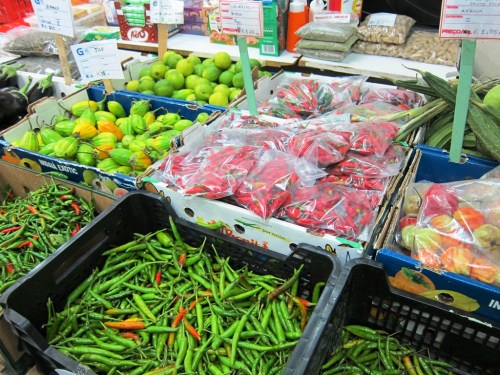
There is also a small fresh market in the front of the store with okra, tomatoes, Piri Piri and Habanero peppers. The coup d’etat however was that they had peanut butter! Peanut butter is particularly rare in Europe, and if you find any it is bound to come in a very small jar and to be particularly expensive. However, Popat Store’s variety was a huge jar of delicious natural peanut butter (which appeared to be imported from Amsterdam) for less than 3€. We bought some garlic naan, tandoori spice mix and peanut butter. After a visit to Popat Store, our kitchen was really starting to feel like home.
Filed under Reviews, World Eats
Amazônia Soul
Rua Teixeira de Melo, 37
Ipanema, Rio de Janeiro
So we consider ourselves at this point to be (sort of) açaí experts, but we were totally floored by our completely different experience at Amazônia Soul in Ipanema, right off of Praça General Osório. Northern açaí is completely different from its Southern variety since the emphasis is on pure açaí flavor. Amazônia Soul is a store concept from the northern state of Pará – and along with delicious Northern-style açaí – it also has a selection of typical Northern dishes including tacacá, crab and maniçoba and Nothern-style feijoada. Don’t forget to wash your meal down with a Guaraná Jesus – a popular regional soda brand. The store itself is very inviting – with a distinctive abstract frog mascot (we think it is a frog) and a little shop inside selling Amazonian products including jarred sweets, ceramics, stoneware and jewelry.

Value: 0/5 Our pequena small bowl was definitely less than 500 mL (we think it was 300 mL), and it was extremely expensive. Total: R$ 16. We had a little bit of sticker shock on this one.
Taste: 12/15. Amazônia Soul presented us with the purest açaí flavor yet. Northern style açaí is simply açaí and ice, instead of an açaí/berry/ice blend which we have come to learn is standard at most Zona Sul places. The taste of pure açaí is extremely strong, and not necessarily sweet, so it is typical to add your own sugar to the bowl. At Amazônia Soul you are given sugar packets to sweeten things up.
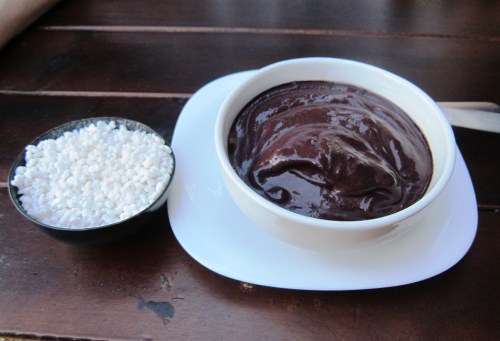
Texture: 10/10. Perfectly smooth, this açaí did not melt at all. It also seemed like there was less ice in this formulation – which means less melting.
Granola: 5/5. In this case the topping was not granola at all – but a bowl of puffed tapioca – which is standard for Northern-style açaí. There was a surcharge for the toppings of $R 2. Though we think we prefer granola over tapioca, we felt we had to go for the authentic experience.
Extras: 5/5. There was a nice indoor seating area, along with wooden tables outside. A plus – we got two spoons on the first try.
TOTAL: 32/40 – Again the value hurt them, but there was a narrow lead.
Rancho Restarante
Praca Gomes Freire, 108 – Centro
Mariana, Minas Gerais
Though our first post from Ouro Preto was about a decidedly non-traditional pizza place in Ouro Preto, our second meal in Minas Gerais was much more traditional. Throughout its history, Minas Gerais was home to many gold/diamond mining booms (the name means “General Mines”), so it occupies a similar place in Brazilian lore as the “Wild West” does in the USA. However, unlike the chuckwagons on the Wild West, people are really into Mineira food in Brazil, and it is considered the classic kind of Brazilian “home cooking.” We were very curious to try some down-home Minerira food, so we were happy when we stumbled upon Rancho Restaurante (“The Ranch”) in Mariana – a small town outside of Ouro Preto.

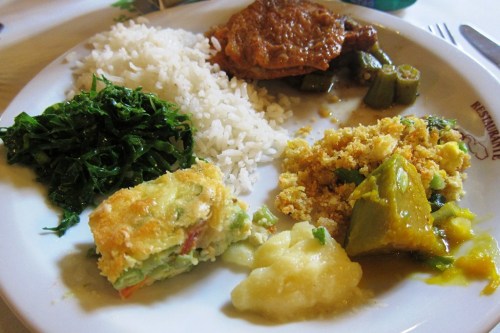
Rancho is done up in a sort of faux pioneering style – and it serves heaps of Mineira food in an all you can eat buffet (R$ 18 person). Mineira food is often traditionally cooked and served in stone vessels – and we were pleased to see the wood-burning buffet area full of stone pots of food. All of the Mineira favorites were on display: chicken and quiabo (okra), couve mineira (kale), tutu de feijão (bean and meat stew), roast pork, roast pumpkin, veggie omelettes, a variety of soups, sausage and rice, fish croquettes, farofa and spicy spaghetti with dende oil. There was also a small salad bar off to the side, though most of the offerings were slathered in mayo – save for a nice carrot salad. However, we have one major knock against the restaurant: no pão de queijo. Come on, this is unforgivable!

We filled our plates twice with all of the food from the buffet, trying to sample as much as we could. Of our picks, the chicken and okra was a standout, it turned out to be one of our favorite preparations of okra, a veggie we usually find to be too gooey. The couve mineira (garlic-spiked kale) and stewed pumpkin were also delicious. The meal was a pretty stick-to-your ribs simple affair, something which characterizes Mineria cuisine, and it seemed to be a favorite among locals. After we arrived, Rancho gradually filled up with families and office workers on lunch break, and there was constantly a line for the buffet. Rancho was a great place for hearty Mineira cuisine with no frills, and gives you a taste of typical local fare with no touristy concessions.
Filed under Reviews
Pizzaria O Passo
Rua São José 56
Ouro Preto, Minas Gerais, Brazil
 So of course, after singing the praises of Mineira cuisine, the first food post of our food adventures in Minas Gerais is the decidedly non-Mineiro pizza! But no worries, even though pizza is an import to Brazil, Brazilians have latched onto it – and O Passo does an excellent rendition of pizza. We decided we needed more of a leisurely meal after walking down the grueling hills of Ouro Preto, and O Passo was consistently referenced as one of the best restaurants in Ouro Preto. The stock in trade at O Passo is pizza – though there are a variety of other Italian specialties – including a large assortment of antipasti, pastas and Italian wines.
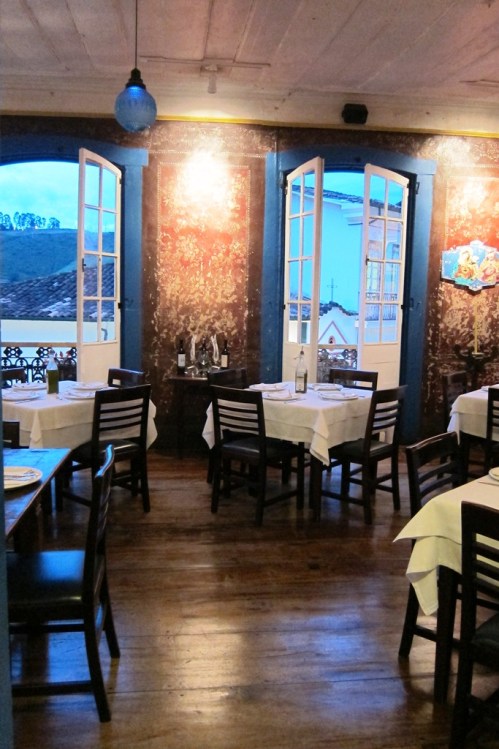
The setting of O Passo is great – with a nice little terrace overlooking the botanic gardens (which are unfortunately closed). The pizzas come in 3 sizes – Individual, Medium and Large. The individual is roughly plate-sized and had 4 slices. Each was more than big enough for each of us (R$ 28 per individual pizza). There were 4 full pages of pizza flavors ranging from classic Italian combinations as Margherita and Quattro Formaggi as well as Brazilian flavors like Minas cheese and Frango & Catupiry.
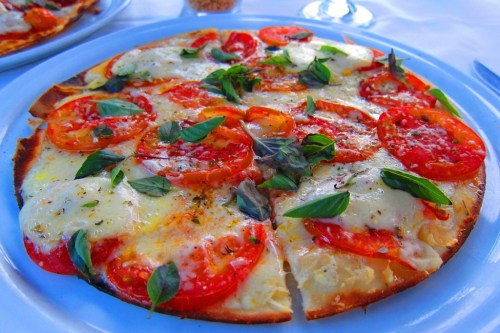
M selected a (slightly) healthier riff on the quattro formaggi – the quattro tomate – which came topped with mozzarella, sundried tomatoes, tomato sauce, heirloom tomatoes and roma tomatoes. All the toppings were fresh; with the heirloom tomatoes still sweet and the sundried ones with a great flavor. L picked a cheesier variety with a Mineiro touch: Minas cheese and Buffalo Mozzarella with roasted garlic and fresh basil. Before too long, our pizzas arrived piping hot to our tables. They had more of a cracker-style crust unlike the Neapolitan style of pizza with a more leavened and bubbly dough. We were big fans of these pizzas – especially the crunchy crusts and generous toppings. All told, about US$30 for two excellent pizzas in a beautiful terrace in this great colonial town? It wasn’t Mineira cuisine, but it is all the more reason to visit Ouro Preto.
Filed under Reviews
Barraca do Uruguay
Ipanema Beach Posto 9, Rio de Janeiro
Brazil

In Rio, they say there are three things that define your Carioca identity. Your favorite soccer team, your favorite samba school, and the lifeguard “Posto” that marks your favorite beach spot along along Copacabana or Ipanema. Your chosen posto defines your personality (or at least your “beach personality”). Are you a tourist from a beach hotel? Posto 2 and 3. Family with kids? Posto 12. Intellectuals and beach bodies? Posto 9. But Posto 9 (the middle of Ipanema) is not just for intellectuals – it is the Posto to hit up for scrumptious Uruguayan sandwiches. You will know you are in the right place because you will see a large Uruguayan flag towering above the beach umbrellas.
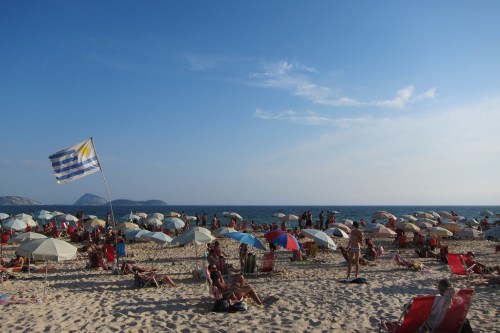
Uruguayan Flag Marks the Spot
Well, we didn’t know what to expect from an Uruguayan sandwich, but since this Barraca has been in business for 30 years we figured it was probably pretty good. There was a little selection of caiprinhas and beverages – and other salgadinhos for snacking – but the real draw is the sandwiches. It costs R$ 12 for beef (less for chicken) and more for a mix of meats. The sandwiches themselves are on the smaller side and come wrapped in wax paper to take back to your chair. The filling is a perfectly barbecued and marinated meat, with grilled onions and chimmichurri sauce on a hard roll.
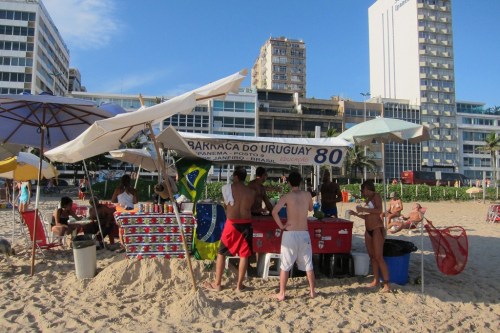
We found it – Barraca do Uruguay
We brought back our sandwich to our chairs and umbrella as we watched the sun start to set. The sandwich reminded us of some of the Argentinean churrasco we had sampled previously and the extra-tangy chimmichurri set the perfectly tended meat off perfectly. This was a great sandwich! Barraca do Uruguay is the perfect spot for a little heartier fare on one of the nicest stretches of beach in Rio. So kick back under your umbrella and enjoy some chimmichurri – life is good.

Uruguayan Steak Sandwich on Ipanema
Filed under Reviews
We are going to the historic town of Ouro Preto for a few days and are excited to try the food of the state of Minas Gerais first-hand. Mineiro cuisine is considered some of the best and most “Brazilian” in Brazil, and it is widely lauded and replicated throughout the country. Minas Gerais is the home of one of our all-time favorite Brazilian foods – Pão de Queijo – but that is just scratching the surface. Other famous Mineira foodstuffs include: Minas cheese, Couve Mineira (Mineran Kale), Frango com Quiabo (chicken with okra), Feijão Tropeiro (meat, beans and rice) and many more. Hopefully we will have some tales of delicious Mineira food to share.

The town of Ouro Preto
Kicê Sucos
Av Nossa Senhora de Copacabana, 1033
Copacabana, Rio de Janeiro
Our search for the perfect açaí bowl continued in the beachy Zona Sul area of Rio de Janeiro. We heard that Kicê Sucos served tasty açaí in a laid-back setting in Copacabana, so we quickly added it to our list. Kicê Sucos had more of an old-school vibe, unlike the slicker Polis Sucos and Bibi Sucos. Like Polis Sucos, Kicê is located on the corner of the street, with a counter wrapping around a semi-circular space. We were heartened to see the piles of fruit on display (as must, as we have learned). Omnivores will also be well taken care of due to the expanded menu of sandwiches.

Value: 1/5. Our bowl was generously sized, and cost R$12, with a R$2 extra charge for granola. It seems that most of the suco places in the Zona Sul beach area always charge extra for granola – just something we will have to get used to…unfortunately. Total: R$ 14.00.
Taste: 11/15. The bowl had a nice açaí flavor, with possibly some strawberries added in, but not as much açaí flavor as at Bibi Sucos.
Texture: 7.5/10. Overall the texture of this açaí bowl was pretty good, though a little gritty. Unfortunately the bowl melted very quickly.
Granola: 4/5. The granola came in a separate cup as seems to be the usual in Rio – but there were no cashews – disappointing the cashew-fiend M.
Extras: 4/5. Kicê Sucos has an extensive menu with many sandwich options, and a full line of juices, including our enigmatic favorite clorofila. There was only counter seating available (or to go of course), and we were lucky enough to get seats, but many weren’t. As a plus – they gave us two spoons.
TOTAL: 27.5/40 – Pretty good, but not enough for the value.

Filed under Reviews
Bar Urca
Rua Cândido Gaffrée, 205 – Urca
Rio de Janeiro
Walking around the quiet street at the base of Sugarloaf, you can tell you are approaching Bar Urca not by the smells, but by the people. The entire concrete waterfront wall is covered with easygoing Cariocas enjoying greasy snacks and cold beer. These are Bar Urca’s stock in trade, as is its view, overlooking Urca beach on Guanabara bay. There are no tables here: Bar Urca itself is only a walkup counter in a corner building, though there is a bigger restaurant that serves a variety of seafood dishes.

The Interior at Bar Urca (squint and you can see the menu)
The assortment of salgadinhos (salty snacks) offered was wide: and included mainly cheese and seafood options. The options are listed on a tiny bulletin board on the back of the bar, not in the case itself. Good luck being able to read, or even see, the menu. Instead, ask the staff: we asked around, and the shrimp and crab dishes came especially highly reccomended. We ordered 3 salgadinhos for about 15 Reais apiece: the Shrimp Empada, the Pastel de Queijo (cheese) and the Pastel de Siri (Crab). The two pasteis were like little tarts, and the empada was a folded pocket of fried dough – a Brazilian empanada.
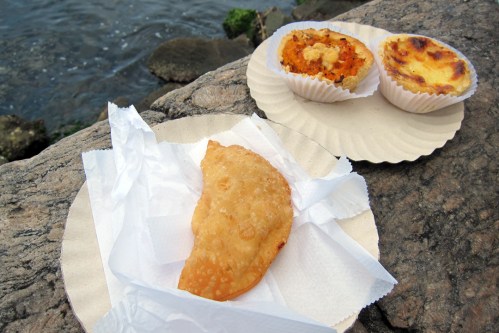
Bar Urca Salgadinhos by the water
The empada was the standout, and it was perfectly hot and flaky. Despite being in a pastry crust, the shrimp seemed fresh. The queijo pastel was a little more forgettable, but the Siri was also delicious, and had a hint of palm oil which gave it a Bahian flavor. We sat on the rock wall and enjoyed our treats as we anticipated the sunset. Though the salgadinhos are good, the best part about Bar Urca is its view, so make sure you are there on a clear day.

The View at Bar Urca, Rio de Janeiro
Amandine
177 Rue Mohammed Al Béqal
40000 Marrakech, Morocco
 While in Marrakech we stayed in the famously labyrinthine Medina, and soon became accustomed to getting lost into its narrow streets and winding alleys. However, to only visit the Medina is to miss the other half of Marrakech: the ville nouvelle. The new city of Marrakech is a world away from the Medina: streets are wider, buses and cars outnumber foot traffic, and French cafes dot the landscape. One of the best French cafes in the new city, and a perfect place to stop in for a quiet respite is Amandine: both a tea/coffee shop and a patisserie. You can eat in the bakery itself (as we did) or in a larger tea room next door.
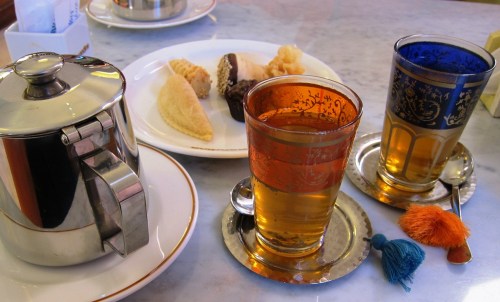
The interior of Amandine is bright and airy, and the attractive pastry case is filled with a wide selection of French and Moroccan influenced pastries and cakes. We found the gazelle horns here to be superlative, though there were dozens of varieties of other sweets to try. To be honest, we don’t know the name of any sweets we ordered other than gazelle horns, but since most Moroccan-French pastries are amalgamations of sugar, chocolate, honey and nut paste, we figured we couldn’t go too wrong (and we didn’t). After a lot of pointing at various confections we selected our drinks. The mint tea came particularly recommended – so we got a teapot to share (30dh – about $4). The presentation was the finest we had seen at any café in Marrakech, and we liked the gilded multicolored teacups as well as the tassel-embellished saucers (which we searched for but could not find in Marrakech). And what could be nicer than sinking into a comfy red velvet lounge chair while enjoying all of your sweets. The service was friendly and relaxed, and it was a much needed respite from the bustling pace of the Medina. So if you are looking for someplace soothing to sample mint tea in the ville nouvelle, definitely check out Amandine.

Filed under Coffee, Pastry Post-Poc, Reviews
Bibi Sucos
Avenida Ataulfo de Paiva, 591A – Leblon
Rio de Janeiro
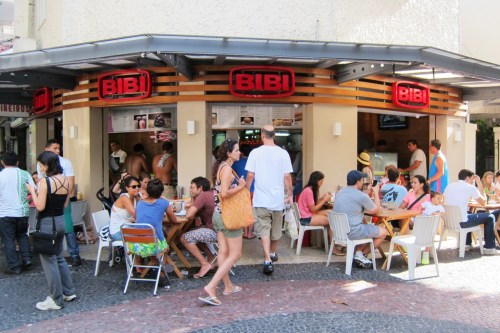
Bibi Sucos, located just past the Leblon/Ipanema border in Rio’s south zone, is an inviting place for sucos in an area of the city full of choices (Bibi has a few other locations in the city, including Barra). With an extensive menu of juices, sandwiches, and other options, it seems to be as great of a meal spot as an açaí destination. L&M, spending the day in Leblon, felt Bibi Sucos was worth a stop – our second in our quest to find the best açaí bowl in Rio! After some initial confusion over the menu – which does not denote mL sizes for the bowls – we settled on a pequena, whose size, as seen below, does not really fit with the name.

Value: 1/5 Our pequena (by the look of it, about 500 mL, or more) was R$12.50, with a R$2 extra charge for granola. The extra granola charge put us off a bit, and raised the price. Total: R$ 14.50.
Taste: 12/15. Very good. Our açaí had a tasty açaí flavor with a few added fruits, but had the tendency to be slightly bitter in places.
Texture: 8/10. Overall smooth, but had hints of graininess that could have been worked out. Sometimes the graininess can be a good thing, but if it gets hints of gritty, we find it to be a turnoff.
Granola: 5/5. In a separate cup with cashew bits? Five points!
Extras: 5/5. Great other factors at Bibi. Extensive outdoor seating for a sucos places, along with refreshingly prompt service. The menu, in addition to an impressive range of açaí add-ons and sizing options, had a wide range of sandwiches, burgers, omelets, and salads available (all of which looked delicious). Best part: this was the first place to give us two spoons without us asking for them!
TOTAL: 31/40 – Good enough for the smallest of leads over Vero Suco, our go-to place in Centro.


 Eating The World