Chocolataria Equador: Portuguese chocolates with style

Equador

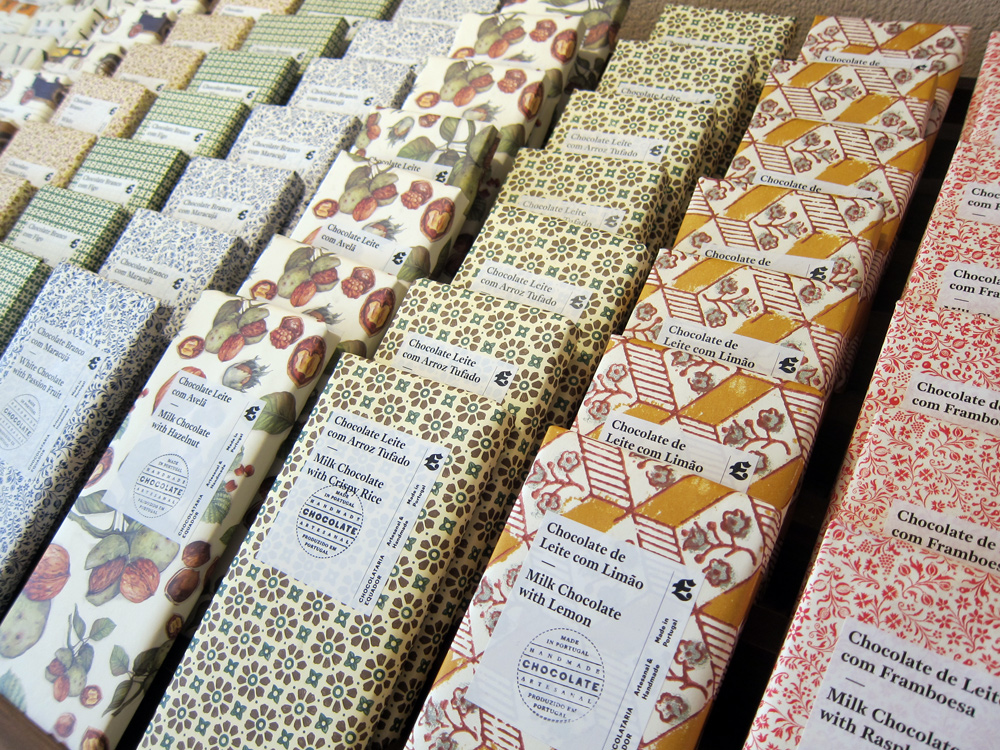
We are going to NYC this weekend, home of one of our favorite chocolate purveyors, Mast Brothers (shop located at 111 N 3rd St, Brooklyn, NY, though you can get the bars elsewhere). Along with having superlative chocolate, we appreciate Mast Brothers’ attention to detail with the clean, simple packaging with interesting papers. While in Lisbon, we came across a store that reminded us a lot of the Mast Brothers’ aesthetic, Chocolataria Equador (Rua da Misericórdia 72, Lisboa). Located in the Chiado district in central Lisbon (with another location in Porto), this elegant and minimalist Portuguese store sells dark, milk and white chocolate bars with flavors including sea salt, port wine, crispy rice and hazelnut, as well as pure bars without any add-ins. The the chocolate is from around the world, but the bars are handmade in Portugal, with beautiful packaging. Though a little pricey, the chocolate bars came in a variety of sizes for appetites big and small. We sampled an 80% single origin bar – which was phenomenal – perfect for those who like their chocolate to be intense. Inside the shop, there is also a counter with beautifully-decorated truffles and other tidbits for a sweet tooth, including a riff on the iconic-in-Portugal chocolate umbrella. Chocolataria Equador is definitely a must-visit for any chocolate (or design) lover in Lisbon.

1 Comment

Filed under Finer Things Club, Reviews

Preparing for Paczki Day in Chicago

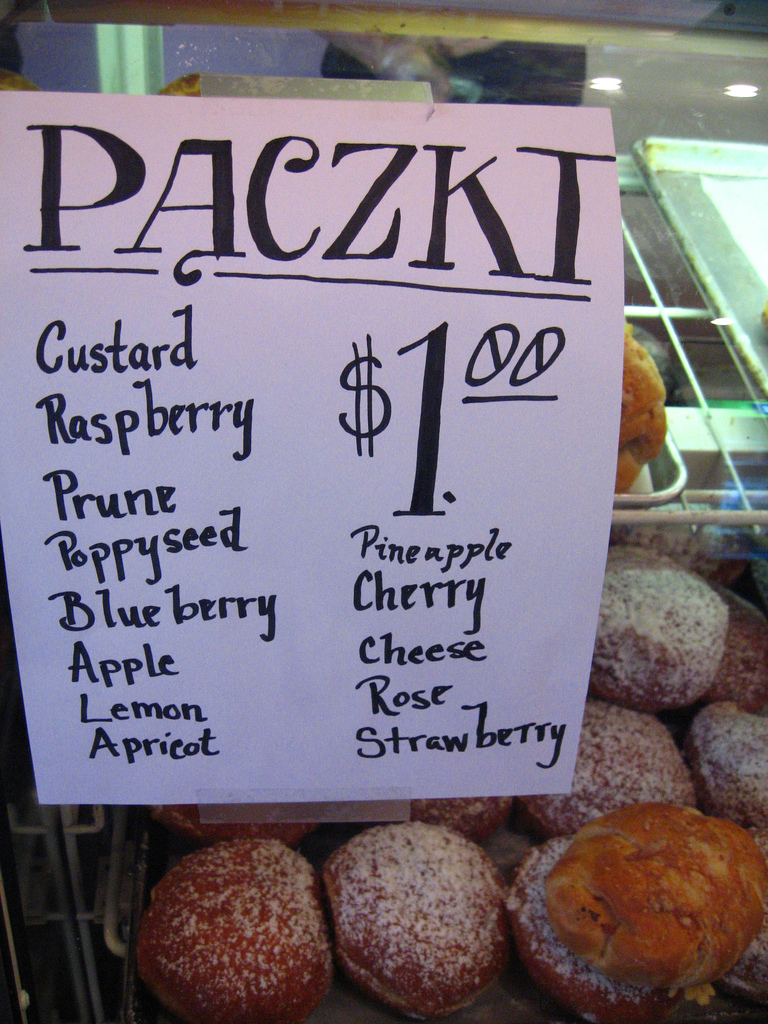
Tomorrow is the Thursday before Mardi Gras – fat Thursday – which means it is paczki day in Chicago – an unofficial holiday which is an opportunity to gorge oneself on Polish filled doughnuts called paczkis. We have done a little bit of paczki coverage over the years, and there are ton of places in the Chicagoland area that serve up great paczkis around this time of year, both traditional and inventively-flavored. Time Out Chicago has a shortlist of paczki bakeries, and DNA info has paczki locations mapped out. Evanston bakery Bennison’s even has a paczki-eating competition on Feb 14 for diehards.
Paczki

2 Comments

Filed under Holidays

Warm Weather Memories of Key Lime Pie

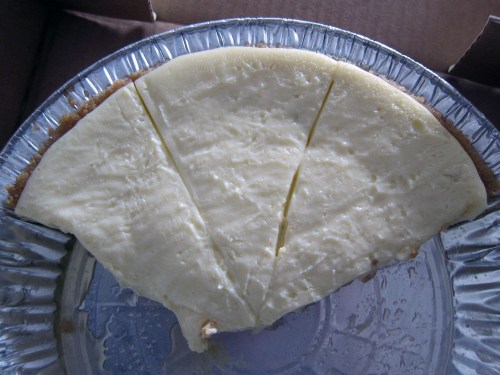
We just returned from Miami, where we enjoyed the warmth, good coffee and the key lime pie, a staple of the region. Key lime pie is a custard pie made from tiny key limes (or often the more common Persian limes that most of us deal with) condensed milk, eggs and with a graham cracker crust. The use of condensed milk was born out of the lack of refrigeration in the area until the 1930s!  Apparently, actually using real key limes is somewhat rare, since many of them were actually destroyed in the 1926 hurricane which devastated Southern Florida. Who knew? Despite key lime pies being available throughout the country (even in Brooklyn), when we visit South Florida we have to sample some of the classics.

wpid-0124151708a.jpg

Why did we leave Southern Florida?

The first pie in the area we sampled was in Key West, at the aptly named Key West Key Lime Pie Company (511 Greene Street, Key West, FL). There are a ton of companies touting Key Lime pie in Key West, but we heard this was the best around (YMMV). The store was shockingly key lime green, which, to be honest, made us want to go inside even more. The only thing for sale were key lime pies and variants of pies, like chocolate-covered pie slices on a stick, and key lime paraphernalia and postcards. We brought back a whole pie and shared it with our friends K and M in Miami, and the pie was great! It was tart and creamy filling (not gel-like as versions some can be) and with a cookie crust. Back in Miami, we also tasted key lime pie from Keys Fisheries (3502 Gulfview Avenue, Marathon, FL). Though made in the keys, these pies are also available from Whole Foods stores in the Miami area. This was an excellent key lime pie, with a pale, creamy filling and a sweet graham cracker crust. We really loved both of these Keys-made pies, and it has inspired us to make one of our own, hopefully soon, to re-capture some of the warm weather. Do you have any favorite key lime pie bakeries or recipes?

KeyLimePie

Keys Fisheries Key Lime Pie – yum!

1 Comment

Filed under Pastry Post-Poc

Pastry Post-doc in Portugal: Escangalhado

CrazyPastryportugalThe name of this pastry says it all. In Portuguese, escangalhado means “messed up” and this pastry is basically a chaotic creation, made up of puff pastry and egg yolk cream. The bottom layer is merely a square layer of puff pastry, on top there is a huge dollop of cream onto which tons of puff pastry shards are stuck, all topped with a flurry of powdered sugar. There is no elegant way to eat this treat. We basically used the puff pastry as chips to scoop up the cream. We saw this special treat at only one location in Lisbon, one of our favorite bakeries, Pastelaria 1800 (Largo do Rato 7, Lisbon, Portugal). Have you ever seen it anywhere else?

Leave a comment

Filed under Pastry Post-Poc

Cake tour of Lisbon

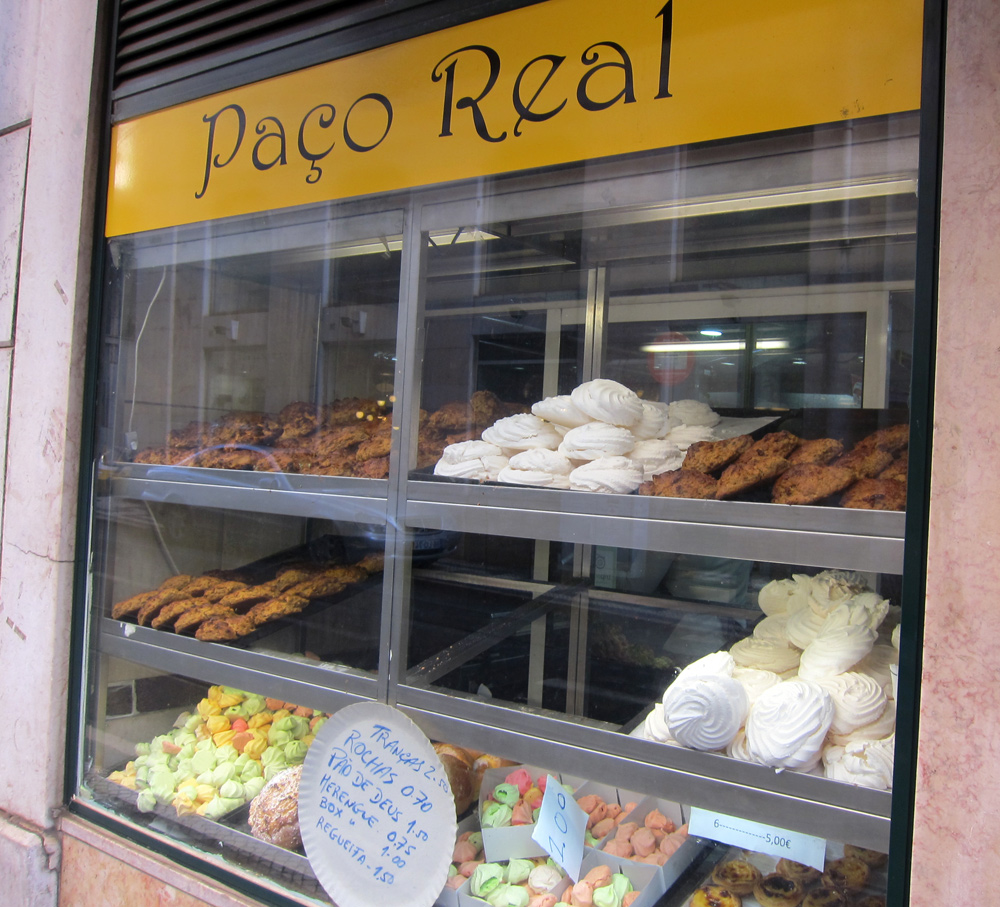
portugalBeing the Portuguese pastry fans we are, we were excited to meet up with one of the masterminds behind the indispensable Portuguese patry guidebook, Fabrico Próprio, Frederico Duarte, for a cake tour. Frederico was generous enough to show us around the city to some hidden bakery gems of Lisbon. While we had previously visited the big names like Versailles and Confeitaria Nacional, Frederico helped us uncover yet another layer of sugary, pastry goodness in Lisbon.PacoRealWe first visited Cafe Paço Real (Rua da Conceição 55) an understated cafe with a full savory menu in addition to the bakery counter, in the heart of Baixa. When you walk in, you will notice one feature immediately: there is an azulejo mural of the ubiquitous Portuguese statesman Marques de Pombal on the wall. However, we were most drawn by the wide variety of pastries on display in the street-facing windows, which Frederico told us was more traditional in bakeries of the north, something we had not noticed to this point. We tried the specialty of the house – a unique treat for us – the rocha (“rock” in Portuguese). These little cakes do indeed have a somewhat craggy appearance, but the texture was almost like a banana bread, unlike a sponge cake or puff pastry. It was cakey, not too sweet, and contained bits of citrus peel and more than a hint of cinnamon. This was a different type of pastry and was a nice change from sugar and egg yolks.
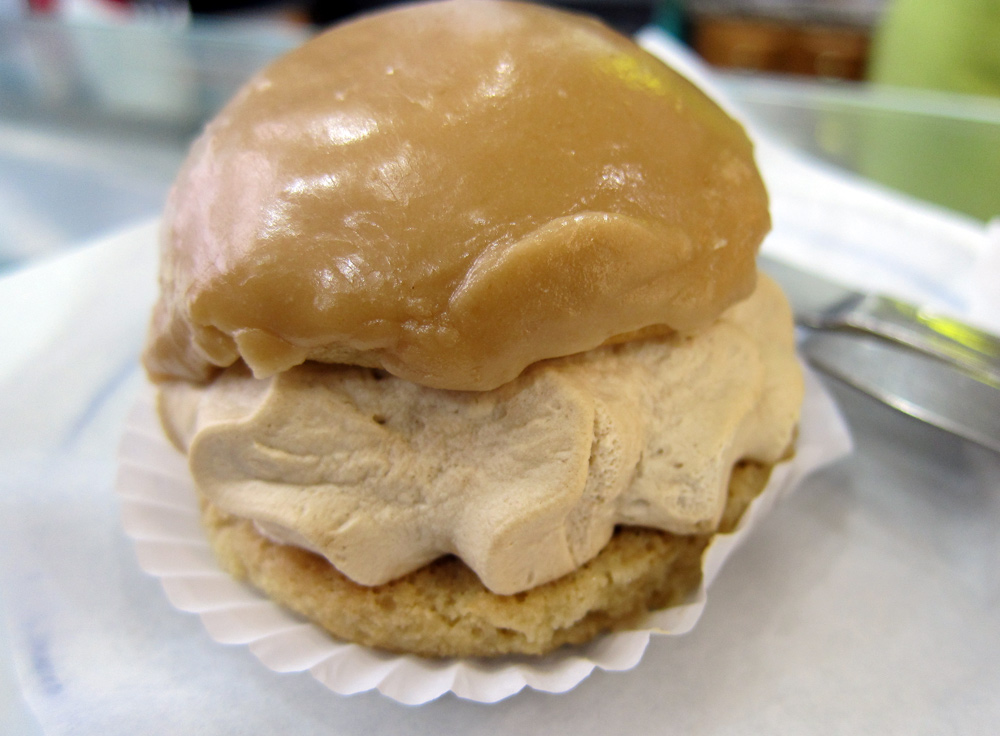
RochaThe next stop on the cake tour was another old school cafe in Baixa that Frederico was familiar with: Cafouro (Rua do Ouro 177), usually spotted by its triangular “Tofa” brand coffee signs. There, Frederico recommended that we try a geladinho, a coffee-flavored version of the Indiano pastry in Fabrico Próprio. This pastry was composed of two layers of cake, split in the middle and filled with a coffee pastry cream and a shiny coffee glaze. The pastry was moist and delicious, and we appreciated the unique coffee flavor, not especially common in traditional Portuguese pastries. Like Paço Real, we definitely appreciated the down-to-earth vibe of Cafouro.
GeladinhaNext, we took the iconic #28 yellow tram up to the School of Hospitality and Tourism of Lisbon, located in Campo de Ourique, in the historic Palácio dos Condes de Paraty. Here, we got a glimpse of future pastry chefs hard at work in the teaching kitchen. Frederico also told us about the techniques manual that you can now buy along with Fabrico Próprio, which makes sense since so many people were intrigued to try the recipes behind the desserts in the book. However, due to the semi-industrial nature of most Portuguese baking, these pastries are not generally meant for a home cook (rats!). Still, we hope to try our hand at making them someday.
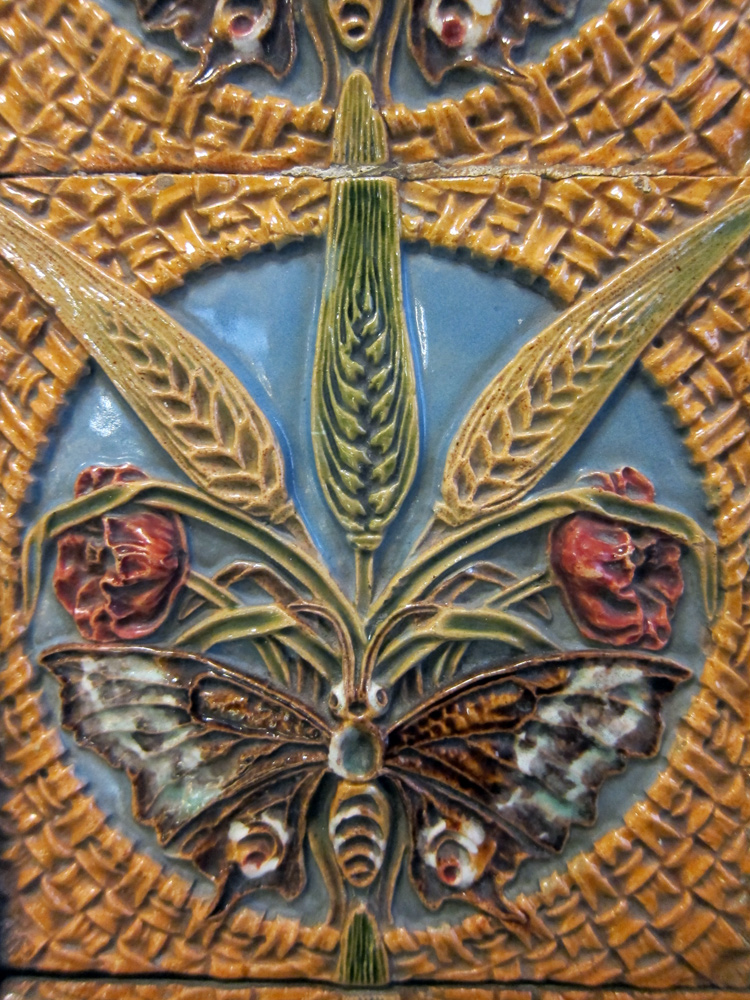
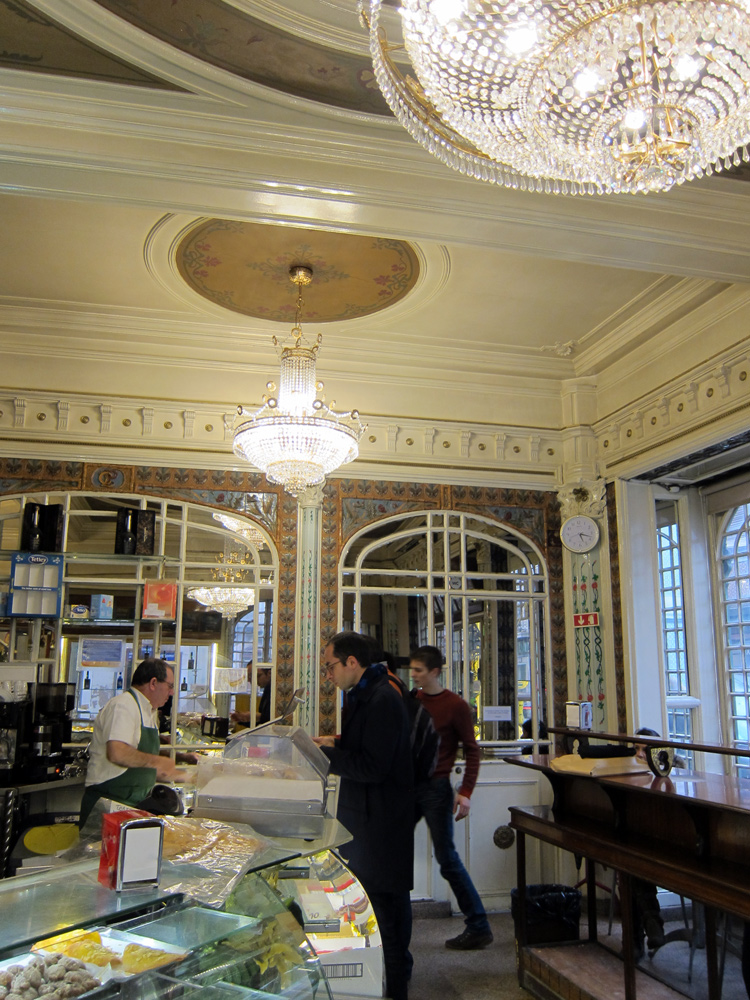
WheatTileAround a nondescript corner we came upon a truly old school cafe, Panificaçao Mecânica (Rua Silva Carvalho 209), our final stop on the cake tour. This was by far the most unusual stop on the tour, a pastry shop crossed with a breadmaker. The opulent setting was the highlight of the cafe, with two large crystal chandeliers and two types of Bordallo Pinheiro azulejos with wheat motifs (seen above and below). We not-so-secretly covet these azulejos for a future kitchen.

Chandalier

The inside was straight art nouveau, with some anachronistic 1950s plastic-y touches. They had a variety of traditional pastries as well as a wall of breads and an unusual streusel from the Alentejo region. We ordered a new-to-us type of cookie, called a Húngaro (yes, after the country Hungary), and a passable Pastel de Nata. The Húngaros were two sugar cookies joined with cherry jelly and coated in chocolate. Another showpiece of the cafe were the bolinhos de Algarve, little marzipan cakes in the shape of fruit, which reminded us of some of the marzipan candies we had seen in Sicily and Naples.

Hungaros

We finished up at one of our favorite Pastelarias for a superlative Pastel de Nata, Pasteleria 1800 (Largo do Rato 7), brightly decorated with yellow, blue and white azulejos. Though not officially on the cake tour, we were excited to return to one of our favorites before parting ways with Frederico. The cake tour was certainly one of our Lisbon trip highlights. We visited bakeries we would have never noticed, thanks to Frederico’s guidance, and gained an even greater appreciation for the world of Portuguese pastries. Thanks so much for showing us around town, Frederico!WheatTile2

1 Comment

Filed under Pastry Post-Poc

A Nutella Round-Up for Nutella Day

NutellaCookie

Happy World Nutella Day! We have written about several Nutella-concept shops throughout the world, and in honor of Nutella Day we wanted to do a little update on a few of these locations. We are sad to report that the Nutellerias  in Germany and Bologna may have closed, while there is a new Nutelleria location in Leiria, Portugal. Additionally, the Nutella concept store in NYC, which we first reported on in Fall 2014, now named Nuteria, has opened one location, and will soon open another [update: they are also being sued by Nutella’s parent company…]. If you are in the mood for some Nutella closer to home, there are certainly a lot of great recipes to tempt you, including these salted dark chocolate Nutella sandwich cookies from Faux Martha (pictured above). Nutella in both the cookie and the filling – seems pretty appropriate for Nutella Day. Or how about a Nutella babka?

1 Comment

Filed under Note, Recipes

Portuguese Pastry Post-doc: Bola de Berlim

BerlimportugalIch bin ein bola de Berlim. Yep, this is an offshoot of the Berliner, the classic German jelly donut. The Bola de Berlim is popular throughout Lisbon, and is a basically a fried donut split and filled with yellow egg yolk-based cream found in many Portuguese pastries, creme pasteleiro. However, we have also seen them filled with chocolate cream, occasionally. The regular and mini-sized classic BdB above are from the Padaria Portuguesa bakery chain, though you can get them pretty much anywhere pastries are sold in Lisbon. M liked these as a Portuguese replacement fix for his beloved American donut (though we saw some bizarre prepackaged versions of “American donuts” in the supermarket as well). You can even make Bola de Berlim of your own at home.

Leave a comment

Filed under Reviews

We’re on Instagram!

MiradouroAlcantaraWe figure we take plenty of pictures of our adventures – so we should put them to even better use. Follow ETW on Instagram here. Let’s be friends!

Leave a comment

Filed under Note

Exotic Portuguese Produce: Anona

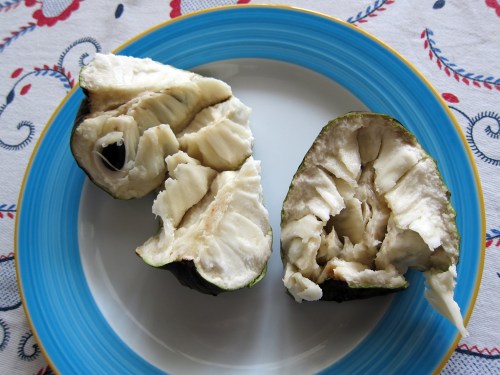
Anona2portugalWhen we were in Brazil we felt like we were in a paradise of exotic fruit, and we certainly tasted a few unique varieties. When we arrived in Portugal, we put our hunt for exotic fruits aside. However, we were stopped in our tracks by an exotic Portuguese fruit that bore a striking resemblance to the Brazilian sugar apple, the anona. When we saw the distinctive green nubby shell in the grocery store we did a double take. It looked like a sugar apple, but with less nubs. The greengrocer informed us it was from the island of Madeira, and was ripe when soft. After two days, we broke the anona open, and like the sugar apple, it had white fleshy nodes surrounding large black seeds. The flavor, while similar, tasted a bit more like banana. We were happy to find the anona though it gave us saudades for the sugar apple.Anona

Leave a comment

Filed under World Eats

Comida de Santo: A taste of Bahia in Lisbon

brazilWe often complain that we can’t find a good moqueca outside the Brazilian state of Bahia. This Northeastern Brazilian coconut milk and palm oil stew is one of our all-time favorite dishes. So when we learned there was a restaurant in Lisbon specializing in Bahian specialties, Comida de Santo (Calçada Engenheiro Miguel Pais 39, 1200 Lisboa, Portugal) we thought we would give a foreign moqueca one last try. Thanks this visit, we were also introduced to the elegant Principe Real neighborhood, where we really enjoyed meandering around the architecturally-interesting streets full of boutiques and antique shops. The restaurant’s name means “food of the saints,” and had an extensive menu featuring food from Bahia and other parts of the Brazilian Northeast, a region of the county whose culture and cuisine has a heavy African influence, and is hard to get outside of Brazil.

Mural

The decor of the cozy restaurant is very cute, we immediately liked the colorful green mural with the armadillo (above), and the classic “namoradeira” woman statue in the window (below). Anyone who has been to Brazil will recognize this statue immediately, since she pops up everywhere. We stared with the standard couvert of bread and olives (€2 – bread and butter is not free with a meal in Portugal), as we perused the menu. We noticed that there were also a smattering dishes from the Minas Gerais region of Brazil, including Mineiran couve (collard greens), we were a little disappointed that there was no pão de queijo available, an essential Minas staple. We waffled among a few of the entrees, including pichanha steak (€18), Carne do Sol (€18) and the requisite bean and meat stew, feijoada (€16.50). However, we knew we had to try at least one moqueca, which came in fish, shrimp and vegetarian varieties. As is our tradition, we went with the shrimp (€20). M was also pleased to find one of his favorite dishes, Xin Xim da galinha (€16), a stew made with shredded chicken. The service, meanwhile, was friendly and efficient

Statue

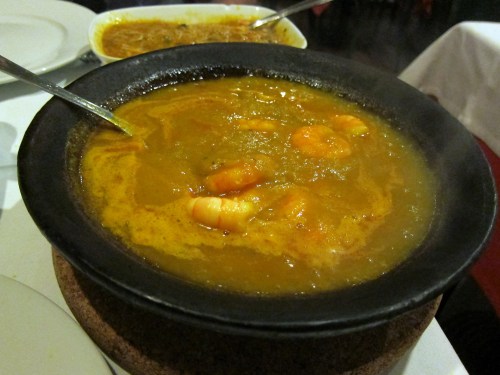
We were pleased that the moqueca came out in a traditional stone dish and was bubbling: a very good sign. Moquecas typically come out with fixings; this one came with the classic farofa, rice, and malagueta sauce. We might have a likes a few more accompaniments like beans and vatapá. The moqueca itself was good, and had a generous amount of palm oil, but maybe needed a little more coconut milk. The xin xim was a hearty portion of shredded chicken with a smoky spiced flavor, and was a welcome and familiar dish we had not found much outside Brazil. The portions were extremely generous, which left us thinking that perhaps one portion was meant for two. Were we not so stuffed we might have made room for the quindim, a egg yolk pudding (€5). While our moqueca experience was perhaps not as transcendent as Axego in Salvador, Comida de Santo gave us heart that there can be hope for an international moqueca. Though we still need to find somewhere to get acaraje abroad!MoquecaLisbon

Leave a comment

Filed under Reviews

The best roast chicken in Lisbon: Frangasqueira Nacional

portugalOur noses led us to the Frangasqueira Nacional (Rua da Imprensa Nacional 117, Lisbon, Portugal). We were on our way to another restaurant in the area when we smelled the delicious roast chicken and spotted the tiny shop down the travessa. We knew we absolutely had to return, so we stopped in a few days later. Though the name is a tongue twister, don’t be intimidated – it just means “national chicken shop.” True to form, all they sell are ribs, sausage and the piece de resistance: roast chickens! Though everything looks great, obviously you are here for the chicken.

Frangasqueira Nacional

Frangasqueira Nacional

This is a take-out-only shop and 2/3rds of the store is given over to a giant charcoal grill with an expert griller manning it. When we popped in on a rainy night, the entire grill was full of spatchcocked chickens with various stages of char, and a small line of hungry Lisboetas. Everything in the shop is sold by weight (chicken is €16 a kilo), along with a small selection of extras including fries, rice, tomato salad, chocolate cake, and a refrigerator of cold drinks and beer. You can get your chicken plain, or with spicy piri piri sauce, which was billed to us as only a little hot (don’t worry it isn’t too hot at all). They are crazy about piri piri in Portugal, a sauce made from malagueta peppers, citrus, lemon and garlic. The non piri piri chicken baste was also flavorful, with a hearty helping of salt and garlic.

Frangasqueira Nacional

Grillmaster at Frangasqueira Nacional

A blackboard informed us that a chicken was usually about 3/4th of a kilo, so over 1.5 pounds, which we figured was more than plenty for the two of us. As you can see, unlike in the US, these chickens appeared to be of a normal size. With a side of rice, our whole meal clocked in at less than €12. Don’t worry about having to cart home an unwieldy bird: the grillmaster had a huge pair of scissors with which he cut the chicken into about 8 pieces expertly and efficiently. This seemed like the perfect size for us, but if you would prefer a sampler, there are a variety of deals where you can get a combination of meats for well less than €10.

Frangasqueira Nacional

Chicken’s ready!

There is no place to sit inside the shop, but if the weather is nice, a perfect place in would be in the elegant Príncipe Real garden, which is only a few block away and has an awesome quiosque. We opted to take ours home, where it fed us for 2 meals! Even after a half hour subway ride home: the chicken was delicious, juicy with a crispy skin. It was amazing and certainly one of the best roast chickens we have ever had! We are so happy we found the Franguesqueira, it has become one of our go-to Lisbon places. If you are in the mood for a good, cheap and comforting meal, we can’t think of a better deal in the city.

2 Comments

Filed under Reviews

LIS > MIA > ORD

image

Palm Beach at dusk

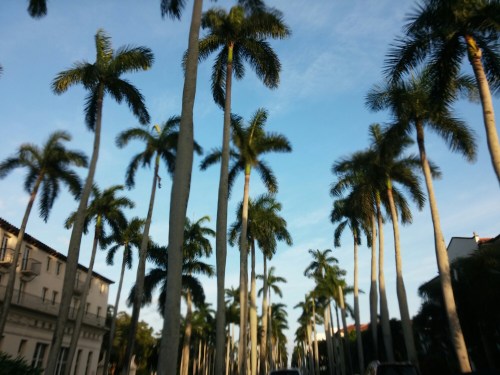
We are finally back from our sojourn to Lisbon, and managed to fit in a weekend in Miami with friends and family along the way back to Chicago. While it’s nice to be back home, the sunny Florida scene pictured above makes us wonder if we really should have come back to brave another Chicago winter. Recaps of our Lisbon and Miami adventures coming soon!

Leave a comment

Filed under Note

Mozambique in Lisbon: Cantinho do Aziz

Restaurante Cantinho do Aziz
Rua das Fontaínhas de São Lourenço 5
Lisbon, Portugal

Mozambique

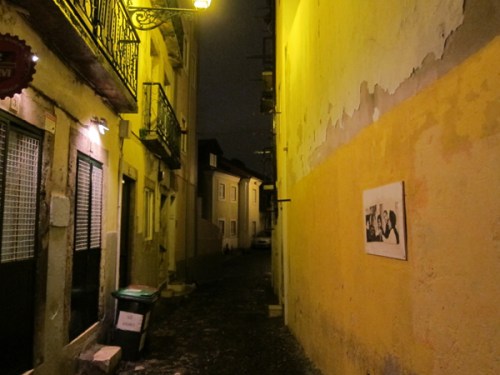
If you’re looking for fantastic Portuguese food, Lisbon is the place. But Lisbon is also an excellent one-stop option if you are looking from food from other Portuguese-speaking countries. In previous visits to Lisbon we have sampled Cape Verdean, Angolan, and Goan (Indian) cuisine, but Cantinho do Aziz was our first experience with Mozambican food. We had heard nothing but good things about Cantinho do Aziz, so were excited to check it out. Be forewarned: the place is a little hard to find, located on a narrow street in the old, labyrinthine Mouraria district of Lisbon, up flights of stairs from the Martim Moniz Largo, a hotbed of Indian and African shops and culture. You have found your destination
IMG_9108

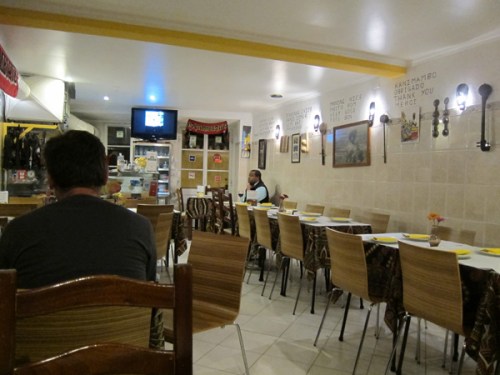
In the middle of winter, Cantinho do Aziz, seems to be a small restaurant. Tucked away in the building shown above, Aziz, the amiable and gregarious owner, would later assure us that during the warmer months hundreds of people dine here each evening, in the huge outdoor seating area that was currently closed, listening to Mozambican and Cape Verdean music while they enjoyed their meals. Indeed, if we ever come back we will surely eat outside; but even so, the Aziz’s menu had a ton of delicious-sounding options, many of which were totally new to us. Aziz was more than happy to guide us through the menu and tell us about the restaurant, which had been on the same site for decades. Aziz recommened the charmussas (€1) to start, a word related to the Indian samosa – a cognate that should already clue in diners to the fascinating history of cultural exchange in the Indian Ocean that infuses Mozambican cuisine. Indeed, we ordered two charmussas, one vegetarian and one beef, and in biting into his, M stated that it “tastes like the Indian Ocean.” Being a fire-breather, he was also a huge fan of the potent and flavorful habanero pepper sauce that accompanied the charmussas.

IMG_9102

For entrees, we went with the Zambezi chicken (named for the river that flows to the Indian Ocean through central Mozambique) and the makoufe. The Zambezi chicken (€5) was similar to the roast chicken we had at the Angolan restaurant Moamba and featured a charred, flavorful skin. The makoufe (€9), voted the best dish in Lisbon by Time Out magazine in 2013, was the more complex option and definitely lived up to its billing. Reminding us of a Brazilian moqueca, makoufe stews generous portions of crab, shrimp and greens together with palm oil and coconut milk. Both dishes were delicious and heavily spiced (but not spicy). We were also impressed by the number of vegetarian dishes and appetizers on offer. The Cantinho drew a diverse crowd, and Aziz noted that it was even a popular lunch spot for workers from the American embassy. We can easily see why – we ate like kings for less than €20!

IMG_9104

Though we were pretty full, we could not resist getting some dessert – cashew fruit mousse. We first encountered the cashew fruit (yep, where the nut comes from) in Brazil, and were perplexed by its sweet cross of citrus, papaya and nut flavors. It stood up pretty well in mousse, too!

IMG_9106

Mozambican cuisine was definitely a unique combination of global influences we had never tasted before, and Cantinho do Aziz was the perfect place to try it. We were blown away by the tastiness, quality and low prices at Cantinho do Aziz. It is the perfect, friendly local option for fans of any cuisine. We hope to go back someday in nice weather to eat outside!
Cantinho do Aziz

Leave a comment

Filed under Reviews

Cheap Eats in Istanbul

turkeyWe had heard from an acquaintance that there was no good cheap food in Istanbul. That could not be less true! Much like Rome, there are a lot of tourist trap places with overpriced low-quality menus, aiming to make a buck on tired tourists by providing sub-par food. However, on the whole, we probably had better luck finding good, cheap food in Istanbul than Rome. One such example of the good options available is Melekler (113 Ipek Sok, off Küçük Parmakkapi Sok). Located in the bustling Taksim district of Istanbul, this place is blink-and-you’ll miss it small. However, the enticing menu of BBQed meats keeps it pretty packed.
MelekerIstanbul
M ordered a plate of Spicy Urfa kebabs, delicious grilled pita and roasted tomatoes. As you can see above, the portions were more than generous. L had a broiled chicken durum wrap that was even cheaper! Durum flatbread wraps are the specialty of the house here, and are definitely worth a try. Dinner was less than 12 Lira, and the tasty BBQ spread certainly fed the two of us. Melekler is open for lunch and dinner –  cash only (though you won’t need to bring much). If you are looking for another quick place for a cheap eats even closer to the touristic center, we also recommend Sultanahmet Köftecisi (Divanyolu Caddesi 12A, Sultanahmet) for amazing, cheap quick kebabs right in the heart of town.

Leave a comment

Filed under BBQ Tour, Reviews

Portuguese Candy Surprise Game: Caxia de Furos de Chocolate

portugalAt snack shops and convenience stores around Portugal, you will often see a perplexing yellow and red box with punch holes near the cash register. We learned that it is in fact an awesome game-of-chance involving chocolate candy, called a “Caixa de Furos,” literally a “box of holes” in Portuguese. The boxes are branded by the chocolate brand Regina, so the surprise you receive will be chocolate. So what happens is you use a little pick to punch a hole in the white circle board and then a color-coded ball falls to the bottom of the box. Depending on the color of the ball, you get a different kind of chocolate candy from behind the counter. We tried our hand at a box and got a yellow ball, which got us a Regina chocolate umbrella, one of the most iconic Portuguese treats. You can even buy a small version for your home (which might by dangerous).

Caixa Chocolate

“Take-Home” Caixa de Fruos de Chocolate

Leave a comment

Filed under World Eats

Will 2015 be the year of Matcha?

JapanBon Appetit certainly thinks so. We have always been fans of matcha – powdered Japanese green tea, so we are look forward to seeing it become more popular in the US. From lattes to cupcakes to sugar cookies, matcha is good in everything.

Matcha

Matcha Latte by cgc76

Leave a comment

Filed under Tea

Portuguese Pastry Post-Doc: São Marcos

portugalAs the Pastry Post-Doc moves into 2015, I have reached the point where I am encountering more esoteric Portuguese pastries. At a recent visit to Chique de Belem (Rua Da Junqueira 524, 1300-341 Lisboa) – our 2012 winner of best Pastel de Nata – we encountered a rarer variety, the São Marcos. The kind waitress assured us that it was “really, really good!” So we decided to give it a shot. We recalled this pastry appearing in Fabrico Próprio. This rendition of São Marcos had a top and bottom layer of sponge cake, filled with whipped cream and topped with sticky, shiny caramel. One large piece was more than enough for two – typical of Portuguese pastries – it was a total sugar bomb!

SaoMarcos

Leave a comment

Filed under Pastry Post-Poc

Lisbon, a city of quiosques

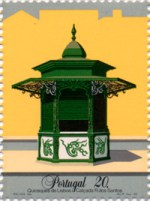
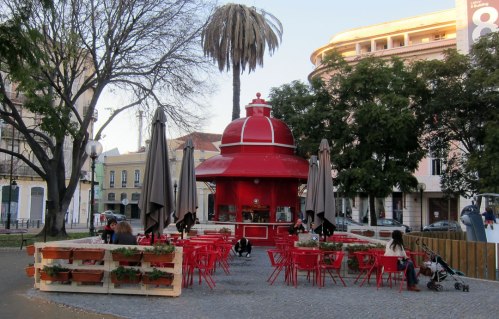
portugalQuiosque stampOne of the classic sights in Lisbon is seeing an elaborate beverage and snack stand in the center of a plaza or at the edge of a park. Now these are not modern, boxy newsstand-type places, these are cool, ornate turn-of-last-century (or earlier) ironwork masterpieces called quiosques (kiosks). Quiosques typically serve an array of snacks, coffee drinks, juices, and alcoholic beverages. Typically outfitted with metal tables and chairs, you can lounge for as long as you like: indeed, quiosques remain popular day or night. One feature we particularly love is that some quiosques have baskets full of blankets for customers to use if it get chilly. Since the quiosques are open well into the night, this can definitely come in handy. If you want some munchies with your drink, you can also get pasteis de nata, fried snacks like bacalhau fritters, and simple sandwiches. Quiosques are found throughout town, and have become one of the iconic symbols of Portugal, even appearing on postage stamps (at right). Though quiosques dot the entire city, one of the most popular cafes is located in the center of the Praça de Luís de Camões in the Chiado district, where you can really be in the heart of it all.
QuiosqueSaoRoqueSome quiosques – called “quiosques de refresco” – even specialize in traditional beverages like the rarer mazagran, an iced coffee mixed with rum. Though quiosques are usually classic in design and menu, there are a few outliers, including the Bananacafe quiosque in Belem that is located in a refurbished yellow tram; and the bright red Soundwich cafe in Cais do Sodre that serves gourmet sandwiches (below) with an eclectic soundtrack. Other updated quiosques are found in the parkway of the main thoroughfare Aveneida Liberdade.
SoundwichQuiosque
Quiosques are also usually located in Lisbon parks with views called miradouros (literally “golden views”), which adds another wonderful element of relaxation to the quiosque experience. Enjoy your bica (strong Portuguese coffee) with a view. One of our favorite miradouro quiosques is in the Miradouro de São Pedro de Alcântara where you can get a good cappuccino and a cheese, prosciutto and arugula sandwich on French bread along with your view of the city below (see below). Though quiosques have been an integral part of the city forever, they have been experiencing a major revival in the past 5 or so years. We can definitely see why Lisboetas are flocking back to the quiosques. We have found that there is nothing more relaxing than sitting back with a coffee and watching the world go by.
QuiosqueAlcantara
MiradouroAlcantara

3 Comments

Filed under Coffee, World Eats

Fabrico Próprio, a field guide to the world of Portuguese pastries

FabricoProprio We are back in Portugal for the third time and there are still so many pastries to try! An invaluable resource for my pastry post doc has been the book Fabrico Próprio (which means “made in house,” a label you will see on many bakeries), which I purchased in Lisbon in 2012. The book, by Rita João, Pedro Ferreira and Frederico Duarte presents a social history of semi-industrial baking in Portugal, and also serves as a field guide, identifying 92 emblematic pastries and many iconic cafes through lovely pictures and Portuguese/English bilingual text. The book was clearly a labor of love, and the authors were quite thorough in their documentation of pastelarias throughout Portugal (but especially in Lisbon). We love using this book’s detailed photos and drawings as a guide to the sweet offerings in Lisbon, since the Portuguese pastry experience can sometimes be overwhelming. You can learn more on the book’s comprehensive website. We highly recommend this book! Fabrico Próprio is available on the book’s site for 35 euros – and with free international shipping!

3 Comments

Filed under Books, Pastry Post-Poc

Lisbon Gastronomic Tour 2k15

Chique Pasteis

Back to the land of Pasteis de Nata

portugalWe are excited to be back in Lisbon, Portugal, one of our favorite culinary locations! One of our ETW team members has been in Lisbon for a week and has already indulged in the chouriço, cheese, olives, and our favorite: the pastel de nata (Portuguese egg tart), among other delights. However, now the second member of the ETW team is here – so the gastronomic adventures can really begin. Most importantly, how do our ratings for the best pasteis de nata in Lisbon hold up in 2015?

Leave a comment

Filed under Note