Tag Archives: Bahia

Bahia’s Best Restaurants: Candomblé Houses

Bahia, a large state in northeastern Brazil, has long been one of our second homes. We have made multiple trips to the region over the past fifteen years, with our time in Bahia oscillating between research, tourism, and eating its distinctive cuisine. Heavily influenced by West African techniques and ingredients (especially palm oil), the cuisine of Bahia’s coastline utilizes manioc, coconut, tapioca, and the region’s variety of fruits, fish, and meats. Bahia’s gastronomy is deservedly heralded among the country’s diverse offerings, and in recent years, the state’s capital city of Salvador is being increasingly regarded as a gastronomic destination. Many new upscale restaurants have opened in the capital, especially in Pelourinho (the old historic center) and the beachside neighborhoods of Barra and Rio Vermelho. And just this year, Ori, one of the city’s finest dining spots, was named #52 on the list of Best Restaurants in Latin America. Yet very few tourists, and even many locals, never realize that some of the city’s best local food is served in off-the-beaten-path religious spaces. Even more surprising? It’s often free.
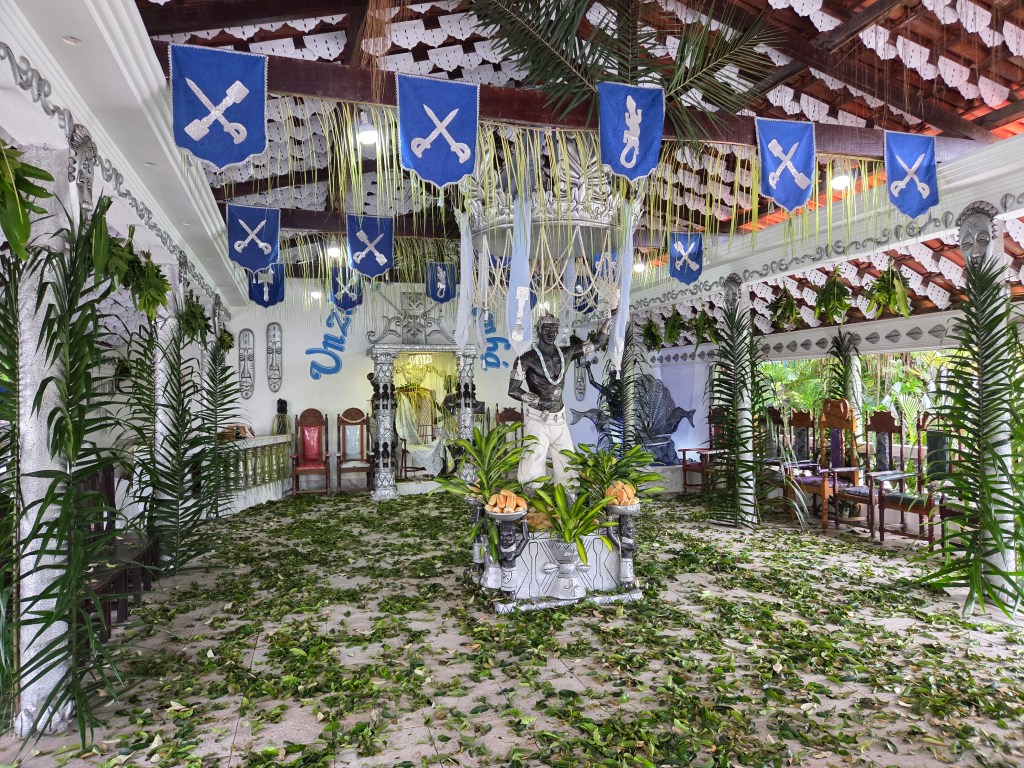
Ceremonial hall of the Terreiro de Lembá in Camaçari, Bahia, Brazil

Bahia is the historic origin point of Candomblé, an African-inspired religion that developed beginning in the nineteenth century. Candomblé is practiced in autonomous “houses” (called terreiros) that range from small homes to large complexes that can incorporate worship halls, museums, shrines, schools, and elaborate kitchens. Some of the most prominent and well-known Candomblé houses maintain well-cultivated social media presences and post the schedules of their ceremonies when they are open to the public. Candomblé ceremonies can be elaborate affairs, lasting four or five hours and incorporating dancing, music, singing, and stunning dress ensembles worn by the spirits. While ritual protocols can be elaborate, especially for outsiders – don’t wear dark colors, only take photos with permission, sit only in the chairs for visitors, and be sure to introduce yourself to the high priest before or after the ceremony – ceremonies can be surprisingly welcoming spaces. Indeed, it is part of the religion to create an atmosphere of acolhimento, a Portuguese term conveys a sense of easy, relaxed, and thorough welcoming.
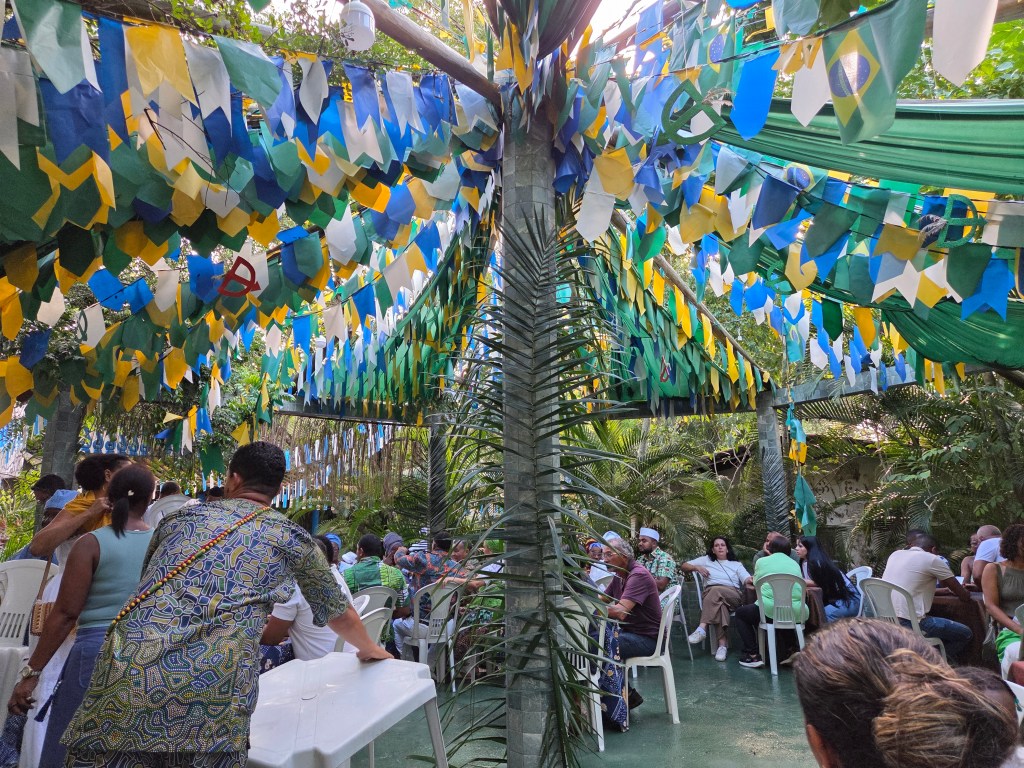
Outdoor eating / gathering space at the Terreiro de Lembá

In early June, M attended a Candomblé ceremony for the god Nikosi, a central African spirit of iron and warfare, at the Terreiro de Lembá, in Camaçari, a small city north of Salvador. Lembá is a spectacular site and sight: a complex of buildings and shrines amid verdant Atlantic rainforest. After entering, we were ushered to the area in front of the kitchen, where initiates of the house – dressed in white lace skirts and blouses and headwraps that are typical markers of female initiates to Candomblé – served slices of chocolate cake alongside lelê (a kind of coconut-and-corn sweet) and aipim. Aipim is the local name for a kind of sweet manioc that’s processed and mixed with a bit of sugar; it’s distinct from sour manioc (mandioca), which is used to make a flour called farofa that is served alongside, or on top of, most Brazilian stews and beans. Also on offer were two flavors of mingau: a slightly sweet, soupy drink made of tapioca and served warm.
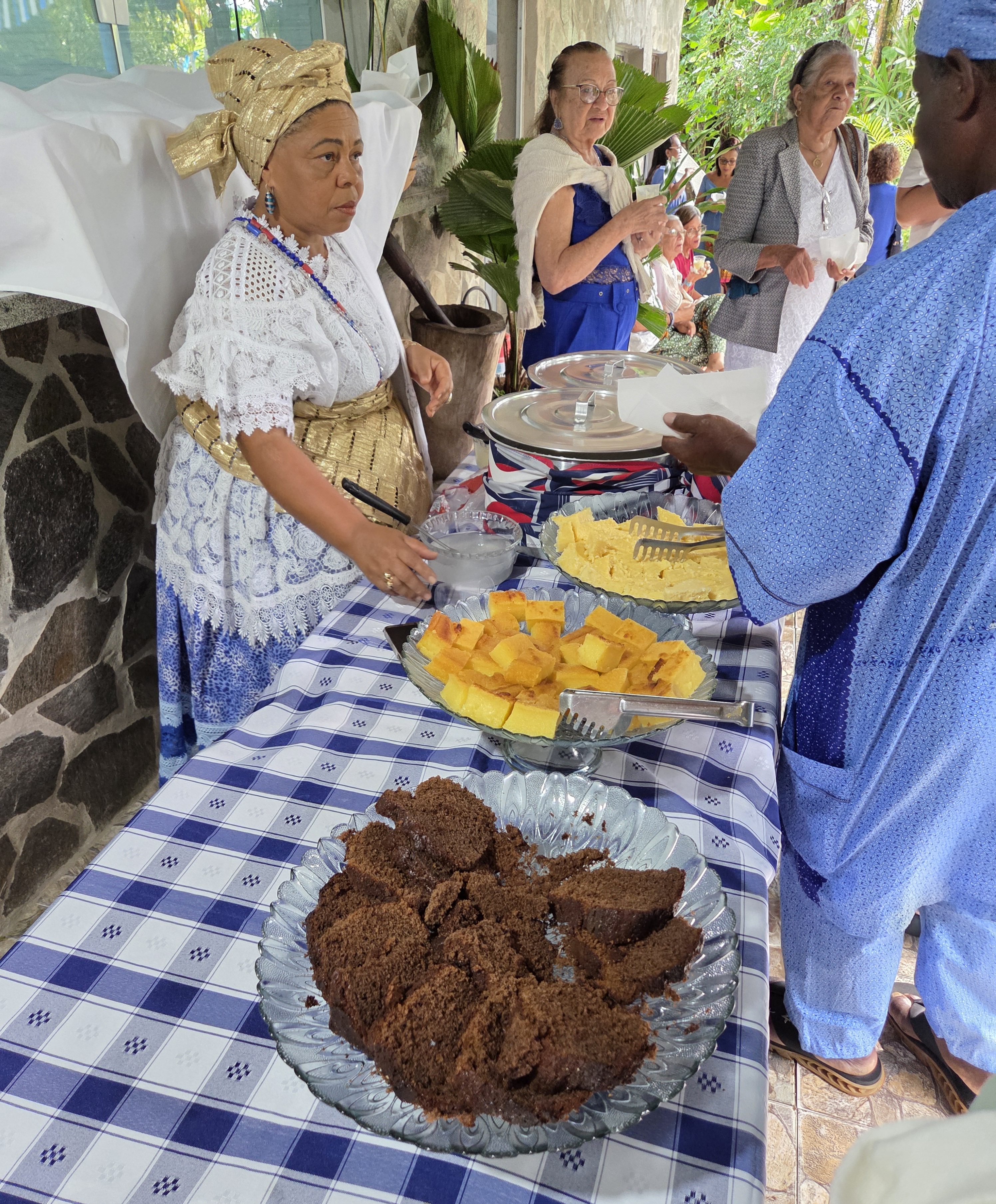
From bottom to top: Chocolate cake, aipim, lelê, and mingau

The ceremony began shortly after this welcoming snack, and lasted five hours: it was an elaborate, energetic, and visually sumptuous affair. Afterwards, all guests were asked to bring their chairs to an open area in the back, decorated with flags and surrounded by forest. Perhaps a hundred people had come, and all were treated to a hearty meal of feijoada: a classic Brazilian stew of beans and meat, served a slew of optional accompaniments: white rice; sliced tomatoes and cucumbers; the aforementioned farofa; and pimenta (a sauce of tomatoes mixed with spicy malalgueta peppers).
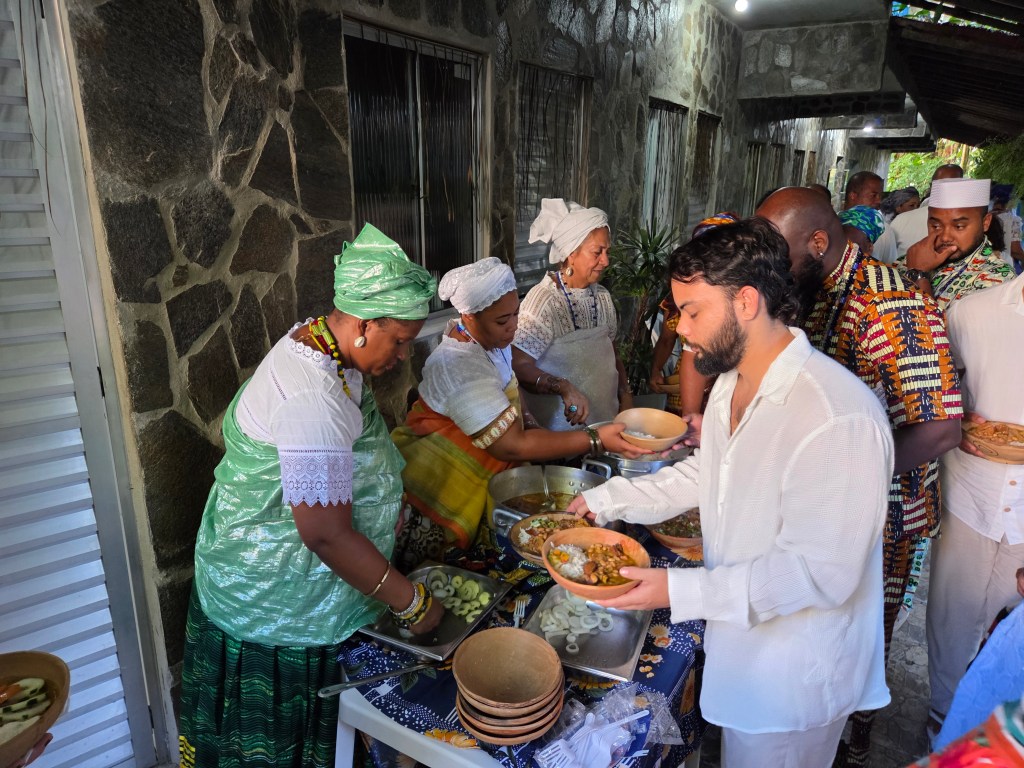
Initiates serve feijoada to guests at Terreiro de Lembá

Feijoada happens to be a food sacred to Nikosi (as well as his better-known Yoruba-based counterpart, Ogum). Each person got in line and was given a traditional clay bowls that had hand-painted geometric designs, while the women served each person in attendance their choices. Back at the tables, younger initiates attended to drink orders, bringing out waters, beers, and fruit punches; clearing tables; and quickly finding extra farofa when anyone requested it (like me).
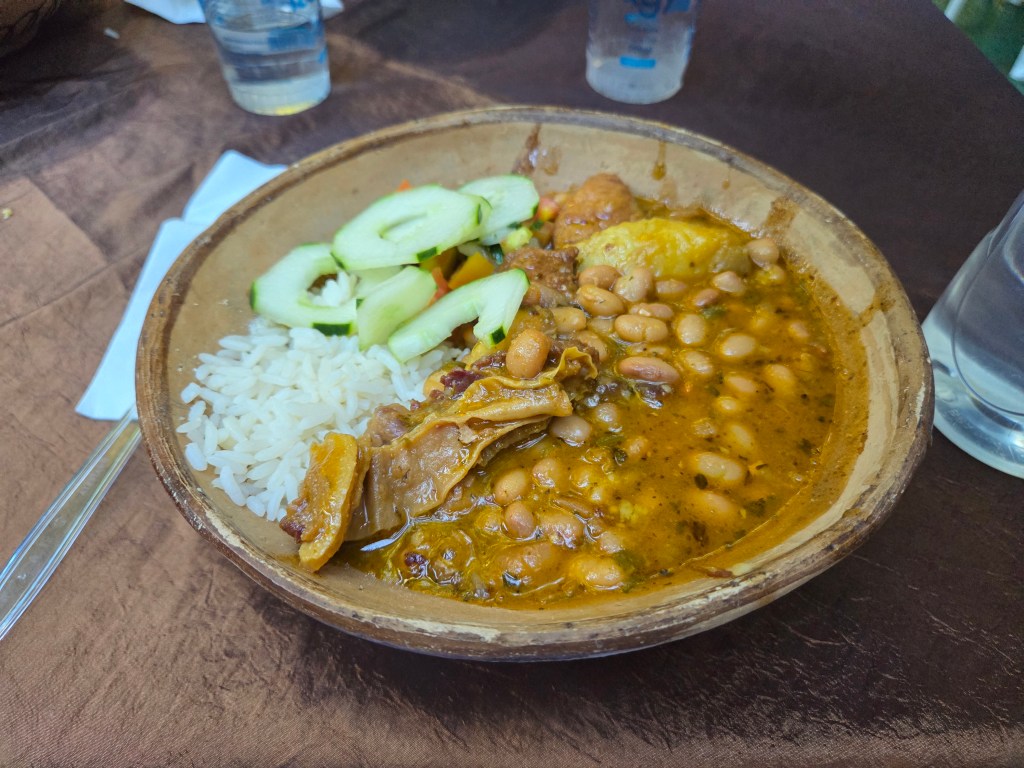
Feijoada, a hearty stew of beans and meat, served with white rice and sliced cucumbers

I’ve had a good number of feijoadas in my life, and this one could hold a candle to any of them: hearty, perfectly seasoned, alongside stellar rice. I went back for a second bowl without thinking about it. And then, before I left, the sweets came out, served table to table: aipim once again (happy to take seconds there too), and a little-known bolo de estudante (“Student’s Cake”) which, despite the name, is a croquette of shredded coconut mixed with tapioca starch, fried until it is crispy on the outside and soft on the inside, and rolled in sugar.
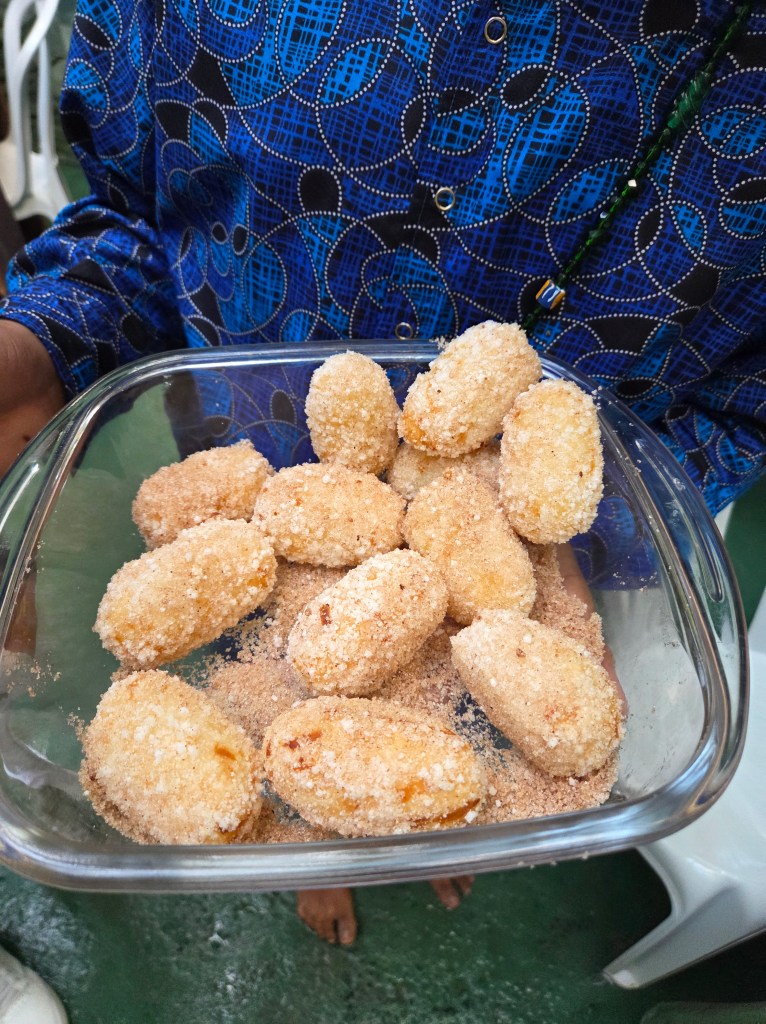
The bolo de estudante served at Terreiro de Lembá

Over the years, I have had many meals at Candomblé houses. I’ve had any number of Bahian classics: acarajé (a bean fritter fried in palm oil and stuffed with fillings), moqueca (a fish stew of palm oil and coconut milk), quiabado (stewed okra); as well as simpler meals of beans, rice, and a bit of meat. They are always made with love and a welcoming spirit; and while I always donate money to the houses, it has never been asked of me. That comes from a legacy: up until the mid-20th century, Candomblé was a heavily criminalized religion in Brazil, and in Bahia in particular, and it still required police permission to be practiced through the 1980s. Today, Candomblé houses are again facing politically- and religiously-motivated attacks – sometimes violent ones – from people who have never been to a temple or attended a ceremony. Terreiro de Lembá’s high priest (tata), the amiable and hardworking Ricardo Tavares, spoke as much at the ceremony. His message was to dispel stereotypes and myths about Candomblé and welcome in the wider community: please be welcome, please come here, please post photos so people know who we are. The sharing of food is evidence of this community spirit.

Leave a comment

Filed under World Eats

Our Favorite Cafe in Salvador, Bahia: Cafe Terrasse

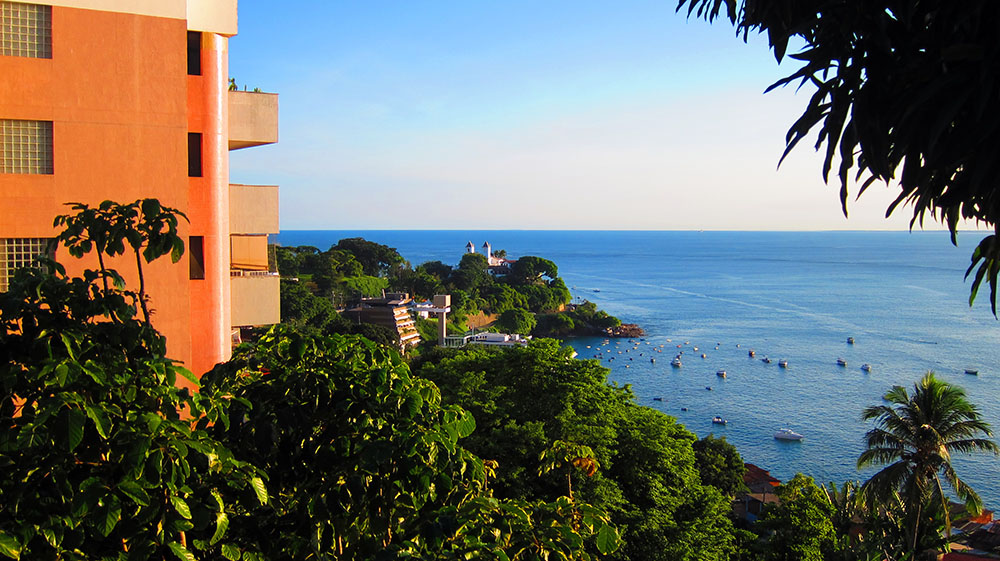
brazilToday is Brazilian Independence Day, which is making us nostalgic for our time in Brazil. If there is one place we miss most from our time in Salvador, it is Café Terrasse (Ladeira da Barra, 401, Salvador da Bahia, Brazil). We can not think of a better place to enjoy a cup of coffee, in all of Brazil (or anywhere else for that matter). Check out the view below and you’ll know why we’re having saudades. Cafe Terrasse is located inside the Aliança Francesa da Bahia in the Barra neighborhood of Salvador. We did not even know it existed on our first visit to Salvador, and it definitely made our second trip infinitely better (we visited at least once a week).cafeview2

Continue reading

Leave a comment

Filed under Reviews

Ramma: Vegetarian-friendly in Salvador, Bahia

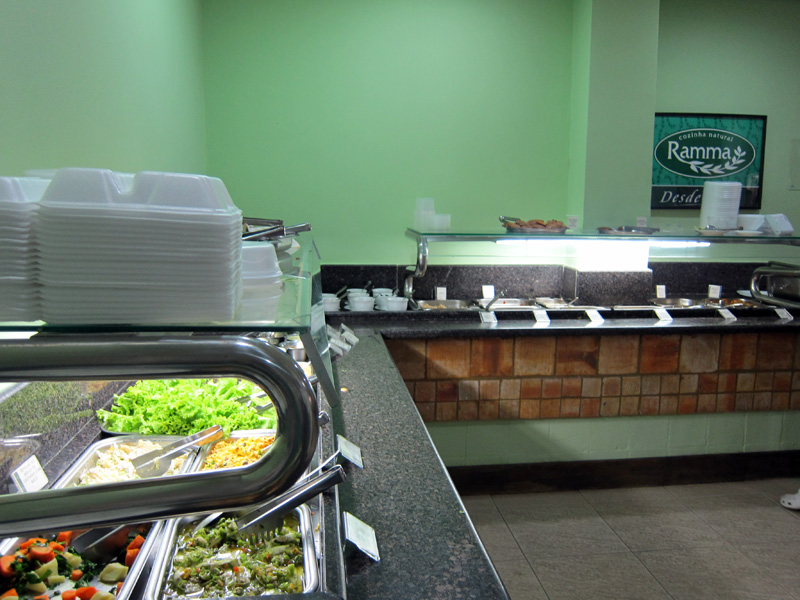
brazilWe visited Ramma Cozinha Natural (Lorde Cochrane, 76 – Barra, Salvador – BA, 40140-070) so many times when we were in Salvador, it’s a great surprise that we never wrote up a post about it (seems like a lifetime ago!). Brazil is a country crazy for meat, and on top of that, Bahia is a state that loves fried foods and heavy palm oil – well, so do we, but sometimes you need a little something different. That’s where Ramma comes in, offering a vegetarian and gluten-free-friendly oasis in the thick of it all. Like many casual spots in Brazil, Ramma is a kilo restaurant, which means you select your food and, pay buy the pound. Check out our complete guide to eating in a kilo restaurant, and don’t be intimidated!Ramma3

Continue reading

Leave a comment

Filed under Reviews

Batuqui: a Taste of Brazil in Cleveland

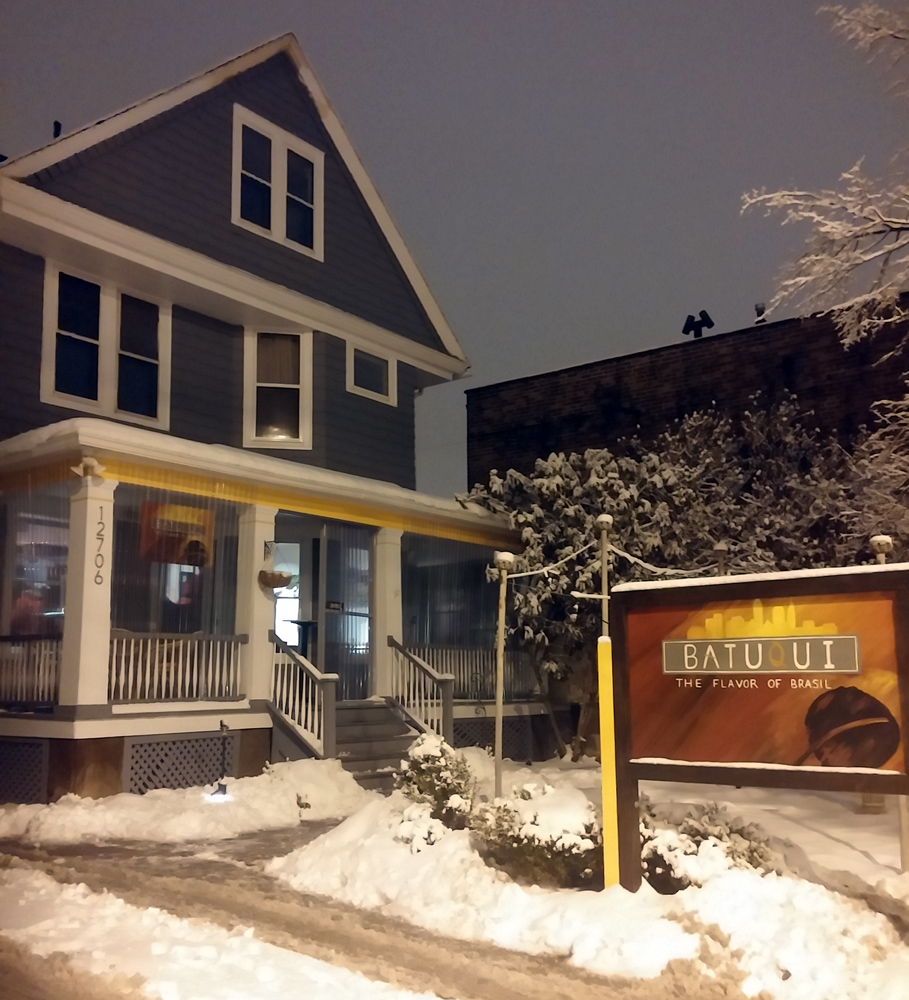
brazilHaving lived in Northeastern Brazil for a while (in the foodie paradise of Salvador) we developed a pretty healthy taste for the cuisine of the region, steeped in a unique combination of European, African and native Brazilian flavors. It is rare to find that kind of cuisine in the US, where the Brazilian steakhouse reigns supreme, so we were floored that we found such a place – Batuqui (12706 Larchmere Boulevard) – right in our new hometown of Cleveland.

Batuqui2.jpg

What do you mean it doesn’t look like Brazil?

Continue reading

Leave a comment

Filed under Reviews

Comida de Santo: A taste of Bahia in Lisbon

brazilWe often complain that we can’t find a good moqueca outside the Brazilian state of Bahia. This Northeastern Brazilian coconut milk and palm oil stew is one of our all-time favorite dishes. So when we learned there was a restaurant in Lisbon specializing in Bahian specialties, Comida de Santo (Calçada Engenheiro Miguel Pais 39, 1200 Lisboa, Portugal) we thought we would give a foreign moqueca one last try. Thanks this visit, we were also introduced to the elegant Principe Real neighborhood, where we really enjoyed meandering around the architecturally-interesting streets full of boutiques and antique shops. The restaurant’s name means “food of the saints,” and had an extensive menu featuring food from Bahia and other parts of the Brazilian Northeast, a region of the county whose culture and cuisine has a heavy African influence, and is hard to get outside of Brazil.

Mural

The decor of the cozy restaurant is very cute, we immediately liked the colorful green mural with the armadillo (above), and the classic “namoradeira” woman statue in the window (below). Anyone who has been to Brazil will recognize this statue immediately, since she pops up everywhere. We stared with the standard couvert of bread and olives (€2 – bread and butter is not free with a meal in Portugal), as we perused the menu. We noticed that there were also a smattering dishes from the Minas Gerais region of Brazil, including Mineiran couve (collard greens), we were a little disappointed that there was no pão de queijo available, an essential Minas staple. We waffled among a few of the entrees, including pichanha steak (€18), Carne do Sol (€18) and the requisite bean and meat stew, feijoada (€16.50). However, we knew we had to try at least one moqueca, which came in fish, shrimp and vegetarian varieties. As is our tradition, we went with the shrimp (€20). M was also pleased to find one of his favorite dishes, Xin Xim da galinha (€16), a stew made with shredded chicken. The service, meanwhile, was friendly and efficient

Statue

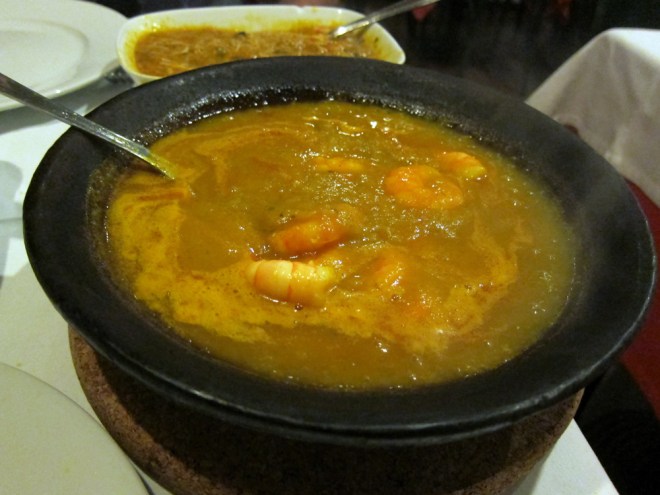
We were pleased that the moqueca came out in a traditional stone dish and was bubbling: a very good sign. Moquecas typically come out with fixings; this one came with the classic farofa, rice, and malagueta sauce. We might have a likes a few more accompaniments like beans and vatapá. The moqueca itself was good, and had a generous amount of palm oil, but maybe needed a little more coconut milk. The xin xim was a hearty portion of shredded chicken with a smoky spiced flavor, and was a welcome and familiar dish we had not found much outside Brazil. The portions were extremely generous, which left us thinking that perhaps one portion was meant for two. Were we not so stuffed we might have made room for the quindim, a egg yolk pudding (€5). While our moqueca experience was perhaps not as transcendent as Axego in Salvador, Comida de Santo gave us heart that there can be hope for an international moqueca. Though we still need to find somewhere to get acaraje abroad!MoquecaLisbon

Leave a comment

Filed under Reviews

A Visit to “Delícias do Porto” Street Food Market in Salvador da Bahia

brazil

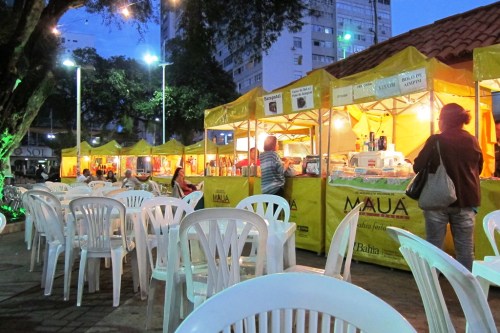
July 2nd (Dois de Julho) is celebrated as Independence Day in Salvador da Bahia, and was considered the definitive end of Portuguese rule in 1823, so it’s the perfect day to celebrate Bahian food! Bahia has great street food, and you can find wonderful Acarajé on nearly any corner, so what could be better than an Acarajé stand surrounded by tons of other great eats? On Friday evenings during the summer (December – April in the southern hemisphere) there is a great street market put on by the Instituto Mauá in the neighborhood of Porto da Barra in Salvador called “Delícias do Porto (Delicacies of the Port)” Though the summer is now over in Brazil, it appears to be a yearly event, so check back for further updates. We highly recommended this fair for its variety, and for bringing a little culinary nightlife to the Porto da Barra area, which can feel empty during the evening hours.

???????????????????????????????You can recognize the market by its characteristic yellow booths, which seem to pop up out of nowhere on Fridays. In addition to food, there are also artisans selling traditional crafts as well as jewelry, clothes and other items. However, of course for us, the draw was the food! There was all sorts of Bahian food for sale: street favorites like BeijusAbará, Queijo coalho, Acarajé – and even some things less commonly found in street stalls – Sarapatel, Bolo de Aipim and Xinxim. In between all of the stalls is a large, open seating area, so eating your food at a leisurely pace is encouraged.

???????????????????????????????
The Xinxim (whick we had before, but in reference to a VERY different dish) was made of ground nuts, dendê (palm) oil, coconut milk, okra and shrimp. Though perhaps not the most visually appealing dish, we loved the unusual combination of savory flavors. Don’t forget to add the hot sauce and dried shrimp!
???????????????????????????????
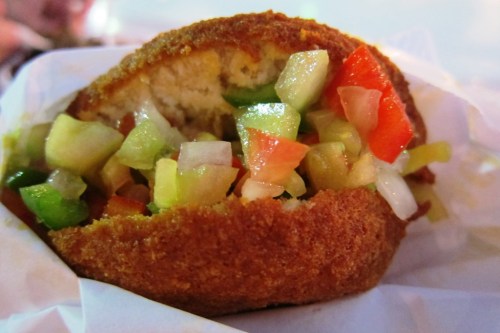
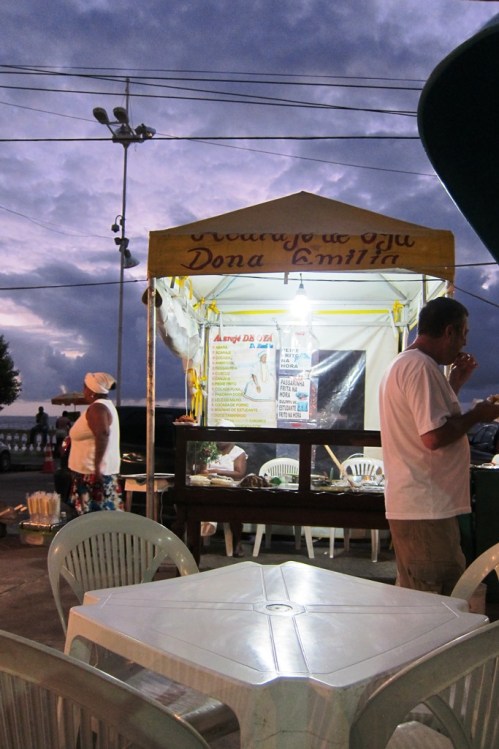
Of course no outdoor market in Bahia would be complete without Acarajé – the trusty black-eyed pea fritter that is pure “Bahia.” This one was from Dona Emilia (whose booth is there even when the whole fair is not), and was cooked fresh to order. Everything at the fair was very reasonably priced, and we couldn’t think of a better way to spend a balmy evening – watching the sunset and washing down our Acarajé with some Guaraná soda in hand.

???????????????????????????????

Leave a comment

Filed under World Eats