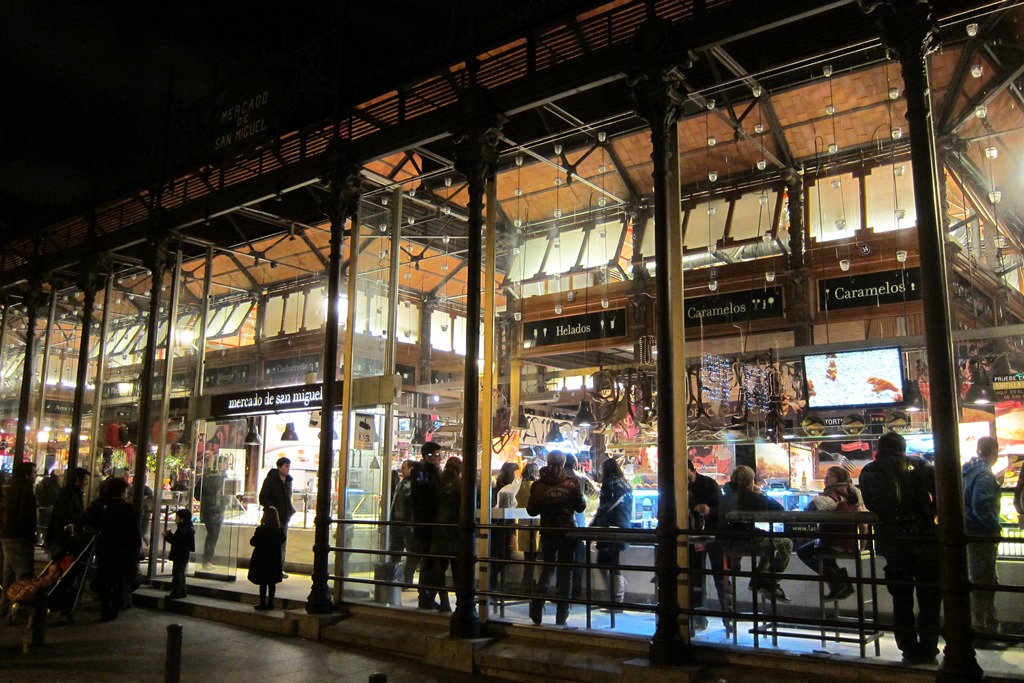
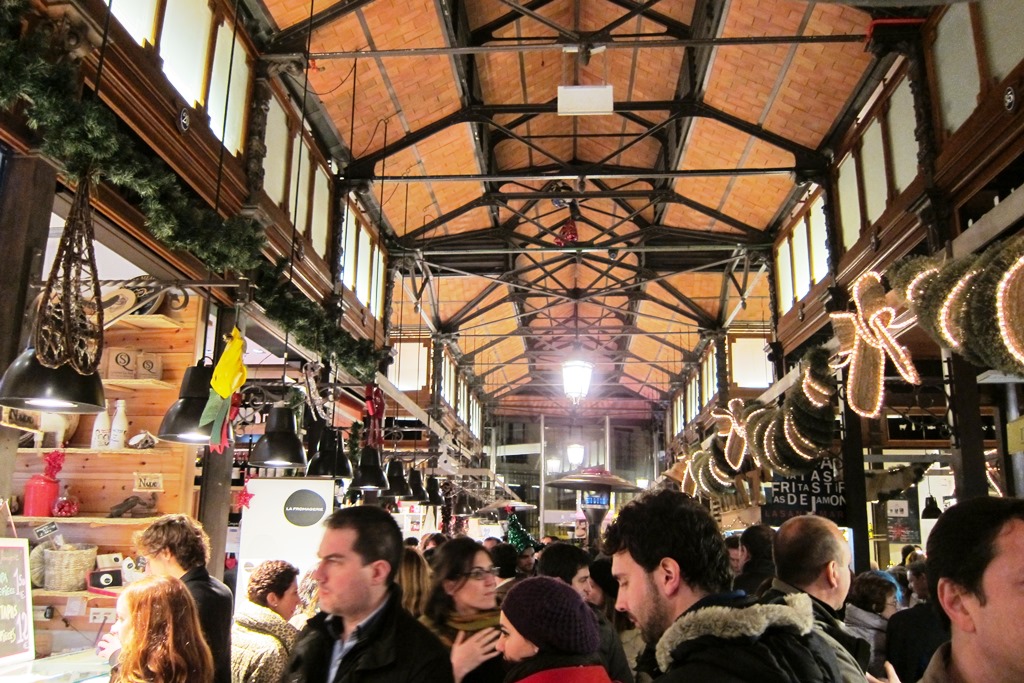
We love visiting markets while traveling, and making a little picnic out of the local meats, cheese and fruits. One of our recent favorites is the Mercado de San Miguel in the heart of Madrid. The Mercado de San Miguel is a metal and glass Beaux-Arts masterpiece that was recently opened after a long renovation. You can find nearly any kind of Spanish food in the mercado, including produce, cheese, meats, paella, pastries, ice cream, seafood and more. The market is open until midnight on most days (and 2 AM on weekends) and is nearly always full of people. It is especially crowded around Tapas time, from 7 to 9 or so, before the extremely late Spanish dinner. We visited one evening and filled up on a variety of excellent meats and cheeses, just wandering around and sampling to our heart’s content.
A Photo Tour of the Mercado de San Miguel
Filed under Finer Things Club, World Eats
Chocolate and churros in Madrid
One of our favorite things to do in a country is to sample their typical iconic breakfast foods. We have found some of our most favorite foods this way – yogurt and honey from Greece, helva from Turkey, Torta Caprese from Italy, etc. – and we find it quite a lot more enjoyable than taking a bland continental breakfast. In Spain, the breakfast treat of choice is hot chocolate and churros. In the US, churros have something of a dubious reputation. While, of course, you can find some excellent renditions of churros in the US, the sugar-coated, soggy churro is often the purview of school lunches and amusement parks. I had personally sworn off churros after they were the only dessert offered in our junior high cafeteria. However, I am open to an opinion change.

Churros (left) and Porras (right) at Chocolatería San Ginés in Madrid
Churros are a different affair in Spain though: no extra sugar is added, and the fried pastry is the whole deal. However the best part of having churros is dipping them in the thick, rich hot chocolate that traditionally accompanies them. No Swiss Miss hot chocolate here: this is thick, rich sipping chocolate. They sometimes even give you a little spoon to eat it with. We tried chocolate and churros and two locations in Madrid, each of which was completely different.

Waiting in line at Chocolatería San Ginés
The first stop for churros was Chocolatería San Ginés (Pasadizo de San Ginés, 5, Madrid). All they serve is chocolate and churros, and boy do they serve a lot! We went on a Saturday night, which admittedly is probably the most crowded time you can get chocolate and churros, and there was a line snaking out of the door. The routine is similar to Giolitti: you order and pay and then get a receipt for what you ordered. If you are able to get one of the tables (either inside, outside or in the basement) the waiter will take your ticket and give you your order. The only things available to order are chocolate, churros and porras (a thicker churro). The churros were excellent: a nice portion and not at all greasy. The cost of a cup of chocolate and 6 churros is less than 4 euros.

Chocolate and Churros at Chocolatería San Ginés
On our last day we sampled churros from Chocolatería Valor (Calle Postigo de San Martin, 7, Madrid), which is more of a regular full service café. We visited Valor at an admittedly off hour, 8:45 on a Monday morning. So we were very pleased to find that a fresh batch of churros was fried up just for us. Perhaps as a product of their freshness, we found these churros a little greasier than the offerings from San Gines. However, the price was a lot cheaper, and you could get additional items off of the menu if you so desired. There are even paper cones for those who want to take the churros to go.

Chocolate and Churros at Valor
Going to Madrid completely changed my idea of the churro (especially when combined with hot chocolate). We especially enjoyed Chocolatería San Ginés, and we are looking forward to going back someday and trying more varieties. Do you have a favorite place for churros in Madrid?
Filed under Finer Things Club, Pastry Post-Poc, World Eats
Spain Week at ETW: Spanish Cheeses
Happy Monday – Buenos días! This week is Spain Week at ETW. On our way back to Chicago from Lisbon we took a stopover in Madrid where we ate some excellent food. However, we never put up any of our posts, and the blog was quickly taken over by our updates from Brazil. Since we are back in the US we figured it would be the perfect time to share our Madrid culinary adventures with you. Stay tuned for a new post about cuisine from Madrid every day this week. To get you started, you can check out some of previous Spain posts on ETW.

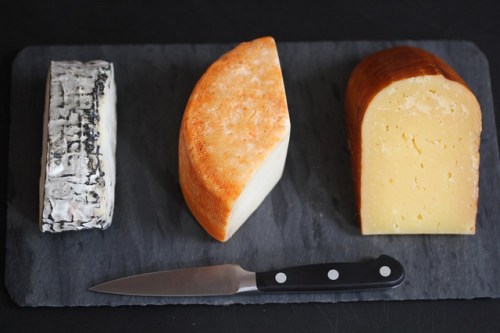
Spanish Cheese (l to r) Montenebro, Ibores, Mahon Curado – by Tenaya Darlington
To kick off the week, why not learn all about Spanish cheeses. Though Manchego is the best-known cheese from Spain, the country has a huge cheese culture with hundreds of varieties. Catavino has a wonderful series on Spanish cheese that gives a crash course on the country’s diverse dairy offerings, divided into cow, goat, sheep and mixed-milk cheeses. The New York Times has a piece on Spanish cheese from the region of Asturias, though that is not the only place cheese is produced in Spain, and there is even a National Cheese fest in Trujillo, in the region of Extremadura.
Filipino Ice Cream in Chicagoland: Village Creamery
Village Creamery
4558 Oakton Street
Skokie, IL

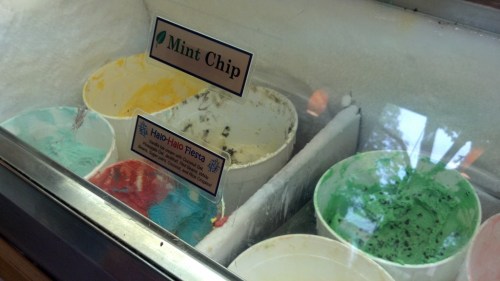
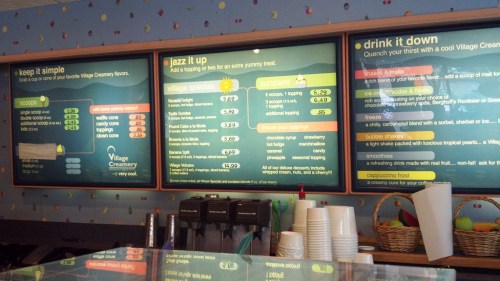
In honor of National Ice Cream Month, here’s another post about one of our favorite topics. We here at ETW are huge fans of ice cream, but it takes a lot to wow us. Village Creamery, is one place we were pretty impressed by, and the sheer variety of unique flavors was a real treat. Many are inspired by Filipino flavors such as Mangosteen and Lychee and others by American treats, such as those made with Girl Scout cookies or Donut pieces. The variety is truly astounding. If you don’t believe us, check out this complete flavor list on their website. Of course if you are in the mood for a more simple Vanilla or Mint Chocolate chip, Village Creamery has those, too.

All of the ice creams are home made and the rotation of flavors varies from day to day. On the day we visited they had such eclectic flavors as Cheese (!), Crème brulee, Durian, Jackfruit and Halo-Halo Fiesta, a riff on a popular Filipino dessert. We figured the halo-halo was a good choice, so we ordered one cup, along with a cup of the more typical Mint Chip. The Halo Halo flavor consisted of vanilla ice cream with banana, pineapple gel, coconut gel, red beans, white beans, and Rice Krispies. Though the combination seems quite unusual, it really worked. Our friends that ordered more traditional flavors were also pleased. Along with simple scoops, Village Creamery also offers a range of sundaes, milkshakes, malts and even bubble tea. We highly recommend Village Creamery for your more idiosyncratic ice cream cravings and it is one of our favorite places in the burbs for a treat (there is also a location in Niles).

Filed under Reviews
Recipe: Goan Vegetaria Feijoada
Feijoada, a meat and bean stew of Portuguese origin, is extremely popular in Brazil, which we experienced while we were there. Everyone has a recipe, and making feijoada turns into a weekend event/party on nearly every corner. However, Brazil is not the only place that feijoada has taken hold – it also enjoys some popularity Goa, India. Goa, a region in Western India, was once a Portuguese colony (until 1961, even), which explains the heavy Portuguese influence on the local cuisine. However, feijoada from Goa is a little different in that it may include pork (rather than the typical beef in Portuuese or Brazilian versions), or is vegetarian. Goan Food Recipes has a version with pork, and My Diverse Kitchen has a recipe for vegetarian Goan feijoada.

Goan Feijoada by My Diverse Kitchen
Filed under Recipes
Food 52’s Heirloom Recipes
We love the food site Food 52, and we are really enjoying one of their newest features: Heirloom Recipes, where a different blogger each week shares a family recipe passed down to them. There is something very satisfying about recipes that are passed on from generation to generation, and almost everyone can think of something that their grandma, grandpa, aunt, etc. made that was absolutely THE BEST. Heirloom recipes on Food 52 is a weekly feature, and so far they have included recipes for Zucchini Bread and Norwegian Boller (Cardamom rolls).

Norwegian Boller from Food 52
Brazilian Samba Food: Bolo de Fubá
In our other lives, we are Brazilian music aficionados. As much time as we spent eating everything in sight while in Brazil, we were as dedicated to listening to as much live music as we could, including seeing the world-famous carnival parade twice: once at the technical rehearsal, and finally during the main event. We had the good fortune both times to see the eventual parade winners, the GRES Unidos de Vila Isabel (headlined, as always, by one of L’s favorite sambistas, Martinho da Vila). Vila’s 2013 samba-enredo (theme song) was the unrelentingly catchy “Água no feijão que chegou mais um;” sing along with the video below:
The song is a celebration of the simple life in the Brazilian countryside, and makes use of some creative wordplay to talk about the samba school’s job of making music using words that evoke farming, planting, and harvesting country crops (“Vila Isabel is going to plant some happiness tomorrow morning”). Once we had listened to the song on repeat 30 times, one particular verse caught our attention:
Bota água no feijão (“[He] throws water in the beans”)
Já tem lenha no fogão (“There’s already wood in the stove”)
Faz um bolo de fubá (“[He] makes a cornmeal cake”)
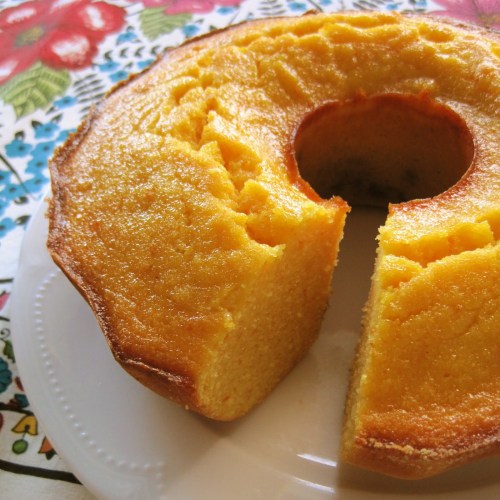
Question to us, then: what is a bolo de fubá, and given our self-professed love of Brazilian pastries and cakes, why have we not made one yet? A bolo de fubá is literally a cornmeal cake, but it is more than cornbread: using finely ground cornmeal (the finer than the better), you make a slightly sweet cake that is a ubiquitous accompaniment to breakfast or midday coffee. Bolo de fubá is also a popular food eaten in the Brazilian June Festivals, or Festas Juninas.

Gluten-free bolo de fubá cremosa with orange, from Sabor Saudade.
Everyone has their own take on a bolo de fubá. The most common variations are to make it a bolo de fubá cremosa (“creamy”) or bem cremosa (“super creamy”), usually by adding coconut or a creamy substitute like extra cheese or eggs. For beginners, try this recipe for a simple bolo from about.com. Denise Browning over at From Brazil to You has a good recipe for a bolo de fubá cremosa with coconut, complete with some reminiscing about some of her bolos of years past. But really, the good recipes will all be in Portuguese: try the one from Sabor Saudade (above), or this one from Tudo Gostoso (Everything Tasty).
And thanks to Vila Isabel for introducing us to a new treat: now we have a food to get addicted to as we get more and more addicted to your song. E está chegando o povo do samba!
Filed under Holidays, World Eats
Marcus Nilsson’s Travel Food Photography
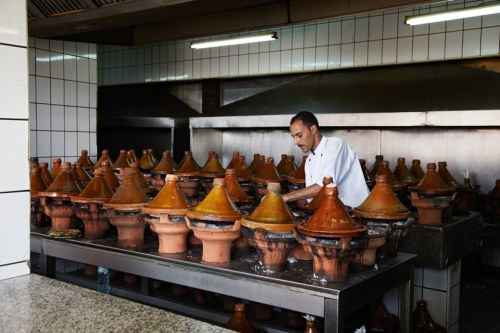
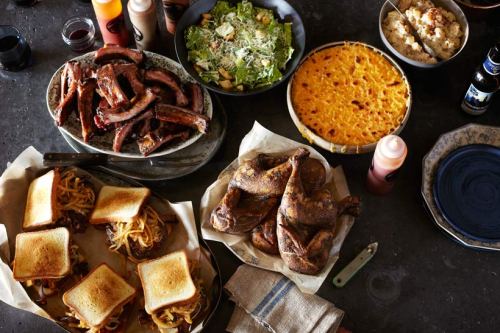
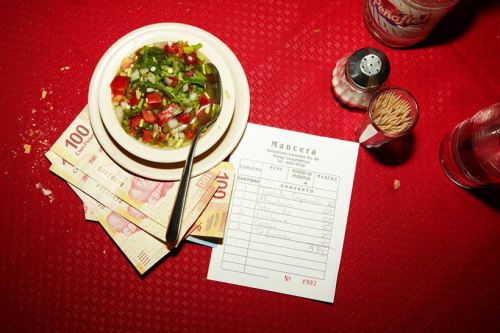
I was first introduced to Marcus Nilsson’s photography by a feature in Swallow Magazine about food culture in Mexico City. Intrigued, I then went on the peruse some of his portfolio, and I love all of the travel food images. Here is a very small sample of some of his captivating photography from around the globe. A former chef, Nilsson talks to Fstoppers about his photography philosophy.

Marcus Nilsson: Parma

Marcus Nilsson: Marrakesh

Marcus Nilsson: Detroit

Marcus Nilsson: Mexico City

Marcus Nilsson: Spain
Filed under Design and Photography, Links
Fêtes de Bayonne: Omelette aux Piments in Basque Country
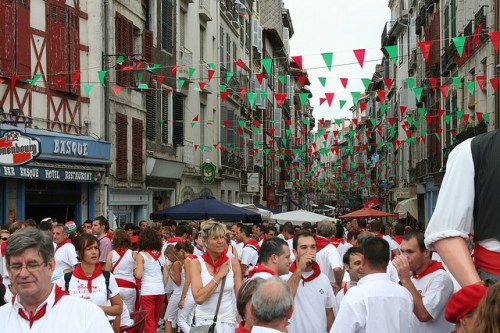
The most famous Bull-fighting festival in the world may be in Pamplona, but the gigantic Fêtes de Bayonne in the Basque region of France features not only bull-fighting, but a festival dedicated to omelettes (Championnat du monde d’omelette aux piments) at the end of every July. Indeed, there is an championship for nearly everything, and this one has been running since 2004. One of the most emblematic foods of the French Basque county, Omelettes aux Piments (Omelette with Peppers) is an egg dish with potatoes and the famous sweet Espelette peppers (piments doux in French or Ezpeletako bipera in Basque).

Fetes de Bayonne by Greg.road.trip
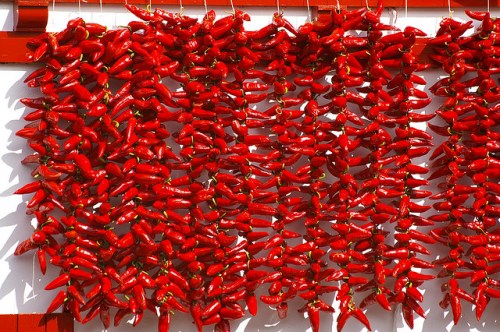
Espelette peppers are a mild red pepper originally from Mexico, and were brought to France in the 16th century, but they are so much a part of Basque cuisine that they have governmental status as a protected destination of origin product. In the town of Espelette, it is not uncommon to see large strings of Espelette peppers drying in the sun. French Basque Country, which is in Southwestern France, and shares a border with Spain, is known for their unique cuisine, and the Omelette aux Piments marries both the Spanish and French influences (classic French egg omelette and Spanish tortilla). Eat Live Travel Write has a wonderful write-up of the entire Bayonne Fest, along with coverage of the Omelette Championship. The Chopping Block has an omelette recipe calling for Espelette peppers. Another use for Espelette peppers is in Piperade, a typical French Basque condiment used on almost anything.

Espelette Peppers in Espelette, France, by Franck Barre
Filed under World Eats
Cheese at Brick Street Market in Delavan, WI
Brick Street Market
104 E Walworth Ave
Delavan, WI 53115
We took a little trip to Lake Geneva this past weekend to get away from the hustle and bustle of Chicago. We hit up our usual haunts, but are happy to report we found somewhere new (to us). We were going to our favorite antique store in nearby Delavan, WI (where we found some interesting postcards and stereograph slides), when we spotted Brick Street Market, right across from Delavan’s signature giraffe statue.

Brick Street Market Cheese Cooler
The front of the store is given over to a cheese cooler, along with a cute seating area. In the back there is a little wine cellar with an international selection of wines, along with other cheese related products (knives, boards, etc), coffee, jam and mustard. There is also a well-curated menu, including a selection of excellent-looking sandwiches, salads and a selection of cheese plates.
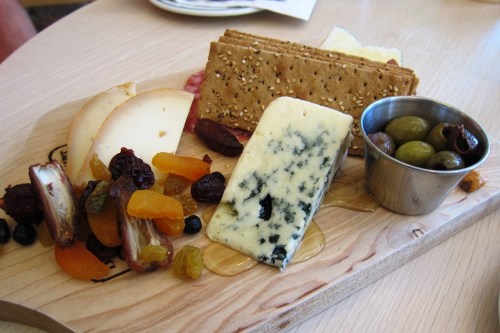
A small cheese plate is only $3.50, but we opted for the heartier Single Cheese Flight ($9). While advertised as serving 1-2 persons, it easily served both of us for lunch. The staff selects the cheeses for you. Our plate included Manchego from León, Spain, Wisconsin-made Holland’s Herbed Gouda, and Hook’s Little Boy Blue sheep’s milk cheese. We also received crackers, quince jam, dried fruit and nuts, a bit of local raw honey for the blue cheese, and a delicious local salami from nearby Milwaukee. We were completely astounded at the quality of these cheese plate for a mere 9 dollars! Everything was completely delicious, and it was one of the most well-composed cheese plates we had recently, at any price.

Brick Street Market
On our way out we bought some 4-year aged Hook’s white cheddar to take home (our old favorite from the Dane County Farmer’s Market in Madison). Now after our travels, we are a pretty jaded bunch, but we felt more pleased after our visit to Brick Market than most of our recent trips. We have to go back very soon.
Cone: Irish Ice Cream in Chicago

Cone Ice Cream from Thrillist

It’s no secret we are huge fans of ice cream, gelato and paletas, and we are happy when a new place for these treats opens up in Chicago. But the latest place for ice cream in Chicago fills a different (and new) international niche: Cone, an Irish ice cream shop in the West Loop (1047 W Madison St.). Until now, we never associated Ireland with ice cream, though the country’s well-known cheese and butter products, in addition to a growing dairy industry, should have given us a clue. Cone is run by Irish expat Sean McGuire, and features all locally-made ice cream. McGuire’s menu highlights some classic Irish flavors, like Guinness and Jameson, while still providing the more typical mint and Oreo, among others. The store sells some Irish candy and beverages. Though Cone may seem unusual, we shouldn’t be surprised to see Irish ice cream: it turns out Irish citizens are among the top 10 consumers of ice cream a year, even beating out Italy.
Filed under A New Place, Finer Things Club
The International Origins of Nando’s Peri-Peri
Over at Africa is a Country, our favorite African news and opinion site, historian Sarah Emily Duff has a fascinating write-up on the multinational origins of Nando’s Peri-Peri, a self-described South African peri-peri chicken joint with locations throughout Africa (including Gaborone, capital of Botswana, from where she writes this piece), Europe, and a few in the USA. M visited a location in Washington, DC last year, and raved about the food. Now, we have a much greater understanding of the surprisingly complex history of the chain, with ties to Portugal, Mozambique, South Africa, and the UK during the second half of the 20th century. We’ll take all this cultural learning with us when we return to the DC Nando’s again in October!

M’s favorite: Nando’s peri-peri chicken with extra spicy sauce, rice, and cole slaw in Washington, DC.
Filed under Links, World Eats
Alternative Swedish Prinsesstårta (Princess Cake) Recipes
In an earlier post we wrote about Sweden’s iconic multi-layered Princess Cake (Prinsesstårta) – which seems equally delicious and daunting. Swedish Prinsesstårta was the May 2013 challenge for Daring Bakers, an online baking group, and the result was a lot of delicious-sounding takes on this tricky tart. May Daring Bakers Host Korena in the Kitchen has a very thorough description of how to make the cakes, for those of you that want to go traditional. Alternative versions include: Prinsesstårta cupcakes, Strawberry-Oreo Prinsesstårta, and Green Tea Prinsesstårta, among others.

Prinsesstarta diagram from Baking Obsession– complicated!
Festive foods for Iftar, Breaking the Ramadan fast
Ramadan, the 9th month of the Islamic calendar, started on July 10th. During the month, Muslims fast from dawn until dusk, and break the fast with a meal known as Iftar each night. What is eaten at an Iftar meal varies widely from country to country and from home to home, ranging from a small family meal to a huge party with an elaborate spread of dishes. Asia Society has a list of classic Iftar dishes from each country, and Time.com has a photo gallery of global Iftars, both showing the diversity of Iftars around the world. So where to begin? The possibilities are nearly endless. Time Out Abu Dhabi has recipes from reknowned chefs, About.com has a list of Traditional Moroccan Iftar recipes, and Veg Recipes of Indian has a wealth of Vegetarian Iftar options.

Iftar in the UK by Reway2007
Filed under Holidays, World Eats
Enough Popsicle and Paleta Recipes to Last the Whole Summer
We recently bought new popsicle molds, and we are excited to make some recipes. We are especially fond of Mexican-style popsicles, paletas, which often combine sweet and spicy flavors. In honor of our new popsicle/paleta maker, we curated a collection of pop recipes from simple to avant-garde. The first recipe we made was yogurt and black raspberry (very similar to this recipe). We pretty much winged it and the result was great – so just let these recipes be a jumping off point for inspiration. Anything goes!

Paleteria in Texas, by Steve Snodgrass
- Sweet Paul Recipes: Cucumber and Lime, Coconut and Vanilla, Pineapple, Mango and Mint, Strawberry, Watermelon and Chili
- Milk Tea with Tapioca Pearls
- Saveur: Tamarind and Chile, Strawberries and Cream, Pineapple, Arroz con leche
- Vietnamese Coffee
- Cookie Dough
- Banana
- Momofuku-Inspired Cereal Milk
- Raspberry Ginger
- Avocado and Coconut
- Zoku Blog: Spicy Mexican Chocolate, Watermelon Mint, Berry Mojito, Strawberry Lime

Paletas from Zihuatanejo, Guerrero, Mexico – by Dolanh
Filed under Finer Things Club, Links, Recipes, World Eats
Moqueca at Terra Brasil in Salvador Shopping
Terra Brasil
Av Tancredo Neves, 2915 Piso L3 – Salvador Shopping
Salvador, Bahia, Brazil
We are not ones to go to the mall very often, but on a terribly rainy day in Salvador we decided it might be fun to go to Salvador Shopping, considered the most luxurious mall in the city. Coincidentally, its food court also houses Terra Brasil, one of the highest rated restaurants on Trip Advisor for Moquecas. Since the moqueca came pretty highly recommended, we decided we would give it a try, even though the food court location made us a little wary. Sure enough, there it was in a large corner location, though for what is worth, it had a more of a botequim environment, and was partially enclosed.

Terra Brasil in Salvador Shopping
The menu at Terra Brasil is primarily northeastern Brazilian food. On this day, they had a lunch special where all moquecas for two (with the choice of shrimp, fish or vegetarian) were only R$48, which is a pretty reasonable price. Other options include German sausages (R$ 38) and Casquinha de siri, a crabmeat gratin baked in a crab shell, (R$ 16) as well as a wide variety of empadas and of course the ever-important Chopp (draft beer). Our moqueca came out pretty quickly, served on a hot stone, which we have found out is a very good sign for some quality moqueca. The moqueca was on the small side, and we made pretty quick work of it. Overall, we were pleased that the shrimp in the moqueca were some of the best we had at any restaurant! For sides there were farofa, Bobó de Camarão (an atypical side dish for a moqueca in Bahia) and rice. M had to ask for extra pimenta to spice things up a little bit. The flavors were good, but a little mild.

Moqueca at Terra Brasil
Overall, the moqueca was very good, but perhaps a little overrated as one of the top bowls in the entire city. The setting alone does leave a little bit to be desired, and we’re not sure if eating a moqueca next to a Bob’s Burgers and a KFC is the most “Salvador” experience that visitors hope for. On the other hand, if you find yourself at the city’s biggest mall on a rainy day, hungry, why not?
One Sweet Course: Carpigiani Gelato University
As graduate students we’ve taken our fair share of classes, but this class in particular caught our eye – the master Gelato course at the Carpigiani Gelato University outside of Bologna. Run by Carpigiani, an Italian company that manufactures gelato machines, the Gelato University course is 4 weeks long, and attracts students from all around the world hoping to get into the business of gelato. The course not only teaches about gelato-making techniques, but about gelato history and culture, as shown below in a video by Monocle.
Filed under Finer Things Club, Links
A Visit to the Argyle Night Market
We wrote last week about our visit to the Argyle night market, a brand new weekly event in the Argyle neighborhood of Chicago, known for its Vietnamese and Chinese culture. We decided to visit the fair on its opening night, and its second installation is this upcoming Thursday, July 11 from 4 to 8 PM.

The fair itself was only a block long, which was a little smaller than we imagined, running on Argyle street from Sheridan to Kenmore. There were at least a dozen stalls, featuring mostly food and snacks. On that note, there was also a feature M especially enjoyed – a whole roast pig on a spit. Beyond the food, there was a face painting booth and activities like a Bean Bag Toss for children. The day we visited there was a dragon dance scheduled, but it seemed to have been delayed due to the intermittent rain (note the umbrellas).

Many local favorites had set up shop: one booth sold sandwiches from perennial favorite Ba Le, and prepared dishes from Hai Yen. Tai Nam Market, a local grocery store, sold various items, including sweetened dried plantains and mango, sauces and Vietnamese candy. Local tofu producer Phoenix bean tofu sold fresh tofu and soy milk.

Though the majority of stalls were Asian there were some international treats – especially for dessert. One of our favorites was the Brazilian Beijo de Chocolat, who sold brigadeiros, along with other American baked goods like cookies and muffins (some were even gluten-free). Another sweet treat came from Uptown Brownie, with their assortment of gourmet brownies. Overall, we think Argyle Market is off to a great start, we are sure it will gain followers as the summer goes on (and hopefully if the weather cooperates). We hope to be back soon!
Happy 4th of July (and Chicago BBQ)

Barbeque sign in Bryson City, North Carolina, by Eric Fink
Happy 4th of July! A classic American 4th of July means barbecue, so we are excited to share a few new Chicago BBQ-related links for those in our neck of the woods. First and foremost, the Serious Eats ranking of the best pulled pork in Chicago. Lillie’s Q comes out on top, and our perennial favorite Smoque comes in 2nd place. Chicagoist has their own recent roundups of the top BBQ overall in Chicago. For something a little different, Time Out Chicago dishes on their pick for the best new BBQ joint in Chicago, Bub City.
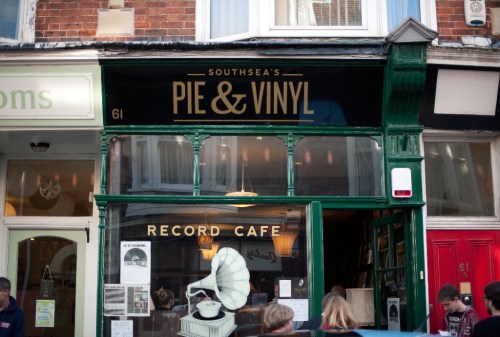
A winning combination: Pie and Vinyl in Southsea, England
Thanks to this Twitter post, RTed by Michael Nagrant, we learned about the Pie & Vinyl combination cafe and record shop in Southsea, England (61 Castle Rd, Southsea, Portsmouth PO5, UK). Now we love both pies and vinyl records, so this seems like one of the winning-est combinations yet. M is a little blue that there are only savory and not sweet pies, though. This is perhaps not surprising, given that the term “pie” in the UK generally would refer to a meat pie, as opposed to a sweet pie, as it would in the US. Perhaps the inclusion of sweet pies is an idea for a future menu expansion? In any case, we love the idea of such a symbiotic combination, and we hope to visit it one day. Along those lines, we are also fond of the cafe/restaurant/book/antique/vinyl shop combo we found in Rio (more on that soon).

The Exterior of Pie & Vinyl – from http://www.pieandvinyl.co.uk/
Filed under World Eats