A Place for Macarons… in Salvador!

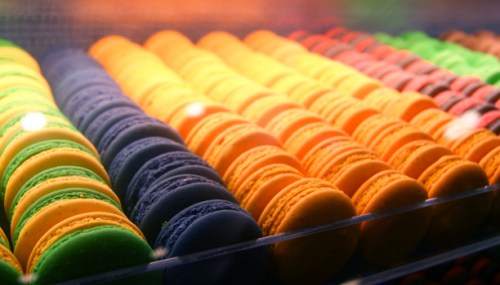
franceWe recently wrote about the boom of Macarons in São Paulo. However, the trend has even trickled down to Salvador, the 3rd largest  city in Brazil. In Shopping Barra, there is a relatively new store, called Avignon, which specializes in chocolates and macarons. The macarons are R$ 4.50 apiece in come in a variety of Brazilian and classic French flavors. When we visited there were: Doce de Leite, Chocolate, Almond, Passion Fruit and Strawberry varieties. While good, the macarons were a little soggy, not surprising given the humidity in Salvador, I guess. However it was great to sample a macaron after a 6-month drought! Other treats available at Avignon included financiers, croissants and a selection of chocolates.  There is also a small menu of drinks including espresso and hot chocolate. Definitely a taste of France in Bahia!

Macarons at Avignon

Macarons at Avignon by Gabiela Baleeiro for iBahia

Leave a comment

Filed under A New Place

The Best Falafel in Chicago

You know we love rankings – and here’s a new list for one food that we will never turn down – falafel! Chicago Magazine has a new list of the top falafel places in Chicago. We are happy that one of our picks for falafel in the city came out on top: Falafill! Here is a review from our visit to Falafill (and their fabulous topping bar).

Falafel

A falafel sandwich from Falafill

Leave a comment

Filed under Quest

FIFA, McDonald’s, and the fight for acarajé in Bahia

brazilWhile we are in Salvador partaking in the city’s extensive acarajé offerings, visitors to Salvador for next year’s FIFA World Cup (possibly us!) will not have such an opportunity. For a series of complex reasons outlined by Jamie Anderson on her blog about life and culture in Salvador, the sale of acarajé will be banned within two kilometers of the refurbished Estadio Fonte Nova, the site of all the World Cup games here. Instead, McDonald’s – a major World Cup sponsor – will have full rights to all food distribution. As such, Bahia’s main street food – a major source of income for locals, and an integral part of the experience of Salvador – will be banned in favor of an American fast food establishment. Coca Cola’s recent billboard in support of baianas and acarajé (seen below) is a great commentary on the issue: Coca Cola claims it is working to “preserve this culture,” but what does it mean that a large corporate entity is working to preserve a culture of Afro-Brazilian street food? We’d like to think that acarajé is doing well otherwise, and will do even better if allowed to continue on its own terms.

outdoor_ABAM_

Needless to say, we at ETW do not support the move, and you can do the same: sign the petition at Change.org in support of baianas’ right to sell acarajé during the World Cup.

2 Comments

Filed under Links

Nutelleria – the all Nutella restaurant

nutelleria

germanyItalyIt is not a secret that we love Nutella. However, we are obviously not alone in our fandom of the Italian chocolate and hazelnut spread. The blog Pink Chocolate Break clued us into a new concept for the brand – 100% Nutella themed restaurants, called Nutelleria – now open in Bologna, Italy and Frankfurt, Germany. Perhaps unsurprisingly, typical fare at the Nutelleria includes Nutella-filled baguettes, croissants and crepes. Please Mind the Gap has a detailed report of a visit to the Nutelleria in Bologna. If only we had known to go there on our visit! Hopefully the Nutelleria concept will spread to other cities and maybe even other continents. We certainly think one would be welcome in Chicago.

FollowTwiter

14 Comments

Filed under A New Place, Links

Middle-Eastern Food in Brazil: Al Kuwait

Al Kuwait
Av. Treze de Maio, 23 – Centro
Rio de Janeiro

KuwaitbrazilsyrialebanonRio de Janeiro is full of middle-Eastern restaurants, ranging from
four-star white-tablecloth places to corner botecos, owing to the large Arab Brazilian population. Al Kuwait falls into the latter category, and does a brisk lunch trade selling Middle Eastern dishes, salgados and juices. Moreover, we figured we had to try this place since Al Kuwait claims to have some of the best kibbe in Rio.

Kibbe

Kibbe at Al Kuwait

Kibbe is extremely popular in Brazil, and is found in almost all snack bars, Middle Eastern or not. A kibbe in Brazil is basically a miniature football-shaped meatball (again, sounds like something Ron Swanson would appreciate, right?) composed of ground meat, bulgur and other fillings, which are then fried. For lunch we each ordered a kibbe and an esfiha (one cheese and one meat), another iconic Middle Eastern salgado. Now, we always eat at Middle Eastern restaurants in Chicago and we have never encountered esfihas there. However, in Brazil they are nearly as ubiquitous as kibbe (you can even get them on the beach). Esfihas are savory triangle pastries filled with meat or cheese, which are prefect to eat on the go.

Esfiha

Esfiha at Al Kuwait

However, Al Kuwait had a nice outdoor seating area, so we took a seat to enjoy our snacks. The kibbe was much larger than we expected, but true to advertising, was excellent and had a great texture and flavor. The esfihas were also oversized, but not as memorable as the kibbe. We also enjoyed that we could wash down our somewhat-heavy meal with some fresh juice (Mango, Passion fruit and Pineapple were on order). There is also a full menu of entree-sized middle-eastern specialties if you would like something a bit more substantial, including hummus, baba ghanouj, kebabs and Brazilian specialties like picanha sandwiches. Al Kuwait is a great place for lunch, especially if you want a taste of typical Arab-Brazilian cuisine in a laid-back setting.

Al Kuwait

Dining Al Fresco at Al Kuwait

1 Comment

Filed under Reviews

Tuesday Humor Break: Hipsters Taking Pictures of Food

A friend sent us a link to the blog Pictures of Hipsters Taking Pictures of Food, which describes its mission as “Documenting the phenomenon of people taking pictures of food they did not themselves cook. Food at restaurants. Food at parties. Food at backyard BBQs.”

We had a chuckle, because one day we will definitely be featured on this blog. I mean, we can barely remember the last time our trusty picture-maker did not accompany us to a restaurant. We should note that most of the featured hipsters seem to be using their phones, but we go high class with a digital camera! Like our friend in the photo above. Check out his commitment to capturing all the beauty in his fast food cheeseburger (McDonald’s?). But whatever – we do it for all our loyal readers out there! You invite us to a backyard BBQ, we will take photos of all the pulled pork. And then happily consume it all and write about it. Just for you.

Leave a comment

Filed under Design and Photography, Links

Homemade Sweets / Doces Caseiros from Minas Gerais

brazil

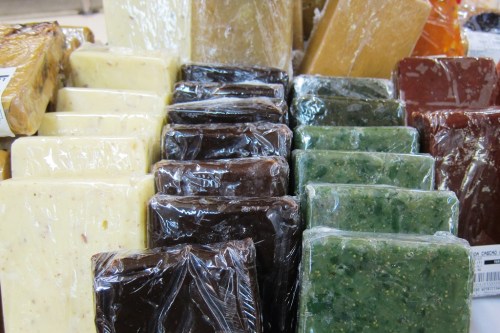
Minas Gerais is also known for its sweets (Doces) made from various fruit pastes, that are often seen in huge wheels of candy. They are pretty impressive to see – imagine a treat the size of a giant Parmesean wheel – but in vivid orange, green or pink! You then pay by the weight to get a little chunk for yourself to take home. When we were in Minas Gerais we saw these giant wheels of candy around town, but even if you are not in Minas, major grocery stores often boast their own doces for sale by weight.

Cocada/ Doce de Coco

Cocada/ Doce de Coco – made from Coconut.

There are shops all around Ouro Preto advertising that they sell “Doces Caseiros / Tradicionais” (Homemade/Traditional Sweets). Though we are quite familiar with Doce de leite, we had never encountered some of these varieties before such as: Doce de Abóbora (pumpkin candy), Doce de Goiaba (Guava Candy) and Doce de Coco (Coconut Candy). The consistency of these treats is basically like fudge, though maybe a little more dense.

Doces Caseiros in Rio

Doces Caseiros in Rio

Also popular in Minas are sweet in spreadable form, especially variations on doce de leite (dulce de leche or milk caramel). You will see this type of spread very commonly with add-ins or swirls of another flavor – including chocolate and peanut. We had a chunk of doce de leite/peanut candy in Ouro Preto and it was heavenly, especially since we were going through peanut butter withdrawal.

Leave a comment

Filed under World Eats

Pastry Post Doc in Brazil: Casa Cavé

Casa Cavé
Rua Sete de Setembro, 127 – Centro
Rio de Janeiro

brazil

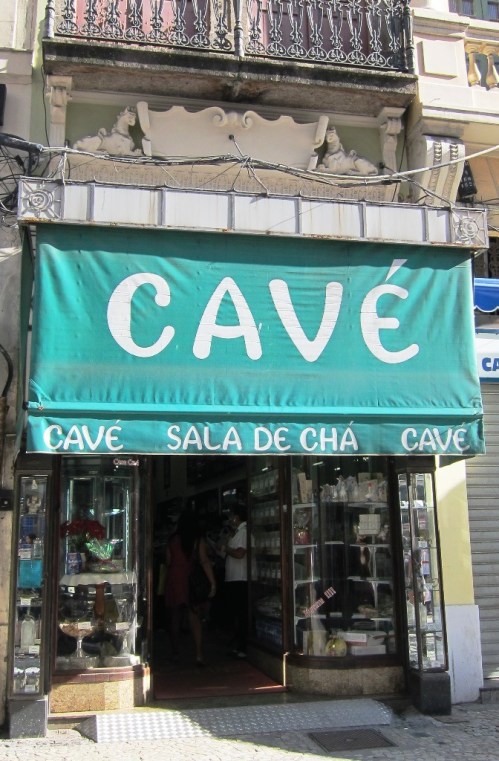
Rio de Janeiro is home to some beautiful colonial architecture as well as some wonderful, classic coffee houses that would be right at home in Lisbon. Casa Cavé is one of those places, featuring excellent pastries and drinks at reasonable prices in a salon that reminded us of our time in Portugal (there are even Portuguese azulejos on the wall). Cavé used to be in a larger, more ornate building just around the corner, which still bears the name “Casa Cavé” on the front, so don’t get confused (as we did – more on that in a future post). You can now find Casa Cavé by its distinctive green sign.

Casa Cave Sign

Casa Cave Sign

When you first enter Casa Cavé, you are greeted by an enormous wall of cookies and a wonderful pastry counter. The specialties at Casa Cavé are Portuguese pastries sold by the unit, and many people opt to take their cookies to go (you pay by the kilo – at a very reasonable price). Once you get past the long, glass counter of treats, you arrive in the larger tea salon, “sala de cha,” where you can enjoy coffee and other snacks. The interior is pretty, with almost a Grecian twist, very much reminding us of a Lisbon coffee house.

Casa Cave Interior

Casa Cave Interior

The selection of pastries was pretty overwhelming, and included everything you would expect in a Portuguese bakery, with some Brazilian favorites thrown in. In the tea salon you can get everything from the bakery, as well as a selection of coffee, juices and light sandwiches. Unfortunately there were not any iced coffee selections (this is Brazil in the Summer heat of 36°C/96°F, so we were surprised)! We had a “ratinho” (true to name, the treat was shaped like a mouse/rat), miniature bem casados (Brazilian dolce de leite sandwich cookies) and pastel de nata. All of the treats were delicious and freshly-made, and we were surprised that the pastel de nata was pretty much up to Portuguese standards, with a nice flaky crust. We were also pleased that nothing set us back more than 3 reais apiece.

Casa Cave Treats

Casa Cave Treats

We could have spent all day sampling the baked goods at Casa Cavé, and we were happy to see some of our Portuguese favorites in Brazil (Jesuitas, Linguas de Gato, Pasteis de Nata). If you are looking for a quiet spot to relax in Rio, Casa Cavé is a perfect break from chaotic modern-day Centro.

Leave a comment

Filed under Coffee, Pastry Post-Poc, Reviews

We launch our new series on the people shaping African cuisine with Chef Pierre Thiam

senegal1We are very excited about Africa is a Country’s new series – “Africa is a Kitchen” all about African cuisine around the world. The first feature is about Pierre Thiam, a successful Senegalese-born chef and restaurateur working in NYC.

Africa is a Country (Old Site)

Welcome to the inaugural post of our new feature profiling African foods and drinks (plus other gastronomical related subjects); and the people on the continent and in the diaspora that are defining and reshaping our ideas and tastes of these. We’ll call it “Africa is a Kitchen”. To kick off the series, we will be speaking to a Chef in the diaspora who is defining African cuisine both on the continent and in the diaspora. Pierre Thiam is a chef, restaurateur, and cookbook author. He was raised in Dakar, Senegal. Thiam moved to New York in the late eighties and started working in various restaurants in the city. In 2003, Thiam opened his first restaurant, Yolele, a visionary African bistro and his second restaurant, Le Grand-Dakar Restaurant, opened in 2004 in Clinton Hill, Brooklyn. Thiam now runs a catering and gastronomy consultancy: Pierre Thiam Catering. In addition to his work…

View original post 1,830 more words

Leave a comment

Filed under Links

Pastry-Post Doc in Brazil: American-Style Cookies at Besi in Rio

Besi
Rua do Carmo, 61 – Centro
Rio de Janeiro

brazilWe are very keen on the Brazilian idea of including cafes in bookstores and other places you might not necessarily expect a cafe. Case in point: Besi Cafe is located in the back of an adorable homegoods and kitchenware store. The cafe is all the way in the back and its is quite difficult to make it past all of the tempting Le Creuset implements and cast iron without buying something (though I suppose that is the point). Besi has a full menu of salads and sandwiches, however the coffee drinks and cookies are the specialties. What is called a “cookie” in Brazil greatly overlaps with what is a cookie in the USA. However, what is often absent from Brazilian bakeries is a good old Tollhouse-Style gooey chocolate chip cookie, or one of those big jumbo soft cookies you find in classic delis.

Besi Cafe

Kitchen goods store + Cafe = Besi

We were kind of homesick for that “big old cookie,” so we were very pleased to hear that Besi Cafe was known for their American-style cookies. When we visited, there were three varieties of cookie on offer (R$6 each): Sea salt chocolate, Triple chocolate chip (milk, dark and white chocolate), and Cinnamon with dark chocolate chips. The sea salt chocolate cookie was almost flat, but had a wonderful flavor (sea salt + chocolate is always a winner combination). The cinnamon and chocolate chip cookie was more leavened and had a strongly cinnamon flavor and was chock-a-block with chips. Of the two varieties, we preferred the chocolate for its flavor, but the texture of the chocolate chip. Unfortunately, Besi did not deliver a cookie that was top notch on all fronts, but rather a series of good cookies. We also greatly enjoyed the cappuccinos with foam art, not heretofore seen in Brazil, (R$ 8) made with Minas Gerais-gown Cafe Suplicy and the loose-leaf Moroccan mint tea ($R 5). While not a perfect imitation, the cookies at Besi are great for a quick fix when a craving hits.

Besi Cafe Cookies

Besi Cafe Cinnamon and chocolate chip cookie (one piece taken out and reassembled)

Leave a comment

Filed under Coffee, Pastry Post-Poc, World Eats

AFAR’s foodie guide to Asia

So we’re still in the midst of our current trip, but why not make future plans for other great foodie destinations? We recently came across Afar’s “A Foodie’s Guide to Asia,” which covers eats in Hong Kong, Seoul, Tokyo, Bangkok, Beijing and Chiang Mai. We are definitely bookmarking these lists for potential future trips.

Bo Lan Restaurant

Dishes from Bo.Lan Restaurant in Bangkok

Leave a comment

Filed under Links

The Best Açaí in Rio de Janeiro!

brazilHow time flies! Our time in Rio de Janeiro has drawn to a close, and we are in Salvador da Bahia now, which means it is time to tabulate the results for the best açaí bowl in Rio. We had a lot of fun sampling açaí spots all over the city, and you can see all of our reviews below. Along the way we learned the difference between regional styles of açaí and sampled more granola and tapioca puffs than we’d ever imagined. So without further ado….

The winner of the best açaí in Rio de Janeiro is: Tacacá do Norte

Incidentally, the best açaí bowl in Rio, at least according to our metrics, was the last bowl we tried! Tacacá do Norte had near-perfect Northern-style açaí, with a good price point. Our top Carioca-style açaí was at Polis Sucos.

The Results (Highest to lowest score):

Tacacá do Norte: 36 / 40
Barraca do Pará: 34 / 40
Polis Sucos: 34 / 40
Amazônia Soul: 32 / 40
Bibi Sucos: 31 / 40
Vero Suco: 30.5 / 40
Kicê Sucos: 27.5 / 40
Pioneiro dos Sucos: 22 / 40

Acai at Tacaca do Norte

The Winner: Acai at Tacaca do Norte

1 Comment

Filed under Reviews

Finding the Best Açaí in Rio de Janeiro: Tacacá do Norte

Tacacá do Norte
Rua Barão do Flamengo, 35
Flamengo, Rio de Janeiro

brazil

Our trip to Rio de Janeiro introduced us to the Northern style of açaí popular in Pará. Tacacá do Norte, named for the unique Northern Brazilian soup, “Tacacá,” is tucked away on a quiet street in the residential neighborhood of Flamengo. Tacacá do Norte is a small diner-like affair, with seats wrapping around a circular counter. The menu is small, and the sign advertises “Sucos e Artigos de Belém do Pará (Juices and articles from Belém in Pará)” which includes northern favorites like Tacacá soup, casquinha de siri and of course açaí (in either 400 or 600 ML bowls). There was also a small section of Northern goods for sale, including the classic cuia gourd bowls for serving Tacacá.

Tacaca do Norte

A view of Tacacá do Norte

Value: 1/5. Our heaping bowl was very generous for R$ 14 for 400mL and R$ 16 for 600mL. It should also be noted that the restaurant is cash-only.

Taste: 15/15. There was pure açaí flavor at Tacacá do Norte – but they pre-added the sugar for us! This was awesome – since at Barraca do Pará we always felt we had too much or too little when we mixed in our own sweetener. At Tacacá do Norte the sweetness level was just right!

Texture: 10/10. The açaí at Tacacá do Norte had the best texture we experienced anywhere. It did not melt at all, and was smooth and creamy throughout.

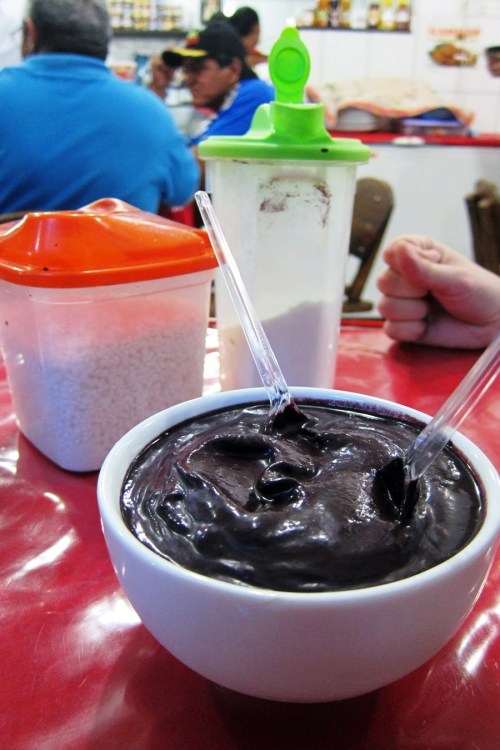
Acai at Tacaca do Norte

Açaí at Tacacá do Norte

Granola: 5/5. The topping was, no surprise, tapioca. It came in a pour container and was the best tapioca of the bunch so far.

Extras: 5/5. There was a very friendly atmosphere at Tacacá do Norte: bustling environment, convenient seating, Amazonian menu, unlimited toppings and 2 spoons – we’re in love!

TOTAL: 36/40 Tacacá do Norte takes the lead with a strong showing.

Leave a comment

Filed under Reviews

The Uyghur Bakers of Kashgar, China

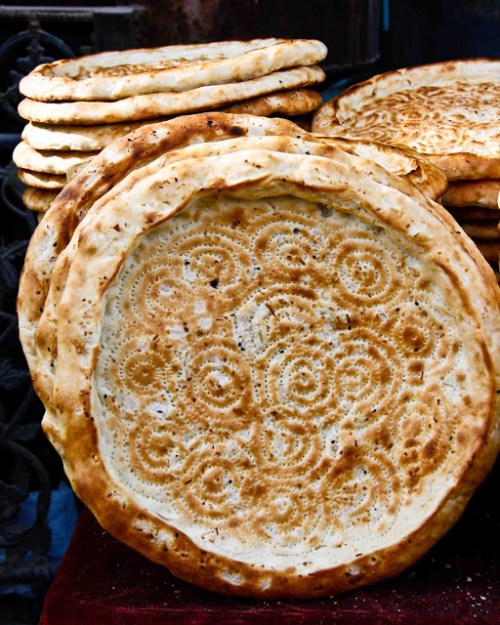
chinaI recently came across this amazing essay (with recipe) about bakers in Kashgar, China. Kashgar is located in the far western region of Xinjiang, which is home to the Chinese Muslim ethnic group known as Uyghurs. Uyghur cuisine is completely different that what North Americans are familiar with as Chinese cuisine, and has more of Middle Eastern and Central Asian flavor. Bread, in particular has a central place in Uyghur cuisine.

KashgarBread

Nan Bread from Kashgar, China by Life on Nanchang Lu

Leave a comment

Filed under Links, World Eats

Finding the Best Açaí in Rio de Janeiro: Pioneiro dos Sucos

Pioneiro dos Sucos
Av. Treze de Maio, 23
Rio de Janeiro

brazil

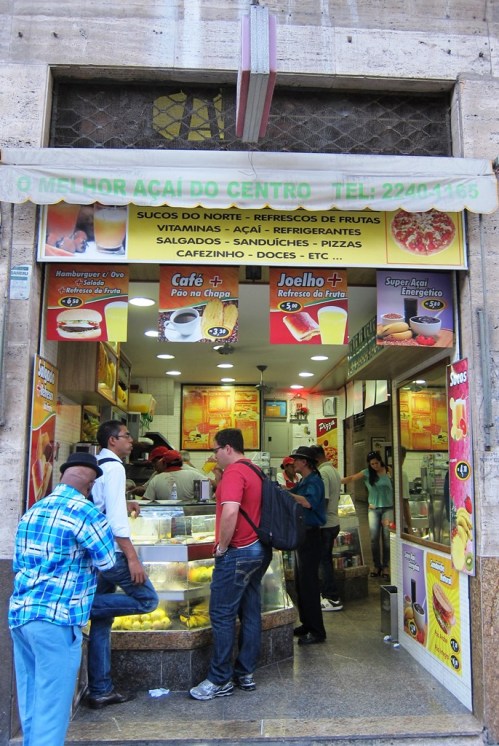
In the heart of Centro (our neck of the woods) we visited Pioneiro dos Sucos, which is a really basic, local, stand-up only açaí place, mentioned on Todo Rio. The juice bar always seemed to be full of locals and office workers so we figured it certainly would be worth a try. This type of simple stand-up juice bar is prolific in Centro. People go to these kinds of places to get a cafezinho or a juice and snack before/after work and at lunchtime. There are also sandwiches and more substantial items, but the majority of people just grab a snack and go.

Value: 5/5. Açaí was $5.80 for a 300 mL cup – with R$1 extra for granola. This was the cheapest price so far for a 300 mL cup in Rio. No complaints so far.

Pioneiro dos Sucos

Pioneiro dos Sucos in downtown Rio de Janeiro

Taste: 10/15. Pioneiro do Sucos had a nice açaí flavor with a generous mix of fruits (probably strawberries and blueberries).

Texture: 7/10. The açaí had a decent texture, but tended towards icy and a little grainy.

Granola: 0/5. This is where our visit screeched to a halt. Now this was definitely a basic type of place, so we went in with modified expectations. However, everything went sour when we found a small black bug (beetle-ish) in our cup of granola. Gross! We stopped eating the granola right there, hoping it was a fluke. We figured the bug could have flown in from the street. However, we then discovered a SECOND bug deep in our cup of granola. That was it for us.

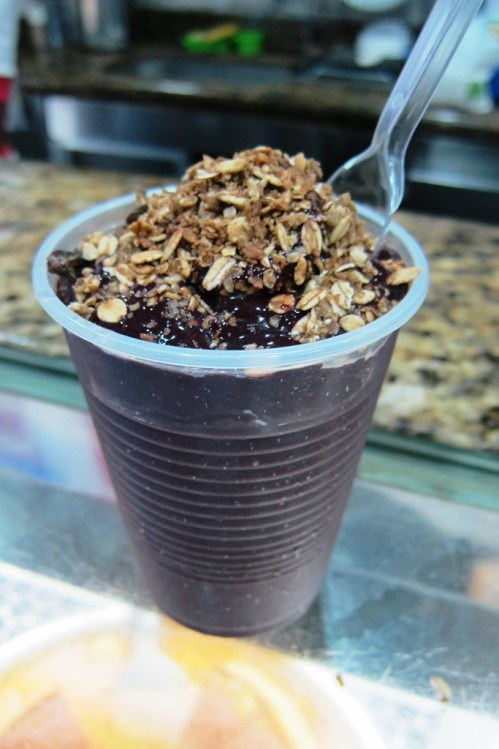
Pioneiro dos Sucos Acai

Pioneiro dos Sucos Açaí Cup

Extras: 0/5. So we were prepared for the lack of seating and bowls, and receiving no spoon, however the unclean atmosphere ruined the experience for us. Bugs in granola = bad vibes.

TOTAL: 22/40 – Probably best avoided.

Leave a comment

Filed under Reviews

Food for the Orixás in Salvador

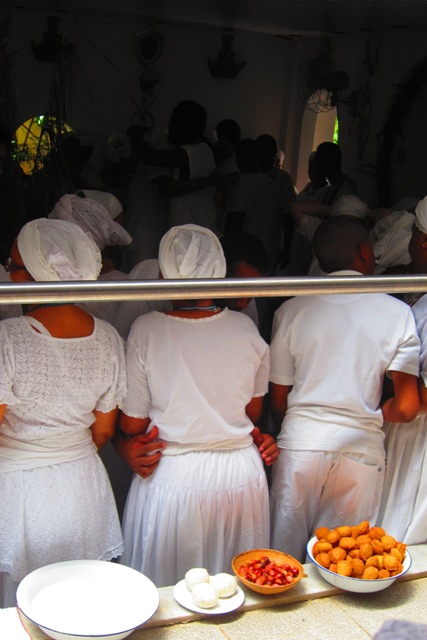
On Saturday, we had the honor of being invited to the to the Ilê Axé Ijino Ilu Orossi, a temple (ilê axé) of candomblé nagô, an Afro-Brazilian religion closely related to the religious practices of the Yorùbá people of southwest Nigeria and Benin. The Saturday before Easter is one of the most important dates in the candomblé calendar: this day celebrates the new year with the Festa de Exu, a day-long celebration for Exu, the orixá (deity) of choices, pathways, and beginnings. At Orossi, the Festa de Exu is a lavish affair: a packed house, dressed all in white, dances and sings for six hours while navigating their way around spectacular offering altars and assemblages. Food and eating are important parts of the ceremony, and we were happy to take part!
???????????????????????????????

Two female initiates (ekedi) standing in front of offerings for Exu, including mini acarajé.

In a candomblé ceremony, it is just as important to feed your guests, and all attendees, as it is to feed the orixás. While Exu was very hungry on this day – he received extensive offerings of alcohol and meat – guests all received food as well, and enough to last us all day. Shortly after the first round of offerings to Exu, all guests seated in the audience section were invited to the main floor of the axé to receive a portion of abará, a dish resembling a tamale. Abará is a classic Afro-Brazilian dish and frequently used in candomblé  ceremonies as a food sacred to the orixás. It consists of bean curd mixed with dendê oil, wrapped in a banana leaf, and steamed (the same base as acarajé, the other classic Afro-Brazilian dish, but acarajé is fried instead of steamed). Abará, like acarajé, is very filling, and we had to force ourselves to finish just one by the time attendees came around to collect our used banana leaves.

???????????????????????????????

M’s unwrapped abará.

After everyone had eaten their abará, the ceremony entered its most exciting part. We once had a friend describe a candomblé ceremony as a party for all the gods where all the gods actually show up, and it’s true. On this day, three orixás arrived to interact with attendees and dance with initiates: Pomba Gira, a female version of Exu who loves to smoke and drink; Iemanjá, the orixá of the deep sea and motherhood; and Ogum, orixá of iron and war. After the orixás had come and gone, and while we were still full from our abará, two men brought out a huge metal pot of feijoada – more than enough to serve the fifty people in attendance with a bunch left over.

???????????????????????????????

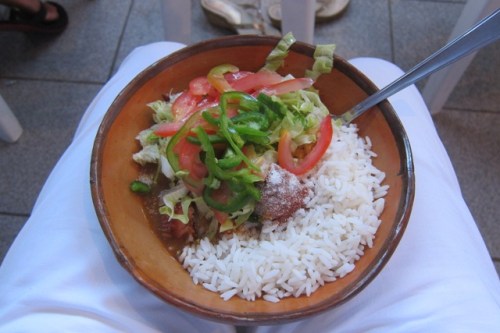
As always, guests were invited up first: we were given a decorated ceramic bowl, and then guided up to the ekedi who served us a heaping bowl of feijoada. That’s not all: out of nowhere appeared a buffet of accompaniments: rice, tomatoes, lettuce, green peppers, and pimenta malagueta: a sauce of flavored spices and famously hot malagueta peppers that is the classic accompaniment to any Bahian dish, but definitely not for the faint of heart. While we are not usually big fans of feijoada, this was excellent: beans, pork, and chicken cooked to perfection in a flavorful sauce, and the fresh veggie accompaniments and pimenta made for a very satisfying and filling meal. After six hours of exhausting singing and dancing, finishing off the feijoada put everyone into a food coma, and all the initiates in the house concluded the day by sleeping on the temple floor. A great end to a beautiful day of food and celebration for the orixás!
???????????????????????????????

M’s feijoada, complete with three spoonfuls of pimenta – apparently a record!

Leave a comment

Filed under World Eats

Finding the Best Açaí in Rio de Janeiro: Barraca do Pará

Barraca do Pará
Feira de São Cristóvão
Rio de Janeiro

brazil

We had our first experience with Northern-style açaí at Amazônia Soul in Ipanema, and we were hooked. When we visited the Feira de São Cristóvão, a fair full of Northeastern Brazilian culture, music and food, we were expecting carne-de-sol and other savory northern specialties, but somehow didn’t think about açaí.  However, we were overjoyed to stumble across Barraca do Pará in the labyrinthine Feira. As its name implies, this little restaurant specialized in cuisine from the northern Brazilian state of Pará, such as Tacacá or Vatapá, along with delicious Northern-style açaí. We actually visited this Barraca on two separate occasions and we were pleased by the quality and consistency each time.

BarracaPara

The state flag of Pará greets you at Barraca do Pará

Value: 0/5. Our heaping bowl was very generous for R$ 15.

Taste: 14/15. Again, the açaí at Barraca do Pará had very strong flavor, similar to what we had at Amazônia Soul. This is pure açaí, with none of the fruit blend at Southern-style places. In order to get the desired sweetness, you were given a large tub of sugar, and you added your own amount. Regrettably, we never really reached the perfect sweetness level.

Acai at Barraca do Pará

Amazonian Acai at Barraca do Para – add your own tapioca and sugar

Texture: 10/10. The açaí had an amazing texture. Absolutely no melting, even when we got to the bottom of the bowl.

Granola: 5/5. Again, we opted for the tapioca as the açaí topping, which was excellent. We also loved that the tapioca came to the table in a giant pouring container, so you can add all you want.

Extras: 5/5. There was tons of seating, a full menu of Paraense cuisine, unlimited toppings and 2 spoons – we’re in love!

TOTAL: 34/40 –  A very good showing. This is our favorite Northern-style place yet.

Leave a comment

Filed under Reviews

Easter Treats from Portugal: Folar da Páscoa

portugalLoyal reader José, who previously introduced us to the Portuguese delicacy, Tripa, sent us some great information about typical Portuguese Easter cakes: Bolo da Páscoa and Folar. Bolo da Páscoa (literally translated to English as Easter Cake) is a simple, delicious cake, popular around Easter time in Portugal. However, even an even more unique Portuguese Easter delicacy is the Folar da Páscoa.

Folar da Pascoa

Folar da Pascoa by Zé Pinho

Folar (which has no English translation), basically a sweet yeast bread, varies from region to region, and could be classified into a few major varieties. The first kind, from the Algarve in Southern Portugal, is a very sweet cinnamon and anise-flavored bread, typically decorated with whole eggs colored with onion skins. This type of Folar also reminds us of classic Italian Easter Bread with its colorful whole-egg topping. The other type of Folar, from the North of Portugal, is a simpler bread which is less sweet than the Algarve version. Another version of Folar from the very north of Portugal, near Spain, called Folar de Trás-os-Montes, sometimes contains ham or bacon! Piglet in Portugal has a recipe from Central Portugal, and Portuguese Girl Cooks shares her grandparents’ version of the sweet variety of Folar. Tia Maria has a recipe for savory Folar.

Thanks for the tip, José!

Leave a comment

Filed under Holidays, Pastry Post-Poc, World Eats

Easter Bilbies in Australia

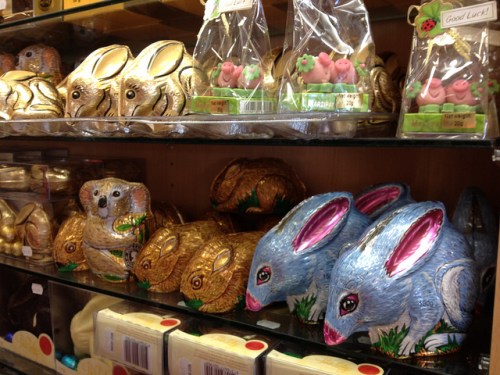
AustraliaIn the USA, Easter is associated in pop culture with rabbits and bunnies. However, in Australia, you are also likely to see a bilby alongside the bunnies. Bilbies are native, endagered Australian marsupials that have floppy ears and a long snout. Rabbits are considered an invasive species in Australia, so it makes sense that they might prefer Bilbies at Easter time. The campaign for the Easter Bilbies was popularized by the Foundation for Rabbit-Free Australia, and the concept has taken off since, with children’s books and chocolate Bilbies galore.
Easter Bilby

Easter Bilbies for sale in Australia – by Rose Holley

Leave a comment

Filed under Holidays

Back to Bahia!

After eleven weeks in Rio, we are heading back to Salvador da Bahia for two months! We spent a good chunk of early 2012 in Salvador, where we sampled all the local specialties from acarajé to moquecas, and we are ready for more. Stay tuned!

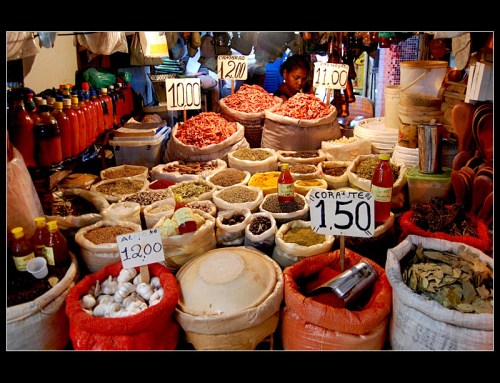
Spices and dried shrimp for sale at the Feira de São Joaquim in Salvador. via

Spices and dried shrimp for sale at the Feira de São Joaquim in Salvador. via Trekearth

Leave a comment

Filed under Reviews