Christmas food is all about comfort, and nothing is more comforting than tamales! Venezuela has their own special Christmas dish that is a close cousin of the Mexican tamal, the hallaca. A mix of European, African and Indigenous foodways, hallacas consist of masa steamed in a plantain leaf, filled with a mixture of beef, pork, chicken and olives. If you are really planning to have a big nochebuena dinner, here is a recipe to make 50 hallacas, or a slightly more modest 25. The tradition of making hallacas at Christmastime has also spread to Trinidad and Aruba, both of which are very close to the Venezuelan coast.
We’ve never thought of potatoes as a sweet dish, but Kalle Bergman’s post about Brunede Kartofler (Danish Caramelized Potatoes) on Honest Cooking definitely intrigued us. As opposed to the salty mashed potatoes we enjoy in the US, the Danish go the sweet route with this traditional Christmas side, which is an excellent match with heavier meat dishes. Brunede Kartofler are deceptively simple, and consist of peeled new potatoes, pan-fried in butter and sugar. In order to cut through the heavier dishes, you will often see the meat and potatoes cut with the tangy cabbage slaw, Rødkål.
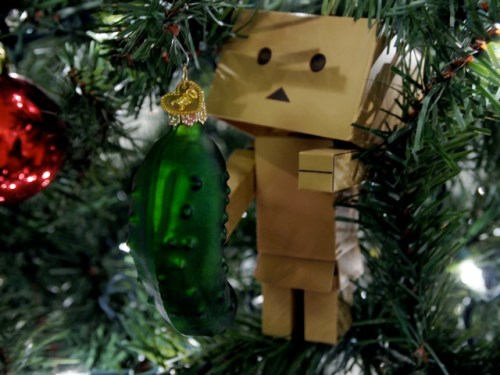
We were at Chicago’s venerable Christkindlmarket today, perusing the holiday ornaments while enjoying bretzels and roasted cashews, when we noticed a huge basket of glass ornaments shaped like pickles. “Odd,” we both said. But then we saw them at another booth, and again at another. What gives? We were intrigued. Finally, in one of the ornament shops, in the midst of yet-again vocalizing how confused we were by the pickle ornaments, a woman behind us jumped in: in her family, one person puts/hides the pickle ornament in the tree, and the person who finds the pickle ornament gets to open presents first, or gets an extra gift. And it was not just her family: apparently the Christmas pickle is a huge tradition! Though some people claim the pickle has German origins, it is probably actually an American or German-American tradition that took root in the late 19th century, just as glass ornaments were being popularized. Even though its origins are shrouded in mystery we like the idea that it is supposed to bring good luck!
Christmas Pickle Ornament (and Danbo friend) by Meagan
The holiday season is upon us – and that means food – and especially sweets – are out in full force! One of the biggest sweet-filled holidays in Central Europe is right around the corner: St. Nicholas Day. On the Eve of St. Nicholas Day (called Deň Sv. Mikuláša in Slovak), children leave out their boots in the hopes that they will get a special treat from St. Nicholas, perhaps some fruit, or if they are lucky, candy! This tradition is similar to other countries, such as the celebration of Sinterklaas in the Netherlands. If you’re looking to learn about Czech candies, Prague Artel blog has a comprehensive guide about some of the most famous varieties (we think Kofila looks especially delicious). You can get your fix of Czech / Slovak candies at Slovczechvar.com and Equ.inox has reviews of both Czech and Slovak chocolates. For something a little more substantial, check out these St. Nicholas moon cookies.
Candy-filled shoes for St. Nicholas Day – by Major Bonnet
Happy Hanukkah! Along with Hanukkah comes a plethora of latke recipes, and who doesn’t enjoy a good potato pancake? One of the most interesting traditions surrounding latkes is the annual “Latke vs. Hamantash” debate – an annual scholarly event where the merits of latkes and hamantashen (pastries traditionally served during the Purim holiday) are debated. The event was first held at University of Chicago in 1946, and is held yearly on the Tuesday before Thanksgiving. The event has become increasingly famous over the years, and has even spread to different universities. Despite its storied and lengthy history, the debate has never been definitively won. Which side are you on?
Like many other counties, Denmark celebrates Shrove Tuesday/Mardi Gras – Fastelavn – with merriment, rich treats and other festivities. But you’ll never guess where it pops up outside of Denmark – Brooklyn. Apparently there is still a yearly Fastelavn celebration going strong in Sunset Park, at the 120-year-old Danish Athletic Club. We love hearing about hidden cultural pockets like this, still surviving after 100+ years.
We are most familiar with Latin American traditions for Dia de Los Muertos / All Saints’ Day, but the holiday is also celebrated in Europe (with some similarities and differences). All Saints’ Day is a national holiday in Poland, where it is known as Wszystkich Świętych. One of the most popular treats for All Saints’ Day in Warsaw is pańska skórka which translates to “The Lord’s Crust.” Pańska skórka is a pink-and-white nougat, similar in texture to Turkish Delight, and is sold in and around cemeteries during the week of All Saints’ Day where families go to light candles (znicze) in cemeteries in honor of the deceased. In Krakow a similar candy is called Miodek Turecki, or “Turkish honey.”
One of our favorite traditional foods for Dia de los Muertos is the sugar skull, which we have written about previously. We usually buy pre-made sugar skulls – and we even got new ones this year personalized with our names in Pilsen. However, we are stepping up our game this year. We picked up sugar skull molds at the Museum of the American Indian in Washington DC last week, and are excited to make sugar skulls of our own for the first time. Once you have the skull-shaped molds, the process doesn’t seem too daunting. However, the recipe included with the molds called for something called meringue powder, which you can buy online or pick up in many craft or large grocery stores. Fortunately, making a recipe with egg whites works just as well, as does a traditional recipe with egg white and cornstarch.
Sugar Skull for Dia de Los Muertos at the Museum of the American Indian in Washington DC
Today is the last day of the 3-day Korean harvest holiday, Chuseok, which is centered around the full moon during the autumn equinox. Many Chuseok activities relate to paying respects to ancestors, with families visiting their ancestral homelands, cleaning graves and making offerings of foods to the deceased. Of course, as with any holiday, traditional foods have pride of place, and one of the most traditional Chuseok foods is Songpyeon (송편). Songpyeon is a sweet chewy cake made with rice flour, and filled with honey, red bean paste, sesame seeds (or another sweet filling). Though the traditional shape is half-moon, Songpyeon can come in a myriad of colors and flavors. They are also traditionally layered on top of pine needles, which does make everything taste a little like pine! Tradition also holds that it is important to make the prettiest Songpyeon possible, since the prettier the cake, the prettier you future child will be. The Korean Bapsang blog has a guide to making your own Songpyeon, in a variety of colors and flavors.
In our other lives, we are Brazilian music aficionados. As much time as we spent eating everything in sight while in Brazil, we were as dedicated to listening to as much live music as we could, including seeing the world-famous carnival parade twice: once at the technical rehearsal, and finally during the main event. We had the good fortune both times to see the eventual parade winners, the GRES Unidos de Vila Isabel (headlined, as always, by one of L’s favorite sambistas, Martinho da Vila). Vila’s 2013 samba-enredo (theme song) was the unrelentingly catchy “Água no feijão que chegou mais um;” sing along with the video below:
The song is a celebration of the simple life in the Brazilian countryside, and makes use of some creative wordplay to talk about the samba school’s job of making music using words that evoke farming, planting, and harvesting country crops (“Vila Isabel is going to plant some happiness tomorrow morning”). Once we had listened to the song on repeat 30 times, one particular verse caught our attention:
Bota água no feijão (“[He] throws water in the beans”) Já tem lenha no fogão (“There’s already wood in the stove”) Faz um bolo de fubá (“[He] makes a cornmeal cake”)
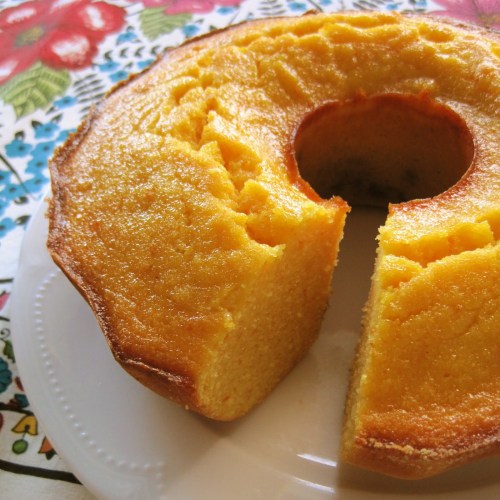
Question to us, then: what is a bolo de fubá, and given our self-professed love of Brazilian pastries and cakes,why have we not made one yet? A bolo de fubá is literally a cornmeal cake, but it is more than cornbread: using finely ground cornmeal (the finer than the better), you make a slightly sweet cake that is a ubiquitous accompaniment to breakfast or midday coffee. Bolo de fubá is also a popular food eaten in the Brazilian June Festivals, or Festas Juninas.
Gluten-free bolo de fubá cremosa with orange, from Sabor Saudade.
Everyone has their own take on a bolo de fubá. The most common variations are to make it a bolo de fubá cremosa (“creamy”) or bem cremosa (“super creamy”), usually by adding coconut or a creamy substitute like extra cheese or eggs. For beginners, try this recipe for asimple bolo from about.com. Denise Browning over at From Brazil to You has a good recipe for a bolo de fubá cremosa with coconut, complete with some reminiscing about some of her bolos of years past. But really, the good recipes will all be in Portuguese: try the one from Sabor Saudade (above), or this one from Tudo Gostoso (Everything Tasty).
And thanks to Vila Isabel for introducing us to a new treat: now we have a food to get addicted to as we get more and more addicted to your song. E está chegando o povo do samba!
Ramadan, the 9th month of the Islamic calendar, started on July 10th. During the month, Muslims fast from dawn until dusk, and break the fast with a meal known as Iftar each night. What is eaten at an Iftar meal varies widely from country to country and from home to home, ranging from a small family meal to a huge party with an elaborate spread of dishes. Asia Society has a list of classic Iftar dishes from each country, and Time.com has a photo gallery of global Iftars, both showing the diversity of Iftars around the world. So where to begin? The possibilities are nearly endless. Time Out Abu Dhabi has recipes from reknowned chefs, About.com has a list of Traditional Moroccan Iftar recipes, and Veg Recipes of Indian has a wealth of Vegetarian Iftar options.
Barbeque sign in Bryson City, North Carolina, by Eric Fink
Happy 4th of July! A classic American 4th of July means barbecue, so we are excited to share a few new Chicago BBQ-related links for those in our neck of the woods. First and foremost, the Serious Eats ranking of the best pulled pork in Chicago. Lillie’s Q comes out on top, and our perennial favorite Smoque comes in 2nd place. Chicagoist has their own recent roundups of the top BBQ overall in Chicago. For something a little different, Time Out Chicago dishes on their pick for the best new BBQ joint in Chicago, Bub City.
The June festivals in the Lusophone world, commonly called “Festas Juninas,” are most associated with Brazil. But one of the biggest is actually held in Porto, Portugal: the Festa do São João do Porto. Though little known outside Portugal, the festival for São João (St. John) is one ofEurope’s biggest street parties. Lasting from the night of June 23rd until June 24th, the holiday celebrates St. John the Baptist (whose feast day is June 24), and was brought to Brazil by the Portuguese. However, the Portuguese celebrations are a little different, though there is the same merriment, dancing and fireworks that Brazil enjoys, along with some quirky Portuguese food-related traditions.
Fireworks (and mallet) for Festa do São João in Porto by Black_wall
There is a ton of food at the Festa do São João do Porto, and one of the most traditional foods, seen on nearly every street corner, is grilled sardines, Sardinhas Assadas (and the recipe couldn’t be easier). Other somewhat stranger food traditions, whose origins are pretty much unknown, are also part of the festivities. First, a tradition is bopping other revelers over the head with plastic mallets (which were substituted for leeks or garlic flowers in former times, a tradition that is actually coming back). The other food tradition is the exchange of basil plants (manjericão) with your sweetheart. The plants traditionally even come with a romantic four-line poem:
Se eu me podesse afogar / If I could drown myself
Na tua pele perfumada / In your perfumed skin
Poderia flutuar, / I would waft away,
Viver sempre apaixonada. / Living passionately forever.
Who’d have thought a little basil plant would have such a major part in any festival?
A Basil Plant (manjericão) sign for São João by Tantegert
In Brazil – “Valentine’s Day”- Dia dos Namorados – actually occurs on June 12. February 14 is too close to Carnaval – which dominates the festivities for a month in Brazil – so putting the holiday in June makes a lot of sense. Dia dos Namorados is celebrated in similar way by showering your sweetheart with chocolates, cards, flowers and the like. This year we made brigadeiros to celebrate, however there are a wealth of other Brazilian treats appropriate for the day, some even with romantic names: beijinhos (little kisses), casadinhos (little marrieds) and bem casados (well-marrieds).
Beijinhos are little coconut candies, “kissed” with cloves, hence the name. They are almost like a coconut version of brigadeiros, and are nearly as popular in Brazil. The recipe for making them is almost identical to a brigadeiro recipe (minus the chocolate), whether covered in sugar or coconut flakes. Casadinhos are black and white brigadeiros (“marrying” the two flavors) – unfortunately I can’t find a recipe for these in English, but here is one in Portuguese. Bem casados are sandwich cookies with a doce de leite filling, which are understandably popular at weddings on the dessert table or as favors. Here is a recipe from Kitchen Corners that even includes homemade doce de leite, and another from the Cookie Shop blog with frosting. Feliz Dia dos Namorados!
Loyal reader José, who previously introduced us to the Portuguese delicacy, Tripa, sent us some great information about typical Portuguese Easter cakes: Bolo da Páscoa and Folar. Bolo da Páscoa (literally translated to English as Easter Cake) is a simple, delicious cake, popular around Easter time in Portugal. However, even an even more unique Portuguese Easter delicacy is the Folar da Páscoa.
Folar (which has no English translation), basically a sweet yeast bread, varies from region to region, and could be classified into a few major varieties. The first kind, from the Algarve in Southern Portugal, is a very sweet cinnamon and anise-flavored bread, typically decorated with whole eggs colored with onion skins. This type of Folar also reminds us of classic Italian Easter Bread with its colorful whole-egg topping. The other type of Folar, from the North of Portugal, is a simpler bread which is less sweet than the Algarve version. Another version of Folar from the very north of Portugal, near Spain, called Folar de Trás-os-Montes, sometimes contains ham or bacon! Piglet in Portugal has a recipe from Central Portugal, and Portuguese Girl Cooks shares her grandparents’ version of the sweet variety of Folar. Tia Maria has a recipe for savory Folar.
Welcome to Eating the World! We’re two Midwestern omnivores, L and M, who are trying to eat food from every country in the world (at restaurants in both the US and abroad). Eating the World is where we update our global restaurant and food adventures. We are based in Cleveland, Chicago and beyond. To contact us for questions, partnerships, or just to say hi, email us at eatingtheworld (at) gmail

 Christmas food is all about comfort, and nothing is more comforting than tamales! Venezuela has their own special Christmas dish that is a close cousin of the Mexican tamal, the hallaca. A mix of European, African and Indigenous foodways, hallacas consist of masa steamed in a plantain leaf, filled with a mixture of beef, pork, chicken and olives. If you are really planning to have a big nochebuena dinner, here is a recipe to make 50 hallacas, or a slightly more modest 25. The tradition of making hallacas at Christmastime has also spread to Trinidad and Aruba, both of which are very close to the Venezuelan coast.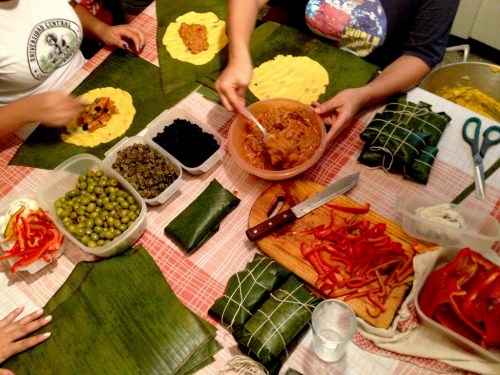
 We’ve never thought of potatoes as a sweet dish, but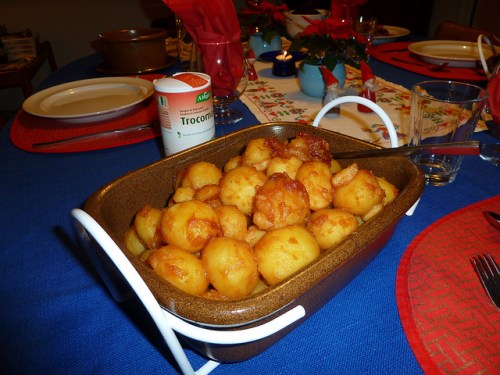

 The holiday season is upon us – and that means food – and especially sweets – are out in full force! One of the biggest sweet-filled holidays in Central Europe is right around the corner: St. Nicholas Day. On the Eve of St. Nicholas Day (called Deň Sv. Mikuláša in Slovak), children leave out their boots in the hopes that they will get a special treat from St. Nicholas, perhaps some fruit,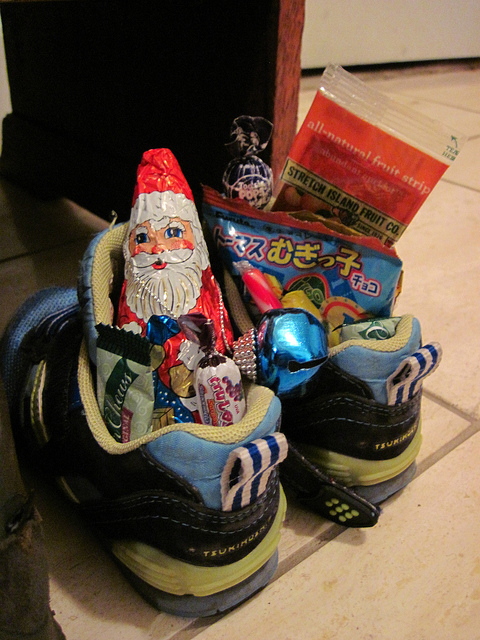

 Diwali, the Hindu “festival of lights” is upon us, and that means a vast supply of excellent food. We talked a little bit about the

 We are most familiar with Latin American traditions for Dia de Los Muertos / All Saints’ Day, but the holiday is also celebrated in Europe (with some similarities and differences). All Saints’ Day is a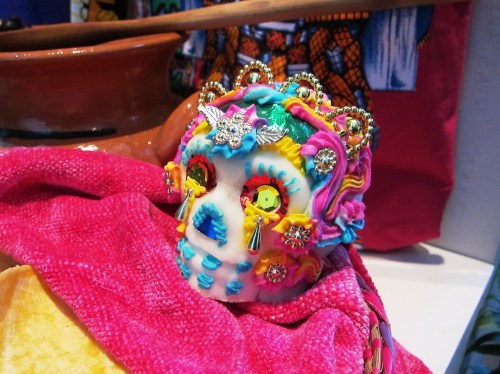
 Today is the last day of the 3-day Korean harvest holiday,

 Tomorrow is


 The June festivals in the Lusophone world, commonly called


 May Day



 Eating The World