Category Archives: Reviews

Unboxing Japan’s Spooky Treats: TokyoTreat Halloween Box

One of the best parts of the arrival of fall is the seasonal treats, particularly when it comes to Halloween. What is your favorite Halloween candy? We always loved picking out the chocolate pieces when going trick-or-treating, and we think our all-time favorite is probably Reese’s Peanut Butter Cups. Though there is nothing like an old classic, we always love to try new-to-us sweet treats, especially from around the world. So, we were like kids in a candy store when we were gifted the October TokyoTreat subscription snack box, packed to the brim with Japanese sweet and savory treats with a spooky Halloween theme. TokyoTreat is like the younger funkier cousin to SakuraCo (which we reviewed in July), providing an assortment of expertly curated Japanese snacks each month for subscribers. Each month also has a theme, and if you missed one you like, you can also purchase a one-off previously-released box. The Halloween box we received can be ordered until 10/15.

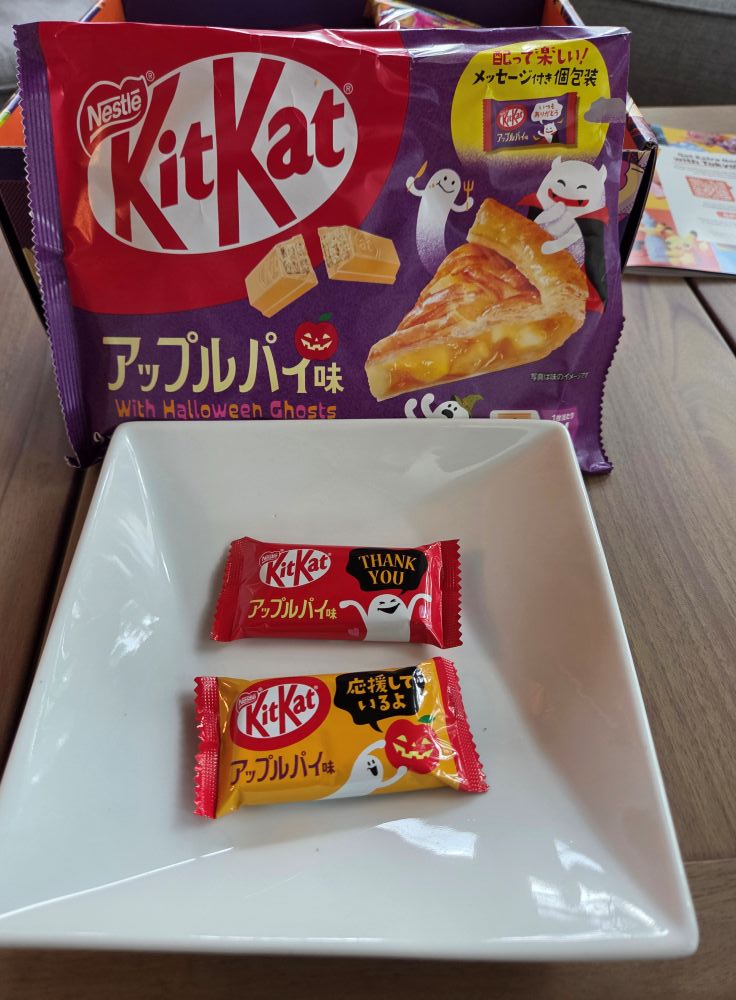
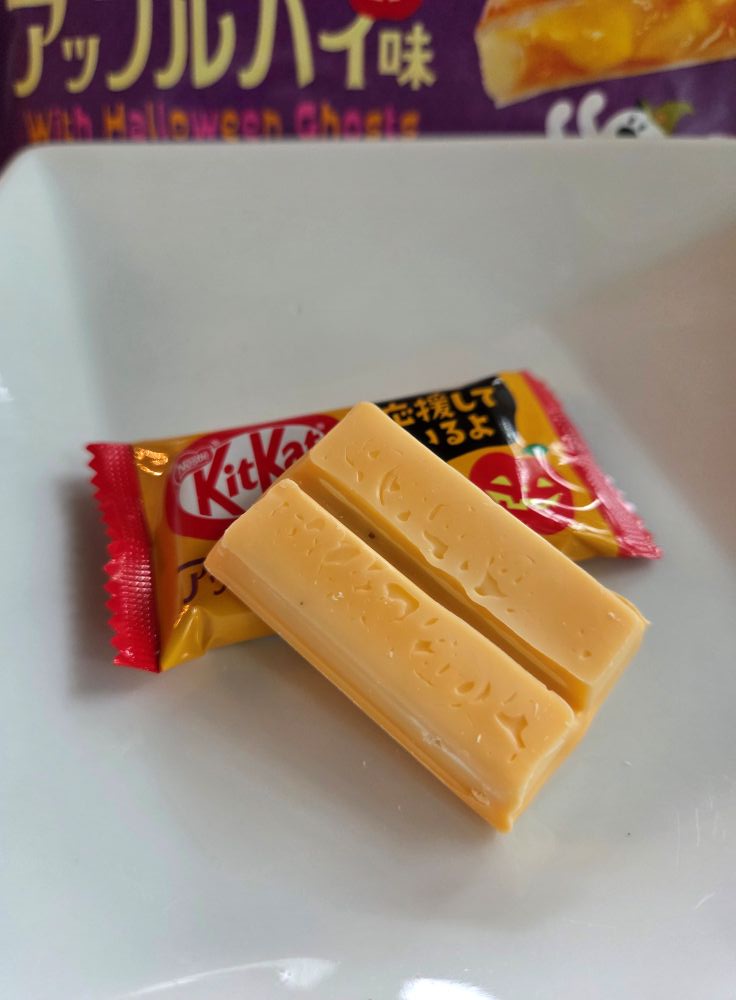
The box included a helpful pamphlet describing Halloween (a foreign import) and other spooky traditions in Japan including the homegrown historical Japanese supernatural spirits known as yokai. Since the packaging for the treats is mostly in Japanese, the booklet also helps you identify all of the treats inside (including listing any common allergens). One of the highlights of this month’s TokyoTreat box was the package of the seasonal apple pie KitKats. When we visited Japan in 2024, we enjoyed trying all of the delicious unique KitKat flavors that are unavailable in the US. Some standouts included red bean, matcha, and raspberry chocolate chip. We had never tried the apple pie flavor, and it tasted uncannily like the real thing! Each TokyoTreat box features a new KitKat flavor, and we look forward to seeing what we get in the future. Past KitKat flavors have included Mont Blanc and strawberry chocolate.

The treats are sourced from throughout Japan, and some were specifically Halloween themed. Of note, we had tried none of the Japanese snacks and candies before! Some of our favorite sweet treats from this month’s assortment included a tiny custard-filled sponge cake and a “chocolate baton” wafer with a meringue-like texture. Though not particularly spooky, we were also fans of the blueberry cheesecake bites, which were airy, flaky and not too sweet. Though there were only small samples of some of the treats, others were large enough to share (which definitely made M happy).

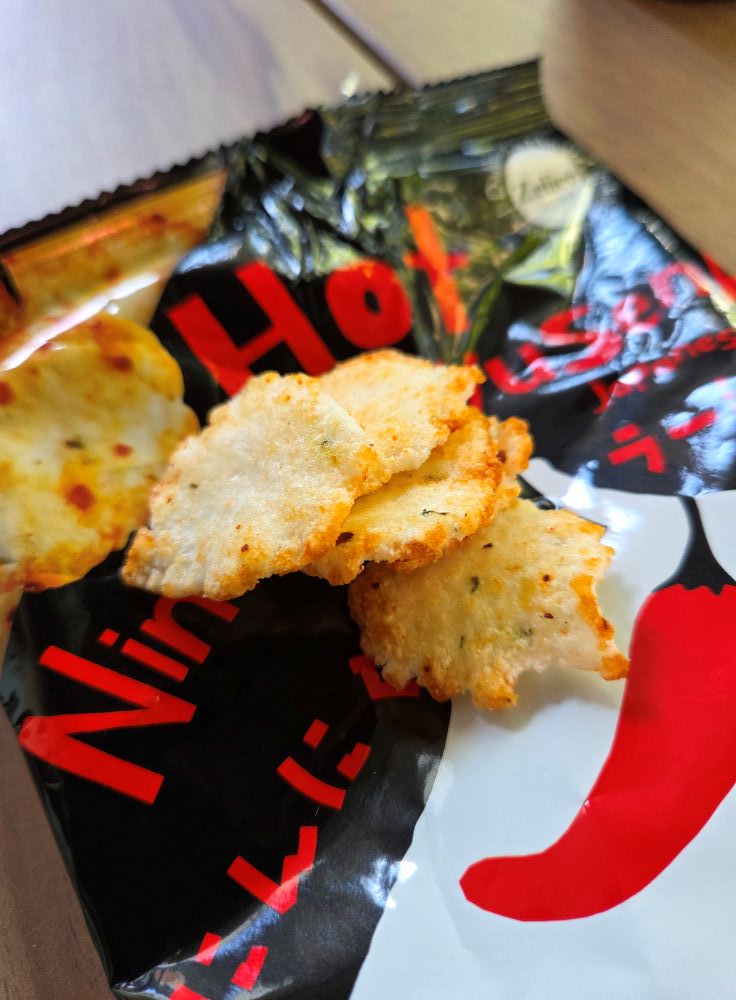
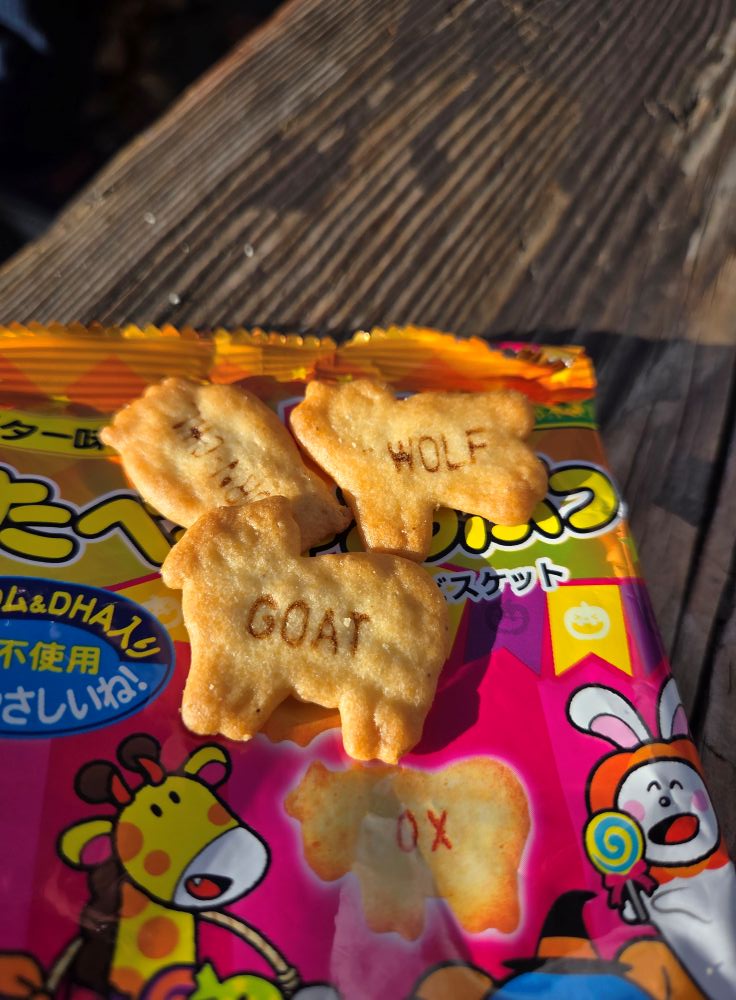
We do appreciate the inclusion of both savory and sweet treats in each TokyoTreat subscription box, since especially with the candy-forward Halloween theme, savory could have easily been overlooked. Of the savory treats, one of our favorites was the garlic and chili senbei rice crackers, which had a delightful crispy texture and satisfying amount of heat. Buttery animal crackers toed the line between savory and sweet, and we got a kick out of how each abstract animal was helpfully labeled. The box even included a spicy ramen pack that we are going to squirrel away for later. These were only a few of the snacks and treats in the box, but we don’t want to give every surprise away.

The Halloween TokyoTreat box is a great way to get into the spirit for Spooky Season. We really enjoyed the assortment of treats provided, and the diversity of unique flavors. If you are trying to decide between a TokyoTreat box and a SakuraCo box, you can’t really go wrong, though they are quite different. SakuraCo is more focused on featuring specific artisanal makers, and the TokyoTreat box is geared toward more fun, pop culture packaging, and off-the-wall flavors. So why not try both? You can try a single month, or a longer subscription (3, 6, or 12 months), or can give either option as a gift. Especially with the winter holidays around the corner, we look forward to seeing what treats are in store for next season!

Leave a comment

Filed under Reviews

Discover Authentic Egyptian Food at King Tut in Cleveland

Ever since we visited Egypt a few years ago, we have had a massive hankering for Egyptian food, even making it at home. Fortunately there is a sizable Egyptian community in Cleveland, which means there are yearly Egyptian cultural festivals with copious amounts of food, and even a delicious local Egyptian restaurant in King Tut (8801 Brecksville Road, Brecksville, OH). King Tut is a small restaurant primarily open for breakfast and lunch – with dinner hours on Friday and Saturday – which serves hearty street food favorites (the tagline of the restaurant is “Egyptian Street Food”). The owners Hadia and Nader Soliman are from Cairo and on one of our visits, Nader was happy to talk to us about everything on the menu, and his life in Egypt. We actually ate at King Tut twice in 2 weeks, which is quite unusual for us, since we like to try new places. In terms of our recent trips, our first visit in was with our adventurous foodie nephew, and when we told some of our friends about this trip, they wanted to visit the restaurant, too. Since we really enjoy King Tut we were happy to oblige.

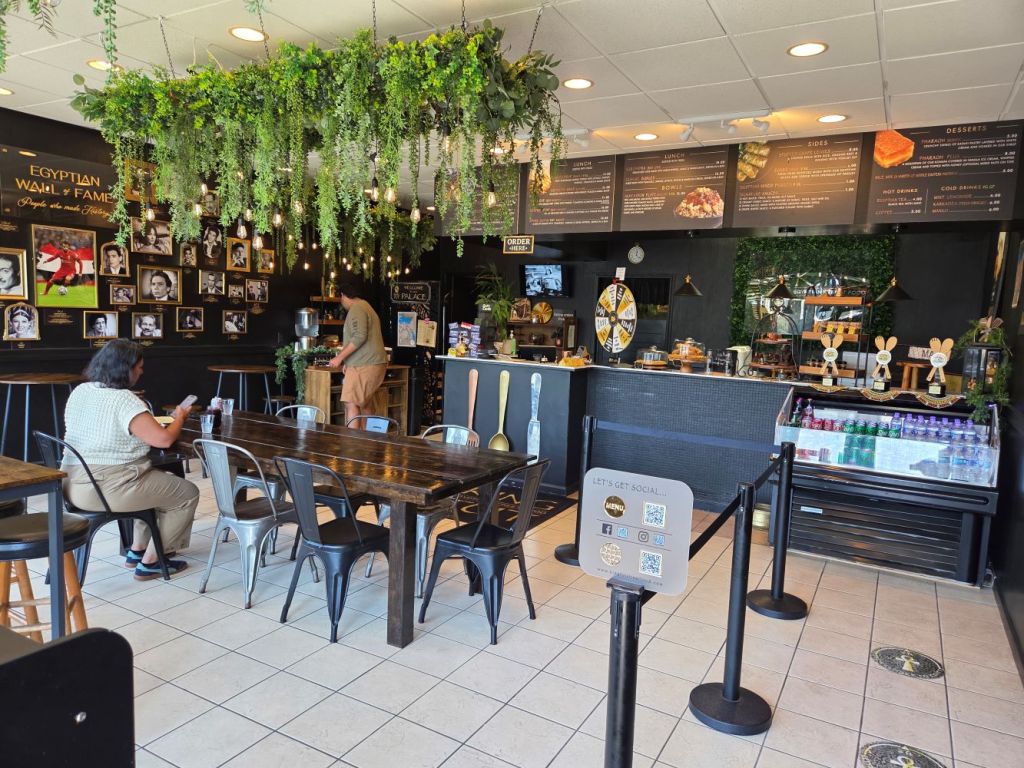
The restaurant was doing a brisk takeout trade around lunchtime, though there are also a few dine-in tables. The decor includes many nods to ancient Egypt and also a prominent photo wall of famous Egyptians across time. King Tut’s curated menu consists of all day breakfast, wraps, entrees, and even some house-made desserts. In terms of breakfast foods, we were happy to see the typical breakfast dish of ful: mashed fava beans with onion, tomato, and tahini, served with a side of aish baladi (Egyptian flat bread). Ful is delightfully hearty and simple, and is filling enough to serve as a small main or side. We also got a delicious side of falafel, and other side dish options included heavily-spiced fries and a smoky and savory baba ghanoush dip.

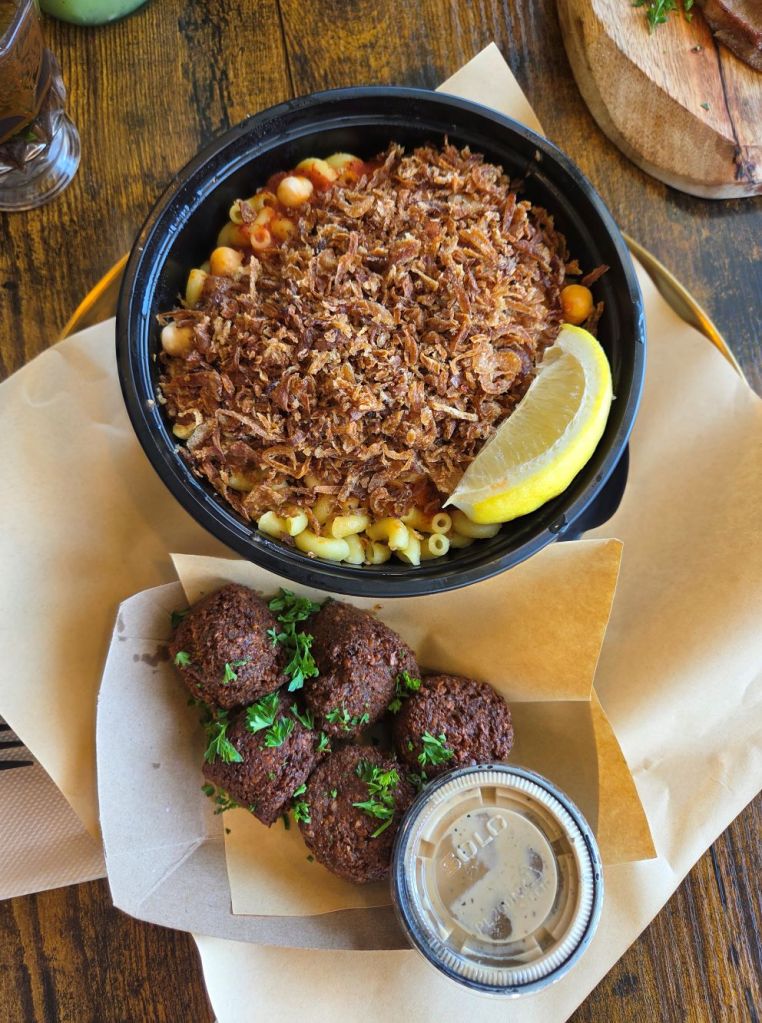
In terms of more lunch-y items, of course, we had to order our favorite, koshary, which is a delicious, carb-heavy mix of pasta, chickpeas, rice, tomato sauce, and topped with fried onions. Koshary prepared in giant batches and doled out in small cups or bowls is a popular street food in Cairo, which is where we first enjoyed it. To finish your serving of koshary, you add your own vinegar and spicy sauce to taste. We have to say that this is definitely some of the best koshary we have had in the US. Among the offered wraps, our favorites included the grilled chicken and the beef shewarma. Our nephew particularly liked the beef hawawshy, spiced ground beef and onions flattened in pita bread, giving it the appearance of a pizza more than a wrap.

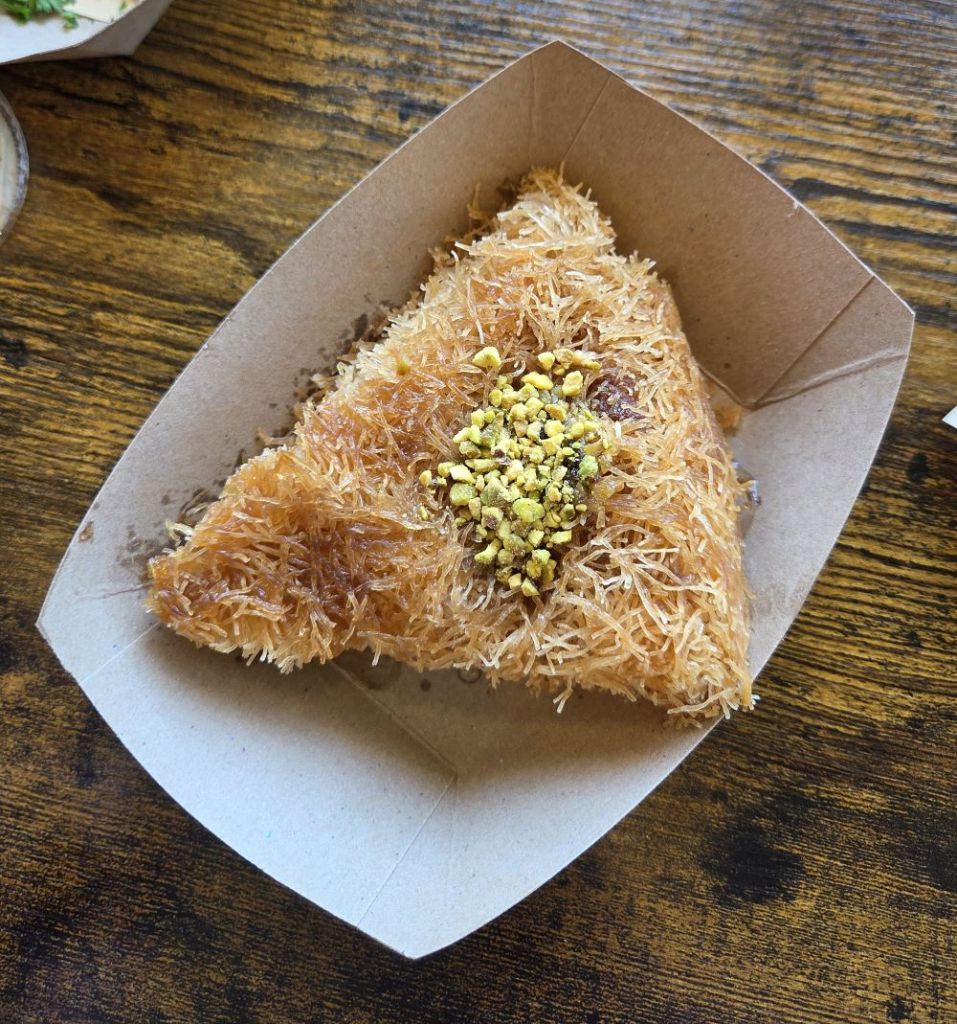
The desserts were also standouts: on offer were baklava and konafa. Our particular favorite was the konafa, which is a confection of an outer layer of crispy thin semolina pastry with a custard center, much harder to find in the US than baklava. The texture of the konafa is really interesting and delicious, a study in contrasts. The freshly-made mint lemonade was also a sleeper hit, alongside strong Turkish tea and Egyptian black tea for those looking for a caffeine fix. At this point, I think we have ordered almost everything on the menu except for the lentil soup, which is only available from October to April, so we will definitely have to go back to try it this fall. We definitely recommend King Tut for a taste of Cairo in Cleveland, and we have enjoyed every visit there. Not only are we fans, everyone we have brought here has also been very impressed.

Leave a comment

Filed under Reviews

A Must-Try: Birria at Birrieria Ocotlan in Chicago

We mourned the loss of Taqueria Chingon (though it seems that they now have a West Loop location), one of our favorite Mexican street food spots in Chicago. However, Chicago is still home to so much great Mexican food, that we simply had to direct our attention elsewhere to some of our other favorites. So, we started with birria. The Jalisciense dish birria has become extremely popular in the US, and I have even seen it offered outside of Mexican restaurants recently. Birria is a slow-simmered stew of beef, or traditionally goat, simmered in a spiced broth called consomé. Aromatics include ancho chiles, cinnamon, cumin, and oregano, among others (home cooks can even buy birria spice blends online).

One of our go-to Chicago birrierias is Birrieria Zaragoza. With a newer Uptown location in addition to their original Midway-area location, they are more accessible to a wider number of Chicagoans than ever before. However, we wanted to sample some other birria offering in the city (and there are many). We had previously heard of Birrieria Ocotlan (4007 E 106th St., Chicago), but we are rarely near its far south side location (there is a second location at 8726 S Commercial Ave.). However driving from Cleveland to Chicago, it is actually just off of I-90! We ended up there on a cold snowy afternoon, as you can see from the photo below.

We were also really pleased to see that Birrieria Octolan was also mentioned on the New York Times list of best things they ate in 2024. Ocotlan, named after the city in Jalisco, basically has only one thing on the menu: birria. This certainly makes ordering easy. You could order a small or large bowl of birria (either beef or goat) with consomé, which then included some tortilla chips on the side. You could order tortillas or salsa as extra sides. Also on offer were tacos with a choice of birria, beef tongue, or beef heart.

On the inside of the restaurant, there are only a few simple booths. They close somewhat early at 6 PM, so you will definitely want to plan ahead, or go for lunch. We each ordered a large plate of birria, which at $15 was only $1 more than a small size. Overall, this was one of the best bowls of birria we have ever had in Chicago. The flavors were complex and deep, and you could tell that they had been perfecting the recipe for the over fifty years they have been open. Birrieria Ocotlan is the epitome of a simple place that does only one thing really, really well. I think this may become one of our go-to locations for birria in the future.

Leave a comment

Filed under Reviews, World Eats

SakuraCo Subscription Box Review: Authentic Japanese Snacks

It’s no secret that we are huge fans of Japanese food, an obsession stoked even further by our trip to Japan in summer 2024. Due to our love of Japanese food, I was particularly delighted that SakuraCo gifted me their August subscription box of Japanese foodie treats. SakuraCo is a monthly subscription service that sends you a curated box of Japanese snacks, based on a different theme each month. You can also buy one-off boxes or products if you don’t want to commit to an ongoing subscription. They also have a sister brand TokyoTreat which offers more pop culture and kawaii based food subscription boxes. I have previously purchased SakuraCo subscription boxes as presents for my foodie friends, and they have always been well-received.

This month’s SakuraCo box theme was Okinawa, the southernmost major island in Japan. I was thrilled to see this theme since Okinawa is one of the top places we would like to visit in the near future. We have a friend who lives there part of the year and we hope to visit him someday. It didn’t work to visit Okinawa on our 2024 trip, but he was previously generous enough to bring us some treats from Okinawa. Okinawa is known for its unique cuisine, its indigenous Ryukyuan culture, and its laid-back beachy atmosphere that sets it apart from other regions in Japan. On the blog we have previously covered Okinawan brown sugar, a special ingredient that found its way into several treats in the SakuraCo August box including in chocolate cookies, an almond mix, and deep-fried wheat snacks.

The SakuraCo box includes at least 20 sweet and savory treats from small-scale artisanal producers all over Japan, but with a focus on Okinawan producers or ingredients this month. SakuraCo boxes also include a piece of pottery, glass or tableware each month, serving as a lasting reminder long after the food has been consumed. This month’s box included a special piece of pottery from Bloom Ceramics in Gifu Prefecture. We received a small Mino Ware bowl in elegant, muted browns and blues, which we think would be perfect for dipping sauces.

One of our favorite parts of the SakuraCo box is the helpful booklet that describes each item and its producer, along with some information about the region’s culture and top sites. Not only does this guide help you identify the products, but it provides additional context on the included foods and their unique origin stories, which I love. One of the featured producers in this month’s box was a heritage dried pickled plum maker from Okinawa, Uema Kashiten. The included honey plum, known as Suppaiman, was truly one of the most intriguing bites in the box: sweet, salty, savory, acidic and juicy all in one.

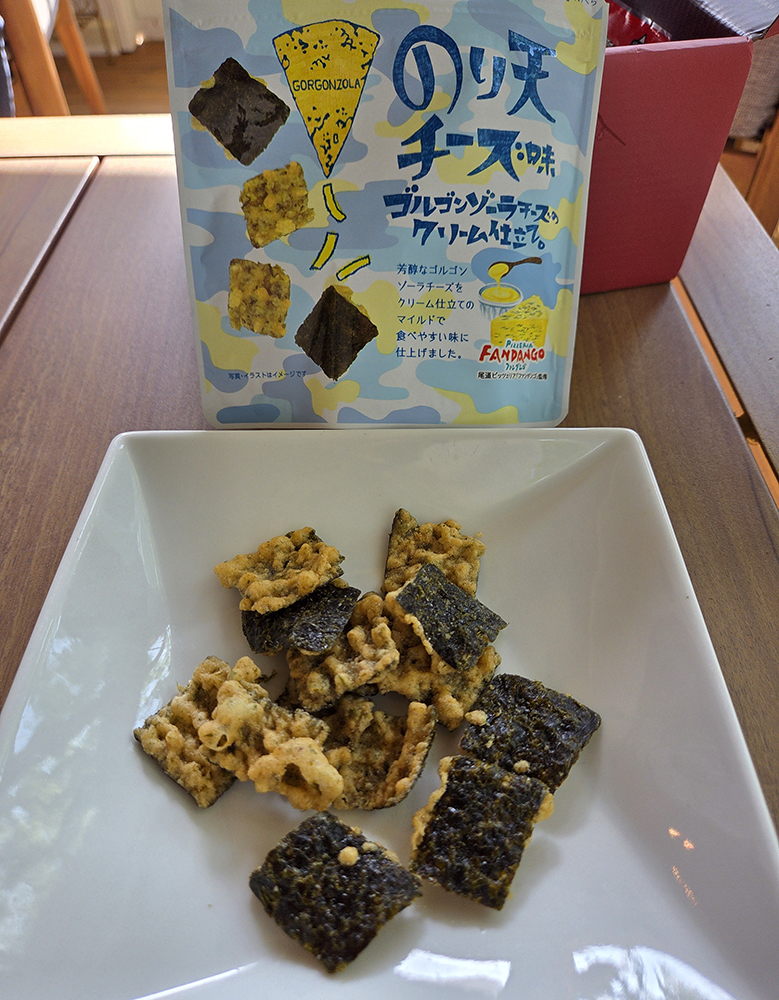
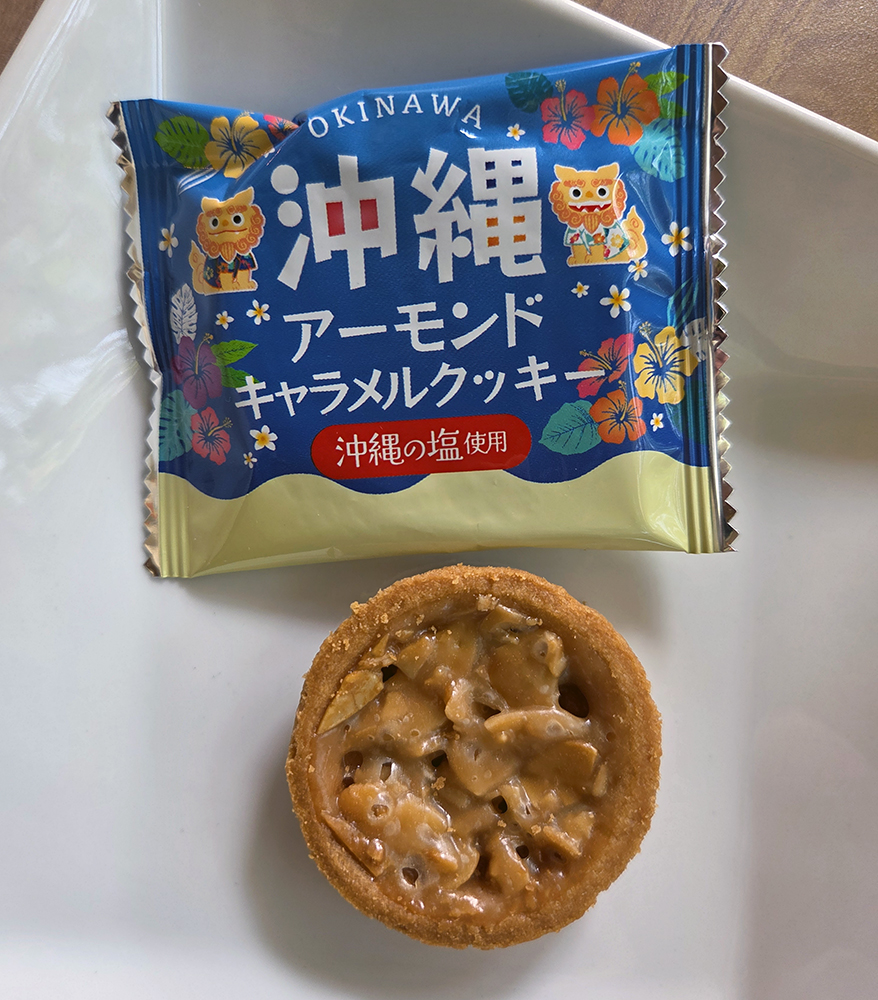
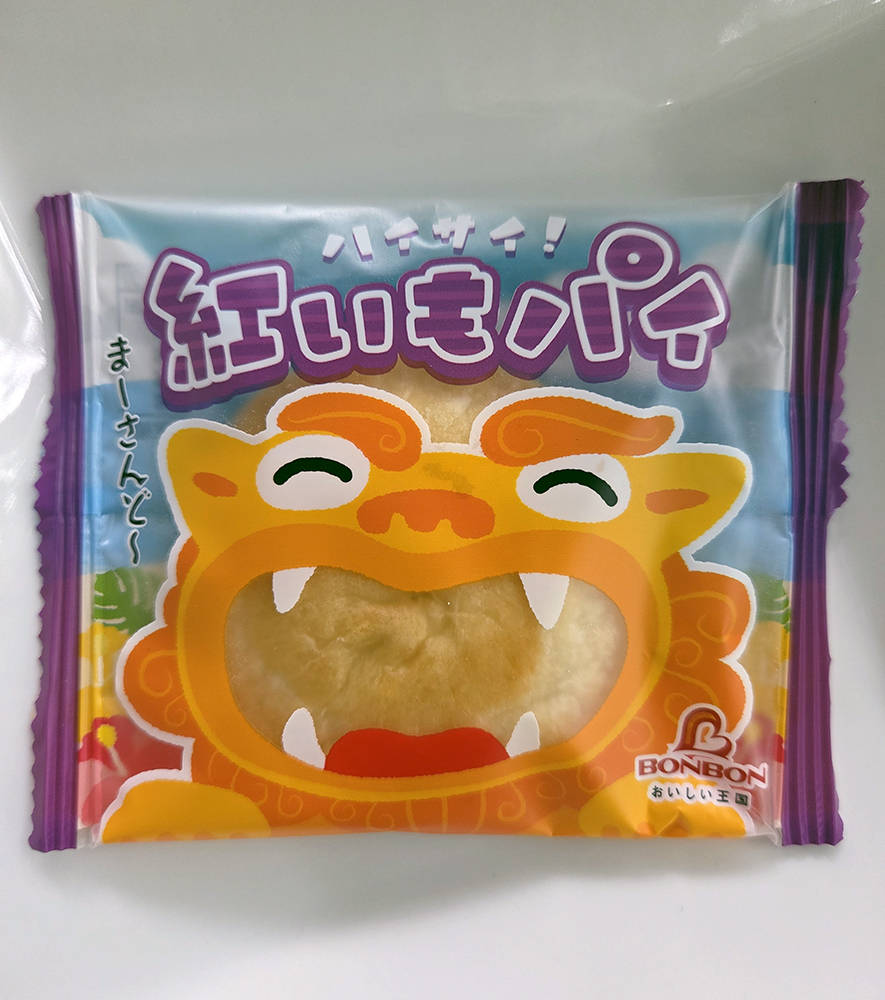
The box was a treasure trove of unique Japanese snacks, none of which we had ever had before. Many of the snacks come in twos, which makes them really fun to share with a friend or partner (or to just have more for yourself). One of of the favorite items in this month’s box was the delicate Sanpin jasmine green tea from Higa Seicha in Okinawa (2 servings) which made the perfect accompaniment for our Japanese treats. On the sweet side, we really enjoyed the Beni Imo pie with Okinawan purple sweet potatoes from Bonbon Confectionery in Hokkaido and the Okinawa Almond Caramel Cookie from Nagatoya in Shizuoka. Though these manufactures were not from Okinawa, they featured key ingredients from the region: Okinawan salt, brown sugar, and sweet potato. On the savory side, we really enjoyed the Gorgonzola Nori Ten bites from Maruka Foods in Hiroshima, which were bursting with umami flavor.

We heartily enjoyed sampling the sweet and savory treats in this month’s box, and can’t wait to see what next month brings. As a result, our desire to go to Okinawa is stronger than ever! These Japanese snack boxes would make the perfect gift for the foodie in your life (or yourself). You can order the SakuraCo Okinawa box until August 20, 2025. Thanks again for the treats, SakuraCo!

1 Comment

Filed under Reviews

Reviving Japan’s Tachibana Citrus: A Nara Cafe Experience

Nara, Japan is a particularly picturesque city, full of both historical and modern cafes. On our trip we stumbled upon Ocasi (5 Ganriincho, Nara, 630-8221, Japan), a small but atmospheric cafe that sold treats with rare citrus jams native to Japan, made in house. When we stepped into Ocasi we got the biggest surprise of all, a rare tachibana citrus tree growing in their tiny courtyard. We enjoyed the tachibana jam at Ocasi in a dorayaki (think mini pancake with a sweet filling) imprinted with the iconic deer of Nara. The intense and complex flavor reminded us of some of the bitter, sour oranges we have tasted in Italy. The unique citrus filling was completely delicious, and worked well paired with a sweeter treat. You could also buy tachibana jam to bring home, which we thought made a great souvenir for ourselves and foodie friends.

Tachibana is something of a sour citrus, and is small, with the appearance of a kumquat. It is one of only 2 citrus species purely native to Japan, and is considered to be threatened. Prior to our trip to Japan, we had never encountered it elsewhere. Nara is the center of the tachibana revival, and the citrus fruit has a long and storied history in the region, garnering mentions in historical poetry, and appearing on the 500 Yen coin. Though tachibana is mainly considered ornamental nowadays, revivalists like Kenji Jō of the Nara Tachibana Project are trying to raise interest and awareness in this now-rare species. Food companies in Japan are making inroads at commercialization, including tachibana in items ranging from chocolate to gin.

Do you want to help in the tachibana revival? It looks like you can even buy one of these heirloom plants online. Though little known outside of Japan, more esoteric Japanese citrus varieties like the tachibana and sudachi have recently gained attention from international media outlets like the New York Times. Yuzu for example, once considered rare and exotic outside of East Asia, is now much more commonly found in culinary dishes around the world. Today yuzu, tomorrow tachibana?

Citrus tachibana (ca. 1823 – 1829) via Wikimedia Commons.

Leave a comment

Filed under Reviews

A Norwegian Culinary Roadtrip: Norsk Nook in Wisconsin

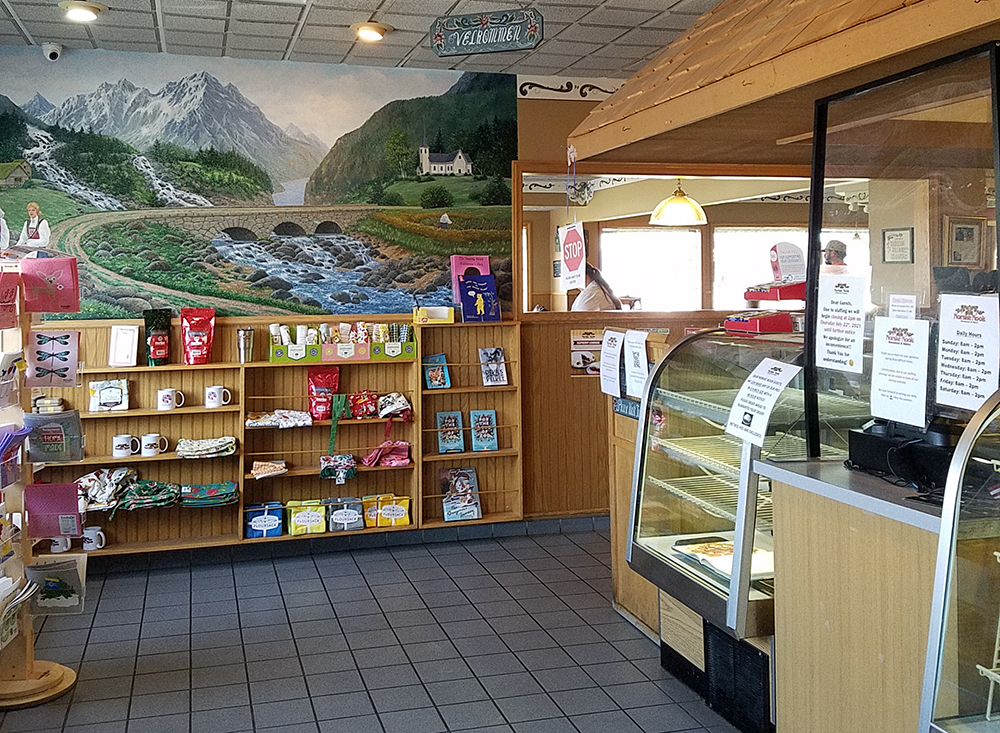
Though Swedish cuisine was amply represented in Chicago, we had been on the look out for Norwegian food for a while. Fortunately, we were driving to “Up North” Minnesota for a dear friend’s wedding, so we were able to drive near the Norwegian food stalwart, the Norsk Nook in Wisconsin (2900 Pioneer Avenue, Rice Lake, WI). With Syttende Mai, Norway’s Constitution Day approaching on May 17, we thought it would be an appropriate time to recap our delicious visit. It is perhaps unsurprising that we had to drive to the heart of central Wisconsin to find Norwegian food, as this area, along with Minnesota in the Upper Midwest was the heart of Norwegian immigration to the US.

The original branch of Norsk Nook in Osseo, WI was founded by Helen Myhre in 1973, and the Norsk Nook empire has grown to 3 locations today. At Norsk Nook one of the signature treats on offer is pie, which is not necessarily a Norwegian classic, but certainly is a Midwestern one. The pies were available in a staggering variety of flavors, by the slice or a whole pie, both of which were enticingly displayed in a retro-looking pie case. We got apple/lingonberry and blueberry with a crumble topping, both of which we highly recommend. The crust was buttery and flaky, and the delicious filling was impeccably fresh. Though we did not try them, the sky-high meringue pies also looked particularly scrumptious, and these were only a few of the dozens of varieties available. The pies are also available to pre-order online and Norsk Nook has its own pie cookbook.

Alongside a super-full bakery case, Norsk Nook also boasts a dine-in section with a menu full of American classics alongside a few Norwegian specialties. In terms of Norwegian options, you can get Norwegian pancakes topped with blueberry, lingonberry, or strawberry, or try an order of potato pancakes. Also on offer are Norwegian lefse, thin crepes made from potatoes. You can pre-order lefse in store or online, or try them as wraps in the restaurant. If you want to go all out with the Norwegian flavor, you can get a lefse full of fried smelts, though chicken and roast beef are also available, among other options. We took both our lefse wraps and our pieces of pie on the road, but everything was still delicious

Attached to the bakery is a small store stocked with assorted Scandinavian specialties, and plenty of Norsk Nook branded swag (much of it with a pie theme). A unique option to bring home is the wild rice and cranberry bread, which also gives a culinary nod to the Indigenous heritage in the region. Definitely make a detour to stop at Norsk Nook on your next Midwest roadtrip, especially if you are a pie lover!

1 Comment

Filed under Pastry Post-Poc, Reviews

Discover Authentic Georgian Cuisine in NYC at Chama Mama

When we lived in Chicago, we were lucky to have easy access to an authentic Georgian bakery with a huge oven in the center (RIP Argo Bakery). When we moved, of course, we lost access to those lovely Georgian breads. So, we were delighted when several friends independently suggested we try out a Georgian restaurant while we were visiting NYC, Chama Mama. There are a few locations of Chama Mama, and we visited the one on the Upper West Side (373 Amsterdam Ave). The restaurant had a modern, buzzy vibe and boasted the Georgian alphabet on the wall in neon. Bread is the heart of Georgian cuisine, so we were so glad to see the restaurant anchored by an amazing oven, called a Tone, analogous to a Tandoor oven.

Unsurprisingly, the menu highlighted bread at every turn. Our group started out with the “Taste of Georgia” platter, which included a series of walnut and chopped vegetable based dips called Pkhali: carrot, spinach, eggplant, red kidney bean, and Georgian leafy greens (ekala). Accompanying the pkhali were small rolls that were hot out of the oven, and smoked Georgian cheese. The pkhali were simply delightful, with complex flavors and a richness from the walnuts, which somewhat reminded us of Muhammara (Roasted Red Pepper Dip).

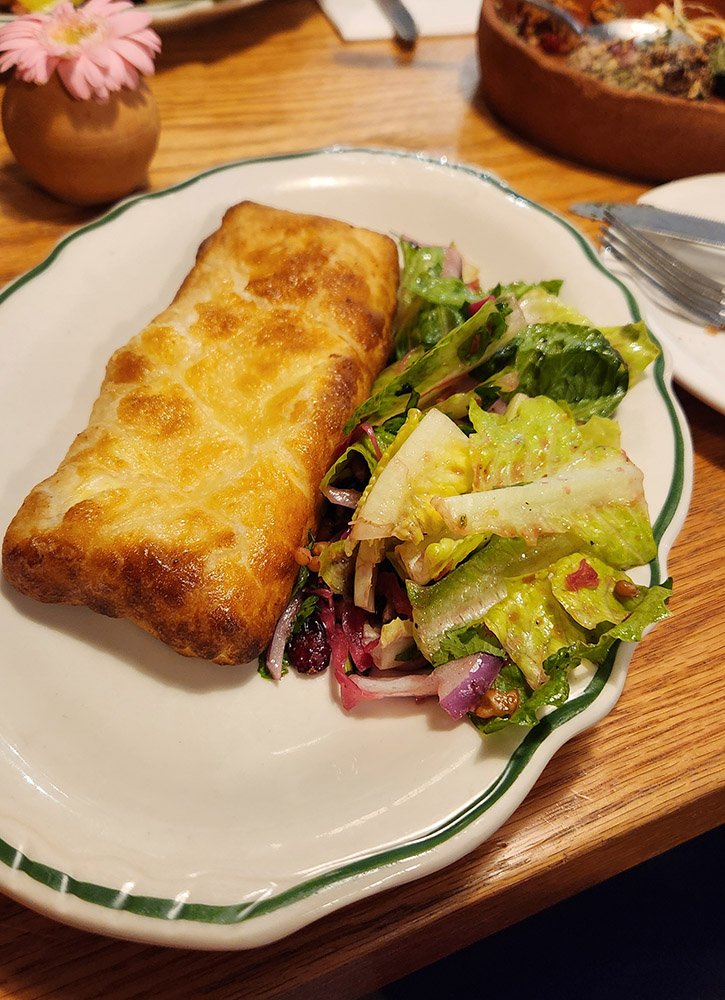
The mains were also bread-focused, including one of the most symbolic dishes of Georgian cuisine, the boat-like Khachapuri, topped with an egg. However, we learned that this style with the egg on top is typical of the Adjara region, and is only one of many regional variations. Chama Mama had other regional Khachapuri versions on offer, including the closed Calzone-like version from the Imereti region. Another classic main course was a tray of Khinkali dumplings (beef/pork, lamb, or mushroom), available either steamed or pan-fried. As part of the lunch special, we sampled small versions of the puri gulani (beef/pork, beans, or cheese) filled puff pastry, along with a small side salad. The bread was light and flaky, and not oily at all, despite the somewhat heavy filling, a real feat.

Chama Mama also offered an extensive list of Georgian wines, and chacha, a grape-based spirit. For other tastes, the restaurant concocted a series of nice mocktails, which our group appreciated, particularly the Figgin Fresh, composed of fig syrup, Earl Grey tea, and lemon juice. Chama Mama was a perfect place to visit after an afternoon at the American Museum of Natural History. Also, importantly for our group that day, Chama Mama is a great place to bring vegetarians, with many creative options. There is also a nice outdoor seating area for nicer weather (certainly not true in February). We can’t wait to go back and try more fresh-from-the-oven bread!

Leave a comment

Filed under Reviews

A Tale of Two Nougats: Torrone and Gaz

I love nothing more than discovering similar dishes from disparate locations. When we were visiting some new foodie friends, we brought along box of Italian torrone morbido – soft almond nougat – to contribute to dessert. Torrone is one of our favorite winter holiday treats, and is an especially good host gift as it is typically both gluten and dairy free. When our gracious hosts tried the torrone they instantly drew a parallel with gaz, the confectionery specialty of the Isfahan region of Iran. In fact, they were kind enough to share some special gaz brought directly from Iran. We heartily appreciated them delving into their limited supply in the name of food culture research!

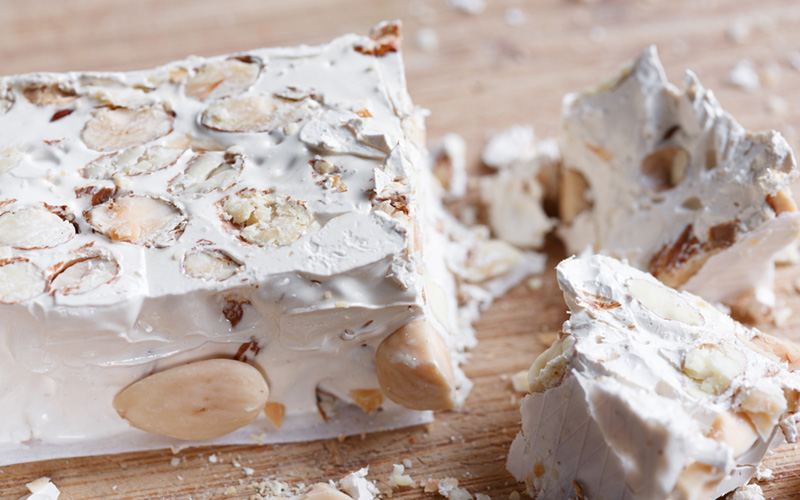
La Florentine’s Italian torrone mobido (soft torrone)

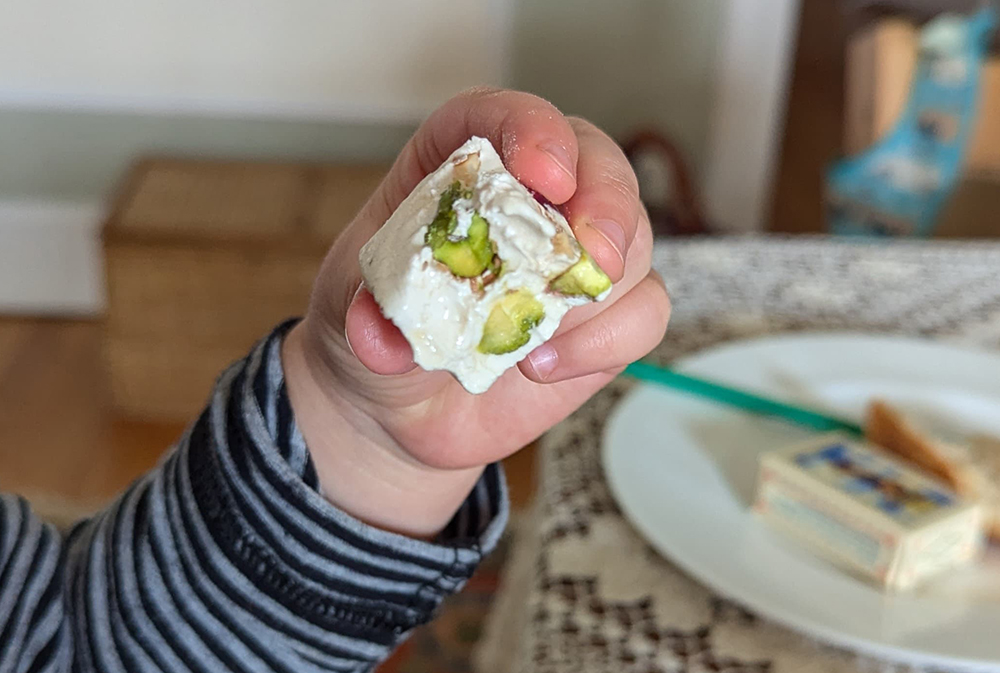
We instantly recognized the parallels between the two confections. Both were soft nougats made with egg whites, sugar, and whole nuts, cut into small rectangles. For torrone, the type of nuts used depends on the region (ours was almond), while gaz is typically made with pistachios. In terms of predominant flavor, gaz is also tinged with rosewater and Tamarisk tree sap, while Italian torrone flavors may include citrus or vanilla. The method for preparing both nougats is very similar, and if you are ambitious you can make it yourself (recipes for torrone and gaz here). Both are also commercially available, our go-to torrone, available in many US Italian markets is La Florentine (and we recently just learned the story behind their packaging design). Eataly also has a wide variety of torrone. You can order many varieties of gaz online at Persian Basket. However, to get the best versions you will probably have to visit the respective countries of origin.

Gaz presented by our hosts’ adorable son.

Torrone can also be found in a very similar format in Spain, where it is called turrón. The similarities between turrón/torrone and gaz are not coincidental. Though its exact creation story is lost to time, it is speculated that one possible origin for Mediterranean European nougats is through the adaptation of Middle Eastern nougats as they entered Southern Spain or Sicily through cross-cultural exchange. Munching on our Persian and Italian treats, we were grateful for new friendships and cross-cultural culinary connections.

Leave a comment

Filed under history, Reviews

An epic quest for the national dish of Vanuatu: Laplap

Dear ETW readers, we just hit a milestone: country 150! Our 150th country is Vanuatu, which we recently visited with two friends, Aaron and Philip. Little known as a tourist destination for Americans, we all found the South Pacific island nation of Vanuatu to be an unexpected delight. According to our research, the food of Vanuatu is near-impossible to find outside of the country itself, so we suspect the only way to eat its cuisine is to befriend some cooks from Vanuatu or to visit the country itself! Vanuatuan cuisine is a mixture of Melanesian, French, and British influences, reflecting the diverse inhabitants and colonial history of this island nation. Thanks to French influence, today you can even get a great croissant in Port Vila!

However, the holy grail we were seeking was the national dish of Vanuatu: Laplap. Laplap is a mixture of mashed cassava, taro, and yam cooked in banana leaves with coconut milk. Laplap is traditionally cooked in an underground earthen oven (called an umu), and takes hours to prepare and bake. As such, it is mostly now served on only on Sundays, holidays, and special occasions. We scoured restaurants around the capitol city of Port Vila, but none were serving Laplap. Normally, you can find Laplap at the Central Market, however, that had been closed since the recent December 2024 earthquake that hit the Central Business District hard. Fortunately, when we visited in January, the country was well on the road to recovery, and we were urged by our tour company, Vanuatu Ecotours to still come visit, as the country’s economy heavily relies on tourism.

While traveling with Vanuatu Ecotours, we let our tour guide Roy know that we were seeking Laplap, which we had previously contacted the company about. However, logistical issues were making it seem that the Laplap might not actually be possible to acquire. At the 11th hour, our traveling buddy Aaron took special pains to make sure our Laplap dreams were realized through an alternative plan. Thanks to Aaron’s efforts, Roy made absolutely sure that our group got our desired Laplap before our time in Vanuatu ended. He contacted a local cook Eillen in Port Vila, who prepared it for us from scratch (and was paid for her efforts). She was so kind and lovely, she made 2 giant servings of Laplap, one for Roy and one for the 4 of us. She couldn’t have been nicer, and we are forever grateful for her efforts.

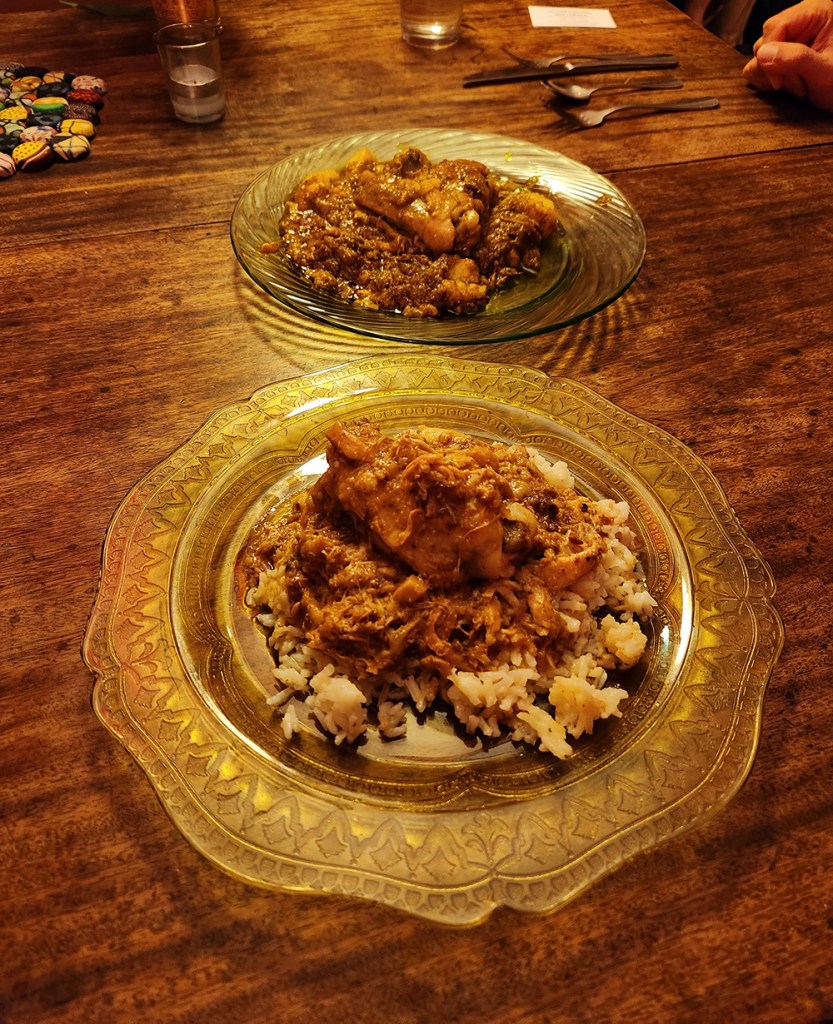
The Laplap was wrapped carefully in banana leaves and aluminum foil, and delivered to us in a neat package. We ran into a bit of a conundrum, as we had no where to eat, and had some time to kill before our flight out of Port Vila. So, as a result, we actually ate the Laplap in the international airport terminal! We bought some drinks with the last of our local currency at the coffee shop and the kind staff allowed us to eat at their tables. So, with an assortment of coffees and teas, we carefully unwrapped our Laplap and dug in. We were impressed by all of the layered flavors and the significant amount of work that surely went into preparing this dish. The Laplap was cooked with bone-in chicken, which was tender and flavorsome. The mashed root vegetables were formed into cakes, and were covered with island cabbage leaves (apparently an Efate island touch) and coconut milk, interspersed with the chicken. All of the flavors melded together beautifully, and the dish was more than the sum of its parts. So, our final memory of Vanuatu was enjoying its fabulous national dish with friends. It doesn’t get much better than that in the ETW universe!

Leave a comment

Filed under Reviews

The Ultimate Tonkatsu Experience in Osaka

When we arrived in Osaka after a long Shinkansen ride, we were famished! Our hotel was a bit off the beaten path, we had to do a little searching for a possible places for a quick bite. One of the foods we were craving at the moment was tonkatsu – crispy fried pork cutlets – so we did a quick Google Maps search for any nearby haunts. It turns out that we were within a short walk of an amazing, Michelin Bib Gourmand-recognized tonkatsu restaurant: Tonkatsu Daiki (1-6-2 Higashishinsaibashi, Chuo-ku, Osaka, 542-0083, Japan).

We showed up at a somewhat early time for dinner – about 5:45 PM – and were seated at the counter right away. As soon as we sat down, a line began to form outside, which grew ever-larger as we continued to wait for and enjoy our meal. The restaurant itself was extremely tiny with a counter that seated 4, and only a few additional tables (note there are no kids allowed). The main options on the menu were several varieties of tonkatsu with different cuts of pork (though fried shrimp also appeared to be a popular option). M got the classic and L got the leaner pork tenderloin. If you wanted something a bit richer, there were tonkatsu plates with melted cheese, Japanese curry, and even an omelette. The restaurant is cash only, and lunch portions are a bit cheaper than dinner, though you will likely not pay more than 3,000 yen at any time.

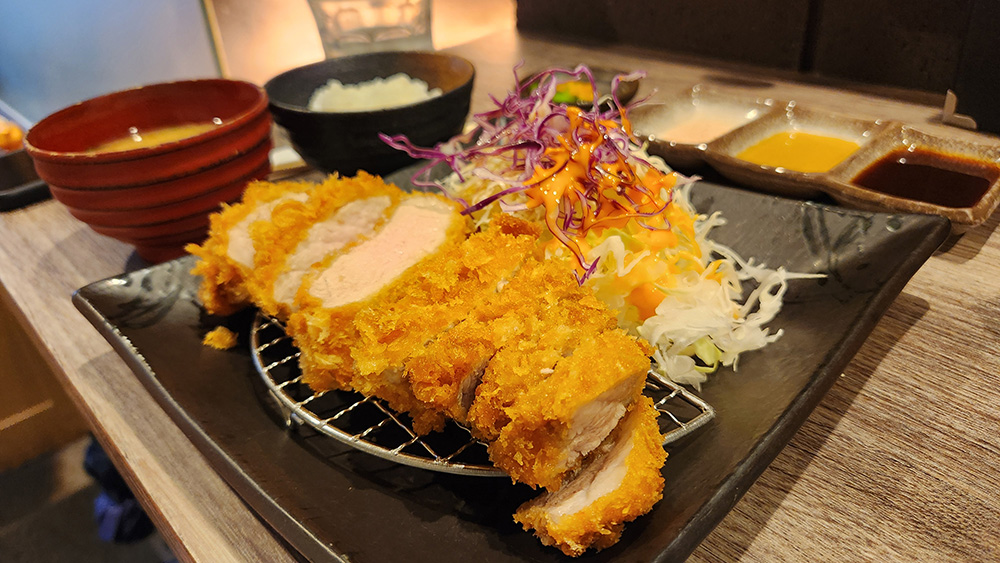
Sitting at the counter, we peered intently into the kitchen as the chef prepared everyone’s meals right in front of us, taking extreme care with each step. There was a bit of a wait, but the end result was worth it. The pork was tender and juicy, and you could tell it was of the highest quality. There was absolutely no grease coming from the fried coating – this was the lightest-feeling fried food we had ever had. Alongside the tonkatsu were a few dipping sauces, including spicy mustard and classic tonkatsu BBQ-style sauce, and some shredded cabbage. This was absolutely the best tonkatsu we have ever had, and definitely some of the best pork of any kind.

We chatted a bit with the chef, who knew some English, and he was very friendly, and humbly accepted our heapings of praise. Somehow, we lucked out with our timing, so we would recommend that you also go towards the beginning of either the lunch or dinner service (they are open 11am-2:30pm and 5:30pm-9:30pm, Closed Sunday). However, we would have definitely waited in line to experience this Tonkatsu again!

1 Comment

Filed under Reviews

Experience Togolese Flavors at Mé Lon Togo in Rockland, Maine

One of the last places you might expect to find a restaurant with cuisine from the small west African nation of Togo is in coastal Maine, but sure enough, that is where you will find Mé Lon Togo (10 Leland Street, Rockland, Maine). The restaurant – whose name translates to “I Love Togo” – is run by a percussionist from Togo who teaches music at Colby College (roughly 1.5 hours away), Jordan Benissan, explaining its somewhat perplexing location. Mé Lon Togo restaurant is set up in an old colonial house, and the restaurant fits neatly into the warren of rooms on the first floor. While we were there, there was even live musical entertainment, contributing to the warm atmosphere within.

Mé Lon Togo offers only a prix fixe menu ($40 per person) for dinner on Thursday through Sunday. However, this format is not limiting. When we visited, there were a staggering amount of main course options, spanning Togolese cuisine; as well as French dishes (showing the French influence on Tologese cuisine and language) like Duck de Provence, Coq au Vin and Beef Bourguignon; and selections from other parts of Africa: a Moroccan chicken tajine and Ghanaian/Nigerian Jollof Rice. The primary Togolese dishes on the menu are designated by the name Dessi: Fetri Dessi, Deku Dessi, Gusi Dessi (similar to Egusi stew, made with melon seeds), and Azi Dessi. There are options for all tastes, including a vegan option in the signature Mi Lon Togo stew with mushrooms, plantains, and eggplant. The restaurant also features a bar with a range of signature cocktails, beer, and even tea.

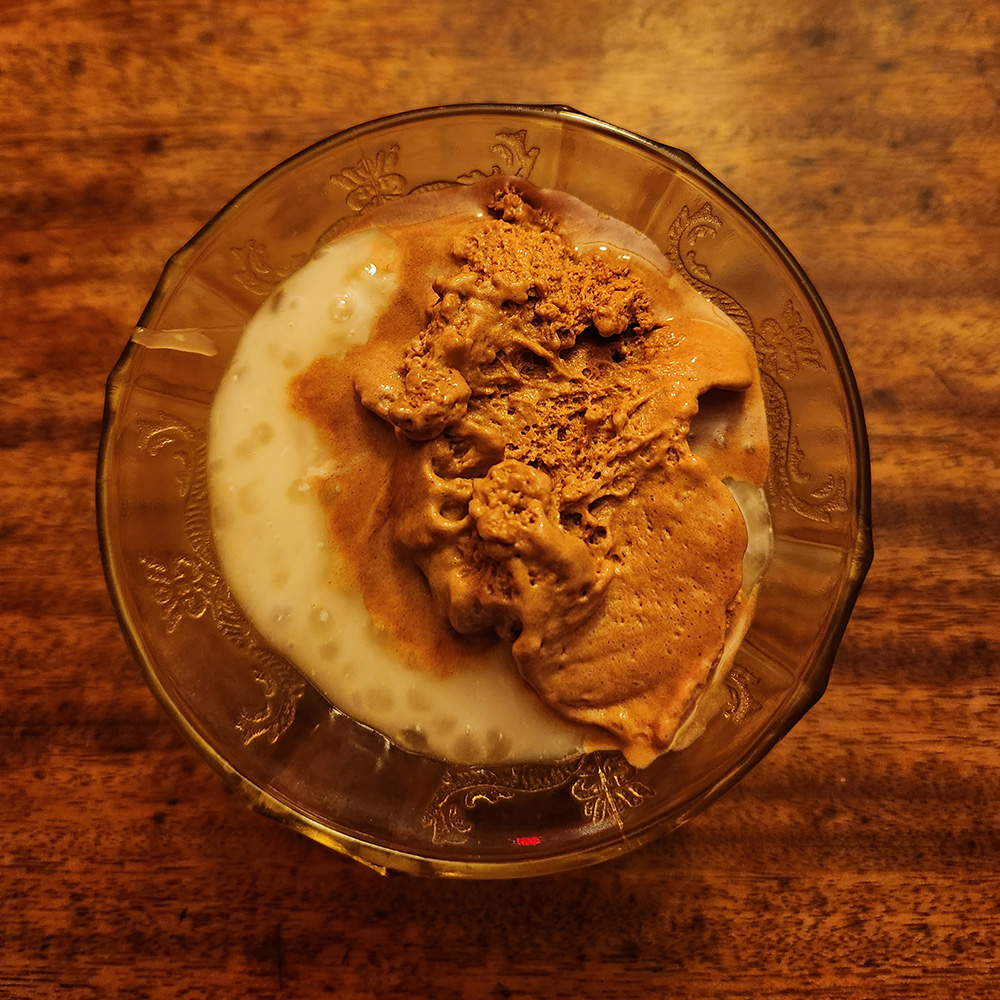
For appetizers, there were 2 options on the prix fixe menu when we visited: Dje te & Amada, a sweet potato and plantain dish with a tomato, onion and apple cider vinegar sauce, and gari fotu, manioc grits with egg and shrimp in a tomato sauce. You also got a small garden salad with each meal. For mains, we ordered the Azi Dessi and the Deku Dessi. The Azi Dessi was chicken in a peanut and tomato sauce, reminiscent of some of the other West African peanut stews we have had in the past, with notes of garlic, ginger, and a peppery kick. The Deku Dessi was your choice of protein (beef/chicken/eggplant) in a red palm oil sauce with West African spices. For dessert, the day’s option was tapioca pudding with a subtle lemongrass broth and your choice of vanilla or chocolate ice cream. The Azi Dessi was a particular standout, and we scrambled to sop up every morsel of the comforting peanut sauce. Each of these dishes was delicious, and we admired the way the chef let all of the individual flavors shine, without being overpowering.

The meal unfolded at a leisurely pace, and the portions sizes were good, but not overwhelming, which really allowed you to sample each course. Perhaps the most important secret ingredient contributing to the Mé Lon Togo experience was the atmosphere. The restaurant’s setting in a historic home only amplified the convivial family atmosphere, supported by friendly servers and staff. Everyone was talking and laughing like old friends, and you can tell that many people dining that night were restaurant regulars. We highly recommend Mé Lon Togo for those looking to sample West African cuisine for the first time, or those tiring a bit of traditional seafood options in New England, they will surely welcome you with open arms!

Leave a comment

Filed under Reviews

Tortello Pastificio: Authentic Fresh Pasta in Chicago

August 15 is Ferragosto, the end-of-summer holiday in Italy, so we decided we would write about one of our favorite Italian places in Chicago, Tortello Pastificio (1746 W Division St, Chicago, IL 60622). Tortello is known for its fresh pasta, and there is often a sfoglino/a (pastamaker) hard at work in the front window, making the latest pastas of the day. One half husband-and-wife of the ownership team, Dario Monni is from Venice, and the other, Jill Gray, is a Chicagoan and marketing executive.

Tortello is a combination of a counter-service restaurant and a takeout pasta shop. If you are in the mood to cook at home, you can buy ready-made fresh pasta by the pound, and a variety of accompanying sauces. The pasta – made with either semolina and water, or flour and egg – is uniformly excellent, and made with the finest quality ingredients. The ready made sauces are also quite good (try the cacio e pepe), and sold either individually or as part of a meal kit. For fresh pasta to go, there is spaghetti, of course, alongside bucatini and rigatoni, but also some harder-to-find in the US varieties like corzetti (coin-shaped pasta from Liguria) and trottole (a spiral pasta from Puglia). There is also a small grocery section up front where you can get some fine Italian goods including balsamic vinegar, Calabrian chilis, and even colatura di alici, a fish sauce descended from the ancient Roman dish garum.

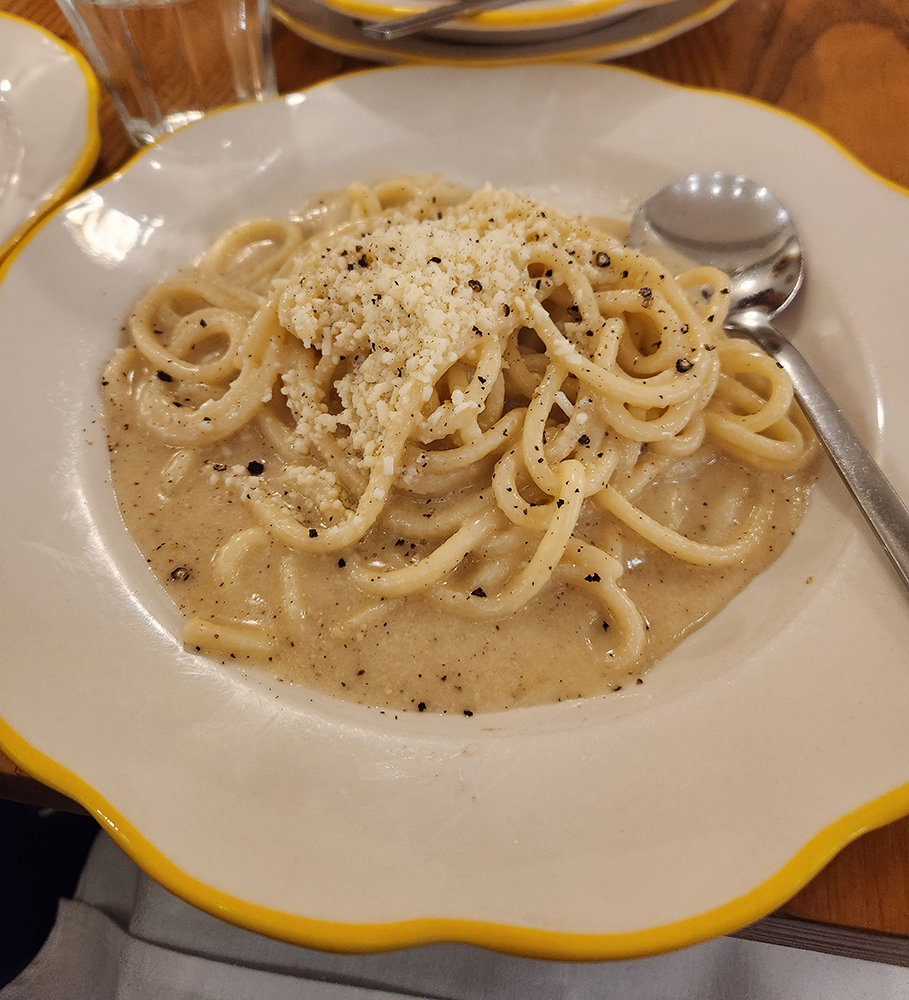
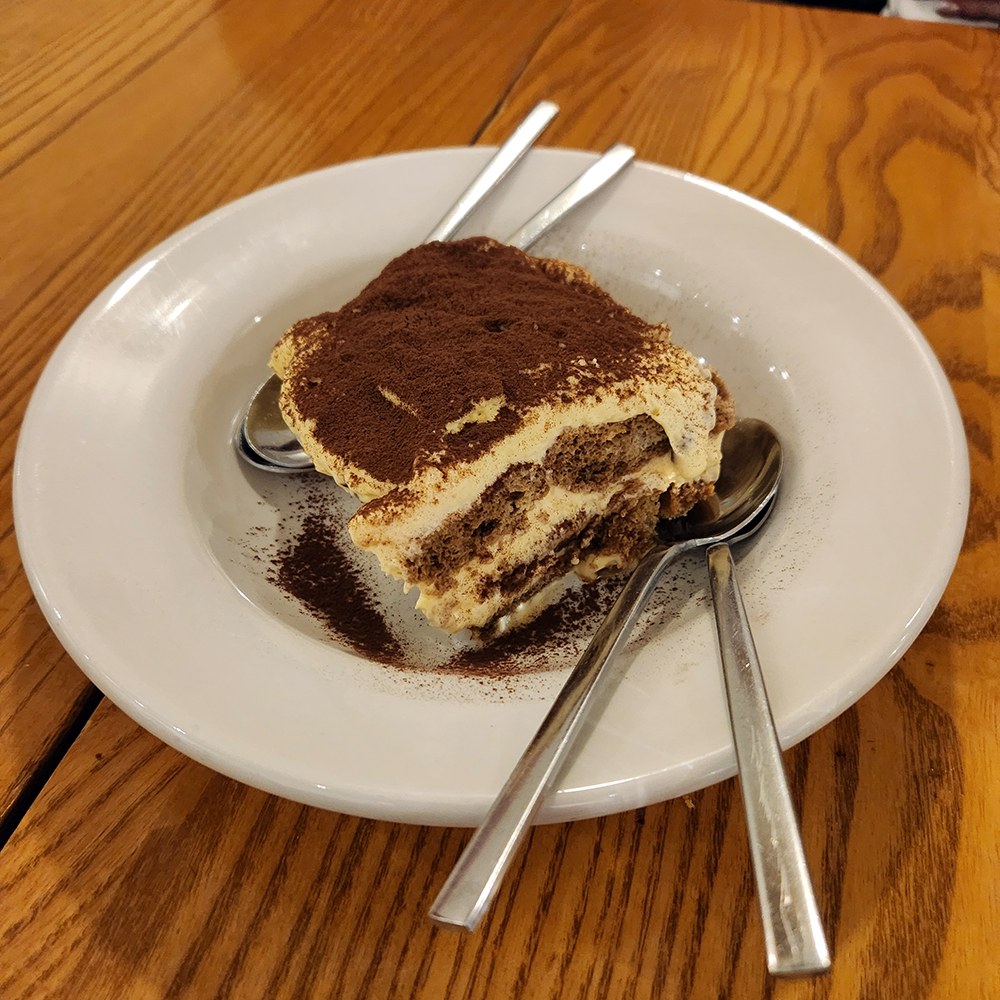
If you would like to eat in, there is also a small amount of tables with counter service, and outside tables when the weather is nice. The pastas on offer rotate, but we have had a good selection across several visits, and have greatly enjoyed everything we have tried. One of our favorites is the cacio e pepe, a classic Roman dish which we are quite picky about (above)! The pesto cavatelli is a standout, as were the signature burrata tortelli, topped with a simple sauce of butter, sage and hazelnuts. There are other dishes available, including some luscious focaccia (either plain or topped with ricotta and honey) and fennel and orange Sicilian salad (below). For those with a sweet tooth, the tiramisu is also sublime.

Tortello is on a busy stretch of Division Street, and has already made a mark on the Chicago food scene, offering pasta-making classes, and holding special Italian food festivals, known as sagre. Tortello has received many accolades, including a Michelin Bib Gourmand, and even garnering an appearance in the hit television show, The Bear. We think the positive press is definitely deserved. If you are looking for some of the best fresh pasta in Chicago, definitely make a beeline for Tortello.

Leave a comment

Filed under Reviews

Shirohige’s Cream Puff Factory: A Ghibli-Inspired Delight in Tokyo

We recently returned from a trip to Japan, and our heads are still spinning from thinking about all the delicious food we ate while there. Watch this space for more Japan travel food content, but in the meantime, here is a taste of what is to come. First up on our trip recap is a place we have had on our “must-visit” list for years, Shirohige’s Cream Puff Factory (2 Chome-7-5 Kichijoji Minamicho, Musashino, Tokyo 180-0003, Japan). The signature cream puffs are made in the shape of the character Totoro (star of the 1988 animated film My Neighbor Totoro), one of the famous mythical creatures from the mind of Hayao Miyazaki and Studio Ghibli. Shirohige’s is owned by Miyazaki’s sister-in-law, and is actually authorized to manufacture cream puffs in this special shape.

The cream puffs come in one size and a variety of flavors: standard flavors custard and chocolate (600 yen apiece), and more rotating seasonal flavors including matcha, strawberry, chestnut and mango (640 yen), each indicated by a different hat or decoration. Plan My Japan has a list of the seasonal flavors for each month, ours were strawberry and matcha in June. We heard rumors of long lines, but when we arrived just before opening at 11 AM on a weekday there were only a few people ahead of us. In addition to the cream puffs, you can buy other small souvenirs or even boxed shortbread cookies in the shape of the smallest (chibi) Totoro, which made the perfect gift from friends and family at home. Be aware that the Kichijoji store itself is quite tiny, fitting only 2 or 3 at a time, and at this location there is no seating. There is another Shirohige location in the Tokyo area that has more seating, if that is a deal breaker (5 Chome-3-1 Daita, Setagaya City, Tokyo 155-0033, Japan). However, the Kichijoji store is closer to the Ghibli Museum, making it a natural stop on a Ghibli-filled day (which is what we did).

Even though it is considered a bit declasse to do so in Japan, we just ate our cream puffs right in front of the shop. Now, onto the cream puffs themselves… even the pickiest among us devoured them! The filling was generous and the pastry was fresh and crisp, and not soggy at all. The matcha and chocolate fillings were particular favorites. We highly recommended Shirohige’s for fans of Studio Ghibli and good pastry alike. Very rarely does a place that has earned Instagram fame due to its aesthetic creations live up to the hype. Fortunately, Shirohige’s Cream Puff Factory does just that.

Leave a comment

Filed under Reviews

The Best Cuban Sandwiches in Miami at Sanguich

Continuing on our Cuban theme, today we are going to talk about our favorite Cubano / Cuban sandwich. There is some controversy as to where the Cubano sandwich originated, though it is not in Cuba, despite the name. Currently, the disputed home of the Cubano is likely either Key West or Tampa, FL. The typical composition of a Cuban sandwich is roast pork, ham, Swiss cheese, mustard, and pickles on Cuban Bread. Despite murkiness around its origins, we can safely say we have found our favorite Cubano in Miami (and probably the US) at Sanguich (various locations in Miami, we have visited the Calle Ocho location multiple times).

Sanguich’s menu – true to name – includes only selected classic sandwiches. All are on perfectly crusty Cuban bread, with a soft interior. Along with the Cubano ($13.49) you can get a medianoche ($11.59), which is similar to a Cubano but on sweeter bread, or a pan con bistec ($14.59) topped with mojo rojo, Swiss cheese, and sous vide beef. All of the sandwiches are slight spins on classics, topped with unique sauces and only top-notch ingredients. The whole of each sandwich is definitely more than the sum of its parts, and they are truly memorable.

Of all of the options, our favorites all involve the amazing slow roasted pork! This special ingredient completely makes the Cubano (seen above), and you can also just get a roast pork sandwich with mojo onions and garlic-cilantro aioli (L’s favorite, $11.99). While the menu is primarily sandwiches, you can also get milkshakes (batidos), including the unique trigo flavor, made with condensed milk and puffed wheat, apparently a Cuban classic. Of course, there is also made-to-order cafecito on offer.

The restaurant itself is tiny, so expect to wait for your sandwich (probably outside), and there is always a danger of them selling out. Whenever you visit (last time we went was a Sunday at 4 PM), there will likely be a bit of a line, and you will have to wait to receive your order, even if you are picking up. We usually just get our sandwiches to go, and once even brought them to the beach – highly recommend the lighthouse at Bill Baggs Cape Florida State Park – as a picnic lunch spot. The next time you are in Miami, be sure to make a beeline for Sanguich for the best Cubano of your life!

Leave a comment

Filed under Reviews

Finally visiting Heladería Coppelia in Havana

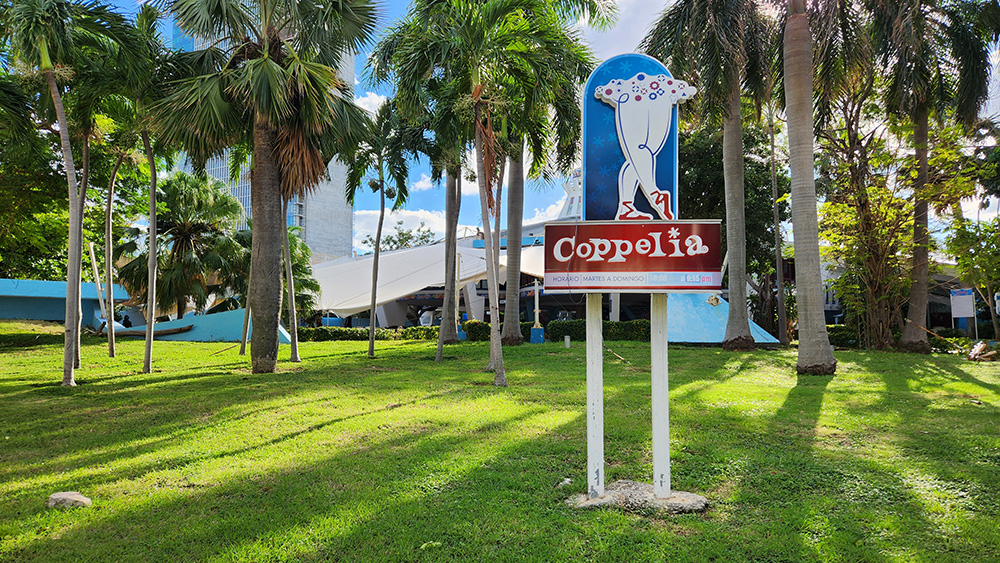
I wrote about the famous, historical Heladería Coppelia ice cream parlor in Havana, Cuba, over 15 years ago, not long after this blog started! I initially was drawn to Coppelia by its iconic and distinctive architectural structure, and was further interested when learning about the multiple currencies at play, and plethora of flavors available. Finally, this year, we were able to visit Cuba – and Coppelia.

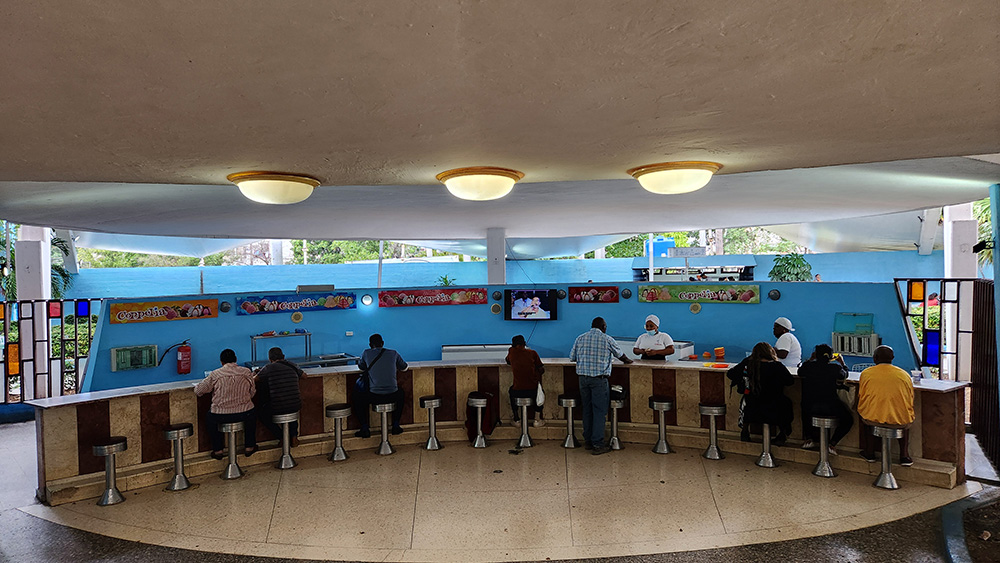
The architecture of this “cathedral of ice cream” is truly something you have to see to believe. Just imagine that a concrete UFO landed in a Havana park, taking up a block of prime Vedado neighborhood real estate. We walked around the building several times just to take in all of its angles. Though the landmark 1966 Mario Girona architecture of Coppelia is unchanged since I wrote in 2008, there have been some other significant shifts. Coppelia used to have 2 separate lines for the country’s 2 separate currencies (CUC and CUP). However, Cuba eliminated the CUC, which was pegged to the US dollar, in 2020.

The crowds, too, seem to have gone from Coppelia. Cuba is currently in the midst of an economic crisis, which was apparent during our visit in frequent supply and energy shortages throughout the island, among other issues. This situation manifested itself in Coppelia only having 2 flavors available when we visited: guava and coconut (though it seems that a limited amount of flavors was standard situation for a while), and no lines. There were a few tourists around when we ordered, but locals were the vast majority of patrons.

The first day in Cuba we attempted to visit Coppelia, but it was closed for some kind of special event. Fortunately, it was open the second time we stopped by. Customers can order ice cream from two floors of table seating or at counters spread throughout the gargantuan complex. We climbed a circular staircase and sat on the second floor, admiring the view and the colorful Mid-Century Modern glass and wood dividers (slightly marred by ugly computer-generated signs). We placed our order directly with a roving, uniformed waiter at out table, and there was plenty of room at the counters. We each ordered a jimagua (two scoops) one of each flavor, brought to us promptly in orange plastic dishes. The total cost for 2 people was only 36 Cuban pesos, or roughly 14 US cents. It felt wrong to enjoy a dessert as such a low price.

The ice cream was good, but the experience was the real draw. Coppelia is a real part of almost 60 years of Cuban history, and one of the few places where people from all walks of life can still enjoy a treat together. An ETW Bucket List food location checked off!

Leave a comment

Filed under Reviews

A Taste of Cuba at Finca Agroecologica El Paraiso

We were recently on a 2 week tour of Western Cuba, specifically focusing on Afro-Cuban music and culture. Unlike most of our trips, we did not specifically plan this trip for foodie purposes. However, there was one unexpected foodie stop on our trip that blew us away: Finca Agroecologica El Paraiso. Finca Agroecologica El Paraiso is an all-organic farm in the hills of Western Cuba outside of Viñales. Everything is grown on site in beautiful terraces, and the picturesque setting alone is worth the trip. The restaurant itself is open-air in a series of wooden structures with open sides, looking over the mountainside. There, we met the charismatic owner, Rachel who runs the farm with her sister Rosalba and their father Wilfredo García Correa.

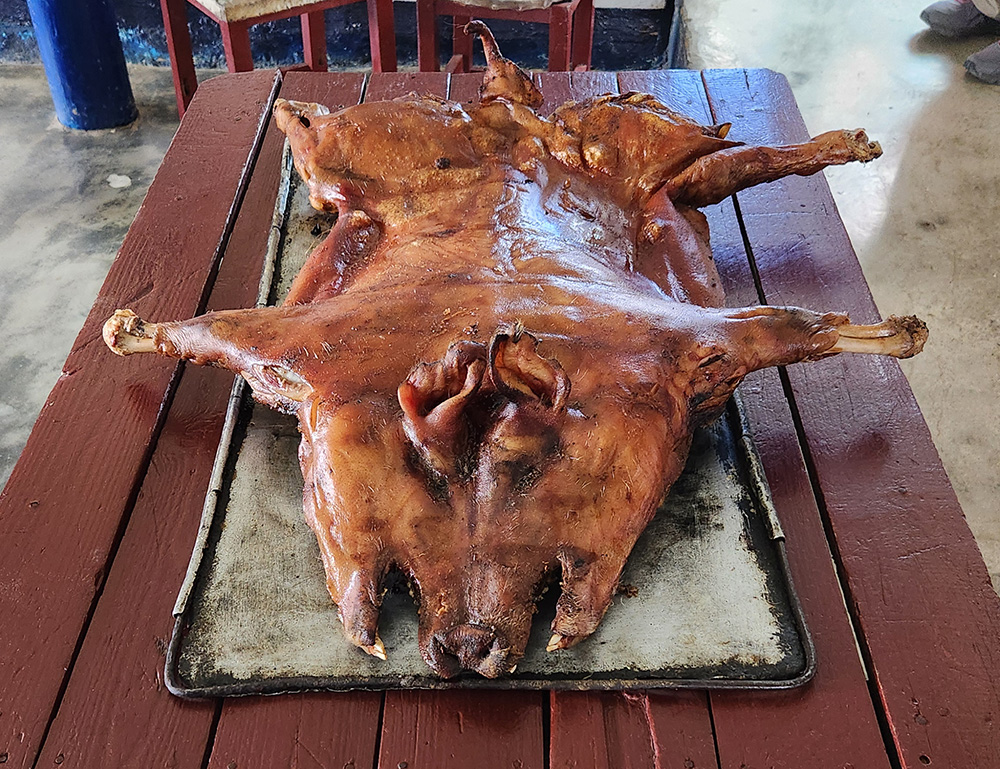
We started off with their so-called “anti-stress” drink (recipe at link and also in the book, A Taste of Cuba), their signature concoction, made with several different types sweet herbs (including mint, lemongrass, and anise), pineapple juice, cinnamon, and coconut milk. Of course, as was the case in many places in Cuba, you could add rum to the drink in any quantity you wanted (or omit it completely). In terms of our lunch, we were heartened to see a whole roast suckling pig being carried into the dining room when we entered (lechon is one of M’s favorite foods). We were eating lunch with a large group, so we all partook in a fixed menu, shared family-style.

We started with a basket of yuca / cassava crackers, and a huge assortment of plates of fresh vegetables: lettuce, tomatoes, squash, yuca, green beans, pickled cucumbers, and more. There was a paucity of fresh vegetables on the rest of trip, so this abundant assortment was particularly welcome. Then onto the mains: lobster in garlic sauce and roast chicken. Of course, the key main was the suckling pig, which was absolutely delectable. Every dish was simple, but highlighted the freshness of the ingredients. There was more food than we could consume, even as a group, and all of that was capped off with a scoop of ice cream for each person. Of course, the meal ended with a cafecito (or tea). We enjoyed our mint tea while overlooking the terraces.

After our hearty lunch, we roamed the grounds of the farm, enjoying some time to swing in a hammock and traipse up and down the terraces. We felt completely rejuvenated by experiencing the natural beauty of the surroundings, which have also been named as a UNESCO World Heritage site. The food at Finca Paraiso was wholesome, delicious and fresh, and the surroundings were even more stunning. We are not sure if we will ever be in this part of Western Cuba again, but Finca Paraiso may just draw us back.

1 Comment

Filed under Reviews

Sophie La Gourmande: Cleveland’s best French Bakery

One of the most exciting spots to open up in the Cleveland area in the last year is a bakery with a French twist, Sophie La Gourmande (2275/2277 Lee Rd, Cleveland Heights). This bakery is unique among those in Northeast Ohio because it specializes in both fancy French pâtisserie and viennoiserie like croissants. Sophie is a clean, compact cafe with an extensive bakery counter, cafe seating, outdoor tables, and a small shop.

We visit Sophie every few weeks (at least) and everything we have tried there so far has been superb. A few of our favorites include the mini Basque cheesecake, the chocolate caramel tart, and the flourless chocolate cake (“La Truffe,” pictured at the bottom of the page). Each day there are different options for decadent cakes and tarts, but these three desserts seem to regularly be on offer, and are all sublime. We wholeheartedly recommend the mini Basque cheesecake with its caramelized burnished top (pictured above) as the ultimate treat. There are also seasonal specials, like pumpkin flan for fall, and we have also previously enjoyed the matcha tiramisu and the passion fruit mousse.

One of our key ways to judge a bakery is through the quality of its croissants, and in this realm Sophie absolutely excels. The croissants (chocolate, plain, almond, etc.) are always perfectly-laminated, light, flaky, and buttery. The other laminated dough options are also divine, including the savory “everything bagel” Danish with a center of labneh cream cheese (above). In fact, I may like it even better than the chocolate croissant, which is usually my go-to pastry order. You can also expect to see seasonal viennoiserie at Sophie, like a butternut squash spiral croissant for fall. If that’s not enough to fulfill your sweet tooth, Sophie also offers an assortment of cookies in inventive flavors like sourdough rye, macarons, an assortment of shortbread cookies, chocolate bars, and picture-perfect little financier cakes (which are also available in seasonal flavors.

Sophie has a selection of savory lunch dishes, with an emphasis on vegetarian options. You can get a sampler plate of one of their many veggie specials: shaved Brussels sprouts, charred green beans, za’atar cauliflower, or other rotating options. Also available are soups, sandwiches (not all vegetarian, including ham and cheese or tuna) and quiche. The pick-three vegetable plate plus a croissant makes a perfect lunch, in my opinion. If you need some caffeine, they also have a selection of coffee, espresso drinks, and tea.

Every time we are in the vicinity of Sophie La Gourmande we stop in for a treat or two, and we have never been let down. We feel lucky to have a bakery with such range right at our fingertips. While we haven’t yet ordered a full-sized version of their cakes, these would be a great birthday or holiday dessert. For the holiday season, Sophie even offers an Advent calendar of their sable cookies. If you are in the Cleveland area, we highly recommend a visit to Sophie La Gourmande for exquisite pastries.

Leave a comment

Filed under Reviews

Uganda: Jaliz Cuisine Of East Africa in Van Nuys

Jaliz Cuisine Of East Africa has been on our list for quite a long time, as one of the few Ugandan restaurants in the US. Finally, this year, we were lucky enough to visit with our two LA foodie friends, A and C. Tucked away in a residential neighborhood in Van Nuys, CA, Jaliz is the brainchild of chef Jalia Walusimbi, who also runs a catering business. As you will realize when pulling up to the address, the restaurant is run out of her home, and the food is served in the back yard, inside a big party tent.

The menu is limited to what is on offer every day, but I can assure you that you will like what you get. The day we visited, the food options were ngege (tilapia soup with zucchini) or mbuzi (goat stew). Each came with a heaping helping of rice and fried matooke (similar to plantains) smothered in a savory peanut butter/groundnut and greens sauce. Topping off each dish was a freshly fried chapati flatbread, a nod to the Indian influence on East African cuisine. Of the dishes, the goat stew was a particular standout and had a lovely smokey flavor. For the heat lovers, there was also some fiery Ugandan hot sauce on offer. According to an LA Times write-up, on other days you might enjoy other mixed grilled meats or ugali porridge.

On the weekday we visited, we were the only people dining in, but the food couldn’t have been fresher, and it was great to chat with the proprietor in a relaxed atmosphere. Just after we visited, we learned that Jaliz temporarily closed to make way for a possible move to a bricks and mortar restaurant. We wish them all of the success in transitioning to a more permanent spot, hopefully bringing their cuisine to a broader audience. Watch this space!

1 Comment

Filed under Reviews

Mostaccioli cookies from Southern Italy

Over the summer, we visited the beautiful Italian region of Abruzzo, and in honor of this Ferragosto, we are sharing a local cookie that is popular in Abruzzo (and also Naples and the rest of Southern Italy), mostaccioli! If you are an English speaker, you may recognize “mostaccioli” as a word that refers to a short tubed pasta often used in pasta al forno pasta bakes. However, this same word refers to paralellogram-shaped cookie flavored with chocolate and cloves. The name of the cookie comes from the word “mosto” – grape must – usually one of the main ingredients, also contributing to its dark color. These cookies are traditionally eaten around the holidays, but you can find them at some bakeries year round. We even bought boxed mostaccioli cookies at Eataly recently. While in the town of Sulmona, we found mostaccioli fresh in a local bakery, which we enjoyed in the town square. Marisa’s Italian Kitchen has a recipe (another variation at She Loves Biscotti) to create your own little slice of la dolce vita.

Leave a comment

Filed under Reviews

Saint Lucia: Rainbow Bakery in London

Saint Lucia, a small island nation in the eastern Caribbean with a population of less than 200,000 people, does not have a large diaspora population. But in the Dalston neighborhood of London, one finds a little but popular outpost of Saint Lucia in Rainbow Bakery. Established in 1987, Rainbow bills itself as the only Saint Lucian establishment in the United Kingdom; indeed, it’s likely one of the very few located outside of the island. And even better, it is well worth a visit for excellent baked goods and drinks.

Newcomers to the cuisines of the eastern Caribbean can sometimes miss the subtleties of the food distinctions between the islands; they can be forgiven, given the long history of exchange and connection between the islands. But Rainbow is unabashedly Saint Lucian. A large Saint Lucian flag hangs over the main ordering area, and all the drinks on offer in their fridge are imported directly from Saint Lucia.

At front, food for order is set up in a bakery case: savories on the left and sweets on the right. Upon getting to the front – there were six in front of me on this busy morning in a clearly popular spot – the man behind the counter said, “First time?” “Yes,” I said, “what should I pick?” Going past the appetizing but probably-too-filling option of an oxtail plate served with mac and cheese and greens, as well as a chicken roti – both staple dishes of Saint Lucian cuisine – I went with their Friday- and Saturday-only special: a “meat loaf,” a kind of medium-dense baked bread filled, in this case, with succulent curried lamb.

For sweets, there was a slew of options: sweet rolls with raisins; a cinnamon and nutmeg cake; baked sweet pastries; but I went with a spice bun: a dense, brown ball of baked rough flavored with seemingly every spice available in Saint Lucia (the helpful man behind the counter listed the spice ingredients, of which there were at least fifteen), plus raisins.

Both dishes were delectable. For a beverage, I grabbed a peanut-flavored seamoss drink (soursop and pure seamoss flavors were also on offer); imported directly from Saint Lucia and complete with the national flag and the island’s outline on the bottle. Excited when I brought it to the counter, the server explained to me how it was made from fermented seaweed steeped in water and then strained; he even had a pack of the leaves behind the counter to demonstrate. He described it as “Taste: 4 out of 10” but “Health: 10 out of 10.” I ended up disagreeing: it tasted to me like a slightly less sweet horchata with some added peanut; or maybe a kind of thinned-out bottled satay sauce. Could have drank another bottle easily if I weren’t so stuffed from the lunch.

Rainbow’s location exemplifies the history of its neighborhood. Rainbow is just a block from the C.L.R. James Library, named for the influential Trinidadian historian and activist who moved to London in 1933, and where he wrote a series of critical works on Caribbean history with a Marxist bent. Rainbow is also around the corner from the Overground line station. Installed in 2011 (ahead of the London Olympics), Dalston’s new public transport connection to downtown has contributed to rapid gentrification in recent years. After carrying my food out of Rainbow, I walked over to a small picnic area in front of the library where I could enjoy all my treats in peace:  the freshly-warmed meat loaf; the roll; and the seamoss drink. Personally, we felt this was the best Caribbean bakery we had been to of those we had tried previously (all in New York). And there are more to try, including Grenadian options (which would be a new country for us!) in London, New York, and Toronto. We hope to hit at least one of those in future years. But we’ll be telling others to head to Rainbow in London for unique Saint Lucian offerings, hospitality, and great food.

Leave a comment

Filed under Pastry Post-Poc, Reviews