Category Archives: World Eats

Homemade Sweets / Doces Caseiros from Minas Gerais

brazil

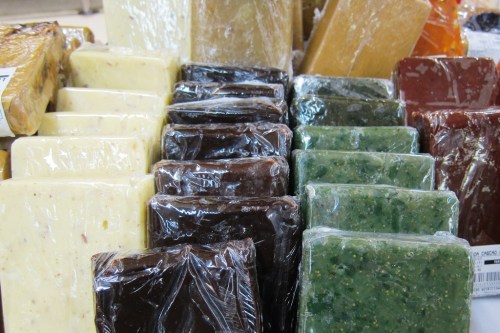
Minas Gerais is also known for its sweets (Doces) made from various fruit pastes, that are often seen in huge wheels of candy. They are pretty impressive to see – imagine a treat the size of a giant Parmesean wheel – but in vivid orange, green or pink! You then pay by the weight to get a little chunk for yourself to take home. When we were in Minas Gerais we saw these giant wheels of candy around town, but even if you are not in Minas, major grocery stores often boast their own doces for sale by weight.

Cocada/ Doce de Coco

Cocada/ Doce de Coco – made from Coconut.

There are shops all around Ouro Preto advertising that they sell “Doces Caseiros / Tradicionais” (Homemade/Traditional Sweets). Though we are quite familiar with Doce de leite, we had never encountered some of these varieties before such as: Doce de Abóbora (pumpkin candy), Doce de Goiaba (Guava Candy) and Doce de Coco (Coconut Candy). The consistency of these treats is basically like fudge, though maybe a little more dense.

Doces Caseiros in Rio

Doces Caseiros in Rio

Also popular in Minas are sweet in spreadable form, especially variations on doce de leite (dulce de leche or milk caramel). You will see this type of spread very commonly with add-ins or swirls of another flavor – including chocolate and peanut. We had a chunk of doce de leite/peanut candy in Ouro Preto and it was heavenly, especially since we were going through peanut butter withdrawal.

Leave a comment

Filed under World Eats

Pastry-Post Doc in Brazil: American-Style Cookies at Besi in Rio

Besi
Rua do Carmo, 61 – Centro
Rio de Janeiro

brazilWe are very keen on the Brazilian idea of including cafes in bookstores and other places you might not necessarily expect a cafe. Case in point: Besi Cafe is located in the back of an adorable homegoods and kitchenware store. The cafe is all the way in the back and its is quite difficult to make it past all of the tempting Le Creuset implements and cast iron without buying something (though I suppose that is the point). Besi has a full menu of salads and sandwiches, however the coffee drinks and cookies are the specialties. What is called a “cookie” in Brazil greatly overlaps with what is a cookie in the USA. However, what is often absent from Brazilian bakeries is a good old Tollhouse-Style gooey chocolate chip cookie, or one of those big jumbo soft cookies you find in classic delis.

Besi Cafe

Kitchen goods store + Cafe = Besi

We were kind of homesick for that “big old cookie,” so we were very pleased to hear that Besi Cafe was known for their American-style cookies. When we visited, there were three varieties of cookie on offer (R$6 each): Sea salt chocolate, Triple chocolate chip (milk, dark and white chocolate), and Cinnamon with dark chocolate chips. The sea salt chocolate cookie was almost flat, but had a wonderful flavor (sea salt + chocolate is always a winner combination). The cinnamon and chocolate chip cookie was more leavened and had a strongly cinnamon flavor and was chock-a-block with chips. Of the two varieties, we preferred the chocolate for its flavor, but the texture of the chocolate chip. Unfortunately, Besi did not deliver a cookie that was top notch on all fronts, but rather a series of good cookies. We also greatly enjoyed the cappuccinos with foam art, not heretofore seen in Brazil, (R$ 8) made with Minas Gerais-gown Cafe Suplicy and the loose-leaf Moroccan mint tea ($R 5). While not a perfect imitation, the cookies at Besi are great for a quick fix when a craving hits.

Besi Cafe Cookies

Besi Cafe Cinnamon and chocolate chip cookie (one piece taken out and reassembled)

Leave a comment

Filed under Coffee, Pastry Post-Poc, World Eats

The Uyghur Bakers of Kashgar, China

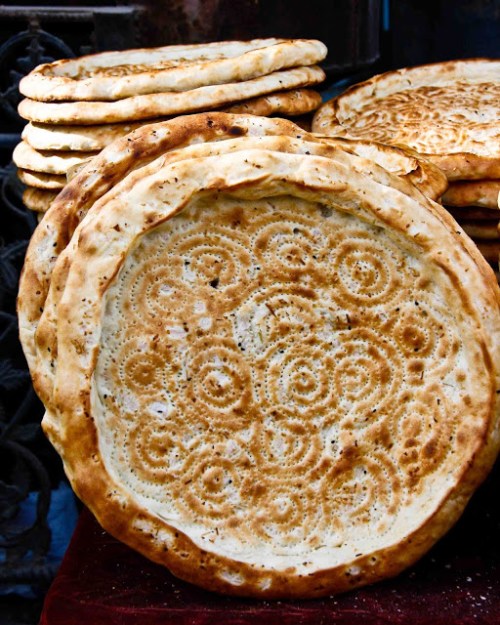
chinaI recently came across this amazing essay (with recipe) about bakers in Kashgar, China. Kashgar is located in the far western region of Xinjiang, which is home to the Chinese Muslim ethnic group known as Uyghurs. Uyghur cuisine is completely different that what North Americans are familiar with as Chinese cuisine, and has more of Middle Eastern and Central Asian flavor. Bread, in particular has a central place in Uyghur cuisine.

KashgarBread

Nan Bread from Kashgar, China by Life on Nanchang Lu

Leave a comment

Filed under Links, World Eats

Food for the Orixás in Salvador

On Saturday, we had the honor of being invited to the to the Ilê Axé Ijino Ilu Orossi, a temple (ilê axé) of candomblé nagô, an Afro-Brazilian religion closely related to the religious practices of the Yorùbá people of southwest Nigeria and Benin. The Saturday before Easter is one of the most important dates in the candomblé calendar: this day celebrates the new year with the Festa de Exu, a day-long celebration for Exu, the orixá (deity) of choices, pathways, and beginnings. At Orossi, the Festa de Exu is a lavish affair: a packed house, dressed all in white, dances and sings for six hours while navigating their way around spectacular offering altars and assemblages. Food and eating are important parts of the ceremony, and we were happy to take part!
???????????????????????????????

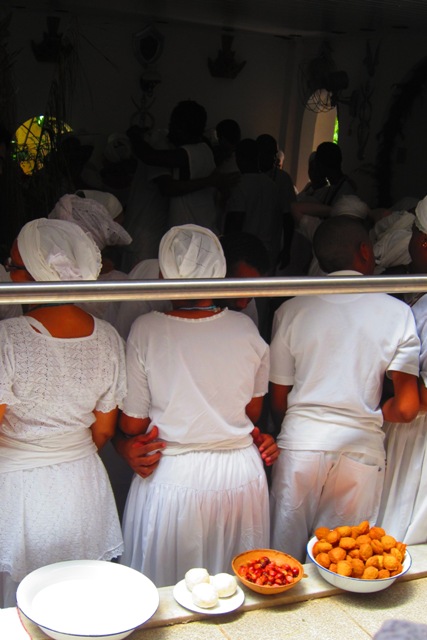
Two female initiates (ekedi) standing in front of offerings for Exu, including mini acarajé.

In a candomblé ceremony, it is just as important to feed your guests, and all attendees, as it is to feed the orixás. While Exu was very hungry on this day – he received extensive offerings of alcohol and meat – guests all received food as well, and enough to last us all day. Shortly after the first round of offerings to Exu, all guests seated in the audience section were invited to the main floor of the axé to receive a portion of abará, a dish resembling a tamale. Abará is a classic Afro-Brazilian dish and frequently used in candomblé  ceremonies as a food sacred to the orixás. It consists of bean curd mixed with dendê oil, wrapped in a banana leaf, and steamed (the same base as acarajé, the other classic Afro-Brazilian dish, but acarajé is fried instead of steamed). Abará, like acarajé, is very filling, and we had to force ourselves to finish just one by the time attendees came around to collect our used banana leaves.

???????????????????????????????

M’s unwrapped abará.

After everyone had eaten their abará, the ceremony entered its most exciting part. We once had a friend describe a candomblé ceremony as a party for all the gods where all the gods actually show up, and it’s true. On this day, three orixás arrived to interact with attendees and dance with initiates: Pomba Gira, a female version of Exu who loves to smoke and drink; Iemanjá, the orixá of the deep sea and motherhood; and Ogum, orixá of iron and war. After the orixás had come and gone, and while we were still full from our abará, two men brought out a huge metal pot of feijoada – more than enough to serve the fifty people in attendance with a bunch left over.

???????????????????????????????

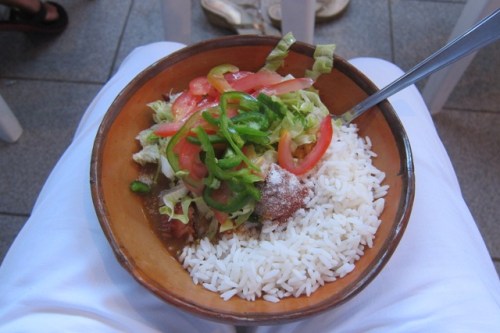
As always, guests were invited up first: we were given a decorated ceramic bowl, and then guided up to the ekedi who served us a heaping bowl of feijoada. That’s not all: out of nowhere appeared a buffet of accompaniments: rice, tomatoes, lettuce, green peppers, and pimenta malagueta: a sauce of flavored spices and famously hot malagueta peppers that is the classic accompaniment to any Bahian dish, but definitely not for the faint of heart. While we are not usually big fans of feijoada, this was excellent: beans, pork, and chicken cooked to perfection in a flavorful sauce, and the fresh veggie accompaniments and pimenta made for a very satisfying and filling meal. After six hours of exhausting singing and dancing, finishing off the feijoada put everyone into a food coma, and all the initiates in the house concluded the day by sleeping on the temple floor. A great end to a beautiful day of food and celebration for the orixás!
???????????????????????????????

M’s feijoada, complete with three spoonfuls of pimenta – apparently a record!

Leave a comment

Filed under World Eats

Easter Treats from Portugal: Folar da Páscoa

portugalLoyal reader José, who previously introduced us to the Portuguese delicacy, Tripa, sent us some great information about typical Portuguese Easter cakes: Bolo da Páscoa and Folar. Bolo da Páscoa (literally translated to English as Easter Cake) is a simple, delicious cake, popular around Easter time in Portugal. However, even an even more unique Portuguese Easter delicacy is the Folar da Páscoa.

Folar da Pascoa

Folar da Pascoa by Zé Pinho

Folar (which has no English translation), basically a sweet yeast bread, varies from region to region, and could be classified into a few major varieties. The first kind, from the Algarve in Southern Portugal, is a very sweet cinnamon and anise-flavored bread, typically decorated with whole eggs colored with onion skins. This type of Folar also reminds us of classic Italian Easter Bread with its colorful whole-egg topping. The other type of Folar, from the North of Portugal, is a simpler bread which is less sweet than the Algarve version. Another version of Folar from the very north of Portugal, near Spain, called Folar de Trás-os-Montes, sometimes contains ham or bacon! Piglet in Portugal has a recipe from Central Portugal, and Portuguese Girl Cooks shares her grandparents’ version of the sweet variety of Folar. Tia Maria has a recipe for savory Folar.

Thanks for the tip, José!

Leave a comment

Filed under Holidays, Pastry Post-Poc, World Eats

Easter in Brazil: Ovos de Páscoa

brazil

We absolutely love Easter candy, a particular favorite being Reese’s Peanut Butter Eggs. However, in Brazil we have discovered a new Easter obsession that dwarfs Reese’s Eggs in every sense: giant chocolate eggs! In the US we have seen chocolate rabbits, chicks, and miniature eggs but the chocolate Ovos de Páscoa (Easter Eggs) in Brazil put them all to shame. We saw these big chocolate eggs all around town, including grocery stores, newsstands and chocolate shops (such as the chain Cacau Show).

ovo de pascoa

A large Ovo de Pascoa – filled with Ferrero Rocher truffles

In the grocery store, in preparation for Easter, trellises were set up and were completely covered with wrapped eggs from different brands. Sizes of the Ovos ranged from a few inches to over a foot tall – with some costing as much as US$50. These eggs are not just solid (or hollow) chocolate – they are filled with other chocolates or creams. For example, the egg in the photo above is stuffed with truffles. Check out some of these exotic Chocolate Easter Eggs varieties (in Portuguese, but the pictures say it all).

ovos de pascoa

A trellis of Ovos de Pascoa at Zona Sul Supermarket in Rio de Janeiro

2 Comments

Filed under Holidays, World Eats

Collection of Charoset Recipes for Passover

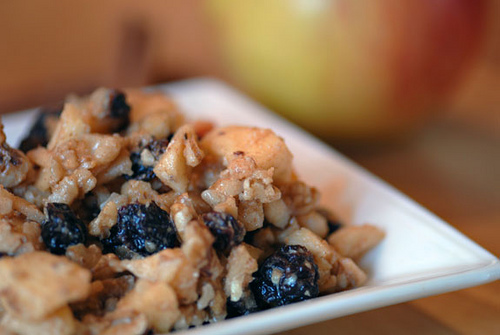
Happy Passover! We found a pretty nice collection of international recipes to put a spin on one of the essential elements of Passover Seder dinner: Charoset. Charoset is a paste made from fruit (often figs or apples), nuts, wine and honey. The exact content of charoset varies by region and tradition, for example, this Syrian version of charoset includes apricots!  Beyond switching up the ingredients, there are a million ways charoset can be altered and dressed up. Elana’s Pantry has a classic version of charoset with apples and walnuts (as depicted below), or check out these unique recipes for Afghan, Indian, Persian and Yemeni varieties. For something even more outside of the box, how about some Sephardic charoset truffles.

Charoset

Charoset By Elana’s Pantry

4 Comments

Filed under Holidays, World Eats

A Taste of India in Portugal: Popat Store

Popat Store
Centro Commerical Mouraria
Lisbon, Portugal

India Flag

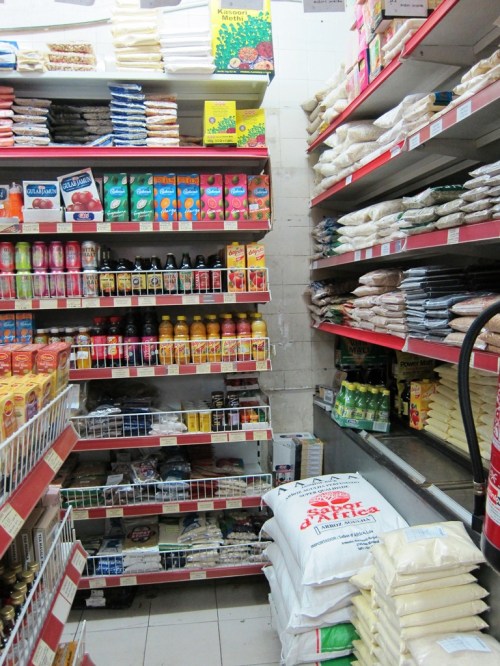
We love cooking with Indian flavors back in Chicago, but we figured that we would not be able to find Indian spices in Lisbon – but we were wrong! Right in the heart of Lisbon, and accessible from the Martim Moniz metro stop is the Popat Store, a small Indian grocery store which will warm the hearts of any Indian food lover. You don’t even need to exit the metro station to find Popat Store, just follow the signs in the labyrinthine Martim Metro stop to the Centro Commerical Mouraria – which is even a more labyrinthine shopping mall of international delights.

???????????????????????????????

Popat store caters to those who want to cook from scratch, as well as those who would reheat frozen samosas. There are pre-packaged spice blends starting from just one euro, including a masala spice blend and tandoori spice rub. You can get bottled sauces for a few euros more, as well as coconut milk and other canned goods imported from India. For those wanting to make their own blend, you can also find fresh lemongrass, and every kind of spice in dried or powdered form. In addition, you can find over a dozen varieties of rice and all different kinds of grain in bulk.

???????????????????????????????

There is also a small fresh market in the front of the store with okra, tomatoes, Piri Piri and Habanero peppers. The coup d’etat however was that they had peanut butter! Peanut butter is particularly rare in Europe, and if you find any it is bound to come in a very small jar and to be particularly expensive. However, Popat Store’s variety was a huge jar of delicious natural peanut butter (which appeared to be imported from Amsterdam) for less than 3€. We bought some garlic naan, tandoori spice mix and peanut butter. After a visit to Popat Store, our kitchen was really starting to feel like home.

3 Comments

Filed under Reviews, World Eats

Savory Zeppole for St. Joseph’s Day

ItalyWe have previously written about partaking in Sweet Zeppole for St. Joseph’s Day – one of our favorite holiday treat traditions. However, we were never even aware there was a savory variety of Zeppole. However, it seems that in the region of Calabria, savory Zeppole are a preferred option. Zeppole are basically fried dough fritters, so it make sense they could toe the sweet/savory line. Savory Zeppole can be made with anchovies or served plain. It seems like they would would probably go perfectly with another popular St. Joseph’s Day dish: Pasta con Sarde (with sardines).

Plain Zeppole

Plain Zeppole in Williamsburg, Brooklyn by Phil H

Leave a comment

Filed under Holidays, World Eats

Guinness Recipes for St. Patrick’s Day

IrelandThough Saint Patrick’s Day it is not widely celebrated in Rio (surprised?), we thought we’d share some festive recipes that all feature Guinness, a classic Irish beer for any day – but especially this one! Design Sponge has a recipe for Guinness chocolate cake which looks delicious.  Chocolate and Guinness seems to be a winning combo, which is repeated in Closet Cooking’s Guinness chocolate cheesecake. A final sweet recipe: Nigella’s Guinness gingerbread (even in March). For something savory, check out stout Macaroni and Cheese or Guinness and honey glazed pork loin. I wonder if they have Guinness at Zona Sul?

Guinness_Turtle

Leave a comment

Filed under Holidays, World Eats

Pastry Post-Doc in Italy: Neapolitan Pastiera for Easter

ItalyThough some Southern Italian delicacies have made their ways to the American shores: Rum Baba, Cannoli, among others, we had not encountered Pastiera (also known as Pastiera di Grano) until our trip to Naples. Pastiera is especially associated with Easter (though we also found it in Pasticcerias in November). Pastiera was developed in modern times by a Neapolitan convent, but also has an older history related to pagan Springtime festivals (hence the inclusion of wheat and egg). Pastiera is composed of a pastry shell with a ricotta, wheat and egg filling, which may also be flavored with citrus or spices. Pastiera is unique – and in order to make it you need to prepare a special wheat mixture (unless you have access to prepared soaked wheat – which this recipe includes). While in Naples we saw large Pastiera pies even being sold in tins – perfect for every Easter table.

Pastiera in Naples

A slice of pastiera in Naples by Yuichi Sakuraba

2 Comments

Filed under Holidays, World Eats

Belgium: The Geometric, Iconic Cuberdon

Belgium

Called alternatively “noses” or “preists’ hats” for their distinctive shape, the Belgian cuberdon is certainly eye-catching. Waxy, burgundy and shaped like a cone, the cuberdon is traditionally filled with sweet raspberry syrup, though other colors and flavors are now available. Due to its popularity and longevity, cuberdons have been named one of the official cultural foods of Belgium. Despite its popularity in Belgium , the cuberdon is mostly known outside of the country since they have no preservatives, and are tough to transport and store. Moroever, the production process is quite intense. So if you want to enjoy this taste of Belgium you’ll likely have to visit!

Cuberdons

Cuberdons from Leuven, Belgium by Carolien Coenen

Leave a comment

Filed under Pastry Post-Poc, World Eats

The Mystery of Clorofila juice solved?

Clorofila

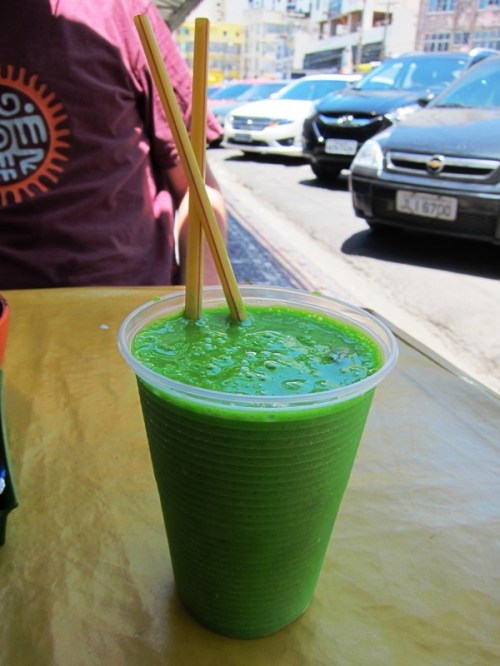
brazilIn Salvador da Bahia we tried a mysterious green liquid called “clorofila (chlorophyll)” at a juice bar that tasted somewhat unpleasantly like green bubblegum. However we have not been able to decode exactly what it was, or if the shocking green color was the result of a natural ingredient or dye. However we think we have decoded one of the major ingredients which would indeed give a natural green color – wheatgrass! We saw the sign below at Kice Sucos in Copacabana, which advertised Clorofila as a wheatgrass drink (broto do trigo). Though the drink we had in Bahia was surely mixed with other fruits and juices (as is advertised here), we now know why it was green. Thanks, Kice Sucos!

???????????????????????????????

2 Comments

Filed under World Eats

The origins of Macaroni and Cheese and Thomas Jefferson

In honor of Presidents Day – we decided to share a little bit of presidential food lore – according to food legend Macaroni and cheese was popularized in America by none other than Thomas Jefferson. Of course, macaroni and cheese, or as it was known then (simply as Macaroni) was very different than its modern-day counterpart, and consisted with pasta layered with butter and cheese. Jefferson didn’t invent Macaroni and Cheese, as similar recipes were already known in Europe, but he was one of the dish’s popularizers in the United States after he first sampled it in Europe. There is actually a historical record for Thomas Jefferson’s foodie discovery, he was fond of pasta and even requested a pasta machine from Europe, which was listed in his list of possessions moved from Philadelphia to Monticello, and he certainly served Macaroni at official functions. Macaroni and cheese is purported to have been served by Jefferson as early as 1802, and it appeared in the 1824 Virginia Housewife cookbook, recipe adapted here. So for helping to bring Macaroni and Cheese to the USA, we say, thank you Thomas Jefferson!

Virginia Housewife Mac and Cheese

Recipe for Macaroni and Cheese from the Virginia Housewife Cookbook, 1824

4 Comments

Filed under Cheese, World Eats

Venezuelan Arepa Infographic

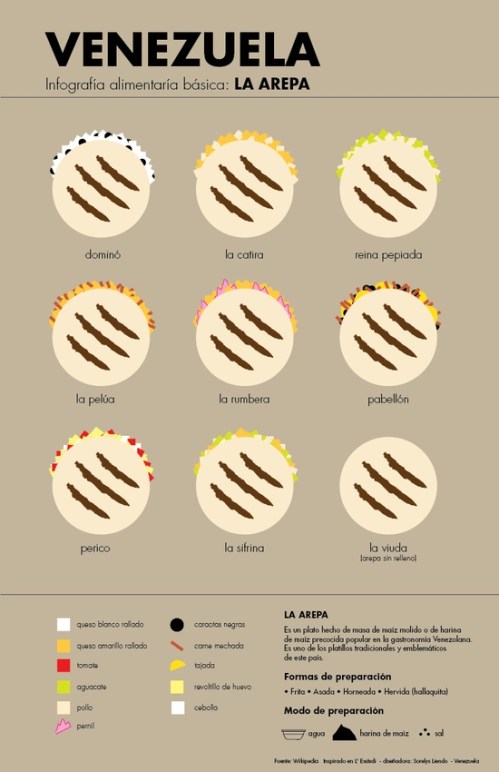
VenezuelaI found this infographic by Sorelys Liendo about Venezuelan arepas floating around on Pinterest (follow ETW if you haven’t already!) and I thought it was too good not to share. Check out all of the combinations – including the viuda (widow) – which has no filling. Arepas are one of the most popular foods in Venezuela and consist of a fried or grilled masa pocket filled with…pretty much whatever you want, as the graphic demonstrates. Adriana Lopez has a great history of the arepa for the curious, and here is a simple recipe. They really couldn’t be easier to make.

Venezuelan Arepas

2 Comments

Filed under World Eats

Paczki Day: A Polish-American Take on Shrove Tuesday / Mardi Gras

PolandWhen we were in Chicago for Fat Tuesday, it was not uncommon to have a friend or co-worker bring over a box of fresh Paczki. Paczki, a type of jelly- filled doughnut, originated in Poland (the official plural in Polish is pączki -pączek is the singular form), as a way to use up sugar and butter before the start of Lent. Unsurprisingly, Paczki Day is really big in Chicago, which has one of the biggest Polish populations outside of Poland. In Michigan, Hamtramck and Detroit are also epicenters of paczki culture. So what is a pączek like? The texture of a pączek is a bit denser than a jelly doughnut, and the jam fillings range from standard raspberry to more creative varieties, such as rose-hip or even guava (you may also see cream fillings).  Louisa Chu on the WBEZ blog lists some top picks for Paczki in Chicago, and DNA Info rounds out the list even further. Rest assured, if you are in Chicago, you can get your Paczki fix.

Paczki

Paczki options at Alliance Bakery by Chad Magiera

6 Comments

Filed under Holidays, World Eats

Lunar New Year in Liberdade, São Paulo

JapanbrazilToday is Lunar New Year – the welcoming the year of the snake. Fact of the day: Brazil has a substantial East Asian population, including the largest population of Japanese-descended persons outside Japan. São Paulo in particular is a major Japanese-Brazilian (nikkei) center, with Japanese cultural heritage on full display in São Paulo’s Liberdade neighborhood (which means “freedom” in Portuguese). Though originally settled by the Japanese, today the area is also home to many recent Chinese and Korean immigrants. Due to this, Liberdade is a great place to experience Lunar new year!  In 2011, 200,000 people attended new years celebrations in Liberdade alone.

LiberdadeNewYear

Chinese New Year Celebration in Liberdade, 2008 by Bianca Bueno

Liberdade is a very cool place, marked by its distinctive red lamp posts and a red Japanese gate (torii) at the entrance to the main street. We visited Liberdade in 2012, right after new year, but the place was still hopping. The neighborhood is also famous for its weekend street fairs, which are full of food, and bring out Paulistanos from all areas of the city. On any day of the week you can get some of the best yakisoba , bubble tea and gyoza in Liberdade. In many other Brazilian cities, Japanese food is quite expensive, but Paulistanos have the pick of any range of restaurants. There is even a dedicated Sake shop!

LiberdadeSaoPaulo

Streets in Liberdade, Sao Paulo by Márcio Cabral de Moura

Leave a comment

Filed under Holidays, World Eats

Juustoleipä, or leipäjuusto: Finnish Bread Cheese

finlandRecently, there has been a post from the blog Dude Foods making the rounds of the blogosphere about a 100% cheese grilled cheese sandwich: the “bread” in this case is actually Finnish Bread cheese, and the filling is American cheese. So what exactly is “Finnish Bread Cheese?” It’s Finnish name is juustoleipä, or leipäjuusto (leipä=bread, juusto=cheese), and it is similar to the better-known (in the US) Halloumi, and Brazilian queijo coelho. The variety of  leipäjuusto Dude Foods used was from Carr Valley cheese in Wisconsin. In order to get the most of this cheese – it should be heated or broiled, giving it distinctive brown grill marks. Though there will probably be a run on this type of cheese for people hoping to recreate the epic “cheese grilled cheese”, there are many other recipes involving leipäjuusto. It pairs particularly well with fruit and jams and you can even dip it into coffee!

leipajuusto

Leipajuusto Finnish cheese and jam by Magnus Franklin

2 Comments

Filed under Cheese, Coffee, World Eats

Pastry Post-Doc in Brazil: Macarons in São Paulo

brazil

Brazilians have such a large variety of homegrown sweets, there isn’t much of a need to import foreign pastries. However, now macarons have made it to Brazil. Folie, in São Paulo is offering up a huge variety of macaron flavors, including some in  a collection called, Da vovó (“From grandma”) which are  inspired by Brazilian flavors like Brigadeiro and Beijinho. We are glad to hear that macarons are making their way to Brazil. Now we really could move here!

folie macarons

Macaons at Folie in São Paulo – Via Cool Hunting

Leave a comment

Filed under Pastry Post-Poc, World Eats

Poutine Fest Comes to Chicago

quebeccanadaPoutine, the emblematic Québecois fast food consisting of french fries, brown gravy and cheese curds has become popular over the past few years in the US, especially in the time since we wrote this post. Chicago will now it will be inaugurating its very own Poutine Fest! In the vein of the ever popular Bacon Fest, Poutine fest will feature a wide array of Poutines from over 10 restaurants across Chicago. The fest will occur on February 24, 2013 at the Haymarket Pub & Brewery. We wish we could be there for the carb-n-cheese goodness, so we hope someone will fill us in with a report.

Classic Poutine

Classic Poutine from L’Authentic Burgers & Poutine in Victoria, BC by Jen Arrr

Leave a comment

Filed under World Eats