

 We adore this letterpress biscuit/cracker/cookie (somewhat lost in translation) notebook from Portuguese design shop Serrote. We bought ours at the A Vida Portuguesa kiosk inside the Ribeira Market (post coming soon), and you can buy it online at A Vida Portuguesa as well.
Portuguese Biscuit Letterpress Notebook by Serrote
Filed under Design and Photography
What is a 99?

99 Ice Cream by Louis du Mont

It’s St. Patrick’s Day, so it’s time for another Irish treat – the 99. But what in the world is a 99? A typical 99 is vanilla softserve served in a cone, and topped with a piece of Cadbury Flake chocolate. Each of these elements has to be present for it to be a true 99. 99s have been around since at least the 1930s, when a special, shorter version of the Flake bar was introduced as a “99 Flake.” But where does the name come from? No one is quite sure, but this short documentary on the 99 provides some theories.
Filed under World Eats
Irish Soda Bread And Spotted Dog Recipes for St. Patrick’s Day

Spotted Dog by my amii
 Irish soda bread is one of the most iconic St. Patrick’s Day recipes, and it is super simple to make. In fact, this historic recipe requires little more that buttermilk, baking soda, and flour. However, for a little twist you can also make Spotted Dog – a richer, sweeter riff on Irish soda bread that has raisins or other dried fruits in the batter. Here is a Spotted Dog recipe on Serious Eats, from Darina Allen’s Forgotten Skills of Cooking. Seems like a perfect accompaniment for some Irish breakfast tea, don’t you think?
Filed under Holidays
Uruguayan parrillada in Miami at La Morocha’s
 We are always excited to visit Miami, because of all of the awesome Latin food there, and because we get to see our friend K & M, who are both awesome people and food pros! One of M’s friends recommended Patio D La Morocha (2175 SW 1st St. Miami, FL 33135) for dinner – it is owned by a friend – and it was truly an awesome local spot. The restaurant is Uruguayan – a new restaurant country for us – our only experience with Uruguayan food was previously on a beach in Rio de Janeiro. Like many of its neighbors, the food of Uruguay is meat heavy, and a lot of the food culture revolves around the almighty grill.

This is a little out of the way place, but the main feature is in fact the roaring, wood-burning grill. It may be better to call it a “fire,” since it is basically just an open blaze stacked with cherry wood and meat. We are talking, smoke, fire the works! The meat is just seasoned with salt, and you pick and choose what types of meat you want, all of which are served to you in a giant chafing dish, and you eat on wooden planks. Kind of a primal experience.
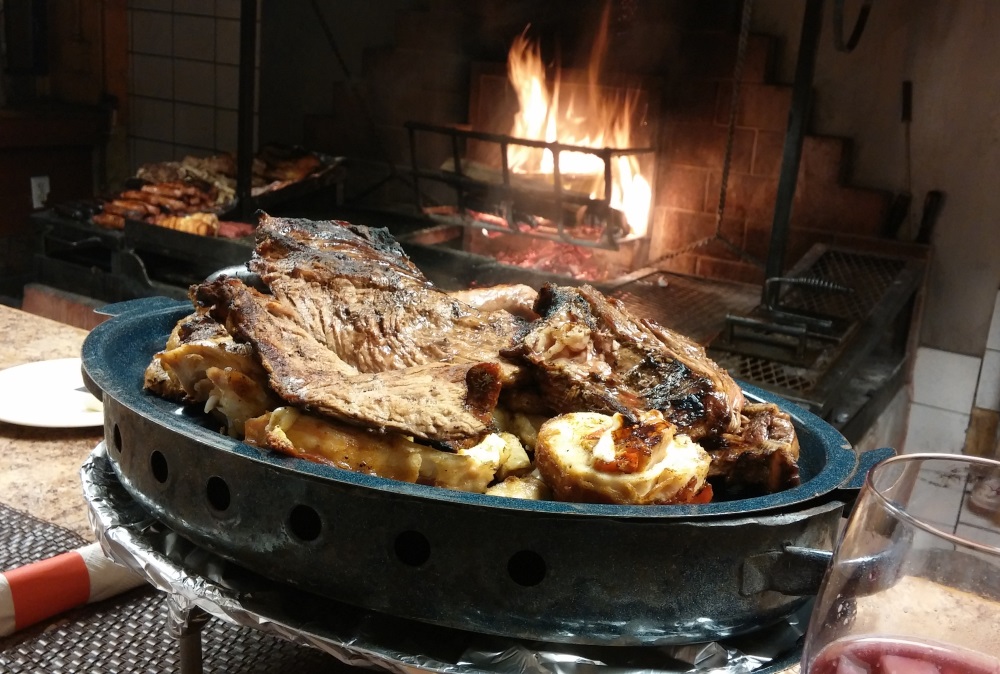
As a group of 5, we chose the mixed parrillada of tripe, skirt steak, Short ribs, stuffed chicken, roast chicken, morcilla blood sausage. Seem like enough for the group? There was definitely something for every taste and appetite, and it was great to get the meat hot off the grill. M’s favorite part was probably watching the grill itself and the artful grillmaster. Even with just the simplest of seasonings, all of the meat was delicious, charred and super flavorful. Along with the meat, we got a number of side dishes, some of which were cooked on the grill, too, including roasted cheese with chimmichurri. In terms of cold sides, we got the “Russian” salad (basically potato salad with carrots and peas) and a green salad.

The atmosphere inside was festive, and there was even a Nicaraguan singer who arrived halfway through to belt out boleros. Judging by the amount of balloons and families, we could tell that this was a very popular for parties. The nondescript interior definitely does not give a hint into what lies inside La Morocha’s! It was a fun experience, with an absolutely insane amount of food for a low price.
Filed under Reviews
Mexico’s Special Lenten Foods
 Mexico Cooks! has an extremely interesting post about special Lenten foods in Mexico. For those observing Lent (La Cuaresma in Spanish), the 40 days leading up to Easter, meat is typically not eaten on Fridays. It is cool to see these more unique veggie and fish-based dishes popular for Lent in Mexico – certainly an alternative to the Friday fish fry. I think we would especially like to try the Capirotada bread pudding – and Mexico Cooks provides a pretty enticing recipe at the link above.

Capirotada from Mexico Cooks
Filed under Holidays
A new place for Tacos: Authentaco [closed]
One bit of Chicago lore is that on the intersection of Ashland and Division nearly every storefront in sight is a La Pasadita taqueria. It’s true, there used to be 3 Pasaditas within a 1 block radius, but a little while ago, one of them closed, and reopened later as Authentaco [closed] (1141 N Ashland Ave). Upon entering you can rest assured that it is not just a reincarnation of La Pasadita. The whole restaurant is about the size of a postage stamp (“restaurant” is a very loose term), it is a basically just a stand up counter, a massive flat top, and a cash register. There are no seats, and no credit cards. However, this is a taqueria with a difference, the motto of the restaurant is “farm-to-taco” so the emphasis is on fresh ingredients and flavors.

So how it works, is you choose the meat, and then how you would like it served – as a taco, torta, quesadilla or plate. As for meat, there are basic options like carne asada, chorizo and pork al pastor, but also more unique options sweet potato al pastor. Aside from sweet potatoes, there are ample veggie options, including squash blossoms and nopal (cactus), which is nice for the veggie crowd. We also appreciated the appearance of the huitlacoche, our favorite corn fungus, which we got in quesadilla form. For tacos, we picked the pork al pastor (our go-to to test out a new taqueria). While we waited for our tacos, we sipped on a tasty horchata. The huitlacoche quesadilla was excellent, with delicious melty cheese, and was stuffed to the brim with huitlacoche. The al pastor was good, but there was too much soupy sauce, and the meat wasn’t really charred like al pastor is supposed to be. The tacos were over $3 each, but the size is a little bigger than at the typical taco joint, and we probably only needed 2 apiece, rather than 3. However, the real stars were the tortillas. The tortillas are made to order and pressed and griddled right before your eyes. They are exemplary, and completely made the meal. Definitely go to Authentaco for the huitlacoche and stay for the tortillas – and bring your vegetarian friends.

Filed under Reviews
Pastry Post-doc in Portugal: Bolo de bolacha
The bolo de bolacha, which means “cookie cake,” is a Portuguese version of the classic icebox cake. This iconic cake uses “Maria” cookies, versions of which are available in pretty much any Latin grocery store, and typically is made with condensed milk and coffee. We tried this mini bolo de bolacha at the Ribeira Market in Lisbon, and we were instantly sold on the comforting dessert with a coffee kick. Unlike many Portuguese desserts, this one is simple enough to make at home. Here is a super-simple butter-free recipe from Dreaming Drawing, and a version with eggs from Portuguese Diner.
Filed under Reviews
A Photo Tour of London’s Brixton Market
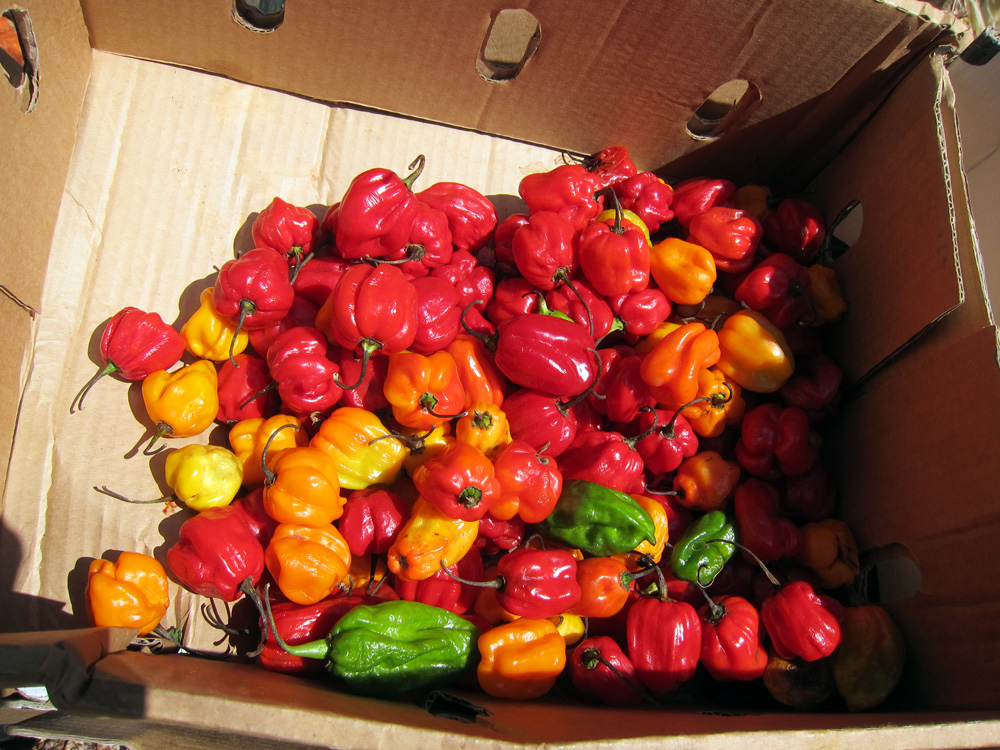
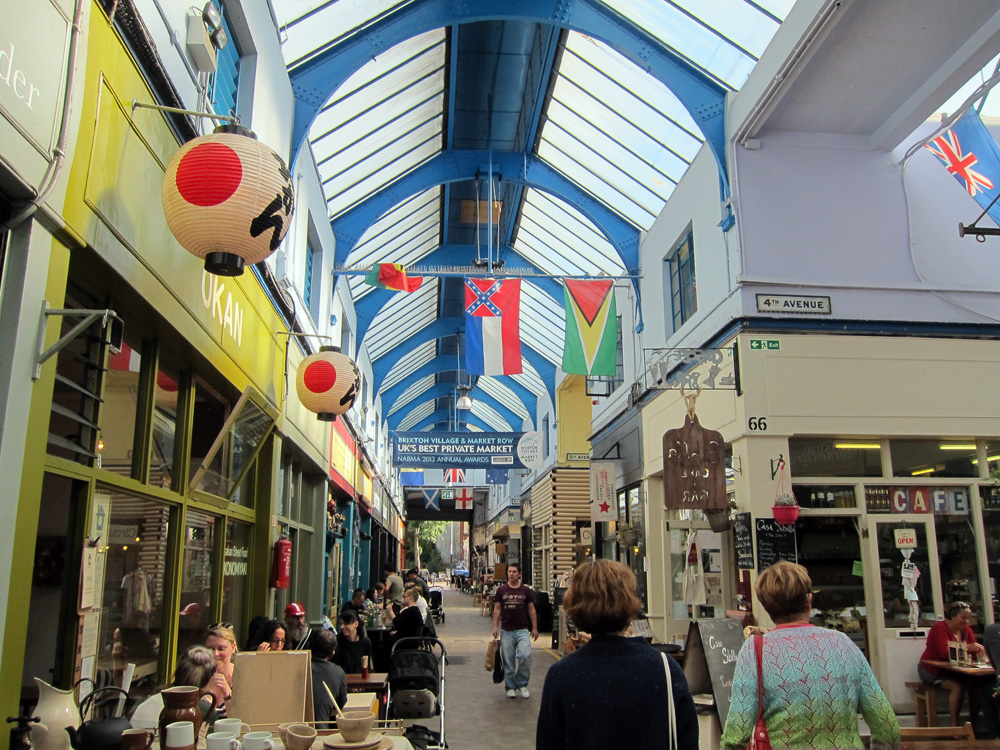
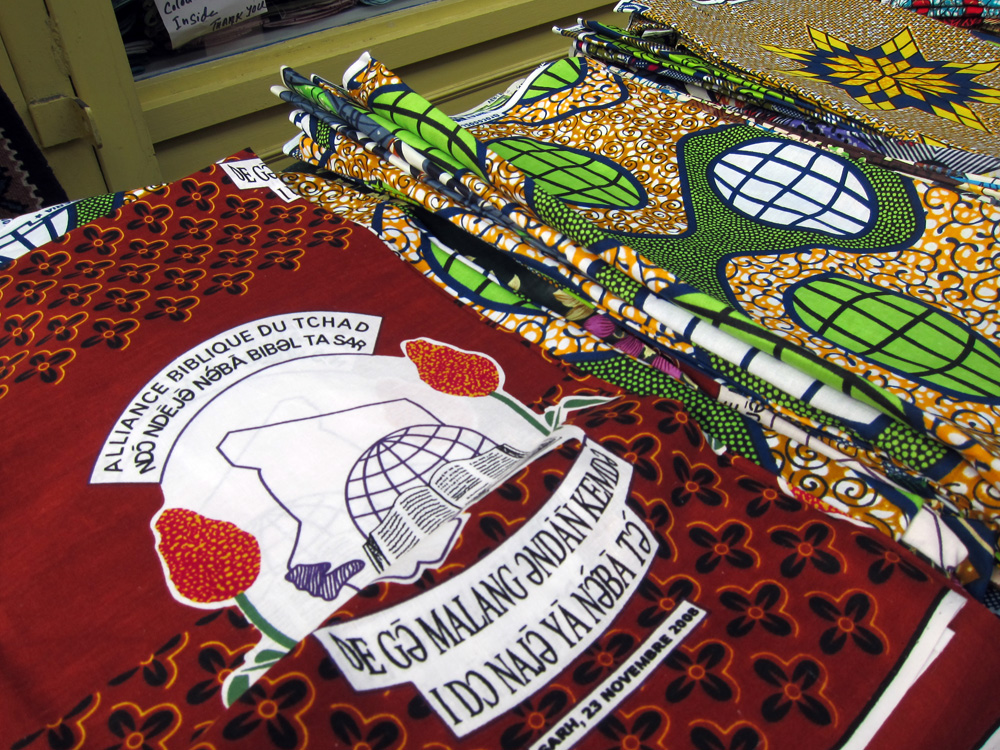
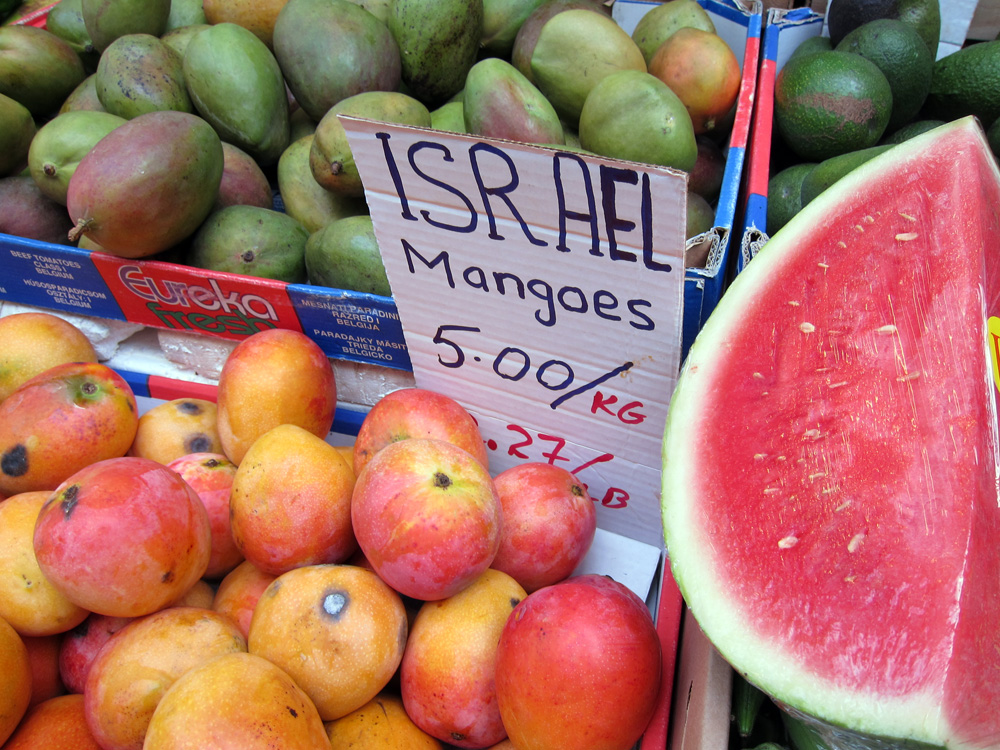
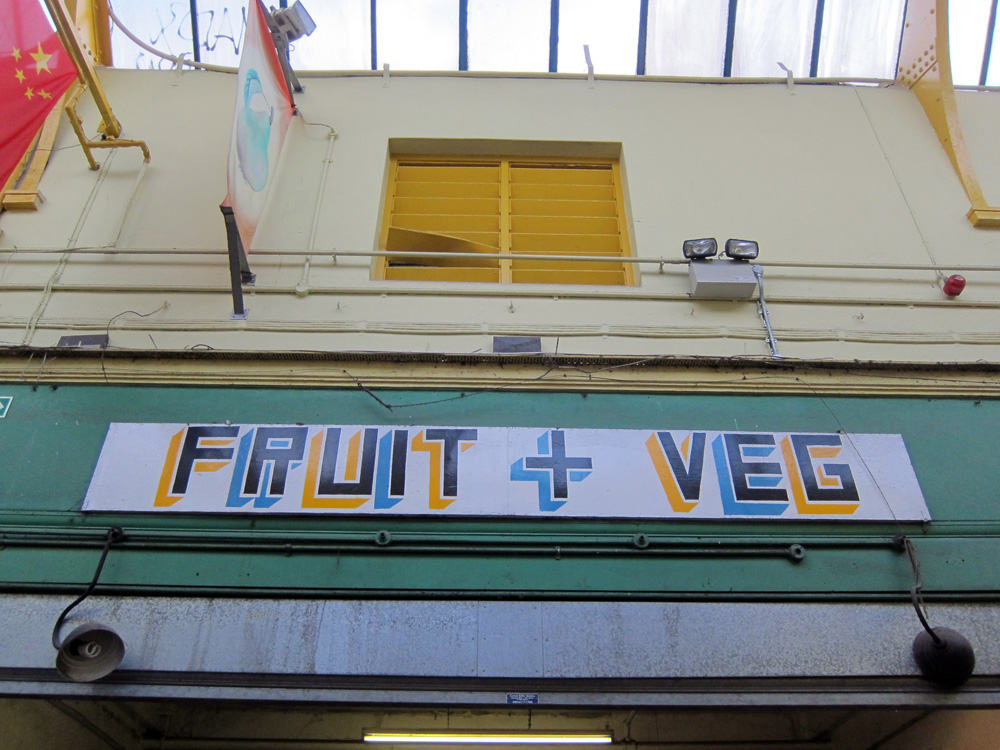
 Where can you find a hipster coffee house alongside a shop selling African waxprint cloth and stalls selling Caribbean produce and Jamaican flag cellphone covers? Brixton Market! Brixton Market in South London is one of the more unique market conglomerations we have ever come across, and we loved every minute of it. Upon exiting the Brixton tube stop you are almost immediately plunged into a bustling market atmosphere, seven days a week. There are actually two parts to the market, the open air stalls lining the streets and the covered market arcade areas. One of these covered areas, “Brixton Village,” has more permanent little shops and restaurants with seating that overflows outside. There is a heavy Caribbean influence in Brixton, but you will find global gems from all over the world alongside Jamaican and Trinidadian food and produce, including Portuguese and Indian grocery stores. Though the market is open daily, there are special theme days, and even a flea market. Here’s a little photo tour of what it is like to walk through Brixton Market on a sunny but brisk Friday afternoon.





Filed under World Eats
BBQ with Franklin YouTube Series
It’s no secret that Franklin BBQ in Austin, Texas is one of the most popular and acclaimed barbecue restaurants in the country. The waits are so long, that the line to get inside even has its own Twitter account. If you, like us, are nowhere near Austin, we have found something to tide you over: a BBQ-centric YouTube series by Aaron Franklin, “Barbecue with Franklin,” which covers BBQ tips, recipes and techniques.
Here, in the first video, Aaron walk us through the process of preparing a brisket! This series is putting us in the BBQ mode, so hopefully some BBQ weather will be right around the corner.
Filed under Links
Pastry Post-Doc in Portugal: Saboia
When we first read Fabrico Proprio, we were particularly intrigued by the saboia cake. It almost looked cartoonish, what with the striking brown polka dots on white background. The saboia is made of the trimmings of other chocolate cakes cut into a thin outer layer and jaunty polka dots, and filled in with whipped cream. Apparently, the saboia used to be popular in the 1940s, but is now sold in very few stores in Lisbon, in fact it may only be one, Central da Baixa (Rua Áurea 94, Lisbon). Like the saboia, this cafe is a holdover from an earlier time, somewhere between the present day and the elegant Manueline architecture. The saboia was super rich, and the chocolate cake parts had a fudgy consistency. This is definitely a special occasion cake. Even more intriguingly, I haven’t found a single recipe for this complicated cake online.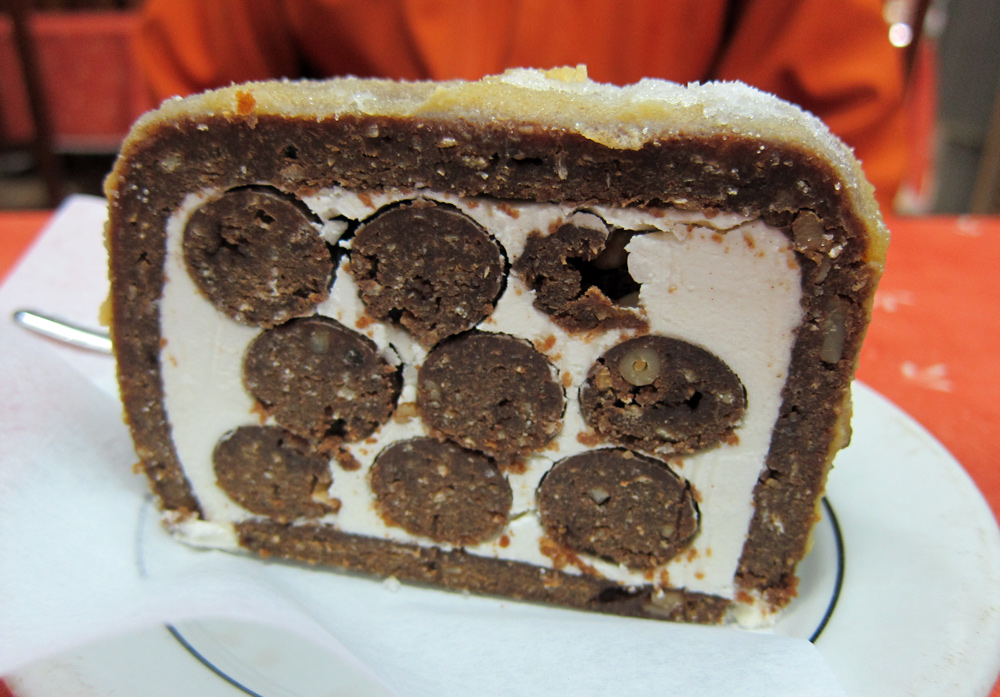
Filed under Pastry Post-Poc
Gogi, modern Korean BBQ in Chicago
 So we have something of a difficult relationship with Korean BBQ. In fact, we have had only had one good experience, all the way in Los Angeles. So, for a long time we never went out of our way to try Korean BBQ. However, when one of our friends suggested that we give Korean BBQ another try at Gogi (6240 N. California Ave, Chicago, IL) we relented, especially when we saw the stellar reviews.

Gogi’s Interior
Filed under Reviews
Discovering Pan de Bono, Colombian cheese bread
 We are huge fans of Brazilian pão de queijo, and we were excited to try its Colombian cousin the “pan de bono” or pandebono on a recent trip to Miami. No, not BUENO, bono. Hmmm. Like pão de queijo, the dough is made from tapioca flour, however, the addition of corn flour also gives it a more bready texture, and it is a bit sweeter than pão de queijo. Our first stop to try pan de bono was a Colombian bakery, Ricky (several location, we went to 252 Buena Vista Boulevard #108, Miami). We were hooked instantly on the slightly-sweet cheesy bread. There is nothing better than a cafe con leche and a pan de bono for breakfast in Miami, at least for me. I have not tried any pandebono offerings in Chicago yet, though I am intrigued by this recipe from Lucky Peach. Do you know of a good place for pandebono?

Pan de Bono at Ricky Bakery
Filed under World Eats
Dinner and a Show at Sabor a Cafe Colombian Steakhouse
 Sabor a Cafe (2435 W Peterson Ave. Chicago, IL, 60659) is deceptively small, but inside it is actually both a music venue and a restaurant with a great atmosphere. Our particular draw for the night was a show by the Brazilian singer and pandeiro player Clarice Maghalães, one of our favorite young Brazilian artists. The inside of the restaurant is divided into two parts, and at the back of one half is a small stage, as well as other creative flourishes like an indoor portico and Colombian murals. Sabor a Cafe also has a big meat-heavy menu to keep show-goers happy, but there are also vegetarian starters like arepas and empanadas ($2 or less apiece).

Dinner and a show at Sabor a Cafe
While perusing the menu we ordered a somewhat unusual drink – hot chocolate – but the interesting part was that it was served with a mild white cheese, which our server instructed us to crumble into the drink. We did and it was pretty good, not too “cheesy” at all, though we are not sure this would be a regular addition to our mugs of hot chocolate. For appetizers we ordered a requisite for M – the Ceviche de Camaron / shrimp ceviche ($11.99). This rendition came in a cup, like a shrimp cocktail but with a spicy citrus and tomato broth. Though not too similar to his favorite Peruvian ceviche, M was happy with his choice. In terms of mains, there were many traditional Colombian dishes, like Bandeja Paisa ($15.99) which is a mix of steak, sausage, beans and an egg. This is certainly a meat-heavy menu and if you are looking for steak (in many varieties) you won’t be disappointed.

Our requisite order of Ceviche + maduros
We opted to share the Parrillada ($18.99) a large plate (board?) of grilled steak, grilled chicken breast and grilled shrimp with chorizo, baked potato, grilled onions, yuca and more plantains. However, if you are not in the mood for such a huge combo, there were a variety of smaller a la carte meat dishes and combos, including carne asada ($12.99) or chicken skewers ($6). We were impressed with our parrillada, all of the meat was grilled to perfection, and we also liked all of the starchy side dishes. Along with the ceviche, the parrillada was more than enough for the two of us.

Enough for two? Yes.
Another good thing about the dinner and a show model as that you pace yourself a little more. After a short break in gluttony, we settled on a decent chocolate cake for dessert (which also had some sort of cherry flavor in it), but we were also tempted by the Brevas con Arequipe / figs with cheese ($3.99) and the Platano Maduro con Queso y Dulce de Guayaba / Plantain with cheese and guava ($3.99). Maybe next time! Sabor a Cafe pleasantly surprised us with a good show, and good food to match. We will definitely be back.
Filed under Reviews
What does the shape of a Croissant mean?
 Some croissants are straight while others are crescent shaped…. but does it MEAN anything, or is it just decorative? Turns out France actually has laws about what each shape indicates. According to Everywhereist, in France, only all-butter croissants are legally allowed to have a straight shape (as seen below)! Any croissant, even those made with part margarine or other oils, can be crescent shaped. There’s your strange fact for the day.

Croissants in Paris, France by Glen Scarborough
Filed under Links, World Eats
Our first frita experience in Miami: Mago de las Fritas
 El Mago de las Fritas
5828 SW 8th St.
West Miami, FL 33144
We have tried a lot of burger joints in our day, and while we were more than happy that a Shake Shack finally opened in our neck of the woods, it is rare we try a burger place that is totally NEW. Well, Miami, you’ve done it for us again by introducing us to the unique and delicious Cuban burger, the frita. There are a couple of places that claim to have the best fritas in Miami, and we decided to make our first frita experience at one of the fan favorites, Mago “Magician” de las Fritas (another rival across town is Rey “King” de los Fritas).

We have arrived
We arrived on Saturday afternoon, and the place was pretty crowded. The Mago himself was even helping man the grill. The restaurant is small and set up like a diner, with a big flattop grill, booths on one side and blue swivel chairs at the counter. There are a number of items available on the menu, including hot dogs, chicken, and steak sandwiches, but rest assured that most people are here for the frita. There are few options for the frita, including a single, double and even one with egg on top (a Caballo). We settled in for our single fritas with a banana shake (mango, guanabana, and others were also available). Now, our only knock on the place is that it took us 30 minutes to get a burger. Sure, we don’t mind to wait a little bit, but it’s a burger…. Despite this setback, the staff was very kind and apologetic throughout.

The Frita!
When we finally received our frita, we dug right in. The thin, crispy burger patty was made out of beef and chorizo, and had a spicy, rich flavor. It was also topped by raw and cooked onions, and shoestring potatoes, a Cuban staple, on an egg carton shaped roll. The mix of textures was really delicious, and the chorizo added a whole new dimension. As always, we loved the crunch that the shoestring potatoes added. We are definitely converts to the frita burger, and El Mago de las Fritas was a fun place to try a frita for the first time. Just go when you have time to spare.

The Mago Himself
Guide to Old-School beverages at Lisbon’s Quiosques de Refresco
 We previously wrote a post about Quiosques, small cafe kiosks located in city squares, and their awesome prevalence throughout Lisbon. Today, we are going to give you a guide to a special breed of quiosque – the Quiosque de Refresco (refreshment kiosk). The quiosque de refrecos is the brainchild of Catarina Portas, proprietor of the store A Vida Portuguesa, who wanted the revive the quiosques in Lisbon, and their old school drinks. The project was extremely successful, and the Quiosque de Refresco is something of a chain now with five locations throughout Lisbon. We were shocked to learn that there was no quiosque (in the recent past) in the bustling Praça Luís de Camões (below) until the Quiosque de Refresco appeared in 2009. Doesn’t it seem like it had been there forever?
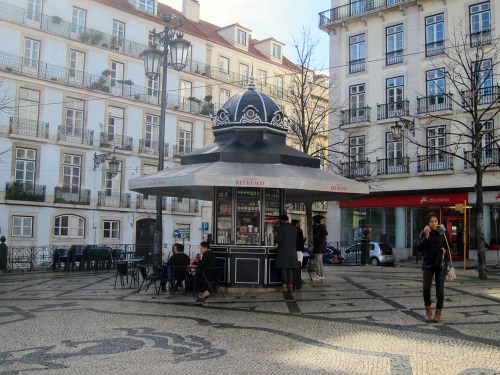
Praça Luís de Camões
What makes these quiosques so unique, despite being cool places to while away the time, is that they sell old-school drinks that originated in the mid-20th century or earlier. So what kinds of drinks can you get at a refreshment quiosque? The drink options are written on a little hanging chalkboard, pictured below, and include both alcoholic and nonalcoholic beverages. Seem confusing? Never fear, I will walk you through all of the options on the menu pictured below.

Leite Perfumado – I ordered what I thought was a Spanish horchata, turns out it was actually a leite perfumado. This drink, which translates to “perfumed milk,” is milk steeped with sugar, cinnamon, and lemon, which gave it a chai-like flavor. Even though it is made with UHT (boxed) milk, which I normally do not like – I thought it was great! This drink is served cold.

Leite Perfumado
Mazargan – This is a classic drink made from coffee, sugar and lemon. The Portuguese are big coffee experts, and this storied coffee drink has quite an interesting history, and bears the name of a town in Algeria. Served cold, this drink is sweet and refreshing and good for a midday caffeine boost.
Limonada/oranjada– Perhaps the most familiar option, these are fizzy lemon or orange drinks, much like a San Pellegrino fizzy beverage. These crisp drinks are definitely great for a warm day, or for kids.
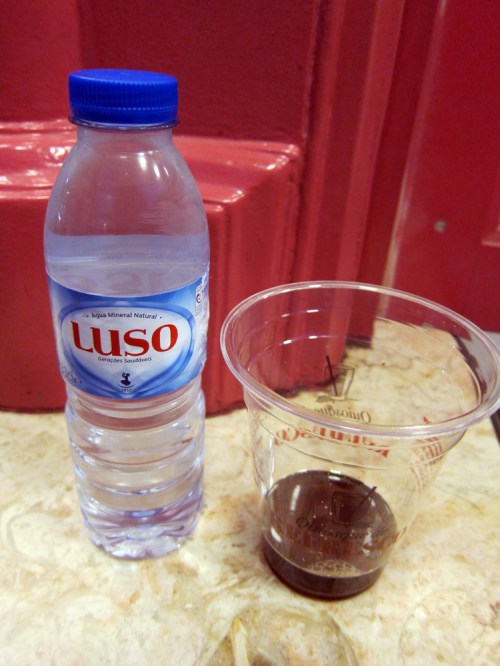
Capilé, pre-mixing
Xarope (Syrup) drinks – These drinks came in a variety flavors, and are served with a small amount of sugar syrup in a cup, and you then mix in a small bottle of still water. Two of the most iconic and unique syrups are the groselha and the capilé. These drinks were somewhere between a juice and Kool-Aid in taste, but not super sweet. The flavor Groselha is within my realm of knowledge – red currant. However, capilé was something else entirely – not that it doesn’t even have a translation on the menu – fern! We really enjoyed the Capilé, which had a sweet grassy flavor similar to green tea. Other syrups available included: chá verde/green tea, erva principe/lemongrass, tonilho-limão/thyme-lemon and the simple limão/lemon.

A mixed Groselha syrup drink
Alcoholic:
Vino quente– We were there during the winter, this drink was basically flying out of the quiosque. Vino quente is literally translated as”hot wine,” and is basically a mulled wine (usually Madeira or Port) with spices. Perfect for a cold night.
Grogue – For some reason we had this drink mixed up in our head with the Swedish drink glögg, which is actually more akin to the vino quente above. However, we did find a description of what makes us a grogue from the Quiosque site:
O nosso Grogue mistura aguardente velha, água, sumo de limão e mel, é servido bem quente e deve ser bebido de um trago. Sem medos! Which translates to: Our Grog mixes old brandy, water, lemon juice and honey, is served hot and should be drunk in one gulp. No fear!

Quiosque in Praça do Príncipe Real
So there you have it! Now you know exactly how to decipher the menu, and find your new favorite Portuguese drink. We also suspect these drinks may change with the season…mulled wine may not be suitable for a hot summer day. If you are in Lisbon, the quiosque de refresco is a great slice of history, and it fun to seek out all of the different quiosques across town. If you go, let us know what you order!
Filed under Reviews
Origami: Starbucks’ single-use Japanese pourover kit
 Pourover coffee is having a moment, but now Starbucks in Japan is taking it one further with their “origami” single use pourover kit. Seems like a pretty cool way to brew coffee, and we certainly prefer it over the more common single-serve coffee method of K-Cups or freeze dried coffee powder. What do you think – would you use origami?
Cheap NYC Chinatown eats at Vanessa’s Dumpling House
 We were in NYC right before Chinese New Year and found ourselves hankering for some good, cheap Chinese food. Vanessa’s Dumpling House (118A Eldridge Street, New York, NY 10002) came highly recommended by my cousin, who is always in the know. When we arrived on a bone-chillingly cold day, there was already a very large line, and huge trays of Beijing-style dumplings basically flying out the door. We knew we were in the right place.
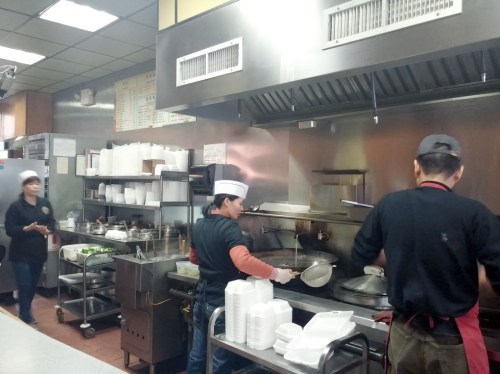
Dumpling prep at Vanessa’s Dumpling House
The specialties of Vanessa’s are dumplings – obviously – but also an intriguing Northern-Chinese style dish – the sesame pancake. The sesame pancake was a must-have according to my cousin, and it was a completely intriguing dish to us, cooked in a giant round pan, and cut into manageable triangles. Despite the name “pancake,” this was basically a Chinese riff on focaccia bread. It had a light bread-y texture, coated with oil and topped with sesame seeds – a little greasy maybe, but totally delicious. And a slice is only $1! Yes, this place is crazy cheap. Vanessa’s takes the sesame pancake concept one further by even making sandwiches out of the sesame pancakes with fillings like beef and Peking duck ($2-3).

Fried dumplings
Onto the dumplings – we ordered a mix of fried and boiled. We got the four fried pork and chive dumplings for only $1.25, eight boiled veggie dumplings, and eight boiled chicken and basil ($4 for 8). The dumplings were perfectly formed and cooked to perfection, though we slightly preferred the slightly crispy skin of the pan-fried dumplings. We also appreciated the soy and chili dipping sauces that came with each order. It was a real treat to watch the production at Vanessa’s – talk about a well oiled machine. You can also pick up some 50-packs of frozen dumplings to enjoy in the comfort of your own home ($7-14). We took our goodies to go and heartily enjoyed our little taste of Chinatown. We can’t think of a better place to get a cheap dumpling fix – and you absolutely have to try the sesame pancake.

Batch of dumplings being cooked at Vanessa’s Dumpling House
Filed under Reviews
Try a new type of cake for Chinese New Year: Nian Gao

Nian Gao in Chinatown, Singapore by Choo Yut Shing
 This lunar new year, the pastry post-doc is celebrating with an entirely new cake preparation format – steamed. Yep, the cake in question, Nian Gao, is actually a sweet steamed Chinese cake made from glutinous rice flour and brown sugar. Nian Gao (or nin gou) is popular across China, and varies widely by region, as well as in the Chinese diaspora. It is considered a lucky food to have around the New Year, partly because of its name. According to Wikipedia:
It is considered good luck to eat nian gao during this time, because “nian gao” is a homonym for “higher year.” The Chinese word 粘 (nián), meaning “sticky”, is identical in sound to 年, meaning “year”, and the word 糕 (gāo), meaning “cake” is identical in sound to 高, meaning “high or tall.”
Nian Gao is traditionally steamed, and therefore has a more gelatinous texture, as in this recipe, though Chow.com also has a baked recipe. Honestly, though the baked cake may be more familiar, I really appreciate the steaming technique, which is definitely not utilized in many Western sweets. Here’s to a sweet new year!
Filed under Holidays, Pastry Post-Poc
Where to go for beignets in Chicago
 [updated 2/2016] Happy Mardi Gras! In Chicago, the classic Mardi Gras treat of choice is the Paczki, however we are also big fans of a fried doughy treat right out of New Orleans, the beignet! While we are not going to be near Cafe Du Monde, we are hoping to get some of that NOLA spirit, so where to go in Chicago? It turns out there are quite a few places. You can get beignets in Chicago at Jimmy’s which specialized in NOLA-style beignets, Big Jones and our new favorite beignet: Butcher & Burger, which also serves Cafe Du Monde coffee. Of course, you can always make your own. Laissez les bon temps rouler!

Beignet from Cafe du Monde in New Orleans.
Filed under Holidays


 Eating The World