Brazil: Delírio Tropical

Delírio Tropical
R. do Rosário, 135 – Centro
Rio de Janeiro

brazilDelírio Tropical is something like a Brazilian Panera, catering to the lunch rush with a variety of (relatively) healthy salads and sandwiches. For a first time visitor the choices may be somewhat daunting, as is the ordering process. You are handed a printed menu of choices (which changes daily), you then go and pay at the front and then go back to the counter and hand the sandwich maker your ticket: there is a different area of the counter for salads, sandwiches and desserts. Okay, maybe that is not so complicated, but when the restaurant is jam packed, loud and elbows are flying, it seems a little more confusing.
???????????????????????????????

The main stock in trade of Delírio Tropicala is mix-and-match salad bowls and sandwiches. M got a double salad bowl (R$ 15.90) with 1/2 Quinoa Salad and 1/2 Caesar salad. Other salad options included Tabbouleh, the “Mineirinha” with  zucchini, tomatoes, onions, black olives and Parmesan, and  the “Fernanda” with chard, mango, strawberry, and kiwi, among other options. The salad menu changes daily, so you are never short on choice. L ordered (after a great deal of confusion on ordering processes and M then messing up her order again) a worth-the-wait chicken caesar wrap on “pao arabe” – what Brazilians call flatbread. There is also the option to build your own sandwiches, or additionally pick from soups, quiches and crepes. At the end of the counter is a variety of sweets including the intriguingly named “brigadeiro cone.”
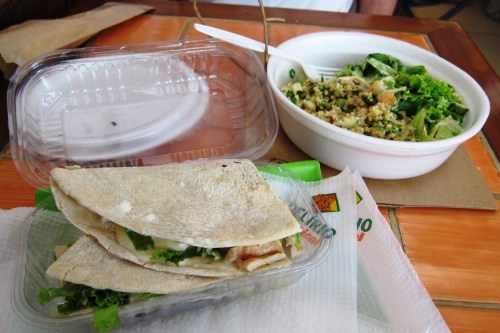
DelirioBread

There is a little area in front to sit, or a more tables on the second floor. However  most people seemed to take their food to go in little paper bags. We definitely understand why this place was so busy with the Centro office crowd during lunch. It was a nice change of pace from heavier fare and fried salgadinhos. Maybe next time we will even try to brigadeiro cone!

Leave a comment

Filed under Reviews

Sweets for Australia Day: Milo Cheesecake

AustraliaHappy Australia Day! We love celebrating national holidays with the appropriate food, and look at how festive this nice Australian Milo cheesecake with chocolate crackle crust looks. Milo is a malt and chocolate powdered drink (similar to Ovaltine, but definitely different). We first tried Milo in Singapore, and it enjoys popularity all over the world, but we were surprised to hear it originated in Australia in the 1930s.

Australian Milo Cheesecake

Australian Milo Cheesecake from Raspberri Cupcakes

Leave a comment

Filed under Cheese, Holidays, World Eats

Pastry Post-Doc in Brazil: Cuscuz

brazilWe were intrigued when we saw a food cart on our street in Rio selling “Cuscuz.” Cous cous, as it is known in English, is very popular in Brazil, due to the large amount of middle-eastern immigrants to Brazil. There are restaurants selling savory cuscuz throughout Brazil (especially in São Paulo) but this version with the same name is something different. More precisely, it is known as cuscuz Carioca or cuscuz tapioca. This sweet version consists of sticky tapioca, condensed milk and a topping of shaved coconut. For a mere R$ 1.50  (about $0.75), you get a little plastic box of cuscuz to go. Now, it is not the most attractive dish, but it sure is tasty, and perfect for an afternoon snack. Fans of tapioca pudding will go gaga for this Brazilian treat, one of the most emblematic Carioca street dishes. Here is an exceedingly simple recipe for cuscuz tapioca in Portuguese. Though you can make it at home, if you are in Rio you will never have to!

Cuscuz

Cuscuz from Rio de Janeiro

Leave a comment

Filed under Pastry Post-Poc

Ethiopia: Abyssinia Restaurant

Abyssina Restaurant
5842 North Broadway
Chicago, IL

ethiopian

We swear by Ethiopian Diamond. The restaurant just next door to Abyssinia has, for years, been our go-to Ethiopian place in the city. Its ample portions and wonderful spices never disappointed, and their tasty and delightfully spongy injera converted even some of our injera-hating friends. But, on a whim with friend, we decided to try Abyssinia. And when the meal was finished, we looked across the table at each other, and M said it: “This may sound sacrilegious. But this place might be better than Ethiopian Diamond.”

AbyssinaFood

The menu at Ethiopian Diamond is slightly larger, but Abyssinia had all of the favorites as well as a few new other things to try. M went adventurous and had the gored gored, meat cubes, served rare and covered in spices. Health risks aside, raw meat has never tasted so good: a delectable and unique texture paired with a rich spice blend. Good as they were, the Ethiopian classic doro tibs stole the show: first-class chicken cuts, with sprigs of rosemary and green peppers, the flavors were much fuller and bolder than at Ethiopian Diamond, easily the best we’ve ever had. We also got stewed spinach, and a salad, which had better dressing than at Ethiopian Diamond. We finished off the meal with a full pot of Ethiopian coffee, which was excellent.

AbyssiniaTea

Overall, Abyssinia had slightly smaller portions (for the same price) than ED, and the injera was not as impressive (and at an Ethiopian place, it needs to be). But with that said, its flavors were more developed, bolder, and deeper than at ED, and when push comes to shove, we may have a new go-to Ethiopian place in Chicago.

Leave a comment

Filed under Coffee, Reviews

Pastry Post-Doc in Brazil: Biscoitos Globo

brazil

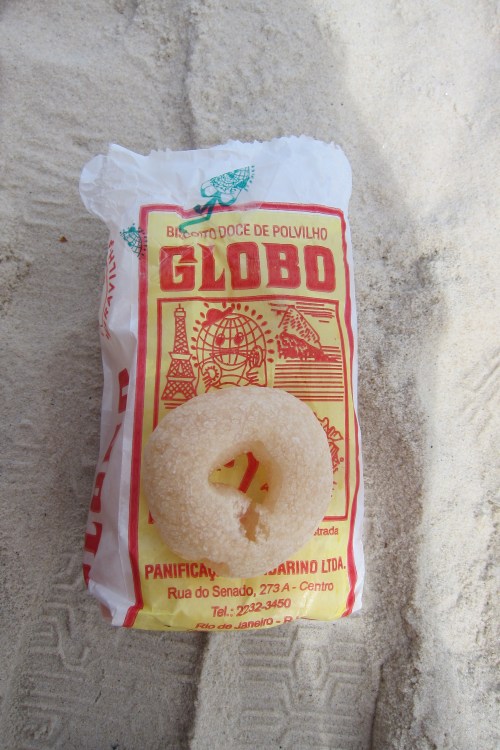
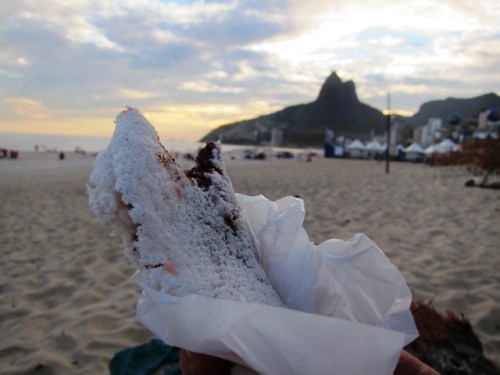
Having just arrived in Rio, we decided to spend our first day relaxing like any good carioca would: on the beach! We slept in and spent the second half the day sitting on Copacabana beach in celebration of M’s birthday. Fans of the blog will have already read our previous post on How to Enjoy a Brazilian Beach, and thus be in the know about lounging around in this most relaxing of full-service food establishments. True to form, just after we bought our chairs and umbrella, streams of vendor began sauntering by (though we noted that there is perhaps more bric a brac for sale in Rio, and less food, as seen in Salvador). As always, the beach did not disappoint, and we were offered, ice cream, popsicles, roast peanuts, soda, cangas, and many other offerings. We were waiting, however, for a bag of Biscoitos Globo – a light, doughnut-shaped snack that have become a Brazilian beach icon, especially in Rio de Janeiro.

IMG_7007

You can imagine our annoyance when the first biscoitos seller came by and stopped short of our stall before turning around; we had to wait another frustrating 20 minutes (under the sun watching the waves – note the sarcasm) for the second Biscoitos Globo to come by. We ordered a pack of biscoitos doce (“sweet”), for R$3 (about $1.50) which come in a red bag, as opposed to the green-bagged salgado (“salty”) variety. Having never had them before, we think they are a fairly unique treat: a light cookie, ring-shaped, crispy but soft, made from corn flour, and unlike many other Brazilian cookies, they are not overly sweet. The texture is extremely light and airy – almost like an un-cheesy Cheetos. The best part for us: their retro packaging with a distinctive globe mascot. We feel like he could be our mascot as well!

Leave a comment

Filed under Pastry Post-Poc

The Pastry Post Doc Goes to Brazil

brazilWe are in Brazil! The second half, or should I say, the second two-thirds of our trip has begun. We are excited to be back in Brazil, a country that likes sweets and pastries as much as Portugal, but also has the benefit on many unique fruits, açaí bowls and amazing cosmopolitan dishes that derive from Native Brazilian, African, Middle Eastern and European influences. We are just getting settled in – and our Internet doesn’t seem to work in the rain (which Rio de Janeiro has been getting a lot of) so stay tuned.

Leave a comment

Filed under Note, Pastry Post-Poc

On Our Way to Rio

brazilAs you see this post we are currently en route to Rio de Janeiro, Brazil! We will be staying in Brazil until June, and we are very excited about all of the food possibilities. We only stayed their a brief time last year, so we hope that our 2.5 month stay will get us better acquainted with the city (after that it is off to Salvador da Bahia). We are looking forward to visiting our favorite cafe, Confeitaria Columbo, as well as finding our go-to açaí spot. If you have any suggestions for places to eat in Rio de Janeiro please let us know!

Confeitaria Colombo

Confeitaria Colombo, Rio de Janeiro

Leave a comment

Filed under Note

Brazil: Brazilian Bowl

Brazilian Bowl
3204 N. Broadway
Chicago, IL

It seems appropriate that for our last post before leaving for Brazil we post about one of the newest Brazilian spots in Chicago, and one which has quickly become one of our favorites. So you may know that we have long been on the hunt for Acai away from Brazil. This hunt led us to Brazilian bowl, which opened up last summer in a convenient Lakeview location. Brazilian Bowl is a brightly-colored restaurant, whose focal point is a large ice cream counter and a “Brazil Bowl” assembly area (more on that later).

BrazilBowlInterior

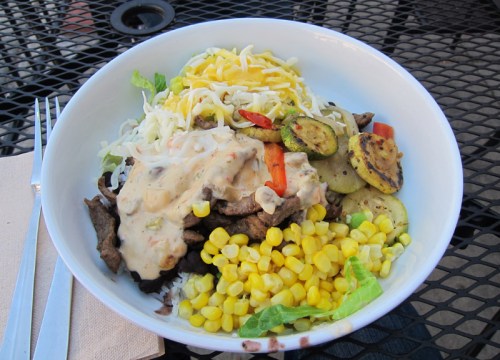
Much like Feel Rio in Lisbon, Brazil Bowl is bringing to Lanchonete to the Brazilian diaspora. The focal point is the “Brazilian Bowl” which is an assemble-yourself bowl of your choice of meat over rice, and with a wide variety of Brazilian-inspired toppings. ($6.95 for Steak, Turkey, Pork, or Sausage; Vegetarian is only $6.15). For main courses, Brazilian Bowl also has typical Brazilian classics like Feijoada (7.95) and a Bahian-inspired shrimp dish with yuca, dende oil and tomatoes ($8.95). M piled his Brazilian bowl high with fixings: opting for the steak, he paired it with a veggies, corn, lettuce, cheese, and a variety of spicy sauces. While the result was filling and tasty, it was not exactly brazilian. We doubt you will ever find the dish anywhere in Brazil. Perhaps Brazilian bowl is to Brazilian as Chipotle is to Mexican food? But at the same time, a tasty and filling inexpensive lunch spot is not a bad thing, especially with this variety of flavor options!

BrazilianBowl

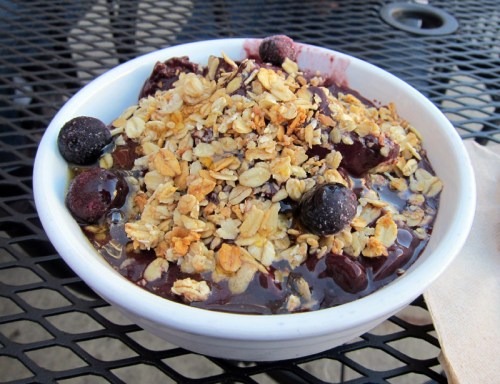
However, the real star of Brazilian bowl were the fruit options, including our favorite, the açaí bowl. There were two options – $6.95 a piece for either acai/blueberry/agave, or acai/banana/honey. The açaí was delicious, and definitely one of our favorite in Chicago – creamy and with a good amount of toppings. It transported us directly back to Bahia. You can also get smoothies for $3.75 with creative Rio-based names like Copacabana ( strawberry, banana and apple juice) and the Ipanema (Mango, banana, kale and coconut milk).

BrazilBowlAcai

In terms of salgados (salty snacks) there are Brazilian Empanadas, Empadas, with a variety of fillings ($2.25) as well as the chicken-filled coxinhas ($2.25). We were also delighted to sample some pães de queijo (2 for $.195, 5 for $2.95, 10 for $5.49). We make a pact to try these at every Brazilian restaurant, but we are sad to say that  these pães were almost a little too cheesy – who would have thought wed ever say that? Mainly because it threw off the typical tapioca-to-cheese ratio. Next time we will be sure to sample some of the exotically-flavored gelato in some unusual flavors ( such as açaí- yum, or goat cheese). For the açaí bowl alone, we will definitely be back to Brazilian Bowl, post-Brazil.

Leave a comment

Filed under Reviews

Turkey: Pide at Karadeniz in Istanbul

Karadeniz
Haci Tahsinbey Sokak, Sultanahmet
(Off of Divan Yolu)
Istanbul, Turkey

turkeyWhen lookign for cheap eats in Istanbul, we got this recommendation from the lovely blog Istanbul Eats. Karedeniz is located on one of the many pedestrian side-streets off of the major thoroughfare Divan Yolu, right at the Sultanahmet tram stop. There are picturesque outdoor tables, though as in other places in Istanbul, you may be joined by a feline friend looking for a few scraps (we sure were!). The specialty of Karedeniz is Pide – though they also sell other Turkish favorites like kebabs.

Karedeniz

Pide is sometimes called “Turkish Pizza” but is in reality a canoe shaped piece of flat leavened dough with a variety of toppings. Pide are not usually a street food, and are often sold in Pide restaurants called “pideci.” This was our first experience with Pide in Turkey, and it was one food we were really looking forward to. The one we got below was cheese – and it was excellent, simple lunch fare, not to mention, easy on the wallet. Other pide varieties available included various combinations of meat and vegetables. M got a generous salad topped with a chicken kebab, which was flavorful and fresh off the grill. If you are in the Sultanahmet, Karedeniz is a great place for great food at a good price. Don’t be lured into the tourist traps!

Pide

Leave a comment

Filed under Reviews

The Tarte Tropézienne, Pastry of the Stars

franceA pastry created for Brigitte Bardot – sounds decadent! The duly sumptuous Tarte Tropézienne, from the French riviera town of Saint-Tropez, really does have a glamorous origin story linked with the star. Tarte Tropézienne is a brioche-like cake filled with vanilla pastry cream and topped with pearl/rock sugar. I like the idea of making a Tarte Tropézienne – it is basically a giant brioche roll, sliced open and filled with cream. The confection was developed in Saint-Tropez in the 1950s by a local pastry-maker of Polish origin, Alexandre Micka. When the 1956 film “And God Created Women,” the film with the breakout role that made Brigitte Bardot a star, was being filmed in Saint-Tropez, director Roger Vadim hired Micka as a caterer for the film. The cast and crew, including Brigitte Bardot, fell in love with the cake, and according to myth, it was Bardot suggested the naming the cake for the town. Micka did just that, and the rest is history. The Tarte is still popular all over the French Riviera, evoking movie star glamour of days past.

Brigitte Bardot

…and God Created Tarte Tropézienne

Leave a comment

Filed under Pastry Post-Poc, World Eats

Portuguese Pastry Post-Doc: Croissants at Pastelaria Benard

While the French are known for impossibly delicate and flaky pastries, the Portuguese prefer denser eggy and sugary cakes. The Portuguese take on the croissant is much the same. We heard that Pastelaria Benard had a reputation for the best croissants in Lisbon we were eager to try them (though we did not know what difference a Portuguese croissant would have in store for us). Pastelaria Benard (Rua Garret 104) is located right off of Largo Camões in the heart of Lisbon’s atmospheric Bairro Alto, right next to A Brasileira, one of Lisbon’s most internationally famous cafes. Benard, though less touristy, is just as antique, and practically exudes history.

 Croissants at Pastelaria Benard

In the old Pastelaria there is an entire shelf of croissants that are piping hot – fresh out of the oven – so we figured we were in for a treat. However, we were a little confused upon first bite. Yes, these so-called croissants were quite good, but nothing like the classic French croissant we have come to know and love. In this rendition, the dough is cakey and rich like a brioche, not flaky at all! At first we thought we perhaps ordered wrong – but they had given us two straight off of the “croissant shelf.” Though the alleged “croissant” was good in its own right, we are surprised the Portuguese have not given this confection another name, especially since the Portuguese have such creative names for their sweets. However, we have also seen French-style croissants in Lisbon also being called by the croissant moniker (or at least they appeared flakier than this). Very confusing! So be warned, pastry-philes looking for a croissant in Lisbon – you could be ordering a different treat altogether!

Leave a comment

Filed under Pastry Post-Poc

Portuguese Pastry Post-Doc: Fradinho

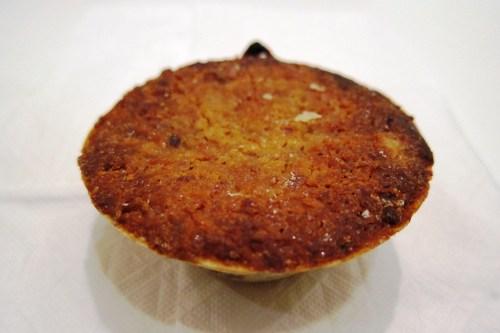
Fradinho, which means “little friar,” is a small traditional Portuguese tart filled with sweetened white beans, almonds and egg custard. In Portuguese feijãofradinho is the name for black-eyed peas, and many recipes calling for “fradinhos” are calling for this sort of bean. We think it is pretty inventive to have a typically savory item like white beans in a sweet dish. If you did not know the filling was bean-based it would not be apparent, and the fradinho has more of an overall nutty flavor. The most classic place to get a fradinho is from a cafe aptly called “Pastelaria Fradinho” in Mafra, the home city of the fradinho, right outside Lisbon.

Fradinho

A humble fradinho

2 Comments

Filed under Pastry Post-Poc

Holiday Eats: Rosca de Reyes from Mexico

Mexico FlagThe tradition of the “King Cake” spans continents, and is tied to the holiday of Epiphany celebrated on the 6th of January. One variety of sweet celebrating this day is the Bolo Rei of Portugal, and another variety is Rosca de Reyes from Mexico, a ring of sweet bread. Epiphany is known in Mexico as Día de Los Tres Reyes Magos (Three Kings Day), lending the cake its name. Much like the other King Cake varieties, the Rosca de Reyes has a trinket inside, in this case a small porcelain (or plastic) Jesus figurine, the finder of which has to host a party on February 2nd, Candelmas. The Rosca de Reyes is more of a bread than a cake, and instead of frosting, the bread is topped with candied citrus and a bit of sugar. The size of the Rosca is dependent on the size of your party, so here is a recipe if you are expecting a crowd, or another if you would rather have more individual-sized rolls.
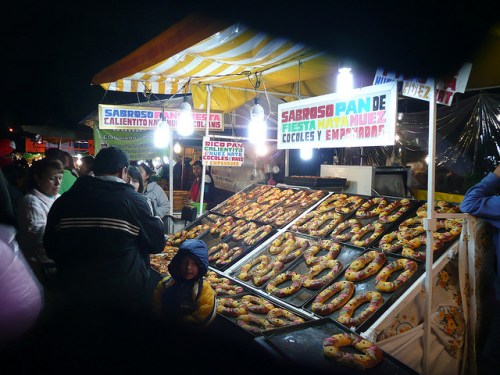
Rosca de Reyes

Rosca de Reyes for sale in Mexico City

3 Comments

Filed under Holidays

Portuguese Pastry Post-Doc: Suspiros

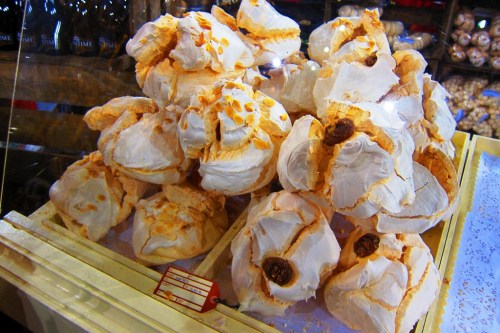
If you are a regular reader of ETW and the Pastry Post-Doc you will surely know that most Portuguese pastries are mainly composed of sugar and egg yolks. However, in a slight twist, suspiros are composed of egg whites and sugar. With these ingredients you can see that suspiros are basically meringues, though they are more artfully named as “sighs” (suspiros means sighs in both Portuguese and Spanish). You can find them in most bakeries and the grocery stores in Lisbon, ranging from tiny to almost disturbingly large. At one Christmas market in Lisbon we managed to find suspiros that were as big as a dinner plate, filled with frosting (as seen below). While, many suspiros are not additionally flavored, we like the chocolate variety (or why not try the strawberry). Suspiros are also popular throughout Latin America with some variations, like the Peruvian Suspiro a la Limeña. However, in the Dominican Republic – suspiro is a type of frosting.

GiantSuspiros

Giant Suspiros at the Campo Pequeno Christmas Market

Leave a comment

Filed under Pastry Post-Poc

Decoding the Dim Sum Menu

China flagIn the latest issue of the Lucky Peach food journal, there is an awesome guide to deciphering Dim Sum, the classic Cantonese meal where a large and diverse selection of small plates is selected from roving carts. Sometimes the sheer volume of dishes can be a bit intimidating, and if you don’t know what to order, you may feel a bit lost. Though it is especially useful for newbies, even experts may find a tip or two inside Lucky Peach’s guide.

Dim Sum in Hong Kong

Dim Sum in Hong Kong

Leave a comment

Filed under Links, World Eats

Happy New Year!

Vintage Happy New Year

[Via Van Paris]

Leave a comment

Filed under Holidays, Note

Recipes for Hogmanay, Scottish New Year!

ScotlandFlagWe have not given much coverage to Scotland on this blog (well… any coverage), so we think its time they got a little love. Apparently Scotland is quite well known for the fun and over-the-top New Year’s Celebrations, known as Hogmanay. One of the traditions of Hogmanay is “first footing” where you try to be the first person over the threshold of an house, where you then give a gift of food. Sounds good to us! Common foods given are shortbread (in its many varieties) or a fruitcake called “black bun.” Black bun is a little different than the average fruitcake since it is much richer and denser, and is then wrapped in a pastry case. People with lighter tastes may like cranachan, a type of Scottish trifle.

HogmanayEdinburgh

Hogmanay in Edinburgh by Robbie Shade

Leave a comment

Filed under Holidays, World Eats

Brazil in Portugal: Feel Rio

Feel Rio
Rua Crucifixo 108
Lisbon, Portugal

brazilWe did not set out looking for Feel Rio – it found us while we were on our way to the iconic San Justa Elevator in Lisbon. However, when did we ever refuse an açaí bowl? Feel Rio had a traditional Brazilian lanchonete snack bar menu: açaí bowls, smoothies, salgadinhos, and some sweet snacks. There are only a few tall tables around the front of the store by the window, and it seemed to be mostly a popular takeout spot. Even beyond snacks, Feel Rio seemed to be a meeting point for the Brazilian community of Brazil, and there were flyers and postings about Brazilian businesses and events in the area.

FeelRioAcai

We ordered our two favorite Brazilian snack dishes from our time in Salvador: an açaí bowl, topped with banana and granola, and a couple of pães de queijo. They made their smoothies and açaí bowls out in the open with fresh fruit, so you could definitely tell they were fresh. On the downside, the pães’ cost seemed a little steep. But to our surprise, they were excellent: a firm crust, a cheesy center, not too gluey, and warm. Potentially the best we have had outside of Brazil!  The açaí bowl, however, was more of a disappointment. It was quite sizable, and came with a topping of bananas and guarana syrup (the granola was extra). While the flavor was alright, it came out with a surprisingly grainy texture, not the milky smoothness you would expect. Perhaps too much açaí concentrate? No matter though. After our famously unsuccessful attempts at trying to recreate the açaí bowls at home, who are we to judge!

FeelRio

We liked that Feel Rio brought the lanchonete concept to Lisbon. Feel Rio is a perfect place for a snack, a light lanche or a juice when you are in the Chiado area. Though Lisbon may be a far cry from the beaches of a Guanabara bay, you can still pop in for your Carioca-style Açaí.

Leave a comment

Filed under Reviews

Holiday Eats Around the World: Stollen from Germany

germanyThough everyone is probably already overtired of holiday sweets, here is one more confection for the road (though is it really possible to be completely tired of sweets?) One of the most popular European Christmas treats is the German Stollen, a type of yeast-based fruit cake chock full of nuts, candied fruits and spices, and topped with powdered sugar. The history of Stollen is very complicated, and dates back to the 14th century, when it originated during a baking contest created by the Bishop of Nauruburg. Stollen enjoyed such an exalted place in German cuisine that a church ban on butter was lifted in the 16th century just to make the holiday cake (with some of the proceeds being used to build churches). Though Stollen is found throughout Germany and Europe, the most lauded variety is found in Dresden,  a recipe that can be found here. Dresden even has an annual festival in honor of the cake. Due to our affinity of all things miniature, also check out this recipe for Mini Stollen.

Stollen

Stollen by Joana Petrova

1 Comment

Filed under Holidays, Pastry Post-Poc

Portuguese Pastry Post-Doc: Folhada / Pasteis de Tentúgal

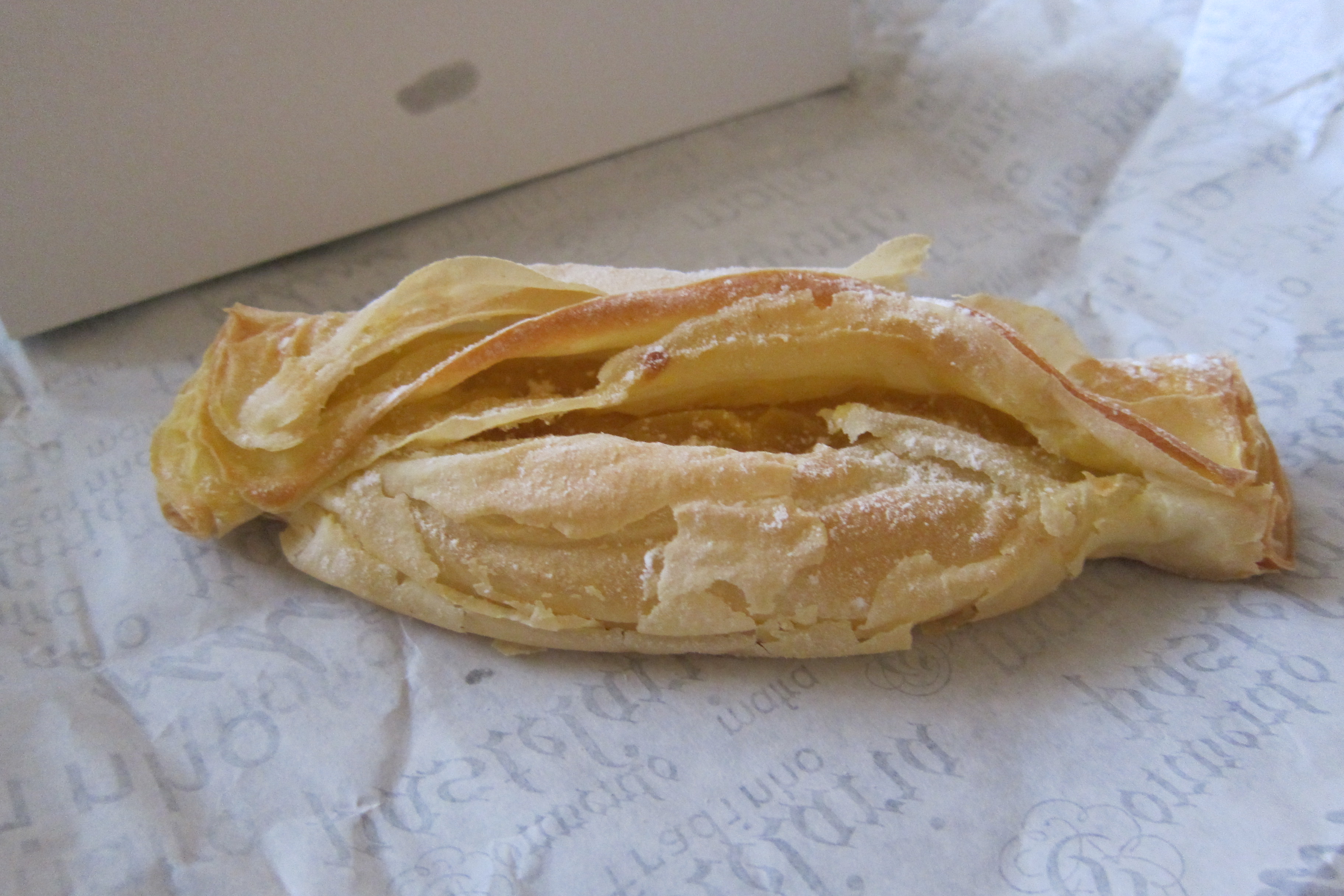
 One lesser-known, but important, pastry in the Portuguese repertoire is the regional sweet called the Folhada de Tentúgal. The Folhada de Tentúgal is a puff pastry filled with ovos moles – the iconic Portuguese egg cream. Its origin is unknown, though it is local to the Tentúgal area, in the Coimbra district of Portugal, an area apparently very well known for their iconic Convent Sweets. Folhadas mean “puffs” in Portuguese, and this refers to the many layers of the puff pastry folded over the ovos moles to form the pastry packet. They are also known as Pasteis de Tentúgal, and we found many more references for them under that name. David Leite has a history of the sweet, as well as the tale of its modern-day revival. Here is a recipe in English. The treat was even a finalist for the “7 Gastronomical Wonders of Portugal” contest (losing out to the Pastel de Nata).

Folhada / Pasteis de Tentúgal

Folhada / Pasteis de Tentúgal from Fradinho in Mafra, Portugal

Leave a comment

Filed under Pastry Post-Poc