Italy: Eating the food Markets and Shops of Bologna

Bologna’s nickname is “The Fat” and we certainly know why. Bologna is not only full of wonderful restaurants, but exceptional food markets and specialty shops, crowding on nearly every corner. We have truly never before seen such varied and high-quality food within such a small area. We only had a day in Bologna, but we definitely made the most of Bologna’s food in that single day – come join us on our tour.

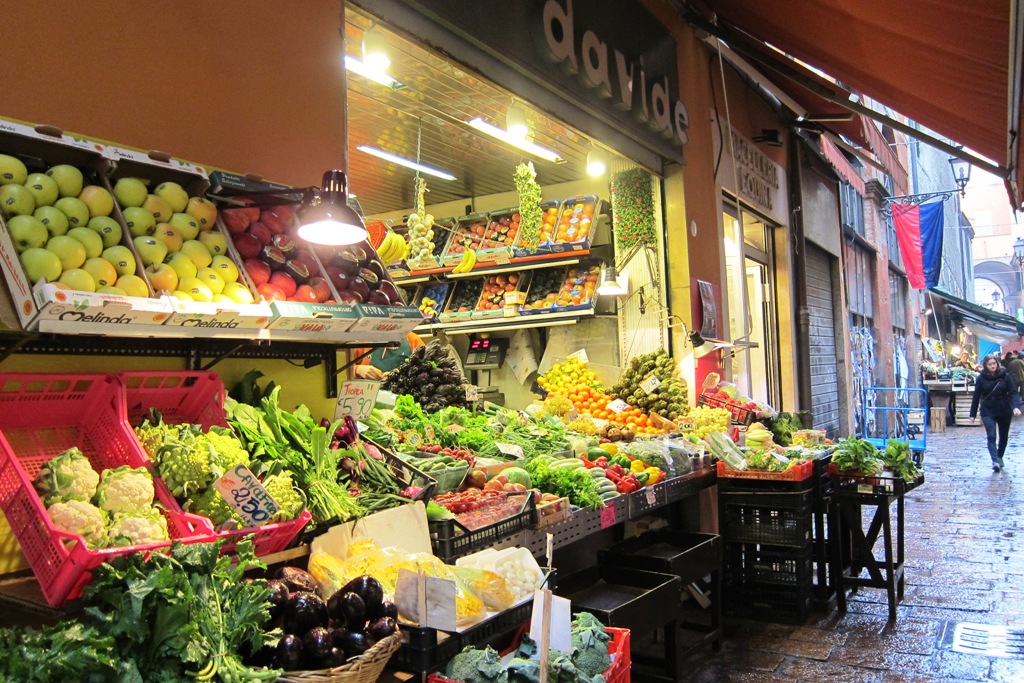
After a highly successful meal at All’Osteria Bottega, we headed north into the center of town. We started our tour at the traditional green market, Mercato delle’erbe (Via Ugo Bassi, 23). This old-school market is housed in a historical covered market building, and is considered the local place to get fresh food. It is a little bit off the tourist track (and is closed around lunchtime), but it is worth seeking out. The array of foods and veggies available at this market are astounding: the freshest herbs, every variety of tomato, romanesco broccoli, and a wide array of Sicilian citrus. Along the perimeter of the market are meat and cheese shops ready to sell accouterments for your meal.
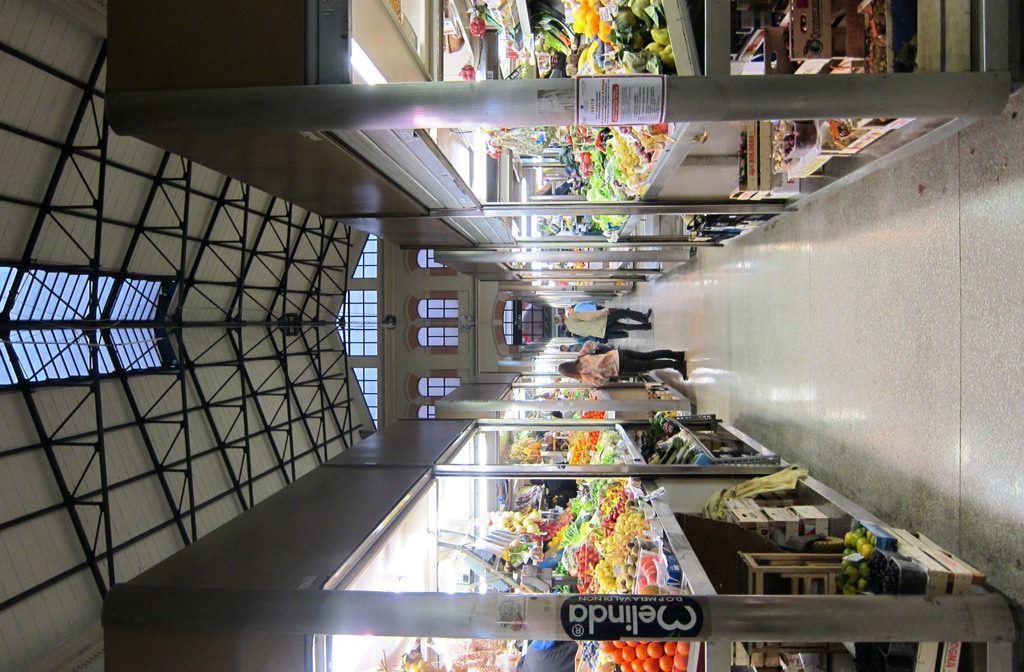
Mercato dell’Erbe

Next we headed to the area just off of the central historical square in Bologna, right outside of the Duomo. In places like Rome, you will want to give the food places near the touristic center a wide (and we mean WIDE) berth. However this is not so in Bologna, where amazing food is found literally in the shadow of the Duomo. Our first stop was Paolo Atti & Figli (Via Caprarie, 7) and our first food mission was Tortellini.
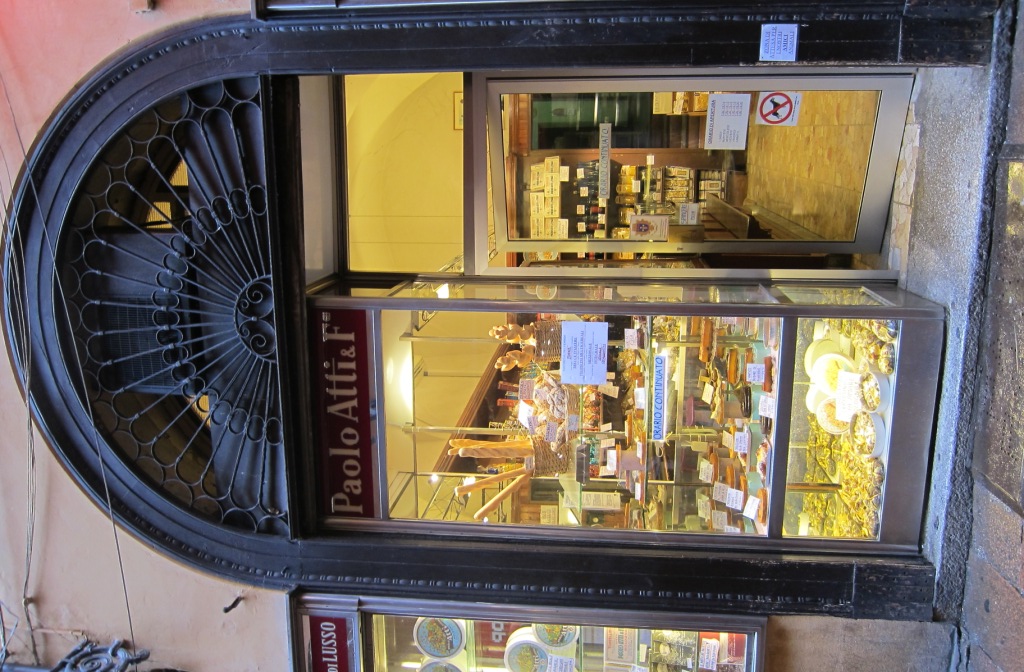
Paolo Atti & Figli

Tortellini, or their larger cousins, tortelli,  are little folded rings of pasta stuffed with meat or cheese. They are native to Bologna, where they are traditionally served in broth. After having divine tortelli at all’Osteria Bottega, we were of the mind to find some to bring home.  Fresh tortellini graced the storefronts in many food stores across Bologna- including Paolo Atti which immediately drew us in. Unfortunately, these fresh, handmade pasta morsels only had a couple days longevity. No preservatives here. Sadly this meant no tortellini could return with us to Lisbon.

Fresh tortelli for sale at Paolo Atti & Figli

However, we found a way to  take a taste of Bologna’s tortellini with us – chocolate tortellini! Chocolate tortellini held pride of place at the amazing food shop Drogheria Gilberto (Via Drapperie, 5). They came in three varieties – white, milk and dark chocolate – all of which are filled with a rich chocolate ganache. Though the prices may seem a little high, you definitely get what you pay for. We’re thinking we should have gotten a kilo more and have carefully been portioning out our remaining choco-tortellini.

Heavenly chocolate tortellini on display at Drogheria Gilberto

If you are looking for some ready-made food to make a quick meal, look no further than A. F. Tamburini (Via Caprarie 1), which had a full counter of lovely Bolognese specialties by the kilo. As you can see, along with prepared foods, there is also no shortage of meats and cheeses on offer. One great thing about Italian cheese stores is that they will vacuum seal any cheese for you. Our favorite kind of souvenir.

A. F. Tamburini

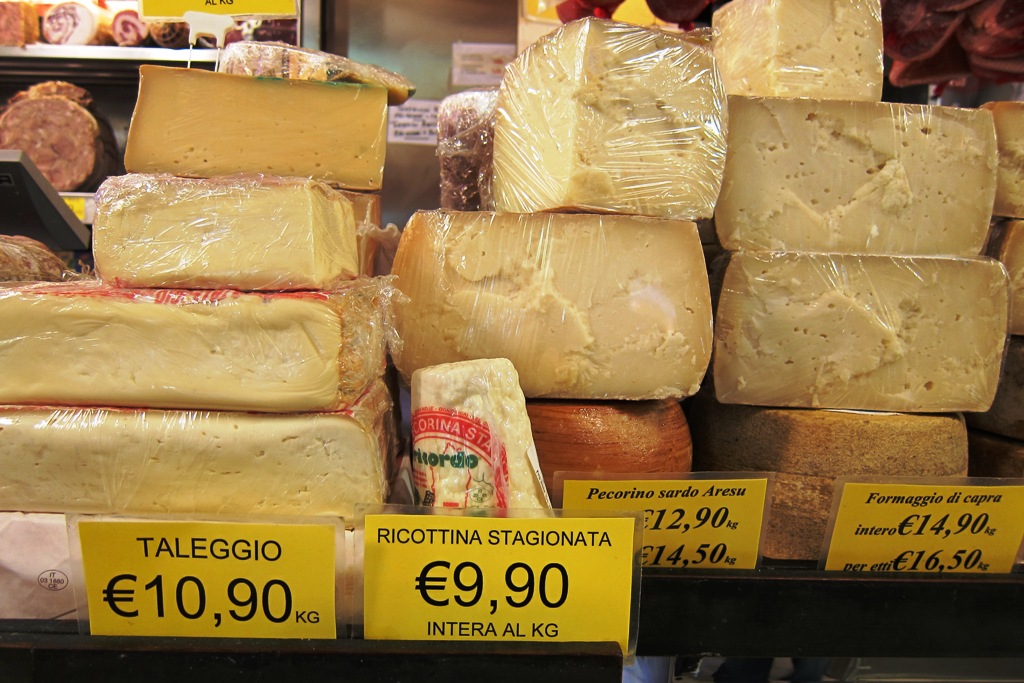
Throughout the day we had been comparing prices for cheese. We decided it was essential to get a block of DOP, 100% authentic Parmigiano-Reggiano, and we know Bologna would be our best chance (outside of Parma). When we happened upon Ceccarelli (Via Pescherie Vecchie, 8) we knew we had found our winner. They had a very friendly, helpful, and welcoming staff, along with an astounding array of cheeses (and prosciutto) at extremely reasonable prices. Also,  there was nary a tourist in sight.
This is a small sampling of the beautiful cheeses on offer at Ceccarelli. Soon enough we were on our way with a healthy wedge (1/2 kilo) of vacuum-sealed parmigiano-reggiano.
We continued our Bologna food walk right outside the doors of Ceccarelli. In the tiny old streets and back alleys along Via Drapperie, Via Pescherie Vecchie and environs, were tons of open-air greengrocers, fishmongers and countless others under canvas awnings. Despite the rain it was fun to walk along these old market streets where it seems nothing has changed for hundred of years.
We definitely fell in love with the sumptuous food of Bologna, “The Fat” and we only wish we had more time to explore the labyrinthine food wonders of this medieval city. We know we will be back someday. As final proof that Bologna takes its food seriously, check out this food stall in the Bologna airport, sending travelers off with some delicious memories.
Leave a comment

Filed under World Eats

Pastry Post-Doc: Classic Neapolitan Sfogliatelle

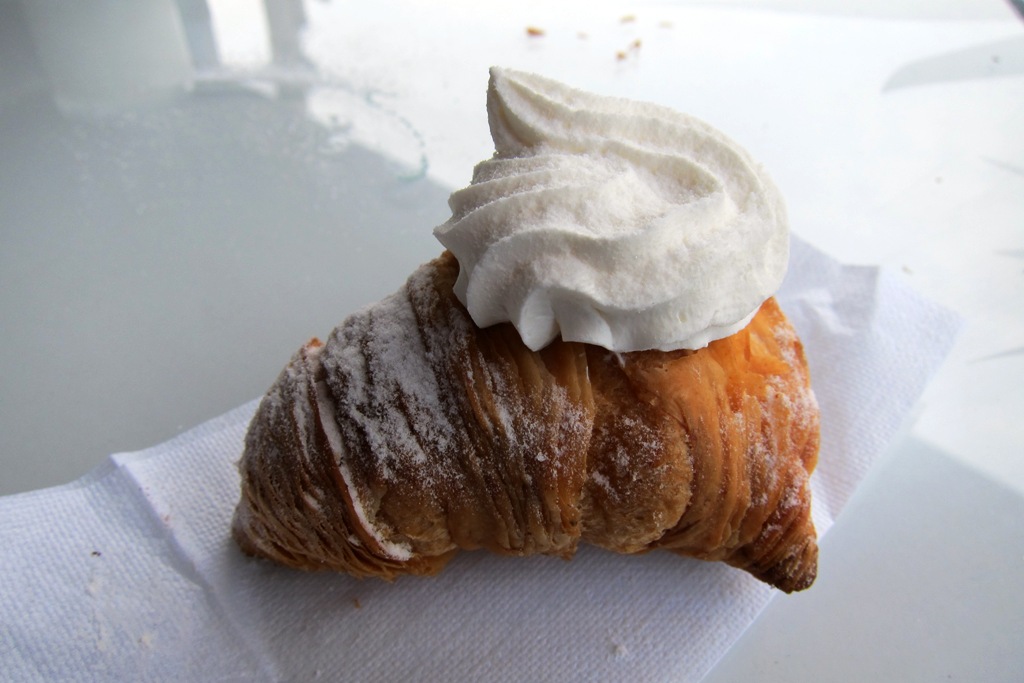
The impossibly flaky Sfogliatelle pastry is ubiquitous in Naples, and a cappuccino and a sfogliatelle quickly became my typical breakfast in Naples. Sfogliatelle is a shell-shaped fried pastry characterized by its many flaky layers (“Sfogliatelle” means many leaves or layers). A typical filling is a cream made from ricotta, semolina, eggs and citrus. While in Naples, I managed to sample ricotta versions as well as a ricotta/almond hybrid, and one with a filling of only preserved oranges. Sfogliatelle are rumored to have originated in a convent on the Amalfi coast, and later traveled to Naples. Unlike some other Italian pastries, sfogliatelle have not made their way into Chicago bakeries the way cannolis or rum baba have. However, a cousin of the sfogliatelle, the “lobster tail,” is popular in New York City Italian-American bakeries, where the ricotta filling is substituted for whipped cream.

I also especially appreciate sfogliatelle because I know there is no way I could try to make them on my own. Perhaps this is why I never got the pricey cupcake trend: anyone can make a cupcake, but certainly not everyone could make a sfogliatelle. So for my 1€ I will take sfogliatelle anytime. Due to the labor-intensive nature of making the dough layers, I am very impressed by those who attempt it on their own.  For now though, I think I will stick to seeking it out in one of Chicago’s Italian Bakeries – Palermo Bakery lists it as a specialty, LTH forum discusses other Chicago bakeries with sfogliatelle on offer.

Leave a comment

Filed under Pastry Post-Poc

Portuguese Pastry Post-Doc: Salame de Chocolate

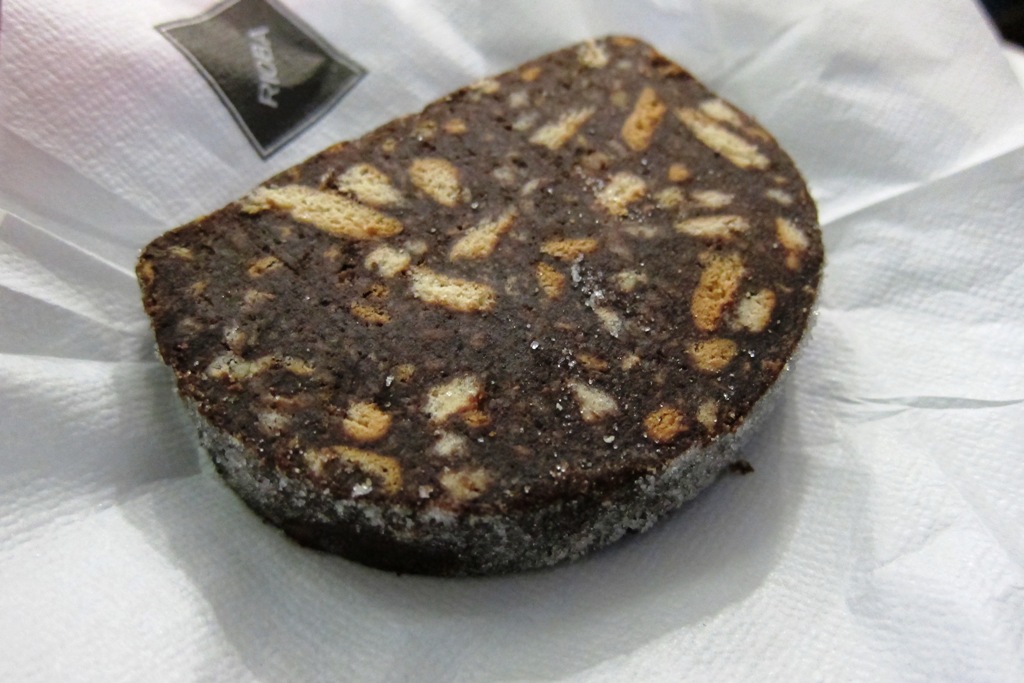
Much like Wafysugar, a watered-down version of Salame de Chocolate (“Chocolate Salami”) is found in typical Portuguese vending machines alongside staples like gum and soda. The name does truly sounds unappetizing, but despite its homely look, the dessert packed a delicious chocolate punch. Basically, chocolate salami is dark chocolate fudge filled with broken cookie pieces, and when the roll of fudge is sliced it resembles “real” salami.  M likened the taste to a chocolate doughnut, but L thought the taste was more fudgy than cakelike. However, true to Portuguese nature, it is SWEET, and relatively simple to make. As it turns out this is not a truly Portuguese dish, it is originally an Italian confection that caught on in Portugal. Though I’m sure M would prefer chouriço, my sweet tooth will take anything made of chocolate.


A Non-Vending Machine Version of Salame de Chocolate in Lisbon

1 Comment

Filed under Pastry Post-Poc

Italy: Pasta Greatness at All’Osteria Bottega

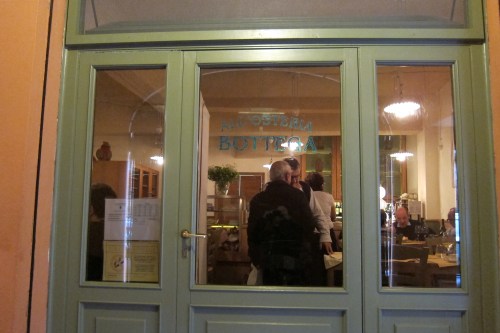
All’Osteria Bottega
51 Via Santa Caterina
Bologna, Italy

If there is an item that should be on an Italian food lover’s bucket list, it should be eating bolognese sauce in Bologna. Delicately cured bits of meat rounded together in an exquisitely, simply complex sauce, Bolognese (or just ragu, as the locals would call it) symbolizes everything that we love about Italian cooking: high quality, lovingly-prepared ingredients that, when treated well, speak for themselves. Such is the case at All’Osteria Bottega, a tiny restaurant outside of Bologna’s historic center where we went to check that elusive item off M’s bucket list, and sample some other winning dishes in the process.

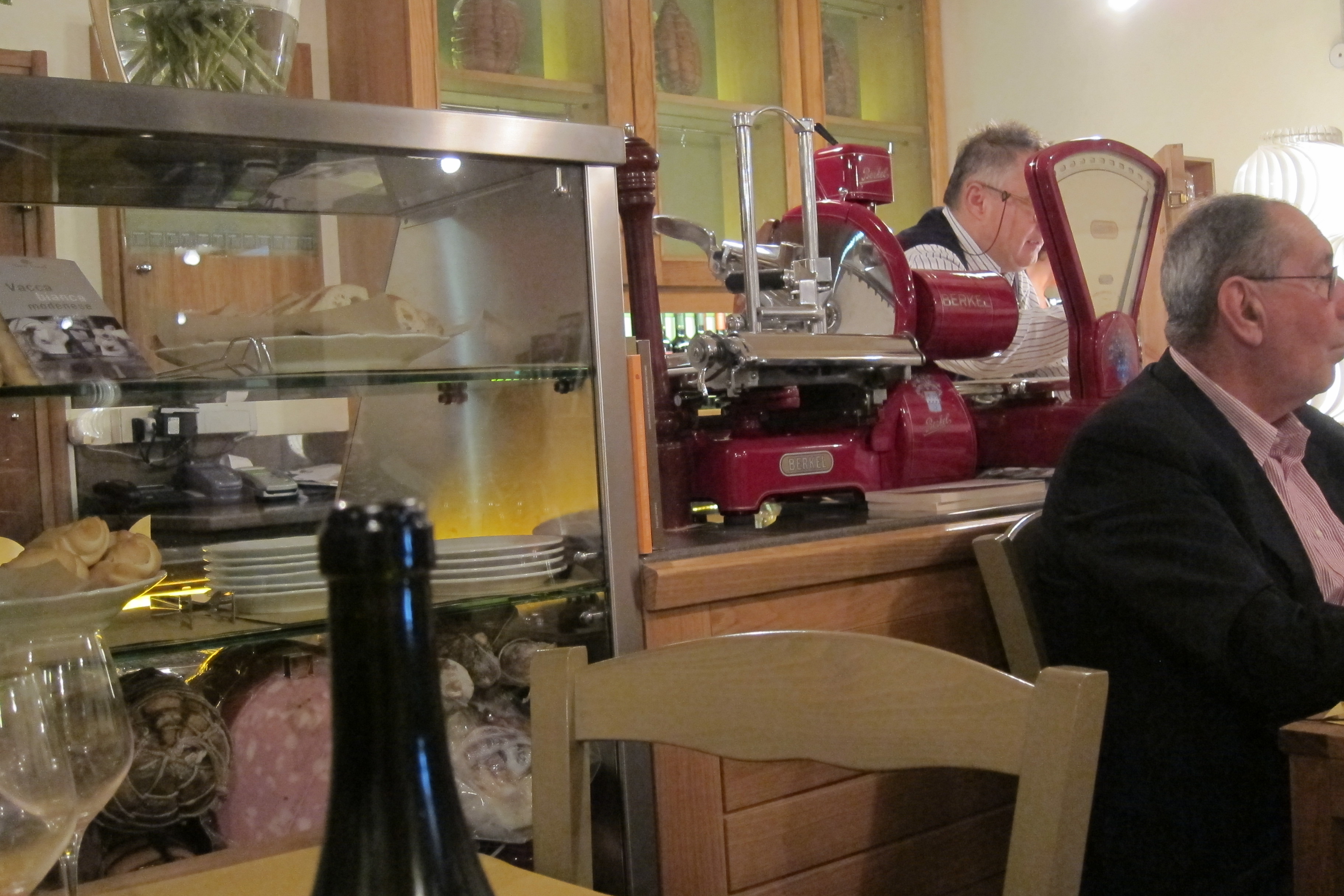
If you are lucky enough to get one of the 20 seats in All’Osteria Bottega’s tiny seating room, you’ll be greeted by one of the pleasant waitstaff or the delightfully gregarious owner, who will fly between you and the other patrons while engaging in lively chat the whole time. If only we spoke Italian! We could have made a new culinary friend. Not that we aren’t up for making friends with the other inanimate objects in the place: legs of prosciutto, salame, mortadella, cheeses galore, and the giant red meat slicer that dominates the back counter. We wanted to take it home, along with a prosciutto leg or two.

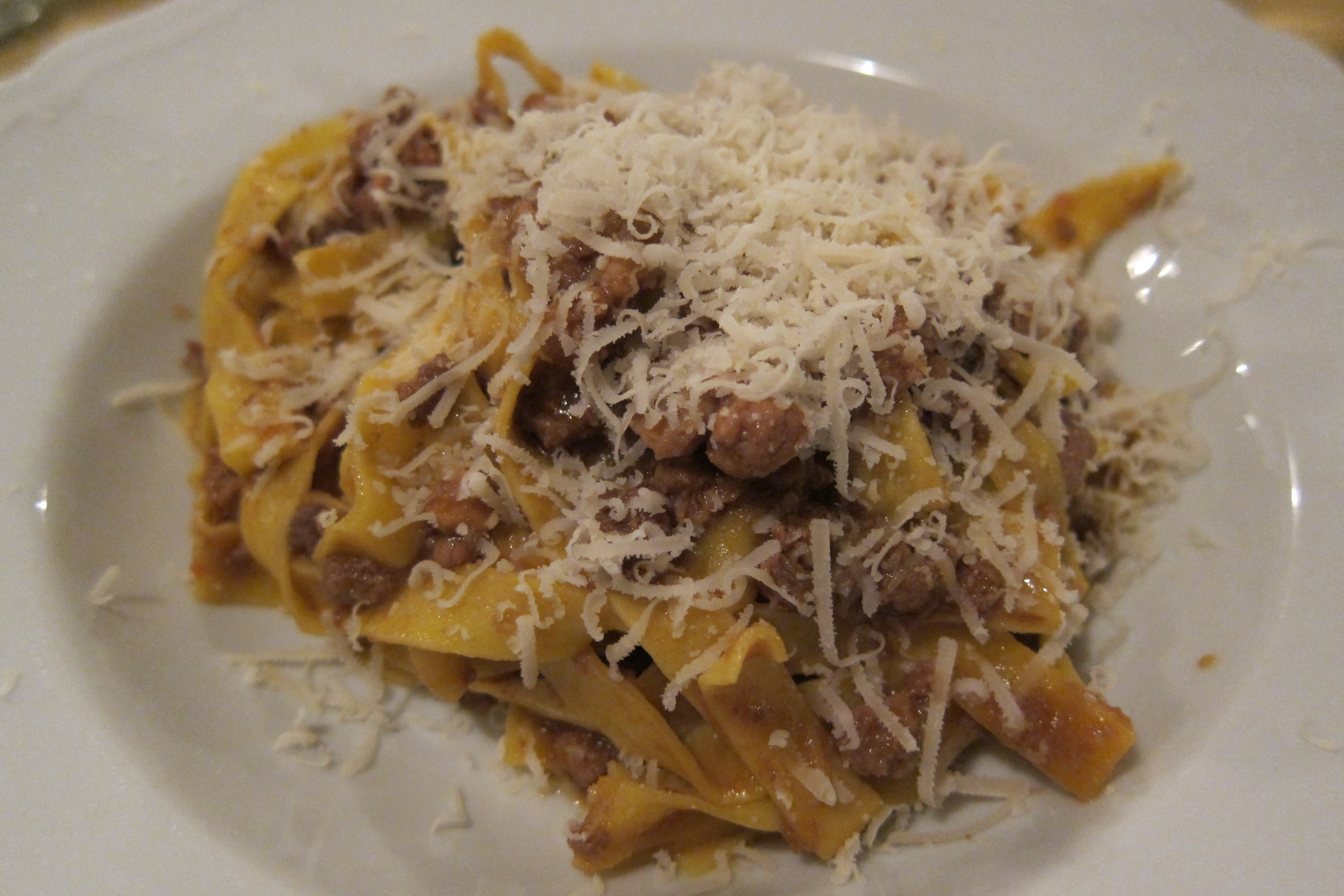
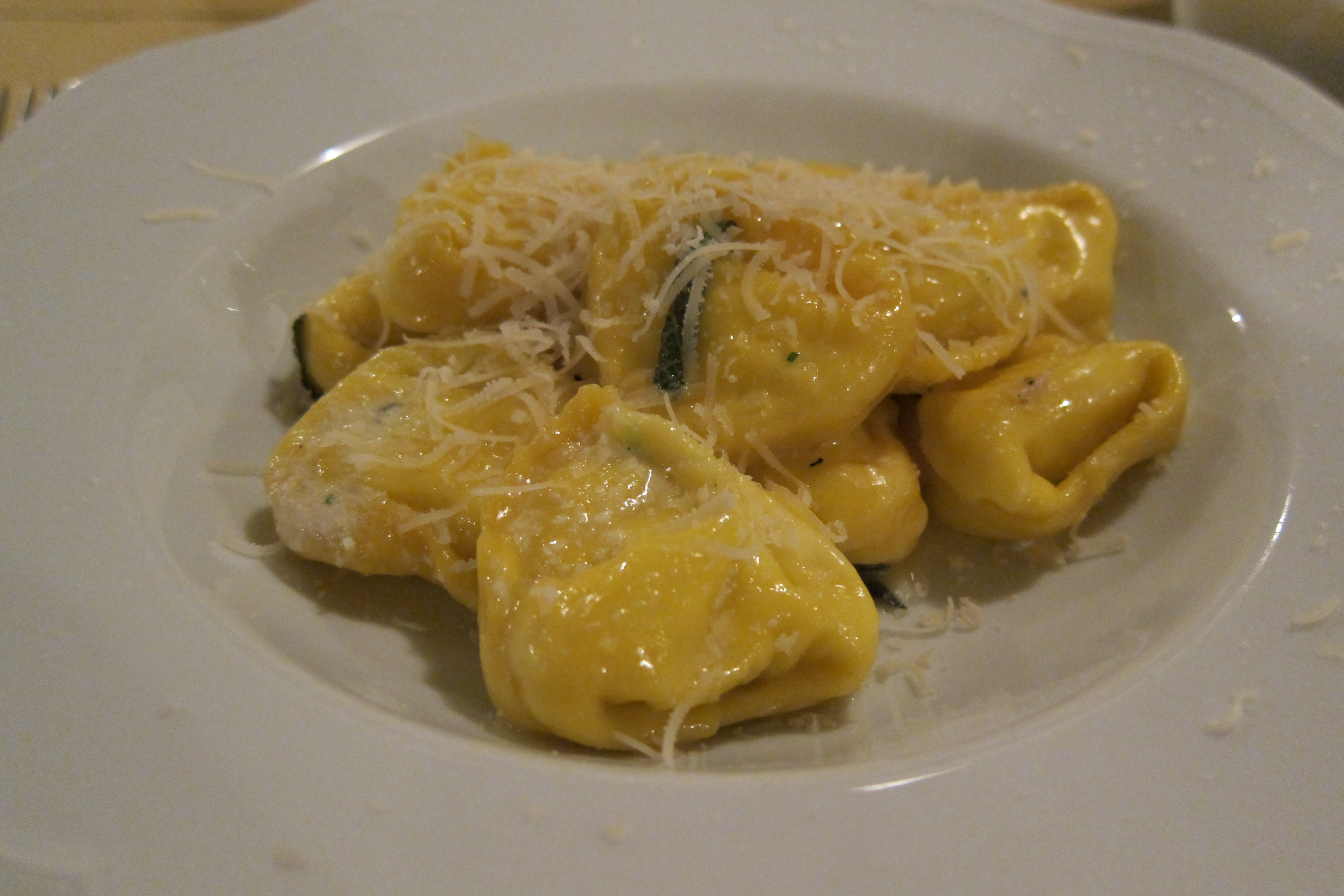
Italians always seem to know how to enjoy a meal. The dress classy for food outings, and they make long affairs of it, ordering plate after plate of prosciutto, cheese, pasta, a main course, wine, dessert, and a coffee. But, unfortunately, we were on a flight layover and in a time crunch: still in our t-shirts and polos (under dressed by Italian standards), we stuck to our main goal: the pasta. M ordered the tagliatelle with bolognese ragu, and L ordered the surprise winner of the evening: tortelli, stuffed with ricotta cheese and served in a light sage cream sauce.

Tagliatelle with ragu bolognese, topped with parmiggiano-reggiano.

This, right here, could have been made by the world’s greatest grandmother, out of the pot she had been using since the ill-fated Mussolini administration. And maybe it was. The mistake so many people make with bolognese ragu is that they make it into too much of a sauce – it slathers over the pasta, dominating it, and the flavors in the meat get bogged down in oil that simply isn’t needed. At Bottega, there is no oil, no liquid in this sauce. Just a series of different meat cuts, ground down to perfection and served delicately integrated into the tagliatelle. You can taste each and every morsel of flavor, all the different textures that went into the ragu, and it just lets you savor each bite that much more. Yet while the sauce was brilliant, the pasta was actually a bit of a disappointment: maybe a thirty seconds or so undercooked, a little less al dente would have made all the difference and really let the sauce (in addition to the parmigiano-reggiano, grated in person!) absolutely shine.

Ricotta tortelli in a sage cream sauce

The same mild criticism of the pasta could not be said for L’s dish, tortelli stuffed with ricotta and served in sage cream sauce. “Little clouds of angelic cheesy goodness” she calls them. Ricotta can come out, especially in tortelli, far too grainy – a product of poor cooking techniques or not using fresh cheese. Not the case here: the oh-so smooth tortelli were stuffed with a ricotta that was extremely smooth; lighter and fluffier than any other ricotta cheese filling she had ever tasted. The sage cream sauce was a perfect complement, providing just the right flavor contrast and letting the great ricotta and its texture steal the show.

A brilliant meal complete for only 30 euro, and then it was off to the center of Bologna to explore an area of food stores founded nearly one thousand years ago that many consider Italy’s best.

2 Comments

Filed under Reviews

The Pastry Post Doc’s Trip to Italy

We have just returned from our trip to Italy, where we enjoyed a great amount of delicious pastries, which I am going to consider as a comparative case study for my Portuguese Pastry Post-Doc. While Portugal is brilliant at pastries,  there is no match for the sheer variety of Italian desserts. There is certainly more chocolate used in Italy than in Portugal (which we appreciate), and we found no fault with all of the flawless coffee drinks. Though I have become partial to the Portuguese Galão (Cafe Au Lait in a glass) in Lisbon it is not as satisfying as a real Italian cappuccino. Stay tuned this week for some tasty Italian updates from Bologna, Naples and Venice.

Enjoying a Cappuccino at Mariella’s in Naples

Leave a comment

Filed under Note

Portuguese Pastry Post-Doc: Tease

Tease
Rua do Norte, 31-33 (Has since moved to another location in Bairro Alto – Rua Nova da Piedade 16
1200-298)
Lisbon, Portugal

While the bakery scene in Lisbon may be dominated by classic cafes with gilded mirrors and eggy pastries, there is another breed of cafe cropping up in trendier areas of Lisbon, one more in line with contemporary culinary trends and tastes. One such shop is Tease, Lisbon’s go-to spot for cupcakes. Tease is located in the Chiado neighborhood of Lisbon, home to many of Lisbon’s newest clubs.

Tease is the brainchild of architect Sónia Millard and you can tell that every detail has been carefully considered. The interior of Tease is eclectic, with a mishmash of velvet armchairs, antique china and cool wall art. The glass bakery case was full of cupcakes, and there was also a variety of other baked goods and coffee drinks on offer.  Like many of the newer cafes in Lisbon, Tease also offers a complete brunch and afternoon tea. However, the main reason to visit Tease is for the cupcakes. Each large cupcake was 2.40€, and miniature cupcakes are 1.00€.

The day we visited, the cupcake assortment included red velvet, vanilla, fresh strawberry, cookies and cream, lemon poppyseed, among others. We ordered a cookies and cream cupcake, chocolate cake, which came topped with cookies and cream icing and an oreo. We were not expecting much (we are not too into cupcake bakeries as a rule) – but the cupcake was actually quite delicious. We loved the eclectic decor of Tease, the friendly service and the cute outdoor seating area. We would definitely recommend Tease to visitors and Lisboetas alike who are maxed-out on Pasteis de Nata.

Leave a comment

Filed under Pastry Post-Poc, Tea

Panellets for La Castanyada – All Saints’ Day in Catalonia

Panellets for All Saint’s Day – by Xaf

In the Catalonia region of Spain, All Saints’ Day (called Dia de Tots Sants in Catalan), is celebrated as La Castanyada. La Castanyada, true to the inclusion of chestnut in the name (castanyas means chestnuts), is celebrated in Catalonia by roasting and eating chestnuts and having a festive meal to celebrate the autumn season and honor ancestors that passed. One of the typical foods for La Castanyada are Panellets: round almond and potato cookies covered in pine nuts (who would have thought of that combination?). For more information on how to make panellets for yourself – check out this recipe.

1 Comment

Filed under Holidays, World Eats

Pão por Deus: “Trick or Treating” on All Saints Day in Lisbon

Trick or Treat? – By Chris Devers

They don’t have trick-or-treating on Halloween in Lisbon, but there is a similar tradition that occurs on All Saints Day, November 1st, called  Pão-por-Deus. Instead of asking “Trick or Treat” Portuguese children go door to door asking, “Ó tia dá bolinho!?”(Originally – “Ó tia dá Pão por Deus?”) Literally – does auntie have any cookies? Traditionally the children would get bread from the neighbors and shop owners they visited, though it is now sometimes substituted for cookies, change or candies. This also leads to the other name for the holiday, “Dia de Bolinho.” Kids collect goodies in special drawstring bags, saquinhos, that are often decorated with embroidery or patches. Unlike Halloween, children go asking for Pão por Deus before noon (no costumes are involved, either).

November 1st, in addition to being All Saints Day, is also particularly known in Lisbon as the day of the destructive  1755 earthquake. This particular event is seen as triggering the Pão por Deus tradition, as the city was  devastated and people had to go asking for food.  The first Pão por Deus was held the following year, and continues today, though there is increasing influence form “Halloween”-type traditions. The holiday is most popular around Lisbon, but has also expanded to Brazil.

1 Comment

Filed under Holidays, World Eats

Portuguese Pastry Post-Doc: Língua de gato

 One thing that makes a Post Doc in Portuguese Pastries difficult, but intriguing, is that most pastries are not labeled in Portuguese pastry cases, so you are always in for a bit of a surprise. Getting an assortment of sweets often involves a lot of pointing and asking “what is this called?” Case in point, what we dubbed “flat madeleines” at Cafe Versailles were in fact properly called Linguas-de-gato “Cat’s tongues”). Still, they basically tasted like a flat, buttery madeleine tea cake. The characteristic cat tongue shape is achieved by piping the batter onto a cookie sheet. Though homemade cats tongue cookies are usually simple ovals, the store-bought versions usually have more of figure-eight shape. There is also a chocolate with a cat tongue shape that goes by the same name, which is popular in Brazil.

The “cat tongue cookie” is also popular in France and Spain, as well as Latin America, where the cookie is known variously as “Langues de chat” or “Lenguas de gato.” The exact origins of the cookie are unclear, with Spain laying claim to them, and others crediting the French ladyfinger cookie as a predecessor. Despite their popularity in Portugal, they likely did not originate here. This simple recipe comes from Finland, showing the near-universal appeal of the cat tongue cookie.

Leave a comment

Filed under Pastry Post-Poc

Foods to Celebrate Dia De Los Muertos

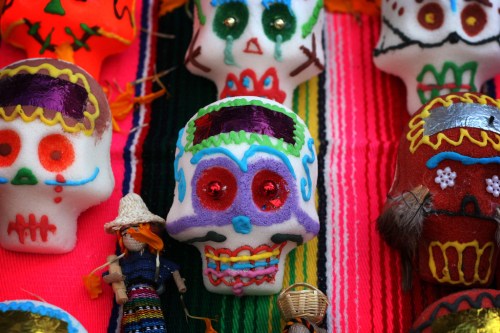
Sugar Skulls for Dia de los Muertos in California – by Gwen

Feliz Dia De Los Muertos! Happy Dia de Los Muertos! Looking for inspiration? Here are some posts ETW has done to commemorate the traditional foods enjoyed on this holiday:

Leave a comment

Filed under Holidays, World Eats

BBQ: Black Dog Smoke and Ale House

Black Dog Smoke & Ale House
201 North Broadway Avenue
Urbana, IL

You know we love us some BBQ – and we’ve tried to explore all of the options in Chicago – sometimes even venturing into the heart of BBQ country in the south. However, sometimes you can find BBQ in unexpected places – like central Illinois. In an unsuspecting building, this little restaurant is turning out some excellent Que. Black Dog BBQ is almost always packed – even at 9 PM on a Sunday – you put in your number with the host, who on this particular night was the owner of the restaurant. When we arrived, there was about a half an hour wait for a table or booth in the narrow restaurant.

The menu contains BBQ classics like brisket, ribs and pulled pork, as well as burgers and even some vegetarian items. We were also excited to see catfish and burnt ends on the menu. Yum. For each of the BBQ dishes, You have the option of getting either a sandwich ($7.95-8.95) with one side or a platter with two sides ($10.95-12.95). The special on Sunday was a little taste of New Orleans, a Muffaletta Sandwich $8.95. Sides included pit beans, slaw, fries, and sweet potato fries [!!!] among others, however there was no mac and cheese [tsk, tsk]. For our plates we upgraded to sweet potato fries for an extra 50 cents and that was well worth it. The house barbecue sauce is a slightly-spicy Carolina red sauce but there are other options:

  • Georgia Peach, sweet & mild
  • Texas Sauce, mild w/ancho peppers & brisket drippings
  • Carolina Vinegar, traditional w/vinegar, peppers salt & sugar
  • Milo’s Mustard Sauce
  • Hot Georgia Peach, hot & sweet
  • Chipotle, hot & smoky


We ordered a piece of Blackdog Cornbread ($2.95) which contained green chiles, cheese and pulled pork. The cornbread was good, but perhaps a little over-full with mix-ins. The pulled pork was excellent and tender, but not too fatty and the Carolina sauce had a nice vinegary flavor with some zing. M opted for a pulled pork platter with Texas sauce, and thoroughly enjoyed the slight ancho kick. However, we noticed that the platter didn’t actually seem to have any more meat than the sandwich – so keep that in mind when ordering. We are pleased to report that Black Dog has some of the best BBQ we have had recently, full stop, and it is hands-down the best BBQ in the Champaign-Urbana area. When visiting the University of Illinois we now have a new go-to place, that is if we can get a table.

Leave a comment

Filed under BBQ Tour

Buongiorno, Napoli

Buona Sera, Portugal – Buongiorno, Napoli! The eaters are headed to Naples for a little trip this weekend, along with day trips (really just very long layovers…) to Venice and Bologna. We are excited to continue our foodie adventure in Italy, and Naples seems like a real foodie haven.  L is looking forward to street food and Sfogliatelle in Naples, and we are both excited to sample as much pizza in Naples as humanly possible. Aside from pizza, M is most excited to eat Bolognese sauce in Bologna (it may even be a bucket list item). We’ll return next week with a report of our Italian food adventures.

Leave a comment

Filed under Note

Dia de los Muertos in Guatemala: Fiambre

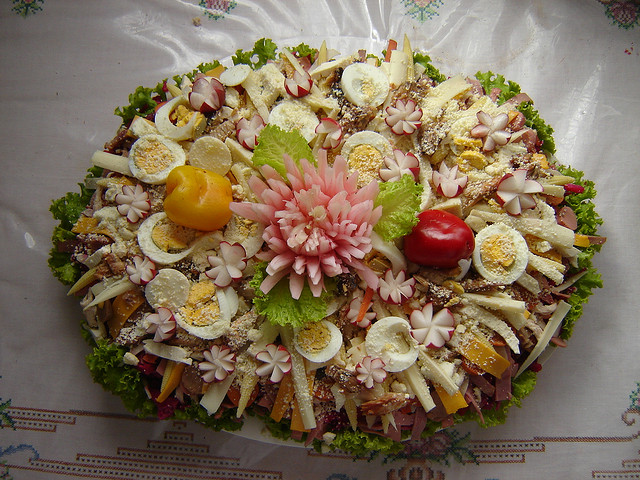
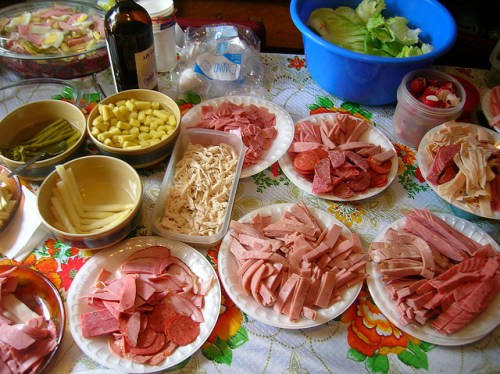
While Dia Los Muertos is perhaps best known in the USA through its Mexican-style celebrations, it is a holiday celebrated throughout Latin America. I was doing a little research on other countries’ traditional foods, and came across Fiambre, a veritable Guatemalan smorgasbord served in honor of Dia de los Muertos/Dia de Todos Santos (All Saints Day). Fiambre is a chopped salad akin to a giant antipasti dish, which may include up to 50 ingredients , and weight up to 20 pounds. Of course there are as many variations as families, but a common denominator is a base of sliced meat, cold cuts, cheeses and sausages followed by veggies (carrots, broccoli, cauliflower, and more), topped with eggs, grated cheese, radishes and dressing. A signature touch is pacaya palm blossoms, a traditional Guatemalan ingredient.

El Fiambre -by Keneth Cruz

Allegedly, the origins of fiambre are rooted in the tradition of bringing ancestors their favorite foods in honor of Dia de Todos Santos. Gradually, according to legend, all of the dishes of food brought to the the graves of the dead were combined to create one large dish of fiambre. Fiambre, unlike many other celebratory dishes, is truly only served on this day, and requires a lot of preparation. The fiambre components have to be sliced and chopped and the assembled fiambre is marinated over night, and is served chilled. Given the amount of ingredients (see below for a sampling), it looks incredibly time-consuming. These two recipes from Growing Up Bilingual and The Latin Kitchen give you a good idea on the preparation of fiambre.

Fiambre ingredients – by guillermogg

1 Comment

Filed under Holidays, World Eats

Dia de los Muertos and Pan de Muerto

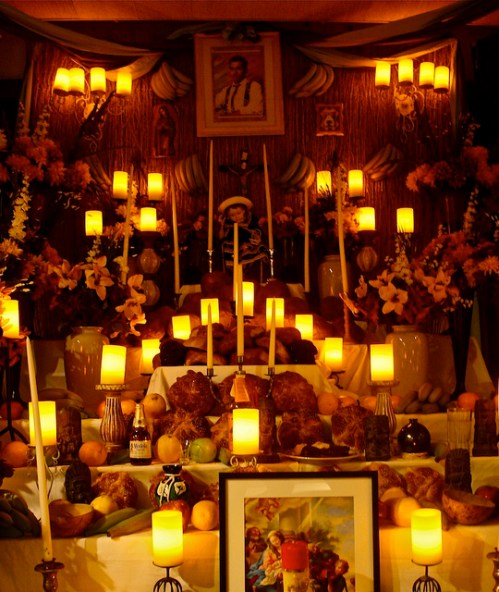
It seems like the iconic sugar skulls for Día de los Muertos/the Day of the Dead, have become increasingly popular in mainstream US culture – I have even seen recommendations for calavera Halloween costumes! But we cannot forget about the other sweet staple that is a necessity for any ofrenda (an altar set up to commemorate the dead) – Pan de Muerto – literally, “bread of the dead.”

An Altar in Seattle with Pan de Muerto – by jeck_crow

Dia de los Muertos as celebrated today is a combination of Pre-Columbian and Catholic traditions and encompasses All Saints’ Day (Nov 1) and All Souls’ Day (Nov 2). The purpose of the holiday is to commemorate and celebrate deceased ancestors and relatives, and the purpose of the pan de muerto on the ofrenda is to provide sustenance for the souls of the returning relatives. For this same reason, other favorite foods and drinks of the deceased are included on the ofrenda. However, not just used as an offering, Pan de muerto is also eaten in the period leading up to Día de los Muertos, and is a mainstay in bakeries and cafes during the season.

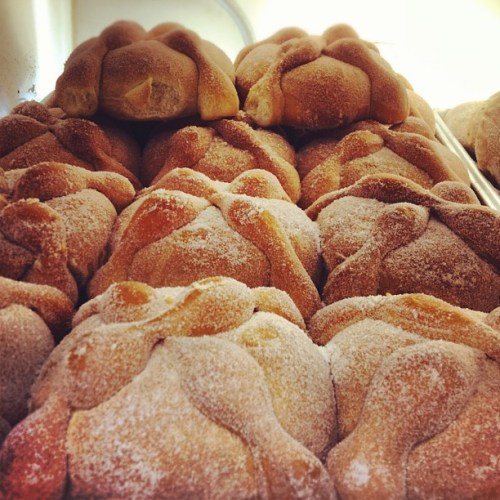
Pan de Muerto in the Zocalo, Mexico City – by Ericrkl

Pan de muerto is a simple sweet bread, think brioche, that is flavored with orange blossom water, orange zest or anise (or all of the above). Pan de muerto takes on different shapes, depending on the region, and the iconic Mexico City version of pan de muerto is usually round with strips of dough representing bones crisscrossed on the top. Pan de muerto may be topped with sesame seeds or a generous helping of sugar (as seen below). Though the round versions are the most common in the US, other other versions have the bread made in the form of little people, bones, angels or even for elaborate shapes. Check out this recipe from Cooking in Mexico to make some Pan de Muerto of your own. Kitchen Parade even has a tutorial to show you how to make the distinctive “bones” for your bread.

4 Comments

Filed under Holidays, World Eats

Portuguese Pastry Post-Doc: Bolo de Arroz

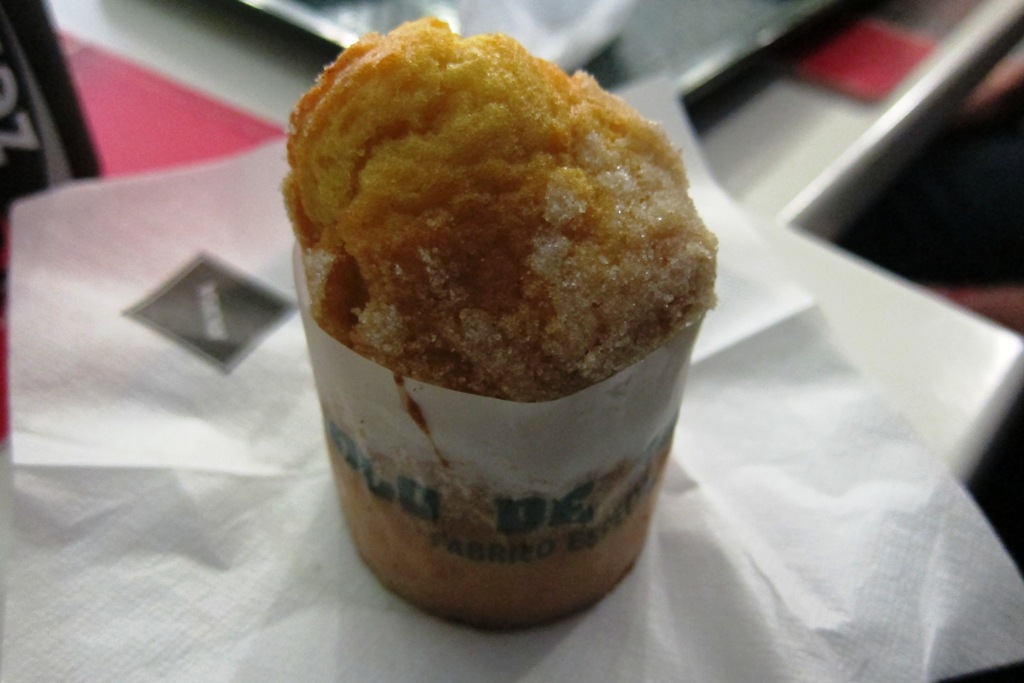
Today, for the first time we tried Bolo de Arroz – Portuguese rice muffins – another classic staple of the Portuguese bakery. We ducked into a small cafe to dodge the rain, and were super pleased to see these particular pastries on offer. Given the name, I was initially expecting these to have a mealy rice-pudding texture like arancine (don’t ask me why), but they were perfectly smooth and had a cake-like texture. The “rice” or arroz in the name just refers to rice flour. Instead of coming in a muffin liner, they are wrapped in little paper sheets that typically say “Bolo de Arroz (see photo below). The taste of a bolo de arroz is basically like an eggy cupcake, but with a hint of earthy rice flavor. Wordflux has a recipe for Bolo de Arroz, they don’t seem too difficult to make, the only special ingredient being rice flour. To add a little confusion, the Bolinho do Arroz, popular in Brazil, is a savory snack made from rice, like arancine.

1 Comment

Filed under Pastry Post-Poc

Brazil: Sinhá Elegant Cuisine

Sinhá Elegant Cuisine
2018 W Adams
Chicago, IL

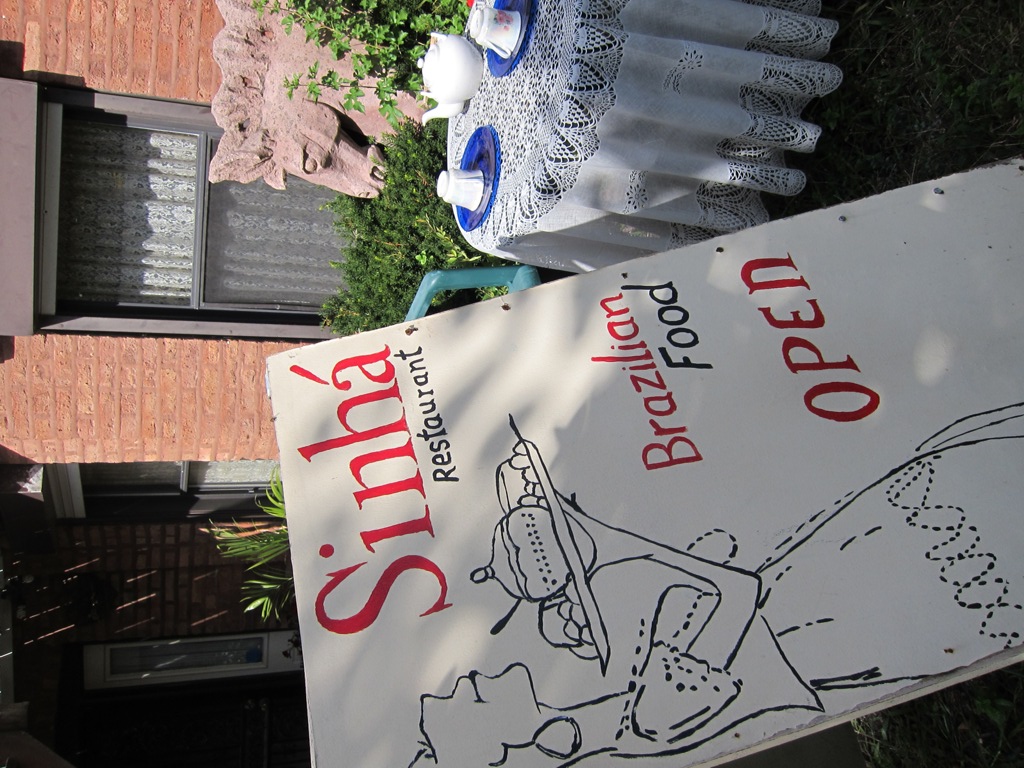
There is nothing better than going over to your grandma’s house for dinner. Many of us, sadly, do not have Brazilian grandmothers – but if you live in Chicago, you can do the next best thing  and head to Sinhá Elegant Cuisine – where chef and owner Jorgina Pereira will serve as your honorary avozinha (grandma) for the day. Like any good grandma, Sinhá Jorgina has enough food for roughly three times the amount of people expected. The main event is brunch, which is held every Sunday at 2 and 4 PM, and also in a smaller form on weekdays.

The little house in which Sinhá dinners are held is within a stone’s throw of the United Center. After ringing the bell to be let in, you are led up the stairs into a drawing room where you are offered some Jamaica (hibicus tea), and those who have chosen to BYOB can uncork their bottles. The drawing room is all glass, antiques and mirrors, and while we were waiting we perused coffee table books about Brazil. Waiting for the buffet we were offered appetizers of coxinhas (chicken fritters) and pão de queijo with queso fresco and marmalade. Both appetizers were excellent, and the plates set at our table were instantly consumed.

After appetizers, we were all led downstairs to the basement for the main event, where there was a mishmash of tables packed into every corner of the small basement. And by packed, we mean packed (as you can see above).  This is not a place to come if you are nervous about meeting new people or having your personal space invaded. Our group of 6 was lucky to get our own table, but many others, especially smaller parties, were seated at a table with strangers. Remember, it is grandma’s house, and everyone is family! Once we were seated, Sinhá Jorgina came in and introduced the various dishes and gave a little history and explanation behind each one. The star of the show is her feijoada, one of the emblematic dishes of Brazilian cuisine, made with a variety of stewed meats (usually various types of pork, sausage and beef) and beans, served over rice. And of course, everyone is convinced their own granny makes the best feijoada, and we found Jorgina’s rendition to be excellent.

Alongside the giant pan of feijoada, there was an entire buffet of other meat dishes and a prodigious amount of sides. The typical Brazilian accompaniments to feijoada, farofa and collared greens, were also present and quite tasty. There was a savory pulled pork, black beans and rice flavored with bacon, pesto chicken skewers, salmon and a beef tenderloin carving station. For those more vegetable inclined (as Brazilians are not), there were a variety of tropical fruits, veggies and assorted salads. There were also sweet fried plantains, our absolute favorite fruit dessert! Adding a nod to the Italian influence of Brazilian cuisine, there was a homemade margarita pizza and homemade ravioli. We were sad to see there was not pão de queijo in the basement, but a very nice waitress brought some extras, all of which we happily inhaled.  The highlights were the farofa and the appetizers, and the veggies and many of the other side dishes faded somewhat into the background. The buffet was all-you-can-eat, and the supply of food was basically infinite, all things considered, the $30 price tag got you more than your money’s worth of food.

Apparently back in the day there was a whole lengthy samba music and dance performance at each Sinhá’s event. However, at our brunch, some wonderful acoustic guitar music was provided by Luciano Antonio. Frankly, the gentler musical interlude suited the mood better than a big production. There were two birthdays the day we went so there was a hearty singing of “Parabéns pra Você,” and each of the birthday boys and girls was given a red velvet flan cake (which was taken back into the kitchen and cut so everyone could enjoy a piece). The red velvet cake with a top layer of flan and mint sauce was an unusual combination, but it really worked well together. After the brunch, we were led into the trellised back porch for some coffee. We enjoyed a pleasant cafezinho while taking in the unusual sight of wine grapes growing on vines right next to the United Center. By 4, we were on our way, with the next brunch waiting in the wings. Sinhá’s was good, plentiful and classic Brazilian Home cooking and, Brazilian or not, you really feel like you are at a party at your grandma’s house.

Leave a comment

Filed under Reviews

Portuguese Pastry Post-Doc: Wafysugar

What is sold in vending machines can tell you a lot about the culture of a country. Here in Portugal they sell waffles. When we first saw the “Wafysugar” in a subway vending machine, we did a double-take. It was the first time we had seen waffles in a vending machine, and waffles aren’t a popular breakfast food here, though they are pretty common in gelato shops. We love waffles and usually have them every weekend, thanks to a well-loved registry gift (sadly, our waffle iron is back across the Atlantic). Out of curiosity, and waffle withdrawal, we felt we had to try a Wafysugar after seeing them everyday in the subway. For one Euro, we figured it was worth a shot. The Wafysugar, billed as a “Gofre de Liege,” was about the size of a quarter of a Belgian waffle. Surprisingly, the ingredient list for the Wafysugar was not terribly long, containing mostly decipherable ingredients. It was a tad chewy, very sweet and though it did indeed taste like it came out of a vending machine, it was not entirely bad. Despite the relative palatability of the Wafysugar, we’ll leave the vending machine purchases to water and soda from now on.

Leave a comment

Filed under Pastry Post-Poc

Portuguese Pastry Post-Doc: Coffee from A Carioca

A Carioca
Rua da Misericórdia, 9
Lisbon, Portugal

Lisboetas loves coffee, and one of the best places to get fresh coffee beans in Lisbon is from A Carioca, a beautiful wood-paneled, art-deco store that is literally filled wall-to-wall with coffee beans, teas and candies. A Carioca is in the trendy-yet-historical Chiado neighborhood, near the most famous cafe in all of Lisbon, A Brasileira. You may note that both of these historic coffee venues have Brazil-themed names, a “Carioca” being an inhabitant of Rio de Janiero. Though Brazil is now the number one producer of coffee in the world, the coffee industry there did not take off until the 1930s.

You can get coffee beans at A Carioca by the gram in a variety of flavors – vanilla, hazelnut, chocolate – as well as single origin coffees and blends from all over South America, Asia and Africa. Note the very friendly-looking bright red coffee grinders (there is even a larger red coffee grinder in the front of the store). Despite looking like antiques, they are still put to use every day. In addition to coffee, A Carioca has sort of an old-time candy store feel, with glass jars of traditional penny candy. Tea is also on offer, including the only tea produced in Europe, Gorreana tea from the Azores.

Leave a comment

Filed under Coffee, Pastry Post-Poc

Marranitos/Puerquitos for Dia de los Muertos

Marranitos made by the Muy Bueno Cookbook Blog

Dia de los Muertos is less than two weeks away – so it’s time to start gathering some recipes to celebrate. We’ve previously featured sugar skulls, but for those looking for a different sort of treat for the Day of the Dead might want to try these delicious gingerbread pigs called, alternatively, marranitos, cochinitos, or puerquitos (all variations on “little pig”). These little pig cookies are made with a generous helping of molasses and unrefined cane sugar, piloncillo, giving them a rich gingerbread-y flavor. The marranitos above were made by the Muy Bueno cookbook blog, which provides a recipe as well as a lovely photoshoot and accompanying story. Marranitos are cut using a special pig-shaped cookie cutter, and as you might be able to tell, they are quite a bit larger than the typical cookie. Not strictly a “Dia de Los Muertos” food, marranitos are enjoyed year round and are especially good with coffee for a light breakfast. We found a large pig cookie cutter for sale on CopperGifts, and we definitely think we need to add some of these pig cookies to our repertoire.

2 Comments

Filed under Holidays, World Eats

Portuguese Pastry Post-Doc: Pastelaria Versailles

Pastelaria Versailles
Av. da República 15A
Lisbon, Portugal

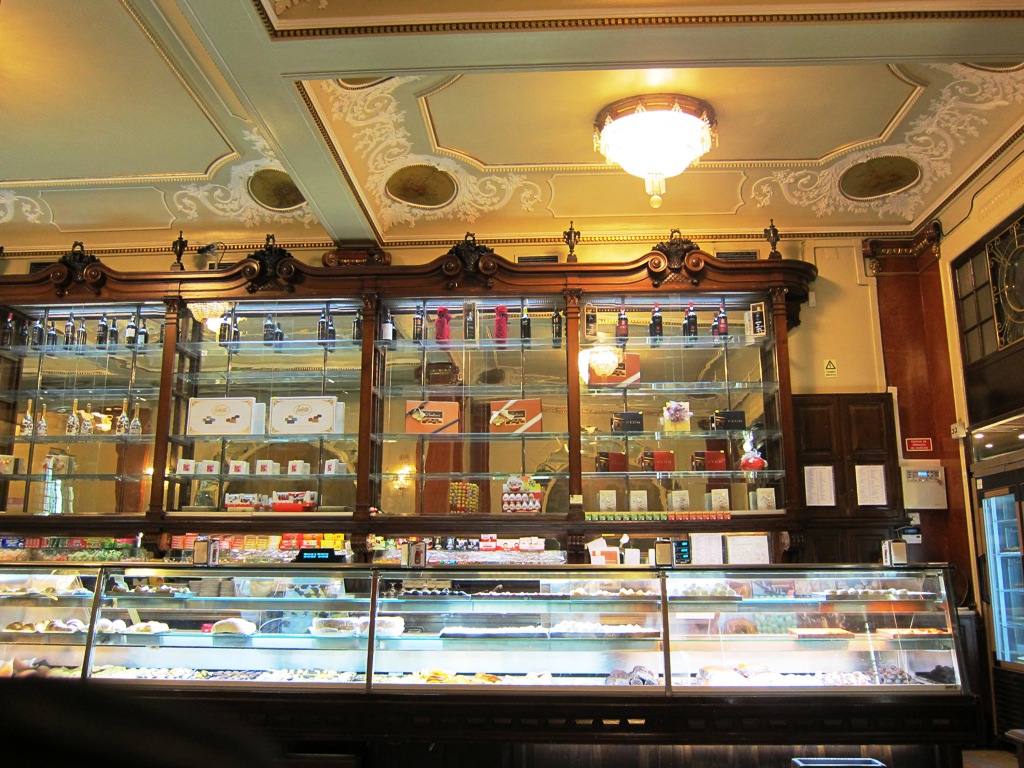
There is something about dining in sumptuous surroundings that makes everything taste a little bit better. Lisbon is full of lovely historical cafes, and Versailles is a stunning example of the slightly faded glory of old-school Lisbon. Pastelaria Versailles was built in the 1920’s and served as a sumptuous symbol of the Avenidas Novas (“new avenues”) that were built north of the historic center of the city. As befitting of the name “Versailles,” the cafe is filled wall-to-wall with gilded mirrors, chandeliers, checkerboard marble and floor-to-ceiling elaborate wooden display cases.

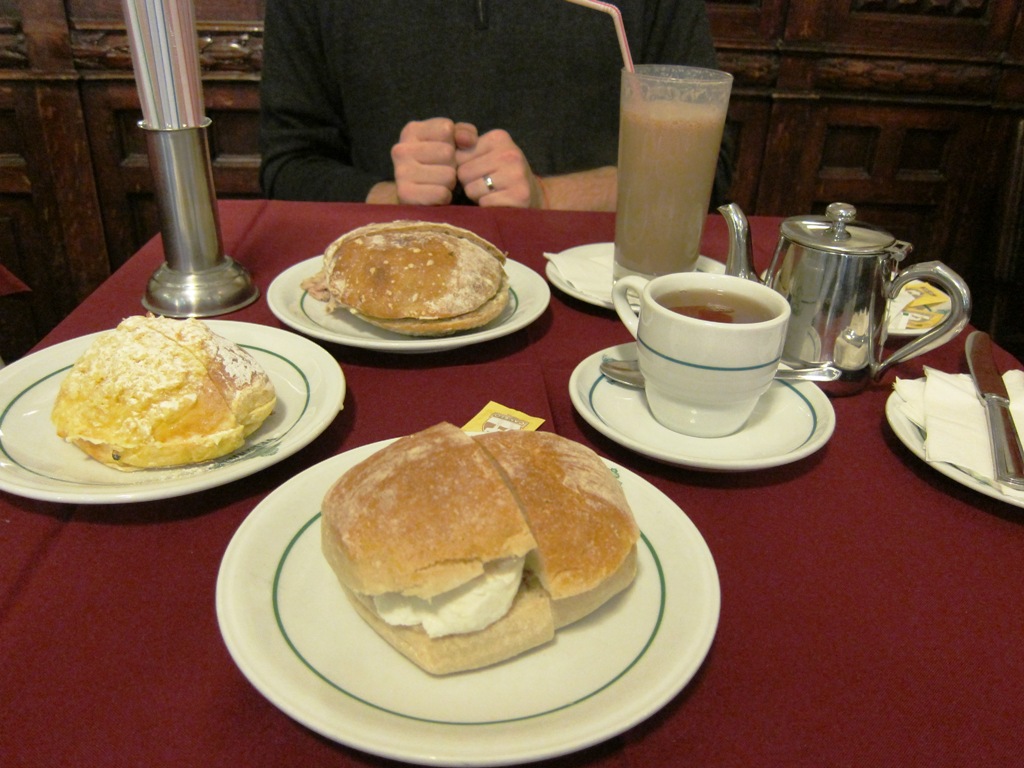
Though primarily a cafe, there is also a little mezzanine that has a more complete dinner menu for 12-25 euros featuring fish and steaks and various traditional Portuguese plates. However, we are cafe people, and opted for the simpler sandwich menu (which was intimidatingly long). There were a range of coffee drinks, batidos (milkshakes) and teas on offer  as well as little snacks like bacalhau croquettes and a series of sandwiches, all for less than about 4 Euros. One way in which we can tell that Portugal is serious about bread is the fact that each sandwich (with the same variety of a few options like bacalhau, turkey, cheese, tomato and even simple butter) is listed by the type of bread it comes on. We counted no less than 8 bread options for sandwiches.

M ordered a turkey sandwich on a Chapada role (which seems to be a cousin to Ciabatta). L ordered a Mafra sandwich with queijo fresco. The light and airy Mafra roll is native to the town of Mafra, just north of Lisbon, and has a slightly sweet flavor. For such a small price, we were surprised at the size of each sandwich, and were impressed with the quality and freshness of the bread. We finished up our meal with a delicate Pão de Deus and an elegant service of Versailles signature tea. The Versailles blend is a black tea with a mix of orange, cinnamon and vanilla, and tasted a little like a subtle citrus chai.

Naturally, we could not ignore the bakery case, which runs the whole length of the cafe. Though we arrived late in the day there was still a pretty good selection of treats, and we filled a box for the road. We selected an assortment of cookies, the names of which were not labeled. One we uncreatively dubbed the “Flat Madeleine,” which looked and tasted like a flat Madeleine cookie. The other was a chocolate Italian-style dipped cookie shaped like an acorn. But the pièce de résistance were the chocolate Pastéis de Nata. The Versailles Pastel had both requisites of an excellent Pastel de Nata: the custard and the flaky multi-layered crust, and with a hint of chocolate these were perfect! Cafe Versailles has quickly become one of our favorite cafes and we are excited to work our way through the pastry case.

2 Comments

Filed under Reviews