Portuguese Pastry Post-Doc: Bolo de Arroz

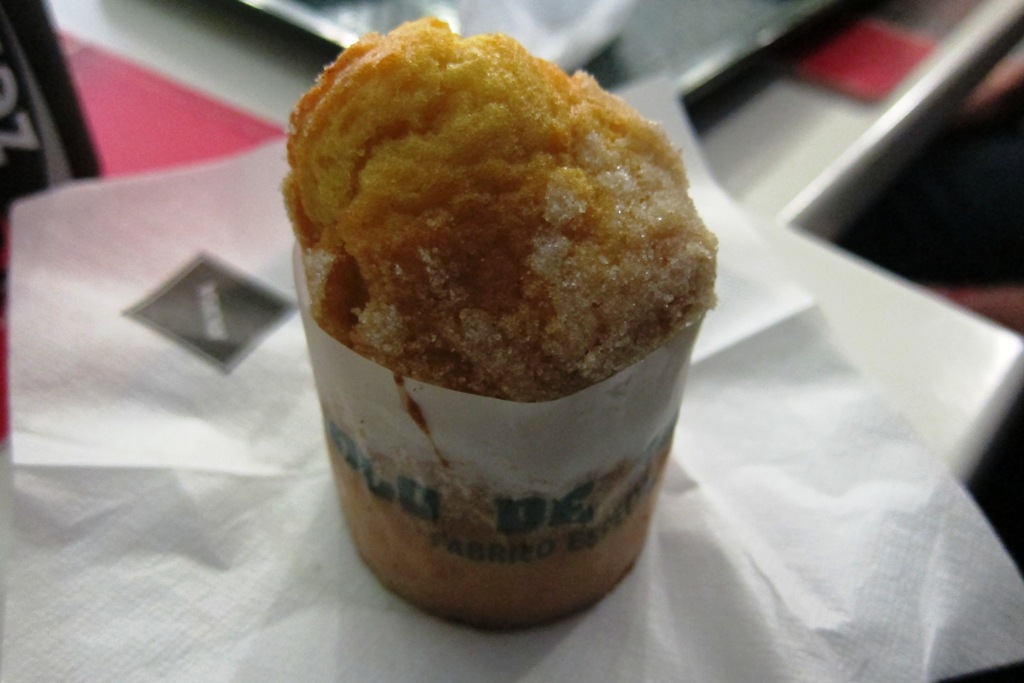
Today, for the first time we tried Bolo de Arroz – Portuguese rice muffins – another classic staple of the Portuguese bakery. We ducked into a small cafe to dodge the rain, and were super pleased to see these particular pastries on offer. Given the name, I was initially expecting these to have a mealy rice-pudding texture like arancine (don’t ask me why), but they were perfectly smooth and had a cake-like texture. The “rice” or arroz in the name just refers to rice flour. Instead of coming in a muffin liner, they are wrapped in little paper sheets that typically say “Bolo de Arroz (see photo below). The taste of a bolo de arroz is basically like an eggy cupcake, but with a hint of earthy rice flavor. Wordflux has a recipe for Bolo de Arroz, they don’t seem too difficult to make, the only special ingredient being rice flour. To add a little confusion, the Bolinho do Arroz, popular in Brazil, is a savory snack made from rice, like arancine.

1 Comment

Filed under Pastry Post-Poc

Brazil: Sinhá Elegant Cuisine

Sinhá Elegant Cuisine
2018 W Adams
Chicago, IL

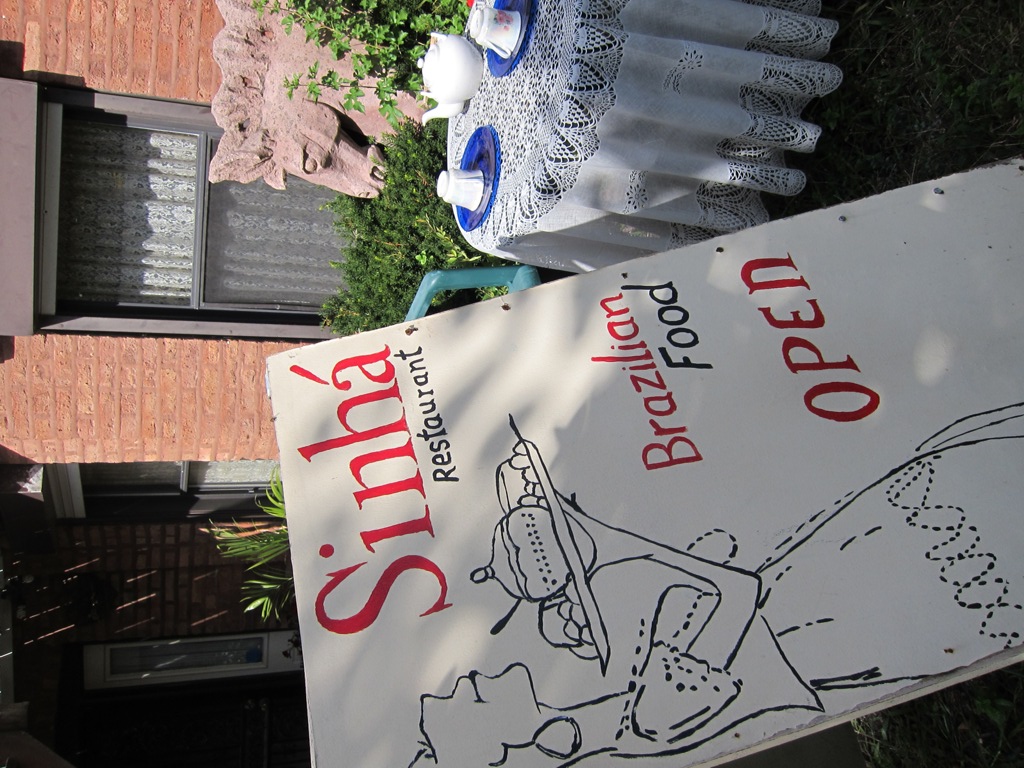
There is nothing better than going over to your grandma’s house for dinner. Many of us, sadly, do not have Brazilian grandmothers – but if you live in Chicago, you can do the next best thing  and head to Sinhá Elegant Cuisine – where chef and owner Jorgina Pereira will serve as your honorary avozinha (grandma) for the day. Like any good grandma, Sinhá Jorgina has enough food for roughly three times the amount of people expected. The main event is brunch, which is held every Sunday at 2 and 4 PM, and also in a smaller form on weekdays.

The little house in which Sinhá dinners are held is within a stone’s throw of the United Center. After ringing the bell to be let in, you are led up the stairs into a drawing room where you are offered some Jamaica (hibicus tea), and those who have chosen to BYOB can uncork their bottles. The drawing room is all glass, antiques and mirrors, and while we were waiting we perused coffee table books about Brazil. Waiting for the buffet we were offered appetizers of coxinhas (chicken fritters) and pão de queijo with queso fresco and marmalade. Both appetizers were excellent, and the plates set at our table were instantly consumed.

After appetizers, we were all led downstairs to the basement for the main event, where there was a mishmash of tables packed into every corner of the small basement. And by packed, we mean packed (as you can see above).  This is not a place to come if you are nervous about meeting new people or having your personal space invaded. Our group of 6 was lucky to get our own table, but many others, especially smaller parties, were seated at a table with strangers. Remember, it is grandma’s house, and everyone is family! Once we were seated, Sinhá Jorgina came in and introduced the various dishes and gave a little history and explanation behind each one. The star of the show is her feijoada, one of the emblematic dishes of Brazilian cuisine, made with a variety of stewed meats (usually various types of pork, sausage and beef) and beans, served over rice. And of course, everyone is convinced their own granny makes the best feijoada, and we found Jorgina’s rendition to be excellent.
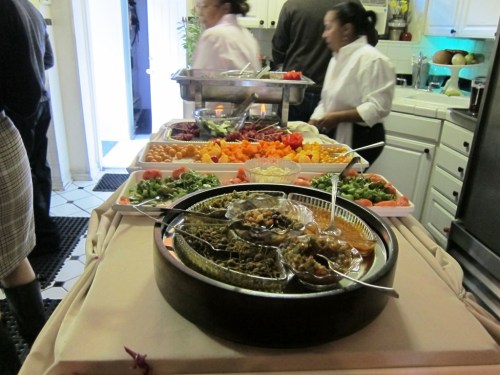
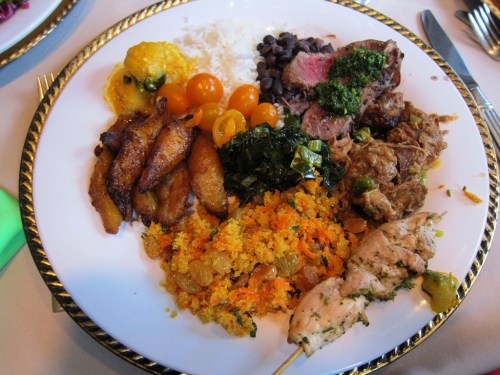
Alongside the giant pan of feijoada, there was an entire buffet of other meat dishes and a prodigious amount of sides. The typical Brazilian accompaniments to feijoada, farofa and collared greens, were also present and quite tasty. There was a savory pulled pork, black beans and rice flavored with bacon, pesto chicken skewers, salmon and a beef tenderloin carving station. For those more vegetable inclined (as Brazilians are not), there were a variety of tropical fruits, veggies and assorted salads. There were also sweet fried plantains, our absolute favorite fruit dessert! Adding a nod to the Italian influence of Brazilian cuisine, there was a homemade margarita pizza and homemade ravioli. We were sad to see there was not pão de queijo in the basement, but a very nice waitress brought some extras, all of which we happily inhaled.  The highlights were the farofa and the appetizers, and the veggies and many of the other side dishes faded somewhat into the background. The buffet was all-you-can-eat, and the supply of food was basically infinite, all things considered, the $30 price tag got you more than your money’s worth of food.
Apparently back in the day there was a whole lengthy samba music and dance performance at each Sinhá’s event. However, at our brunch, some wonderful acoustic guitar music was provided by Luciano Antonio. Frankly, the gentler musical interlude suited the mood better than a big production. There were two birthdays the day we went so there was a hearty singing of “Parabéns pra Você,” and each of the birthday boys and girls was given a red velvet flan cake (which was taken back into the kitchen and cut so everyone could enjoy a piece). The red velvet cake with a top layer of flan and mint sauce was an unusual combination, but it really worked well together. After the brunch, we were led into the trellised back porch for some coffee. We enjoyed a pleasant cafezinho while taking in the unusual sight of wine grapes growing on vines right next to the United Center. By 4, we were on our way, with the next brunch waiting in the wings. Sinhá’s was good, plentiful and classic Brazilian Home cooking and, Brazilian or not, you really feel like you are at a party at your grandma’s house.

Leave a comment

Filed under Reviews

Portuguese Pastry Post-Doc: Wafysugar

What is sold in vending machines can tell you a lot about the culture of a country. Here in Portugal they sell waffles. When we first saw the “Wafysugar” in a subway vending machine, we did a double-take. It was the first time we had seen waffles in a vending machine, and waffles aren’t a popular breakfast food here, though they are pretty common in gelato shops. We love waffles and usually have them every weekend, thanks to a well-loved registry gift (sadly, our waffle iron is back across the Atlantic). Out of curiosity, and waffle withdrawal, we felt we had to try a Wafysugar after seeing them everyday in the subway. For one Euro, we figured it was worth a shot. The Wafysugar, billed as a “Gofre de Liege,” was about the size of a quarter of a Belgian waffle. Surprisingly, the ingredient list for the Wafysugar was not terribly long, containing mostly decipherable ingredients. It was a tad chewy, very sweet and though it did indeed taste like it came out of a vending machine, it was not entirely bad. Despite the relative palatability of the Wafysugar, we’ll leave the vending machine purchases to water and soda from now on.

Leave a comment

Filed under Pastry Post-Poc

Portuguese Pastry Post-Doc: Coffee from A Carioca

A Carioca
Rua da Misericórdia, 9
Lisbon, Portugal

Lisboetas loves coffee, and one of the best places to get fresh coffee beans in Lisbon is from A Carioca, a beautiful wood-paneled, art-deco store that is literally filled wall-to-wall with coffee beans, teas and candies. A Carioca is in the trendy-yet-historical Chiado neighborhood, near the most famous cafe in all of Lisbon, A Brasileira. You may note that both of these historic coffee venues have Brazil-themed names, a “Carioca” being an inhabitant of Rio de Janiero. Though Brazil is now the number one producer of coffee in the world, the coffee industry there did not take off until the 1930s.

You can get coffee beans at A Carioca by the gram in a variety of flavors – vanilla, hazelnut, chocolate – as well as single origin coffees and blends from all over South America, Asia and Africa. Note the very friendly-looking bright red coffee grinders (there is even a larger red coffee grinder in the front of the store). Despite looking like antiques, they are still put to use every day. In addition to coffee, A Carioca has sort of an old-time candy store feel, with glass jars of traditional penny candy. Tea is also on offer, including the only tea produced in Europe, Gorreana tea from the Azores.

Leave a comment

Filed under Coffee, Pastry Post-Poc

Marranitos/Puerquitos for Dia de los Muertos

Marranitos made by the Muy Bueno Cookbook Blog

Dia de los Muertos is less than two weeks away – so it’s time to start gathering some recipes to celebrate. We’ve previously featured sugar skulls, but for those looking for a different sort of treat for the Day of the Dead might want to try these delicious gingerbread pigs called, alternatively, marranitos, cochinitos, or puerquitos (all variations on “little pig”). These little pig cookies are made with a generous helping of molasses and unrefined cane sugar, piloncillo, giving them a rich gingerbread-y flavor. The marranitos above were made by the Muy Bueno cookbook blog, which provides a recipe as well as a lovely photoshoot and accompanying story. Marranitos are cut using a special pig-shaped cookie cutter, and as you might be able to tell, they are quite a bit larger than the typical cookie. Not strictly a “Dia de Los Muertos” food, marranitos are enjoyed year round and are especially good with coffee for a light breakfast. We found a large pig cookie cutter for sale on CopperGifts, and we definitely think we need to add some of these pig cookies to our repertoire.

2 Comments

Filed under Holidays, World Eats

Portuguese Pastry Post-Doc: Pastelaria Versailles

Pastelaria Versailles
Av. da República 15A
Lisbon, Portugal

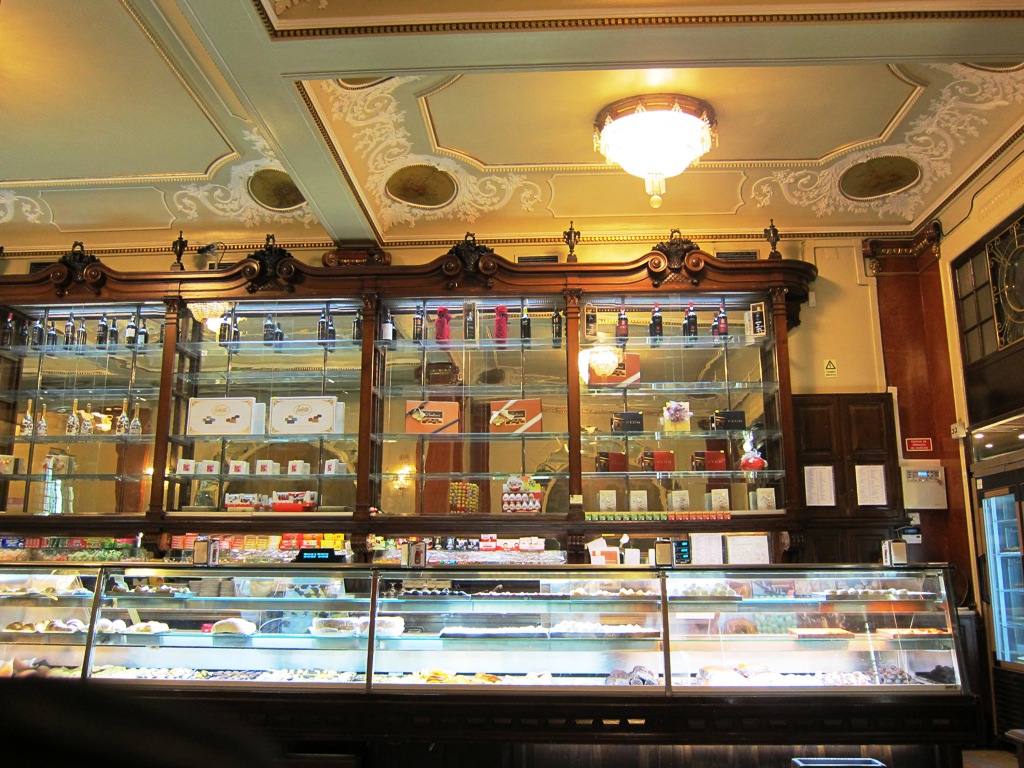
There is something about dining in sumptuous surroundings that makes everything taste a little bit better. Lisbon is full of lovely historical cafes, and Versailles is a stunning example of the slightly faded glory of old-school Lisbon. Pastelaria Versailles was built in the 1920’s and served as a sumptuous symbol of the Avenidas Novas (“new avenues”) that were built north of the historic center of the city. As befitting of the name “Versailles,” the cafe is filled wall-to-wall with gilded mirrors, chandeliers, checkerboard marble and floor-to-ceiling elaborate wooden display cases.

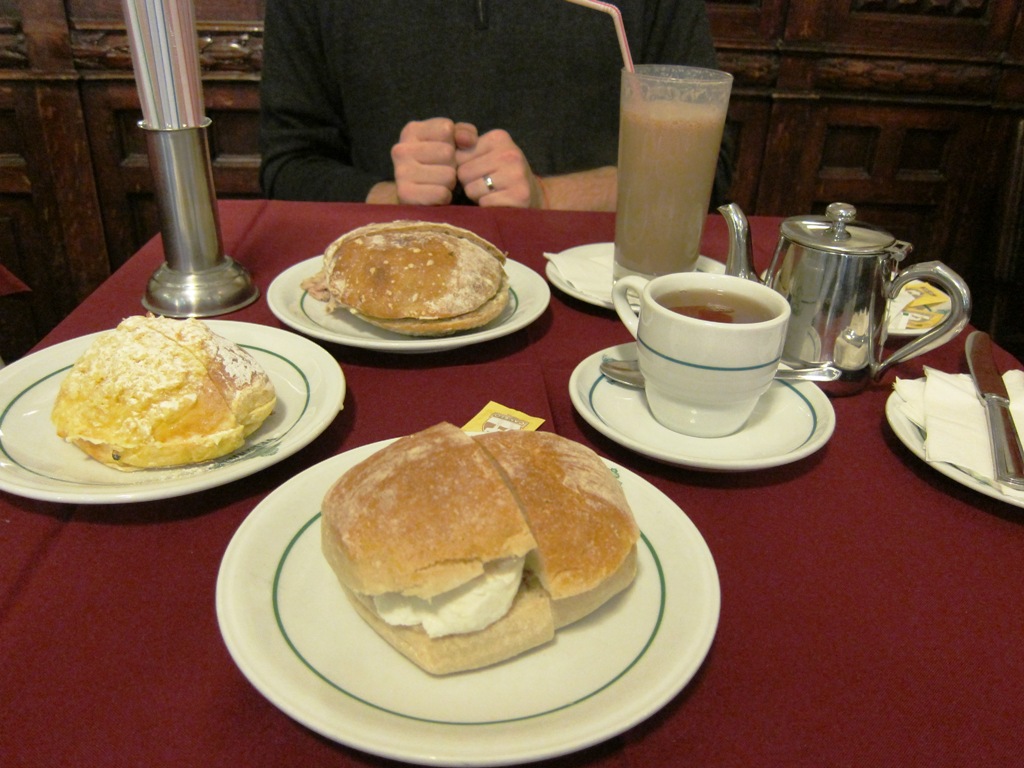
Though primarily a cafe, there is also a little mezzanine that has a more complete dinner menu for 12-25 euros featuring fish and steaks and various traditional Portuguese plates. However, we are cafe people, and opted for the simpler sandwich menu (which was intimidatingly long). There were a range of coffee drinks, batidos (milkshakes) and teas on offer  as well as little snacks like bacalhau croquettes and a series of sandwiches, all for less than about 4 Euros. One way in which we can tell that Portugal is serious about bread is the fact that each sandwich (with the same variety of a few options like bacalhau, turkey, cheese, tomato and even simple butter) is listed by the type of bread it comes on. We counted no less than 8 bread options for sandwiches.

M ordered a turkey sandwich on a Chapada role (which seems to be a cousin to Ciabatta). L ordered a Mafra sandwich with queijo fresco. The light and airy Mafra roll is native to the town of Mafra, just north of Lisbon, and has a slightly sweet flavor. For such a small price, we were surprised at the size of each sandwich, and were impressed with the quality and freshness of the bread. We finished up our meal with a delicate Pão de Deus and an elegant service of Versailles signature tea. The Versailles blend is a black tea with a mix of orange, cinnamon and vanilla, and tasted a little like a subtle citrus chai.

Naturally, we could not ignore the bakery case, which runs the whole length of the cafe. Though we arrived late in the day there was still a pretty good selection of treats, and we filled a box for the road. We selected an assortment of cookies, the names of which were not labeled. One we uncreatively dubbed the “Flat Madeleine,” which looked and tasted like a flat Madeleine cookie. The other was a chocolate Italian-style dipped cookie shaped like an acorn. But the pièce de résistance were the chocolate Pastéis de Nata. The Versailles Pastel had both requisites of an excellent Pastel de Nata: the custard and the flaky multi-layered crust, and with a hint of chocolate these were perfect! Cafe Versailles has quickly become one of our favorite cafes and we are excited to work our way through the pastry case.

2 Comments

Filed under Reviews

Portuguese Pastry Post-Doc: Pão de Deus

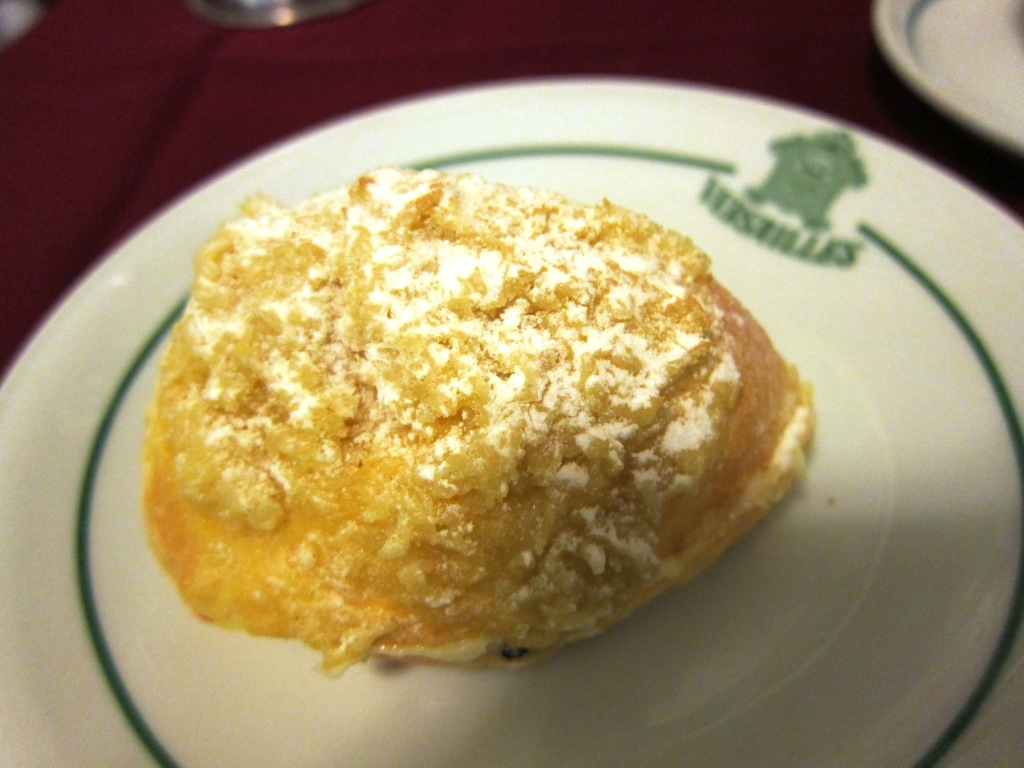
The pastries in Portugal are often  quite uniquely – almost poetically – named. Case in point – Pão de Deus – God’s bread.  Many of Portugal’s most iconic pastries originated in convents many centuries ago, perhaps accounting for the recurring religious allusions in pastry names. In appearance, Pão de Deus is somewhat more humble of a creation than its name implies. It is a sweet brioche roll with a topping of coconut and a shower of powdered sugar.  The coconut develops a gooey almost macaroon-like texture beneath the surface, and is pleasantly crispy on top. As seen below, the Pão de Deus we sampled from Pastelaria Versailles (review coming soon) came with a healthy slather of butter, and if you are feeling especially hungry you might even include some ham and cheese! Pão de Deus is a typical breakfast all across Portugal, though it is not very well known outside of the country. Home Gourmets has a recipe for Pão de Deus if you are feeling nostalgic for some Portuguese patisserie, or are looking to try it for the first time.

2 Comments

Filed under Pastry Post-Poc, World Eats

Portuguese Pastry Post-Doc

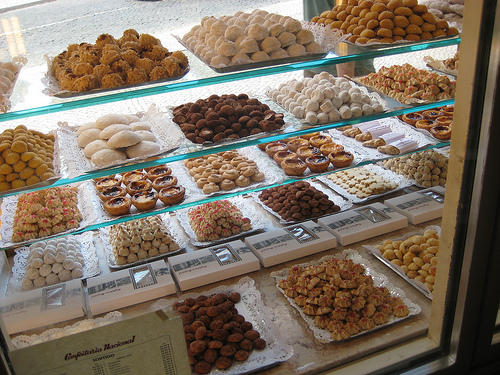
So ETW world HQ has been moved to Portugal for two more months, our second extended visit in the past year. The first time around, while we enjoyed the food, we were not blown away by Portuguese cuisine. However, we vowed to make our second visit more of a culinary success. In the first week alone, we have improved our food fortunes immensely by simply doing one thing: focusing on the pastries! Portugal is known for its pastries, many of which are found in elegant historical pastelarias or confeitarias. It all seems so simple in retrospect – the Portuguese are renowned for their varied pastries, cookies and cakes, many of which are impossibly rich and laden with eggs, butter and sugar – so why not focus on them? While I have written about Pasteis de Nata, the most iconic Portuguese pastry, Portugal has so much more to offer in the way of sweet treats. Since I (L) have recently finished my PhD, I am using these next two months as some much needed relaxation time. However, I can’t quite give up my researching ways, so I will be dedicating my research skills to Portuguese pastries. I call this new project my “Post-Doc in Portuguese Pastries,” and I promise I will leave no stone un-turned in my quest for the tastiest, most classic, most beautiful and iconic Portuguese desserts.

Pastries and Cookies at Confeitaria Nacional, Lisbon

Pastries and Cookies at Confeitaria Nacional, Lisbon

1 Comment

Filed under Note, Pastry Post-Poc

Chocolates + Macarons = Les Macarolats

We spent a wonderful weekend in Paris last December with our friends T & I, where we determined the best macarons in Paris. Though our international paths are nearly missing each other again, we were lucky enough to see them before we left for Portugal. We were so grateful and surprised when they gave us Macarolats from Michel Cluizel as a going-away present, and it was a wonderful reminder of our time in Paris. So you’re probably thinking, “What on earth is a Macrolat?” It is basically a filled chocolate in the shape of the iconic macaron.

The flavors included in our box of 5 Macrolats were: Dark chocolate ganache, Caramel ganache, Coffee ganache, and Crunchy hazelnut praline. All of the flavors were absolutely delicious! Our favorites were the caramel and hazelnut varieties, which were impossibly rich. What’s more, Macrolats are more transportable than the delicate Macarons (they made the journey across the Atlantic unscathed) – practical and delicious!

Leave a comment

Filed under World Eats

Sukiyabashi Jiro: The $20-a-Minute Meal

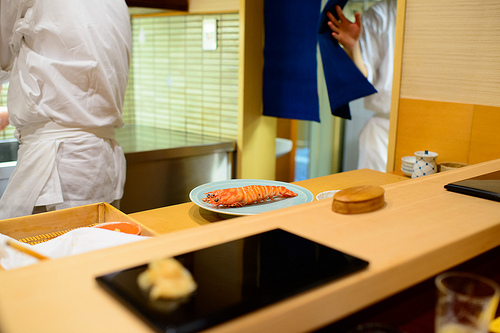
Recently, I posted about the wonderful documentary film about sushi expert Jiro Ono, Jiro Dreams of Sushi. Via Kottke.org I found an account of A Life Worth Eating’s recent visit to Jiro’s restaurant, Sukiyabashi Jiro, where the entire meal lasted a mere 19 minutes, with a tab of $380. You can check out the entire stunning meal on Flickr.

A scene from Sukiyabashi Jiro

Leave a comment

Filed under Links, World Eats

World Cuisines in Portugal: A Guidebook for International Foodies

On our first full day in Lisbon, after acquiring our monthly metro passes we decided to head downtown and reacquaint ourselves with Lisbon.  Surprisingly, we pretty much remembered our way around, and sampled a few Pasteis de Nata as we headed toward the Tagus River. Unfortunately, it started to drizzle unexpectedly ( and counter to weather reports) so we ducked into Betrand Livreiros, a bookstore in the Chiado neighborhood, to avoid the rain. Naturally, as we waited out the weather, we starting browsing for books. There was a pretty healthy culinary section with a bunch of global cookbooks – but one in particular caught our eye: Cozinhas do Mundo em Portugal (World Cuisines in Portugal). However, this was not a cookbook, but a guidebook! Along with descriptive information about various cuisines, typical ingredients and meal structure, the book listed restaurants in Portugal that specialized in each cuisine. While the book covered all of Portugal, there are many restaurants in Lisbon. Cuisines from Asia, Europe and Africa are represented, from obvious choices like Japan and Italy to the more esoteric Guinea Bissau and Luxembourg. There are even a few Irish pubs and American restaurants listed. We just couldn’t pass up this cool book, and it is now part of our growing travel book library in Lisbon. It is already littered with sticky tabs and we are well on our way to checking a few more countries off of the list.

Leave a comment

Filed under Books

ETW em Lisboa (ETW in Lisbon)!

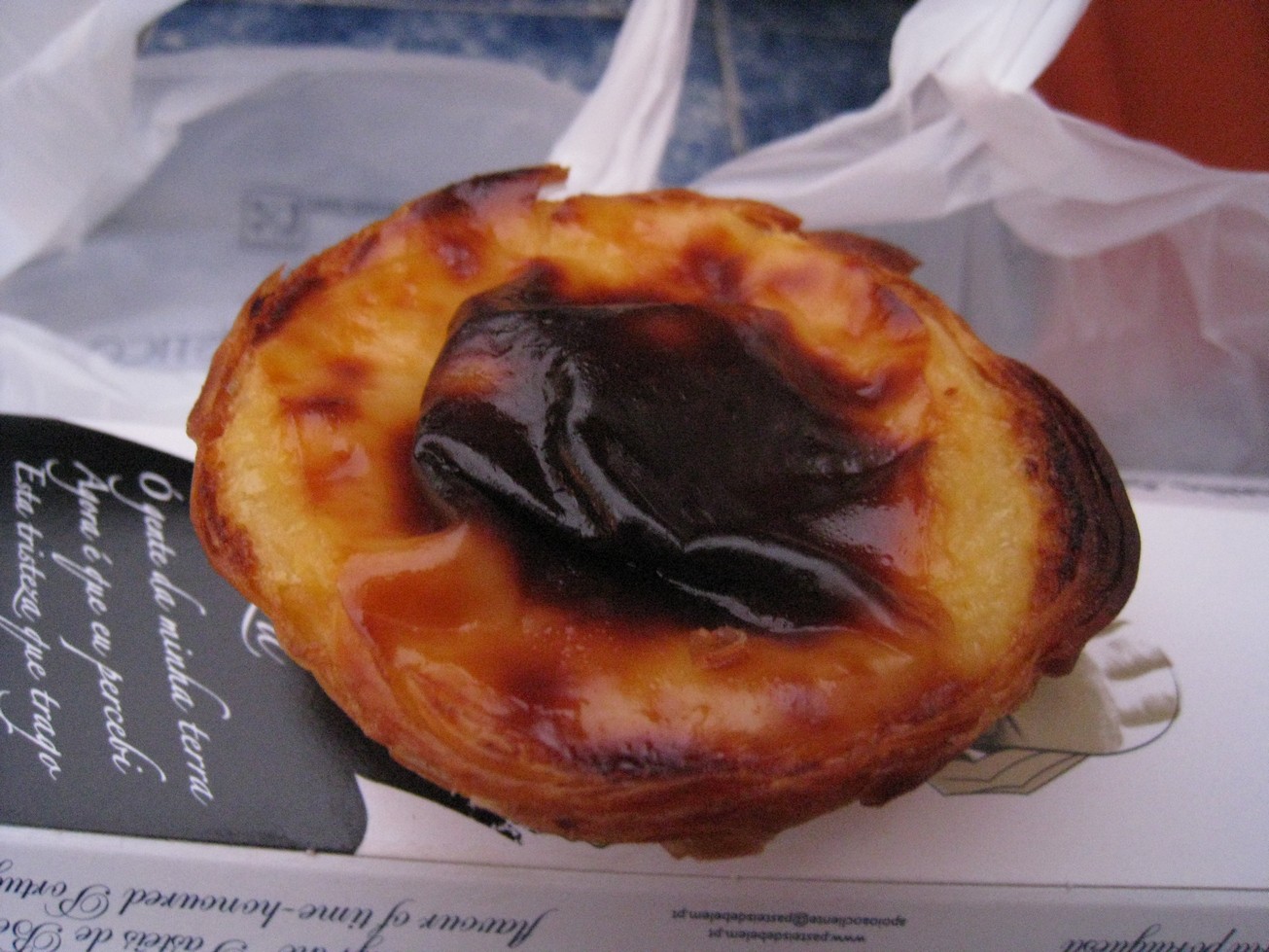
ETW is in Lisbon until the Christmas season – and we are both excited to continue our European food adventures. Now that I am done with school, I have more free time, so expect some more regular posting. We’ve been having some great eating adventures in Chicago recently (particularly Brazilian ones), and even took a brief jaunt to New York City, so expect some reports. Here in Lisbon, we’ve already been on our first grocery run and got our first batch of Pastéis de Nata, though we are excited to revisit Pastéis de Belém in the near future.  Stay tuned!

We have missed you, little Pastel!

Leave a comment

Filed under Note

Japan: Jiro Dreams of Sushi

We recently watched the documentary, Jiro Dreams of Sushiabout Jiro Ono, a dedicated Japanese Sushi chef that has earned three Michelin stars for his tiny restaurant  Sukiyabashi Jiro in a Tokyo subway station. Jiro was the first sushi chef to ever receive 3 Michelin stars and it is clear that his life is completely dedicated to perfecting his craft. The movie is beautiful and engrossing, and I guarantee you will have a newfound respect for sushi. Anthony Bourdain has stated that it is his favorite sushi experience, and we agree that the tasting menu looks amazing.

1 Comment

Filed under Reviews, World Eats

Vietnam: Nhu Lan

Nhu Lan
2612 West Lawrence Avenue
Chicago, IL

It’s been a while since we wrote a review, so we figured we’d update you on one of our ongoing quests: the search for the best banh mi in Chicago. Much like pizza places and hotdog joints, everyone in Chicago has a favorite bahn mi place. “Banh mi” is the Vietnamese name for airy baguette-like bread, and is also synonymous with the iconic sandwich with meat and pickled veggies. Previously, our favorite stalwart was Ba Le – the combination of location, price and quality couldn’t be beat. However, Nhu Lan has been on our radar for a while and is frequently named as the top bahn mi spot in the city, so we had to try it.

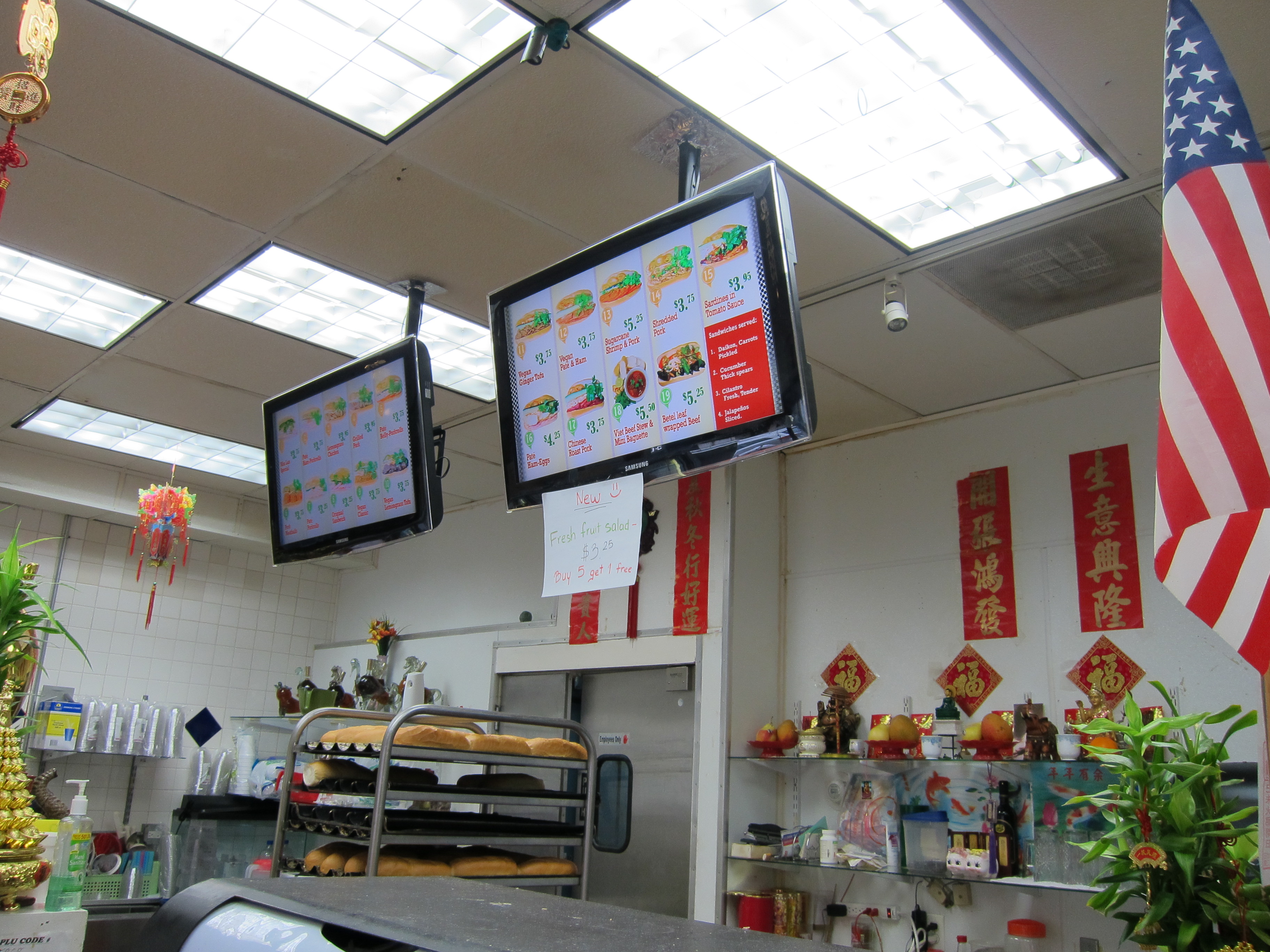
High-tech digital menus at Nhu Lan!

There are now two locations of Nhu Lan, but we visited the original location on Lawrence. Though Nhu Lan is mainly a walk-up counter, there are also a nice array of baked goods, smoothies and takeout items (including takeout drinks with colorful characters, as seen below). Much like many of the other banh mi places in town, Nhu Lan presents all of its banh mi options on a large menu, and it also features a buy-5-get-1-free deal. The prices are all below $5 for a sandwich, a typical bahn mi steal. Though we took our sandwiches to go, there is a small sitting area inside.

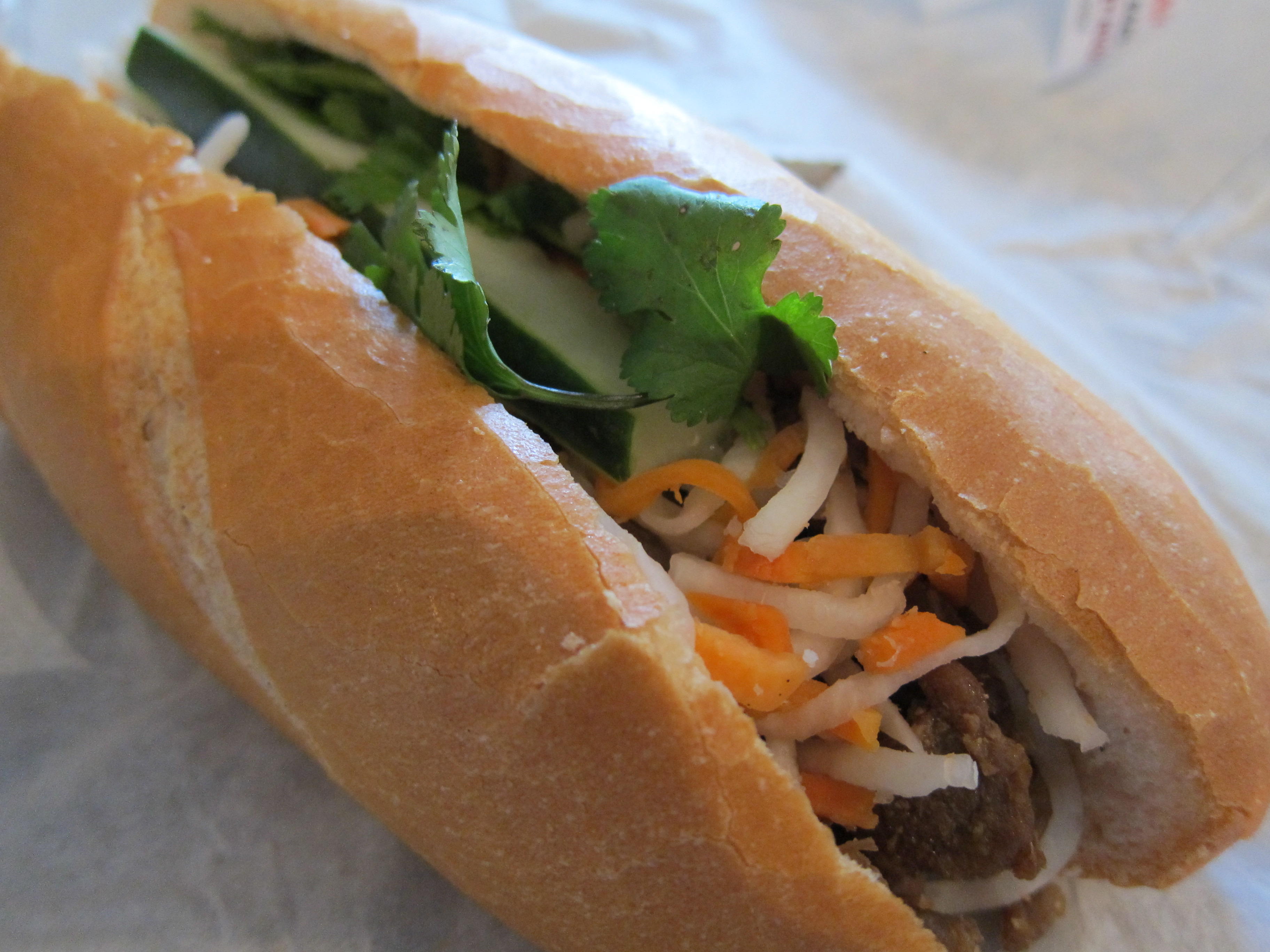
Roast pork banh mi – with a generous helping of cilantro.

The selection of sandwiches contains all of what you would usually expect, but there are also a few more unique items like a vegan lemongrass tofu banh mi. We ordered the roast pork, the shredded pork and our go-to, the lemongrass chicken. The lemongrass chicken was well-seasoned but a little fatty. We were warned against the shredded pork by the server because she said “Americans don’t usually like it,” and we have to admit the little julienned strips of skin were not our favorite. The roast pork however, was excellent. We also appreciated the full cucumber spear, the light pickled daikon and carrot slaw and the generous helping of cilantro. Nhu Lan also bakes its own bread and you can buy the delightfully fresh baguettes right in store (check out the rack of bread in the photo above).

Thanks, we did!

So how did Nhu Lan stack up in the banh mi battle? The bread at Nhu Lan was a hands-down winner, but we slightly prefered the meat fillings at Ba Le. On the other hand we liked the cucumber spear at Nhu Lan and the fact that they didn’t use any mayonnaise. We also appreciated the cases of smoothies, salads and desserts, as well as the wide variety of baked goods and dessert items. While we can see why Nhu Lan is a favorite, we’ll probably stick to the more convenient Ba Le.

Leave a comment

Filed under Reviews

The Red Bees of Brooklyn

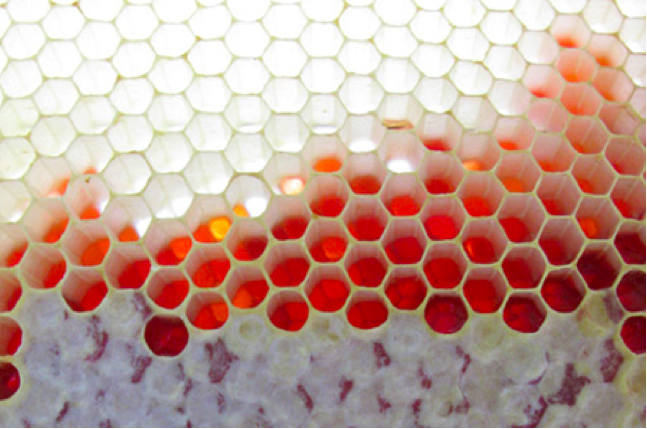
Red Honeycomb from the Red Bees of Brooklyn

Typically bees make honey from the nectar of flowers, but apparently sometimes they develop a taste for some stranger foods. Enter the red bees of Brooklyn. Some beekeepers in Brooklyn caught notice of the unusual bright red color of the bees and their honey, and sought to figure out just what the bees were consuming. As it turns out, instead of dining on the usual feast of clover and other wildflowers, these bees were eating high fructose corn syrup and red dye runoff from a nearby maraschino cherry factory. Though bright red honey is pretty cool, it is not exactly a match made in heaven, with both the beekeepers and the cherry factory not quite sure what the next step is. We love trying different varieties of honey, and we’d be curious to taste some red honey – for the first time today we even tried pumpkin honey – however, we have to report that it doesn’t taste anything like pumpkins!

Leave a comment

Filed under Links

El Bulli’s Ferran Adrià on the Cover of Wired

El Bulli’s Ferran Adrià is known for his mind-bending molecular gastronomy, so it’s no surpise that ths creative and innovative mind is featured in Wired Magazine UK – he is also giving a keynote at the 2012 “Wired Event” in London. For those lucky enough to be in Boston, Adrià will be giving a lecture on October 3rd.

Leave a comment

Filed under Links

The Mystery of Sweden’s Green Princess Cake: Prinsesstårta

A Princess cake in Stockholm, by Peter Sunna

One of the most striking cakes we have ever seen is the Swedish Prinsesstårta, or “Princess cake.”  It is called a princess cake because it was said to be a favorite of the daughters of Prince Carl, Duke of Västergötland – princesses Margaretha, Märtha and Astrid. Since its creation in the 1930s, it has been popular for special occasions in Sweden. This festive cake is covered in green marzipan, one of the rare sweets to have green as its principal color. CakeSpy did a wonderful post researching why the princess cake is green (unfortunately the answer is still unknown). The cake, while beautiful, seems fairly labor intensive. Just take a look at the cross section on the Baking Obsession site for a better idea – the components are layers of genoise cake, jam, and buttercream, all covered by a dome of whipped cream and the distinctive marzipan. If you are feeling up to the task War and Yeast and have great step-by-step recipes. We think we will stick to getting the cake from the experts, Swedish Bakery (5348 N. Clark, Chicago).

1 Comment

Filed under World Eats

Finding Spiciness in Havana

Ojacy Curbello and her husband Cedric Fernando, co-owners of Bollywood restaurant in Havana (via Reuters)

NPR’s food blog, The Salt, has a fascinating profile on Cedric Fernando, co-owner of Cuba’s only Indian restaurant. The mission of his restaurant, Bollywood, is to take down the following (quite frequent) question: “Why doesn’t Cuba have any good spicy restaurants?” A Briton of Sri Lankan descent now transplanted to Havana, Fernando seems to be giving the city’s culinary scene just the spicy jolt it needed. Bollywood, which opened last December to exactly zero customers, has taken off as of late. Us visiting won’t do much to change the clientele, apparently – the restaurant seems to cater mostly to foreigners living in Havana and tourists – but hopefully locals will develop a taste for some of the heat that, in our opinion, is all too lacking in Cuban cuisine!

Leave a comment

Filed under Reviews

Brazil: Suco de Clorofila (Chlorophyll Juice)

The rundown of juices available at the trifecta of Açai bars in Farrol de Barra in Salvador da Bahia, Brazil is mind boggling. However, most of the fruits in question were something we had heard of – Jackfruit, Apple, Mango, Passionfruit, etc. However, one of the juice choices stood out as something utterly bizarre and untranslatable – Clorofila. Yes, that’s Portuguese for Chlorophyll. We were completely intrigued by the idea of ordering chlorophyll juice so one day we decided we had to try it. True to name, the juice was shockingly bright green – but the taste was something completely bizarre. It tasted like a mix of bubblegum, mint, green apple and pineapple. L likened it to the fluoride foam they used to put on your teeth when you went to the dentist as a kid (remember that?). While not disgusting, I don’t think we’ll ever order it again. Unfortunately we neither turned green nor started processing sunlight into energy. We also remain skeptical – was that really chlorophyll (even if it was just used as a colorant), or just a mix of juices that are green? Our hunch is towards the latter option. So, will we ever unravel the mystery of the clorofila drink? Can you help us?

Leave a comment

Filed under World Eats

Turkey: Dining Under the Galata Bridge in Istanbul

Some destinations have “must-do” experiences, visiting the Eiffel Tower, the Golden Gate Bridge, etc., but our favorite requisites tend to be food-related. One quintessential Turkish dining experience is enjoying a meal under the Galata Bridge that spans the Golden Horn in Istanbul. In terms of natural and architectural beauty, Istanbul is a grand city, and the Bosphorus plays a huge part in its history and the landscape. Though we found plenty of awesome cheap food in Istanbul, you can hardly beat the panoramic setting of the Galata bridge. It’s also the perfect place to take in some of the city and its people. The bridge is always bustling, full of pedestrians and fishermen. If you’re craving a Galata dining experience, there are two ways you can go, dining under the bridge itself, or dining on the neon-bedecked fishing boats docked on the Eminonu side of the river.

We chose to eat underneath the bridge, (partially because we ended up on the side of the river opposite of the neon boats). There we found a range of eateries serving seafood, from dirt cheap to more expensive, packing in both crowds of tourists and locals. The cuisine is not the draw though, the views are. We found a restaurant serving simple fish sandwiches for 5 Lire and a particularly potent Turkish coffee. Next time around we would love to try the neon fish boats, which were literally jumping and rollicking and blasting music as the sun set.

Leave a comment

Filed under World Eats