Tag Archives: Brazil

Finding the Best Açaí in Rio de Janeiro: Vero Suco

Vero Suco
R. Sen. Dantas, 76 – Centro
Rio de Janeiro

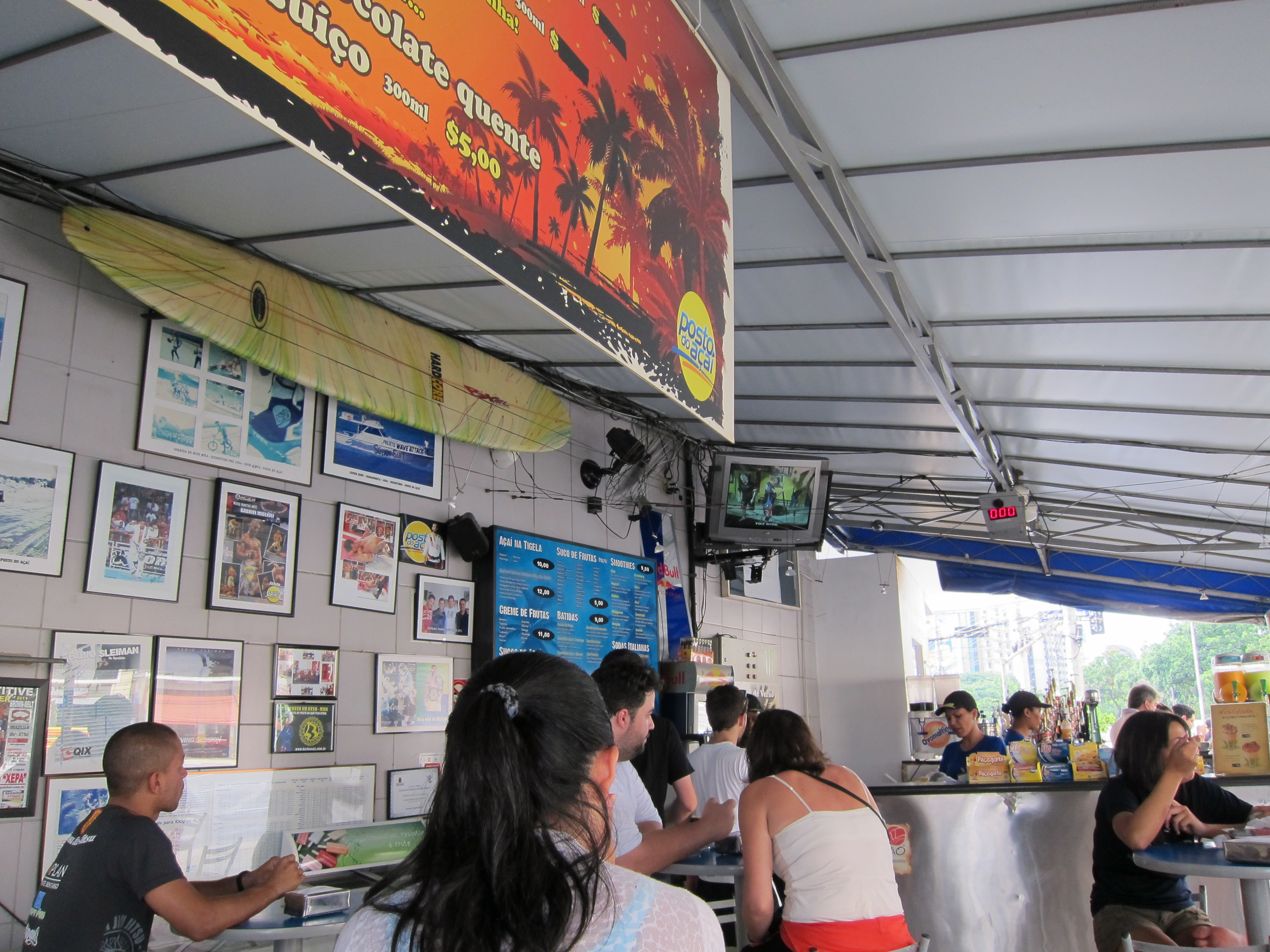
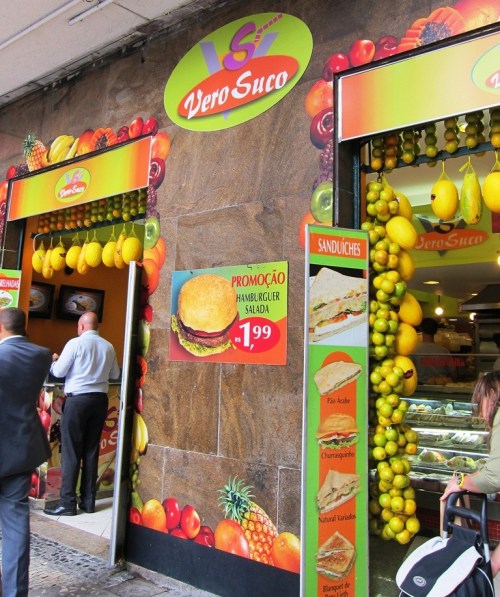
brazilVero Suco is a typical Brazilian juice bar – fresh fruit piled on the counter, a somewhat dated 1980s look and a giant menu (and conveniently located just steps from our apartment!) There were also a variety of sandwiches also for sale for less than R$ 10 apiece. They were passable, but the juices and açaí were definitely the stars of the show.
VeroSucos

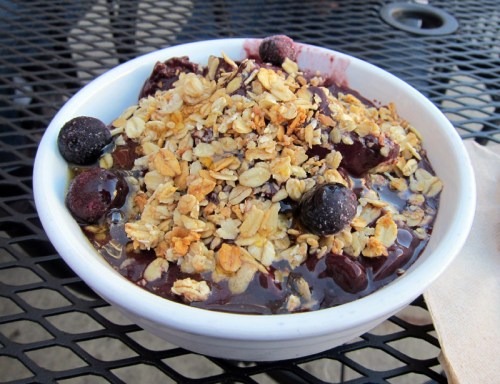
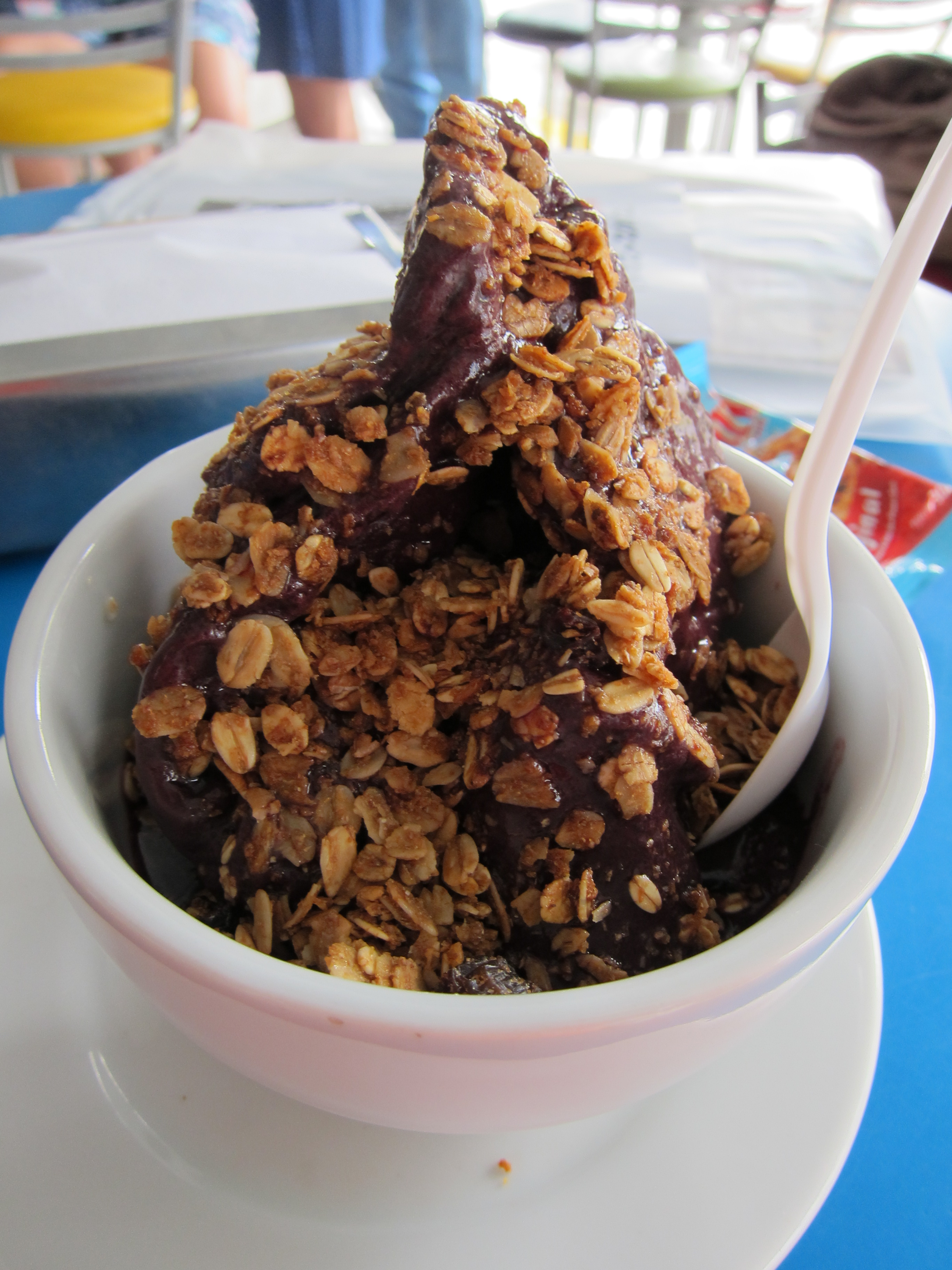
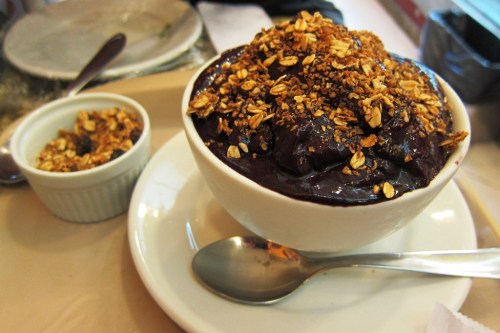
We got an açaí bowl for 8.90, which had 500 mL of açaí . We went two times: the first time the bowl had an excellent taste and texture, but was a little disappointing the second time. Regardless, Vero Suco was the first place in which we were served granola in a side dish. We are used to a small sprinkling of granola or a small granola packet. However, the bowl of granola was a revelation! This way, we can add granola as we see fit, bit by bit. A standard granola package has too little for an entire bowl, and getting it batida (mixed in), while tasty, denies you the visual appeal of fresh granola on top of the purple açaí. This was one of our favorite açaí bowls in Rio so far, and we enjoyed the price and the copious amount of granola.

Value: 4/5. A 500 mL bowl, with free granola, was R$ 8.90.

Taste: 10.5/15. Very good. Tasty, but could have brought out more of the fruitiness in the açaí and other accompanying fruits.

Texture: 7/10. Good. Our first visit was easily 9/10, but our second visit it was too grainy. We worked out an average score here.

Granola: 5/5. Excellent. Served in a separate cup, including two full cashews.

Extras: 4/5. Seating is provided (always a plus), but like all places in Centro, is inside and a little crowded/stifling. This is made up for by the brightly painted walled and extensive fruit decorations. Service is prompt and efficient, but they lose a point for not bringing us two spoons!

TOTAL: 30.5/40
Vero Sucos Acai

While there, we also decided to try some of Vero Suco’s actual juice offerings. Beyond the more typical juices of abacaxi (pineapple) and maracuja (Passion fruit) we were excited to see  beterraba (beet), acerola, graviola and cacau juices. The one that intrigued us the most was cacau, which means “cocoa” in Portuguese. M, of course, upon seeing this on the menu ran up to the counter to order one. We soon found out, however, this is not a chocolate juice. Much like another popular Brazilian juice, Caju (cashew), this juice is from the flesh of a fruit usually harvested for nuts. So cashew juice is from the fruit of the cashew, cocoa juice is from the fruit of the cocoa.  The fruit is particularly mild, and doesn’t really taste at all like chocolate.

Leave a comment

Filed under Reviews

Brazil: Delírio Tropical

Delírio Tropical
R. do Rosário, 135 – Centro
Rio de Janeiro

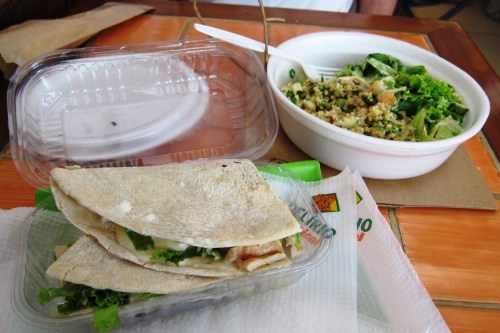
brazilDelírio Tropical is something like a Brazilian Panera, catering to the lunch rush with a variety of (relatively) healthy salads and sandwiches. For a first time visitor the choices may be somewhat daunting, as is the ordering process. You are handed a printed menu of choices (which changes daily), you then go and pay at the front and then go back to the counter and hand the sandwich maker your ticket: there is a different area of the counter for salads, sandwiches and desserts. Okay, maybe that is not so complicated, but when the restaurant is jam packed, loud and elbows are flying, it seems a little more confusing.
???????????????????????????????

The main stock in trade of Delírio Tropicala is mix-and-match salad bowls and sandwiches. M got a double salad bowl (R$ 15.90) with 1/2 Quinoa Salad and 1/2 Caesar salad. Other salad options included Tabbouleh, the “Mineirinha” with  zucchini, tomatoes, onions, black olives and Parmesan, and  the “Fernanda” with chard, mango, strawberry, and kiwi, among other options. The salad menu changes daily, so you are never short on choice. L ordered (after a great deal of confusion on ordering processes and M then messing up her order again) a worth-the-wait chicken caesar wrap on “pao arabe” – what Brazilians call flatbread. There is also the option to build your own sandwiches, or additionally pick from soups, quiches and crepes. At the end of the counter is a variety of sweets including the intriguingly named “brigadeiro cone.”

DelirioBread

There is a little area in front to sit, or a more tables on the second floor. However  most people seemed to take their food to go in little paper bags. We definitely understand why this place was so busy with the Centro office crowd during lunch. It was a nice change of pace from heavier fare and fried salgadinhos. Maybe next time we will even try to brigadeiro cone!

Leave a comment

Filed under Reviews

Pastry Post-Doc in Brazil: Cuscuz

brazilWe were intrigued when we saw a food cart on our street in Rio selling “Cuscuz.” Cous cous, as it is known in English, is very popular in Brazil, due to the large amount of middle-eastern immigrants to Brazil. There are restaurants selling savory cuscuz throughout Brazil (especially in São Paulo) but this version with the same name is something different. More precisely, it is known as cuscuz Carioca or cuscuz tapioca. This sweet version consists of sticky tapioca, condensed milk and a topping of shaved coconut. For a mere R$ 1.50  (about $0.75), you get a little plastic box of cuscuz to go. Now, it is not the most attractive dish, but it sure is tasty, and perfect for an afternoon snack. Fans of tapioca pudding will go gaga for this Brazilian treat, one of the most emblematic Carioca street dishes. Here is an exceedingly simple recipe for cuscuz tapioca in Portuguese. Though you can make it at home, if you are in Rio you will never have to!

Cuscuz

Cuscuz from Rio de Janeiro

Leave a comment

Filed under Pastry Post-Poc

Pastry Post-Doc in Brazil: Biscoitos Globo

brazil

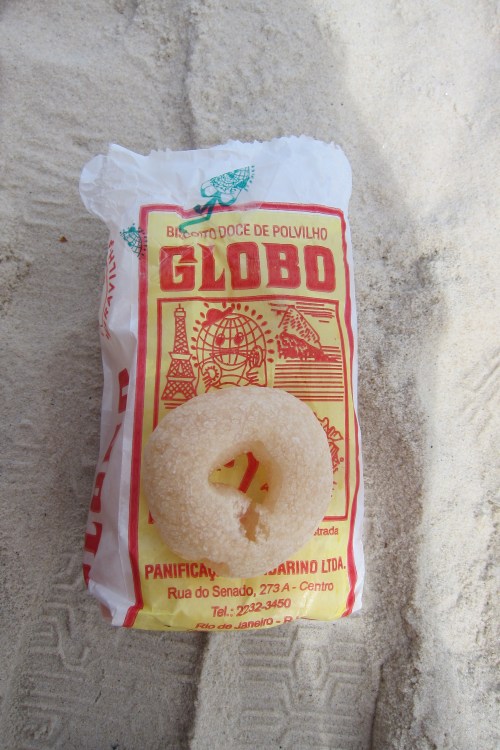
Having just arrived in Rio, we decided to spend our first day relaxing like any good carioca would: on the beach! We slept in and spent the second half the day sitting on Copacabana beach in celebration of M’s birthday. Fans of the blog will have already read our previous post on How to Enjoy a Brazilian Beach, and thus be in the know about lounging around in this most relaxing of full-service food establishments. True to form, just after we bought our chairs and umbrella, streams of vendor began sauntering by (though we noted that there is perhaps more bric a brac for sale in Rio, and less food, as seen in Salvador). As always, the beach did not disappoint, and we were offered, ice cream, popsicles, roast peanuts, soda, cangas, and many other offerings. We were waiting, however, for a bag of Biscoitos Globo – a light, doughnut-shaped snack that have become a Brazilian beach icon, especially in Rio de Janeiro.

IMG_7007

You can imagine our annoyance when the first biscoitos seller came by and stopped short of our stall before turning around; we had to wait another frustrating 20 minutes (under the sun watching the waves – note the sarcasm) for the second Biscoitos Globo to come by. We ordered a pack of biscoitos doce (“sweet”), for R$3 (about $1.50) which come in a red bag, as opposed to the green-bagged salgado (“salty”) variety. Having never had them before, we think they are a fairly unique treat: a light cookie, ring-shaped, crispy but soft, made from corn flour, and unlike many other Brazilian cookies, they are not overly sweet. The texture is extremely light and airy – almost like an un-cheesy Cheetos. The best part for us: their retro packaging with a distinctive globe mascot. We feel like he could be our mascot as well!

Leave a comment

Filed under Pastry Post-Poc

The Pastry Post Doc Goes to Brazil

brazilWe are in Brazil! The second half, or should I say, the second two-thirds of our trip has begun. We are excited to be back in Brazil, a country that likes sweets and pastries as much as Portugal, but also has the benefit on many unique fruits, açaí bowls and amazing cosmopolitan dishes that derive from Native Brazilian, African, Middle Eastern and European influences. We are just getting settled in – and our Internet doesn’t seem to work in the rain (which Rio de Janeiro has been getting a lot of) so stay tuned.

Leave a comment

Filed under Note, Pastry Post-Poc

Brazil: Brazilian Bowl

Brazilian Bowl
3204 N. Broadway
Chicago, IL

It seems appropriate that for our last post before leaving for Brazil we post about one of the newest Brazilian spots in Chicago, and one which has quickly become one of our favorites. So you may know that we have long been on the hunt for Acai away from Brazil. This hunt led us to Brazilian bowl, which opened up last summer in a convenient Lakeview location. Brazilian Bowl is a brightly-colored restaurant, whose focal point is a large ice cream counter and a “Brazil Bowl” assembly area (more on that later).

BrazilBowlInterior

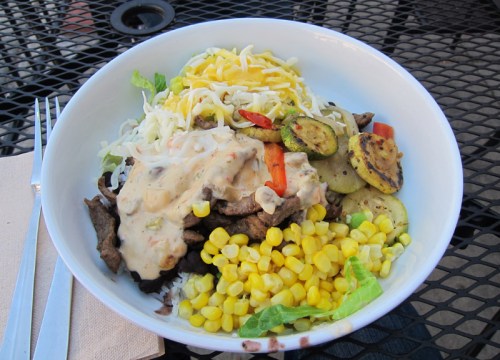
Much like Feel Rio in Lisbon, Brazil Bowl is bringing to Lanchonete to the Brazilian diaspora. The focal point is the “Brazilian Bowl” which is an assemble-yourself bowl of your choice of meat over rice, and with a wide variety of Brazilian-inspired toppings. ($6.95 for Steak, Turkey, Pork, or Sausage; Vegetarian is only $6.15). For main courses, Brazilian Bowl also has typical Brazilian classics like Feijoada (7.95) and a Bahian-inspired shrimp dish with yuca, dende oil and tomatoes ($8.95). M piled his Brazilian bowl high with fixings: opting for the steak, he paired it with a veggies, corn, lettuce, cheese, and a variety of spicy sauces. While the result was filling and tasty, it was not exactly brazilian. We doubt you will ever find the dish anywhere in Brazil. Perhaps Brazilian bowl is to Brazilian as Chipotle is to Mexican food? But at the same time, a tasty and filling inexpensive lunch spot is not a bad thing, especially with this variety of flavor options!

BrazilianBowl

However, the real star of Brazilian bowl were the fruit options, including our favorite, the açaí bowl. There were two options – $6.95 a piece for either acai/blueberry/agave, or acai/banana/honey. The açaí was delicious, and definitely one of our favorite in Chicago – creamy and with a good amount of toppings. It transported us directly back to Bahia. You can also get smoothies for $3.75 with creative Rio-based names like Copacabana ( strawberry, banana and apple juice) and the Ipanema (Mango, banana, kale and coconut milk).

BrazilBowlAcai

In terms of salgados (salty snacks) there are Brazilian Empanadas, Empadas, with a variety of fillings ($2.25) as well as the chicken-filled coxinhas ($2.25). We were also delighted to sample some pães de queijo (2 for $.195, 5 for $2.95, 10 for $5.49). We make a pact to try these at every Brazilian restaurant, but we are sad to say that  these pães were almost a little too cheesy – who would have thought wed ever say that? Mainly because it threw off the typical tapioca-to-cheese ratio. Next time we will be sure to sample some of the exotically-flavored gelato in some unusual flavors ( such as açaí- yum, or goat cheese). For the açaí bowl alone, we will definitely be back to Brazilian Bowl, post-Brazil.

Leave a comment

Filed under Reviews

Brazil in Portugal: Feel Rio

Feel Rio
Rua Crucifixo 108
Lisbon, Portugal

brazilWe did not set out looking for Feel Rio – it found us while we were on our way to the iconic San Justa Elevator in Lisbon. However, when did we ever refuse an açaí bowl? Feel Rio had a traditional Brazilian lanchonete snack bar menu: açaí bowls, smoothies, salgadinhos, and some sweet snacks. There are only a few tall tables around the front of the store by the window, and it seemed to be mostly a popular takeout spot. Even beyond snacks, Feel Rio seemed to be a meeting point for the Brazilian community of Brazil, and there were flyers and postings about Brazilian businesses and events in the area.

FeelRioAcai

We ordered our two favorite Brazilian snack dishes from our time in Salvador: an açaí bowl, topped with banana and granola, and a couple of pães de queijo. They made their smoothies and açaí bowls out in the open with fresh fruit, so you could definitely tell they were fresh. On the downside, the pães’ cost seemed a little steep. But to our surprise, they were excellent: a firm crust, a cheesy center, not too gluey, and warm. Potentially the best we have had outside of Brazil!  The açaí bowl, however, was more of a disappointment. It was quite sizable, and came with a topping of bananas and guarana syrup (the granola was extra). While the flavor was alright, it came out with a surprisingly grainy texture, not the milky smoothness you would expect. Perhaps too much açaí concentrate? No matter though. After our famously unsuccessful attempts at trying to recreate the açaí bowls at home, who are we to judge!

FeelRio

We liked that Feel Rio brought the lanchonete concept to Lisbon. Feel Rio is a perfect place for a snack, a light lanche or a juice when you are in the Chiado area. Though Lisbon may be a far cry from the beaches of a Guanabara bay, you can still pop in for your Carioca-style Açaí.

Leave a comment

Filed under Reviews

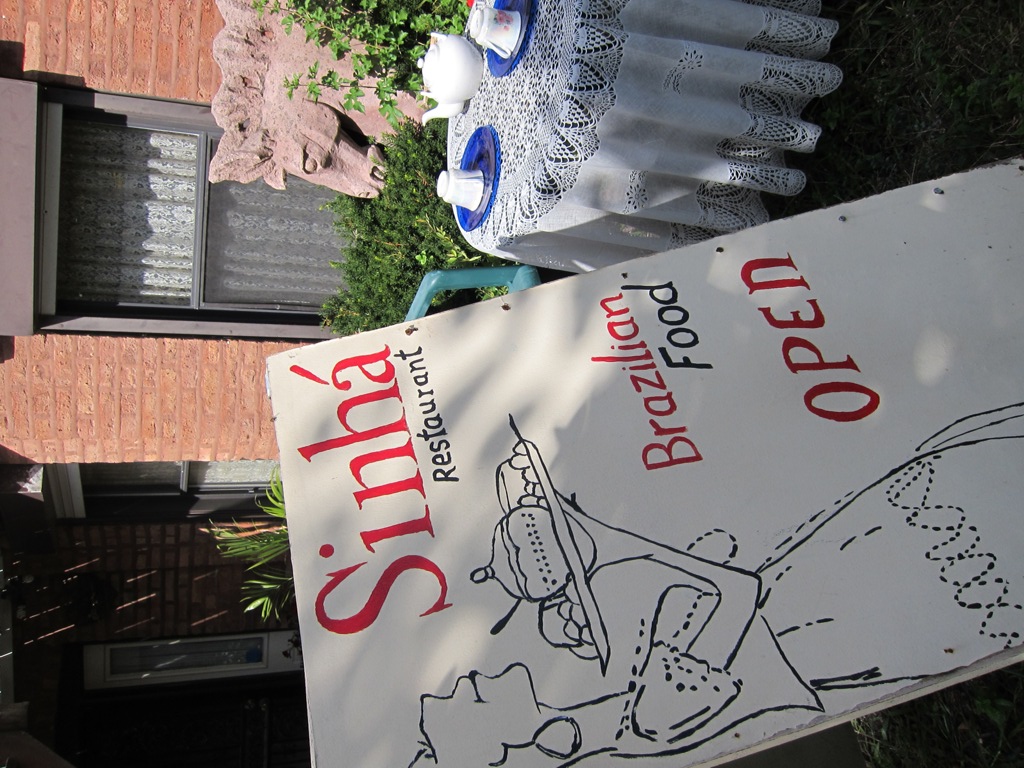
Brazil: Sinhá Elegant Cuisine

Sinhá Elegant Cuisine
2018 W Adams
Chicago, IL

There is nothing better than going over to your grandma’s house for dinner. Many of us, sadly, do not have Brazilian grandmothers – but if you live in Chicago, you can do the next best thing  and head to Sinhá Elegant Cuisine – where chef and owner Jorgina Pereira will serve as your honorary avozinha (grandma) for the day. Like any good grandma, Sinhá Jorgina has enough food for roughly three times the amount of people expected. The main event is brunch, which is held every Sunday at 2 and 4 PM, and also in a smaller form on weekdays.

The little house in which Sinhá dinners are held is within a stone’s throw of the United Center. After ringing the bell to be let in, you are led up the stairs into a drawing room where you are offered some Jamaica (hibicus tea), and those who have chosen to BYOB can uncork their bottles. The drawing room is all glass, antiques and mirrors, and while we were waiting we perused coffee table books about Brazil. Waiting for the buffet we were offered appetizers of coxinhas (chicken fritters) and pão de queijo with queso fresco and marmalade. Both appetizers were excellent, and the plates set at our table were instantly consumed.

After appetizers, we were all led downstairs to the basement for the main event, where there was a mishmash of tables packed into every corner of the small basement. And by packed, we mean packed (as you can see above).  This is not a place to come if you are nervous about meeting new people or having your personal space invaded. Our group of 6 was lucky to get our own table, but many others, especially smaller parties, were seated at a table with strangers. Remember, it is grandma’s house, and everyone is family! Once we were seated, Sinhá Jorgina came in and introduced the various dishes and gave a little history and explanation behind each one. The star of the show is her feijoada, one of the emblematic dishes of Brazilian cuisine, made with a variety of stewed meats (usually various types of pork, sausage and beef) and beans, served over rice. And of course, everyone is convinced their own granny makes the best feijoada, and we found Jorgina’s rendition to be excellent.

Alongside the giant pan of feijoada, there was an entire buffet of other meat dishes and a prodigious amount of sides. The typical Brazilian accompaniments to feijoada, farofa and collared greens, were also present and quite tasty. There was a savory pulled pork, black beans and rice flavored with bacon, pesto chicken skewers, salmon and a beef tenderloin carving station. For those more vegetable inclined (as Brazilians are not), there were a variety of tropical fruits, veggies and assorted salads. There were also sweet fried plantains, our absolute favorite fruit dessert! Adding a nod to the Italian influence of Brazilian cuisine, there was a homemade margarita pizza and homemade ravioli. We were sad to see there was not pão de queijo in the basement, but a very nice waitress brought some extras, all of which we happily inhaled.  The highlights were the farofa and the appetizers, and the veggies and many of the other side dishes faded somewhat into the background. The buffet was all-you-can-eat, and the supply of food was basically infinite, all things considered, the $30 price tag got you more than your money’s worth of food.

Apparently back in the day there was a whole lengthy samba music and dance performance at each Sinhá’s event. However, at our brunch, some wonderful acoustic guitar music was provided by Luciano Antonio. Frankly, the gentler musical interlude suited the mood better than a big production. There were two birthdays the day we went so there was a hearty singing of “Parabéns pra Você,” and each of the birthday boys and girls was given a red velvet flan cake (which was taken back into the kitchen and cut so everyone could enjoy a piece). The red velvet cake with a top layer of flan and mint sauce was an unusual combination, but it really worked well together. After the brunch, we were led into the trellised back porch for some coffee. We enjoyed a pleasant cafezinho while taking in the unusual sight of wine grapes growing on vines right next to the United Center. By 4, we were on our way, with the next brunch waiting in the wings. Sinhá’s was good, plentiful and classic Brazilian Home cooking and, Brazilian or not, you really feel like you are at a party at your grandma’s house.

Leave a comment

Filed under Reviews

Brazil: Suco de Clorofila (Chlorophyll Juice)

The rundown of juices available at the trifecta of Açai bars in Farrol de Barra in Salvador da Bahia, Brazil is mind boggling. However, most of the fruits in question were something we had heard of – Jackfruit, Apple, Mango, Passionfruit, etc. However, one of the juice choices stood out as something utterly bizarre and untranslatable – Clorofila. Yes, that’s Portuguese for Chlorophyll. We were completely intrigued by the idea of ordering chlorophyll juice so one day we decided we had to try it. True to name, the juice was shockingly bright green – but the taste was something completely bizarre. It tasted like a mix of bubblegum, mint, green apple and pineapple. L likened it to the fluoride foam they used to put on your teeth when you went to the dentist as a kid (remember that?). While not disgusting, I don’t think we’ll ever order it again. Unfortunately we neither turned green nor started processing sunlight into energy. We also remain skeptical – was that really chlorophyll (even if it was just used as a colorant), or just a mix of juices that are green? Our hunch is towards the latter option. So, will we ever unravel the mystery of the clorofila drink? Can you help us?

Leave a comment

Filed under World Eats

Food for the Festas Juninas / Festa de São João

Festa Junina Dancers by Christoph Diewald

June is a very important month in Brazil, especially due to the many mid-summer festivals called “Festas Juninas” – celebrating the three saints days of Anthony (June 13th – Santo Antônio), John (June 24th – São João) and Peter (June 29th – São Pedro). Festas Juninas are naturally filled with lots of merriment and delicious food. The events take place in large spaces with festive flags called an arraial, and there are elaborate dances called quadrilhas. The festivals are particularly popular in the Northeast of the country, and one rather humorous tradition is to dress up like a “caipira,” in a costume similar to what those in the US would think of as a “country bumpkin.” Though those outside of Brazil likely won’t be able to get the full Junina experience (though there are some celebrations in the US), there is certainly a lot of food to try. Corn based dishes are particularly popular including pamonha, bolo de fuba and Canjica (or Muzunga). Another popular Junina drink that I imagine would be a stateside hit is Quentão, mulled Cachaça. Peanuts also make an appearance in Festa Junina food, and a recipe for Doce de amendoim (Peanut Bars) can be found on the House of Pinheiro Blog.

2 Comments

Filed under Holidays, World Eats

Brazil: Broa de Milho – Brazilian Cornbread

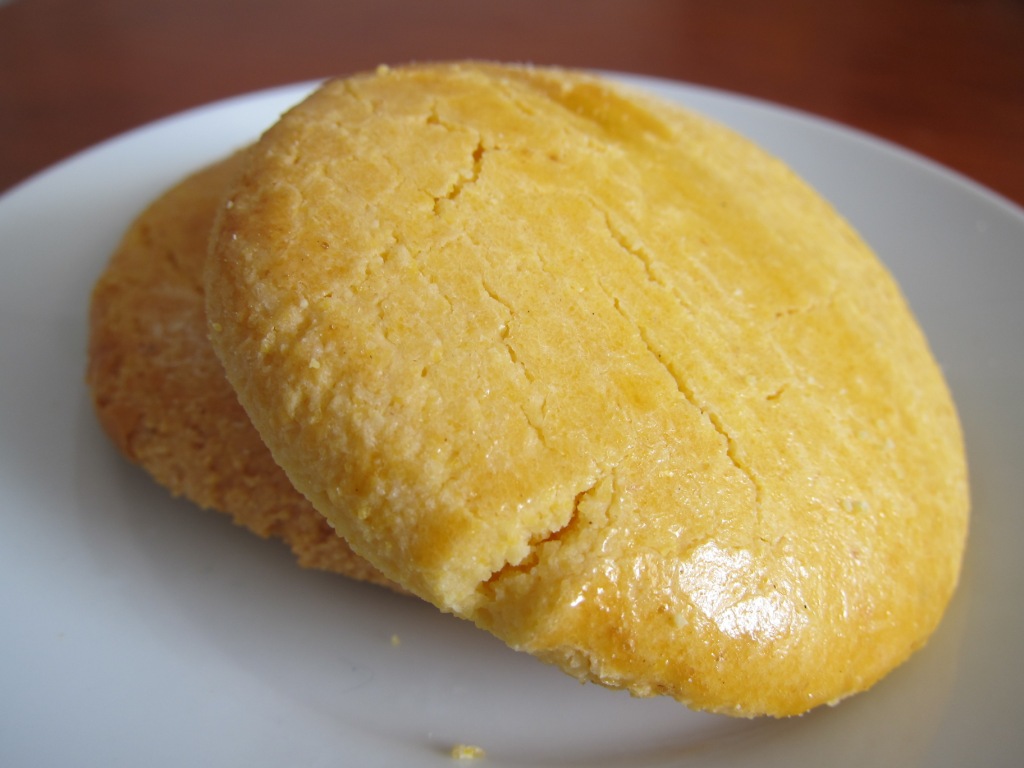
In Brazil, cornbread, known as Broa de Milho, often comes in cookie form (can’t complain about that), and is found pre-prepared in most grocery stores and bakeries. So if you’ve ever dreamed of snacking on some cornbread cookies with your tea, you’re in luck. The taste is not quite the same as US cornbread, and Broa de Milho have a more crumbly texture, less sweetness, and a shiny egg-wash finish. However, the one thing that really makes them stand out as true broa de milho vs. cornbread cookies is fennel seed (erva doce in Portuguese). There is a recipe in Portuguese to make broinhas “little breads” on Tudo Gostoso. The following English language recipe on From Brazil to You makes a monster-sized cookie/round, which is the traditional way to make broa, as opposed to in small cookie format. The name “Broa de Milho” may also refer to Portuguese Cornbread, which is more likely made in loaf form.

Broa de Milho from Bahia

1 Comment

Filed under World Eats

A new place for… Açai bowls in Chicago

One of our favorite things to eat for breakfast is an Açai Bowl, one of the few recipes from Brazil that we have NOT been able to perfect back in the states, sadly. So we were very excited to learn from Chicagoano about the opening of Brazilian Bowl in Lakeview (3204 N Broadway). The store, specializing in Brazilian food (including some of our favorite salgadinhos), opened its doors over the weekend, and our friends who went said they are fans. We are looking forward to going to Brazilian Bowl to test out some Açais very soon!

Leave a comment

Filed under A New Place, World Eats

How to Properly Enjoy a Brazilian Beach (Hint: Eat Everything)

Brazilian beaches have the stereotype of being all about beautiful people, sun, and skin. We tend to think that big stereotype gets out just so people won’t discover the real reason Brazilians go to the beach: to have a great time with lots of food. So much so that Rio’s mayor recently declared beach vendors as part of the city’s cultural heritage. What follows is what we learned from multiple trips to beaches in Bahia over two months: our no-nonsense guide to enjoying one Brazil’s best full-service and sinfully gastrononmic experiences. Really!

1. Relax! You’re on a beach.
Brazilian beaches vary widely in quality, but we are here to tell you that while beach quality as judged by swimming or picturesqueness is important, going to a beach with good-quality food options and service more than makes up for that. In either case…

2. Don’t bring anything except a little money.
Why? Because everything you need will be provided to you. Free yourself of all of your worldly possessions, and come to the beach prepared to be pampered, Brazil-style. If you bring a lot of stuff to the beach, not only are you asking to get it stolen, you are going to immediately divorce yourself from the great fun of the beach market!

3. Pick a chair, and sit in it all day. 
Any beach worth going to for the service will have a large set-up of chairs. Umbrellas too. Typically you can rent a chair for a few reais all day, or at some less-frequented beaches it is free. Pay the attendant whatever the going rate seems to be, and be this person’s friend: he or she is your one-stop shop to all the goods for the rest of the day.

See all these people? They know how to live life.

4. Survey the culinary landscape.
Remember when we said you got the chair all day? That means you have a ton of time to check out all the beach food. No, no, don’t get up from your chair! Yoou don’t need to, since the food comes to you. Tens of hundreds of beach food sellers, roaming amongst the beachgoers, selling whatever is on the market for the day. Investigate the offerings for a while: sit there and see what is being solid by the many roaming foodsellers, and if you can, check out the prices being paid by Brazilians. Also take a moment to sit in awe at the selection. Here, for example, is a shortlist of the food we encountered on a recent 2-hour beach excursion: soda, beer, fresh fruit juices, coffee, bottled water (with and without gas), picoles (popsicles), chips, queijo coalho, grilled shrimp, sandwiches, moquecas, oysters, sugarcane, cocadas (coconut cookies), roasted cashews, meat skewers, salgados (various savory fried snacks), fried fiesh, hard boiled eggs, acarajé, and cotton candy.

And this is only the food. There are a number of other items being sold by roaming sellers, like gum, suntan lotion, aloe, sunglasses, jewelry, kangas (Brazilian sarongs), dresses, hats, sandals, and towels. The world is at your disposal!

Picoleishion blasts cheesy Brazilian tunes from his colorful cart while selling the best picoles in Itaparica. He’s famous!

5. Sample everything.
After three months, we found this to be the best thing about Brazil’s street/beach market economy: nobody cares if you do not buy. Sample, sample, sample – but if you don’t want it, say no, thank you, give a thumb’s up to the seller, and go along with your day. They’ll give you a thumb’s up back, and move right along selling. No guilt tripping, no bargaining – especially on beaches where there are more than enough customers. It’s incredibly refreshing.

6. Get whatever you want!
You know those Brazilian steakhouses becoming so popular in the USA, where the meat comes to your plate as long as you ask for it? That’s how the beach is – wave people over, pay a little money to get as much or as little as you want, and keep buying and buying until you are full. Get full? Go swimming, relax, take in some sun, nap, wake up, and then eat more. Repeat ALL DAY, eating cheaper, better, and more comfortably than you could have in any restaurant.


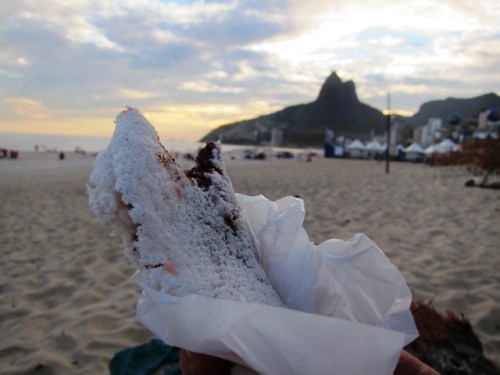
So nice we posted this photo twice: beijus filled with chocolate and coconut on Ipanema beach.
You know you’re jealous.

And finally,

7. Don’t necessarily avoid the crowds.
One of our best days on the beach was in two chairs absolutely packed in between other groups and families. We couldn’t even see the water. But you know what? People share! You make friends! And suddenly you realize the best part of the beach is not the water – it’s the community, the service, and the great food.

You’re welcome, travelers.

Leave a comment

Filed under Reviews

The Mixed Martial Arts Açai Shop in a Gas Station: Posto do Açaí

Posto do Açaí
R. Vergueiro, 1694 (R. Estela)
São Paulo, SP 04102-000

Only in Brazil, right? While we previously rated our favorite açaí spots in Salvador, açaí bowls are extremely popular all across Brazil. São Paulo, of course, is no exception, and as usual we were excited to find a relatively crowded local açaí watering hole only a block from where we were staying in Sampa. Normally, we would usually give little credence to a restaurant in a gas station – technically sandwiched in between two gas stations – but that is exactly where we found Posto do Açaí.  Our first time through was by accident – just stopping under their roof to get out of the all-too-typical Sampa drizzle – and we were initially baffled by the Brazilian jiu-jitsu paraphernalia on the walls. Turns out it’s a chain, and they sponsor a series of Brazilian martial arts groups. But, even better for us, we found Posto do Açaí to be surprisingly decent açaí in the heart of São Paulo.

The menu, similar to most açaí joints, contains no real surprises: açaí na tigela with various toppings; juices; and juice milkshakes (batidas). However, points to the Posto for offering an interesting twist, presumably descended from São Paulo’s rich history of Italian immigration: a wide variety of Italian flavor syrups to add to any açaí bowl or drink (for a surcharge of R$2). We sampled the Sicilian orange and lime beaten into a bowl, topped with granola, and felt it was on par with some of our favorite places in Salvador, especially given the extra exotic fruit. We also sampled one of their range of Italian sodas – not bad for a gas station joint!

Leave a comment

Filed under Reviews

Brazil: Deskolado Bar Futebol E Pizza

Deskolado Bar Futebol E Pizza
Just West of Shopping Barra – Exact address unknown
Salvador, Bahia, Brazil

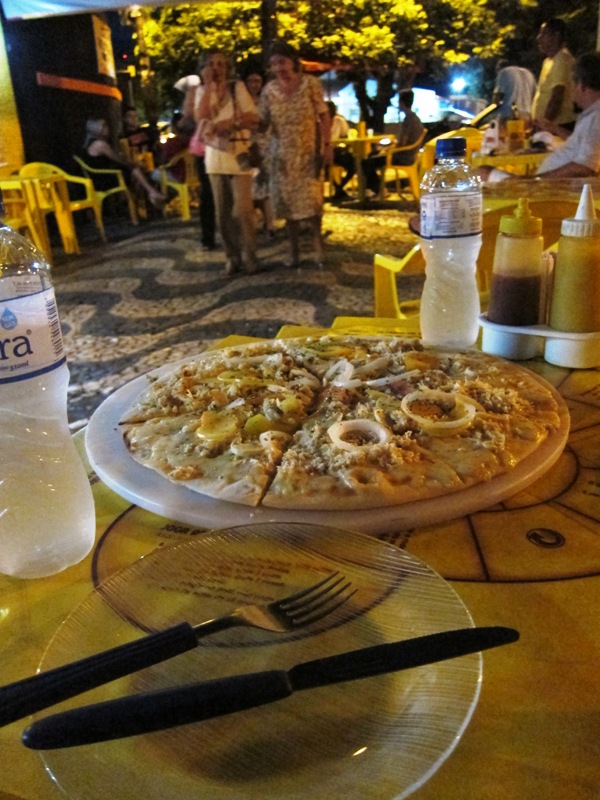
If São Paulo’s 1900 Pizzeria represents an elegant, refined pizza experience, Café Deskolado represents the quick, fast and cheap end of the scale, with its yellow plastic tables and menu written on poster board. Deskolado spills out into the street right outside the Shopping Barra mall, and most people prefer to mingle over their pizzas with gigantic bottles of Skol beer, while the latest futebol game is fed by satellite to the TV. The word “Descolado,” by the way, means something like “cool” in Brazilian Portuguese. The punny “Skol” in the name has been altered due to the fact that it is a Skol bar, an uber-popular Brazilian beer brand that makes itself known with a huge array of yellow and red branded merchandise.

Pizzas at Deskolado start at about R$13 for a large (about US $7) and R$16 (about $9) for a special large. This, as you may recall is a far cry from the US $25+ prices at fancy establishments, so this was a good place to soothe our sticker shock. Even at this lower price point, we were still spoiled for choice. The toppings at Brazilian pizza restaurants tend to be rather more eclectic (as we saw at Fogo 2 Go) than the typical American take out joint, and offerings at Deskolado including toppings of ham, Catupiry cheese, hard-boiled eggs, anchovies, etc.

Our classic pick was the chicken and Catupiry pizza – a white pizza that was laden with both Mozzarella and Catupiry cheeses, as well as onions.  The pizzas at Deskolado arrive quickly, on a tasty thin crust, perfectly crisp. It may not be an elegant, artisan pie, but it sure is tasty. Above all, Deskolado is definitely is a great place to hang out with friends and enjoy a heated Esporte Clube Bahia match. It was a rare night that we didn’t see the dining area of bright-yellow Skol-branded tables completely full. The pizza is good, but won’t blow your mind, and the addition of friends, futebol and drinks obviously account for some of this place’s appeal. Due to its location and good selection, Deskolado definitely became a staple for when we were craving some take-out food at night in Salvador. However, we would have to go elsewhere for our lunch cravings. No matter how much you may want a quick slice over lunch– pizza is for dinner only in Brazil!

Leave a comment

Filed under Reviews

São Paulo: 1900 Pizzeria

1900 Pizzeria
Rua Estado Israel, 240
São Paulo, 04022-002, Brazil

São Paulo is famed for its pizzerias, a fact of which Paulistanos are very proud. The city’s strong pizza heritage is thanks to waves of Italian immigrants that call São Paulo home. There are pizzerias of all stripes in Sampa, from utterly elegant to tiny one-woman operations. We were completely spoiled for choice in São Paulo and didn’t quite know where to start, so we were completely grateful when our hosts in São Paulo, Marciel and Angela, suggested we try 1900 Pizzeria.

1900 Pizzeria, which has several locations around Sampa, is an upscale establishment specializing in artisan Neapolitan pies. The name of 1900 Pizzeria comes from the fact that some iteration of the Pizzeria has been open since the year 1900. The recipe is also reportedly unchanged since that time. The restaurant itself was lively and bustling when we entered at the early, un-Brazilian time of 7 PM, and the partially open kitchen was working full-tilt. We could see pizza ovens burning, which was naturally a good sign.

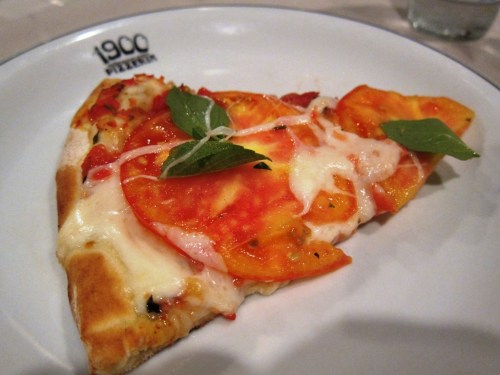
The menu was divided into “Traditional (Tradicionais)” and “Specialty (Especias)” varieties of pizza – with the specialty pizzas having slightly more adventurous combinations like bacalhau and dried beef (and slightly higher price points). Pizzas came in individual, medium and large sizes, and the prices for a large pizza ranged from 47 to 62 reais (about 25-35 dollars). Across 2 large pizzas we sampled 4 varieties (1/2 of a pie each). First up was the endive and Margherita pizza. We had never tried endive on a pizza before, but the slightly spicy endive made for a very delicious and fresh pizza. The classic Margherita was lovely, with a perfect distribution of tomatoes, fresh basil and buffalo mozzarella (see below). Our second pizza (which we tried with a whole wheat crust) was ½ four cheese and ½ arugula. The winner of this pie was the 4 cheese, which included the delicious Brazilian staple Catupiry along with gorgonzola, mozzarella and provolone. We slightly preferred the whole wheat crust, since it added a little more substance to the pizza. For dessert there were also several sweet pizzas, with nutella, strawberries, etc, apparently an exceedingly popular option in São Paulo pizzerias.

Though it was more than we are used to paying for pizza, we felt the added cost was worth it. The pizzas at Pizzeria 1900 were excellent, and we are happy that we got to experience a slice of São Paulo pizza culture with our friends. We only wish we could have more time in Sao Paulo to try some more pizza spots.

1 Comment

Filed under Reviews

Bahian Moqueca Tour, Stop 2: Paraíso Tropical

 Restaurante Paraíso Tropical
Rua Edgar Loureiro, 98-B, Resgate
Cabula – Salvador, Brasil

In general, it seems that Bahians do not like to eat at restaurants. Street food, little hole-in-the-wall places, vendors on the beach, these things Salvador does and does well; but the idea of dressing up and heading to an expensive restaurant for a long meal does not seem to be in the wheelhouse of most soterpolitanos. Which is why, as Chicagoans, we had to give Salvador’s most acclaimed restaurant a try.

When we read Veja Salvador’s annual food issue and their glowing reviews of Paraiso Tropical (Best Moqueca in the City! Best Chef in the City! ), we knew we had to go. That would be the difficult part: tucked away in the central Cabula neighborhood, the restaurant is almost impossible to get to from Barra. We had to take a bus to a large shopping mall and from there a cab – gasp! – through the only road leading to the isolated bairro. A confused cab driver to boot, and a trip of nearly two hours and R$40 (about US$25) and we were finally there.

But no one else was. We were so sure to make a reservation, we had to laugh when we arrived at 5:30pm on a Wednesday – about four hours before Bahians usually eat – to a huge, and largely empty restaurant. Inside, though, it was something of a paradise. The dress code seemed typically Bahian, with the only other couple donning jeans and tennis shoes. Simple wooden tables surrounded a central area of greenery. Our second floor table looked over the restaurant interior, while a large jabitiquaba tree’s branches nearly touched our plates – and oh how we wanted to grab some of the fruits!

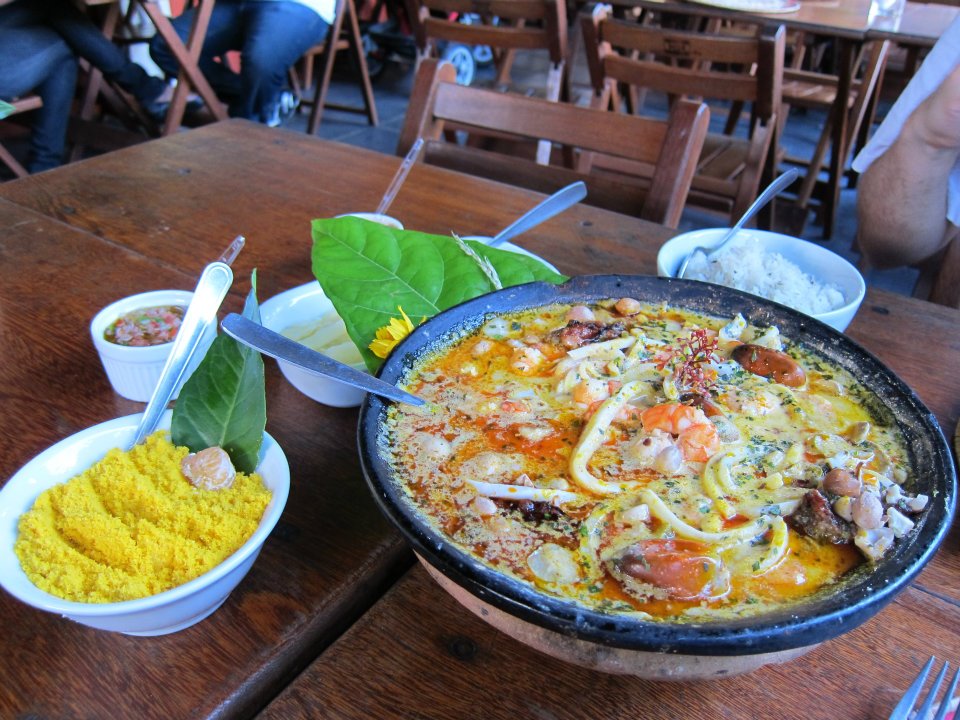
The menu was extensive, with many moqueca offerings. Beto Pimentel, the Chef, has done a masterful job putting inventive and welcome touches on Bahia’s most famous dish. His offerings were divided into traditional and special moqeucas, and we opted for one of the special shrimp moquecas, to split. To this day, we are not quite sure of all that was in it. Fibrous nuts, tomatoes, peppers, any number of small sea creatures, long noodles of gelatinous consistency, and much more dendê oil than we were accustomed too (and we believe less coconut milk). Accompaniments were shockingly good farofa, with an orange peel added to absorb a little moisture and add flavor; spicy sauce made of malagueta peppers (good for M and his spice addiction), dried yucca; and rice.

All of which was fantastic. The combinations of flavors of the moqueca felt more like intriguing contradictions we were pleased to be eating. The many different textures and shades of foods all cooked together was a seeming metaphor for all Bahian cuisine in one dish. Unwaveringly complex and yet consistently delicious, we know this would easily be the best moqueca we would have in Bahia, or at bare minimum, the most inventive. We were sure to eat slowly, savoring this dish, as we knew we would not be back anytime soon. But, of course, there was dessert!

Paraiso Tropical, in addition to moquecas, is famous for its roscas: think of these as fresh fruit juice, frozen, and then very lightly thawed to a smooth but icy consistency, then piled high on a dish. We opted for the mango. Admittedly there was not much to it – essentially frozen mango juice, but still smooth and fresh. We had to be sure to eat quickly, otherwise it was going to melt all over our hands.

Our best surprise of the evening: a second dessert. With the check, the waiter brought us a tray of fresh Brazilian fruits and a plastic bag. We were baffled about what to do with them until we saw the restaurant’s other patrons putting the fruits in a bag to take home. We were happy to oblige, picking up a week’s worth of fruits: guavas, pinhas, and a mango.

To be honest, if you only have a few days in Salvador, this is not a place you should go. Stick to the wonderful beach and street food and the more famous parts of town, where you can meet more locals. But if you have a lot of time, and are willing to splurge, meander your way to Paraiso Tropical and experience the finest dining the city has to offer. The ambience is definitely Bahian upscale – read: American casual – and your taste buds will not leave disappointed.

Our favorite part? We only learned upon trying to pay they didn’t accept credit cards, only cash. We had no cash, and no ATM. The solution – apparently a common problem – was to give us a sheet of paper with the chef’s bank account number, and instruct us to just deposit the money tomorrow. We could have left getting this meal for free. But for food like that we are more happy to pay, so the next day I walked into Banco do Brasil and deposited R$160 (about $90) into the account. Well worth it.

Leave a comment

Filed under Reviews

Queijo coalho, essential Brazilian beach food

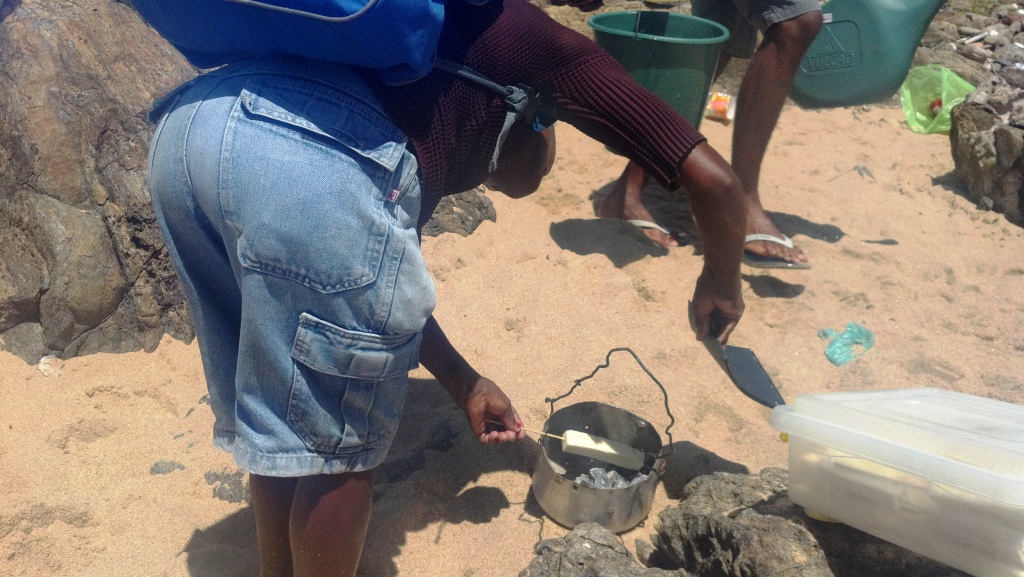
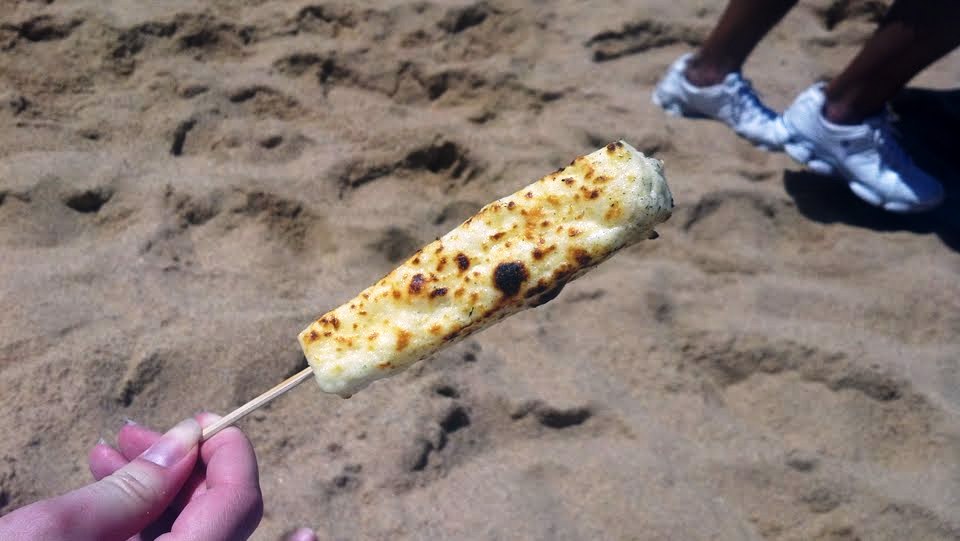
There is something about food on a stick that makes it all the more awesome. This trend carries over to Brazilian street food, which has many stick-laden options. One of our favorites among these was the queijo coalho – roast cheese. You have to love a country where roasting sticks of cheese over an open flame and coating it in rosemary is a viable beach snack. The cheese used to produce queijo coalho goes by the same name, and has a squeaky texture similar to cheese curds. The cheese is near-impossible to find in the US, but Carlos Figueira has a great roundup and review of some possible substitutes. Once on a stick, the cheese is roasted over a little handheld coal stove and coated in rosemary or possibly molasses, for the sweet-lovers. The roasting gives the cheese a bubbly, burnt outer layer. Surprisingly, it is the perfect complement to a hot day.

Queijo Coalho in production in Rio Vermelho

The finished product

1 Comment

Filed under World Eats

Bahian Moqueca Tour, Stop 1: Sorriso da Dadá

Sorriso da Dadá
Rua Frei Vicente, 5
Pelourinho, Salvador, Brasil

One of my first days in Salvador, I knew I wanted a moqueca. The word flows off your tongue smoother than the dende-oil infused coconut milk that is the backbone of this traditional Bahian seafood stew, and garnished with farofa (toasted manioc flour, usually with a little dende) and vatapá, there really is nothing like it. I was walking through Pelourinho, operating on the recommendation from a friend to try Panela da Bahia, a place he told me to go if I needed a “moqueca made with love.” Boy, did I!

But, sadly, the “love” would have to wait another day. Panela da Bahia was closed on this Monday, and I had to settle for the restaurant next door, another moqueca-specialist place called Sorriso da Dadá (“Dadá’s Smile). It was not until after my meal, returning home, that I discovered Dadá has one of the most famous restaurants in Bahia. So, to give the readers a luxury I forgot to afford myself, please read the following reviews and ask yourself: would you have gone to this restaurant? From Frommer’s, via NYT:

Dadá has made quite a name for herself and contributed to a renewed appreciation of Bahian cuisine. Brazilians and foreigners come from far and wide to taste her food, journalists write articles about her, and gourmet magazines rave about her restaurant. Her food certainly showcases the best of Bahian cuisine, specializing in seafood moquecas, vatapá, and bobó de camarão. However, Dadá may be coasting a little bit on her success. We found service uninspired and the prices higher than at other restaurants — typically 25% more than elsewhere. The food, however, was still as delicious as ever.

An OK review, I suppose. I’ll take uninspired surface as long as the food is justifiably delicious. However, my own guidebook, Bradt (2010), had this to say:

The restaurant takes its name from the perpetual smile of the former queen of traditional Bahian cooking, Aldaci ‘Dadá’ dos Santos. She began her career selling acarajé on the streets of Salvador. In her heyday Tropicalista & culture minister, Gilberto Gil was a fan of her moquecas & Dadá was serving her spicy, Afro-Brazilian dishes to distinguished visitors to Bahia, including Hillary Clinton. But when we ate here last, Dadá had either taken her eye off the ball or was busy in one of her other restaurants in Salvador or on the Costa do Sauipe. The food was bland, lukewarm & over-priced.

So, what to take from these two reviews? Potentially bland and lukewarm food with uninspired service? Turns out that is exactly what I got. And while the food was acceptable, it was a little pricey for what was received, and I would recommend to anyone they try any number of other solid moquecas in Salvador (three of which will have glowing reviews on ETW in the coming days).


Dadá’s restaurant is not an uninviting space, but I also didn’t find it the most welcoming. The windows to the outside don’t do the best lighting job, and I found the eating space surprisingly dark for always-sunny Salvador. On this day I had the restaurant to myself; an American couple were finishing up their meal just as I arrived, but otherwise the place was empty. Service was a little inattentive by Bahian standards (where service is usually inattentive; it is seen as impolite to bug the customers unless they want to be bugged), though Pelourinho usually operates on a more touristic agenda for the Europeans and Americans coming through seeking an authentic meal.

I decided quickly on a traditional fish moqueca, with a white fish filet cooked in coconut milk and dende, garnished with tomatoes, green peppers, and cilantro, and served with vatapá. It was not, however, served with farofa – something in the coming weeks I would come to cite as a cardinal sin.

Though this was my first moqueca in Brazil, and the flavors were new and inviting, I could tell there were problems. A lack of flavor punch, a watery moqueca broth, and the fish a tad undercooked for my taste (perhaps stemming from the thin broth, which probably needed more time to cook down). “Watery” is a word one should never have to utter in reference to a moqueca, as water is not an ingredient. But it tasted watery to me, and lucky for the restaurant I am not a Bahian, otherwise someone may have made a scene. Portions were generous, more than what was needed for one person at R$39 – but less than what one usually gets in Salvador for the same price, and better quality, elsewhere. The uninspired food left me hungry for what I knew were better moquecas in the city. And our next three posts will let you know: boy, did we find them!

StGeorge (Oxóssi) stands guard over the cash register at Sorriso da Dadá.

1 Comment

Filed under Reviews

São Paulo: Esfihas at Jaber

Jaber
Rua Domingos Morais, 86 – Vila Mariana
Sao Paulo, 04010-000, Brazil

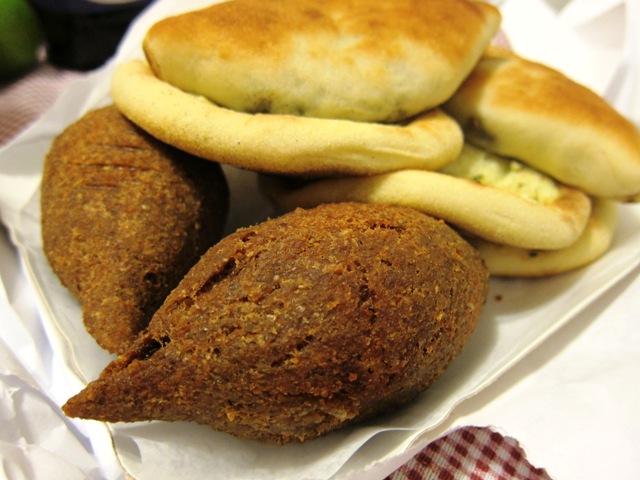
São Paulo, with its cosmopolitan populace, is home to a large middle-Eastern population – especially Lebanese residents. This of course means delicious Lebanese food, one of our favorite varieties. Some Lebanese-inherited dishes have become popular all across Brazil – including kibbe – ground beef and cracked wheat fritters and the esfiha – an open faced pastry with either sweet or savory toppings. There are Middle Eastern restaurants on almost every corner of Sampa, so were definitely spoiled for choice (much as we were for Pizzas, as we will write about shortly). Right around the corner from our friends’ place was a Lebanese takeout restaurant that racked up accolades from Veja magazine and the like for awesome Lebanese treats. The menu at Jaber had both individual dishes, hot small snacks (salgados), and huge-family-style platters, they seemed to be doing very rapid turn over on large take-out plates for hungry families.

kibbe and esfiha

Of course we were pleased to see both kibbe and esfiha on offer at Jaber, both of which are pictured above. We sampled 3 types of esfihas, Za’atar, Cheese and Endive. The Za’atar esfiha really impressed us – the topping on the pastry crust was nothing but a solid layer of spice – Za’tar is a spice mix of thyme, oregano, sumac, sesame and salt – and the flavor of the esfiha was nothing short of explosive. Also on the menu were varieties of Esfiha that are “closed”, kind of a Brazilian/Lebanese take on Stromboli, with the pastry folded over the filling. Sao Paulo made us esfiha addicts! One thing about Brazil – they definitely have a lock on the pocket-sized savory pastry – who knew such myriad wonders even existed?

1 Comment

Filed under Reviews, World Eats