The Mystery of Clorofila juice solved?

Clorofila

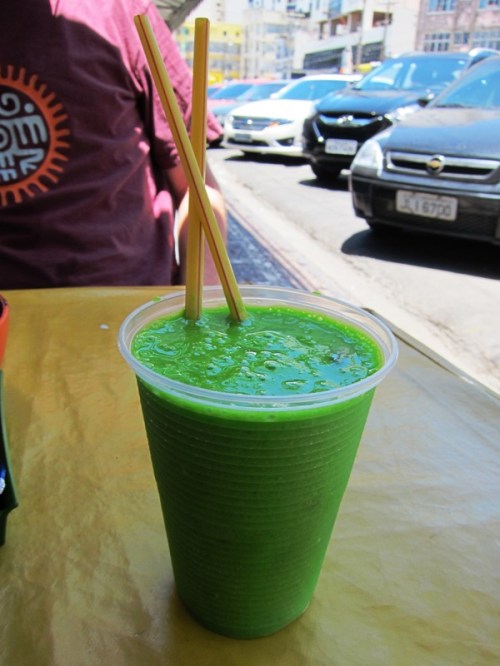
brazilIn Salvador da Bahia we tried a mysterious green liquid called “clorofila (chlorophyll)” at a juice bar that tasted somewhat unpleasantly like green bubblegum. However we have not been able to decode exactly what it was, or if the shocking green color was the result of a natural ingredient or dye. However we think we have decoded one of the major ingredients which would indeed give a natural green color – wheatgrass! We saw the sign below at Kice Sucos in Copacabana, which advertised Clorofila as a wheatgrass drink (broto do trigo). Though the drink we had in Bahia was surely mixed with other fruits and juices (as is advertised here), we now know why it was green. Thanks, Kice Sucos!

???????????????????????????????

2 Comments

Filed under World Eats

Sweden: Semla for Tuesdays in Lent

sweden_flag Semla (or as it goes by many other names: fastlagsbulle, laskiaispulla, or fastelavnsbolle) is a Scandinavian pastry strongly associated with Lent in Finland, Denmark, Iceland and Sweden. Semlor (plural) used to be eaten on Shrove Tuesday/Mardi Gras, however, it is now eaten throughout Lent, especially on Tuesdays. Semla seems pretty easy to make – and consists of a cardamom flavored sweet roll filled with whipped cream and almond paste. During this time of year, all of the bakeries in Scandinavia stock semla, and it is the perfect snack to enjoy with your afternoon coffee break, or fika. For those outside of Northern Europe, Camilla’s Cravings has a recipe for Semla.

Semla

Semla by Erik Boralv

3 Comments

Filed under Coffee, Holidays

Brazil: Classic Salgadinhos at Bar Urca

Bar Urca
Rua Cândido Gaffrée, 205 – Urca
Rio de Janeiro

brazil

Walking around the quiet street at the base of Sugarloaf, you can tell you are approaching Bar Urca not by the smells, but by the people. The entire concrete waterfront wall is covered with easygoing Cariocas enjoying greasy snacks and cold beer. These are Bar Urca’s stock in trade, as is its view, overlooking Urca beach on Guanabara bay. There are no tables here: Bar Urca itself is only a walkup counter in a corner building, though there is a bigger restaurant that serves a variety of seafood dishes.

BarUrca

The Interior at Bar Urca (squint and you can see the menu)

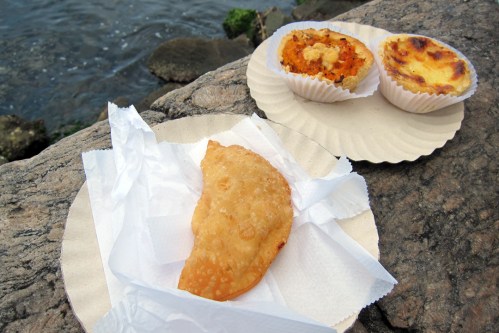
The assortment of salgadinhos (salty snacks) offered was wide: and included mainly cheese and seafood options. The options are listed on a tiny bulletin board on the back of the bar, not in the case itself. Good luck being able to read, or even see, the menu. Instead, ask the staff: we asked around, and the shrimp and crab dishes came especially highly reccomended. We ordered 3 salgadinhos for about 15 Reais apiece: the Shrimp Empada, the Pastel de Queijo (cheese) and the Pastel de Siri (Crab). The two pasteis were like little tarts, and the empada was a folded pocket of fried dough – a Brazilian empanada.

BarUrcaSalgadinhos

Bar Urca Salgadinhos by the water

The empada was the standout, and it was perfectly hot and flaky. Despite being in a pastry crust, the shrimp seemed fresh. The queijo pastel was a little more forgettable, but the Siri was also delicious, and had a hint of palm oil which gave it a Bahian flavor. We sat on the rock wall and enjoyed our treats as we anticipated the sunset. Though the salgadinhos are good, the best part about Bar Urca is its view, so make sure you are there on a clear day.

BarUrcaView

The View at Bar Urca, Rio de Janeiro


1 Comment

Filed under Reviews

Pastry Post-Doc: Limonada Suíça / Swiss Lemonade

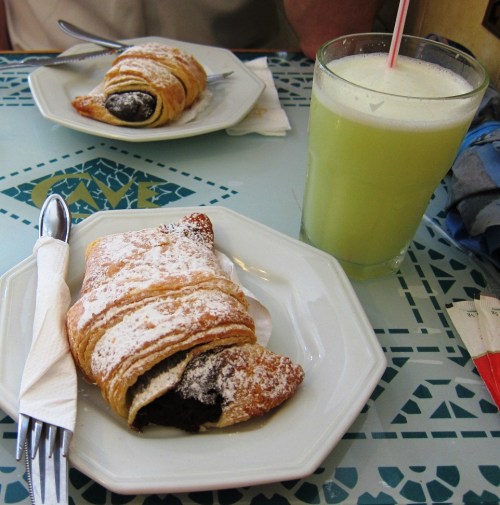
brazilThere is a heatwave going on right now in Rio de Janeiro, and it is pretty hot, even for the always-balmy Brazil (think 40 degrees Celsius – 104 degrees Fahrenheit). One delicious drink to enjoy on a particularly hot summer day in Brazil is Limonada Suíça (Swiss Lemonade). Don’t let the name fool you: it is actually a lime-aid, made with limes, sugar and condensed milk. Part of the confusion over the name comes from the fact that the Portuguese word limão can refer to various citrus fruits – including both yellow lemons (limão Siciliano), and also what people in the USA would call conventional green limes (limão Tahiti). In any case, we like green limes more that yellow lemons, so we are fans of this drink. Brazilians are fond of condensed milk, and even though it may seem like an unconventional choice for a beverage, the sum is definitely greater than the parts, and the drink is pleasingly tart, even despite its sugary ingredients. There are a few different varieties of Limonada Suíça you might try, including the classic with condensed milk, or a fizzy version with carbonation.

Limonada Suica and Croissant

Limonada Suíça and Chocolate Croissants at Confeitaria Manon in Rio de Janeiro

1 Comment

Filed under Pastry Post-Poc

The origins of Macaroni and Cheese and Thomas Jefferson

In honor of Presidents Day – we decided to share a little bit of presidential food lore – according to food legend Macaroni and cheese was popularized in America by none other than Thomas Jefferson. Of course, macaroni and cheese, or as it was known then (simply as Macaroni) was very different than its modern-day counterpart, and consisted with pasta layered with butter and cheese. Jefferson didn’t invent Macaroni and Cheese, as similar recipes were already known in Europe, but he was one of the dish’s popularizers in the United States after he first sampled it in Europe. There is actually a historical record for Thomas Jefferson’s foodie discovery, he was fond of pasta and even requested a pasta machine from Europe, which was listed in his list of possessions moved from Philadelphia to Monticello, and he certainly served Macaroni at official functions. Macaroni and cheese is purported to have been served by Jefferson as early as 1802, and it appeared in the 1824 Virginia Housewife cookbook, recipe adapted here. So for helping to bring Macaroni and Cheese to the USA, we say, thank you Thomas Jefferson!

Virginia Housewife Mac and Cheese

Recipe for Macaroni and Cheese from the Virginia Housewife Cookbook, 1824

4 Comments

Filed under Cheese, World Eats

Venezuelan Arepa Infographic

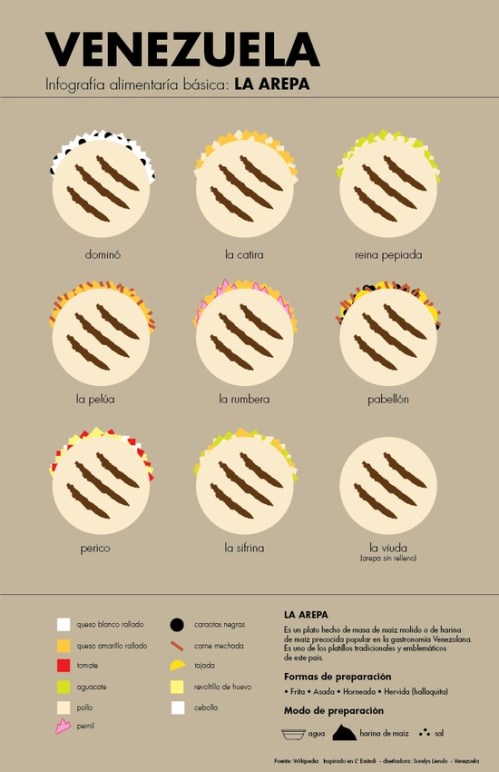
VenezuelaI found this infographic by Sorelys Liendo about Venezuelan arepas floating around on Pinterest (follow ETW if you haven’t already!) and I thought it was too good not to share. Check out all of the combinations – including the viuda (widow) – which has no filling. Arepas are one of the most popular foods in Venezuela and consist of a fried or grilled masa pocket filled with…pretty much whatever you want, as the graphic demonstrates. Adriana Lopez has a great history of the arepa for the curious, and here is a simple recipe. They really couldn’t be easier to make.

Venezuelan Arepas

2 Comments

Filed under World Eats

Pastry Post-Doc in Morocco: Amandine

Amandine
177 Rue Mohammed Al Béqal
40000 Marrakech, Morocco

Flag_of_MoroccoWhile in Marrakech we stayed in the famously labyrinthine Medina, and soon became accustomed to getting lost into its narrow streets and winding alleys. However, to only visit the Medina is to miss the other half of Marrakech: the ville nouvelle. The new city of Marrakech is a world away from the Medina: streets are wider, buses and cars outnumber foot traffic, and French cafes dot the landscape. One of the best French cafes in the new city, and a perfect place to stop in for a quiet respite is Amandine: both a tea/coffee shop and a patisserie. You can eat in the bakery itself (as we did) or in a larger tea room next door.

???????????????????????????????

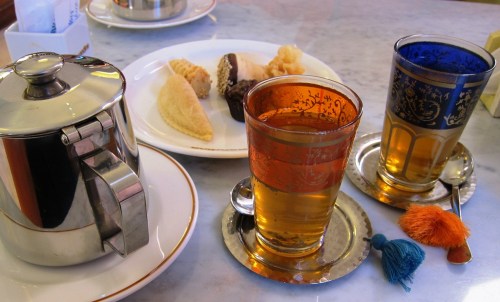
The interior of Amandine is bright and airy, and the attractive pastry case is filled with a wide selection of French and Moroccan influenced pastries and cakes. We found the gazelle horns here to be superlative, though there were dozens of varieties of other sweets to try. To be honest, we don’t know the name of any sweets we ordered other than gazelle horns, but since most Moroccan-French pastries are amalgamations of sugar, chocolate, honey and nut paste, we figured we couldn’t go too wrong (and we didn’t). After a lot of pointing at various confections we selected our drinks.  The mint tea came particularly recommended – so we got a teapot to share (30dh – about $4). The presentation was the finest we had seen at any café in Marrakech, and we liked the gilded multicolored teacups as well as the tassel-embellished saucers (which we searched for but could not find in Marrakech). And what could be nicer than sinking into a comfy red velvet lounge chair while enjoying all of your sweets. The service was friendly and relaxed, and it was a much needed respite from the bustling pace of the Medina. So if you are looking for someplace soothing to sample mint tea in the ville nouvelle, definitely check out Amandine.

???????????????????????????????

Leave a comment

Filed under Coffee, Pastry Post-Poc, Reviews

Vintage Food-Related Valentine’s Day Cards

Happy Valentine’s Day! Why not celebrate with some of these vintage food-related Valentines from the Vintage Valentine Museum: here are their collections of food-related cards and anthropomorphized food cards. For some more fun, here is an assortment of tea related cards from Tea with Friends.

SweetteaValentine

1 Comment

Filed under Holidays, Links

Pastry Post-Doc: The irresistable desserts of Momofuku Milk Bar

MomofukuMilkBar

Momofuku Milk Bar by Robyn Lee

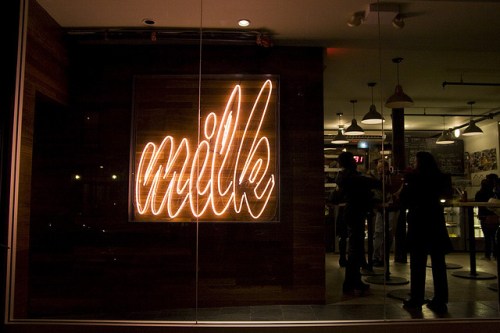
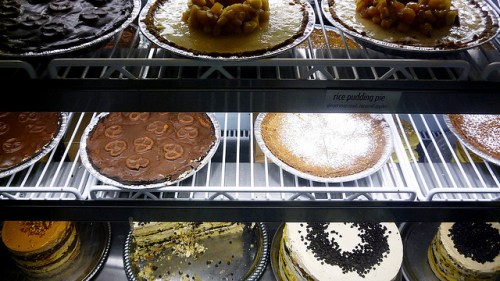
Meet Christina Tosi , the acclaimed chef of NYC’s Momofuko Milk Bar, who is known for her unique, whimsical and nostalgic desserts. We visited Milk Bar in 2010 and fell in love with Tosi’s creations, especially the cereal milk ice cream and the crack pie. However, we are not in NYC every weekend, so we are looking forward to recreating some of those recipes at home. For some of the cookies, there are even official Milk Bar mixes, and Serious Eats did a test of the mixes against Milk Bar-bought cookies (the compost cookie mix was a hit). Tosi came out with a Milk Bar Cookbook that has some of the delightful recipes from the store, which has further inspired bloggers. For other Milk Bar fans, we have found a number of recipes online we wanted to share with you. Feel free to share more in the comments section! Which are your favorites? I’m most looking forward to making the birthday cake, a riff on the childhood classic Funfetti.

MomofukuMilkBarCakes

Momofuku Milk Bar Cakes and Pies – by Gary Wong

Cookies

Cakes and Pies

Other

Leave a comment

Filed under Links, Pastry Post-Poc, Recipes

Paczki Day: A Polish-American Take on Shrove Tuesday / Mardi Gras

PolandWhen we were in Chicago for Fat Tuesday, it was not uncommon to have a friend or co-worker bring over a box of fresh Paczki. Paczki, a type of jelly- filled doughnut, originated in Poland (the official plural in Polish is pączki -pączek is the singular form), as a way to use up sugar and butter before the start of Lent. Unsurprisingly, Paczki Day is really big in Chicago, which has one of the biggest Polish populations outside of Poland. In Michigan, Hamtramck and Detroit are also epicenters of paczki culture. So what is a pączek like? The texture of a pączek is a bit denser than a jelly doughnut, and the jam fillings range from standard raspberry to more creative varieties, such as rose-hip or even guava (you may also see cream fillings).  Louisa Chu on the WBEZ blog lists some top picks for Paczki in Chicago, and DNA Info rounds out the list even further. Rest assured, if you are in Chicago, you can get your Paczki fix.

Paczki

Paczki options at Alliance Bakery by Chad Magiera

6 Comments

Filed under Holidays, World Eats

Finding the Best Açaí in Rio de Janeiro: Bibi Sucos (Leblon)

Bibi Sucos
Avenida Ataulfo de Paiva, 591A – Leblon
Rio de Janeiro

brazil

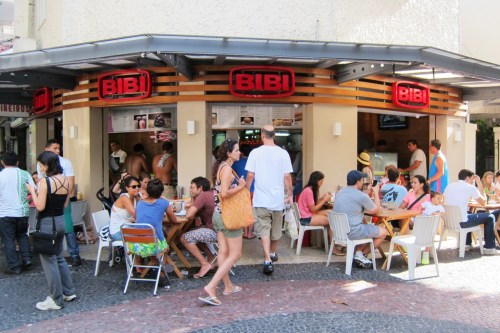
Bibi Sucos, located just past the Leblon/Ipanema border in Rio’s south zone, is an inviting place for sucos in an area of the city full of choices (Bibi has a few other locations in the city, including Barra). With an extensive menu of juices, sandwiches, and other options, it seems to be as great of a meal spot as an açaí destination. L&M, spending the day in Leblon, felt Bibi Sucos was worth a stop – our second in our quest to find the best açaí bowl in Rio! After some initial confusion over the menu – which does not denote mL sizes for the bowls – we settled on a pequena, whose size, as seen below, does not really fit with the name.

???????????????????????????????

Value: 1/5 Our pequena (by the look of it, about 500 mL, or more) was R$12.50, with a R$2 extra charge for granola. The extra granola charge put us off a bit, and raised the price. Total: R$ 14.50.

Taste: 12/15. Very good. Our açaí had a tasty açaí flavor with a few added fruits, but had the tendency to be slightly bitter in places.

Texture: 8/10. Overall smooth, but had hints of graininess that could have been worked out. Sometimes the graininess can be a good thing, but if it gets hints of gritty, we find it to be a turnoff.

Granola: 5/5. In a separate cup with cashew bits? Five points!

Extras: 5/5. Great other factors at Bibi. Extensive outdoor seating for a sucos places, along with refreshingly prompt service. The menu, in addition to an impressive range of açaí add-ons and sizing options, had a wide range of sandwiches, burgers, omelets, and salads available (all of which looked delicious). Best part: this was the first place to give us two spoons without us asking for them! 

TOTAL: 31/40 – Good enough for the smallest of leads over Vero Suco, our go-to place in Centro.

???????????????????????????????

1 Comment

Filed under Reviews

Lunar New Year in Liberdade, São Paulo

JapanbrazilToday is Lunar New Year – the welcoming the year of the snake. Fact of the day: Brazil has a substantial East Asian population, including the largest population of Japanese-descended persons outside Japan. São Paulo in particular is a major Japanese-Brazilian (nikkei) center, with Japanese cultural heritage on full display in São Paulo’s Liberdade neighborhood (which means “freedom” in Portuguese). Though originally settled by the Japanese, today the area is also home to many recent Chinese and Korean immigrants. Due to this, Liberdade is a great place to experience Lunar new year!  In 2011, 200,000 people attended new years celebrations in Liberdade alone.

LiberdadeNewYear

Chinese New Year Celebration in Liberdade, 2008 by Bianca Bueno

Liberdade is a very cool place, marked by its distinctive red lamp posts and a red Japanese gate (torii) at the entrance to the main street. We visited Liberdade in 2012, right after new year, but the place was still hopping. The neighborhood is also famous for its weekend street fairs, which are full of food, and bring out Paulistanos from all areas of the city. On any day of the week you can get some of the best yakisoba , bubble tea and gyoza in Liberdade. In many other Brazilian cities, Japanese food is quite expensive, but Paulistanos have the pick of any range of restaurants. There is even a dedicated Sake shop!

LiberdadeSaoPaulo

Streets in Liberdade, Sao Paulo by Márcio Cabral de Moura

Leave a comment

Filed under Holidays, World Eats

Juustoleipä, or leipäjuusto: Finnish Bread Cheese

finlandRecently, there has been a post from the blog Dude Foods making the rounds of the blogosphere about a 100% cheese grilled cheese sandwich: the “bread” in this case is actually Finnish Bread cheese, and the filling is American cheese. So what exactly is “Finnish Bread Cheese?” It’s Finnish name is juustoleipä, or leipäjuusto (leipä=bread, juusto=cheese), and it is similar to the better-known (in the US) Halloumi, and Brazilian queijo coelho. The variety of  leipäjuusto Dude Foods used was from Carr Valley cheese in Wisconsin. In order to get the most of this cheese – it should be heated or broiled, giving it distinctive brown grill marks. Though there will probably be a run on this type of cheese for people hoping to recreate the epic “cheese grilled cheese”, there are many other recipes involving leipäjuusto. It pairs particularly well with fruit and jams and you can even dip it into coffee!

leipajuusto

Leipajuusto Finnish cheese and jam by Magnus Franklin

2 Comments

Filed under Cheese, Coffee, World Eats

Finding the Best Açaí in Rio de Janeiro: The Rating Scale

brazilIt’s no secret that we love ranking our food finds, from the best macarons in Paris, to the best Pasteis de Nata in Lisbon. Now that we are in Brazil, our attentions have turned to Açaí – the delightful slushy-like creations made from frozen Açaí berry and topped with fresh fruit and granola. We rated our favorite Açaí bowls in  Salvador previously, but we have many more options in Rio de Janiero, so figured we would  try to standardize our ratings. After a little consideration, we decided to rate the Açaí bowls on the following parameters:

AcaiVeroSucos

Açaí from Vero Suco with a cup of granola – a nice extra!

Value: Out of 5. The typical price for an Açaí na Tigela ranges from 6 to 10 Reais for a bowl (typically 500 mL). You get points based on your cost: Below R$8 = 5/5; 8-9.99 = 4; 10-11.99 = 3; 12-13.99 = 2; 14-15.99 = 1; 16 and above = 0.

Taste: Out of 15. It has to taste good – and taste like Açaí rather than a random fruit blend.

Texture: Out of 10. Açaí should be smooth, and not grainy, watery or icy (and we have had all of these)

Granola: Out of 5. Quantity and quality of granola, a very underrated aspect of the Açaí bowl!

Extras: Out of 5. This is a somewhat more intangible category. For example – do they give you spoons (sometimes this doesn’t happen)? Is the setting decent? Can you sit or do you have to stand?

So here we go – hopefully by the end of our stay here we will have some definitive results for the best Açaí in Rio. Anyone have any recommendations for us to try?

Leave a comment

Filed under Reviews

Pastry Post-Doc in Austria/Portugal: Pois, Café

Pois, Café
Rua de São João da Praça 95
Lisbon, Portugal

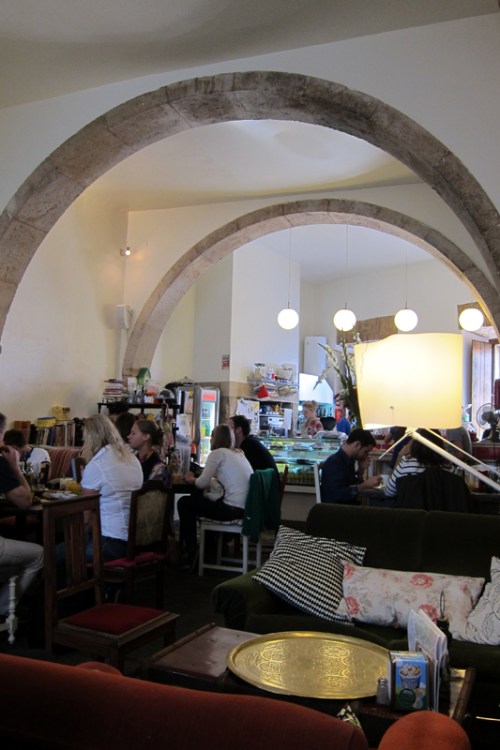
Pois, Café sits nestled in a weathered stone building amongst Alfama’s small, hilly alleyways east of downtown Lisbon. One of the best cafes in a city overrun with them, its Austrian owners have managed to cultivate a niche with great sandwiches, even better Austrian cake selections, and a global influence. The broad selection is definitely appealing, particularly in contrast to a classic Lisboeta café. Moreover, it is a just a cool place to hang out. Pois, Café’s cavernous old interior is marked by stone arches, washed to a sunny white. Decorating the interior are a veritable crossroads of international books – mostly novels and travel guides –  all left by patrons over the years. You can sit and enjoy great food in a relaxing atmosphere while reading travel guides to places you never considered traveling to (Israel? Why not?). The cafe’s name tells you that you should: it is a riff on “Pois, é” a common northeastern Brazilian Portuguese expression meaning “Yeah” or “Of course.”

PoisCafe

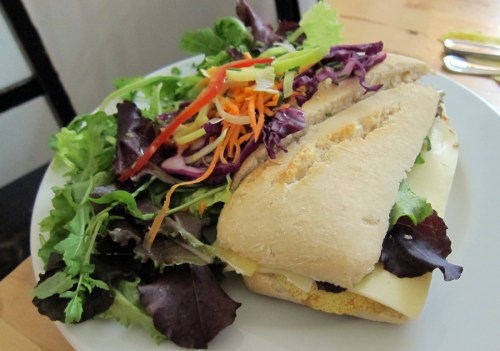
Pois Café features a standard menu at as well as a rotating slate  of specials. The main offerings are various sandwiches, tostas and wraps with international flair ranging from 6 to 10 euros. There are other light dishes, (quiches seem to be a big favorite). Pois Café is mainly a breakfast and lunch place and  they also offer a nice brunch with pastries, yogurt, juice, muesli for less than 10 euros. For our lunch we had a Mozart sandwich (prosciutto, balsamic vinegar and arugula) as well as an Ilha sandwich (seen below – with a duo of Azorean cheeses, pear and paprika); both were around 7 Euros. The sandwiches were both delicious and fresh, and we enjoyed the unique flavor combos.

PoisCafeIlha

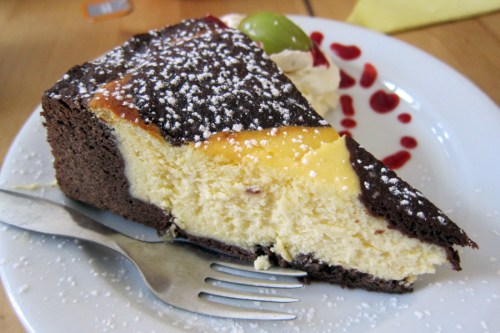
After finishing our meal, our attention quickly turned to the shiny glass case at the back of the restaurant, packed with Austrian cakes and sweets. At 4 euros per slice the price seemed high, but then again there is very little that can come  between us and a pastry. The cakes looked delicious  and we couldn’t resist after our chocolate cake cravings, especially given the general Portuguese lack of chocolate desserts. With a little influence from our server’s recommendations and a little more from our discerning eyes, we ordered the Tarte Russe (seen below), a cake with a chocolate base layer topped with a light lemon-flavored cream. For contrast, we also got a slice of passionfruit cheesecake. While very tasty, the cheesecake was a little light for those of you looking for a New York style cheesecake. But the Tarte Russe was a delightful bit of chocolate heaven. Pois Café definitely invites you to linger and it seems to have gained a strong following from the international community, tourists and locals alike. The restaurant is an absolute gem, and is definitely one of our favorite places for lunch in Lisbon.

PoisCafeTarteRusse

1 Comment

Filed under Pastry Post-Poc, Reviews

Portuguese Pastry Post-Doc: Tripa de Aveiro

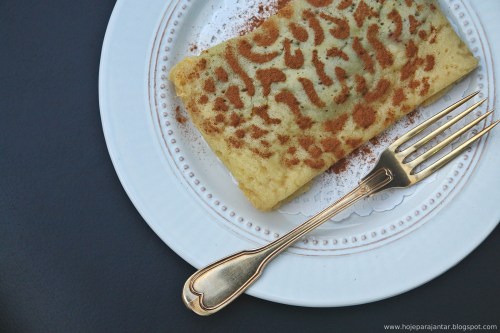
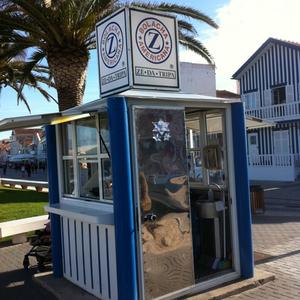
Today we are featuring a rare Portuguese confection – tripa de aveiro – we first learned of this dessert from one of our loyal readers, José. Tripa literally means “tripe” and it was named for its appearance  not its contents. Much like tripe, tripa has a bubbly texture, and is somewhere between a crepe and a waffle in consistency. A typical topping for tripa is cinnamon, with an ovos moles filling, though topping and filling combinations may be more exotic.  Tripa de Aveiro is local to the city of Aveiro, in North-Central Portugal, and is little known in other parts of Portugal. In fact, we never came across them in Lisbon at all. The typical place to find tripas is at small kiosks around town, José sent this picture as an example. We wish we would have had a chance to try them, maybe next time we will be able to visit Aveiro. If you are not in the vicinity of Aveiro, here is a recipe for chocolate-filled tripas from Hoje Para Jantar (in Portuguese). Thanks for the tip about Tripas, José!

Tripa de Chocolate

Tripa de Chocolate from Hoje Para Jantar

Leave a comment

Filed under Pastry Post-Poc

Pastry Post-Doc in Brazil: Macarons in São Paulo

brazil

Brazilians have such a large variety of homegrown sweets, there isn’t much of a need to import foreign pastries. However, now macarons have made it to Brazil. Folie, in São Paulo is offering up a huge variety of macaron flavors, including some in  a collection called, Da vovó (“From grandma”) which are  inspired by Brazilian flavors like Brigadeiro and Beijinho. We are glad to hear that macarons are making their way to Brazil. Now we really could move here!

folie macarons

Macaons at Folie in São Paulo – Via Cool Hunting

Leave a comment

Filed under Pastry Post-Poc, World Eats

Brazil: Acarajé at the Feira Hippie in Ipanema

Feira Hippie
Praça General Osório, Ipanema
Rio de Janeiro

brazilOne of our favorite treats in Bahia was acarajé, fried chickpea fritters.  You can find acarajé stand on nearly every corner in Salvador da Bahia, however it is a little rarer in Rio de Janeiro. But fear not, we found a place to get our acarajé fix. There is an acarajé stand at the Feira Hippie “Hippy Market” in Praça General Osório, Ipanema, Sundays until 5 PM. While the main stock in trade at the Feira is clothing, bags and souvenirs, we were on a mission for another good for sale: acarajé. There are two acarajé stands bordering the feira, and we patronized the one closer to the beach, since it seemed to be doing brisker business. The stand itself is only there for the feira, but there is a complete setup – including the requisite vats of hot oil for frying the fritters. Each acarajé costs R$ 8 ($4 US), which would be considered highway robbery in Bahia. 

Acaraje

A Taste of Bahia in Rio

However, due to our hankering for acarajé, we thought it would be worth it for a splurge. Even compared to the acarajé in Bahia, we thought the Rio rendition was extremely delicious, and it was fresh out of the fryer. Along with the acarajé, you can get the traditional topping of peppers, salad and vatapá (a sort of condiment with shrimp and palm oil). The vatapá was fresh and we loved the fresh cilantro in the salad topping. So it may cost you double of those in Bahia, but Cariocas have a place to get an acarajé fix.

Leave a comment

Filed under Reviews

Finding the Best Açaí in Rio de Janeiro: Vero Suco

Vero Suco
R. Sen. Dantas, 76 – Centro
Rio de Janeiro

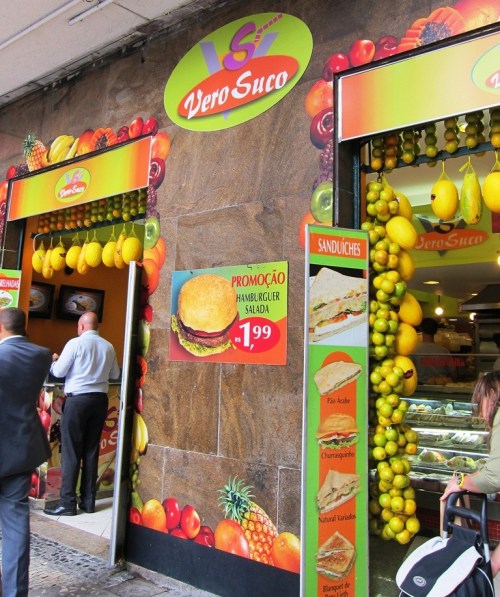
brazilVero Suco is a typical Brazilian juice bar – fresh fruit piled on the counter, a somewhat dated 1980s look and a giant menu (and conveniently located just steps from our apartment!) There were also a variety of sandwiches also for sale for less than R$ 10 apiece. They were passable, but the juices and açaí were definitely the stars of the show.
VeroSucos

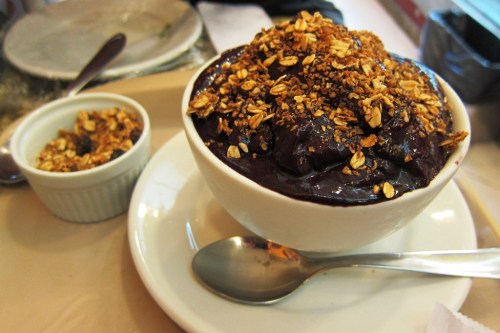
We got an açaí bowl for 8.90, which had 500 mL of açaí . We went two times: the first time the bowl had an excellent taste and texture, but was a little disappointing the second time. Regardless, Vero Suco was the first place in which we were served granola in a side dish. We are used to a small sprinkling of granola or a small granola packet. However, the bowl of granola was a revelation! This way, we can add granola as we see fit, bit by bit. A standard granola package has too little for an entire bowl, and getting it batida (mixed in), while tasty, denies you the visual appeal of fresh granola on top of the purple açaí. This was one of our favorite açaí bowls in Rio so far, and we enjoyed the price and the copious amount of granola.

Value: 4/5. A 500 mL bowl, with free granola, was R$ 8.90.

Taste: 10.5/15. Very good. Tasty, but could have brought out more of the fruitiness in the açaí and other accompanying fruits.

Texture: 7/10. Good. Our first visit was easily 9/10, but our second visit it was too grainy. We worked out an average score here.

Granola: 5/5. Excellent. Served in a separate cup, including two full cashews.

Extras: 4/5. Seating is provided (always a plus), but like all places in Centro, is inside and a little crowded/stifling. This is made up for by the brightly painted walled and extensive fruit decorations. Service is prompt and efficient, but they lose a point for not bringing us two spoons!

TOTAL: 30.5/40
Vero Sucos Acai

While there, we also decided to try some of Vero Suco’s actual juice offerings. Beyond the more typical juices of abacaxi (pineapple) and maracuja (Passion fruit) we were excited to see  beterraba (beet), acerola, graviola and cacau juices. The one that intrigued us the most was cacau, which means “cocoa” in Portuguese. M, of course, upon seeing this on the menu ran up to the counter to order one. We soon found out, however, this is not a chocolate juice. Much like another popular Brazilian juice, Caju (cashew), this juice is from the flesh of a fruit usually harvested for nuts. So cashew juice is from the fruit of the cashew, cocoa juice is from the fruit of the cocoa.  The fruit is particularly mild, and doesn’t really taste at all like chocolate.

Leave a comment

Filed under Reviews

Poutine Fest Comes to Chicago

quebeccanadaPoutine, the emblematic Québecois fast food consisting of french fries, brown gravy and cheese curds has become popular over the past few years in the US, especially in the time since we wrote this post. Chicago will now it will be inaugurating its very own Poutine Fest! In the vein of the ever popular Bacon Fest, Poutine fest will feature a wide array of Poutines from over 10 restaurants across Chicago. The fest will occur on February 24, 2013 at the Haymarket Pub & Brewery. We wish we could be there for the carb-n-cheese goodness, so we hope someone will fill us in with a report.

Classic Poutine

Classic Poutine from L’Authentic Burgers & Poutine in Victoria, BC by Jen Arrr

Leave a comment

Filed under World Eats