Tag Archives: Japan

Unboxing Japan’s Spooky Treats: TokyoTreat Halloween Box

One of the best parts of the arrival of fall is the seasonal treats, particularly when it comes to Halloween. What is your favorite Halloween candy? We always loved picking out the chocolate pieces when going trick-or-treating, and we think our all-time favorite is probably Reese’s Peanut Butter Cups. Though there is nothing like an old classic, we always love to try new-to-us sweet treats, especially from around the world. So, we were like kids in a candy store when we were gifted the October TokyoTreat subscription snack box, packed to the brim with Japanese sweet and savory treats with a spooky Halloween theme. TokyoTreat is like the younger funkier cousin to SakuraCo (which we reviewed in July), providing an assortment of expertly curated Japanese snacks each month for subscribers. Each month also has a theme, and if you missed one you like, you can also purchase a one-off previously-released box. The Halloween box we received can be ordered until 10/15.

The box included a helpful pamphlet describing Halloween (a foreign import) and other spooky traditions in Japan including the homegrown historical Japanese supernatural spirits known as yokai. Since the packaging for the treats is mostly in Japanese, the booklet also helps you identify all of the treats inside (including listing any common allergens). One of the highlights of this month’s TokyoTreat box was the package of the seasonal apple pie KitKats. When we visited Japan in 2024, we enjoyed trying all of the delicious unique KitKat flavors that are unavailable in the US. Some standouts included red bean, matcha, and raspberry chocolate chip. We had never tried the apple pie flavor, and it tasted uncannily like the real thing! Each TokyoTreat box features a new KitKat flavor, and we look forward to seeing what we get in the future. Past KitKat flavors have included Mont Blanc and strawberry chocolate.

The treats are sourced from throughout Japan, and some were specifically Halloween themed. Of note, we had tried none of the Japanese snacks and candies before! Some of our favorite sweet treats from this month’s assortment included a tiny custard-filled sponge cake and a “chocolate baton” wafer with a meringue-like texture. Though not particularly spooky, we were also fans of the blueberry cheesecake bites, which were airy, flaky and not too sweet. Though there were only small samples of some of the treats, others were large enough to share (which definitely made M happy).
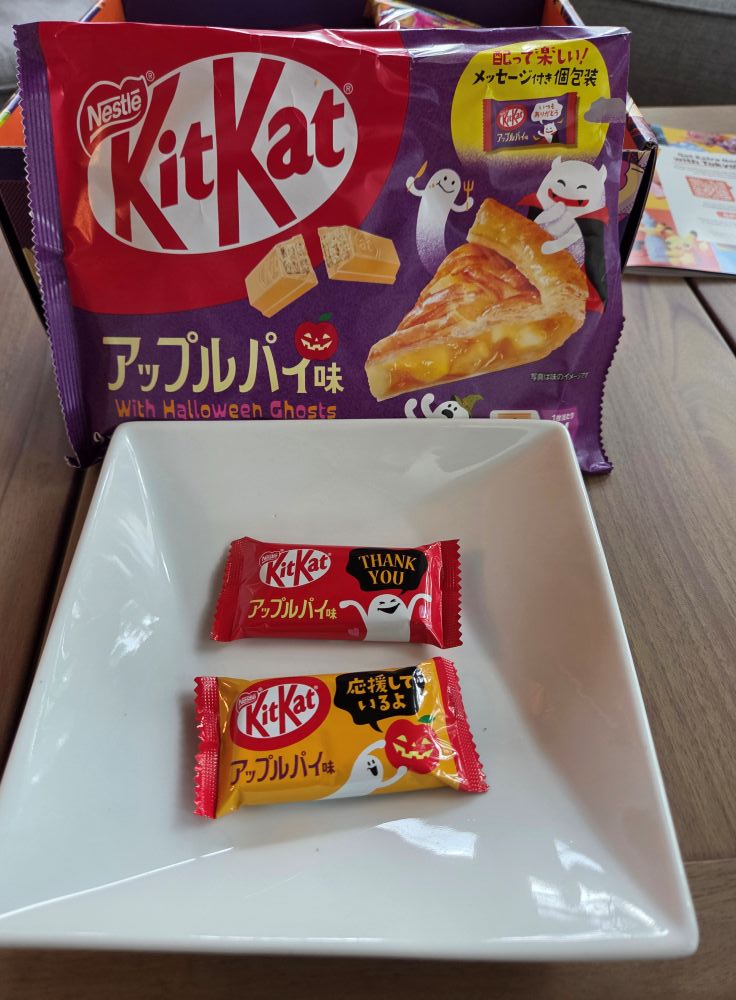
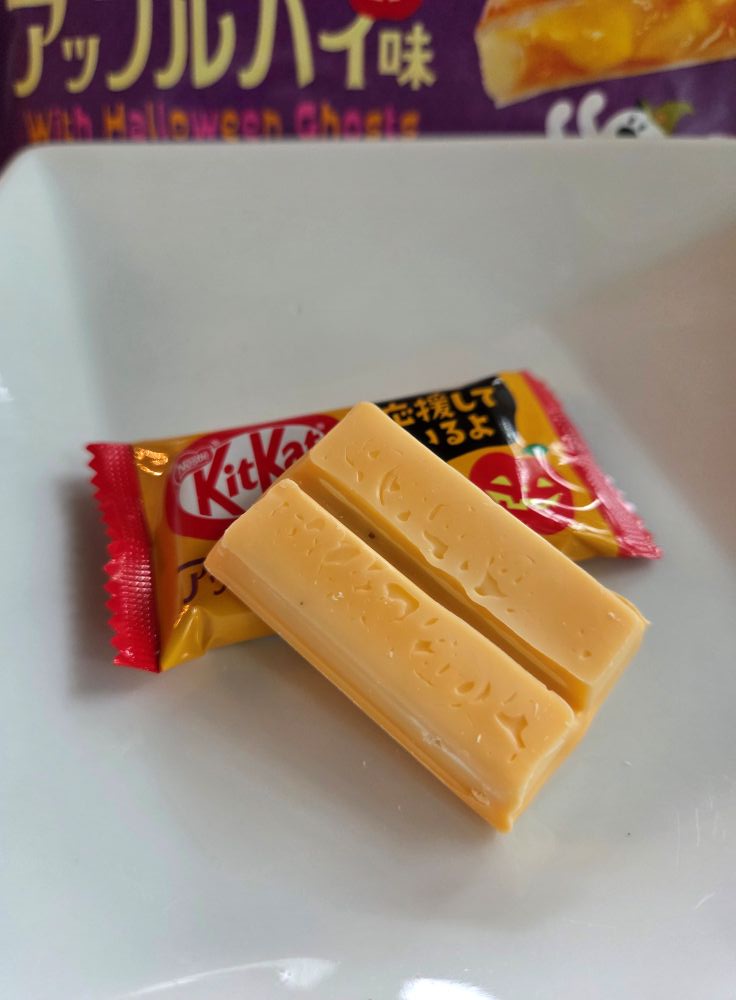
We do appreciate the inclusion of both savory and sweet treats in each TokyoTreat subscription box, since especially with the candy-forward Halloween theme, savory could have easily been overlooked. Of the savory treats, one of our favorites was the garlic and chili senbei rice crackers, which had a delightful crispy texture and satisfying amount of heat. Buttery animal crackers toed the line between savory and sweet, and we got a kick out of how each abstract animal was helpfully labeled. The box even included a spicy ramen pack that we are going to squirrel away for later. These were only a few of the snacks and treats in the box, but we don’t want to give every surprise away.
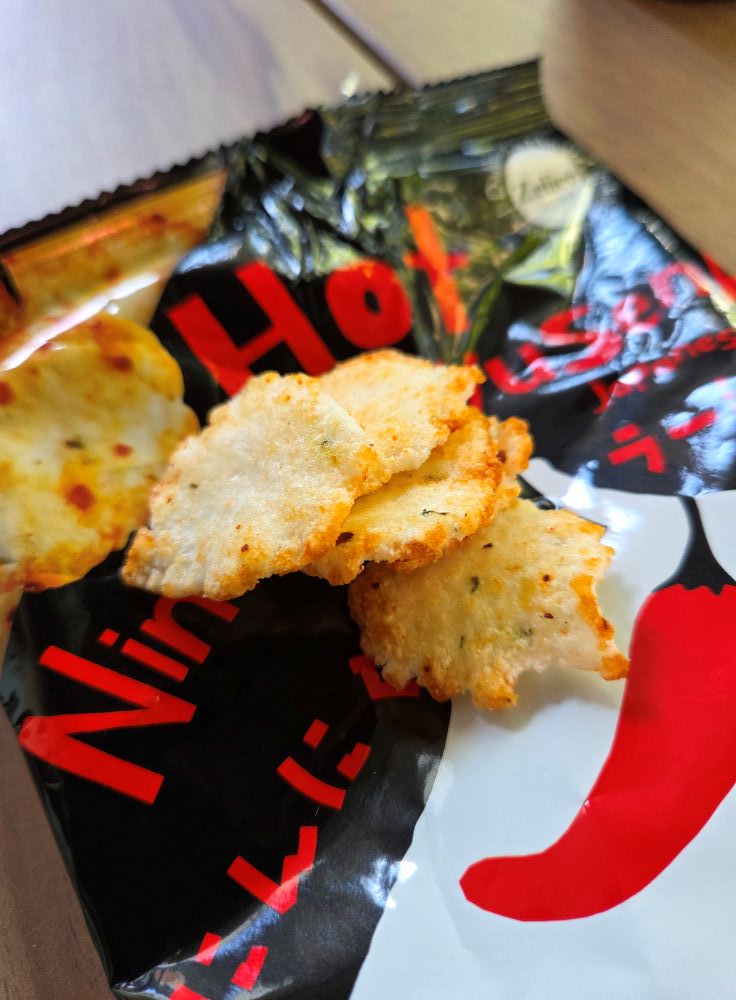
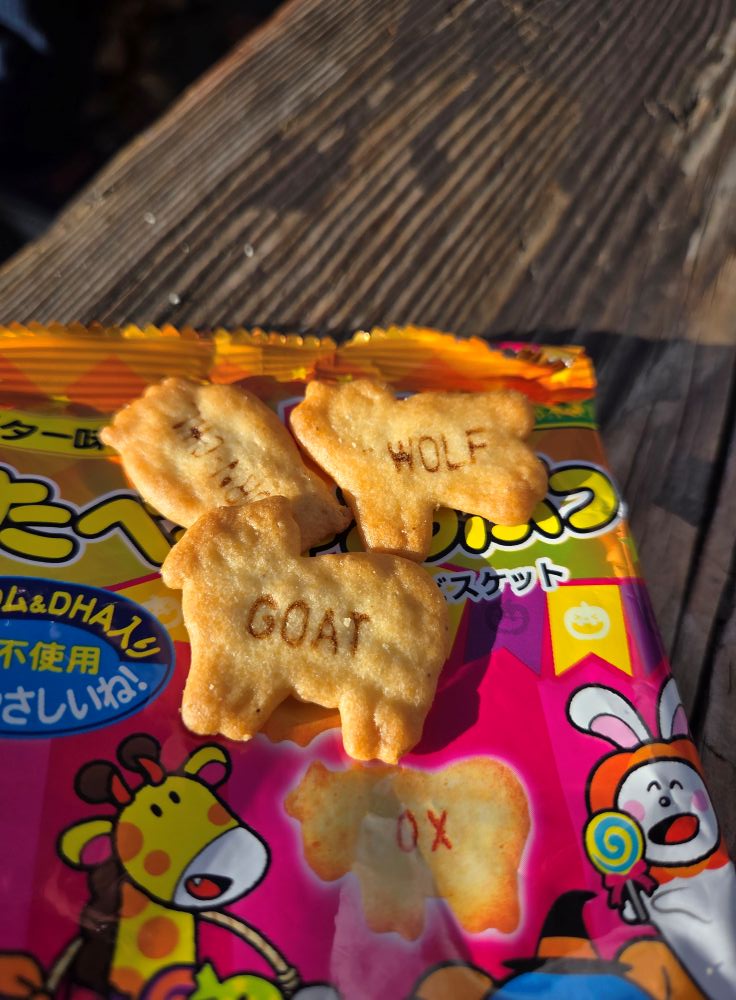
The Halloween TokyoTreat box is a great way to get into the spirit for Spooky Season. We really enjoyed the assortment of treats provided, and the diversity of unique flavors. If you are trying to decide between a TokyoTreat box and a SakuraCo box, you can’t really go wrong, though they are quite different. SakuraCo is more focused on featuring specific artisanal makers, and the TokyoTreat box is geared toward more fun, pop culture packaging, and off-the-wall flavors. So why not try both? You can try a single month, or a longer subscription (3, 6, or 12 months), or can give either option as a gift. Especially with the winter holidays around the corner, we look forward to seeing what treats are in store for next season!

Leave a comment

Filed under Reviews

SakuraCo Subscription Box Review: Authentic Japanese Snacks

It’s no secret that we are huge fans of Japanese food, an obsession stoked even further by our trip to Japan in summer 2024. Due to our love of Japanese food, I was particularly delighted that SakuraCo gifted me their August subscription box of Japanese foodie treats. SakuraCo is a monthly subscription service that sends you a curated box of Japanese snacks, based on a different theme each month. You can also buy one-off boxes or products if you don’t want to commit to an ongoing subscription. They also have a sister brand TokyoTreat which offers more pop culture and kawaii based food subscription boxes. I have previously purchased SakuraCo subscription boxes as presents for my foodie friends, and they have always been well-received.

This month’s SakuraCo box theme was Okinawa, the southernmost major island in Japan. I was thrilled to see this theme since Okinawa is one of the top places we would like to visit in the near future. We have a friend who lives there part of the year and we hope to visit him someday. It didn’t work to visit Okinawa on our 2024 trip, but he was previously generous enough to bring us some treats from Okinawa. Okinawa is known for its unique cuisine, its indigenous Ryukyuan culture, and its laid-back beachy atmosphere that sets it apart from other regions in Japan. On the blog we have previously covered Okinawan brown sugar, a special ingredient that found its way into several treats in the SakuraCo August box including in chocolate cookies, an almond mix, and deep-fried wheat snacks.

The SakuraCo box includes at least 20 sweet and savory treats from small-scale artisanal producers all over Japan, but with a focus on Okinawan producers or ingredients this month. SakuraCo boxes also include a piece of pottery, glass or tableware each month, serving as a lasting reminder long after the food has been consumed. This month’s box included a special piece of pottery from Bloom Ceramics in Gifu Prefecture. We received a small Mino Ware bowl in elegant, muted browns and blues, which we think would be perfect for dipping sauces.

One of our favorite parts of the SakuraCo box is the helpful booklet that describes each item and its producer, along with some information about the region’s culture and top sites. Not only does this guide help you identify the products, but it provides additional context on the included foods and their unique origin stories, which I love. One of the featured producers in this month’s box was a heritage dried pickled plum maker from Okinawa, Uema Kashiten. The included honey plum, known as Suppaiman, was truly one of the most intriguing bites in the box: sweet, salty, savory, acidic and juicy all in one.

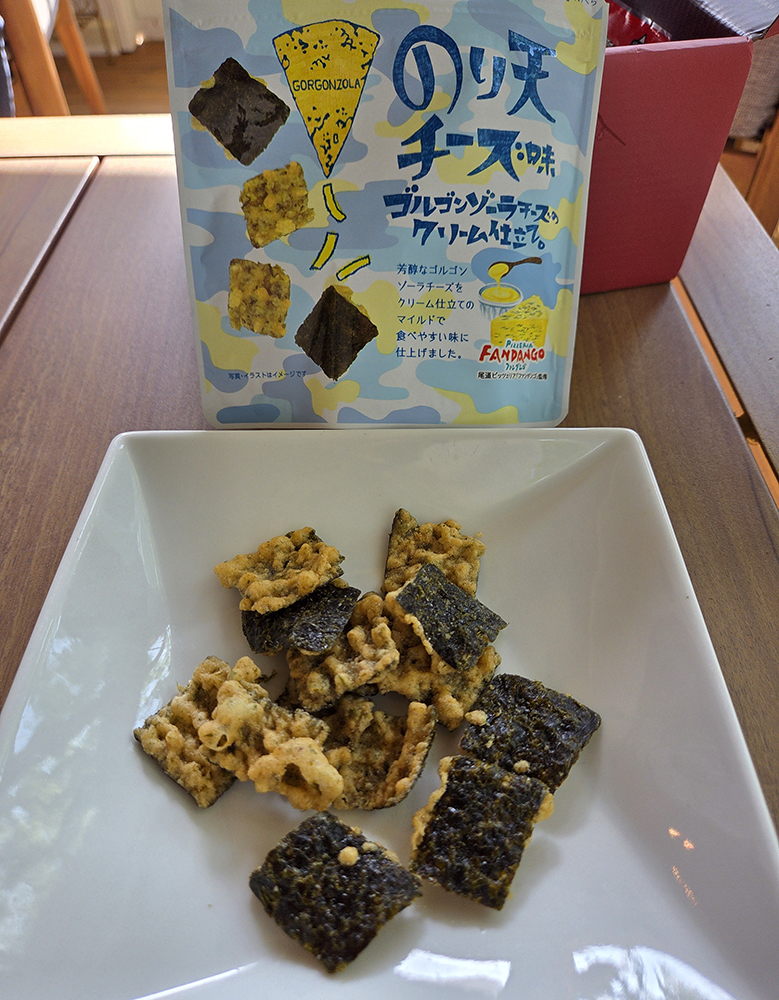
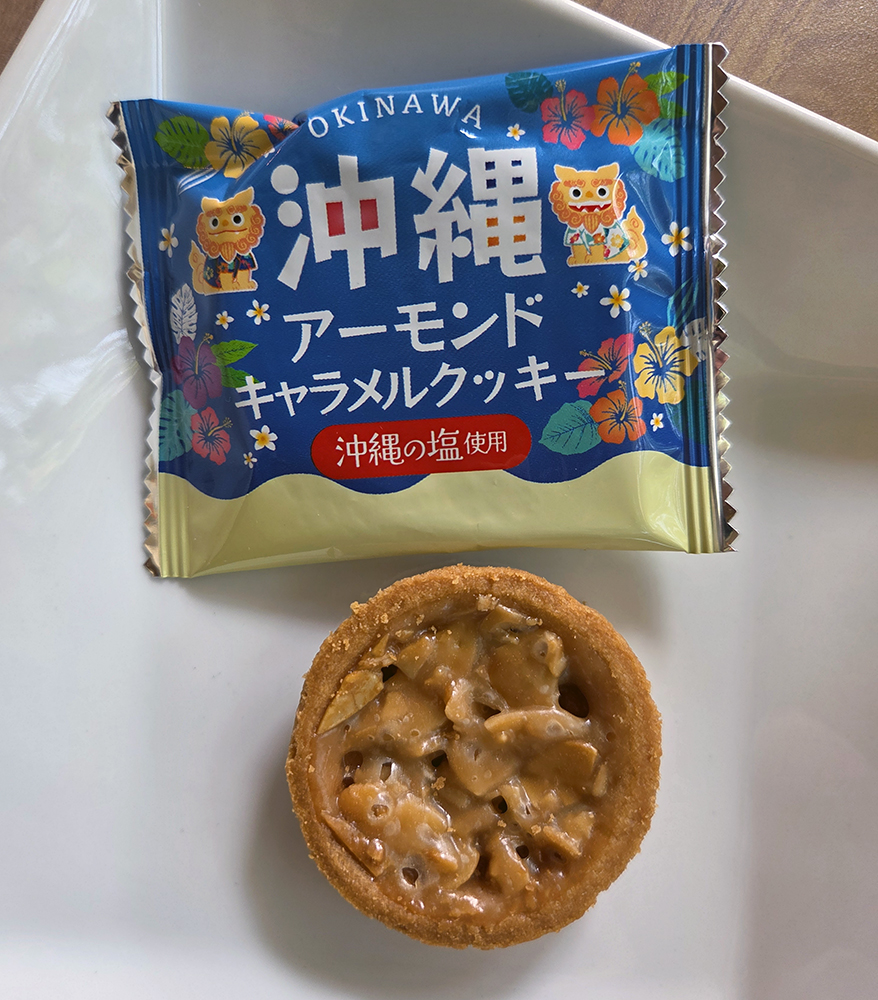
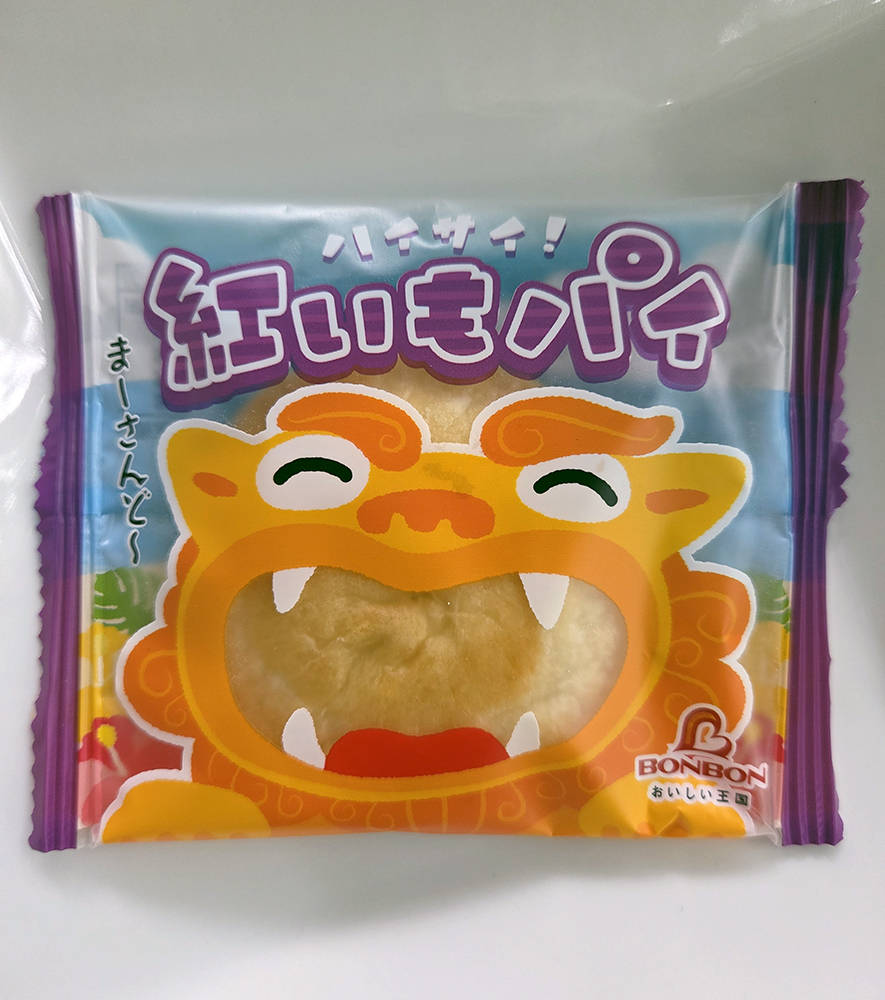
The box was a treasure trove of unique Japanese snacks, none of which we had ever had before. Many of the snacks come in twos, which makes them really fun to share with a friend or partner (or to just have more for yourself). One of of the favorite items in this month’s box was the delicate Sanpin jasmine green tea from Higa Seicha in Okinawa (2 servings) which made the perfect accompaniment for our Japanese treats. On the sweet side, we really enjoyed the Beni Imo pie with Okinawan purple sweet potatoes from Bonbon Confectionery in Hokkaido and the Okinawa Almond Caramel Cookie from Nagatoya in Shizuoka. Though these manufactures were not from Okinawa, they featured key ingredients from the region: Okinawan salt, brown sugar, and sweet potato. On the savory side, we really enjoyed the Gorgonzola Nori Ten bites from Maruka Foods in Hiroshima, which were bursting with umami flavor.

We heartily enjoyed sampling the sweet and savory treats in this month’s box, and can’t wait to see what next month brings. As a result, our desire to go to Okinawa is stronger than ever! These Japanese snack boxes would make the perfect gift for the foodie in your life (or yourself). You can order the SakuraCo Okinawa box until August 20, 2025. Thanks again for the treats, SakuraCo!

1 Comment

Filed under Reviews

Reviving Japan’s Tachibana Citrus: A Nara Cafe Experience

Nara, Japan is a particularly picturesque city, full of both historical and modern cafes. On our trip we stumbled upon Ocasi (5 Ganriincho, Nara, 630-8221, Japan), a small but atmospheric cafe that sold treats with rare citrus jams native to Japan, made in house. When we stepped into Ocasi we got the biggest surprise of all, a rare tachibana citrus tree growing in their tiny courtyard. We enjoyed the tachibana jam at Ocasi in a dorayaki (think mini pancake with a sweet filling) imprinted with the iconic deer of Nara. The intense and complex flavor reminded us of some of the bitter, sour oranges we have tasted in Italy. The unique citrus filling was completely delicious, and worked well paired with a sweeter treat. You could also buy tachibana jam to bring home, which we thought made a great souvenir for ourselves and foodie friends.

Tachibana is something of a sour citrus, and is small, with the appearance of a kumquat. It is one of only 2 citrus species purely native to Japan, and is considered to be threatened. Prior to our trip to Japan, we had never encountered it elsewhere. Nara is the center of the tachibana revival, and the citrus fruit has a long and storied history in the region, garnering mentions in historical poetry, and appearing on the 500 Yen coin. Though tachibana is mainly considered ornamental nowadays, revivalists like Kenji Jō of the Nara Tachibana Project are trying to raise interest and awareness in this now-rare species. Food companies in Japan are making inroads at commercialization, including tachibana in items ranging from chocolate to gin.

Do you want to help in the tachibana revival? It looks like you can even buy one of these heirloom plants online. Though little known outside of Japan, more esoteric Japanese citrus varieties like the tachibana and sudachi have recently gained attention from international media outlets like the New York Times. Yuzu for example, once considered rare and exotic outside of East Asia, is now much more commonly found in culinary dishes around the world. Today yuzu, tomorrow tachibana?

Citrus tachibana (ca. 1823 – 1829) via Wikimedia Commons.

Leave a comment

Filed under Reviews

The Ultimate Tonkatsu Experience in Osaka

When we arrived in Osaka after a long Shinkansen ride, we were famished! Our hotel was a bit off the beaten path, we had to do a little searching for a possible places for a quick bite. One of the foods we were craving at the moment was tonkatsu – crispy fried pork cutlets – so we did a quick Google Maps search for any nearby haunts. It turns out that we were within a short walk of an amazing, Michelin Bib Gourmand-recognized tonkatsu restaurant: Tonkatsu Daiki (1-6-2 Higashishinsaibashi, Chuo-ku, Osaka, 542-0083, Japan).

We showed up at a somewhat early time for dinner – about 5:45 PM – and were seated at the counter right away. As soon as we sat down, a line began to form outside, which grew ever-larger as we continued to wait for and enjoy our meal. The restaurant itself was extremely tiny with a counter that seated 4, and only a few additional tables (note there are no kids allowed). The main options on the menu were several varieties of tonkatsu with different cuts of pork (though fried shrimp also appeared to be a popular option). M got the classic and L got the leaner pork tenderloin. If you wanted something a bit richer, there were tonkatsu plates with melted cheese, Japanese curry, and even an omelette. The restaurant is cash only, and lunch portions are a bit cheaper than dinner, though you will likely not pay more than 3,000 yen at any time.

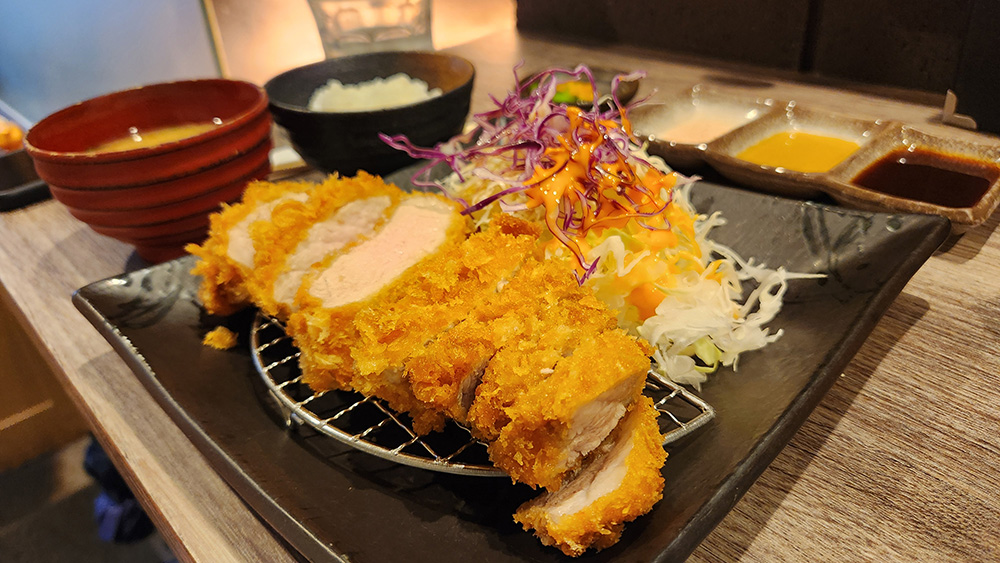
Sitting at the counter, we peered intently into the kitchen as the chef prepared everyone’s meals right in front of us, taking extreme care with each step. There was a bit of a wait, but the end result was worth it. The pork was tender and juicy, and you could tell it was of the highest quality. There was absolutely no grease coming from the fried coating – this was the lightest-feeling fried food we had ever had. Alongside the tonkatsu were a few dipping sauces, including spicy mustard and classic tonkatsu BBQ-style sauce, and some shredded cabbage. This was absolutely the best tonkatsu we have ever had, and definitely some of the best pork of any kind.

We chatted a bit with the chef, who knew some English, and he was very friendly, and humbly accepted our heapings of praise. Somehow, we lucked out with our timing, so we would recommend that you also go towards the beginning of either the lunch or dinner service (they are open 11am-2:30pm and 5:30pm-9:30pm, Closed Sunday). However, we would have definitely waited in line to experience this Tonkatsu again!

1 Comment

Filed under Reviews

Shirohige’s Cream Puff Factory: A Ghibli-Inspired Delight in Tokyo

We recently returned from a trip to Japan, and our heads are still spinning from thinking about all the delicious food we ate while there. Watch this space for more Japan travel food content, but in the meantime, here is a taste of what is to come. First up on our trip recap is a place we have had on our “must-visit” list for years, Shirohige’s Cream Puff Factory (2 Chome-7-5 Kichijoji Minamicho, Musashino, Tokyo 180-0003, Japan). The signature cream puffs are made in the shape of the character Totoro (star of the 1988 animated film My Neighbor Totoro), one of the famous mythical creatures from the mind of Hayao Miyazaki and Studio Ghibli. Shirohige’s is owned by Miyazaki’s sister-in-law, and is actually authorized to manufacture cream puffs in this special shape.

The cream puffs come in one size and a variety of flavors: standard flavors custard and chocolate (600 yen apiece), and more rotating seasonal flavors including matcha, strawberry, chestnut and mango (640 yen), each indicated by a different hat or decoration. Plan My Japan has a list of the seasonal flavors for each month, ours were strawberry and matcha in June. We heard rumors of long lines, but when we arrived just before opening at 11 AM on a weekday there were only a few people ahead of us. In addition to the cream puffs, you can buy other small souvenirs or even boxed shortbread cookies in the shape of the smallest (chibi) Totoro, which made the perfect gift from friends and family at home. Be aware that the Kichijoji store itself is quite tiny, fitting only 2 or 3 at a time, and at this location there is no seating. There is another Shirohige location in the Tokyo area that has more seating, if that is a deal breaker (5 Chome-3-1 Daita, Setagaya City, Tokyo 155-0033, Japan). However, the Kichijoji store is closer to the Ghibli Museum, making it a natural stop on a Ghibli-filled day (which is what we did).

Even though it is considered a bit declasse to do so in Japan, we just ate our cream puffs right in front of the shop. Now, onto the cream puffs themselves… even the pickiest among us devoured them! The filling was generous and the pastry was fresh and crisp, and not soggy at all. The matcha and chocolate fillings were particular favorites. We highly recommended Shirohige’s for fans of Studio Ghibli and good pastry alike. Very rarely does a place that has earned Instagram fame due to its aesthetic creations live up to the hype. Fortunately, Shirohige’s Cream Puff Factory does just that.

Leave a comment

Filed under Reviews

The oldest Japanese American business in the US: Fugetsu-Do

One of the trips we wanted to take over the last two years was to Japan, however, that trip was canceled due to COVID (like so many people’s trips over the past few years). However, on our recent trip to Los Angeles, we got a real taste of Japan at the Fugetsu-Do Bakery Shop (315 East First Street, Los Angeles, CA) in historical Little Tokyo Japantown in downtown Los Angeles. The Fugetsu-Do shop has been operating since 1903, and is considered the oldest store in the neighborhood, and the oldest Japanese American business in the US!

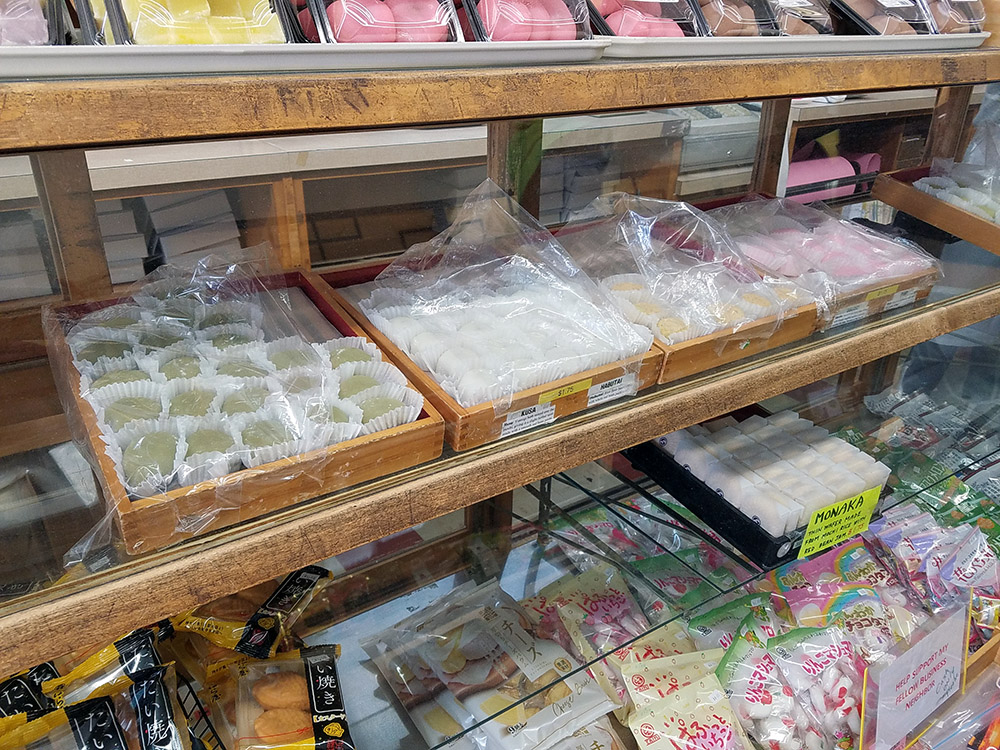
The specialty of Fugetsu-Do is mochi, made from pounded glutinous rice flour shaped into single-bite balls. In the US, mochi are often popularly filled with ice cream. However, in Japan, the filling is usually red bean, or simply the mochi itself is served unfilled, and can lean either savory or sweet. Also available at Fugetsu-Do are manju, treats made from cake flour. At the helm of Fugetsu-Do is Brian Kito, third-generation owner, and master confectioner. Inside the shop, there are well-worn bakery cases filled with a myriad of multi-color mochi, which you can buy by the piece, or in prepackaged sets of enticing rainbow-colored wagashi confections perfect for tea.

Among these choices are some traditional flavors like inaka or habituai (filled with red bean paste) or kiku (filled with white bean paste). There are also more idiosyncratic and colorful flavors like peanut butter, blueberry, or mango. In the springtime, the pretty pink cherry blossom Sakura flavor is particularly popular, and often sells out quickly.

The texture of the mochi was amazingly smooth and chewy. We also liked the mix of traditional and more avant-garde flavors. The store accepts credit cards only over a certain amount, so you should bring cash. If you are not able to get to LA, you can even buy Fugestsu-Do mochi online. We are so glad we got to visit Fugetsu-Do, and taste a living piece of Los Angeles history. The stores of Little Tokyo were hit hard by the pandemic, so we encourage you to give them a visit as well (either in person or online).

Leave a comment

Filed under Reviews

Celebrating the New Year in Japan with Kagami Mochi

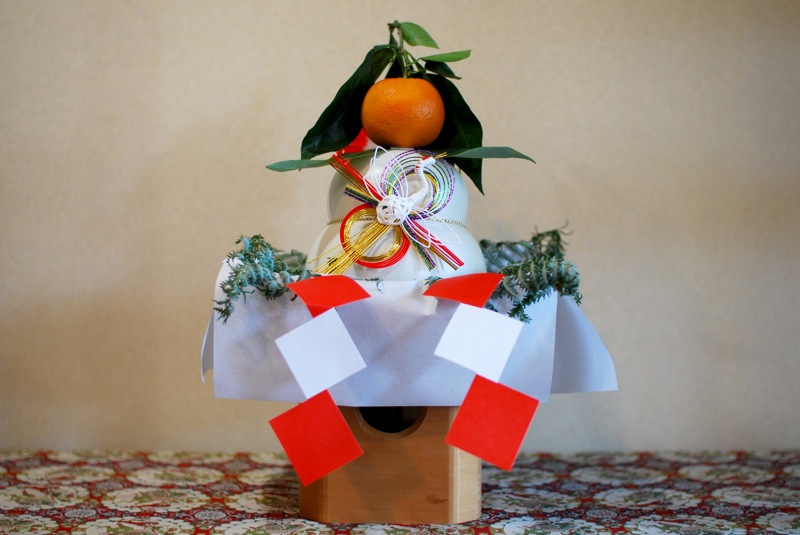
A few years ago in Chicago, our friends shared kagami mochi with us, one of the many traditional foods and decorations used to celebrate the new year in Japan. Kagami mochi, meaning “mirror mochi,” is a two-layered stack of white mochi (pounded rice cakes), topped with a citrus fruit, usually a daidai or mikan. A symbol of the new year for centuries, they are called mirror mochi because they somewhat resemble old copper mirrors, and the double stack is considered auspicious. The kagami mochi may be simple stack, or may sit on wooden stands (sanpō) where they are festooned with paper chains (gohei) and other accoutrements. In Japan you can buy kagami mochi throughout December pretty widely, and you can also find it at some Japanese grocery stores in the US. If you don’t have access to this, you can make your own mochi at home. It is then considered auspicious to then “break” the mochi (kagami biraki) and eat them on January 11th!

Kagami Mochi by Midorisyu

Leave a comment

Filed under Reviews

Issho Ni: Ramen and more in Cleveland

Issho Ni Ramen Sushi & Hibachi (34302 Euclid Ave, Willoughby, OH 44094). We are always on the hunt for good ramen in Cleveland, and we are sad to admit that it is a little bit hard to find. We had heard good things about Issho Ni, in the eastern Cleveland suburb of Willoughby, so we finally decided to bite the bullet and make the trek all the way out to the east side. If you blinked, you would miss it, since Issho Ni is an unassuming restaurant in a strip mall just off of I-90. But appearances could be deceiving. The menu at Issho Ni was pretty extensive: ramen is only one of the options, there is also a full hibachi menu, and a wide variety of sushi rolls. Plus, as a bonus in these COVID-19 times, we really liked that you could order and pay in advance.

Despite the large menu, we were all in on ramen, of which there were five different varieties: Issho Ni Ramen (no broth, topped with an egg yolk $14.55), Kuro (Black) Ramen with pork broth ($14.55), Kiiro (Yellow) Ramen ($12.47) made with a rich pork and chicken broth, Spicy Tonkatsu Ramen ($13.51), and a lighter choice of soy-based Shoyu Ramen, which could be made vegan (without an egg $11.43). We decided to get two varieties: the black ramen, which was seasoned with black garlic oil and squid ink, and the spicy tonkatsu ramen, marked with four hot peppers, piquing M’s interest. There was also the option to order extra broth or noodles, along with other extra helpings of other toppings (or to omit ingredients). We ordered our ramen for takeout – and greatly enjoyed the contact-less takeout service – we placed our order online, and they brought it right out to the car for us. They were certainly attentive to the details, and we appreciated how they put the toppings/noodles and the broth in two separate containers, so they would not get soggy.

It took about a half hour to drive home, so unfortunately, we are sure that the ramen suffered a little bit from the transportation. However, we found that the ramen broth was still pretty hot by the time we got home. The toppings were generous: in addition to the roast pork, we got a soft-boiled egg, bamboo shoots, mushrooms, and green onions. The tonkatsu broth that was the base of both of our ramens was rich and delicious, and the black garlic also added an unexpected umami flavor. Additionally, the roast pork on top had a nice char and umami flavor. The only mark against them, is that the noodles were not as springy as we would have liked, and were a little tough. However, we have to say that, overall, this was one of the best bowls of ramen in Cleveland so far, especially taking the broth into consideration. Based on our first experience, we look forward to trying all of the varieties of ramen at Issho Ni at some point in the future. We are so glad that we gave Issho Ni a try, and think it is a great addition to the ramen scene in Cleveland.

Leave a comment

Filed under Reviews

KFC for Christmas in Japan

I hope those who celebrate had a wonderful Christmas. We have been partaking in some serious rest and relation these past two weeks, and since we are unable to travel, the blog is relatively slow. However, we wanted to drop a fun Christmas-related tidbit that we have been meaning to share a while now. Did you know that KFC (Kentucky Fried Chicken) is associated with Christmas in Japan? It is the result of a long-running publicity campaign, first started by a Japanese franchisee Takeshi Okawara in 1970. The festive KFC “party barrel” of chicken served as a stand-in for the American turkey dinner. Colonel Sanders even looks like Santa, an association made in Japan as part of the marketing campaign, that you can see below! This special proved to be popular, and soon caught on across the country. Now there are hundreds of KFCs in Japan, and the long-running association between fried chicken and Christmas in Japan is set in stone.

Colonel Sanders by Mark

Leave a comment

Filed under Holidays

How to Make Your Own Taiyaki

JapanInadvertently, this is an appropriate post for Poisson D’Avril / April Fool’s Day, but the recipe is no joke! Cartoon-fish-shaped Taiyaki may be the cutest dessert there is. Originating in Japan, Taiyaki has a waffle-like base, and is traditionally filled with red bean paste. The hand-held snack has a centuries-long history and the fish shape, tai, symbolically conveys wealth. We first experienced Taiyaki at Japanese restaurants in the US, and in frozen packets at the Mitsuwa grocery store.  Fortunately, in the past few years more restaurants in the US are taking cues from the Taiyaki’s homeland of Japan, and are making these fish waffles fresh to order (we have had them recently at Taiyaki NYC and Mini Mott). However, my sister gave us a Taiyaki iron for Christmas, so we have been able to recreate Taiyaki at home for the first time. Though the fish shape is intricate, Taiyaki are really no harder to make than waffles (albeit with a hand-held iron instead of an automatic one).Taiyaki3b

There are many Taiyaki recipes out there, and we started with one from Just One Cookbook. This recipe called for cake flour, which was easier to come by pre-pandemic. If you don’t have it, here is way to substitute All-Purpose Flour + Corn Starch. You may be able to find canned or jarred red bean / azuki paste in a local Asian supermarket. If not, you make your own red bean paste with some of your pantry reserves. Or for even more variety, you can fill these with custard or even Nutella! The only tricky part is the timing of cooking the Taiyaki, we have a gas oven, and it took us a while to find the right cook time, which may also vary for your oven. If you make extra Taiyaki, you can freeze them and then reheat in a 350 oven for a few minutes. Enjoy!

How to make your own Taiyaki (recipe adapted from Just One Cookbook).

Ingredients
Makes 5 Taiyaki
  • 1¼ cup cake flour
  • 1 tsp baking powder
  • 1 tsp baking soda
  • 1 egg
  • 3/4 cup milk
  • 3 Tbsp sugar
  • 5 Tbsp red bean paste (about 1 Tbsp per Taiyaki, or substitute with Nutella, Cream, etc.)
  • 1 Tbsp vegetable / canola oil

Taiyaki

Instructions
1. Sift the cake flour, baking powder and baking soda into a large bowl.
2. Whisk in sugar.
3. In a second bowl, whisk the egg, add the milk and whisk together.
4. Add the wet ingredients to the dry and whisk well. Let batter rest in refrigerator for one hour (there should be roughly 1.25 cups of batter).
5. When your batter is done resting, preheat your Taiyaki pan over a low heat (taking care to keep the plastic handle away from heat source).
6. When you are ready to make the Taiyaki, brush vegetable oil into the Taiyaki depressions
7. Raise heat to medium and fill the Taiyaki depression just over halfway with batter.
8. Spoon in one tablespoon of Azuki paste
9. Pour batter over the top to cover the paste, but do not overfill.
10. Close the two halves of the pan and turn to flip.
11. Cook each side 2-3 minutes, depending on the heat of your stove-top, until the Taiyaki is golden brown on each side.
12. Cool on a baking rack and serve warm!
Taiyaki2

1 Comment

Filed under Pastry Post-Poc, World Eats

Treats from Okinawa

Our friend Jose from NYC has a second home in Okinawa, where his wife’s family is from, and the last time we saw him he was generous enough to shower us with Okinawan treats! We have long been fascinated by the unique culture of Okinawa, the largest of a chain of islands located south of the rest of Japan. Due to its relatively remote location Okinawan culture is completely different than in a place like Tokyo, which means Okinawa has its own unique, amazing food.

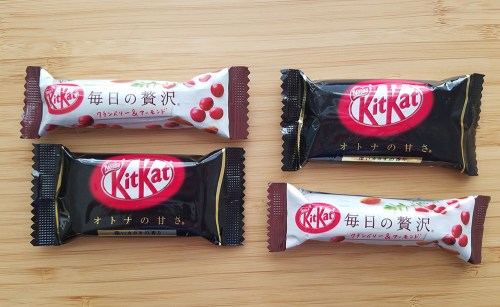
Local brown sugar, kokutu, is a prized commodity in Okinawa, made by slowly cooking down sugarcane juice (instead of adding molasses back in), imparting it with a unique flavor. Jose brought us two kinds of brittle made with Okinawa brown sugar: Black sesame & crushed peanut and coconut chunk. Plus we got Japan-exclusive Kit-Kats – almond and cranberry and dark chocolate.

There were also beautifully wrapped little cakes, which turned out to be – Sata Andagi – Okinawan fried doughnuts. Our variety had peanuts, white sesame and orange peel, though they can come in a variety of flavors, including the emblematic Okinawan sweet potato (also very popular in Hawaii). Thank you Jose for bringing us these wonderful Okinawan treats that we could have never gotten anywhere else!

1 Comment

Filed under World Eats

Pastry Post Doc: The long and winding history of Japanese castella

portugalJapanWe love hearing about treats that are a result of cross-national food pollination. One of the most fascinating examples of this is the Castella cake from Japan aka Kasutera (カステラ). Castella is a simple, light sponge cake often served in rectangular loaves and sweetened with honey. Intriguingly, the history of this simple-seeming cake is a lot more complicated: it actually arrived in Japanese via Portuguese traders in the 1500s! Unlike Macau, I don’t really think of Japan as having a lot of Portuguese influence. However, it turns out the Portuguese were in Japanese port of Nagasaki by the 16th century, and the cake, known by the Portuguese as Pão de Castile (literally “bread from the region of Castile”), was brought on these early ships.  This Western-style cake really caught on in Japan, and the rest is history. We have tried Castella cake a few different places – but a good place to get it in the Chicago area is at Handsome Bakery (204 E Golf Rd., Schaumburg, IL). if you are hankering to make your own Castella, check out the instructional video below from Just One Cookbook.

Leave a comment

Filed under Pastry Post-Poc

The perfect pre-theater dinner in NYC – Ramen

We were lucky  enough to get Hamilton tickets in NYC this year, which brought us to the age old question – where in the worlds are we going to eat? The key to pre-theater food is that it has be quick and close to the theater – it’s a bonus if it is any good (this is harder than it may seem). Fortunately, we think we have cracked the code for pre-theater dining in NYC – ramen! Turns out there is a pocket of great ramen joints pretty near NYC’s theater district. One of the best places to go is Totto Ramen (366 W 52nd St, New York, NY 10019), or Totto Ramen Next Door (366 W 52nd St. – same address…but next door) if that is a bit too busy! The best rumored ramen in the area is Ippudo (321 W 51st St, New York, NY 10019), and you might also try your hand at getting a spot there, but we heard that the line could be epic.

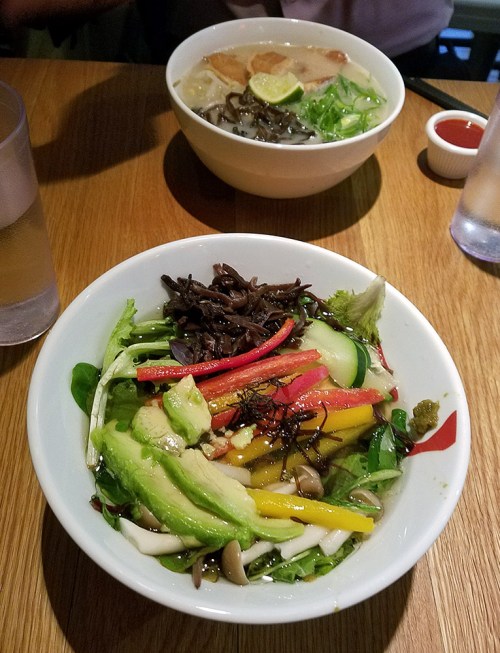
The name of the game at each of these places is ramen, and each is basically a walk-in. Regardless, there may be a line, even at Totto Ramen, and we had better luck going “Next Door” on a Thursday night. The menu at Totto Ramen Next Door is an abbreviated version of Totto Ramen – but all of the ramen greatest hits are there. You can order a piping-hot bowl of vegetable ramen (regular $9 or spicy $10), richer pork tonkatsu ramen, available with both shoyu or shio broths in both regular or spicy varieties ($12-14). The tonkatsu is the specialty of the house, so we knew we had to try it for ourselves. If you are really feeling peckish you can get a “Mega char siu tonkatsu” with a larger bowl and an extra helping of char siu pork ($16-17). It may have not been the most amazing ramen we have ever tried, but it was rich and flavorful, and the veggie ramen was some of the freshest and most colorful we have ever had. Plus, it may have just been the quickest and cheapest thing in the theater district aside from fast food. We walked right to our show after grabbing a bite, which took less than 45 minutes, all told. So do away with all of the fuss and expensive pre-dinner packages and just get yourself some ramen!

Leave a comment

Filed under Reviews

Ramen Misoya, the original Ramen-ya in Chicago

We are happy that authentic Japanese ramen has exploded as a trend in the US, and now you can find great ramen in most US cities.  If you’re looking for the starting point of this wave of ramen in Chicago, you have to go out to the northwest suburbs, where Ramen Misoya (1584 S Busse Rd., Mount Prospect, IL 60056) was the first authentic Ramen-Ya (ramen restaurant) in the Chicago area, starting in 2013. Little did we know, but Ramen Misoya is actually a chain, with a few locations throughout the US and Japan, and now a downtown Chicago outpost (213 E. Ohio St.). Despite the influx of ramen restaurants in Chicago, one of our favorites is still Ramen Misoya.

Ramen Misoya is a tiny place with maybe only 8 tables, and a small amount of counter seating, so get there early. The menu may seem overwhelming at first, but there are 3 main varieties of broth to choose from, and you can get 5 versions of meat and vegetable toppings for each broth. The three miso-based broth options are Kome, Mame and Shiro: the Hokkaido-style kome ramen is made with a rice-and-soybean miso, and is the darkest and most full-bodied; the Nagoya-style mame is slightly bitter; and the Kyoto-style shiro is the lightest miso variety of the trio, and was described as having a fruity flavor. All ramen comes topped with ground pork, green onions, sprouts, and menma (fermented bamboo shoots), but with each broth you can can choose from assorted vegetables, Cha-Shu pork, spicy and kimchi varieties ($9-$13 depending on the toppings).

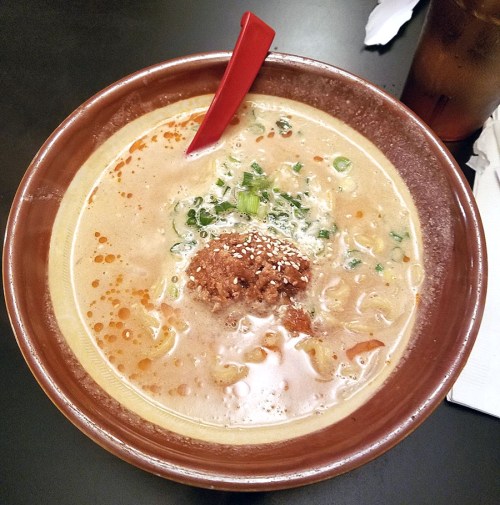
There are also a few special varieties of ramen including the creamier, richer Tokyo miso pork tonkatsu ($9.50) and the Kyoto miso tan-tan sesame ramen (above – $9.90). One of the best part of the ramen is that you get to customize your bowl with extra toppings including tonkotsu fried pork, extra noodles, nori sheets a, miso egg, or even a pat of butter (all for small extra charges). We like to start out with a small assortment of appetizers including a tasty gyoza dumplings ($4.5) and chicken kaarage (fried chicken, $3.50 small, $7 large).

We have tried all of the different broths, and each one has been delicious, though we think our favorite may be the special sesame broth, which you can not get at many other ramen places. Ramen Misoya excels at everything from start to finish: the noodles are also delicious – toothsome and springy – a perfect complement to the broth. The portion size is pretty big, too, and one bowl of ramen usually lasts us two meals. As an added plus, you can also get one of our favorite Japanese desserts there – taiyaki – a fish shaped waffle-like treat filled with sweet red bean paste. If you are looking for great ramen at the place that kicked off the ramen craze in Chicago, definitely visit Ramen Misoya.

Leave a comment

Filed under Reviews

The weird and wonderful world of Japanese Kit Kat Bars

greenteakitkat

Green Tea Kit Kat by Smallbrainfield

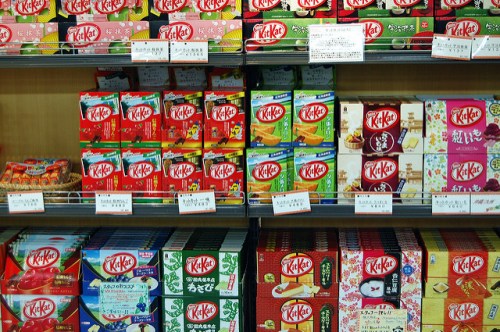
JapanKit Kat, the chocolate-coated wafer candy from Nestle, is experience a bit of a publicity resurgence in the US, due to a popular series of quirky ads featuring Chance the Rapper. However, nowhere is Kit Kat more popular than in Japan, where the humble Kit Kat bar is only a jumping-off point for fanciful flavors and gourmet Kit Kat creations. Kit Kat was introduced to Japan in 1973, and has since become ubiquitous convenience store treat, as well as a popular gift for students and a present for friends and family when traveling. In Japan, the different flavor varieties of Kit Kat are seemingly endless – there are nearly 300 – including anything from strawberry cheesecake to plum to wasabi. Now there’e even a Sake-flavored KitKat. When we visited a candy store in Chicago’s Chinatown, we were able to sample the sweet potato and green tea Kit Kats. The sweet potato flavor basically tasted like white chocolate, but the green tea flavor was really excellent! If you are hankering for some unique Japanese-flavored Kit Kats, check out Amazon – you can get a variety pack, or pick up bags of esoteric flavors like Pumpkin Pudding. And just when you think it couldn’t get any weirder – enter Kit Kat sushi!

kitkat

Kit Kat display in Tokyo by jpellgen

1 Comment

Filed under Reviews

Happy New Year 2017

newyear

We love this Japanese candy advertisement wishing us a happy new year (in 1956) – we hope you have a Happy New Year, too!

Leave a comment

Filed under Holidays, Note

Pastry Post-Doc: Japanese Taiyaki

JapanThis crazy week has left a lot of people, the eaters included, in need of a smile (and some food therapy). And we have found a light-hearted dish that may put a smile on your face: Taiyaki. Taiyaki is a Japanese dessert cake shaped like a fish (“taiyaki” means baked/fried fish in Japanese) and filled with red bean paste. Made with pancake-like batter poured into a fish-shaped mold, taiyaki is commonly sold as a street food or festival snack. This fishy dessert has been around in Japan for at least 100 years, though others argue that its roots can be traced to imagawayaki, a non-fish shaped cake with the same flavors that has been around for centuries. Though taiyaki is largely unknown in the US, it is starting to make some waves at Taiyaki NYC, an ice cream shop where the taiyaki is used as a cone. We’re adding that to our NYC food list! You can make Taiyaki yourself at home if you have the right pan, but what’s the fun in that?

taiyaki

Taiyaki by Eliza Adam

2 Comments

Filed under Pastry Post-Poc

The Hidden Japanese Food Emoji Revealed

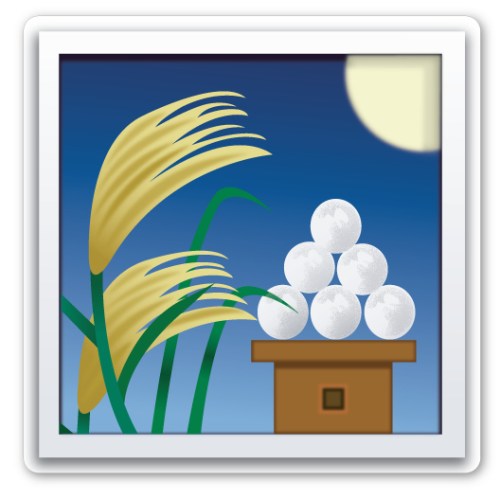
emojimoonJapanEmojis have saturated our texts and tweets, and everyone is familiar with perennial food favorites like the coffee cup and the bowl of noodles. Some food emojis are more esoteric, however, and we needed a little help to decipher them (most are Japanese snacks that are not as common in the US). However, Bon Appetit may have just uncovered the most esoteric food emoji of all: an emoji with a moon, grass, and what appears to be a basket of eggs. However, this emoji actually references a fall Japanese moon-viewing ceremony, Tsukimi. And the basket doesn’t contain eggs, it is full of mini mochi (rice cakes)! Tsukimi is celebrated to honor the autumn harvest, and includes food, drink and tables covered with tall grasses, and bowls of mochi and chestnuts. Yum!

Leave a comment

Filed under Reviews

Japanese Coffee Culture at Sawada

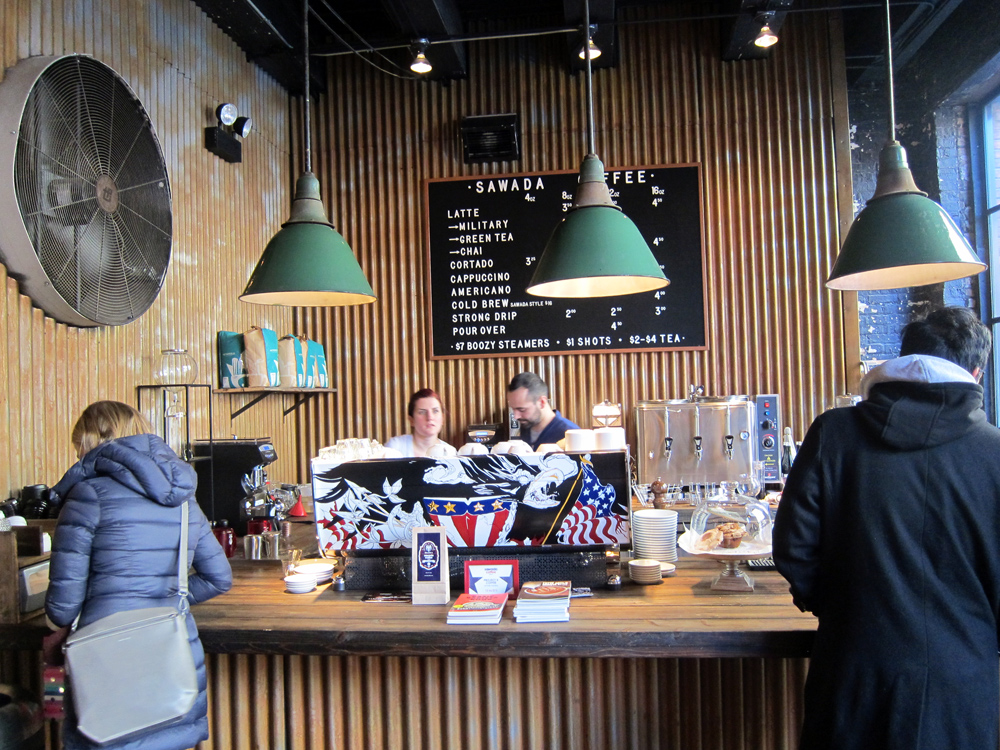
JapanWe are serious about our coffee (well at least one of the two of us is) so we were extremely excited to hear about the opening of Sawada Coffee (112 N Green St, Chicago, IL 60607). The small coffee bar, which is actually located inside of the BBQ spot Green Street Smoked Meats, is a collaboration between restaurateur Brendan Sodikoff and master Japanese coffee impresario Hiroshi. Sawada founded Streamer Coffee Co., a darling of the Tokyo coffee scene, and is also a world latte art champion. With a pedigree like that you have to figure the coffee is probably going to be pretty serious.

Sawada

The selection of drinks at Sawada is relatively small, but there are some notable choice like boozy steamers, and the signature drink of Sawada, the Military Latte. The Military Latte, which just may be one of the most photographed drinks in all of Chicago (which we are contributing to, of course), is basically a mashup of a mocha, a matcha green tea latte and a shot of espresso. It sounds kind of bizarre, but tasted divine, and looks even better.  The more standard coffee drinks like cortado and cappuccino at Sawada are also crafted with care, and the knowledgeable baristas are friendly. There are few seats around the window by the coffee bar (and at the ping pong table) but the traffic also seems to overflow into the Green Street Smoked Meats area, so there is a bit more room. If you are feeling peckish they even offer Doughnut Vault doughnuts.

Sawada2


1 Comment

Filed under Coffee, Reviews, Tea

Persimmon season is here!

Move over pumpkins, its persimmon season! We did not grow up eating persimmons, and our first experience really eating this Japanese fruit was in Brazil, where they are called caqui (the Japanese word for persimmon is Kaki). Persimmons were brought to the US from Japan in the 1800s, where they are considered the national fruit. As we began diving into the world of persimmons, we were intrigued by the differences between the varieties. There are two major persimmon types in the US (and many more in Japan and other areas) the Hachiya and the Fuyu. Their texture and preparation differs widely: the acorn-shaped Hachiya can only be eaten when extremely ripe, while the Fuyu can be eaten at any stage. One step further for persimmon aficionados is the hand-massaged and dried hoshigaki persimmon. So lets get cooking: The Kitchn has 10 seasonal persimmon recipes, or try an amazing looking bread or a savory persimmon caprese.

by Darya Mead

Persimmons  – Fuyu (L) and Hachiya (R) by Darya Mead

1 Comment

Filed under Reviews