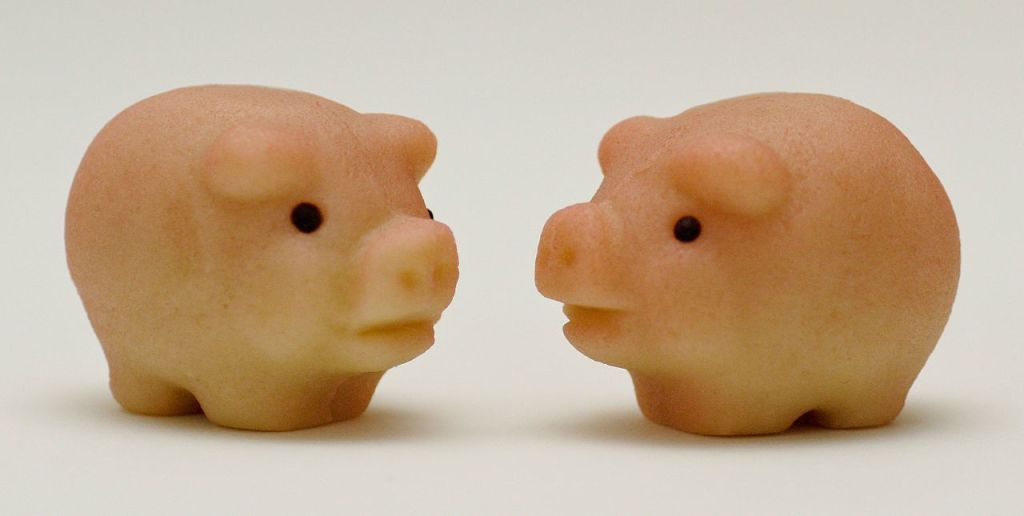
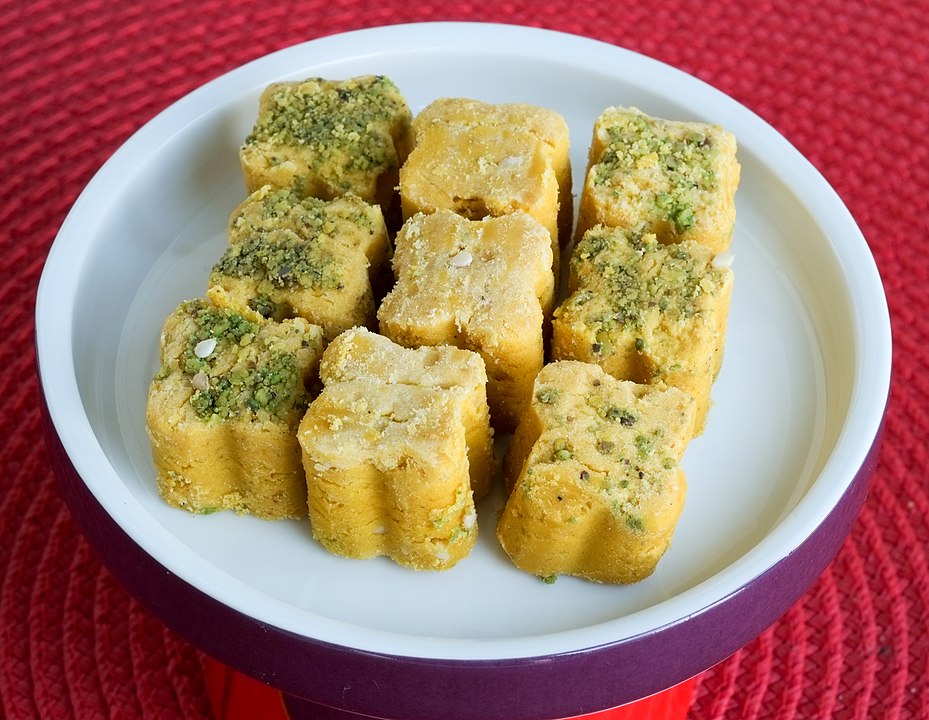
With 2025 on the horizon, we are looking toward the new year ahead, and toward the delicious treats to ring in the new year. Marzipan pigs are commonly given as gifts for good luck in Germany for New Years, called Marzipanschwein or Glücksschwein. So why pigs? In German, the phrase “Schwein gehabt” (literally “having a pig”) means being lucky, having connotations of prosperity and largesse by owning a pig in more pastoral times. This also manifets itself in the popularity of pig figurines and piggy banks! These marzipan pigs remind me a bit of the frutta martoranamade for All Saint’s Day in Sicily, or the Easter marzipan lambs. If you are really ambitious, you can even make your own marzipan pigs. Happy new year!
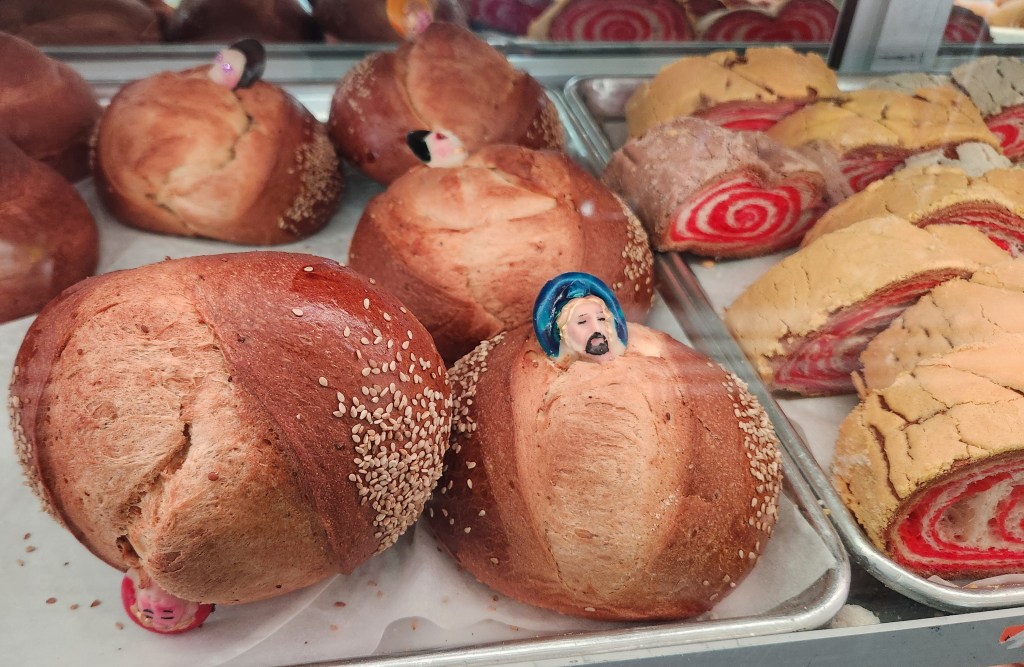
In Chicago, we frequently enjoyed pan de muerto, traditional Mexican bread for Dia de los Muertos, from one of the many local panaderias. In the US, the pan de muerto we bought was usually a sweet brioche roll with two crossed “bones” on the top. Since pan de muerto is hard to find in Cleveland, we have previously made our own using the Chicano Eats recipe, which came out great. On a recent trip to Los Angeles in late October, we knew we wanted to find some pan de muerto in person. During our LA research, we came across some places specializing in regional Oaxacan pan de muerto, which is a bit different than what we are used to. These breads are also lightly sweetened, but are covered with sesame seeds, and may take the form of larger doll shapes or rounds. They also come with colorful, adorable miniature faces made from hardened masa and painted in vibrant hues. It is relatively hard to find recipes in English for this Oaxacan-style bread, but you can look at a photo story from Vogue Mexico.
We found this particular style of pan de muerto at two different bakeries we visited. First, at Venice Bakery (1529 S Crenshaw Blvd, Los Angeles, CA), there were variations of the Oaxacan pan de muerto in many different sizes, some quite elaborately decorated. In addition to a large bakery section, Venice also houses a store with some dry goods and a restaurant. Corredor Oaxaqueño Market (4475 W Pico Blvd, Los Angeles, CA) also had the same small rolls for sale (see above). You could even buy the small masa faces that go in them, alongside a few other baked goods, and an assortment of other implements for your ofrenda. We also sampled a new-to-us drink there, tejate (see below), made from toasted masa, flavored with coconut. Absolutely delicious! Other Oaxacan bakeries in LA also offer the regional form of day of the dead bread, and we look forward to trying more variations in the future.
Today, March 8, is International Women’s Day, a day meant to draw attention to women’s rights and gender equality. In Italy, this holiday is known as the Festa Della Donna (though the literal Italian translation of the day’s name is Giornata internazionale della donna). An Italian tradition on this day is to give the women in your life yellow mimosa flowers, pictured here.
As an outgrowth of the mimosa flower tradition, the Torta Mimosa was born. Torta Mimosa is a cream-layered sponge cake, completely covered in cake pieces which approximate the puffy, yellow flower’s appearance. The exact origins of the cake are debated, but it only made its first appearance in Italy in the 1950s or 60s. The cake gets its pale yellow color from egg yolks (which are brighter yellow in Europe) and lemon juice/peel. Finally, syrup is added to the baked cake, usually consisting of Rum, Grand Marnier, Limoncello, or other non-alcoholic options like pineapple juice. Check out these Torta Mimosa recipes from Inside the Rustic Kitchen, Food 52, and Giallo Zafferano (in Italian). In the video below, in Italian (captions available), Benedetta Rossi walks you through the assembly process, step by step.
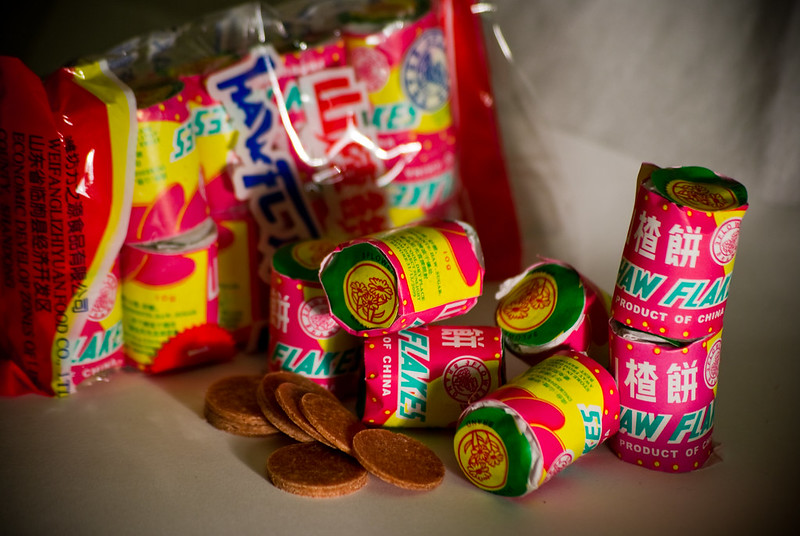
Happy Lunar New Year! In honor of the upcoming Year of the Dragon we are excited to share with you one of our new favorite Chinese snacks (though it is really quite an old-school favorite). It all started when M was in San Francisco, he visited an amazing art popup run by artist Derrick Higa in Japantown. At the pop-up he bought a sticker depicting Haw Flakes (山楂餅), an iconic Chinese, Chinese American, and Asian Diaspora childhood sweet snack. We had never tried Haw Flakes, so on our next trip to Park to Shop, we decided to seek them out.
Haw Fakes by Joey
Haw Flakes are compressed discs of Hawthorn fruit (from the Chinese Hawthorn Tree), sweetened with sugar. They are wrapped in little tubes of flat circular candies, maybe the diameter of a nickel. Mackenzie Chung Fegan, writing in Bon Appetit, likens them to Necco wafers, and I think that is pretty spot on. They had a sweet, slightly-tangy cranberry-like flavor with a tiny bit of chew. Red Hawthorn fruits are associated with Lunar New Year celebrations, particularly candied Hawthorn on sticks (Tanghulu). You can find Haw Flakes at most Chinese grocery stores, and our local shop even had multiple varieties, or you can buy them at many locations online. The iconic Haw Flake is also branching out and can now be seen in ice cream, cookie, and pin formats!
Merry Christmas to all who celebrate! Glædelig jul! One emblematic Christmas food that was popular when we lived in Chicago and Madison, Wisconsin, was the Kringle. Brought by Danish immigrants to the US, Kringle is basically a large version of what Americans might call a “Danish” pastry, a ring of laminated dough (though it was originally pretzel-shaped in Denmark), with a variety of fillings ranging from dried fruit to almond paste to cream cheese. With a high concentration of Danish residents, Racine, Wisconsin is considered to be the home of Kringle in the US and is headquarters to Kringle producers O & H Danish Bakery and Racine Danish Kringles. Evidence of the state’s pride, Kringle is now the official pastry of Wisconsin. If you are in search of Kringle, O & H’s version (featured in the video below) can be found at Trader Joe’s nationwide, or you can make your own.
We are always looking for holiday foods to add to our repertoire, and in our search this year we came across Zengoula. Zengoula is Iraqi deep-fried dough, doused in lemony syrup, produced in a fashion similar to American funnel cakes or Indian Jalebi (really, what food culture doesn’t love fried dough?). Zengoula are perfect for Hanukkah because they are fried in oil, representative of the miracle of the oil that lasted 8 nights instead of 1, in the story of Hanukkah. This recipe comes from Amelia Saltsman‘s cookbook, The Seasonal Jewish Kitchen. Amelia comes from an Iraqi and Romanian household, and these diverse food traditions inform her seasonal takes on eating. You can check out Amelia’s recipe for Zengoula on Food 52.
Just when I think I have run out of special foods to celebrate All Saints’ / Souls’ Day, I turn up one more variation. This year I learned about Fave dei Morti (literally “Fava Beans of the Dead”) which are central Italian cookies shaped like beans, traditionally eaten on All Saints’ Day / Ognissanti (Nov 1) or All Souls’ Day / Festa dei Morti (Nov 2). I have seen the origin of the name described as referring to the shape of the cookie, serving as representations of food offered to the dead, or symbolizing the longstanding mythical connection between beans and death. Whichever version is true, these bean-free cookies are made with almonds, and are often flavored with rum and cinnamon, a flavor profile similar to Ossi Dei Morti. There are many regional variations, and the cookies may be soft or crunchy, and in the north of Italy, they also may be made with colored dough. You can check out Emiko Davies’ recipe from Food 52 that comes directly from Pellegrino Artusi’s influential 1891 cookbook (pictured above). For other recipe variations, see Katie Parla,Italian Kiwi and The Languages Kitchen.
I am shocked that I do not have a post for Angelo Brocato yet, particularly since it may be our platonic ideal of an Italian bakery in America. First of all, you are greeted by an amazing vintage neon sign. Second, the shop has operated continuously since 1905 (not at this particular location the whole time) and thirdly, it is simply delicious! Every time we visit New Orleans, we have to give their flagship store a visit (214 N Carrollton Ave, New Orleans, LA 70119, there is also a new branch with ice cream only in the MSY airport). In fact, Angelo Brocato was one of the last places we visited before COVID-19 shut everything down in February 2020. We were so happy to return in 2023!
Though we think of it primarily as a bakery, Angelo Brocato is also a coffee shop and ice cream parlor. The old school copper espresso maker is serious, and you can get any number of classic espresso drinks. However, ice cream was their original claim to fame. A native of Cefalù, Angelo Brocato himself got his start making gelato in Palermo, Sicily before emigrating to New Orleans. The original Angelo Brocato shop opened in the French Quarter in 1905, when it was a hub of New Orleans’ Sicilian immigration wave. Befittingly, there is still gelato on offer by the cup or pint, but also some of the more old-school frozen sliced ice cream treats, which you rarely find anywhere else. These vintage ice cream specialties include torroncino, vanilla and cinnamon; spumoni, pistachio, almond, and tutti frutti; and the cassata, spumoni with a cake layer.
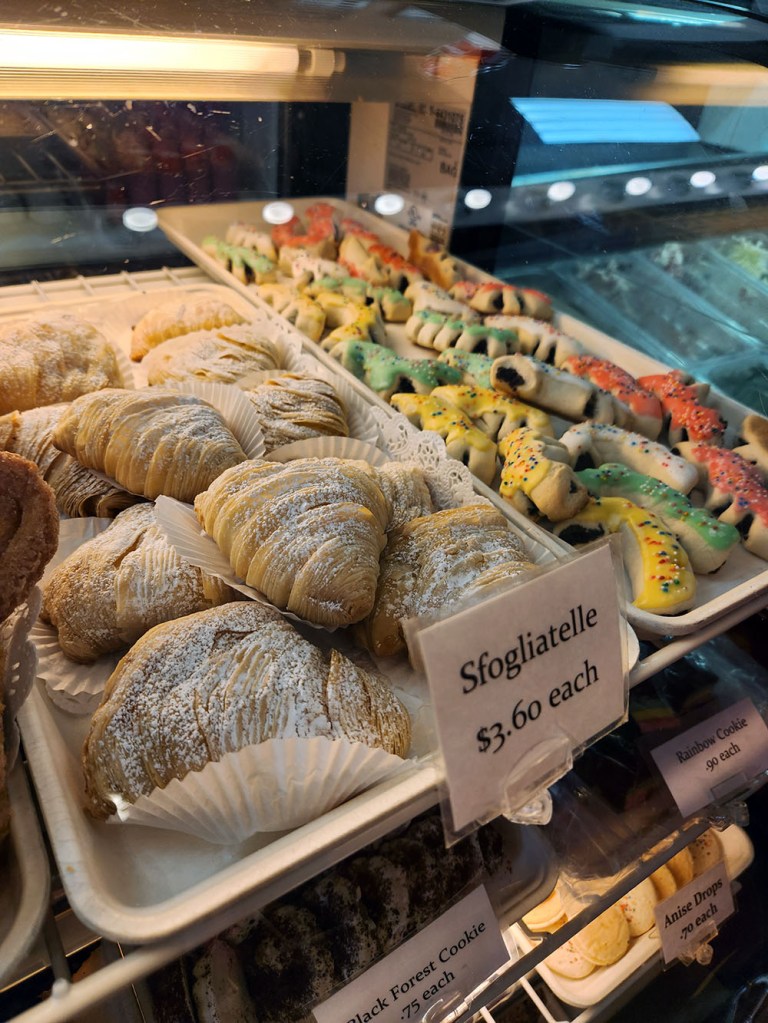
Of course, they also have many pastries, Italian and otherwise: rum baba, cream puffs, eclairs, mini cassata cakes, and holiday specials like the St. Joseph’s Day zeppole. The cannoli are filled to order with the somewhat unorthodox half chocolate and half vanilla cream by default. All of the pastries are delicious, and who can resist a fresh cannolo? This time around, we tried the eclairs for the first time, and M particularly approved, especially since it was filled with chocolate cream. The sfogliatelle are one of L’s favorites, and she also appreciates how they are one of the few places where you can get an authentic mini Sicilian cassata cake (covered in green marzipan and filled with cake and cream – similar to Swedish princesstarta).
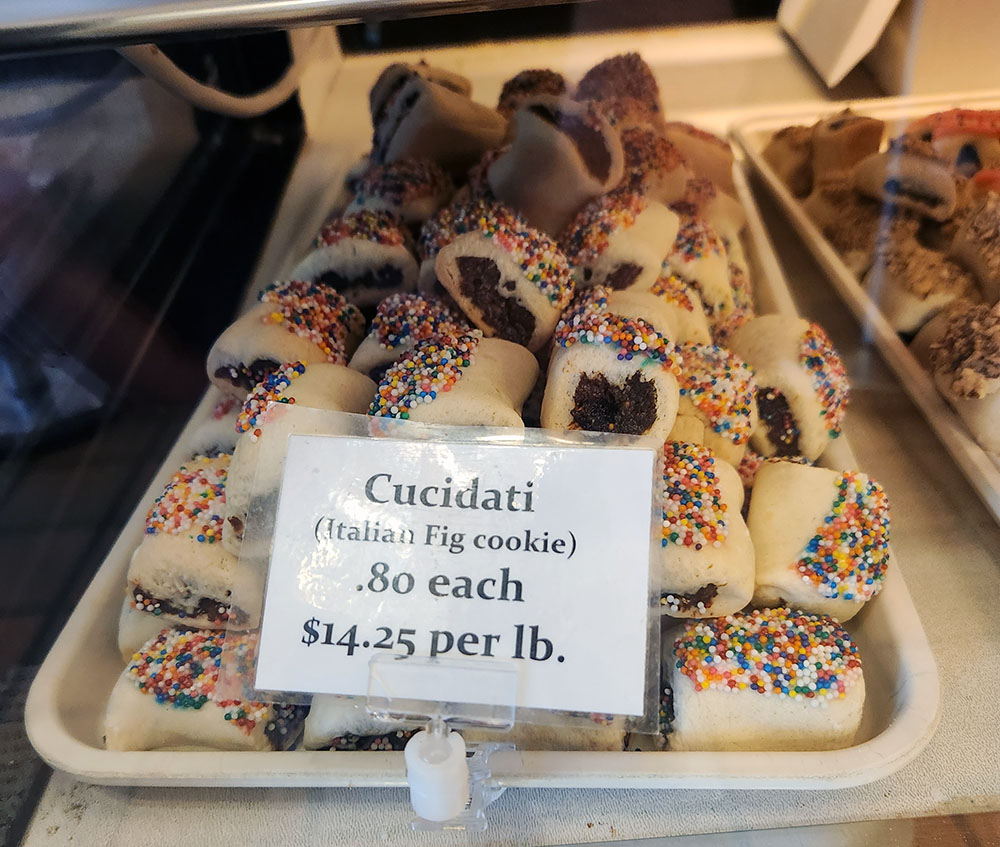
However, our favorite treats at Angelo Brocato are the full assortment of Italian cookies, of course. There are dozens of varieties on offer: cuccidati, pignoli, rainbow cookies, biscotti, ricotta cookies, chocolate drops, etc. They also have some rarer varieties like nucotoli (cinnamon spice cookies). You can buy cookies by the piece, pound, or even in sealed packages for some of the more popular varieties. The Sicilian representation in the cookie varieties is significant, and we particularly love their cuccidati and biscotti regina, both of which are staples for St. Joseph’s Day.
We were surprised to learn that Brocato’s moved to their current location only in the 1970s, due to its vintage flair. The store boasts a small amount of seating, but be prepared, because it is not unusual for there to be a sizable wait to order, and to get a table. On St. Joseph’s Day weekend, there was a line out the door both times we visited. Despite the crowd, it is also an interesting time to go, since on St. Joseph’s Day, they even have an altar in the back, showing the traditional elements: shaped breads, fava beans, cookies, etc.. Remaining a local staple for over 100 years, Angelo Brocato will always be one of our New Orleans must-dos. It is a great place to satiate your sweet tooth, and get a taste of bygone Sicilian New Orleans.
One of the most emblematic foods in Trinidad for Christmas is Black Cake: a rich, boozy, fruitcake-like confection. The name is earned from the dense and fudgy appearance of the cake, made from rum-soaked prunes, currants and raisins. The key is soaking the fruit long in advance – even months! The ancestor of the Trinidadian Black Cake are the alcohol-soaked fig puddings and fruitcakes from England, meant to withstand long voyages, brought to Trinidad when the island was colonized by the British. However, over the years, Trinidad made the Black Cake entirely their own, substituting rum for other liquors, and adding the essential caramelized burnt sugar syrup. If you don’t have access to a local bakery, there are dozens of scrumptious recipes: We Trini Foods, Trini Gourmet, and Saveur. Or you can order a mail order cake from NY’s Black Cake Company.
Patrice Yursik’s recollection of Trinidadian Christmases is definitely worth a read, to get a taste of the food and music culture at the heart the celebration (including the hit by Lord Kitchener “Drink a Rum,” linked above). Black Cake is just one of the many delicious Trinidadian treats making Christmastime appearances, including Sorrel (also popular in other Caribbean countries), Pastelles, and Ponche de Creme (all highlighted at Trini Gourmet). Merry Christmas to all who celebrate!
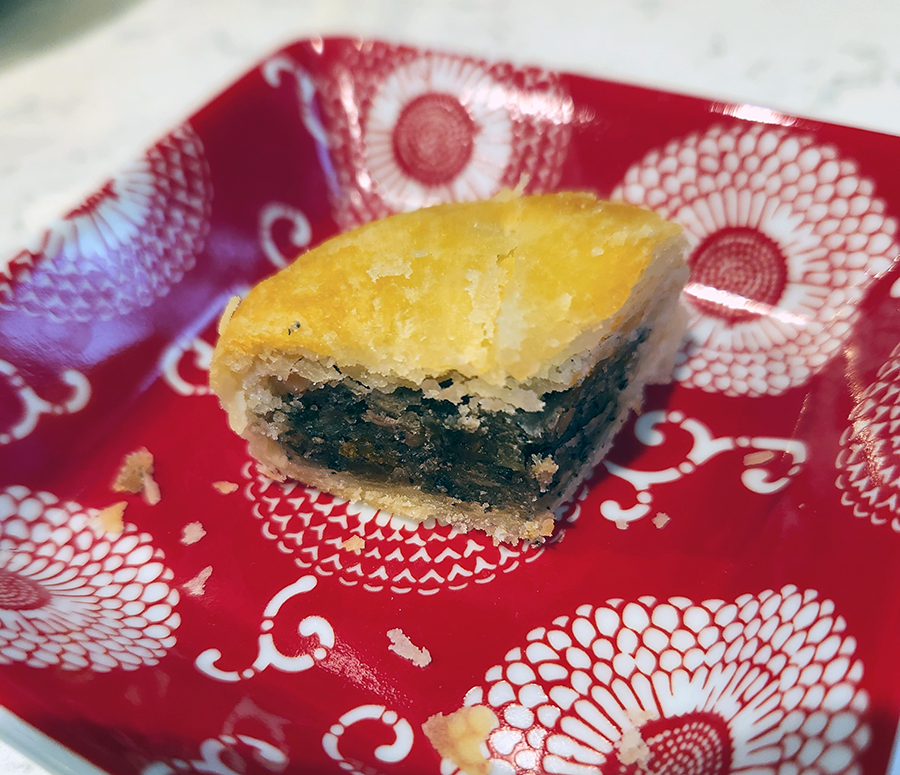
In China, one of the most emblematic dishes for the Mid-Autumn Festival, celebrated throughout East Asia, is the mooncake, a beautiful sweet with a thin, chewy skin and a myriad of fillings. However, today we were introduced to an intriguing variety of mooncake unlike any other variety we had seen: Suzhou or “Su” style mooncakes. This style of mooncakes from the city of Suzhou in the Yangtze River Delta has a different kind of “skin,” instead consisting of a shell of undecorated, multi-layered, flaky puff pastry! The filling for Suzhou mooncakes can be either sweet or savory, which is atypical of other mooncakes. To prevent any surprises, a red mark on top often distinguishes the sweet mooncakes from the savory. The version I tried was filled with sweetened squash, nuts and black sesame, though red bean is also typical. If you would like to make your own savory version, Food 52 and the New York Times have versions stuffed with pork, while the Woks of Life has a sweet red bean version.
Happy New Year! Bòn ane! And if you are in Haiti, Happy Independence Day! January 1st marks Haiti’s independence from France in 1804, as the culmination of the Haitian Revolution. This independence marked not only the end of French rule in Saint-Domingue (precursor to the modern state of Haiti), but also the end of slavery. On January 1st, to mark the sovereign nation of Haiti’s independence, it is traditional to eat Soup Joumou. Soup Joumou is made with calabaza squash, cabbage, potatoes, scotch bonnet peppers, pasta, and beef. So how did this soup become associated with independence? It is said that during the times of French rule, enslaved people were forbidden from eating this soup, however, once the country became free, this restriction was lifted. As a result, after independence, Soup Joumou became associated with freedom, in many senses of the word. The tradition of Soup Joumou lives on over two centuries later, and just a few weeks ago, the soup was given a protected cultural heritage status by UNESCO. The soup is also popular throughout the Haitian diaspora, and filmmaker Dudley Alexis made a documentary on Soup Joumou called “Liberty in a Soup” [trailer below]. Every family’s recipe is slightly different, so here are a few recipe versions from Epicurious, PBS and WLRN South Florida.
We are always looking for intriguing Christmas recipes, particularly where sweets are concerned, and for our latest holiday treat we turn to the Balkans, an area little visited on our ETW journey. In Bosnia and other neighboring areas, Christmas dessert is synonymous with hurmašice, a small, sweet vanilla and walnut cake soaked in lemon-flavored sugar syrup. These pastries remind us of the Indian Gulab Jamun, or Greek Loukoumades, also little cakes smothered in a sweet syrup. It turns out that hurmašice / hurmašica is similar to (or possibly a descendant of) the Turkish Kalburabastı. One of the signature features of hurmašice is the series of indentations on its top, made by pressing down on the cake with a grater. You can check out recipes from Recipes by Nana,Mediterranean and Me, and SBS to make your own, or if you would like step-by-step help, check out the video from Ingrid in Bosnia below. If you celebrate, we hope your Christmas is full of delicious sweets!
December 13 is St. Lucia Day, celebrated in various countries, but perhaps most prominently in Sweden, and Italy, specifically Sicily. In Sicily, the holiday is strongly celebrated in honor of St. Lucia blessing the island with a shipment of wheat after a long famine in the 17th century. Traditionally, the dish eaten on this day in Sicily was cuccia, a sweet or savory boiled wheat berry porridge, which is supposed to be the only form of wheat eaten on the day. However, to current palates, this is perhaps not the most exciting dish. In modern-day Palermo the most popular Saint Lucia food is now arancine! Arancine are delicious deep-fried rice balls filled with cheese and/or meat ragu that are popular year round in Sicily. In Palermo in particular, arancine is eaten with gusto on St. Lucia’s Day, and conveniently these rice-based treats do not contain much wheat (though they are typically breaded). In Palermo, too, the dish is always spelled arancinE in the plural, and arincinA in the singular, as opposed to arancini (pl) and arancino (singular) in Eastern Sicily and in much of Italy. This year we will be making cuccia, but perhaps next year some arancine would be in order.
November 2nd is the Day of the Dead, a remembrance day for deceased ancestors celebrated around the world. In Sicily, the day is called the “Festa Dei Morti,” and is celebrated with a number of unique,seasonaldishes. Far from being morbid or somber, some of the treats forFesta dei Morti are particularly colorful, including the realistic-looking marzipan fruits known as Frutta Martorana and the even more complex Pupi di Zucchero.
Pupi di zucchero means “sugar puppets” in Italian, and these edible, brightly-colored treats are formed in molds in the shapes of Italian folkloric characters, including knights and dancing girls. The tradition of actual pupi marionettes, particularly in Opera dei Pupi performances, is a major Sicilian art form dating from the 13th Century, and is still visible (in diminished form) throughout the island, particularly in Palermo. The origins of the sugar versions of pupi, and how they came to be associated with the Day of the Dead, are relatively obscure, and various historians place them as having French or Arabic origins. I haven’t ever seen these sugar treats outside of Sicily, so those of us outside of the island will just have to enjoy the visuals!
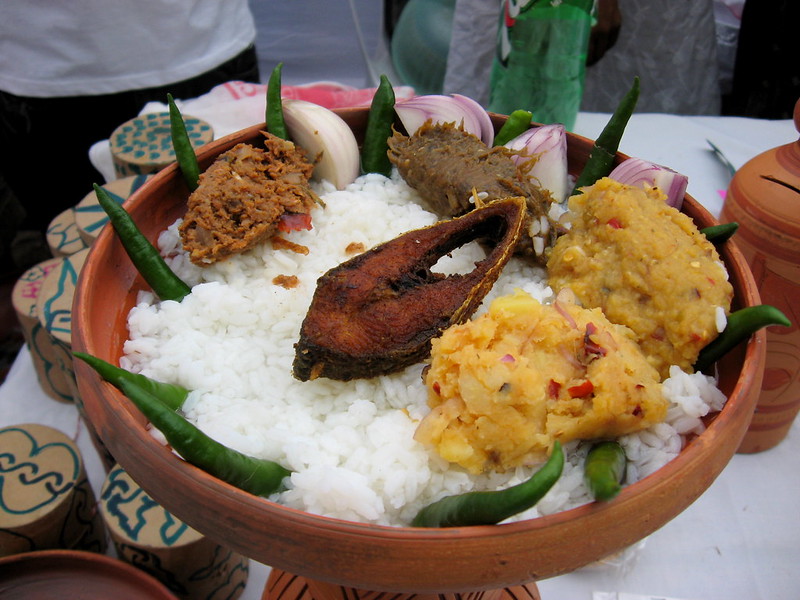
April 14 or 15 is celebrated as Pahela_Baishakh (also spelled Pohela/Poila Boishakh), the start of the New Year in Bangladesh (April 14) and across some eastern Indian states (April 15) with significant Bengali populations. Pahela Baishakh is traditionally celebrated with large processions with floats (especially in Dhaka), but in both 2020 and 2021, Covid has sent the merriment and public celebrations indoors. However, you can still use the occasion of Pahela Baishakh to make a Bangladeshi feast. One of the most iconic dishes for New Year is panta ilish, a dish of soaked rice (panta bhat) and fried “Hilsa Herring”/ilish fish. If you want a bit more inspiration for a complete feast, you can find entire Pahela Baishakh menus on Whisk Affair, India Today, and With a Spin.
We are very familiar with sweet carb-y options on the Italian Easter table including the colomba, marzipan lambs, and pastiera. However, we are excited to learn about some more savory Easter dishes popular in Italy. In Central Italy, one version of this Easter bread goes by many names including Pizza di Pascua, Crescia di Pasqua, and Crescia al Formaggio. Crescia al Formaggio (as it is known in the Marche region, literally translating to cheese growing/rising) is a leavened, dome-shaped bread filled with an assortment of cheeses, including Parmesan. This bread is traditionally baked on Good Friday, and is then eaten on Easter, especially with a side of charcuterie. While we might not have enough room to make this cheesy bread this Easter, we think it sounds like a delicious treat year-round. Check out recipes from King Arthur, Our Italian Table, MA Kitchen, and She Loves Biscotti.
This weekend is the Persian New Year’s festival of Nowruz, falling on March 20, 2021. Earlier on the blog, we have talked a little bit about the festive savory dishes eaten on Nowruz. However, in doing our research into what we should make, we also came across these intriguing cookies – make with chickpea flour, and flavored with rosewater and cardamom – Nan-e Nokhodchi (or shirini nokhodchi)! We have to admit that we have never incorporated chickpea flour into cookies (or sweet dishes) before, so we are very excited to try these someday. Plus, chickpea flour is naturally gluten free. Here are some tasty recipes for Nan-e Nokhodchi from The Washington Post, Ahead of Thyme and The Delicious Crescent.
Today at sunset marks the start of the Jewish holiday of Purim, which commemorates the saving of the Jewish people from Haman. Many of the treats enjoyed on Purim have to do with Haman in some way, including the more-famous, triangular, filled Hamantaschen cookies. Fazuelos, fried dough formed into a spiral shape, are also a popular Sephardic Jewish Purim recipe, found in Italy, Morocco, Israle and Turkey, among other places. These fried dough treats go by many different names throughout the Mediterranean: Fazuelos, fijuelas, deblas, or orecchie di Ammon. The last of these, the Italian name, “orecchie di Ammon,” gives a clue to why they are so popular on Purim, since this name literally translates to “ears of Hammon” in Italian. You can find recipes for fazuelos at Kosher Cowboy and Jamie Gellar (who provides the video below.).
I hope those who celebrate had a wonderful Christmas. We have been partaking in some serious rest and relation these past two weeks, and since we are unable to travel, the blog is relatively slow. However, we wanted to drop a fun Christmas-related tidbit that we have been meaning to share a while now. Did you know that KFC (Kentucky Fried Chicken) is associated with Christmas in Japan? It is the result of a long-running publicity campaign, first started by a Japanese franchisee Takeshi Okawara in 1970. The festive KFC “party barrel” of chicken served as a stand-in for the American turkey dinner. Colonel Sanders even looks like Santa, an association made in Japan as part of the marketing campaign, that you can see below! This special proved to be popular, and soon caught on across the country. Now there are hundreds of KFCs in Japan, and the long-running association between fried chicken and Christmas in Japan is set in stone.
Between the two of us, M has the stronger love of pumpkin spice, and every Fall he has to get his fill of this seasonal flavor. What Americans now call pumpkin spice – a variable mix of cinnamon, ginger, nutmeg and clove – is similar to many spice blends around the world, and we just learned of another international pumpkin spice cousin: Neapolitan Pisto (Italian Wikipedia). The key ingredients of the Pisto spice blend are cinnamon, nutmeg, cloves, star anise, and coriander. Pisto is a key component of the popular Roccoco and Mostaccioli (below) cookies, which are eaten around the Christmas holidays. Mostaccioli [recipe] are diamond-shaped spicy cookies coated in chocolate, and Roccoco [recipe] are ring shaped with candied fruit. Other Neapolitan holiday cookies like susamielli use Pisto as a major component. You can buy pre-blended Pisto in Naples, but we have never seen it for sale in the US. Fortunately, you can find recipes online like this one from SBS / Italian Street Food.
Welcome to Eating the World! We’re two Midwestern omnivores, L and M, who are trying to eat food from every country in the world (at restaurants in both the US and abroad). Eating the World is where we update our global restaurant and food adventures. We are based in Cleveland, Chicago and beyond. To contact us for questions, partnerships, or just to say hi, email us at eatingtheworld (at) gmail