Category Archives: Pastry Post-Poc

Pastry Post-Doc: What are Chinese “German Cookies”?

chinaWe were doing a search for “German cookies” in Instagram when we came across a series of photos of near-identical cookies with the same fork impressions, with Chinese captions. Come to find out that the name for these Chinese cookies, popular around Lunar New Year, is “German Cookies” (德式酥饼). German cookies require little more than potato starch (which can be found in most Asian groceries) and sugar, and you can find easy recipes at Goody Foodies and Bake for Happy Kids (seen below). As far as I can tell, they have no real association with Germany beyond the name. If anyone has any insight into their unusual name, let me know!

GermanCookie


1 Comment

Filed under Finer Things Club, Pastry Post-Poc

Pastry Post-Doc: What is a mangonada?

Mexico FlagThe Mexican ice cream shop – neveria – has become a staple of the Chicago food landscape. It was not until we moved from Chicago that we knew how good we had it in terms of icy treats. Though the Neverias in Chicago sell traditional treats like paletas, they are also home to some more exotic specials. Take the mangonada – an icy concoction made with fresh mango pieces, mango ice cream, chamoy (pickled plum sauce), a tamarind spice stick and Tajin (salt/lime/chile pepper) sprinkled over the top. This hodgepodge of flavors seems like it shouldn’t work, but it really does, and capitalizes on an amazing spicy-sweet combo, which is very popular in Mexican candies. Mangonadas remind us of summertime, so we could really go for one now in the dead of winter. If you leave near a Mexican grocery store, you can probably pick up most of ingredients you need to assemble your own, or they are available online at Mex Grocer.

mangonada

Leave a comment

Filed under Pastry Post-Poc

Pastry Post-Doc: Czech Rakvičky Cookies

czechPretty much every culture has a proclivity for sweet treats, and there is nothing I love more than learning about them all (hence the Pastry Post-Doc). When my friend attended a wedding in Wisconsin she told me about a unique Czech cookie they had there, Rakvičky (which translates to “little coffins” in Czech), which were totally new to me. Though the name sounds a little morbid, this festive cookie doesn’t have any deadly associations – the “coffin” references the hollow, coffin-like shape. Somewhat similar to eclairs, they consist of a long hollow pastry shell topped with whipped cream (and are sometimes filled). Here is a recipe in English for Rakvicky from Catalina Bakes, though we found many more recipes in Czech if you are a purist.

Rakvicky

Rakvicky from Apetit Online

Leave a comment

Filed under Pastry Post-Poc

Swedish Cake Table for St. Lucia’s Day

sweden_flagWe are pretty fond of the Swedish way of taking coffee, Fika, and we also love their idea of the “cake table” aka kaffebröd or fikabröd which accompanies this traditional Swedish fika coffee break. A cake table typically includes cakes (obviously), cookies, pastries and other sweet treats. We think that a full fika with cakes and cookies is the perfect way to celebrate St. Lucia’s day, a holiday celebrated in Sweden on December 13th. Here are some top picks that we think would be perfect on any holiday table (or just for fun):

Kladdkaka

Kladdkaka by Andreas Ivarsson

1 Comment

Filed under Coffee, Holidays, Pastry Post-Poc, World Eats

Ossi dei Morti – Italian bone cookies for Day of the Dead

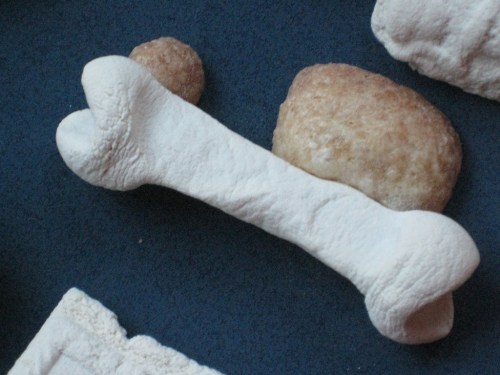
ItalyWe love making special food for the holidays, and foods for Halloween/ Day of the Dead tend to have a bit of a macabre bent, which is always fun! Many foods for these holidays feature bones, skulls or similar shapes, and we are always interested to see how this is even true across cultures. Pan de Muerto from Mexico is topped with mini dough bones, and we recently discovered an Italian cookie that is all bones – the “ossi dei morti/ossa dei morti” – bones of the dead. The “Ossi” are like biscotti, and are flavored with almond and cinnamon/clove. Though this cookie is from the region of Piedmont north of Italy, it is found throughout the country. Good Food Stories has a good-looking recipe, as does Passion and Cooking which includes hazelnuts and a slightly less macabre shape.

Ossi dei Morti

Ossi dei Morti in Philadelphia by cherdt

5 Comments

Filed under Holidays, Pastry Post-Poc

The best Pasteis de Nata in London

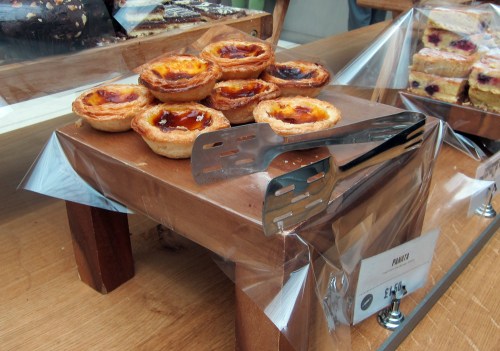
united_kingdomportugalOne of our first stops in London was the venerable British Museum, where they had a delightful museum cafe run by the local cafe chain Benugo (various locations throughout London). Imagine our surprise when we saw the iconic Portuguese pastry, the Pastel de Nata, being advertised proudly front and center alongside muffins and scones, as a “Panata.” We certainly weren’t expecting to see one of our favorite Portuguese treats in this location! The panata from Benugo was actually pretty good, and once we saw our favorite treats there, we started seeing them in shops all around town. Who would have thought it would be so popular in London?

Panata

Continue reading

2 Comments

Filed under Pastry Post-Poc

Pastry Post-Doc in Portugal: Saboia

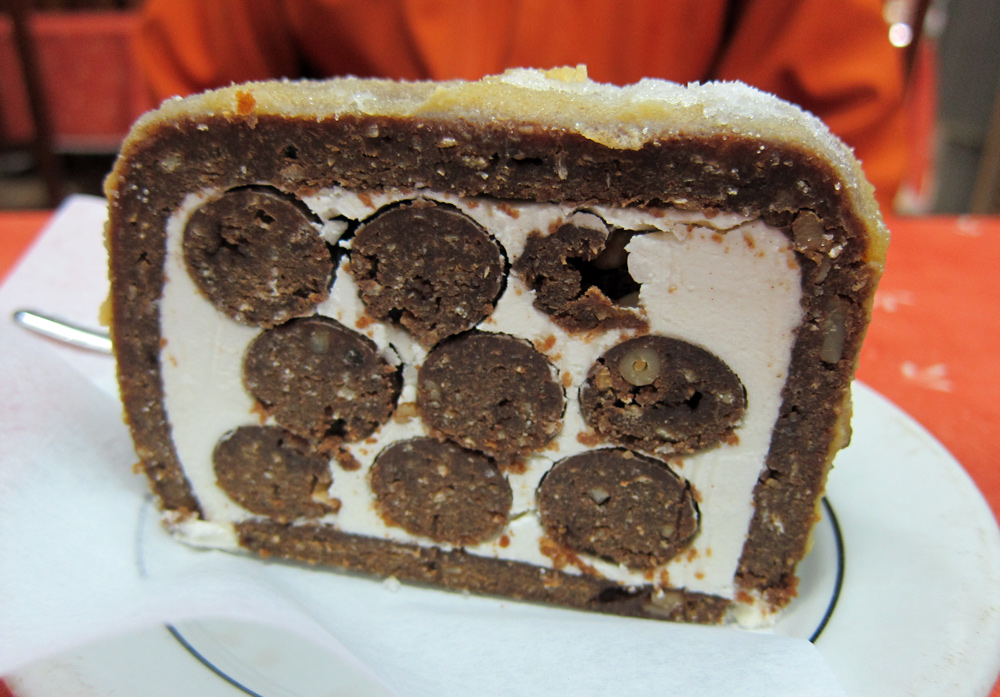
When we first read Fabrico Proprio, we were particularly intrigued by the saboia cake. It almost looked cartoonish, what with the striking brown polka dots on white background. The saboia is made of the trimmings of other chocolate cakes cut into a thin outer layer and jaunty polka dots, and filled in with whipped cream. Apparently, the saboia used to be popular in the 1940s, but is now sold in very few stores in Lisbon, in fact it may only be one, Central da Baixa (Rua Áurea 94, Lisbon). Like the saboia, this cafe is a holdover from an earlier time, somewhere between the present day and the elegant Manueline architecture. The saboia was super rich, and the chocolate cake parts had a fudgy consistency. This is definitely a special occasion cake. Even more intriguingly, I haven’t found a single recipe for this complicated cake online.Saboia

Leave a comment

Filed under Pastry Post-Poc

Try a new type of cake for Chinese New Year: Nian Gao

Nian Gao

Nian Gao in Chinatown, Singapore by Choo Yut Shing

chinaThis lunar new year, the pastry post-doc is celebrating with an entirely new cake preparation format – steamed. Yep, the cake in question, Nian Gao, is actually a sweet steamed Chinese cake made from glutinous rice flour and brown sugar. Nian Gao (or nin gou) is popular across China, and varies widely by region, as well as in the Chinese diaspora. It is considered a lucky food to have around the New Year, partly because of its name. According to Wikipedia:

It is considered good luck to eat nian gao during this time, because “nian gao” is a homonym for “higher year.” The Chinese word 粘 (nián), meaning “sticky”, is identical in sound to 年, meaning “year”, and the word 糕 (gāo), meaning “cake” is identical in sound to 高, meaning “high or tall.”

Nian Gao is traditionally steamed, and therefore has a more gelatinous texture, as in this recipe, though Chow.com also has a baked recipe. Honestly, though the baked cake may be more familiar, I really appreciate the steaming technique, which is definitely not utilized in many Western sweets. Here’s to a sweet new year!

Leave a comment

Filed under Holidays, Pastry Post-Poc

All about Ensaimadas – Spain to Puerto Rico to the Philippines

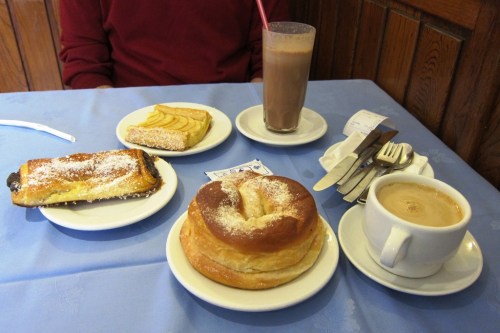
philippinesFlag of Puerto RicospainWe first ate an ensaimada, a sweet eggy, yeast roll on a warm day in Puerto Rico, not knowing anything of its history, other than that it looked pretty tasty (it is actually called a Mallorca there). However, we did not put two and two together until we stumbled upon the same sweet yeast roll, with the same spiral top, on a cold winter day in Madrid, except this time it was called an ensaimada. When we got home, we did a little research and sure enough these two rolls, encountered an ocean apart, were actually the same pastry.

La Mallorquina in Madrid

Enaismada (center) from La Mallorquina in Madrid

Ensaimadas originated on the Spanish island of Mallorca, and gained their name from the pork fat used to make them, saïm. The pastry traveled with the Spanish around the world, and throughout the centuries have found their way throughout the Spanish speaking world to Puerto Rico, and to the Philippines, where they are particularly popular. Ensaimadas, due to their richness, are popular to eat around Mardi Gras time, before all the sweets and butter are given up for Lent, so why not whip some up now? Check out this Spanish-style recipe from Delicious Days, or a traditional Cabell d’àngel pumpkin jam-filled version from the Gusty Gourmet. Jun-blog has a recipe for Filippino ensaimadas, which are miniature-sized and made with butter.

Leave a comment

Filed under Holidays, Pastry Post-Poc

Warm Weather Memories of Key Lime Pie

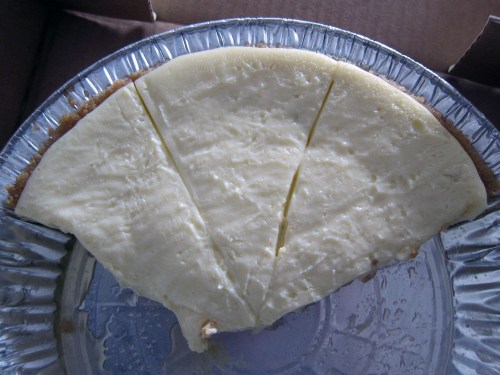
We just returned from Miami, where we enjoyed the warmth, good coffee and the key lime pie, a staple of the region. Key lime pie is a custard pie made from tiny key limes (or often the more common Persian limes that most of us deal with) condensed milk, eggs and with a graham cracker crust. The use of condensed milk was born out of the lack of refrigeration in the area until the 1930s!  Apparently, actually using real key limes is somewhat rare, since many of them were actually destroyed in the 1926 hurricane which devastated Southern Florida. Who knew? Despite key lime pies being available throughout the country (even in Brooklyn), when we visit South Florida we have to sample some of the classics.

wpid-0124151708a.jpg

Why did we leave Southern Florida?

The first pie in the area we sampled was in Key West, at the aptly named Key West Key Lime Pie Company (511 Greene Street, Key West, FL). There are a ton of companies touting Key Lime pie in Key West, but we heard this was the best around (YMMV). The store was shockingly key lime green, which, to be honest, made us want to go inside even more. The only thing for sale were key lime pies and variants of pies, like chocolate-covered pie slices on a stick, and key lime paraphernalia and postcards. We brought back a whole pie and shared it with our friends K and M in Miami, and the pie was great! It was tart and creamy filling (not gel-like as versions some can be) and with a cookie crust. Back in Miami, we also tasted key lime pie from Keys Fisheries (3502 Gulfview Avenue, Marathon, FL). Though made in the keys, these pies are also available from Whole Foods stores in the Miami area. This was an excellent key lime pie, with a pale, creamy filling and a sweet graham cracker crust. We really loved both of these Keys-made pies, and it has inspired us to make one of our own, hopefully soon, to re-capture some of the warm weather. Do you have any favorite key lime pie bakeries or recipes?

KeyLimePie

Keys Fisheries Key Lime Pie – yum!

1 Comment

Filed under Pastry Post-Poc

Pastry Post-doc in Portugal: Escangalhado

CrazyPastryportugalThe name of this pastry says it all. In Portuguese, escangalhado means “messed up” and this pastry is basically a chaotic creation, made up of puff pastry and egg yolk cream. The bottom layer is merely a square layer of puff pastry, on top there is a huge dollop of cream onto which tons of puff pastry shards are stuck, all topped with a flurry of powdered sugar. There is no elegant way to eat this treat. We basically used the puff pastry as chips to scoop up the cream. We saw this special treat at only one location in Lisbon, one of our favorite bakeries, Pastelaria 1800 (Largo do Rato 7, Lisbon, Portugal). Have you ever seen it anywhere else?

Leave a comment

Filed under Pastry Post-Poc

Cake tour of Lisbon

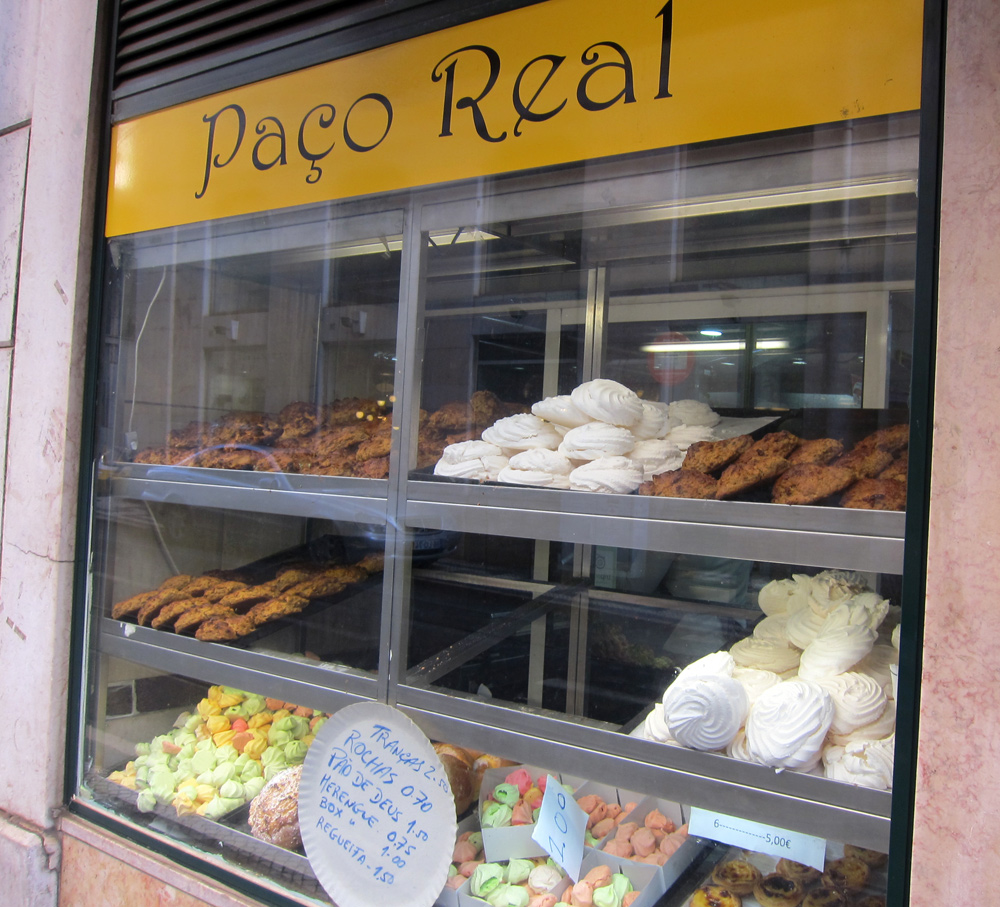
portugalBeing the Portuguese pastry fans we are, we were excited to meet up with one of the masterminds behind the indispensable Portuguese patry guidebook, Fabrico Próprio, Frederico Duarte, for a cake tour. Frederico was generous enough to show us around the city to some hidden bakery gems of Lisbon. While we had previously visited the big names like Versailles and Confeitaria Nacional, Frederico helped us uncover yet another layer of sugary, pastry goodness in Lisbon.PacoRealWe first visited Cafe Paço Real (Rua da Conceição 55) an understated cafe with a full savory menu in addition to the bakery counter, in the heart of Baixa. When you walk in, you will notice one feature immediately: there is an azulejo mural of the ubiquitous Portuguese statesman Marques de Pombal on the wall. However, we were most drawn by the wide variety of pastries on display in the street-facing windows, which Frederico told us was more traditional in bakeries of the north, something we had not noticed to this point. We tried the specialty of the house – a unique treat for us – the rocha (“rock” in Portuguese). These little cakes do indeed have a somewhat craggy appearance, but the texture was almost like a banana bread, unlike a sponge cake or puff pastry. It was cakey, not too sweet, and contained bits of citrus peel and more than a hint of cinnamon. This was a different type of pastry and was a nice change from sugar and egg yolks.
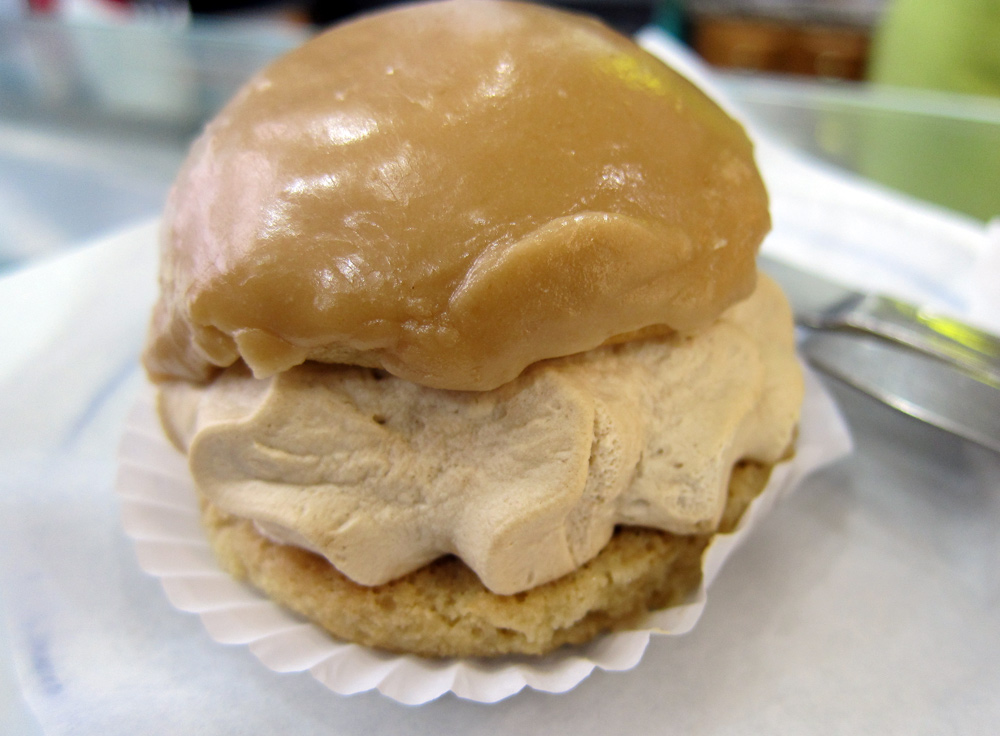
RochaThe next stop on the cake tour was another old school cafe in Baixa that Frederico was familiar with: Cafouro (Rua do Ouro 177), usually spotted by its triangular “Tofa” brand coffee signs. There, Frederico recommended that we try a geladinho, a coffee-flavored version of the Indiano pastry in Fabrico Próprio. This pastry was composed of two layers of cake, split in the middle and filled with a coffee pastry cream and a shiny coffee glaze. The pastry was moist and delicious, and we appreciated the unique coffee flavor, not especially common in traditional Portuguese pastries. Like Paço Real, we definitely appreciated the down-to-earth vibe of Cafouro.
GeladinhaNext, we took the iconic #28 yellow tram up to the School of Hospitality and Tourism of Lisbon, located in Campo de Ourique, in the historic Palácio dos Condes de Paraty. Here, we got a glimpse of future pastry chefs hard at work in the teaching kitchen. Frederico also told us about the techniques manual that you can now buy along with Fabrico Próprio, which makes sense since so many people were intrigued to try the recipes behind the desserts in the book. However, due to the semi-industrial nature of most Portuguese baking, these pastries are not generally meant for a home cook (rats!). Still, we hope to try our hand at making them someday.
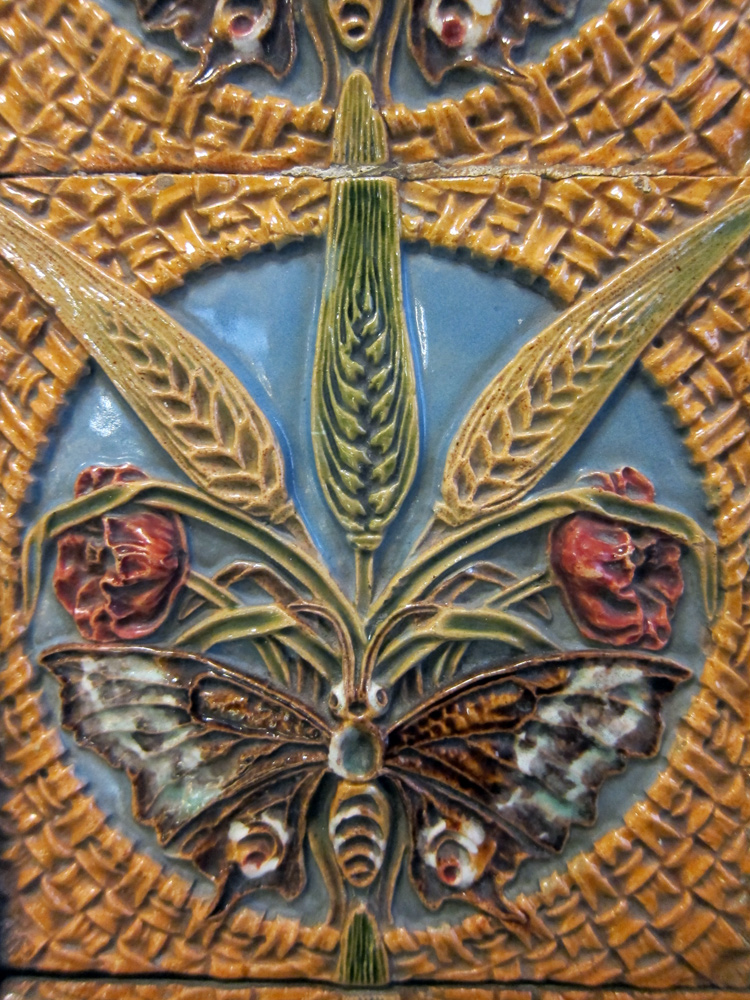
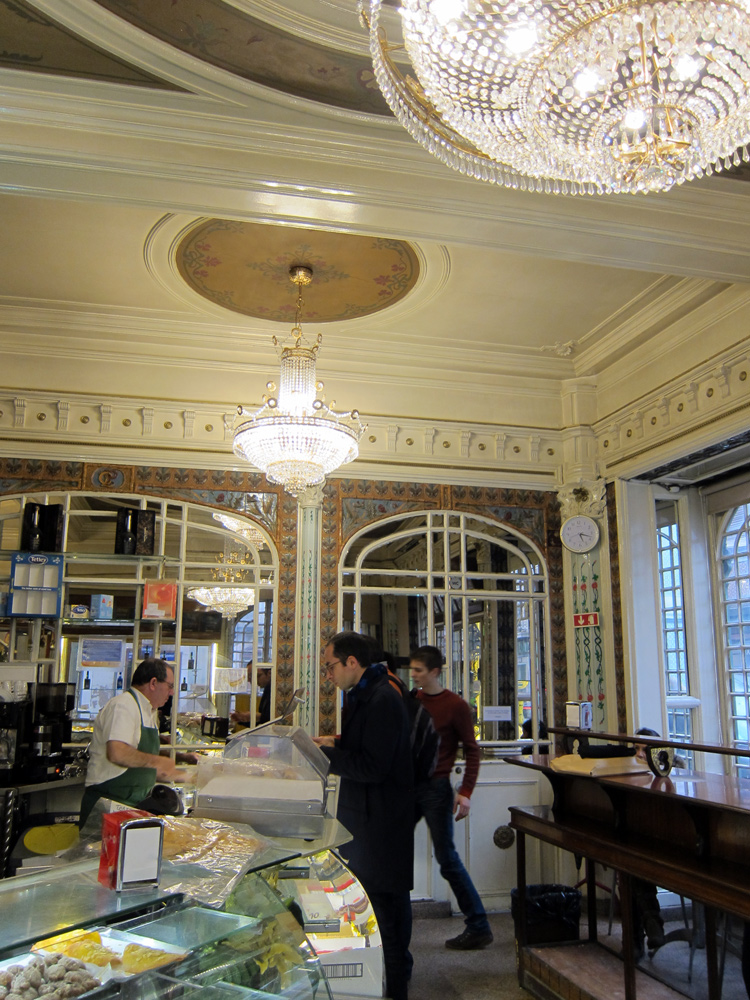
WheatTileAround a nondescript corner we came upon a truly old school cafe, Panificaçao Mecânica (Rua Silva Carvalho 209), our final stop on the cake tour. This was by far the most unusual stop on the tour, a pastry shop crossed with a breadmaker. The opulent setting was the highlight of the cafe, with two large crystal chandeliers and two types of Bordallo Pinheiro azulejos with wheat motifs (seen above and below). We not-so-secretly covet these azulejos for a future kitchen.
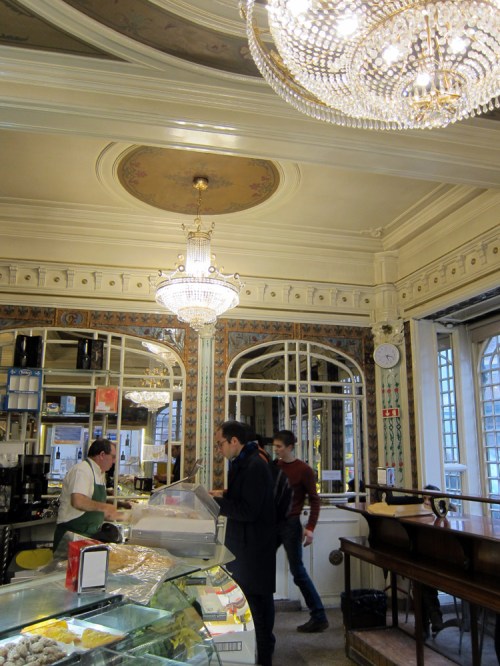
Chandalier

The inside was straight art nouveau, with some anachronistic 1950s plastic-y touches. They had a variety of traditional pastries as well as a wall of breads and an unusual streusel from the Alentejo region. We ordered a new-to-us type of cookie, called a Húngaro (yes, after the country Hungary), and a passable Pastel de Nata. The Húngaros were two sugar cookies joined with cherry jelly and coated in chocolate. Another showpiece of the cafe were the bolinhos de Algarve, little marzipan cakes in the shape of fruit, which reminded us of some of the marzipan candies we had seen in Sicily and Naples.

Hungaros

We finished up at one of our favorite Pastelarias for a superlative Pastel de Nata, Pasteleria 1800 (Largo do Rato 7), brightly decorated with yellow, blue and white azulejos. Though not officially on the cake tour, we were excited to return to one of our favorites before parting ways with Frederico. The cake tour was certainly one of our Lisbon trip highlights. We visited bakeries we would have never noticed, thanks to Frederico’s guidance, and gained an even greater appreciation for the world of Portuguese pastries. Thanks so much for showing us around town, Frederico!WheatTile2

1 Comment

Filed under Pastry Post-Poc

Portuguese Pastry Post-Doc: São Marcos

portugalAs the Pastry Post-Doc moves into 2015, I have reached the point where I am encountering more esoteric Portuguese pastries. At a recent visit to Chique de Belem (Rua Da Junqueira 524, 1300-341 Lisboa) – our 2012 winner of best Pastel de Nata – we encountered a rarer variety, the São Marcos. The kind waitress assured us that it was “really, really good!” So we decided to give it a shot. We recalled this pastry appearing in Fabrico Próprio. This rendition of São Marcos had a top and bottom layer of sponge cake, filled with whipped cream and topped with sticky, shiny caramel. One large piece was more than enough for two – typical of Portuguese pastries – it was a total sugar bomb!

SaoMarcos

Leave a comment

Filed under Pastry Post-Poc

Fabrico Próprio, a field guide to the world of Portuguese pastries

FabricoProprio We are back in Portugal for the third time and there are still so many pastries to try! An invaluable resource for my pastry post doc has been the book Fabrico Próprio (which means “made in house,” a label you will see on many bakeries), which I purchased in Lisbon in 2012. The book, by Rita João, Pedro Ferreira and Frederico Duarte presents a social history of semi-industrial baking in Portugal, and also serves as a field guide, identifying 92 emblematic pastries and many iconic cafes through lovely pictures and Portuguese/English bilingual text. The book was clearly a labor of love, and the authors were quite thorough in their documentation of pastelarias throughout Portugal (but especially in Lisbon). We love using this book’s detailed photos and drawings as a guide to the sweet offerings in Lisbon, since the Portuguese pastry experience can sometimes be overwhelming. You can learn more on the book’s comprehensive website. We highly recommend this book! Fabrico Próprio is available on the book’s site for 35 euros – and with free international shipping!

3 Comments

Filed under Books, Pastry Post-Poc

The Best Thing We’ve Eaten Recently: Cinnamon Roll at Baker Miller

Everyone has been buzzing about Baker Miller (4610 N. Western Ave.), and the fact that they mill their own flour, adding yet another layer of artisan to the artisanal bakery. Everyone is especially buzzing about their bread and toast bar – there are even toasters available at every table to toast it up yourself. So when we visited on Saturday, we were a little disappointed to see the power was out (and therefore the toasters, too) – not their fault – it affected the whole block. But luckily for us that meant they were having a fire sale on cinnamon rolls – 2 for 1 at (normal price $3.50). The cinnamon rolls were huge – so this is a really good bargain. We decided to split one in the store and take one home for later. On appearance alone, we were delighted – but the taste was even better – this was a darned good cinnamon roll! The roll, which was actually an earthy sourdough, had a good cinnamon flavor, and was not covered in a gross sticky glaze that I hate, like at some other venues. The “raw sugar” frosting was also particularly fresh, and not overpoweringly sweet. This was a restrained cinnamon roll – and we liked it. You can even take some rolls to bake at home yourself. After our excellent cinnamon roll experience, we can’t wait to visit Baker Miller again when they have power.

Cinnamon Roll at Baker Miller

Cinnamon Roll at Baker Miller


Leave a comment

Filed under Pastry Post-Poc, Reviews

Pfeffernüsse / Pepernoden for St. Nicholas Day, Sinterklaas/Nikolaustag

germanyNetherlands flagIt’s a rule – there is nothing we like more than baking treats for any associated holiday, American and international alike. St. Nicholas Day is coming up soon – December 6th, and in some European countries, it is a HUGE holiday complete with feasts, cookies, and having St. Nicholas fill your shoes with candy. One of the St. Nicholas Day treats that has traversed many borders and become something of a holiday staple is the German Pfeffernüsse cookie (which literally translates to “pepper nut”) which show up all around Central and Northern Europe this time of year. Similar cookies are called Pepernoden in the Netherlands and Pebernodder in Sweden. We even found a Swiss version of Pfeffernüsse in New Glarus, Wisconsin (see below). Pfeffernüsse are super easy to make and have a spiced, gingerbread-like flavor, sometimes coated in powdered sugar or glazed. The Austin Statesman has an interesting story about unearthing a heritage family Pfeffernüsse recipe and Saveur has a recipe that includes a rum glaze. We even saw a version at Trader Joe’s in the holiday special section, if you’re looking for an extra-quick treat.

SwissCookie

Pfeffernusse in New Glarus, Wisconsin

Leave a comment

Filed under Holidays, Pastry Post-Poc

Speculoos at Maison Dandoy for St. Nicholas Day

BelgiumSt. Nicholas Day (December 6th) is right around the corner, and that means it is time for speculoos! These crispy brown sugar and spice cookies, popularized in the US by the brand Biscoff, are extremely popular in Belgium and the Netherlands at this time of year. Though you can get speculoos stateside, if you are Brussels, you can try a taste of the original old-style speculoos at Maison Dandoy, who has been baking them up since 1829. Speculoos are traditionally eaten with tea and are associated with advent time and especially St. Nicholas Day.

MaisonDandoy1
There are Maison Dandoy locations sprinkled throughout Brussels, and we went to the Tea Shop location (Rue Charles Buls 14) in the center of the old town. The tea shop has a restaurant upstairs (another post on this to follow) and a lovely store on the first floor filled with beautifully displayed and packaged Belgian cookies. The speculoos at Maison Dandoy are stamped with a windmill, shaped by traditional molds or even by special springerle rolling pins with designs imprinted on them. You can also get a vanilla or chocolate version of speculoos at Dandoy if you are so inclined, though we are purists and prefer the original. Though of course the original recipe is secret, you can try an imitation Dandoy recipe from Un déjeuner de soleil (in French – auto-translated here. Eat the Love has another speculoos recipe and even more history. We can’t think of a better way to celebrate St. Nicholas Day than with cookies and tea!

MaisonDandoy2

2 Comments

Filed under Finer Things Club, Pastry Post-Poc, Reviews

The Best Thing We’ve Eaten Recently: Croissant at Beurrage [closed]

Pain Au Chocolat
franceWe are always on the hunt for delicious baked goods, and other than the perfect macaron, one of our most elusive quests is for the perfect croissant. We have had many good croissants, but they all seem to lack the light flakiness we so desire. However, we may have just found one of our favorite croissants at a small bakery in Pilsen: Beurrage (1248 W 18th St). Beurrage is the brainchild of Jeffrey Hallenbeck, a self-taught baker, who developed the business out of a catering company. Beurrage has a variety of croissants available, from almond to chocolate to hazelnut banana to savory varieties. In a Chicago-y twist, there is even a pretzel croissant! For their generous size, we were also shocked at the reasonable prices ($3.50 for a pain au chocolat / chocolate croissant). We went with the chocolate croissant – and were completely delighted at how light and flaky it was. We’re talking shatter-into-a-million-flakes-upon-biting flaky. There was also a generous filling of dark chocolate, we hate when bakeries skimp on this, so we were in heaven. Of course, Beurrage also sells other things than croissants, like doughnuts, cinnamon rolls and danishes. However, with a croissant that good, who needs variety? We will be returning ASAP to stuff our faces with more croissant-y goodness.
1 Comment

Filed under Pastry Post-Poc, Reviews

Dia de Los Muertos Macaron Display in London

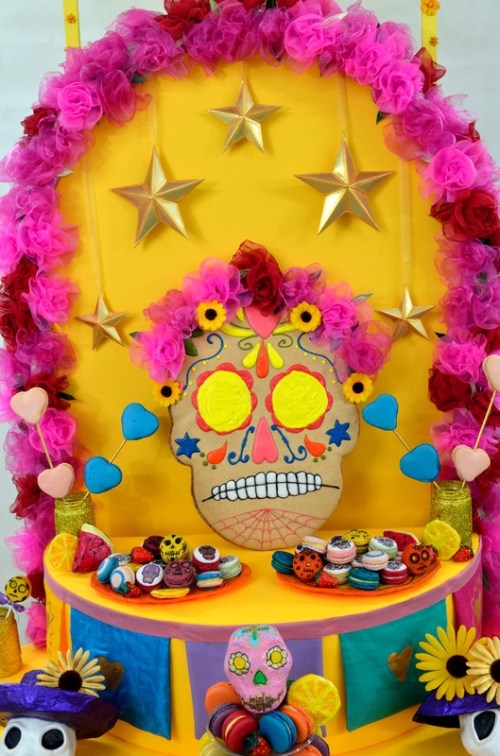
DiaDeLosMuertosMacaron

Dia De Los Muertos Macaron Display – photos by Ganache Macaron

Dia de Los Muertos/Day of the Dead is becoming more popularly celebrated and recognized around the world, which means that a whole new variety of creative treats based on the day are emerging. One of the more interesting Dia de Los Muertos themed creations we have seen is a macaron-themed Day of the Dead display in London. The display is located in the Covent Garden branch of Wahaca, an upscale Mexican restaurant. The macarons were created by Ganache Macaron and the designer Katherine Burke. We think they did a pretty amazing job, and our favorite has to be the giant sugar skull inspired macaron that is the centerpiece of the display (above). If you happen to be in London the display will be up until November 3rd.

DiaDeLosMuertosMacaron2

Dia De Los Muertos Macaron Display – photos by Ganache Macaron


Leave a comment

Filed under Design and Photography, Finer Things Club, Holidays, Pastry Post-Poc

Pastry Post Doc’s Scottish Desserts: Ecclefechan Butter Tarts

ScotlandFlagYesterday we covered an emblematic English dessert, the Bakewell Tart on ETW, so today, the day on which Scotland votes on independence, it seemed only appropriate to feature a Scottish treat. The Ecclefechan butter tart’s name tells much of its story, a buttery pastry from the small Scottish town of Ecclefechan. The pastry is a short crust, filled with dried fruit, butter, sugar and eggs, with the secret ingredient of vinegar. However, their reach goes far beyond Scotland, where they are considered the predecessor for an emblematic Canadian treat, the more simply named butter tart. London Eats has a recipe for Ecclefechan butter tart, a relatively rare treat even in the UK.

Ecclefechan

Ecclefechan Tart by Richard Milnes

Leave a comment

Filed under Pastry Post-Poc