Tag Archives: Mexico

What is Tepache?

Mexico FlagWe recently covered a video series, Thirsty for…, that covers nothing but unique and emblematic non-alcoholic beverages from around the world. We recently discovered a unique drink that would be a perfect fit for the series: Tepache. We first spotted tepache alongside the more familiar jamaica and horchata drinks in our favorite taqueria. So…what IS tepache? Tepache is a drink native to Jalisco, made from both the flesh and the rind of pineapples and sweetened with brown sugar/piloncillo. Usually we stick to our favorites, but we decided to go for the unknown and try some Tepache. It was extremely refershing, sweet and slightly carbonated, due to the fermentation. It doesn’t seem that hard to make (recipe here) but the trick is waiting for it to ferment instead of enjoying the pineapple juice!

tepache

Tepache at a street stall by Y!Musica

1 Comment

Filed under World Eats

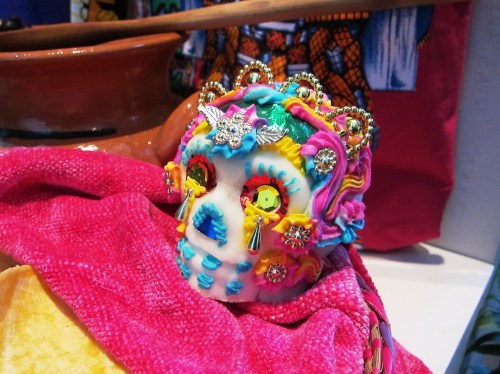
How to Make Sugar Skulls for Dia de Los Muertos

One of our favorite traditional foods for Dia de los Muertos is the sugar skull, which we have written about previouslyWe usually buy pre-made sugar skulls – and we even got new ones this year personalized with our names in Pilsen. However, we are stepping up our game this year. We picked up sugar skull molds at the Museum of the American Indian in Washington DC last week, and are excited to make sugar skulls of our own for the first time.  Once you have the skull-shaped molds, the process doesn’t seem too daunting. However, the recipe included with the molds called for something called meringue powder, which you can buy online or pick up in many craft or large grocery stores. Fortunately, making a recipe with egg whites works just as well, as does a traditional recipe with egg white and cornstarch.

Sugar Skull for Dia de Los Muertos

Sugar Skull for Dia de Los Muertos at the Museum of the American Indian in Washington DC

Leave a comment

Filed under Holidays, Recipes

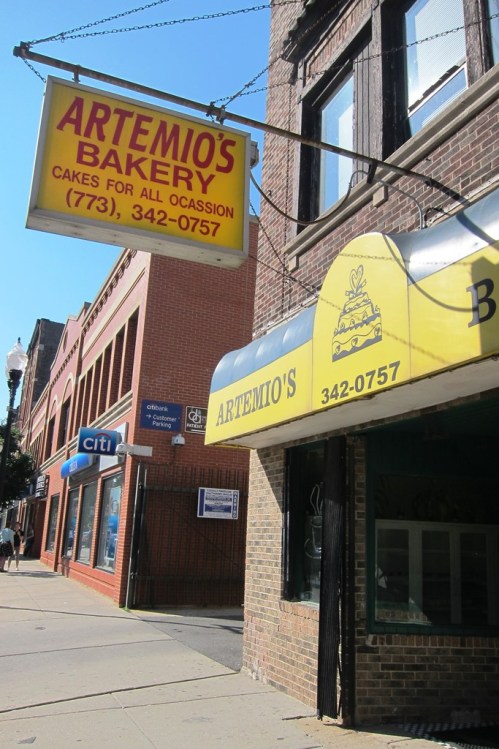
Time Warp in Wicker Park: Artemio’s Bakery

ArtemiosSign

Artemio’s Bakery
1443 N. Milwaukee Ave.
Chicago, IL

Every time we go to Wicker Park the landscape is slightly different than the time before, with upscale stores and eateries seeming to carve out a larger footprint each visit. Time marches on, however there are some places that stay the same even though everything around them changes. One of those stalwarts is Artemio’s Bakery, which seems like it is a transplant from another era. Walk in the front door and you will feel like you are in a time warp – the bakery is crammed with wooden cases and the strong aroma of butter and sugar is unmistakable. But don’t worry, in this case a time warp is a good thing, the pastries are old-school and everything is unbelievably cheap! 25 cents for a cookie? Heck – 25 cents for anything?!?! Even in Brazil the smallest piece of candy was usually 50 cents apiece (R$ 1). Cookies at Artemio’s are only 25 cents and larger pastries like croissants or conchas are barely a dollar.

Artemios

The selection is wide (though unlabeled, so you may have to guess or ask), and you can get nearly every kind of Mexican pastry, as well as American classics. We spotted croissants, cupcakes, coconut macaroons, many types of cookies, tarts, elephant ears, doughnuts, sweet rolls and cakes by the slice including chocolate and tres leches. This time around we ordered several black and white cookies and a giant sugary croissant – both delicious – and they set us back less than $2. As we trailed sugary crumbs down Milwaukee avenue we were satiated and happy. Definitely check out Artemio’s for a cheap sugar fix and for a time warp back to old-school Wicker Park.

ArtemioPastry

Leave a comment

Filed under Pastry Post-Poc, Reviews

Chihuahua Cheese’s (Queso Menonita) Mexican Mennonite Origins

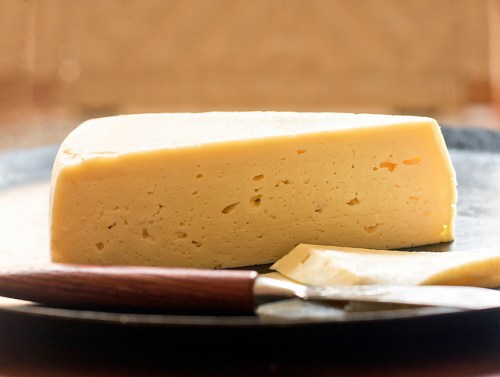
Mexico FlagBack in the US we are very familiar with Chihuahua cheese (Queso Chihuahua) and have seen many recipes calling for the mild, slightly yellow cheese. However, we did not know much about its origins – and it turns out it has a rather unusual history.

Chihuahuacheese

Chihuahua Cheese by Mérida Hideaway

Chihuahua cheese, known for the Northern Mexican state where it is produced, is also known as Menonita cheese in Mexico. Yes, Menonita is “Mennonite” in Spanish – and it is indeed Mennonite cheese! Turns out there is a rather large Mennonite population in Mexico, having first arrived in the 1920s, and they were the ones who first produced the cheese. Though it has now been commercialized, you can still find Menonita cheese being made by Mennonites in the town of Cuauhtemoc, Chihuahua.

MennoniteMexico

A Mennonite sells cheese in Mexico by Cristiano Oliveira

4 Comments

Filed under Cheese, World Eats

Authentic Mexican food in Rio: Azteka

Azteka
Rua Visconde de Pirajá, 156 – Ipanema
Rio de Janeiro

brazil

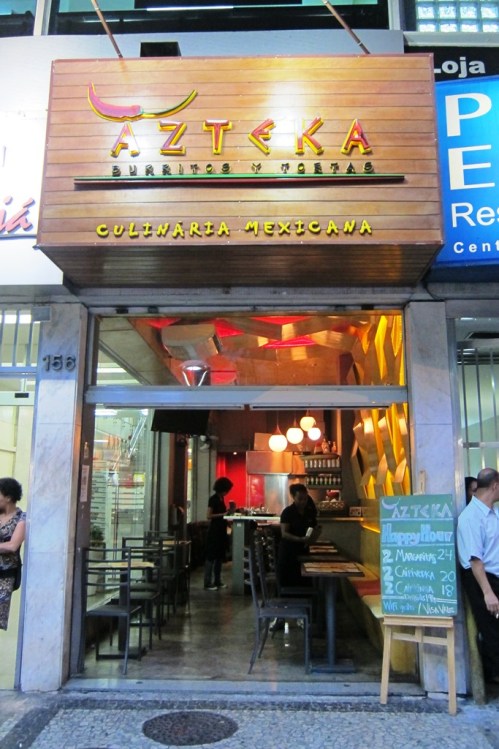
Mexico FlagLiving in Chicago spoils one for taco choices: there are amazing taquerias everywhere, from the high-end fancy places to tried-and-true local establishments, and the price is nearly always right. But Brazil seems to have the opposite problem: Salvador has but a few Mexican restaurants, and Rio de Janeiro even less, proportionately. However, Mexican food fans in Rio now have a new option.  The relatively new restaurant Azteka, helmed by transplanted Chicagoans  Aglika Angelova and Miguel F. Campos, aims to bring Mexican street food to the streets of Rio. When we heard chef Campos was from Chicago, we knew we had to visit, especially since our Mexican food cravings were strong after months out of the country (the tortillas we managed to find in Lisbon didn’t exactly satiate our craving).

Azteka Exterior

View into Azteka. Actually a lot of seating for an Ipanema establishment!

Azteka is a small restaurant, conveniently located right on Praca General Osorio in Ipanema. The decor is nice and modern, looking a little like a gussied up Chipotle. The menu at Azteka consists of burritos, tortas, tacos and quesadillas, with the choice of cochinta pibil (slow roasted pork), chicken, beef or pork al pastor. For starters there are dishes of house-made guacamole and pico de gallo. We ordered two cochinita pibil tacos for R$24 (about $12) and an Al Pastor quesadilla for R$ 26 (about $13).  Both were excellent: really good flour tortillas are difficult to pull off, and these made-in-house versions were great. The cochinita pibil was full of flavor and the al pastor was juicy and tender, and just a little bit sweet. Salsas were stars of the toppings, but the tacos were never overdressed: just lime, onion, cilantro and a little cheese, all the hallmarks of taco chefs who know what they are doing.

Azteka Tacos

Awesome tacos. Worth US$7 apiece? In Rio, definitely.

That said, Rio is an expensive food town overall, and Azteka is no different. The tacos were fantastic, and would easily compete with the best we’ve had in Chicago, but the price was no comparison: we paid over US$30 for four total tacos at Azteka, when we would pay $10 or less back home. But there can be no argument with the quality of food, the depth of flavors, and the care put into their preparation. We will always pay more for excellent food, and we were happy when the quality matched the price in a city where that does not always happen. The food at Azteka is definitely tastier than your average La Pasadita back in Chicago. Azteka satisfied all of our Mexican food cravings, and if we lived in Rio we would certainly be regulars.

Leave a comment

Filed under Reviews

Holiday Eats: Rosca de Reyes from Mexico

Mexico FlagThe tradition of the “King Cake” spans continents, and is tied to the holiday of Epiphany celebrated on the 6th of January. One variety of sweet celebrating this day is the Bolo Rei of Portugal, and another variety is Rosca de Reyes from Mexico, a ring of sweet bread. Epiphany is known in Mexico as Día de Los Tres Reyes Magos (Three Kings Day), lending the cake its name. Much like the other King Cake varieties, the Rosca de Reyes has a trinket inside, in this case a small porcelain (or plastic) Jesus figurine, the finder of which has to host a party on February 2nd, Candelmas. The Rosca de Reyes is more of a bread than a cake, and instead of frosting, the bread is topped with candied citrus and a bit of sugar. The size of the Rosca is dependent on the size of your party, so here is a recipe if you are expecting a crowd, or another if you would rather have more individual-sized rolls.

Rosca de Reyes

Rosca de Reyes for sale in Mexico City

3 Comments

Filed under Holidays

Foods to Celebrate Dia De Los Muertos

Sugar Skulls for Dia de los Muertos in California – by Gwen

Feliz Dia De Los Muertos! Happy Dia de Los Muertos! Looking for inspiration? Here are some posts ETW has done to commemorate the traditional foods enjoyed on this holiday:

Leave a comment

Filed under Holidays, World Eats

Dia de los Muertos and Pan de Muerto

It seems like the iconic sugar skulls for Día de los Muertos/the Day of the Dead, have become increasingly popular in mainstream US culture – I have even seen recommendations for calavera Halloween costumes! But we cannot forget about the other sweet staple that is a necessity for any ofrenda (an altar set up to commemorate the dead) – Pan de Muerto – literally, “bread of the dead.”

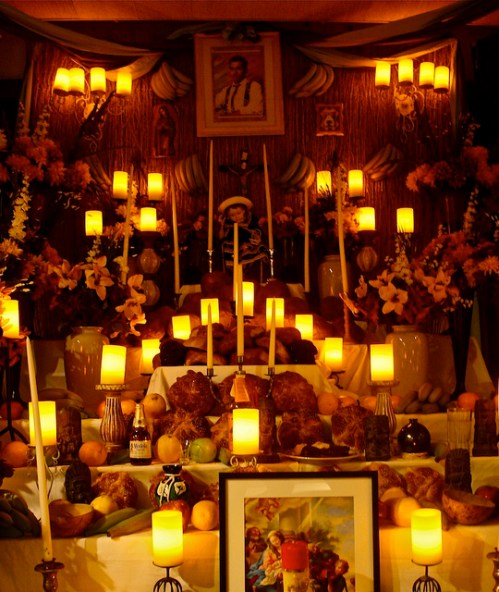
An Altar in Seattle with Pan de Muerto – by jeck_crow

Dia de los Muertos as celebrated today is a combination of Pre-Columbian and Catholic traditions and encompasses All Saints’ Day (Nov 1) and All Souls’ Day (Nov 2). The purpose of the holiday is to commemorate and celebrate deceased ancestors and relatives, and the purpose of the pan de muerto on the ofrenda is to provide sustenance for the souls of the returning relatives. For this same reason, other favorite foods and drinks of the deceased are included on the ofrenda. However, not just used as an offering, Pan de muerto is also eaten in the period leading up to Día de los Muertos, and is a mainstay in bakeries and cafes during the season.

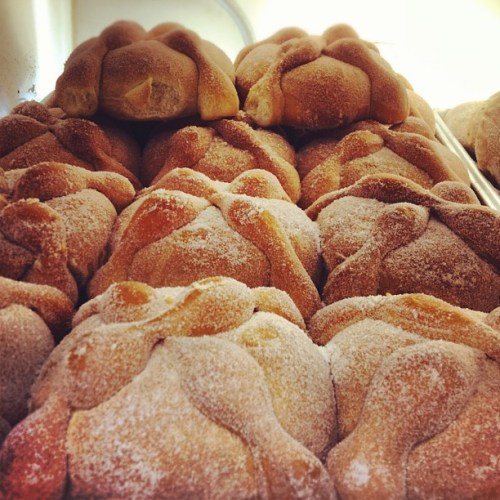
Pan de Muerto in the Zocalo, Mexico City – by Ericrkl

Pan de muerto is a simple sweet bread, think brioche, that is flavored with orange blossom water, orange zest or anise (or all of the above). Pan de muerto takes on different shapes, depending on the region, and the iconic Mexico City version of pan de muerto is usually round with strips of dough representing bones crisscrossed on the top. Pan de muerto may be topped with sesame seeds or a generous helping of sugar (as seen below). Though the round versions are the most common in the US, other other versions have the bread made in the form of little people, bones, angels or even for elaborate shapes. Check out this recipe from Cooking in Mexico to make some Pan de Muerto of your own. Kitchen Parade even has a tutorial to show you how to make the distinctive “bones” for your bread.

4 Comments

Filed under Holidays, World Eats

Marranitos/Puerquitos for Dia de los Muertos

Marranitos made by the Muy Bueno Cookbook Blog

Dia de los Muertos is less than two weeks away – so it’s time to start gathering some recipes to celebrate. We’ve previously featured sugar skulls, but for those looking for a different sort of treat for the Day of the Dead might want to try these delicious gingerbread pigs called, alternatively, marranitos, cochinitos, or puerquitos (all variations on “little pig”). These little pig cookies are made with a generous helping of molasses and unrefined cane sugar, piloncillo, giving them a rich gingerbread-y flavor. The marranitos above were made by the Muy Bueno cookbook blog, which provides a recipe as well as a lovely photoshoot and accompanying story. Marranitos are cut using a special pig-shaped cookie cutter, and as you might be able to tell, they are quite a bit larger than the typical cookie. Not strictly a “Dia de Los Muertos” food, marranitos are enjoyed year round and are especially good with coffee for a light breakfast. We found a large pig cookie cutter for sale on CopperGifts, and we definitely think we need to add some of these pig cookies to our repertoire.

2 Comments

Filed under Holidays, World Eats

Cacahuates Estilo Japonés (Japanese-Style Peanuts)

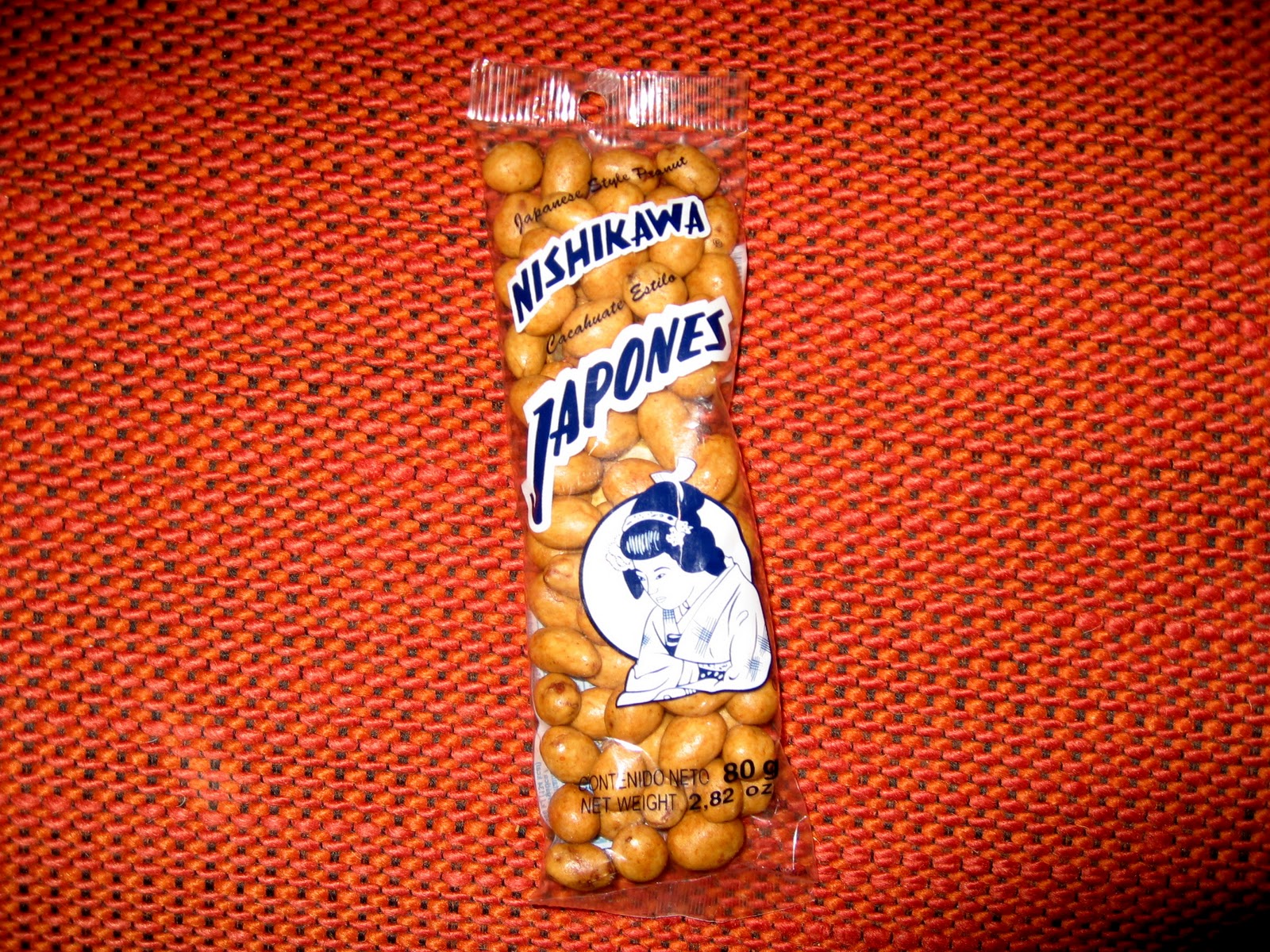
In July, we attended the wedding of one of our good friends – a Mexicophile – and a wonderful man from Puebla state. They had excellent wedding favors: a packet of candy, filled with their favorite candies from Mexico and the U.S. We were particularly struck by what a blue plastic packet of “Cacahuates Estilo Japonés” (literally “Japanese Style Peanuts.”) They appear to be unique to Mexico: large peanuts, de-shelled, covered with a thick, dried sweet coating with a hint of soy sauce. It took us a couple minutes to figure out that the coating we even edible (too used to shelling peanuts at baseball games, I suppose!), and when we finally did, we were perplexed by the texture and the flavor. After that, they became one of our go-to snacks: salty, sweet, crunchy, and soft all at the same time. A bit of research has yielded no definitive answer as to their origins: unique to Mexico, they appear to have no relation to Japan other than a hint of soy flavor. Beyond that, it is unclear how they were developed in Mexico, and who developed them. The best part, according to Slashfood contributor Joe DiStefano, is the packaging, which depending on the brand “which ranges from a geisha to a Mr. Peanut-type character dressed in a baseball uniform.

Nishikawa brand Japanese-style peanuts (via The Grande Enchilada)

4 Comments

Filed under Reviews

Mexico: Huaraches Dona Chio

Huaraches Dona Chio
1547 W. Elmdale Ave.
Chicago, IL

When we got back from Brazil we went straight for the food we craved most – in our case, BBQ and Mexican food. Fortunately, Chicago is more than overflowing with Mexican eateries, so we decided to try someplace new. Huaraches Dona Chio had a reputation for being difficult to find, but the big awning meant we did not have any trouble.  On a chilly and blustery day, there could be nothing more comforting than some fresh Mexican food. Inside, the welcoming yet spartan space provides a few tables and an open view of the small kitchen where Dona Chio herself was busily at work preparing the food for the night. Her specialty? Huaraches, a type of thick, open-face masa tortilla from from Mexico City. Huarache toppings provide an almost endless variety, and HDC did not disappoint.

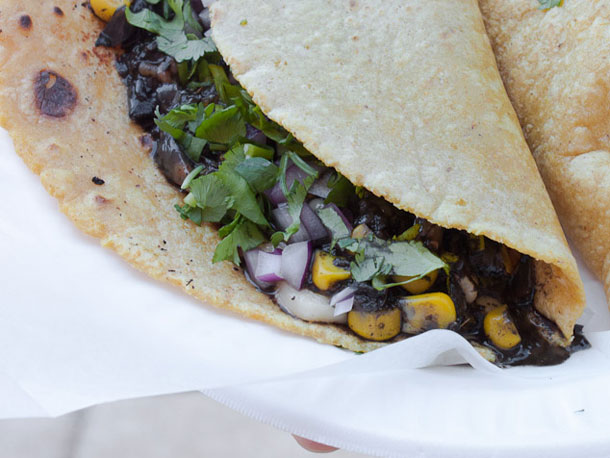
You can get the regulars at HDC: the usual tacos and burritos, and quesadillas. But you come for the huaraches. Naturally, we selected two huaraches as our entree (at only $6.50 each, how could we not)? L got the tinga (it came highly recommended) and M picked the huitlacoche (still his favorite from his time in Mexico). Tinga was by far our favorite. The huitlacoche was topped with both mild green and spicy red salsa, black beans, corn, white onions, cotija cheese and cilantro. The tinga, shredded chicken marinated in chipotle sauce,  was topped with white onion, cilantro and a hearty helping of cotija cheese. We’ve tried a few places around town and also in other cities and these were definitely the best huaraches we’ve had. The masa was not soggy (a problem we encountered elsewhere), and the toppings were extremely generous.

Our dining companion went a more conservative route and got a plate of tacos ($2.50), noting they were excellent as well. To finish up the meal M ordered a banana chocolate smoothie. With our time in Brazil, we will never take for granted the great Mexican food selection in Chicago again (side note: We met up with a friend from Guatemala in São Paulo, who is planning on starting a Mexican food distribution business in Brazil. We hope he succeeds!). Huaraches Dona Chio is one of the fine examples: small, family-run, and serving up great regional Mexican dishes to a small but discerning clientele.

Tinga huarache, we miss you already!

Leave a comment

Filed under Reviews

Origin of the Taco

Chorizo Taco from Carniceria Guadalajara in Chicago

They may be wildly popular in Mexico, the US and…pretty much everywhere else, but what is the exact origin of the taco? We can assume they are from Mexico, but what beyond that? Though somewhat shrouded in mystery, this Smithsonian Magazine interview with Mexican food expert Jeffrey M. Pilcher, professor of history at the University of Minnesota, talks about the history of the taco.

The origins of the taco are really unknown. My theory is that it dates from the 18th century and the silver mines in Mexico, because in those mines the word “taco” referred to the little charges they would use to excavate the ore. These were pieces of paper that they would wrap around gunpowder and insert into the holes they carved in the rock face. When you think about it, a chicken taquito with a good hot sauce is really a lot like a stick of dynamite. The first references [to the taco] in any sort of archive or dictionary come from the end of the 19th century. And one of the first types of tacos described is called tacos de minero—miner’s tacos. So the taco is not necessarily this age-old cultural expression; it’s not a food that goes back to time immemorial. [Read more here].

Leave a comment

Filed under World Eats

Rick Bayless Teaches Us To Make Guacamole

“Everything is better with bacon.” – Rick Bayless

We were lucky enough to catch Chicago’s own Rick Bayless at a cooking demonstration during the Printer’s Row Lit Fest a few weeks ago. Originally we had considered not even going – too hot, too crowded, we thought – but were shocked when we arrived just a few minutes early to find a few open seats. Stay we did, and we are glad, because over the next fifteen minutes Rick Bayless absolutely blew our minds making a simple bowl of guacamole. Here’s some of his key thoughts, which we have already started incorporating into our home-made guacs:

1. Avocados are amazing. Use Hass avocados – they were bred specifically for guacamole-like uses. They are one of the few fruits that does not ripen on the tree. Amazingly, if picked and left at below 50 degrees, they will never ripen. What this means is that when you buy them at the grocery store they have been pre-refrigerated, and so will not ripen for another 3-5 days. The takeaway: you cannot use an avocado the day you buy it. When buying an avocado, check to make sure the stem is still intact (it will be brown inside otherwise), and afterwards you can store them up to a year in the fridge and they will never go bad. They are ripe when you have left them out for 3-5 days and the top by the stem is squishy.

2. Lime juice and avocado pits: you’re using too much! Leaving avocado pits in the fruit or in guacamole does not help them stay fresh. Neither does adding lime juice. And adding too much of either makes the guacamole taste less like avocado and more like something else. To keep it fresh, only temperature matters. And getting rid of the rumors helps you highlight the other ingredients.

3. Use white onions. They taste better, they are crispier, and it is a sin against cooking to use red or Spanish ones. He said this and he meant it. If you are concerned about them being too overwhelming in the dish, here is how to fix it: Cutting white onions causes chemicals in two different sections of the membrane to interact, producing a kind of sulfuric acid. To stop the reaction, just run them under cold water – this is called “deflaming” the onion in Mexico. It is for this reason…

4. Do not make guacamole in a molcajete! Crushing the onions with the stone mortar and pestle will just re-break the onion membrane and thus ruin all the good washing work you did. Better to make the guacamole in another bowl (mixing it), and then serve it in a molcajete for maximum classiness.

5. Guacamole is largely an American invention, as the USA is largely, as Mr. Bayless put it, “a chip-and-dip culture.” Mexican guacamole is very simple: avocado, garlic, a little lime juice, and perhaps salt and pepper. That’s because it is meant to be used on foods in concert with other accompaniments: fresh cilantro, salsas, etc. When you realize how American guacamole is, you realize that you don’t have to be dependent on stereotypically Mexican ingredients, which brings us to point 6….

6. Avocados are adaptable. They go with sweet, sour, and savory, and do it well. Americans tend to be too limited in how they use avocados, and they tend to not be particularly knowledgeable about the ones they are using. Rick Bayless made a salsa with tomatoes, cilantro, chipotle peppers in adobo sauce, and – wait for it – bacon. (He even held up a piece of bacon and said “everything is better with bacon.”) Another great combination he recommended: watermelon cubs, habaneros, and mint. Mangoes are great as well in guacamole. Most of us don’t think to use these ingredients, but trust us, they are killer.

You’re welcome!

1 Comment

Filed under Note, Recipes

Great Non-Taco Items at Maxwell Street Market

Huitlacoche Quesadilla at Rubi’s – our favorite! (via SeriousEats)

It’s no secret that we love Maxwell Street Market for its awesome array of street food, so we were happy to see this Serious Eats Chicago profile on the some great things to eat at the Market (beyond the taco).

Leave a comment

Filed under Links

What is a puffy taco? Where can I find one?

Puffy Tacos by angrywayne

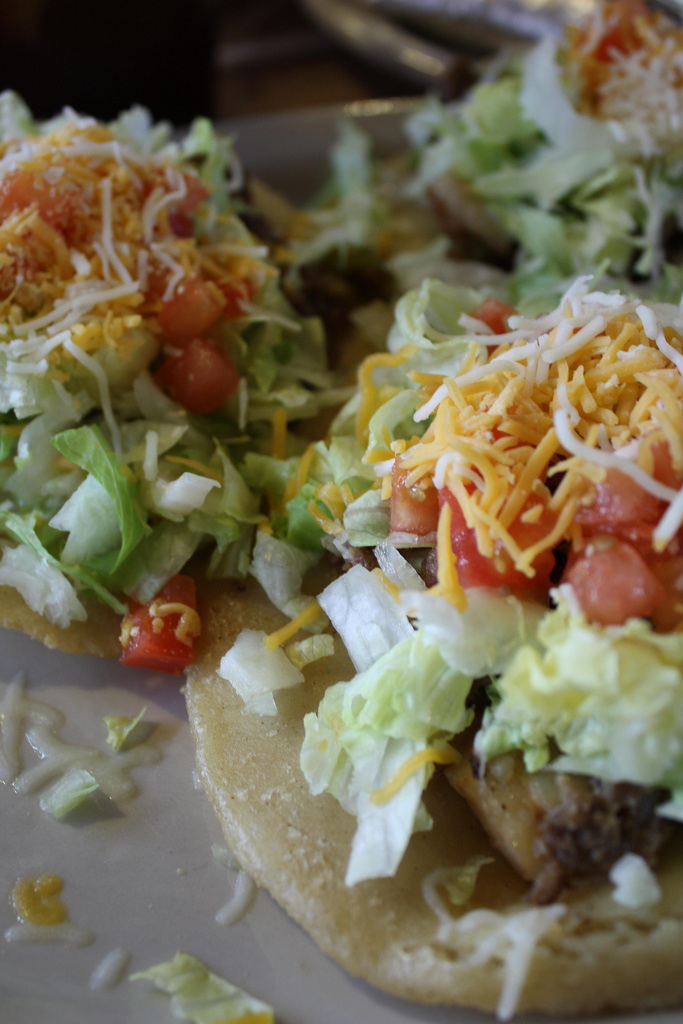
Here in Chicago, we have an amazing array of Mexican foods, but just as soon as we think we figured it out, we find a wonderful new hybrid we never even knew existed. The latest among these discoveries is the “puffy taco”, which is noteworthy for its puffy shell. To make the signature shell, uncooked masa is deep-fried, and as a result, takes on a puffy shape. With origins in San Antonio, Texas, the puffy taco is a hybrid Tex-Mex creation, which originated at a place aptly called Henry’s Puffy Tacos in the 1970s. The association between San Antonio and puffy tacos runs so deep that the minor league baseball team, The San Antonio Missions, even has a mascot called Henry the Puffy Taco. Though you are most likely to get puffy tacos in San Antonio, there are a few outposts, like  Goat Town in NYC. If you are feeling ambitious (or if you don’t live anywhere near Texas) you can make puffy tacos yourself.

1 Comment

Filed under World Eats

Eating Oaxaca

Totally jealous of Mexico Cooks’ recent food journey to Oaxaca. It is definitely high on our to-go list (even though lucky M has already been there).

Leave a comment

Filed under Links

Mexico: Cemitas Puebla

Cemitas Puebla
3619 W. North Avenue
Chicago, IL

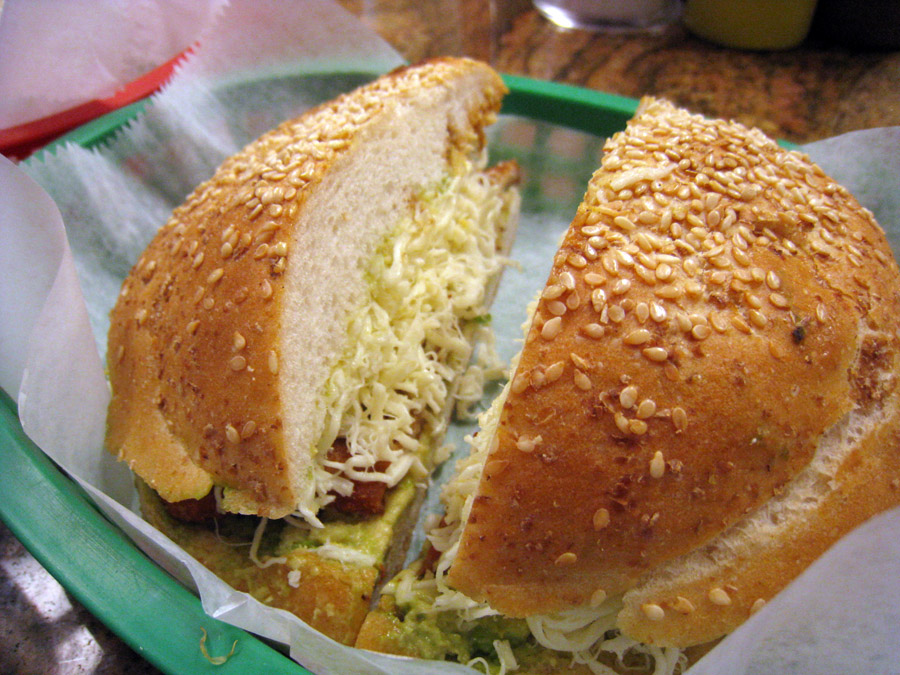
The name pretty much says it all – Cemitas Puebla specilizes in the cemita, a type of sandwich that is indigenous to Puebla, Mexico. Though we usually head to Pilsen (or Rogers Park for that matter) for Mexican food – we were surprised to find ourselves in the primarily Caribbean Humboldt Park (note to selves we need some Puerto Rican food, stat!) The space itself is relatively tiny and non-descript, and like most little places with hype there is always a wait and a line. Suffice to say, Cemitas Puebla is not a hidden secret anymore – and evidence of their various brushes of fame (Diners, Drive-in and Dives, etc) – is apparent. When we walked in we were greeted by a gregarious fellow we can only assume was an owner with a hearty “Hello – welcome! Do you know what a Cemita is, let me explain….” After listening to a little spiel we were ready to order.

Naturally we started out by ordering a Cemita ($6) – we chose a milanesa cemita (breaded pork cutlet) – other options were ham, cheese, carne asada and cow foot. Our food arrived at the counter just a few minutes later, and we were excited and a little bit nervous, as we often are at uber-popular restaurants (were we going to love it or hate it). Fortunately, the Cemitas did not disappoint. The pork was juicy and tender and topped with a crazy amount of avocado, a spicy chipotle sauce and a huge pile of Oaxacan cheese. All of the ingredients worked together perfectly, and each bite was packed with flavor. For good measure, we also got an order of the Tacos Arabes ($2.60), park tacos carved off a spit (like gyros) on a thick tortilla. The tacos arabes were also delicious, but did not shine like the cemita. Cemitas Puebla is good local place with a unique specialty, but definitely with a little bit of the TV treatment. But if you can get past that, the food actually does rock.

Leave a comment

Filed under Reviews

Dia de los Muertos and Sugar Skulls

sugarskulls

Sugar Skulls for Sale in San Francisco by Digiyesica

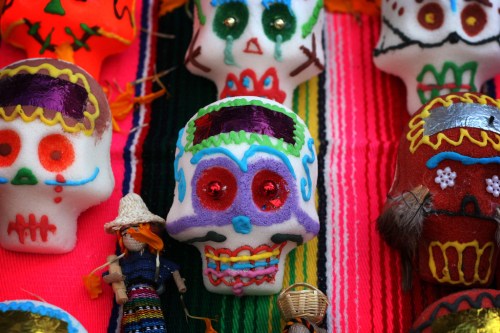
Today is the 2nd day of the colorful, delicious holiday of  Dia De Los Muertos! One of our favorite parts of Dia de los Muertos are the colorful sugar skulls. While in previous years we have bought our pre-made there are also many ways you can make your own – with the help of a special sugar skull mold. If pure sugar’s not your thing, you can go the ultra-edible route with chocolate skulls. Another typical treat made for this holiday is Pan de Muerto an anise-flavored bread traditionally placed on ofrendas.

1 Comment

Filed under Holidays, World Eats

A taste of Mexico at Maxwell Street Market

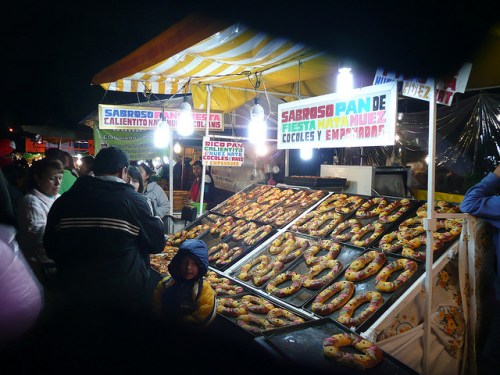
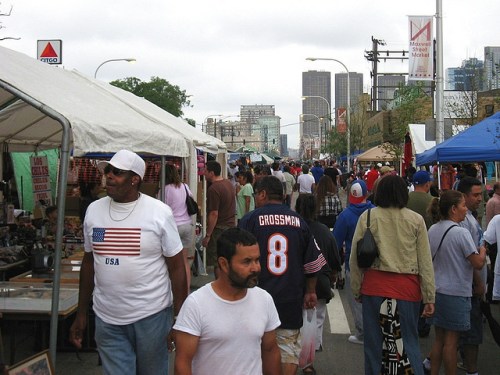
Birria, Huraches, tostones, pambozo, tacos, Canela Tea galore! Are we in the Distrito Federal? More like Maxwell Street Market. Maxwell Street Market is basically an open air food court of Mexican cuisine, combined with a totally eclectic outdoor flea market. Despite having lived in Chicago for a long time neither of the Eaters had ever been to the Maxwell Street Market (currently in its 3rd incarnation in its 100+ year history, on Des Plaines).

Maxwell St. Market by Lobstar28

Maxwell St. Market by Lobstar28

Though there are sports jerseys, knockoff sunglasses powertools and tchotchkes galore, we really came out for the food and produce. M could not resist hitting up the mobile truck, Churro Factory, which sell, unsurprisingly only churros. When we arrived at 11:30 they were already out of chocolate churros, unfortunately. Even as a second choice, M thoroughly enjoyed his vanilla cream-filled churro. However, the “out of food” saga continued to haunt us throughout our visit.

Churro Truck by Edsel Little

Churro Truck by Edsel Little

You know it’s a popular time (and that fall has arrived)  when the champurrado (a thick, spiced hot chocolate made of masa) is clear sold out at not one, not two but THREE locations. We were jonesing for some choco-cinnamon goodness so we kept looking. We ended up at La Paz, a food vendor that had a long line forming (which we took as a good sign) where they had only enough champurrado left to fill one cup, which we figured was better than nothing! Turns out we were not disappointed.

Estilo DF by Stu Spivak

Estilo DF by Stu Spivak

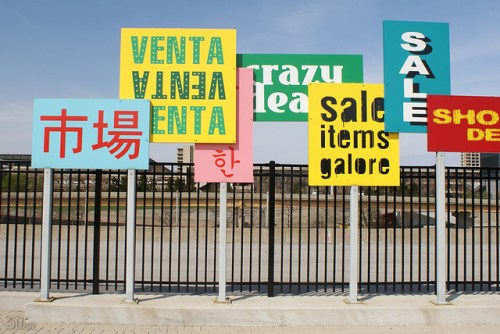
Along with our awesome Champurrado ($2) that was perfect for the slight chill in the air, we ended up ordering a Huitlacoche tortilla ($3.50), one of our favorites, and usually rather difficult to find in many Mexican restaurants. There was no room to sit at La Paz so we hunkered down under the kitschy pop art signs that marked the market’s presence on Des Plaines. On our way out we also picked up some purple tomatillos and cilantro for salsa fixins. We can’t beleive it too us so long to get here – but we’ll definitely be back!

Maxwell Street by JosEnrique

Maxwell Street by JosEnrique

Leave a comment

Filed under Reviews

Mexico: Paleteria La Monarca

With the arrival of September I’ve seen my fair share of articles proclaiming the end of Summer – but I’m not ready to let it go yet. In hon,or of the continuation of Summer (I have until the 21st, darnit!) the eaters ventured out to Paletria La Monarca (6955 N Clark St, Chicago, IL) an ice cream / Mexican popsicle store on north Clark street. We had driven by the Paletertia’s iconic green popsicle time so so so so many times while driving down Clark, but, always on the way to another location, we never stopped in. But we do love our paletas, so we knew we would get there eventually. Today was the day! The Paleteria did not disappoint, with a selection of about a dozen ice cream flavors and 25 ice and milk paletas ranging from mango to coconut to chocolate. We opted for a lime paleta, which even contained real chunks of lime despite being neon green. At less than a dollar each – how in the world can you beat that on a hot Summer’s day.

PaletaSmal

Leave a comment

Filed under Reviews