
 Thank goodness for the internet. I recently was the recipient of an assortment of snack-sized Israeli chocolate bars, and none of them, and I mean none had any sort of roman letters. Since I don’t read any Hebrew, and I was curious as to what type of log-like confection I was eating, I turned to Google. All I typed into Google was “Israeli candy” “chocolate” and “log” – but somehow I still got directed to the right place! The candy I had was Mekupelet, a famous Israeli candy similar to the Cadbury Flake bar – milk chocolate specifically extruded in a flaky form to look like a log. Markos Kirsch attempted to compare the two, but they were pretty much running neck and neck, with no clear winner.
Category Archives: World Eats
Israel: Mekupelet
Filed under World Eats
An American (Cheese) in Paris
It’s funny to imagine that a Wisconsin cheddar is a pricey luxury import abroad. But, according to the Wall Street Journal, this is increasingly the case, as American artisanal cheeses are making their way to Europe. This is a trend I approve of – hopefully it will change some attitudes that American Cheese = Velveeta.

Filed under Cheese, World Eats
Eating North Africa: Makroud
 Today someone at work returned from northern France with a treat from North Africa, Makroud/Makrout. Makrouds are sweet date pastries, made with semolina flour and dipped in honey, that (perhaps surprisingly) are not overly sweet. There are several varieties of Makroud across regions, including the makroud blanc (without a filling), and makrouds filled with almonds instead of dates. Naturally, due to immigration patterns, this delicious pastry has gotten a foothold in France. Apparently the French are a fan of not-sickly-sweet pastries, so the makroud fits the bill perfectly.
Filed under World Eats
Traditional Norwegian Lefse in the USA
 In grocery stores in Madison it is not uncommon to see packages of lefse in the dairy case, though we had never once encountered them in Chicago. So what are we missing here in IL? Lefse are thin Norwegian potato pancake-like creations that are generally used like tortillas – and can be stuffed with sweet or savory goodies. Lutefisk and Gravlax get more attention when discussing Norwegian cuisine due to their reputation as acquired tastes, but who doesn’t like potato pancakes?
Most lefse are now machine made, and in the US, are usually only available in places with large Scandinavian populations. However, but the tradition of homemade lefse still live on in pockets. The Milwaukee Journal Sentinel has an interesting piece about Countryside Lefse in Blair, Wis, a company that still makes Lefse by hand. In fact, according to the University of Wisconsin, the tradition of lefse is more alive in the Upper Midwest than it is in Norway! Wisconsinite LeAnn Ralph has a Lefse recipe, if you’d like to try your hand at homemade.
 Lefse by Litherland
Filed under World Eats
The Heartbrand

You’ve probably seen these heart logos on a box of ice cream before, weather in the US or abroad. The iconic shape, introduced only a decade ago, is Unilever’s Heartbrand. I never really realized the reach of the Heartbrand until I was in Spain, and saw ‘heartbranded’ ice cream stalls all up and down the boulevards and beaches. The heartbrand wasn’t actually unveiled until 1999, and Unilever uses it across most of its worldwide offerings, with local names particular to the country. Apparently, Good Humor, one of the many Unilever ice cream brands, is unfolding its logo from the Heartbrand, more info about this is on the design blog Brand New. Though the behemouth that is Unilever scares me a bit, its interesting to think that a little heart logo can mean ‘ice cream’ across the world.
Filed under World Eats
The world of Indian flatbreads
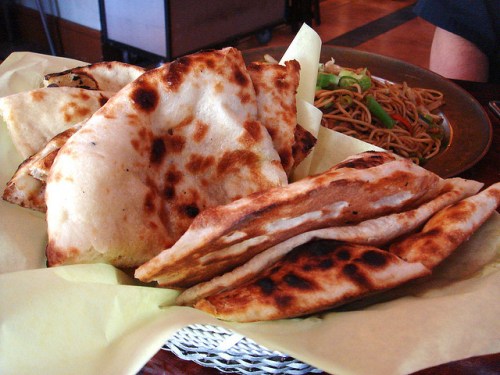 Butter Nan, Tandoori Roti, Onion Kulcha – Photo by Silly Jilly
 Indian cuisine, owing to the size and diversity of the country is completely eclectic and varied. We must confess that when we thought of Indian flatbreads the ubiquitous naan came to mind, but we are now diving deeper into the dizzying array of delicious Indian breads, and you can too! We found a brief but informative guide to Indian flatbreads, which lists the leaving agent and ingredients of each. For example, naan is leavened with bread, while kulcha is leavened with yogurt and baking soda. If you want to keep exploring, check out the list of Indian flatbreads on Wikipedia.
Filed under World Eats
World Eats: Café Europe

Belgium is represented by Waffles
We think perhaps more diplomacy should be arranged with food. One of the European Union’s cultural initiatives of the past few years was Café Europe, which aimed to promoted gastronomical exchange between the 27 countries of the EU. Each country got to nominate an emblematic sweet. Many are no surprise such as Tiramisu from Italy and Waffles from Belgium. However, some of the treats are new to us like Lithuania’s Šakotis, a layered, sweet pastry made on a spit or Maltese Imqaret, a fried date confection. While the initiative seems to be over, without it would have never heard of Prekmurska gibanica.
Filed under Finer Things Club, World Eats
Chinese Food Around the World
 Appetite for China has an intriguing post about Chinese restaurants found in unusual places around the world including a traincar in Chile and a church in England. The photos in the post come from the inimitable Flickr group, “Chinese Restaurant Worldwide Documentation Project.”
Filed under World Eats
World Eats: African Eats in Paris
Eating the World started as an idea in a Senegalese restaurant in Paris, and with a glimmer of a trip to France next year on the horizon, we are already in pre-pre-planning mode. So in prep for that we have compiled some links that may prove helpful. African restaurants in Paris tend to be Northern and Western Africa – corresponding with the francophone regions of the continent. A large hub of the African population is the Goutte d’Or (Drop of Gold), located in the 18th arrondissement, along with Montmartre. For the flâneurs among us, we found an interesting self-guided walking tour of the Goutte d’Or on the Anglophone Parisian Site Parisvoice.
 Goutte D’Or Market: Photo by Findustrip
First up foodwise, a comprehensive article from the New York Times extolling the charms of Paris’ African eats, ranging from trendy nightclubs to little patisseries. We are especially drawn to Algerian bakery La Bague de Kenza, (106, rue St.-Maur). However, befitting the more well-heeled NYT reader, the article covers more high priced eats. More our speed are hole-in-the-wall cafes selling the Tunisian egg and pastry specialty, Brik. At this the lower end of the price scale (less than 15 euros), Chowhound users weigh in with some recommendations: North African restaurants in Paris and Ethnic restaurants in Paris?. If you read French, we also found an interesting review site where you can search by cuisine, called Linternaute. It’s very comprehensive, and they even have a category for Réunionnais restaurants. Guess there aren’t many expatriates from Réunion in the US….
 Kaysha performs at Moussa Restaurant in Paris: Photo by Kaysha
Though North African restaurants may be more numerous, other areas of Africa are represented. In the photo above, Kaysha, a French rapper of Congolese heritage, performs at Moussa, a restaurant specializing in West African cuisine (25-27, avenue Corentin Cariou). All of these wonderful recommendations are making us eager for our trip, even though it is a year away. Perhaps next week we will branch out to other esoteric cuisines found in Paris – Guadeloupan? Maltese? Corsican?
Filed under World Eats
The transnational Macanese egg tart
 The egg tart may be the perfect example of a truly transnational and international food! Egg tarts are pretty simple in their perfection, baked egg custard in a flaky pastry shell. Egg tarts are a big part of Macanese cuisine, and expanded later in Hong Kong and China. Macau was a former colony of Portugal. The egg tart was supposedly invented at Lord Stow’s on the island of Coloane in Macau. The tarts are related to the Portuguese Pastel de Nata an egg tart that is something of a national institution.
The tarts were introduced to Hong Kong in the 1940s through tea houses called cha chaan teng, which are known for their extensive selections of snacks and treats. Today, in Hong Kong and Taiwan you can even get Egg Tarts from KFC.
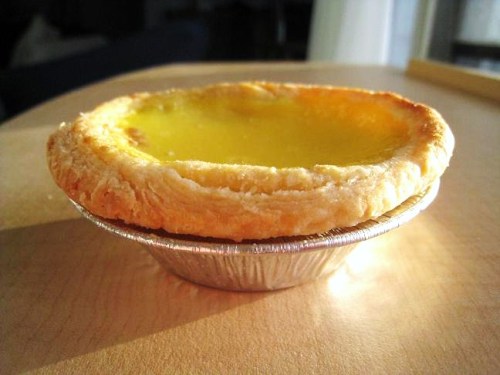
One major differentiation between a Macanese egg tart and a regular egg tart is that the Macanese varieties have a layer of caramelized sugar on top. You can get these little treats for a steal at many bakeries around town. We got this tart above for only $0.95 at Richwell Market in Chinatown – where you can get both plain and Macau-style tarts. For a taste of Macau via Portugal, China and Hong Kong, that’s a pretty good deal.
Richwell Market
1835 S Canal St
Chicago, IL 60616
Filed under World Eats
Hamantaschen recipes for Purim
 [Hamantaschen by Ulterior Epicure]
Happy Purim! Purim is the Jewish holiday that celebrates the thwarting of Haman’s plot to kill the Jews in ancient Persia. Purim begins at sunset today the 9th, and ends at sundown tomorrow. It’s a happy, carnivalesque holiday with lots of noisemaking and tasty treats. The most recognizable food eaten on Purim is the distinctive Hamantaschen (seen above), which is a triangle-shaped pastry filled with jam. Mindy Segal of Hot Chocolate shares her Hamantaschen recipe on Epicurious.
Filed under Holidays, World Eats
Fat Tuesday Around the World!
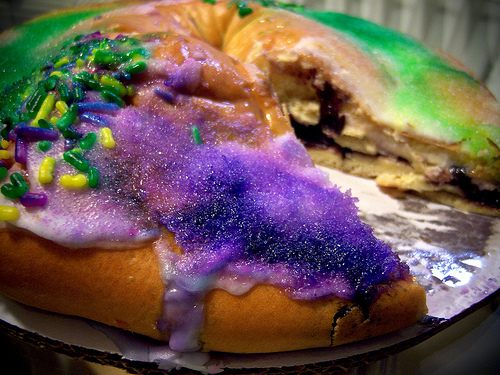
It’s not called Fat Tuesday for no reason. Shrove Tuesday, the last day before Lent begins, is a traditional day of feasting. Naturally, in the US the focus is on Creole and Cajun Mardi Gras foods due to the big way that New Orleans celebrates the holiday. For an awesome intro, Epicurious has a new guide on Cajun and Creole food, because as we learned, there is a difference. If you’re feeling especially festive (or hungry) Chow has a recipe for King Cake (Galette des Rois – seen below) and Gumbo Pages has a history and recipe of the ubiquitous Muffaletta.
However, in addition to the Nawlins Mardi Gras we know and love, there are some other pretty great food traditions, such as Paczki Day in Chicago. Paczkis (pronounced poonch-key) are filled doughnuts and are traditionally consumed in areas with high Polish populations. On the other side of the pond, the tradition in England is to have Shrove Tuesday Pancakes (is it a coincidence that IHOP has free pancakes today?). In Sweden, the day is called Fettisdagen, and a traditional pastry of semolina wheat called Semla is consumed. Basically every country or community that celebrates Easter has their own Mardi Gras food traditions, and they all sound pretty delicious to us!
Filed under Holidays, World Eats
Finer Things Club: Torrone for the holidays


As the holiday season draws to a close, we are finishing up the last of the Christmas goodies – including one of our favorites torrone. It’s a pretty simple confection made of egg whites, honey, almonds and sugar. Popular across Southern Europe, this almond nougat is known as Turrón (Spanish), torró (Catalan), or torrone (Italian).The origin of Turron is Arabic, and was created by moors in the town of Jijona, in Valencia, Spain. Spanish turron comes in 2 basic varieties – soft Jijona or turrón blando, and hard Alicante or turrón duro, similar to peanut brittle.

Torrone is most commonly consumed around the holidays – La Florentine is one of the most popular varieties in the US, and has individually-warpped portions of soft torrone in Vanilla, Lemon and Orange flavors. You can even get La Florentine torrone online, though it is pretty commonly available in larger grocery stores. Delicious Days even has a recipe to try on your own, even though it seems pretty tricky.
Filed under Finer Things Club, Holidays, World Eats
Holiday Food Around the World
 So we know about German Stollen and Italian Panettone – but there are so many other holiday foods from around the world that we never knew about. As ausual, Wikipedia provides a treaure trove of information about international and American holiday foods. It’s fun to explore. We have definitely not heard of some of these – like Chilean Cola de mono (literally, monkey tail) is a festive vanilla-flavored alcoholic coffee drink.
Filed under Finer Things Club, Holidays, World Eats
Cuba: Heladería Coppelia
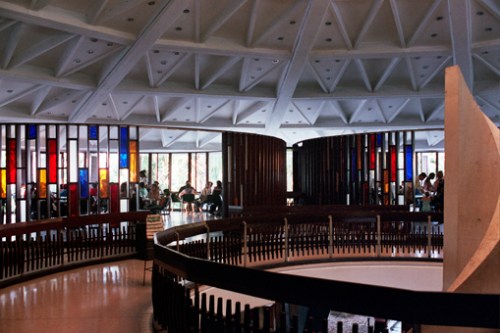
 In many countries the water and gas industries are nationalized. But how about the ice cream industry? Well, that’s the case of Coppelia, the official ice cream of Cuba. After the 1959 revolution, Fidel Castro, who was himself a fan of ice cream, wanted to create a state-run ice cream brand that would surpass any foreign varieties in quality. And so Coppelia was born. Every town in Cuba has a Heladería Coppelia, but the centerpiece of the Coppelia empire is located in Havana. The Havana Coppelia building is a mid-century marvel, made of colored glass in steel, and designed by Mario Girona in 1966. The whole complex takes up nearly an entire block in the Vedado district of Havana and seats over 700. The Girona building rose to some fame after it appeared in Tomás Gutiérez Alea’s 1994 film Fresa y chocolate (Strawberries and Chocolate).
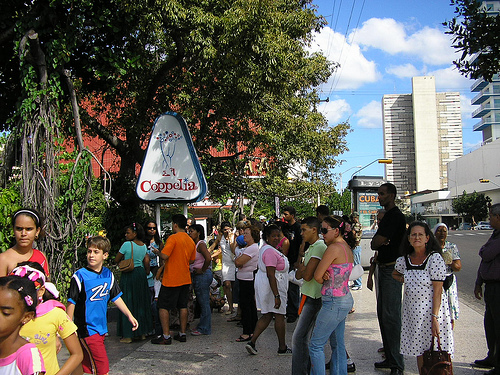 What is interesting is that there are in fact 2 lines at the Havana Coppelia, one for those (usually tourists) who are paying CUC (Cuban Convertible Peso) and one for locals paying in CUP (Cuban pesos). Needless to say, the tourist-filled line tends to move faster. When Coppelia first opened, it boasted more flavors than Baskin Robbins at the time, though a selection 2 or 3 flavors a day is the standard nowadays. The logo of Coppelia stores are ballerina legs, as seen above, surely a reference to the ballet Coppelia.
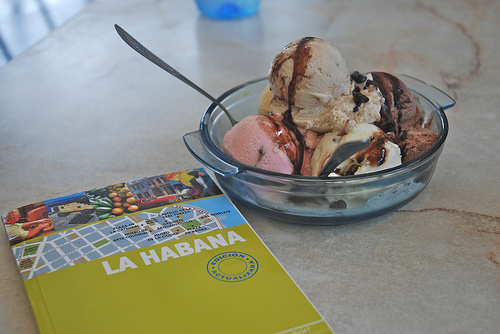 [Flickr CC photo credits: top – arghon , middle –veo veo, bottom- esti]
Filed under World Eats
Sweden: Happy St. Lucia’s Day!
 Happy St. Lucia’s Day! St. Lucia’s day is the day dedicated to the Sicilian martyr St. Lucy, and is traditionally celebrated in Sweden on December 13th, and represents the start of the holiday season. Like most other winter holidays, St. Lucia’s Day boasts some unique treats, especially in Sweden: saffron buns (lussekatt) and gingersnap cookies (pepparkakor). On St. Lucia Day in Sweden, a long-running tradition is that girls dress in white with crowns of candles (electric nowadays for kids) and serve their parents lussekatt, as seen in the painting below.Here are recipes to make your own pepparkakor and lussekatt, if you’d like to try.
 St. Lucia by Carl Larsson [1908]
Filed under Holidays, World Eats
What is Black Garlic?
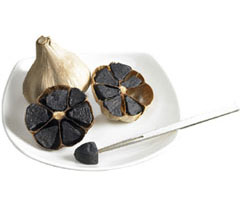 I recently came across a new food that, while it looks kind of frightening, is pretty intriguing – black garlic! Black garlic is popular in China, Korea and Japan and is really just aged and fermented whole cloves of garlic. The flavor is more mellow than raw cloves with a bit of a tang. And it’s spreadable. Some Whole Foods stores sell black garlic, but you can get it online, too.
Filed under World Eats
World Eats: Québécois Bagels
 I’ve heard from various native Québécois and visitors about Québéc’s long and storied Bagel Tradition. Being from Chicago, a city with no great claim to bagels like New York, I am less dubious of this claim as some New Yorkers are. However, when thinking of Francophone Québéc I don’t think of Bagels. However, Montreal-style bagels have a long history – brought by Eastern European immigrants in the early 20th century. Though they are like New York-style bagels, they differ in a few important ways: They are baked in Wood-fire ovens, have no added salt, and have added honey.
Some of Montreal’s favorite bagels are St. Viateur Bagels (1127 Av. Mont-Royal est) which has been turning out doughy goodness since 1957, and Fairmount Bagel (74 Fairmount West). A Canadian astronaut even requested that his favorite bagel be transported into space with him. So maybe the idea of the Québécois bagel is not so unusual.
Filed under World Eats
Mexico Trip: Moles

L and I love moles. A Spanish corruption of a Nahua word meaning simply “sauce,” today moles span varieties as diverse as guacamole (avocado sauce), chocolate moles (great on enchiladas) and a number of other varieties less common in the United States, but still popular and widespread in Mexico. My trip gave me a chance to sample a couple of mole dishes, as well as learn a little about the sauces and their relation to Mexican culture in general.
Cafe El Popular Restaurante
Avenida Cinco de Mayo 52
México, D.F., México
While in the historic center of Mexico City, I wandered into Cafe El Popular looking for a relatively quick and cheap lunch that would still give me a chance to have some solid Mexican cooking. El Popular looked like just such a place, packed to the brim with local patrons inside a large diner that seemed more out of the 1950s than Mexico’s modern megalopolis. When I arrived around noon, the menu still leaned toward the breakfast end of things, but I managed to find mole de pollo (Chicken mole) and the menu and quickly place my order.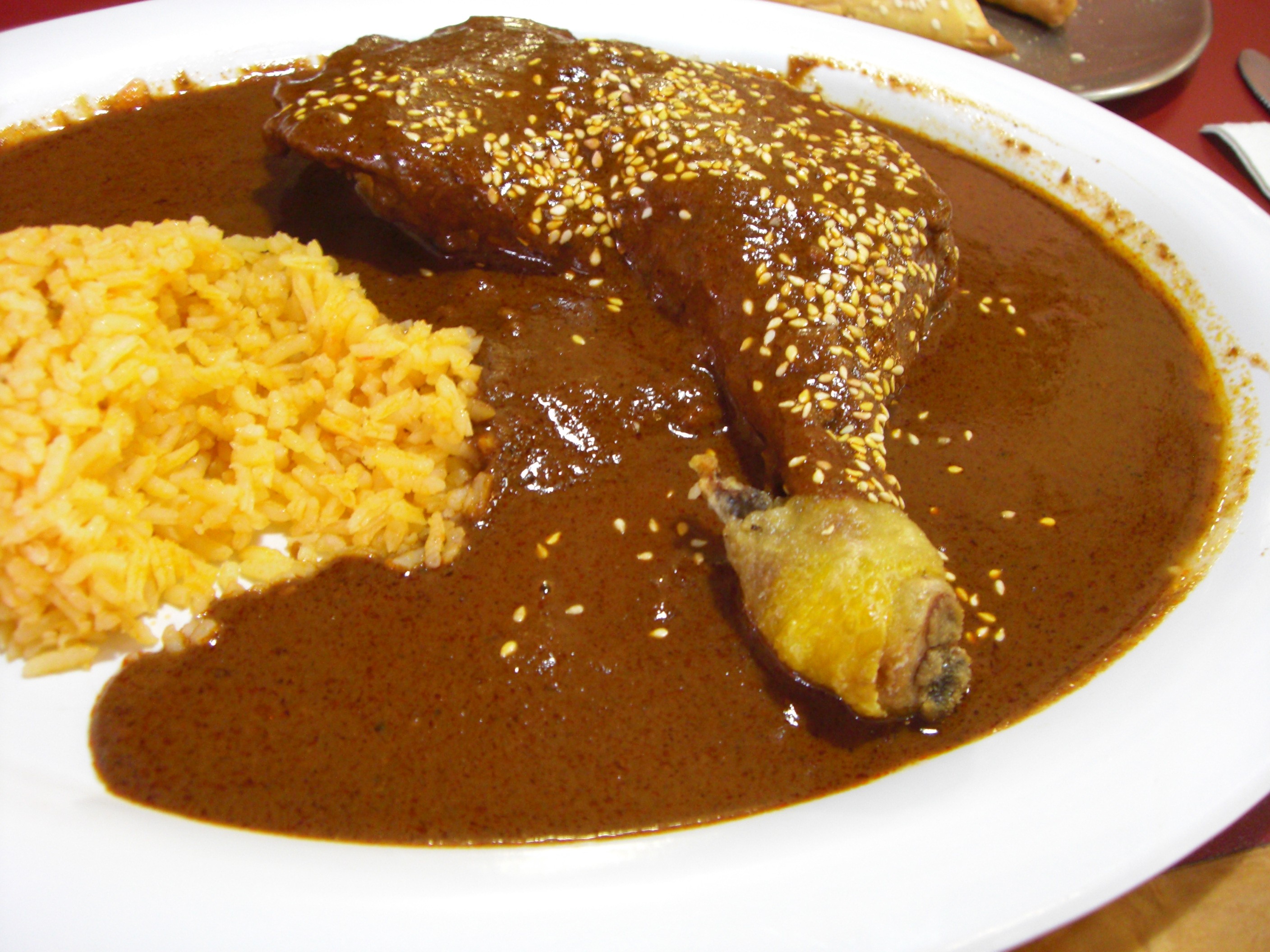
I had been to Mexico previously, and my trip then taught me that there is a reason the “mole” comes first in the dish’s name – the chicken is slathered in mole sauce. Not that I am complaining – smooth and chocolatey, mixing together with the rice and fall-off-the-bone chicken, a solid chocolate mole really can’t do anything wrong to a dish. Especially if it is the focal point. That being said, I did think El Popular’s addition of a copious amount of sesame seeds was a little strange, until I found the seeds being used in dishes across Mexico City. Maybe it is just a culinary fad, but I can’t say I am on board with this one. Overall, I left El Popular satisfied and eager for other moles – particularly ones that break the common chocolate-only stereotype we often find in the USA.
Restaurante Techinanco
Service Road, North of Pyramid of the Moon
Teotihuacán, Estado de México, México
The next day I went exploring in Teotihuacan, an ancient site outside of Mexico City so massive and pyramid-ridden that a few hours of walking completely wears you out. For sustenance, I made the mistake of trusting my Lonely Planet guide to direct me toward Restaurant Techinanco, which it recommended as  having the best food for miles around. The writers were correct about the food, but an hour of looking for the restaurant made me realize they were wrong about the location (it is directly behind, not next to, the Pyramid of the Moon at the north end of the site).
When I finally got to Techinanco (pronounced tetch-ee-non-co), I was the only patron in the restaurant. A quick glance around gave away a few of the restaurant’s secrets – the two mushroom posters at the far end (visible in the photo) leak some of the key ingredients in a number of Techinanco’s dishes. The plethora of masks on the far wall give off a far less touristy vibe than the surrounding establishments – and the effort saved goes directly into the food.
Techinanco’s menu was small, but I made a quick decision: chicken with mole huitlacoche (also spelled cuitlacoche), a green sauce made with mushrooms and maize (wild corn). The friendly owners must have made a pot of the sauce earler in the day, as my food was served almost immediately. And it was heavenly. I can’t really say what I imagined a mushroom / corn mole sauce would taste like, but this was not it. It was almost acidic, with a sharp bite that activated my tastebuds in all the right places, then finished smooth like a good homemade pasta sauce. The finishing taste only made you eat more, and while I filled up quickly during the meal, had I had more than a few pesos in my pocket I probably would have ordered seconds. To top it off, the chicken was grilled to perfection, holding just the right amount of natural juices to let the huitlacoche work its magic. If I am ever back in Teotihuacan, I will definitely make the effort to find Techinanco again (no thanks to the Lonely Planet mapmakers!)
All in all, Mexican food once again fails to disappoint. L and I have plans to try to make our own moles (possibly an upcoming Recipe Friday?) – perhaps we can try to create my new huitlacoche favorite. I doubt it can even approach Techinanco’s creations, however. If in the meantime anyone has any Chicago-area suggestions for some authentic Mexican regional moles, we would love to hear them!
Filed under Reviews, World Eats
April Fool’s Day in France: Poisson d’Avril

 In France, April 1st is a day of fun and pranks, much like April Fools. French festivities are known as Poisson d’Avril (April fish), where you are supposed to go around taping paper fish on the backs of friends and acquaintances. However, it is also a day for chocolate fish! These on the right are from Jean-Paul Hévin. The blog Paris Breakfasts has an extensive photo-essay of the wonderful fish-shaped tricks and treats in Paris this April 1st.
Filed under Holidays, World Eats


 Eating The World