What is a puffy taco? Where can I find one?

Puffy Tacos by angrywayne

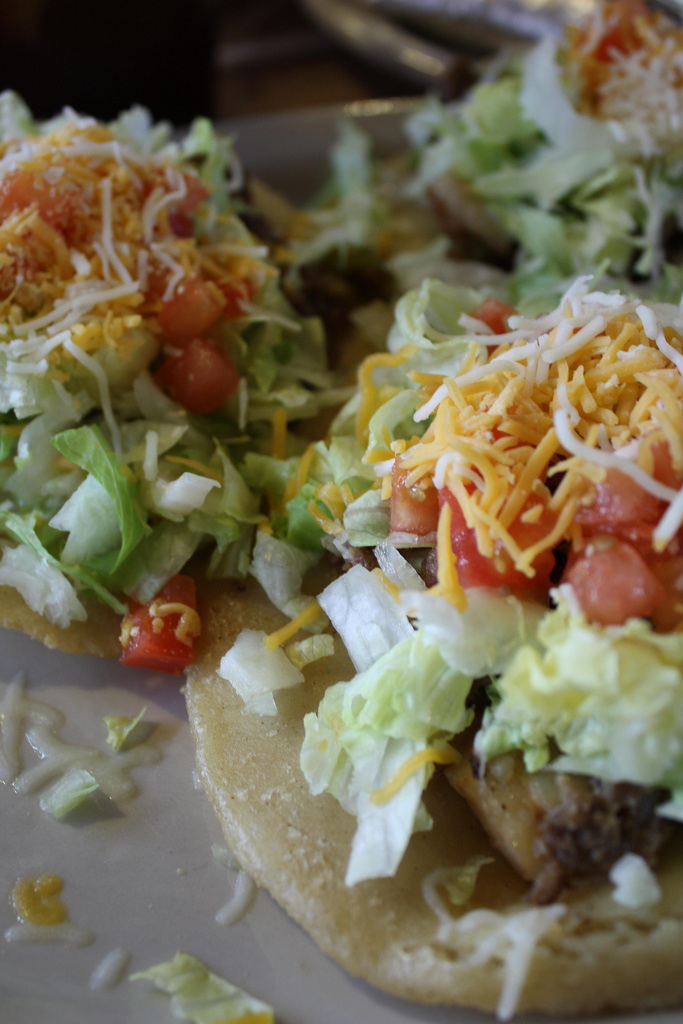
Here in Chicago, we have an amazing array of Mexican foods, but just as soon as we think we figured it out, we find a wonderful new hybrid we never even knew existed. The latest among these discoveries is the “puffy taco”, which is noteworthy for its puffy shell. To make the signature shell, uncooked masa is deep-fried, and as a result, takes on a puffy shape. With origins in San Antonio, Texas, the puffy taco is a hybrid Tex-Mex creation, which originated at a place aptly called Henry’s Puffy Tacos in the 1970s. The association between San Antonio and puffy tacos runs so deep that the minor league baseball team, The San Antonio Missions, even has a mascot called Henry the Puffy Taco. Though you are most likely to get puffy tacos in San Antonio, there are a few outposts, like  Goat Town in NYC. If you are feeling ambitious (or if you don’t live anywhere near Texas) you can make puffy tacos yourself.

1 Comment

Filed under World Eats

How to Properly Enjoy a Brazilian Beach (Hint: Eat Everything)

Brazilian beaches have the stereotype of being all about beautiful people, sun, and skin. We tend to think that big stereotype gets out just so people won’t discover the real reason Brazilians go to the beach: to have a great time with lots of food. So much so that Rio’s mayor recently declared beach vendors as part of the city’s cultural heritage. What follows is what we learned from multiple trips to beaches in Bahia over two months: our no-nonsense guide to enjoying one Brazil’s best full-service and sinfully gastrononmic experiences. Really!

1. Relax! You’re on a beach.
Brazilian beaches vary widely in quality, but we are here to tell you that while beach quality as judged by swimming or picturesqueness is important, going to a beach with good-quality food options and service more than makes up for that. In either case…

2. Don’t bring anything except a little money.
Why? Because everything you need will be provided to you. Free yourself of all of your worldly possessions, and come to the beach prepared to be pampered, Brazil-style. If you bring a lot of stuff to the beach, not only are you asking to get it stolen, you are going to immediately divorce yourself from the great fun of the beach market!

3. Pick a chair, and sit in it all day. 
Any beach worth going to for the service will have a large set-up of chairs. Umbrellas too. Typically you can rent a chair for a few reais all day, or at some less-frequented beaches it is free. Pay the attendant whatever the going rate seems to be, and be this person’s friend: he or she is your one-stop shop to all the goods for the rest of the day.

See all these people? They know how to live life.

4. Survey the culinary landscape.
Remember when we said you got the chair all day? That means you have a ton of time to check out all the beach food. No, no, don’t get up from your chair! Yoou don’t need to, since the food comes to you. Tens of hundreds of beach food sellers, roaming amongst the beachgoers, selling whatever is on the market for the day. Investigate the offerings for a while: sit there and see what is being solid by the many roaming foodsellers, and if you can, check out the prices being paid by Brazilians. Also take a moment to sit in awe at the selection. Here, for example, is a shortlist of the food we encountered on a recent 2-hour beach excursion: soda, beer, fresh fruit juices, coffee, bottled water (with and without gas), picoles (popsicles), chips, queijo coalho, grilled shrimp, sandwiches, moquecas, oysters, sugarcane, cocadas (coconut cookies), roasted cashews, meat skewers, salgados (various savory fried snacks), fried fiesh, hard boiled eggs, acarajé, and cotton candy.

And this is only the food. There are a number of other items being sold by roaming sellers, like gum, suntan lotion, aloe, sunglasses, jewelry, kangas (Brazilian sarongs), dresses, hats, sandals, and towels. The world is at your disposal!
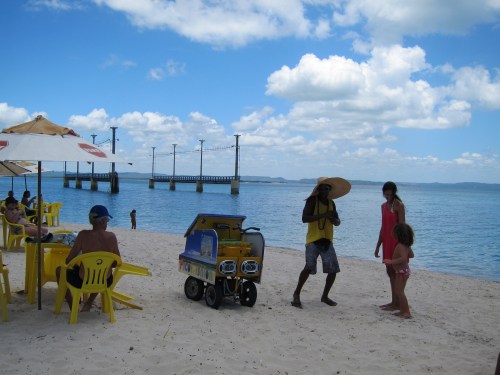
Picoleishion blasts cheesy Brazilian tunes from his colorful cart while selling the best picoles in Itaparica. He’s famous!

5. Sample everything.
After three months, we found this to be the best thing about Brazil’s street/beach market economy: nobody cares if you do not buy. Sample, sample, sample – but if you don’t want it, say no, thank you, give a thumb’s up to the seller, and go along with your day. They’ll give you a thumb’s up back, and move right along selling. No guilt tripping, no bargaining – especially on beaches where there are more than enough customers. It’s incredibly refreshing.

6. Get whatever you want!
You know those Brazilian steakhouses becoming so popular in the USA, where the meat comes to your plate as long as you ask for it? That’s how the beach is – wave people over, pay a little money to get as much or as little as you want, and keep buying and buying until you are full. Get full? Go swimming, relax, take in some sun, nap, wake up, and then eat more. Repeat ALL DAY, eating cheaper, better, and more comfortably than you could have in any restaurant.
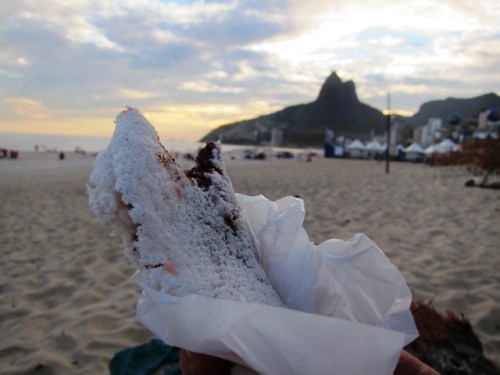

So nice we posted this photo twice: beijus filled with chocolate and coconut on Ipanema beach.
You know you’re jealous.

And finally,

7. Don’t necessarily avoid the crowds.
One of our best days on the beach was in two chairs absolutely packed in between other groups and families. We couldn’t even see the water. But you know what? People share! You make friends! And suddenly you realize the best part of the beach is not the water – it’s the community, the service, and the great food.

You’re welcome, travelers.

Leave a comment

Filed under Reviews

Guaranteed future review: Omar’s Peace Corps Kitchen

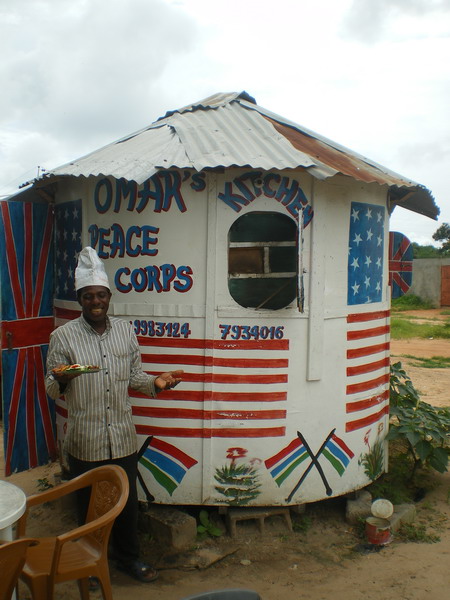
 Over the weekend M made a new friend, Whitney, who spent a good chunk of last year as a Peace Corps   volunteer in the Gambia. Reading her blog today, we came across her review of an apparent Banjul lunch gem: Omar’s Peace Corps Kitchen. Whitney says

Omar is a talented cook who has been friends with PC for years. His little rocket ship-shaped hut is just down the street from our offices, so its a great lunch spot, plus he’s open to learning new foods for volunteers, such as quasadillas or philly cheese steak sandwiches. He caters a lot of PC training events and makes a mean ginger chicken. 

Wait just a minute: we can feast on both West African ginger chicken AND Philly cheese steaks from the same place, while chatting with an apparently good-natured chef to boot?! Omar, looks like a trip to Banjul is in order!

Image

Source: Whitney in Gambia

Leave a comment

Filed under Reviews

Angolan Cuisine in Lisbon: Moamba

 Moamba
 Rua Fradesso da Silveira, 75
Lisbon, Portugal

If anywhere outside of Angola would have good Angolan food, it would be an Angolan restaurant directly across from the Angolan Embassy in the city with the world’s largest population of Angolan expatriates.

Surprisingly, though Moamba was full, there were few Angolans in the restaurant on this day – perhaps they were all still working at the consulate? But even though most patrons were Portuguese, looking around we could tell they staunchly avoided the small section of Portuguese cuisine on the menu, and went straight for the moamba, the house specialty and Angola’s national dish, which is served up hot, heavy and in bulk to almost everyone who walks through the door.

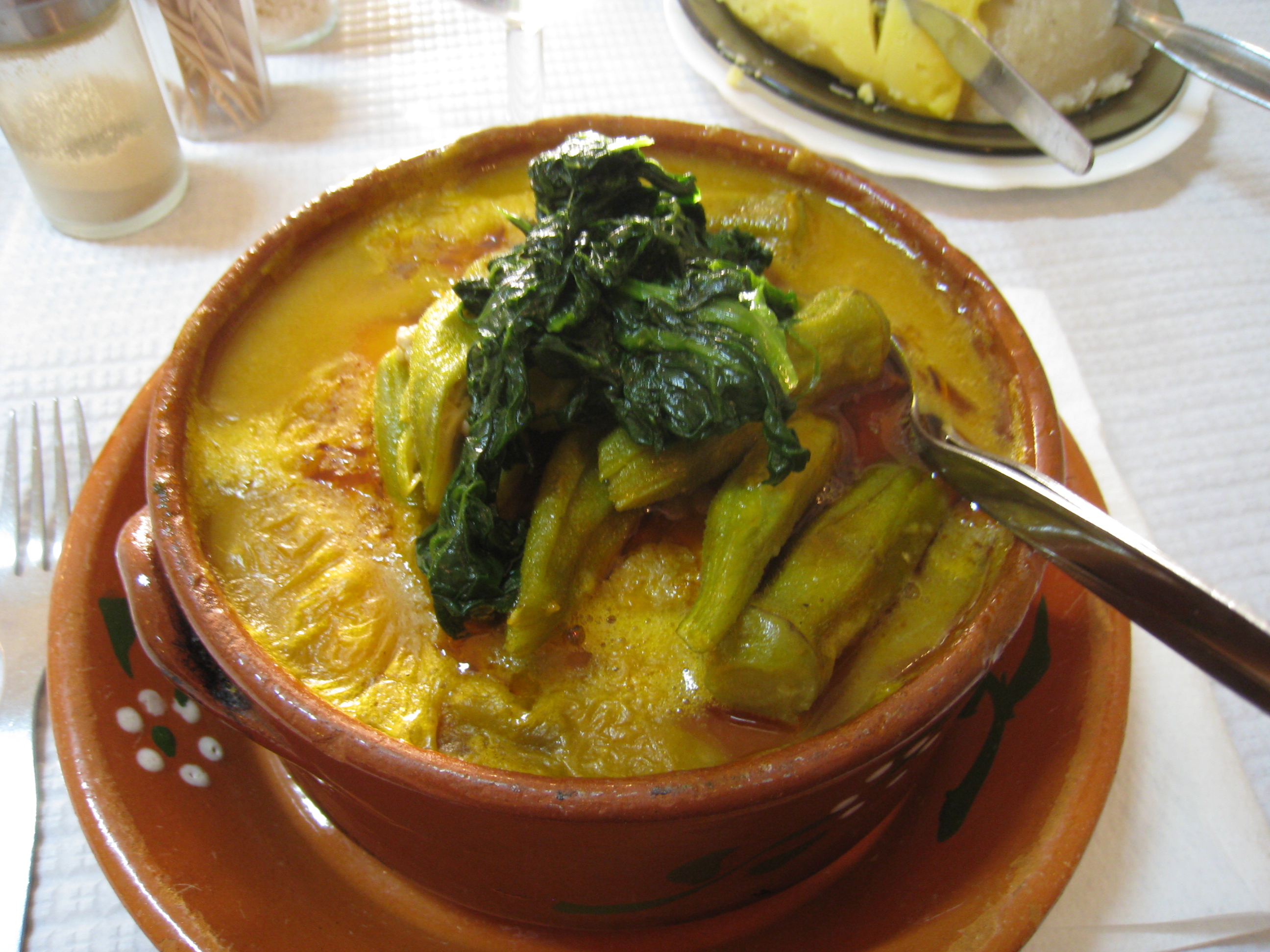
Moamba will remind the first-timer of other rich stews from the western African coast: a thick, oily dish of chicken stewed with tomatoes, okra, potatoes, and collard greens in a slightly spicy sauce. It is served with generous portions of tapioca and a yellow flour mash, similar to Nigerian fufu. Even the half-portion we ordered (9 euros), when combined with the tapioca, was far more than what was needed for the two of us.

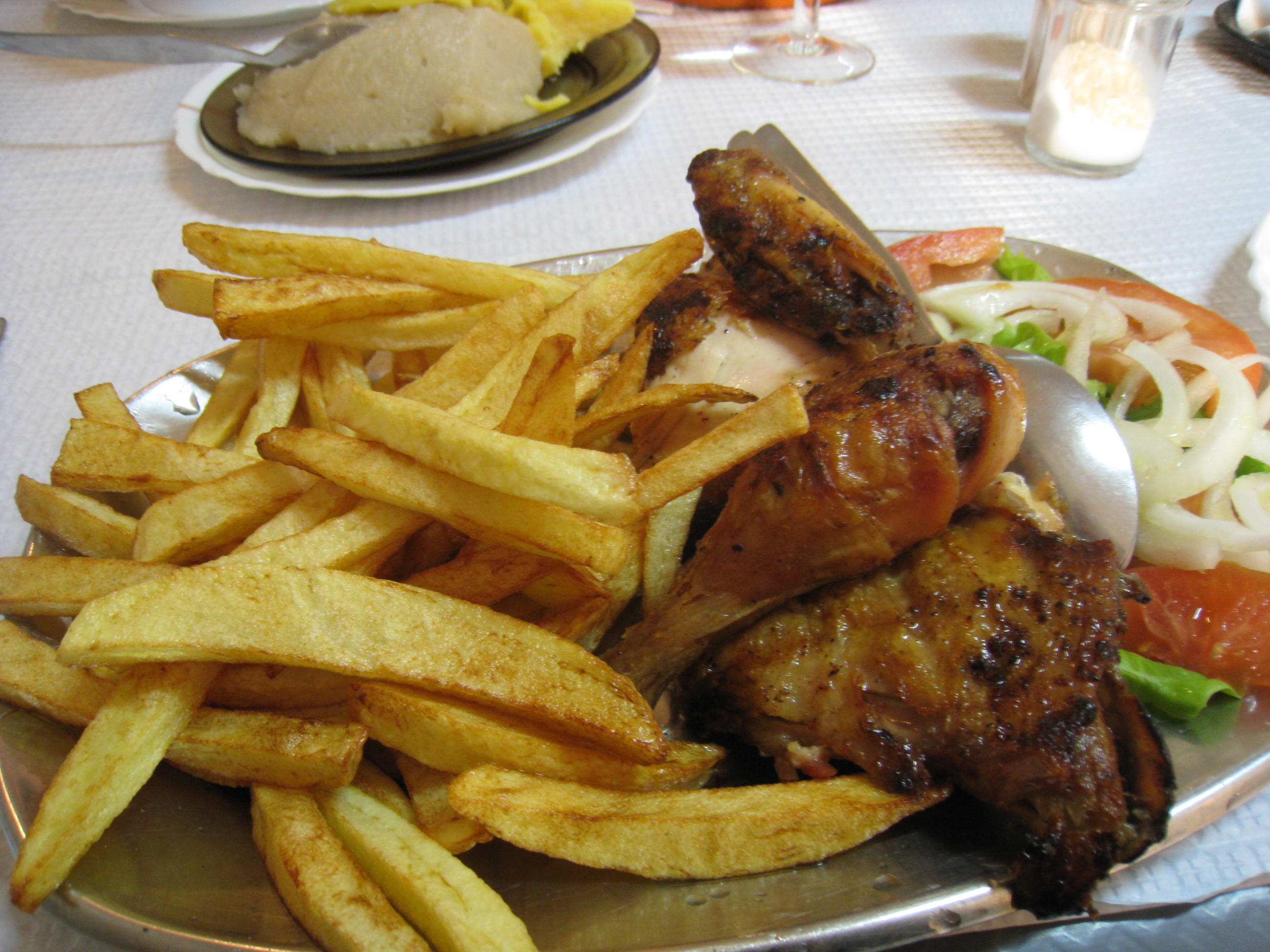
To mix things up, L ordered the roast chicken, grilled and marinated with Angolan spices and served with piri-piri. She was less than willing to heap on the piri-piri, but M dove right in, slathering it on his moamba, some chicken, and the welcome fresh – and desnse! – bread served with our meal. The chicken, served with fries and a small inconsequential salad, hit the spot – places that serve a great, flavorful piece of grilled chicken are increasingly hard to come by, and it is no secret that a lot of our favorites have come from western and central African restaurants. When we head back to Lisbon in the fall (yes, the secret is out), Moamba will definitely be on our return list for a flavorful, inexpensive, and very hearty African lunch.

1 Comment

Filed under Reviews

The Mixed Martial Arts Açai Shop in a Gas Station: Posto do Açaí

Posto do Açaí
R. Vergueiro, 1694 (R. Estela)
São Paulo, SP 04102-000

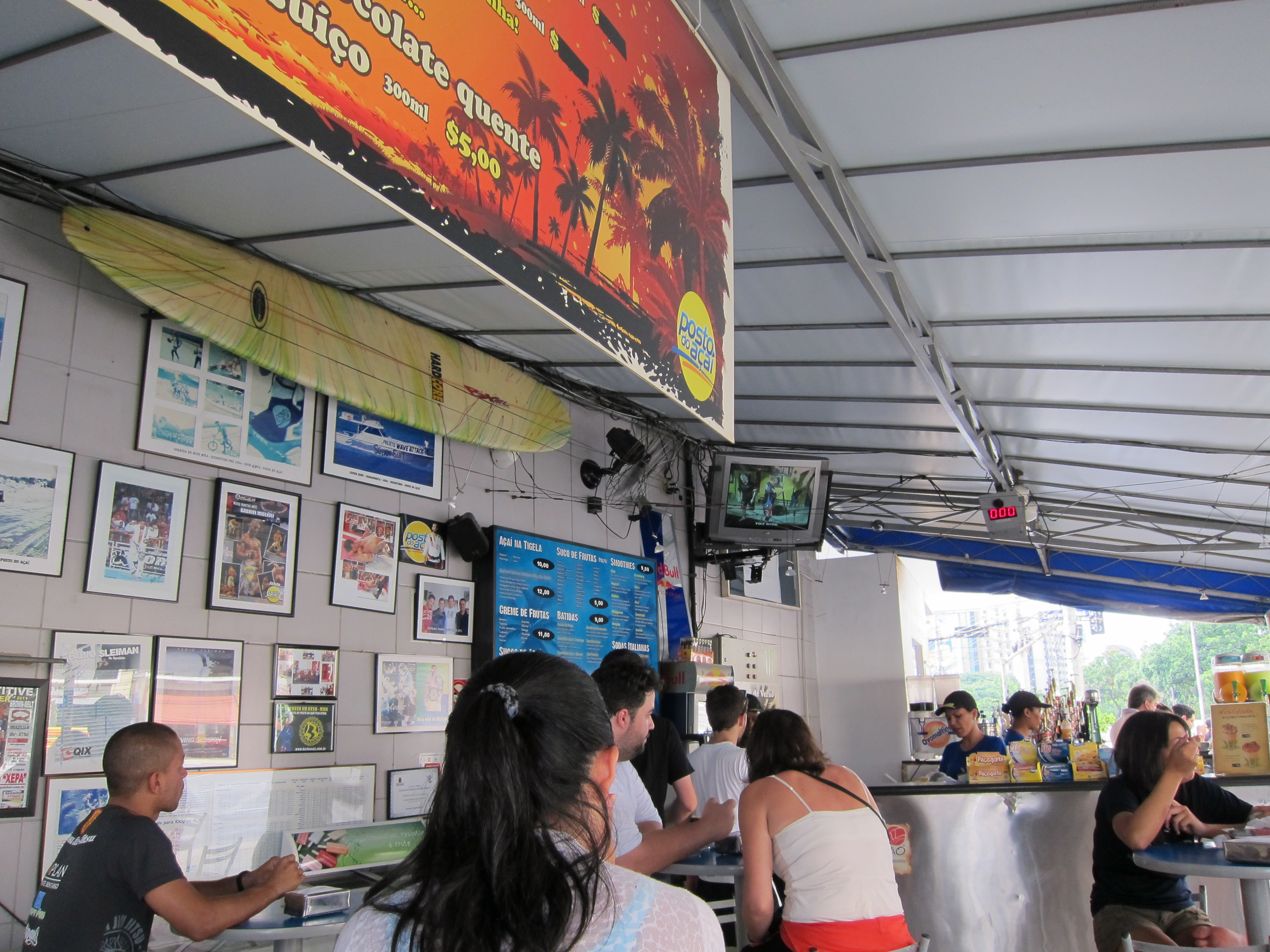
Only in Brazil, right? While we previously rated our favorite açaí spots in Salvador, açaí bowls are extremely popular all across Brazil. São Paulo, of course, is no exception, and as usual we were excited to find a relatively crowded local açaí watering hole only a block from where we were staying in Sampa. Normally, we would usually give little credence to a restaurant in a gas station – technically sandwiched in between two gas stations – but that is exactly where we found Posto do Açaí.  Our first time through was by accident – just stopping under their roof to get out of the all-too-typical Sampa drizzle – and we were initially baffled by the Brazilian jiu-jitsu paraphernalia on the walls. Turns out it’s a chain, and they sponsor a series of Brazilian martial arts groups. But, even better for us, we found Posto do Açaí to be surprisingly decent açaí in the heart of São Paulo.

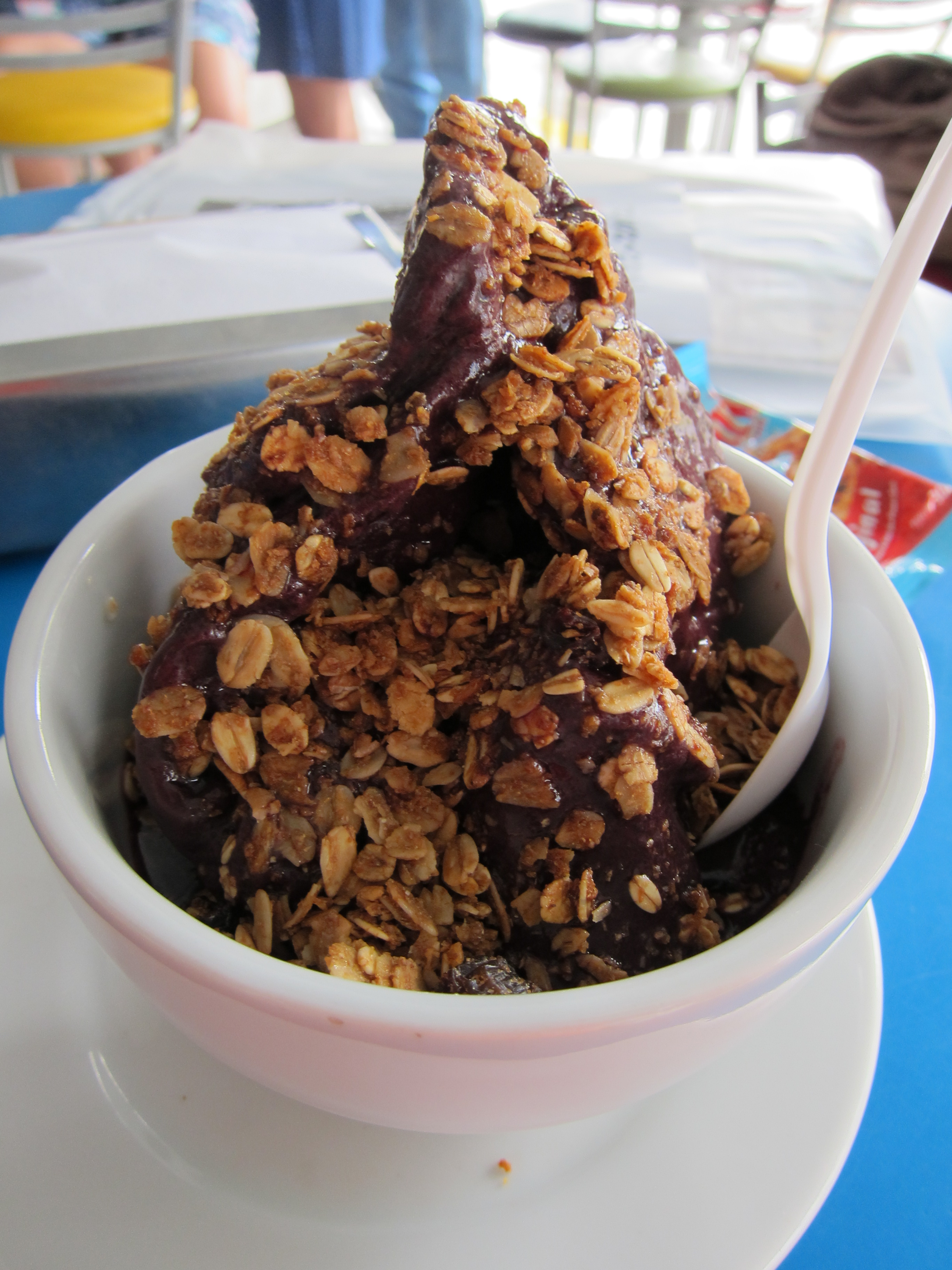
The menu, similar to most açaí joints, contains no real surprises: açaí na tigela with various toppings; juices; and juice milkshakes (batidas). However, points to the Posto for offering an interesting twist, presumably descended from São Paulo’s rich history of Italian immigration: a wide variety of Italian flavor syrups to add to any açaí bowl or drink (for a surcharge of R$2). We sampled the Sicilian orange and lime beaten into a bowl, topped with granola, and felt it was on par with some of our favorite places in Salvador, especially given the extra exotic fruit. We also sampled one of their range of Italian sodas – not bad for a gas station joint!

Leave a comment

Filed under Reviews

Challah Cumulus Clouds

Cozywalls’ challah cumulus clouds

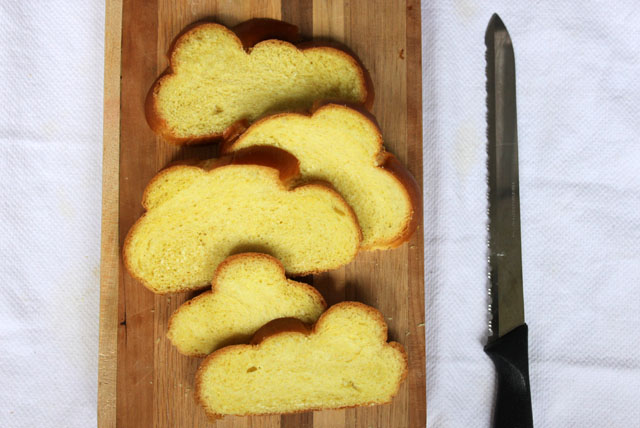
Until I saw this post by Cozywalls, I had never really considered the obvious fact that when Challah is sliced it makes the shape of perfect cumulus clouds (a finding also discovered by others)! Smitten Kitchen has a recipe for challah, a Jewish egg bread, as well as some great braiding instructions, which of course are the most important part in obtaining the cloud shape.

1 Comment

Filed under Links, Recipes

Xue Hua Bing at 527 Cafe

 Now that Cloud 9 in Chicago is closed, and Spring is theoretically around the corner, where can you go for you Xue Hua Bing (Taiwanese shaved ice) fix? 527 Cafe! Right in downtown Evanston (527 Davis St.), Cafe 527 makes some pretty good XHB, with gargantuan portions. The flavors available are mango, strawberry and passion fruit and the serving size is more than enough for you and your 2 closest friends.

Xue hua bing by Kimberlykv

Leave a comment

Filed under Reviews, World Eats

Australian and New Zealand Sweets for Anzac Day

We have to admit that there is a bit of a blind spot in our repertoire for Australia and New Zealand, perhaps due to their geographic distance and the fact that we don’t have any Aussie / Kiwi restaurants around here. So unfortunately, we don’t often give this area of the world its fair due. We would like to thank our commentor Whitney for writing to us about Australian treats, and we figured we would do a link roundup of some Australian and New Zealander desserts, especially since ANZAC day is coming up on April 25th.

Pavlova by AnneCN

2 Comments

Filed under Holidays, World Eats

Argentina: Chimichurri / Chimmichurri

Chimichurri, perhaps the famous Argentinian sauce, is definitely our favorite use for parsely. In a country that is obsessed with grilling, everyone has their own version of chimichurri. Some people prefer no red pepper, lime instead of lemon, more vinegar, less vinegar. Of the versions we made, this is the combination that has worked out the best for us, though of course any chimichurri recipe is designed for tweaking.

Chimichirri
Adapted from Chimichurri Recipe | Leite’s Culinaria

1/2 cup red wine vinegar
1/2 cup olive oil
1 cup fresh flat-leaf (Italian) parsley – no stems
6 cloves garlic
1/2 teaspoon red pepper flakes
3/4 teaspoon salt
Juice of one large lemon

Combine all ingredients and pulse in food processor – simple as that.

Leave a comment

Filed under Recipes

Brazil: Deskolado Bar Futebol E Pizza

Deskolado Bar Futebol E Pizza
Just West of Shopping Barra – Exact address unknown
Salvador, Bahia, Brazil

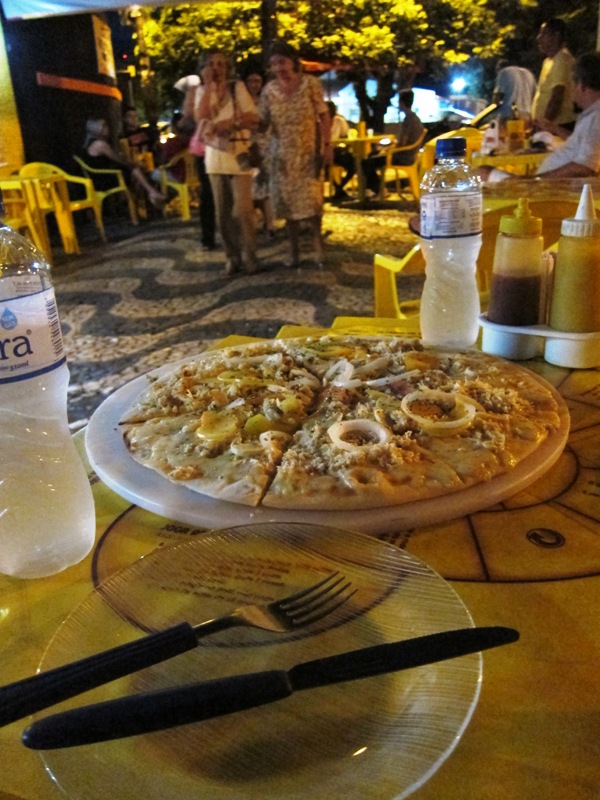
If São Paulo’s 1900 Pizzeria represents an elegant, refined pizza experience, Café Deskolado represents the quick, fast and cheap end of the scale, with its yellow plastic tables and menu written on poster board. Deskolado spills out into the street right outside the Shopping Barra mall, and most people prefer to mingle over their pizzas with gigantic bottles of Skol beer, while the latest futebol game is fed by satellite to the TV. The word “Descolado,” by the way, means something like “cool” in Brazilian Portuguese. The punny “Skol” in the name has been altered due to the fact that it is a Skol bar, an uber-popular Brazilian beer brand that makes itself known with a huge array of yellow and red branded merchandise.

Pizzas at Deskolado start at about R$13 for a large (about US $7) and R$16 (about $9) for a special large. This, as you may recall is a far cry from the US $25+ prices at fancy establishments, so this was a good place to soothe our sticker shock. Even at this lower price point, we were still spoiled for choice. The toppings at Brazilian pizza restaurants tend to be rather more eclectic (as we saw at Fogo 2 Go) than the typical American take out joint, and offerings at Deskolado including toppings of ham, Catupiry cheese, hard-boiled eggs, anchovies, etc.

Our classic pick was the chicken and Catupiry pizza – a white pizza that was laden with both Mozzarella and Catupiry cheeses, as well as onions.  The pizzas at Deskolado arrive quickly, on a tasty thin crust, perfectly crisp. It may not be an elegant, artisan pie, but it sure is tasty. Above all, Deskolado is definitely is a great place to hang out with friends and enjoy a heated Esporte Clube Bahia match. It was a rare night that we didn’t see the dining area of bright-yellow Skol-branded tables completely full. The pizza is good, but won’t blow your mind, and the addition of friends, futebol and drinks obviously account for some of this place’s appeal. Due to its location and good selection, Deskolado definitely became a staple for when we were craving some take-out food at night in Salvador. However, we would have to go elsewhere for our lunch cravings. No matter how much you may want a quick slice over lunch– pizza is for dinner only in Brazil!

Leave a comment

Filed under Reviews

Global Easter Recipe Roundup

Easter may be over, but that doesn’t mean that you can’t make holiday-themed food (and we aren’t going to be retiring our Peeps-shaped muffin pan). In that spirit, we have a roundup of some international carb-heavy Easter recipes for your enjoyment.

Leave a comment

Filed under Holidays, Links, Recipes

São Paulo: 1900 Pizzeria

1900 Pizzeria
Rua Estado Israel, 240
São Paulo, 04022-002, Brazil

São Paulo is famed for its pizzerias, a fact of which Paulistanos are very proud. The city’s strong pizza heritage is thanks to waves of Italian immigrants that call São Paulo home. There are pizzerias of all stripes in Sampa, from utterly elegant to tiny one-woman operations. We were completely spoiled for choice in São Paulo and didn’t quite know where to start, so we were completely grateful when our hosts in São Paulo, Marciel and Angela, suggested we try 1900 Pizzeria.

1900 Pizzeria, which has several locations around Sampa, is an upscale establishment specializing in artisan Neapolitan pies. The name of 1900 Pizzeria comes from the fact that some iteration of the Pizzeria has been open since the year 1900. The recipe is also reportedly unchanged since that time. The restaurant itself was lively and bustling when we entered at the early, un-Brazilian time of 7 PM, and the partially open kitchen was working full-tilt. We could see pizza ovens burning, which was naturally a good sign.

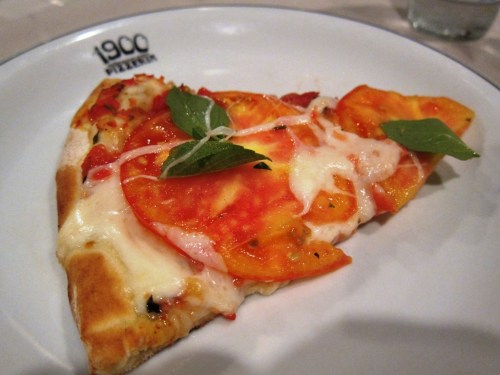
The menu was divided into “Traditional (Tradicionais)” and “Specialty (Especias)” varieties of pizza – with the specialty pizzas having slightly more adventurous combinations like bacalhau and dried beef (and slightly higher price points). Pizzas came in individual, medium and large sizes, and the prices for a large pizza ranged from 47 to 62 reais (about 25-35 dollars). Across 2 large pizzas we sampled 4 varieties (1/2 of a pie each). First up was the endive and Margherita pizza. We had never tried endive on a pizza before, but the slightly spicy endive made for a very delicious and fresh pizza. The classic Margherita was lovely, with a perfect distribution of tomatoes, fresh basil and buffalo mozzarella (see below). Our second pizza (which we tried with a whole wheat crust) was ½ four cheese and ½ arugula. The winner of this pie was the 4 cheese, which included the delicious Brazilian staple Catupiry along with gorgonzola, mozzarella and provolone. We slightly preferred the whole wheat crust, since it added a little more substance to the pizza. For dessert there were also several sweet pizzas, with nutella, strawberries, etc, apparently an exceedingly popular option in São Paulo pizzerias.

Though it was more than we are used to paying for pizza, we felt the added cost was worth it. The pizzas at Pizzeria 1900 were excellent, and we are happy that we got to experience a slice of São Paulo pizza culture with our friends. We only wish we could have more time in Sao Paulo to try some more pizza spots.

1 Comment

Filed under Reviews

A World of Popovers: Poffertjes, Aebelskivers and Paniyaram

India FlagWhen we discovered Eggettes, a Hong Kong sweet we profiled previously, little did we know that there were similar popover confections present around the world (though we should have guessed). Ranging from India to Denmark, all of these treats are made in special pans with round indentations (as can be seen above). First up are poffertjes, mini-pancakes made with buckwheat flour that originated in the Netherlands in the 15th century. Kitchen butterfly has a recipe for poffertjes from Dutch Cooking Today (Kook ook Holland).

Aebelskivers

Aebelskivers in a pan.

Similar to poffertjes are ebelskivers / abelskivers / aebelskivers from Denmark, not surprising, given the proximity of the two countries. The recipes are quite similar, but an aebelskiver (or their pan, rather) is larger. For those ready to commit to the recipes: Fante’s Kitchen Shop in Philadelphia has both poffertje and aebelskiver pans, as does William-Sonoma. Also falling into this small-popover milieu are Paniyaram (seen above), an Indian snack that can be made sweet or savory. We think this serves as evidence that some things – like bite-sized carb-y snacks – are universal.

1 Comment

Filed under Pastry Post-Poc, World Eats

New Orleans: Coop’s Place

Coop’s Place
1109 Decatur Street
New Orleans, LA

When we were looking for places to eat in New Orleans we were warned against the French Quarter restaurants for being generally high-priced and too tourist-centric. However, there were a few diamonds in the rough, including Coop’s Place. For Southern cooking in the vicinity of the French quarter this is one of your best options. Coop’s, with less than a dozen rickety table and a retro bar, probably qualifies as a hole in the wall. Coop’s also has a pretty strict seating policy – no reservations allowed – you just tell the hostess your party size. The host then continuously scans the line (which often snakes around the block) and when one of the tables in the tiny place opens up with your group size– you’re in (even if that 2-top that just got a table arrived a half hour later than your 4-top)!

The menu at Coop’s is pretty extensive and has touches of both Cajun and Creole cooking. A posted menu board also lists some daily specials including Shrimp Etouffee and Alligator. M couldn’t decide among the options – so he was really pleased that there was a sample platter featuring some Southern Favorites ($12.95) – Jambalaya, Gumbo, Red Beans & Rice, and some BBQ shrimp and pasta. M was especially a fan of the jambalaya and gumbo, both of which were extremely flavorful and full of spice. The BBQ shrimp was also good, but could not measure up to the other offerings.

L was decisive however – and was prepared to tackle the LARGEST PLATE OF FRIED CRAWFISH EVER (our name, yours for only $11.25). We did not know going in that this was going to be the LARGEST PLATE OF FRIED CRAWFISH EVER when we ordered, but when the mammoth plate arrived, we were prepared for the challenge. The plate itself was probably about 12 inches diameter and was piled high with piping hot, fresh-out-of-the-frier crawfish. Needless to say we were pleased (and we only ended up finishing about ½ of the plate). Coop’s Place is definitely a NOLA experience, from the regulars at the bar, to the abundant crawfish supply, if you can spare the wait; it’s a great French Quarter option.

3 Comments

Filed under Reviews

The World is Eating “Eating the World”

Image

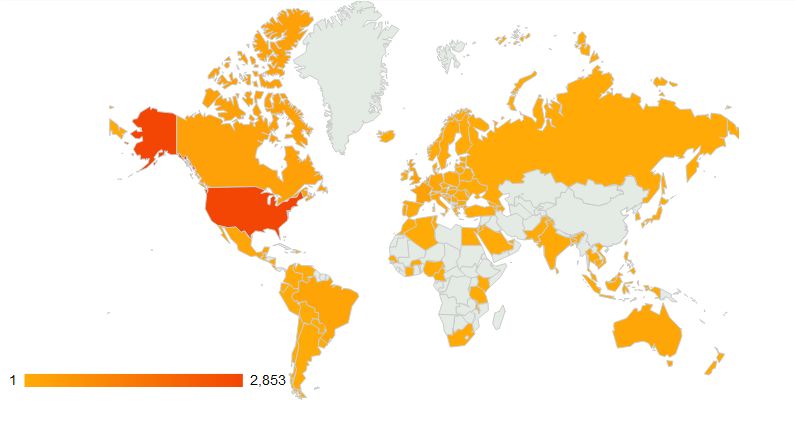
Recently ETW seems to have hit its stride, at least visitor-wise. Two days left until April, and March 2012 has already broke the ETW record for visits in a month (we passed the 4,000 and 5,000 marks for the first time ever), and March 27 set a new record for hits in a day. This makes us very happy, since there’s nothing we like more than knowing people appreciate our culinary adventures.

But we had another surprise. Earlier this month, WordPress installed a feature that tracks the national origins of visitors to the site. The stats shocked us: since February 25 of this year, people from 114 (!!!) different countries have found their way to ETW. This includes Malawi, East Timor, Anguilla, and THREE visits from little San Marino. By contrast, we have only eaten food from 86 countries, so that really puts the pressure on us. Maybe some of you out there want to put us up for a few days in your lovely hometowns and show us the local fare? I’m talking to you, Morocco (2 visits). Any suggestions on the best things to do when we hit up Marrakech in the fall?

Thanks again to everyone for reading! As always, more fun to come.

Leave a comment

Filed under Note

Photographing the Cuban Kitchen

Cuban Kitchen

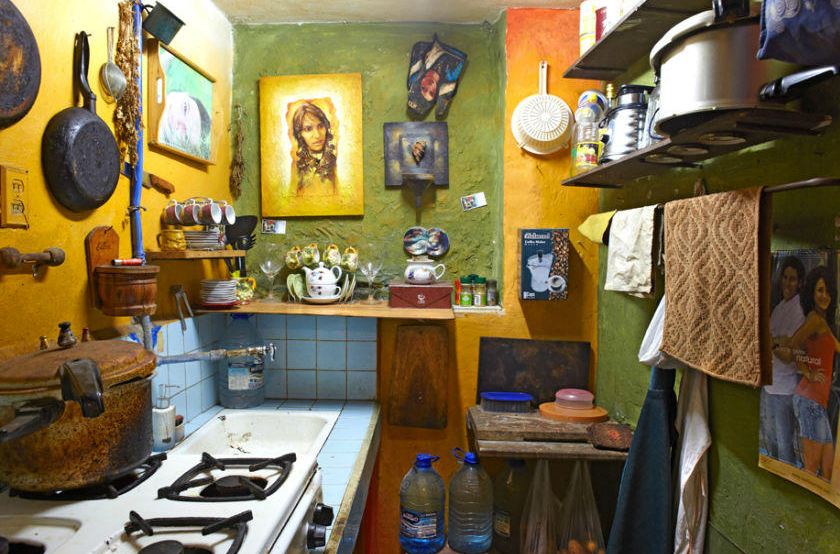
A kitchen in Havana – photograph by Ellen Silverman

Photographer Ellen Silverman did a wonderful photo series called “Spare Beauty: The Cuban Kitchen,” documenting kitchens around Havana, Cuba, and NPR did a short piece about the project. I’m definitely impressed by the ingenuity and personality of these kitchens. You can see the entire photo series on Silverman’s website.

2 Comments

Filed under Design and Photography

Bahian Moqueca Tour, Stop 2: Paraíso Tropical

 Restaurante Paraíso Tropical
Rua Edgar Loureiro, 98-B, Resgate
Cabula – Salvador, Brasil

In general, it seems that Bahians do not like to eat at restaurants. Street food, little hole-in-the-wall places, vendors on the beach, these things Salvador does and does well; but the idea of dressing up and heading to an expensive restaurant for a long meal does not seem to be in the wheelhouse of most soterpolitanos. Which is why, as Chicagoans, we had to give Salvador’s most acclaimed restaurant a try.

When we read Veja Salvador’s annual food issue and their glowing reviews of Paraiso Tropical (Best Moqueca in the City! Best Chef in the City! ), we knew we had to go. That would be the difficult part: tucked away in the central Cabula neighborhood, the restaurant is almost impossible to get to from Barra. We had to take a bus to a large shopping mall and from there a cab – gasp! – through the only road leading to the isolated bairro. A confused cab driver to boot, and a trip of nearly two hours and R$40 (about US$25) and we were finally there.

But no one else was. We were so sure to make a reservation, we had to laugh when we arrived at 5:30pm on a Wednesday – about four hours before Bahians usually eat – to a huge, and largely empty restaurant. Inside, though, it was something of a paradise. The dress code seemed typically Bahian, with the only other couple donning jeans and tennis shoes. Simple wooden tables surrounded a central area of greenery. Our second floor table looked over the restaurant interior, while a large jabitiquaba tree’s branches nearly touched our plates – and oh how we wanted to grab some of the fruits!

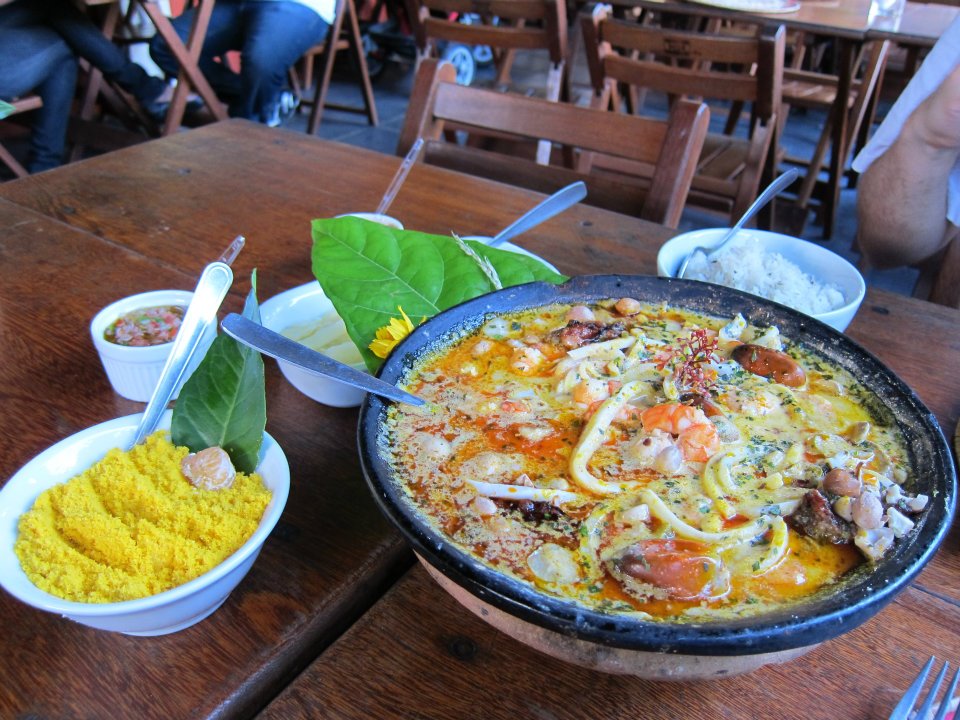
The menu was extensive, with many moqueca offerings. Beto Pimentel, the Chef, has done a masterful job putting inventive and welcome touches on Bahia’s most famous dish. His offerings were divided into traditional and special moqeucas, and we opted for one of the special shrimp moquecas, to split. To this day, we are not quite sure of all that was in it. Fibrous nuts, tomatoes, peppers, any number of small sea creatures, long noodles of gelatinous consistency, and much more dendê oil than we were accustomed too (and we believe less coconut milk). Accompaniments were shockingly good farofa, with an orange peel added to absorb a little moisture and add flavor; spicy sauce made of malagueta peppers (good for M and his spice addiction), dried yucca; and rice.

All of which was fantastic. The combinations of flavors of the moqueca felt more like intriguing contradictions we were pleased to be eating. The many different textures and shades of foods all cooked together was a seeming metaphor for all Bahian cuisine in one dish. Unwaveringly complex and yet consistently delicious, we know this would easily be the best moqueca we would have in Bahia, or at bare minimum, the most inventive. We were sure to eat slowly, savoring this dish, as we knew we would not be back anytime soon. But, of course, there was dessert!

Paraiso Tropical, in addition to moquecas, is famous for its roscas: think of these as fresh fruit juice, frozen, and then very lightly thawed to a smooth but icy consistency, then piled high on a dish. We opted for the mango. Admittedly there was not much to it – essentially frozen mango juice, but still smooth and fresh. We had to be sure to eat quickly, otherwise it was going to melt all over our hands.

Our best surprise of the evening: a second dessert. With the check, the waiter brought us a tray of fresh Brazilian fruits and a plastic bag. We were baffled about what to do with them until we saw the restaurant’s other patrons putting the fruits in a bag to take home. We were happy to oblige, picking up a week’s worth of fruits: guavas, pinhas, and a mango.

To be honest, if you only have a few days in Salvador, this is not a place you should go. Stick to the wonderful beach and street food and the more famous parts of town, where you can meet more locals. But if you have a lot of time, and are willing to splurge, meander your way to Paraiso Tropical and experience the finest dining the city has to offer. The ambience is definitely Bahian upscale – read: American casual – and your taste buds will not leave disappointed.

Our favorite part? We only learned upon trying to pay they didn’t accept credit cards, only cash. We had no cash, and no ATM. The solution – apparently a common problem – was to give us a sheet of paper with the chef’s bank account number, and instruct us to just deposit the money tomorrow. We could have left getting this meal for free. But for food like that we are more happy to pay, so the next day I walked into Banco do Brasil and deposited R$160 (about $90) into the account. Well worth it.

Leave a comment

Filed under Reviews

Citrus and Seafood: Sicilian Menu recipes

We here at ETW have a special affinity for Sicilian food, which was only confirmed on our honeymoon trip to Sicily where we encountered amazing street food, pasta and citrus (more food reports coming soon). Williams Sonoma has a special feature on Sicilian food, including recipes and sample menus, including some of our favorites. Check out the orange salad, something so simple, but so satisfying.

Leave a comment

Filed under Links, Recipes

Queijo coalho, essential Brazilian beach food

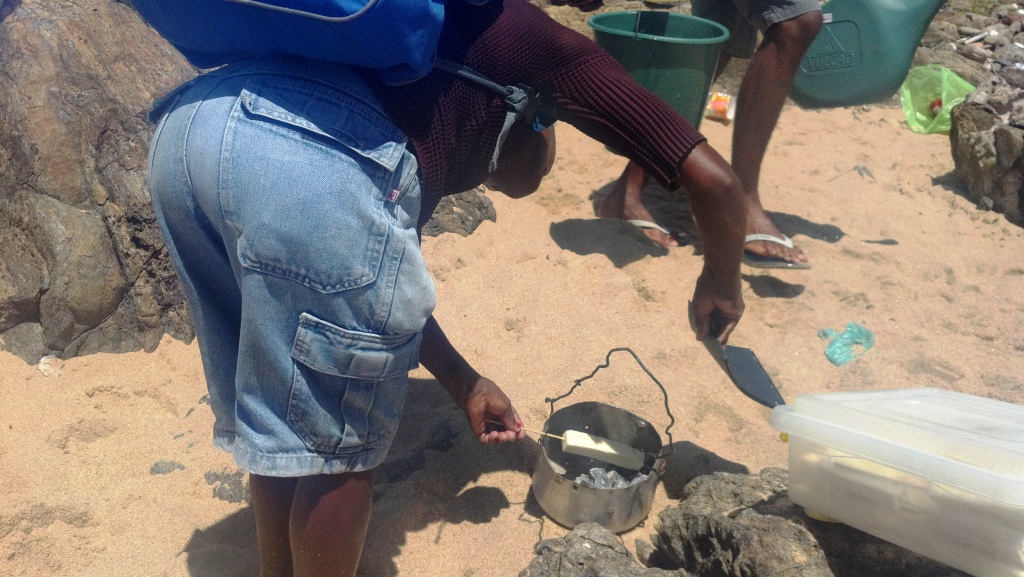
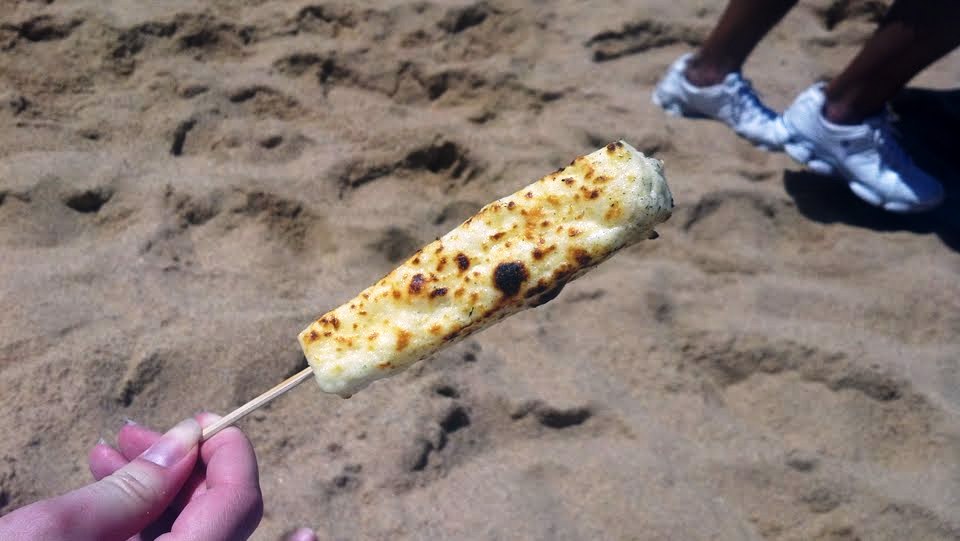
There is something about food on a stick that makes it all the more awesome. This trend carries over to Brazilian street food, which has many stick-laden options. One of our favorites among these was the queijo coalho – roast cheese. You have to love a country where roasting sticks of cheese over an open flame and coating it in rosemary is a viable beach snack. The cheese used to produce queijo coalho goes by the same name, and has a squeaky texture similar to cheese curds. The cheese is near-impossible to find in the US, but Carlos Figueira has a great roundup and review of some possible substitutes. Once on a stick, the cheese is roasted over a little handheld coal stove and coated in rosemary or possibly molasses, for the sweet-lovers. The roasting gives the cheese a bubbly, burnt outer layer. Surprisingly, it is the perfect complement to a hot day.
Queijo Coalho in production in Rio Vermelho

The finished product

1 Comment

Filed under World Eats

Québec: Poutine in Chicago (updated)

canadaquebec Québec has a unique food history (including some superlative bagels), but until recently we haven’t been able to find the inimitable Québecois staple, poutine, anywhere in Chicago. Poutine is an unusual concoction of french fries served with fresh cheese curds and brown gravy, which originated some time in the mid-20th century in Canada. Until fairly recently, poutine was the domain of Québec only, but now restaurants serving the specialty are popping up all over the United States. The Chicago Tribune has a list of restaurants that serve poutine in Chicago.

Classic Poutine

Classic Poutine from L’Authentic Burgers & Poutine in Victoria, BC by Jen Arrr

3 Comments

Filed under World Eats