Category Archives: World Eats

The Magical World of Turkish Osmanlı Macunu

turkeyWe absolutely love the culture of street food in Turkey, and we were completely intrigued by Zester’s videos of the Turkish candy, Osmanlı Macunu, being made on the street. Macun (which means “paste” in Turkish) is basically a colorful sugar lollipop that comes in a variety of flavors, made to order. Each lollipop is composed of several flavors, twirled on a stick in succession and then cured by lemon. You just have to watch!

Leave a comment

Filed under World Eats

A Winter’s Nabe Tale

JapanWhile we have always enjoyed Japanese cuisine, we don’t consider ourselves experts. But we do consider our friends R & R to be Japanese food experts, given their years of experience in Japan and a passion for Japanese food. They recently opened out eyes to a whole new dish when (just as the weather turned colder) they invited us over for some Nabe (or nabemono 鍋物, なべ物), a warm, hearty, wintery stew. Nabe’s name derives not from its ingredients but from the pots used to make it (donabe), which also are heated to keep the dish warm on a portable burner after it has been served. A true stew, nabe can be made with pretty much anything you have a taste for.

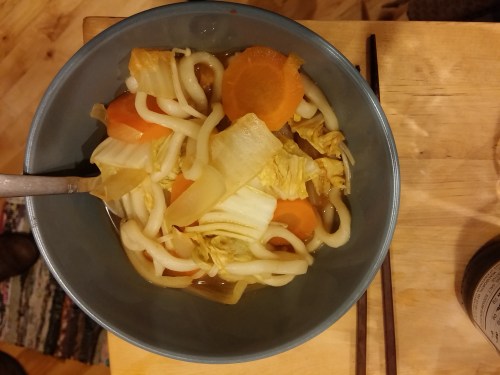
Nabe

Nabe ready for consumption!

Typically this begins with special nabe broth, which can be purchased pre-made in packets in a variety of flavors. One then adds veggies and many add-ins along with a dipping sauce, which are then cooked with long metal cooking chopsticks. A particularly hearty chicken and fish nabe is also known as “sumo nabe,” Chankonabe (recipe here), since it allegedly helps sumo wrestler pack on the pounds. The nabe R & R made was composed of a spicy kimchi broth, cabbage, carrots, noodles, mushrooms and meatballs, and was delicious, hearty and filling. You also use the leftovers to make a fried rice dish, which was amazing. Our first taste of nabe made us hungry to try more in the future. Spicy pork and seafood nabe sounds good, no? Thanks R & R, for introducing us to the vast world of nabe!

Leave a comment

Filed under World Eats

What is Maggi seasoning?

We have come across recipes calling for something called “Maggi” or “Maggi Seasoning” in Latin American, Asian and European recipes alike, and it had always wondered about this mystery ingredient. So what IS Maggi?!  Turns out Maggi seasoning is a thin, salty and savory sauce somewhat like soy sauce. Also like soy sauce, the role of Maggi is to give a savory umami kick to any dish. We were incredibly interested to learn that Maggi was originally a Swiss product, and was created in 1872. Maggi is now a huge international brand name which was bought in the 1940s by Nestle, and hosts a ton of other products like bouillon cubes, ramen and sauces under its banner. However, the most famous Maggi product is probably still the seasoning sauce, Maggi-Würze. You can find Maggi in a diverse array of stores given its international popularity and we have seen it in German, Chinese, Mexican and Russian food stores (the formulations may also vary by country). So what do you do with Maggi? How about make a quick Vietnamese steak, Indian-style noodles, Malaysian black pepper chicken or a Mexican michelada.

Maggi Seasoning and Soup

Maggi Seasoning and Stew by Frederik Hermann

Leave a comment

Filed under Links, World Eats

Kaju Katli (Cashew fudge) Recipe for Diwali

India FlagDiwali, the Hindu festival of lights, is right around the corner, which means it is time for Diwali sweets, or Mithai. The sweets served vary from region to region, and we have covered a few before on ETW (just a drop in the bucket), including ghugra and susiyam. However, we recently discovered a new Diwali specialty, Kaju Katli, a cashew fudge candy made with sugar and ghee (yes “Kaju” means cashew). M loves cashews, so this recipe seemed especially appropriate to try, and Kaju Katli seems pretty easy to make. Here’s a recipe from Padhu’s Kitchen and another from Rak’s Kitchen (which includes saffron). For extra flair, it is also sometimes decorated with silver leaf, vark (as below). In some ways, Kaju Katli even reminds us of one of our favorite Brazilian candies made from cashew and sugar, the cajuzinho!

Leave a comment

Filed under Holidays, World Eats

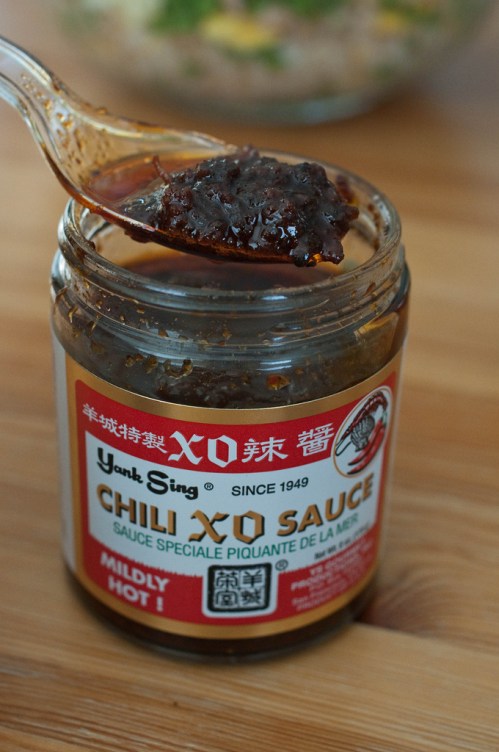
What is XO sauce?

Hong KongI have come across Chinese recipes and restaurant dishes calling for XO Sauce, but had no idea of what the cryptic name truly meant. It turns out this sauce is relatively new, and bears an interesting history.  XO Sauce consists of dried shrimp and scallops cooked down with pork, oil and chili (the pork is sometimes omitted). XO Sauce was first developed in Hong Kong in the 1980s and its popularity has spread from there, finding its way onto international Cantonese restaurant menus and beyond. I definitely understand its appeal – it is basically liquid umami with an added kick! So where does the name XO come from? It is apparently derived from an expensive Cognac designation, “XO” which stands for “extra old.” The sauce itself has no cognac, but is meant to evoke the same luxury. Talking c0st alone, this sauce is pretty luxurious – dried scallops are extremely expensive! You can buy XO sauce ready-made in Asian supermarkets or even make it yourself with recipes from Gourmet Traveller and Kylie Kwong.

Leave a comment

Filed under Finer Things Club, World Eats

A Visit to the Mercado de Antojitos in Coyoacán, Mexico City

Mexico FlagToday is Mexican Independence Day, so what better day to talk about some Mexican street food classics? While in Mexico City we enjoyed a lot of amazing street food including a quest to find the perfect tacos al pastor (post forthcoming). However, for the most delicious street food in the smallest space under a single roof, Coyoacán’s street food market, the Mercado de Antojitos, is a veritable one stop shop for low-key, delicious, authentic, friendly and cheap food.

???????????????????????????????

Part of the major draw, beyond the food of course, is the market’s location in the historical and charming Coyoacán neighborhood in Southern Mexico City. With its cobbled streets and faded mansions, you will feel like you’ve stepped into another era (before Mexico City engulfed it, it was in fact its own town). The Anotjito Market is tucked into a side street near the main square of Coyoacán. There are about a dozen stalls inside, each ringed with stools or benches. This is definitely not a touristy place, and the food is so good – and turnover so high – there isn’t much need for hawking or up-selling.  People of all ages packed the stalls, and for added liveliness, a guitar band entertained.

???????????????????????????????

We were spoiled for choice by all of the antojitos (literally “little cravings”): so what did we get? One of the most popular dishes on offer was the quesadilla, which means something different that it does in English parlance  (no cheese!). Due to their prevalence and popularity among the market patrons, we knew we had to choose a quesadilla. The quesadillas we tried were deep fried and stuffed with huitlacoche, one of our favorite Mexican flavors. Huitlacoche is technically a corn fungus, and tastes something like a truffle!

???????????????????????????????

Another popular choice for sale was pozole, a hearty stew made from hominy and pork, which was especially delicious on a somewhat dreary and rainy day. For a little Vitamin C, you can also get your fill of fresh squeezed juices in flavors like strawberry and papaya. Beyond its role in pozole and in the tortillas, corn is king at the market, and for an even purer corn experience try a thick cornmeal drink (atole) or a cup of corn kernels with epazote (esquite). The prices are also very reasonable, so you can get more than a meal’s worth for only a few dollars. A market full of street foods is potentially one of our favorite concepts – and the Mercado de Antojitos definitely did not disappoint.

Leave a comment

Filed under Reviews, World Eats

Supplì vs. Arancini

ItalyWe are extremely intrigued to learn about Suppli, a Roman fried rice ball that is a cousin of the Sicilian arancini. Suppli traditionally have a cheese filling (MOST traditionally with chicken giblets), while arancini have a filling of meat ragu and peas. Of course the fillings of each can vary wildly depending on the creativity of the chef. Overall, arancini tend to be bigger (sometimes even baseball sized) while suppli are smaller. Both suppli and arancini were traditionally found in fried snack shops, but now are popular antipasti at pizzerias and other casual restaurants. We are dumbfounded that we did not have any suppli while in Rome (we need to correct that error ASAP). In any case, we think the US needs some more fried rice treats, whether suppli or arancini.

1 Comment

Filed under Links, World Eats

How (fresh) Ramen Noodles are made

Japan[Video via Kottke] We spoke recently how authentic ramen restaurants were becoming increasingly popular across the US, and that trend has no sign of slowing down. Some of these restaurants make noodles in-house, but many buy them. Check out how fresh ramen is made for some of the most popular ramen eateries across the US, at Sun Noodle.

Leave a comment

Filed under Links, World Eats

Mexican Ice Cream shops – Neverias (and Paleterias) – in Chicago

Mexico FlagOne of our go-to places for a cool summer treat is Palateria La Monarca in Rogers Park (6955 N. Clark) – we usually get the lime and mango paletas. However, there are a whole variety of Mexican Paleterias (popsicle shops) and Neverias (Ice cream stores) throughout Chicago that we have not yet tried. Even just on the stretch of North Clark near Monarca we noticed a few new ice cream places popping up, including Las Delicias de Michoacan (6649 N. Clark).  However, shops aren’t just popping up on North Clark – it is a city-wide phenomenon! WBEZ’ Monica Eng has an article about the proliferation of Mexican ice cream shops, and more than a few recommendations of places/treats to try. In particular, Eng recommends the mangonada, a neveria staple of mango sorbet topped with mango slices and a sweet and salty pickled fruit sauce called chamoy. The mangonada is now on our summer bucket list. What’s your favorite thing to order at a Neveria or Paleteria?

Paletas from, Zihuatanejo, Guerrero, Mexico

Paletas from, Zihuatanejo, Guerrero, Mexico – by Dolanh

2 Comments

Filed under World Eats

The Bel-Gem Waffle: Introducing Belgian Waffles to the US

BelgiumThough there may be some lingering animosity towards Belgian waffles after the fateful US/Belgium World Cup game (and with the Waffle House restaurant chain declaring war on Belgian Waffles), waffles seem like an everyday part of life in the US. However, it turns out that Belgian waffles were first introduced into the US in 1962! That seems awfully recent, don’t you think? They first turned up at the 1962 Seattle World’s Fair at a stand run by the Belgian Vermersch family, where the waffles  were marketed to Americans as “Bel-Gem.” The main difference between Belgian waffles and “regular” waffles is that Belgian waffles have a yeast batter, while the other has a pancake batter. The Bel-Gem waffles, a hit in Seattle, were sold again at the much larger 1964 World’s Fair in Queens.  Many people believe that they were first introduced at the NYC World’s Fair, but that credit actually goes to Seattle. However, it was at the 1964 Fair that the waffles really caught on…and the rest is history. Good Food Story has even unearthed an original Bel-Gem recipe.

64-waffle-shop

Bel-Gem Waffle Stand at the 1964 World’s Fair in Queens

Leave a comment

Filed under Pastry Post-Poc, World Eats

The Ghana/Nigeria – Brazil Connection: Acarajé and Akara/Acara

nigeriaGhana.svg

brazilThis post is particularly appropriate for the world cup since it connects host country Brazil with one of the countries playing a game today, Ghana. One of the most emblematic foods in Brazil, especially in the Northeast of the country, is acarajé, which we have written about extensively for this blog. However its roots are in Africa, and brought and adapted by enlaved Africans brought from West Africa to Brazil. Both Nigeria and Ghana have a dish called acara/akara, which is very similar to acarajé, and all variants are fritters made from black eyed peas. Betumi blog  and Kitchen Butterfly have recipes for akara, which definitely seem similar to acarajé. However, akara is typically eating for a snack or breakfast, while acarajé is more of a later-in-the-day snack. Another difference is that, in Nigeria, the akara fritters may be fried in vegetable oil, while in Brazil it is always the bright-red palm oil – our favorite!We love acarajé, so we assume we would be fond of its predecessors as well.
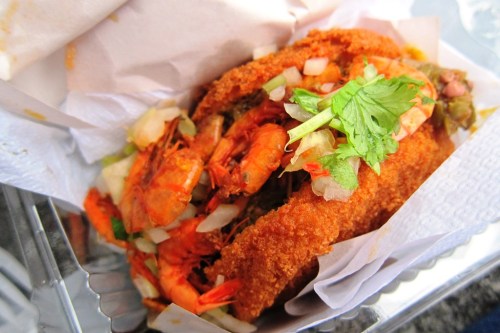
Cida Acaraje

Acarajé with dried shrimp from Cida in Salvador da Bahia, Brazil

2 Comments

Filed under World Eats

The FiveThirtyEight International Food Association World Cup

We are fans of Nate Silver’s 538 for its mix of culture, sports, politics and statistics. However, now they have taken it even one further and incorporated food into the mix. Perfect! In honor of the World Cup, the 538 team has created a ranking based on the national cuisines of the countries participating in the World Cup, as well as other culinary powerhouses. Here’s their methodology:

We polled 1,373 Americans through SurveyMonkey Audience and asked them to rate the national cuisines of the 32 teams that qualified for the World Cup, as well as eight additional nations with bad soccer but great food: China, Cuba, Ethiopia, India, Ireland, Thailand, Turkey and Vietnam.

So who’s going on to the Round of 16? Personally we think the list is pretty decent, though we’d have picked Turkey over Germany.

  • Mexico vs. Ethiopia
  • Japan vs. Vietnam
  • France vs. Argentina
  • U.S. vs. Belgium
  • Spain vs. Brazil
  • Italy vs. Greece
  • Cuba vs. China
  • Thailand vs. Germany
Acai at Tacaca do Norte

Acai at Tacaca do Norte – a taste of Brazil!

Leave a comment

Filed under Links, World Eats

Blue Seal, the original Okinawan Ice Cream

JapanOur World Cup coverage continues with an unexpected cross-cultural treat from Japan. Okinawa, Japan may not be first place you think of when you think of ice cream, but it turns out the island is crazy about it! Ice cream came to Okinawa with American troops in WWII, but became a trend that lasted much longer. The main purveyor is Blue Seal, originally founded to provide troops with a taste of ice cream from home, but eventually the ice cream became available island-wide, where it has gained quite a following. There are flavors that Americans would be familiar with, as well as Okinawan flavors like sugarcane, bitter melon and purple sweet potato. Blue Seal-branded cafes are found all over Okinawa, and now even in Tokyo, too. Softserve is more popular in Japan, but Blue Seal definitely holds the top spot for American-style ice cream.

Blue Seal Ice Cream

Blue Seal Ice Cream by Jason Poon

Leave a comment

Filed under Reviews, World Eats

The National Dish of Cameroon: Ndolé

CameroonCameroon is playing its second match in the World Cup today so we thought we’d do a little research into the country’s cuisine, which is characterized by indigenous ingredients and a prevalent French influence. Ndolé is the national dish of Cameroon, it consists of ground nuts, ndolé leaves (aka bitter leaves – which give the dish their name) and either fish or beef. You can even add some shrimp, which seems appropriate since that is where the country got its name, from them Portuguese word for shrimp – Camerões! Sounds delicious! African Bites has a great recipe for Ndolé, and if you are unable to find Ndolé leaves you can use spinach or kale, as in this beautifully-illustrated Wandecrush recipe.

Ndole in Cameroon

Ndole in Cameroon by Joel Abroad

Leave a comment

Filed under World Eats

Brazil: All About the Cafezinho

brazilWith the important World Cup match-up between Brazil and Mexico today, it seems appropriate to talk about a topic near and dear to both country’s hearts. Coffee-time is something of a ritual in Brazil, where people have their daily cafezinhos. Coffee in Brazil does not simply mean drip coffee, as we are accustomed to having in the US. Instead, you brew a cafezinho through a cloth filter with boiling water, at least if you are doing it traditionally. A cafezinho in Brazil, no matter where you get it, tends to be sweet and strong and served in absolutely tiny cups (typically plastic). People often drink it at a counter standing up in the morning, as a welcoming gesture for guests, or after meals (sometimes it is free, sometimes it is not…). Flavors of Brazil has a guide on how to Order Coffee in Brazil, you can get a wide variety of permutations, but be prepared – everything comes with sugar! Though the traditional cafezinho reigns supreme, cafes with Italian espresso style coffee and drinks are getting more popular, definitely in São Paulo, which has always had an Italian heritage, and in Rio, too.

IMG_3020

Cafezinho by Erica Pallo

Leave a comment

Filed under Coffee, World Eats

As the World Cup opens, we celebrate Croatian Pršut!

Flag_of_Croatia.svgIn just a few hours, the 2014 World Cup will open in São Paulo as the heavily favored Seleção take the field against Croatia. Over the next month, we will be highlighting some of our favorite Brazilian dishes and food experiences, as well as stories from some of the competing nations. But today, we felt it appropriate to pay a small homage to Croatia, Brazil’s sacrificial ham (get it?) Italian prosciutto, born just across the Adriatic sea, is beloved in Croatia, where it is known as pršut. Of course, Croatians have put their own unique spins on the classic delicacy. Native to the western Croatia region of Istria, which is near the Italian border, pršut is generally similar to Italian preparations, but Istrians remove skin and fat, and replace it with salt, spices, and other herbs. But go further down the Dalmatian coast, and pršut – shock of shocks – is generally not dried but smoked, with the flavor accented by the air from nearby mountains and fields. Having never been to Croatia, and of course being big fans of dried cured ham, we would love to try both varieties. Maybe the Croatian national football team will bring some to their match in a few hours? The afterparty would be fun!

Dalmatinski pršut (Dalmatian prosciutto) on racks. Via vvv

Dalmatinski pršut (Dalmatian prosciutto) drying after being smoked (Via Diaspora Diaries)


Leave a comment

Filed under World Eats

Getting ready for the Copa do Mundo / World Cup!

The World Cup is almost here! In honor of this global event, we are looking forward to cheering on the Brazil and US teams and sharing some of our favorite stories and dishes from around the globe. Also look for special coverage about the food scene in Brazil, we still have a lot to cover from our time there! 719px-WC-2014-Brasil.svg

Leave a comment

Filed under Note, World Eats

What is Tepache?

Mexico FlagWe recently covered a video series, Thirsty for…, that covers nothing but unique and emblematic non-alcoholic beverages from around the world. We recently discovered a unique drink that would be a perfect fit for the series: Tepache. We first spotted tepache alongside the more familiar jamaica and horchata drinks in our favorite taqueria. So…what IS tepache? Tepache is a drink native to Jalisco, made from both the flesh and the rind of pineapples and sweetened with brown sugar/piloncillo. Usually we stick to our favorites, but we decided to go for the unknown and try some Tepache. It was extremely refershing, sweet and slightly carbonated, due to the fermentation. It doesn’t seem that hard to make (recipe here) but the trick is waiting for it to ferment instead of enjoying the pineapple juice!

tepache

Tepache at a street stall by Y!Musica

1 Comment

Filed under World Eats

(Chocolate) Pesce d’Aprile for April Fools’ Day

ItalyOur favorite April Fools’ tradition is the French Poisson d’Avril (April fish), where you are supposed to go around taping paper fish on the backs of friends and acquaintances. We learned that Italy has their own version of this holiday, Il Pesce d’Aprile! However, in both countries, the “fish” means the appearance of fish-shaped chocolate as well. Of course we approve of any holiday where chocolate eating is sanctioned.

PoissonDAvril

Poisson D’Avril by ParisSharing

L’hai visto? (Have you seen him?)
Chi? (Who?)
Il pesce d’Aprile! (The April fish/fool!)

Leave a comment

Filed under Holidays, World Eats

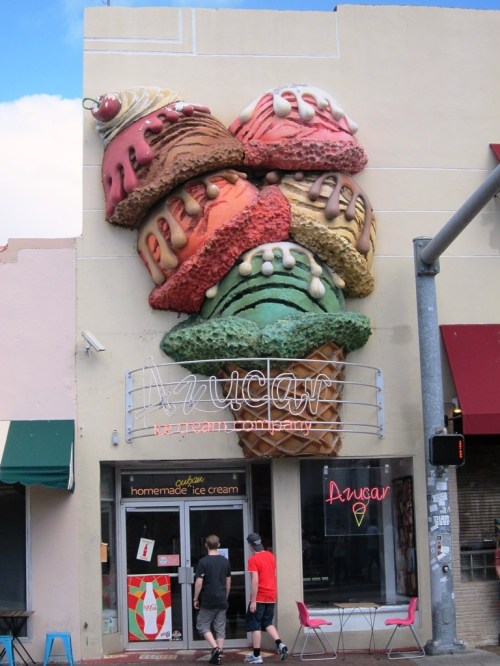
Pastry Post-Doc: Abuela Maria Ice Cream at Azucar

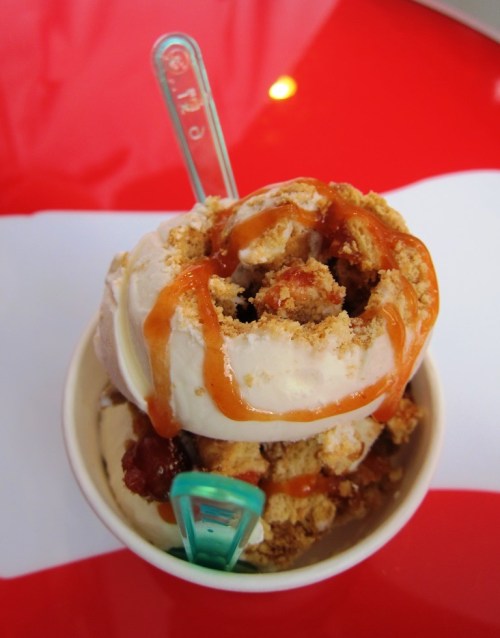
Azucar Ice CreamSo obviously we are going to be obsessed with any ice cream store that is named in homage to Celia Cruz’s signature phrase and has seats made from guayabera shirts. Azucar Ice Cream (1503 SW 8th St., Miami, FL) is all that and more – and the ice cream is more than good! There is a huge list of flavors written on the chalkboard wall, but only a portion are usually on offer. The flavors that stand out are the tropical varieties: plantain, Cuban coffee and mango, etc., and of course Abuela Maria! This flavor consists of Maria sugar cookies (apparently found all over the world in various forms), cream cheese and a guava swirl. We instantly fell in love. It was just like eating a guava cheesecake; absolutely wonderful. This flavor in particular seemed to be so popular that we saw it on offer at several other restaurants throughout the city. If you are in Miami you have to try it!

Azucar Ice Cream

Abuela Maria from Azucar Ice Cream

1 Comment

Filed under Pastry Post-Poc, World Eats